
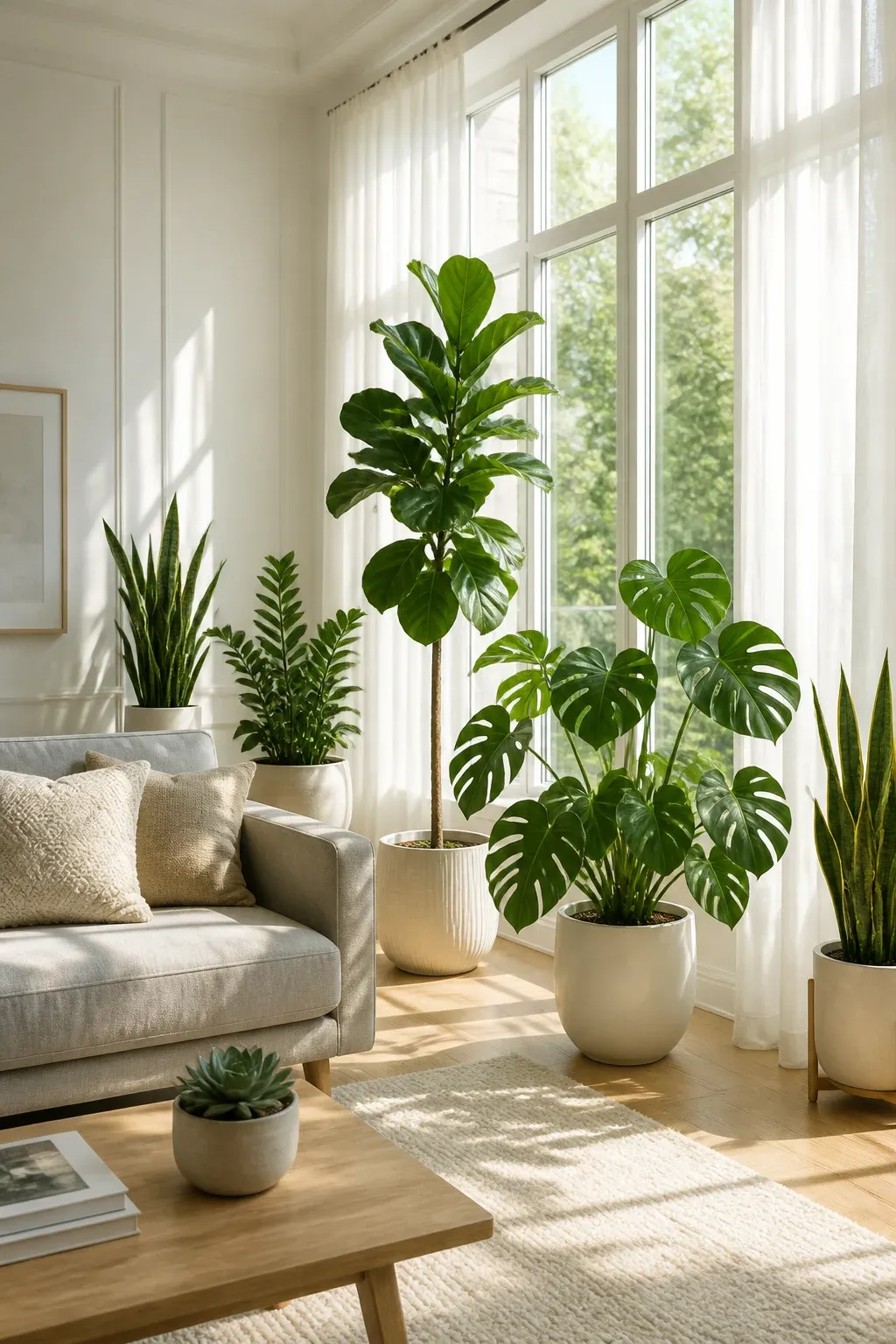
Turning a living room into a lush sanctuary doesn't require a professional designer. Adding greenery is one of the easiest ways to make a space feel lived-in and fresh. Beyond just looking good, plants help clean the air and can even lower your stress levels after a long day at work. This guide explains how to select the right species for your space and how to arrange them so they look like they belong there.
Key Takeaways:
- Match plants to the actual light levels in your room.
- Use varied heights and leaf textures for visual interest.
- Group plants together to create a cohesive focal point.
- Choose planters that complement your existing decor.
- Stick to a consistent watering and maintenance routine.
Choosing Plants for Your Specific Light Levels
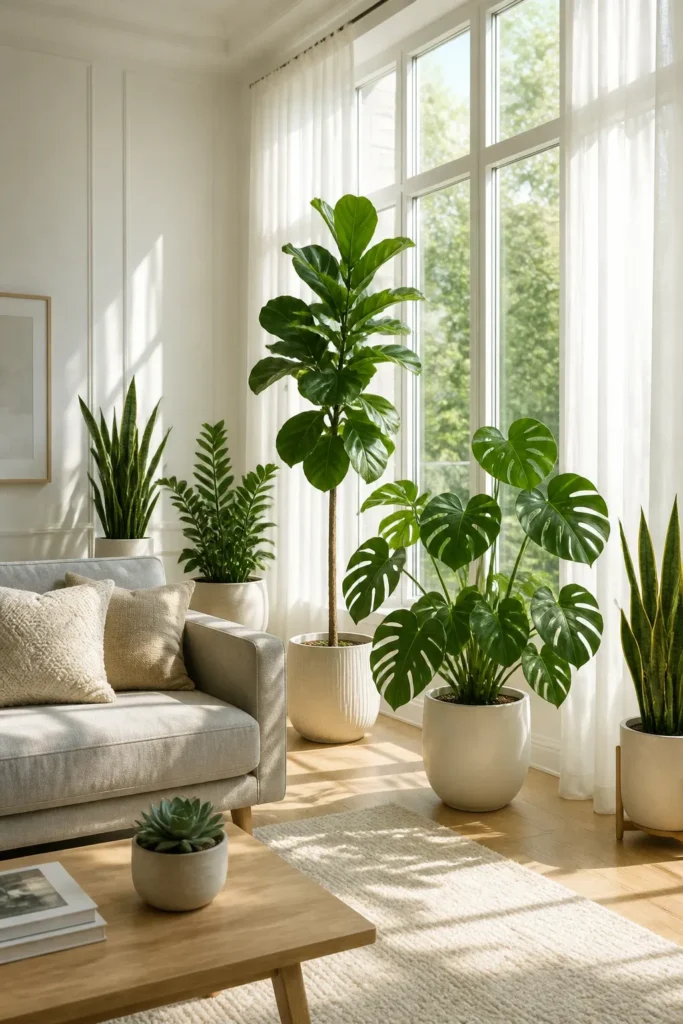
Before you buy a plant because it looks pretty, look at your windows. Most living rooms fall into three categories: bright direct light, indirect light, or low light. If you have a south-facing window that gets hot sun all day, succulents and cacti will thrive. For rooms with plenty of light but no direct sun hitting the leaves, try a Fiddle Leaf Fig or a Monstera. If your living room is on the darker side or has small windows, stick to hardy options like Snake Plants or ZZ plants. These can handle neglect and lower light without dying. Always check the tag for light requirements before heading to the checkout.
Selecting the Right Pots and Planters for Your Style
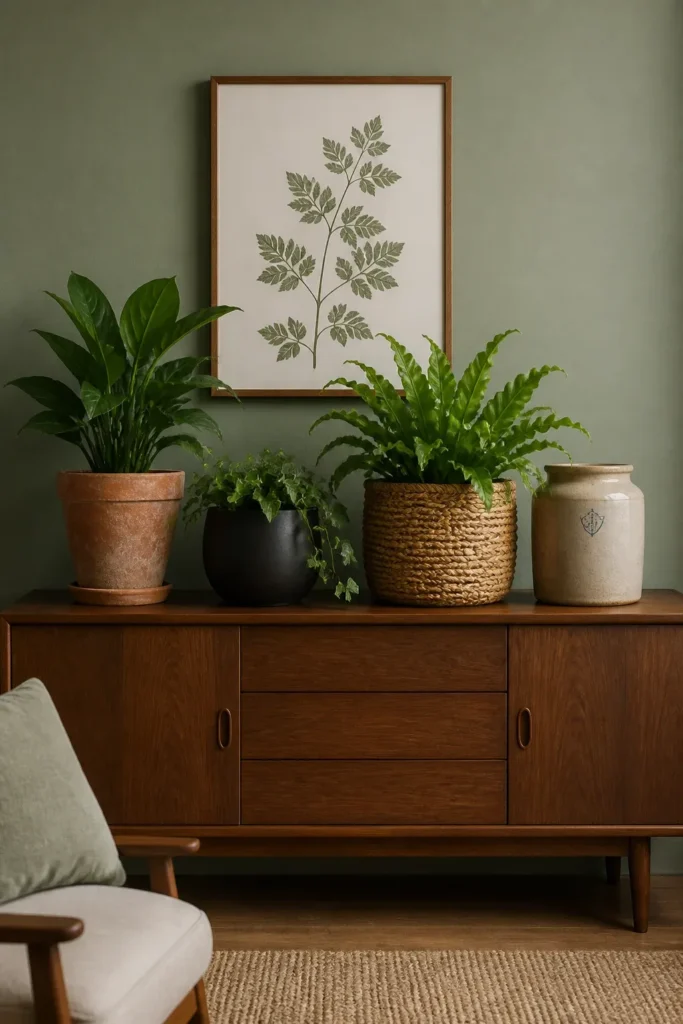
The pot is just as important as the plant when it comes to decor. Terracotta is a classic choice that works well in rustic or bohemian settings, and its porous nature helps prevent root rot. If your style is more modern, look for matte ceramic pots in neutral tones like grey, white, or black. For a more natural or coastal look, woven baskets can hide ugly plastic nursery pots. Just make sure every pot has a drainage hole or a saucer inside to catch excess water. If you find a beautiful vintage crock without a hole, use it as a decorative outer shell for a plant kept in a standard plastic pot.
Arranging Greenery at Different Heights
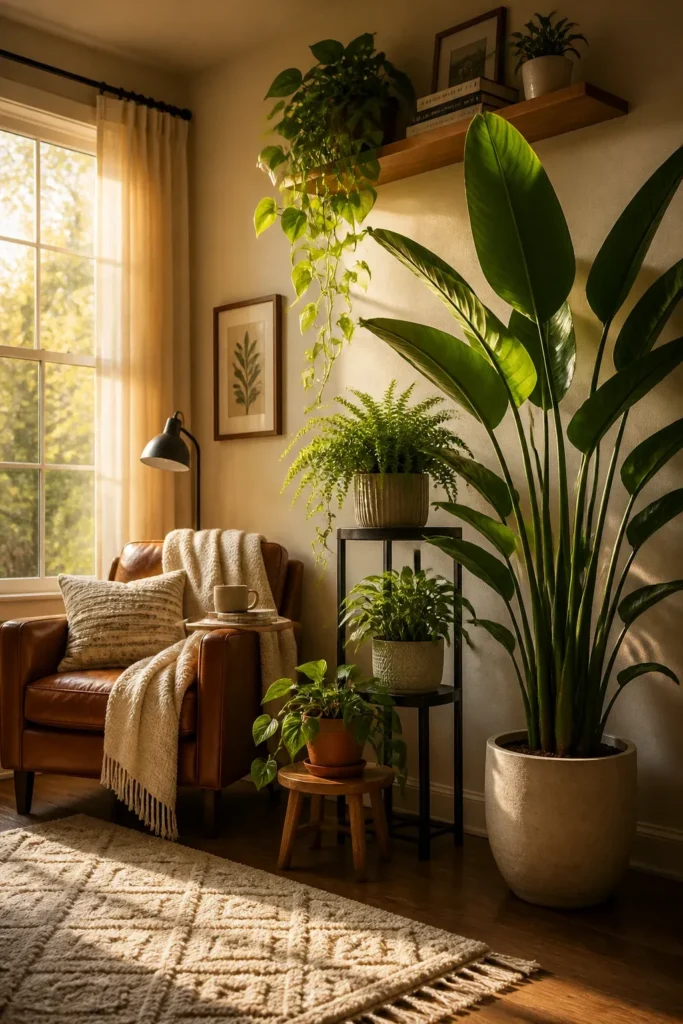
A common mistake is putting all your plants on the same level, like a row of soldiers on a windowsill. This looks flat and unnatural. Instead, vary the height of your greenery. Place a large floor plant, such as a Bird of Paradise, in a corner to draw the eye upward. Use plant stands or small stools to lift medium-sized pots off the ground. For shelves and mantels, trailing plants like Pothos or Heartleaf Philodendron work well because they grow downward, filling the vertical gap between furniture and the floor. This layering makes the room feel more three-dimensional.
Grouping Plants to Create a Natural Focal Point
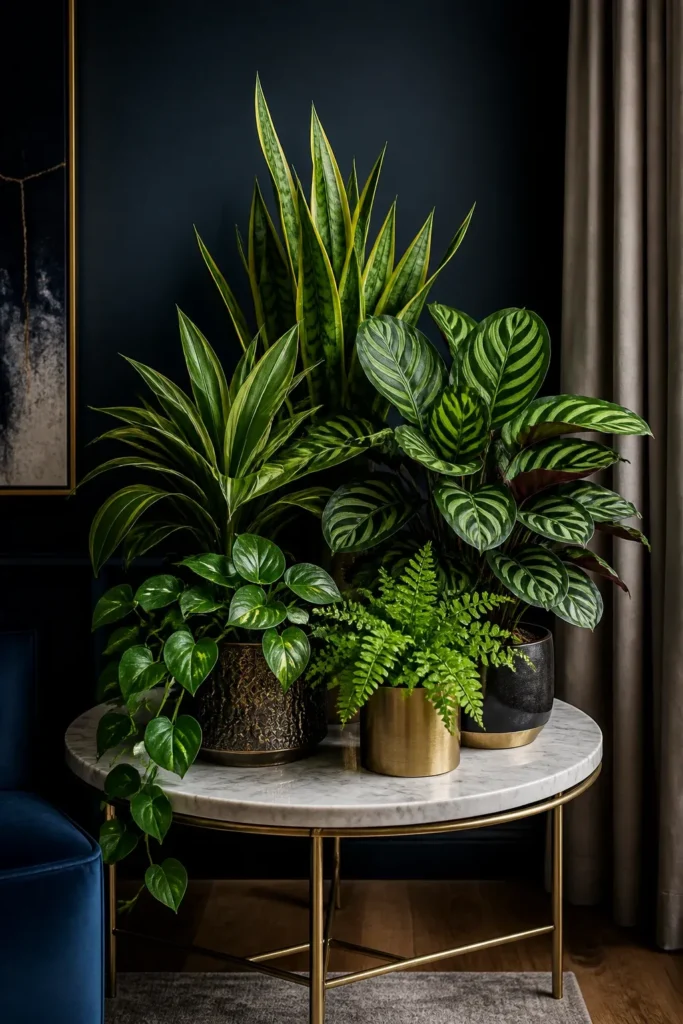
Instead of scattering single pots across the entire room, try grouping three or five plants together. Odd numbers usually look better to the human eye. When you cluster plants, they create a mini-ecosystem that looks like a small indoor jungle. This also makes care easier since all your watering needs are in one spot. You can group them on a dedicated plant stand or a side table. Make sure to vary the sizes within the group so the smaller ones don't get hidden behind the larger ones. This technique creates a clear focal point that anchors the room's design.
Adding Texture with Different Leaf Shapes and Sizes
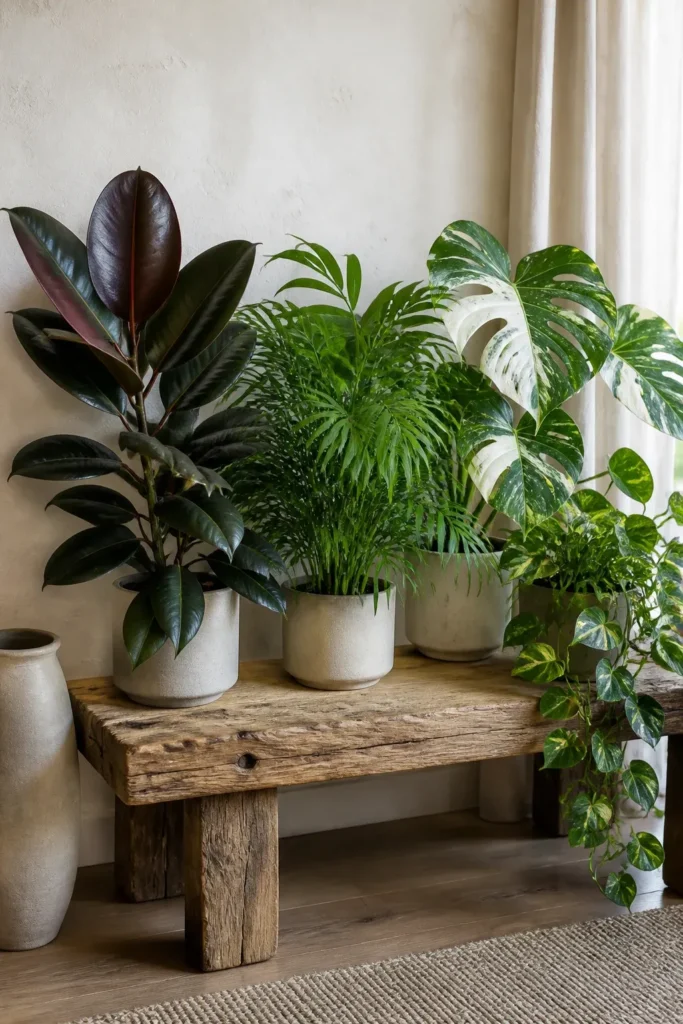
Texture is what makes an indoor garden look professional. Mix plants with large, broad leaves with those that have small, delicate foliage. For example, the massive, waxy leaves of a Rubber Tree look great next to the feathery, thin fronds of a Parlor Palm. You can also play with colors; many plants have variegated leaves with white, yellow, or even pink stripes. Combining these different shapes and patterns prevents the greenery from blending into one green blob. It keeps the eye moving and makes each plant stand out on its own.
Keeping Your Indoor Garden Healthy and Vibrant
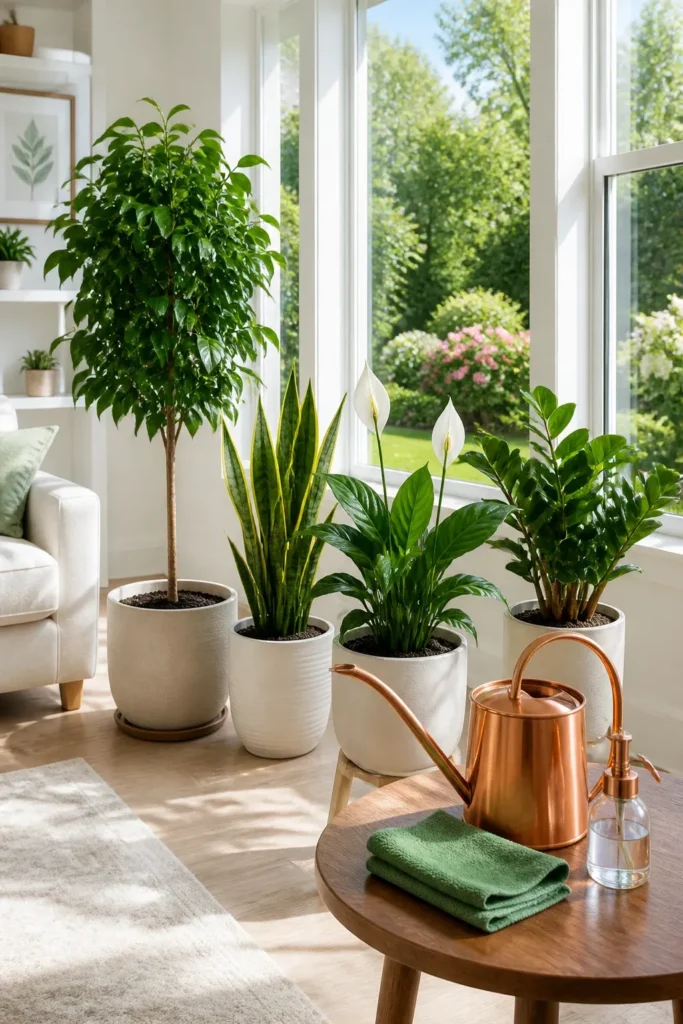
The best-looking plants are the healthy ones. Overwatering is the most common way people kill indoor plants. Stick your finger an inch into the soil; if it feels damp, wait a few more days. Dust the leaves occasionally with a damp cloth so the plant can breathe and soak up light efficiently. It is also helpful to rotate your pots every few weeks. Plants naturally grow toward the light, and if you don't turn them, they will start to lean or become lopsided. A little bit of regular attention goes a long way in keeping your living room looking like a lush retreat.
Adding plants to your living room is an ongoing process of trial and error. Don't be afraid to move things around if a plant isn't happy in its current spot. Start with one or two easy-to-care-for varieties and build your collection as you get more comfortable. Take a look at your brightest corner today and imagine how a splash of green could change the feel of your home.