
Many people want to bring more greenery into their homes but worry that a collection of plants will make their space feel messy or crowded. It is easy to end up with a mismatched assortment of pots and leaves that competes with your furniture and creates visual noise. However, you can enjoy the benefits of nature without sacrificing a clean and organized home by following a few simple design rules.
This guide explains how to use greenery as a deliberate design element rather than just an addition to the room. You will learn how to choose the right plant shapes, use space effectively, and maintain a look that feels fresh and intentional. By focusing on quality over quantity, you can create a calming environment that feels both natural and spacious.
Selecting Plants with Architectural Shapes
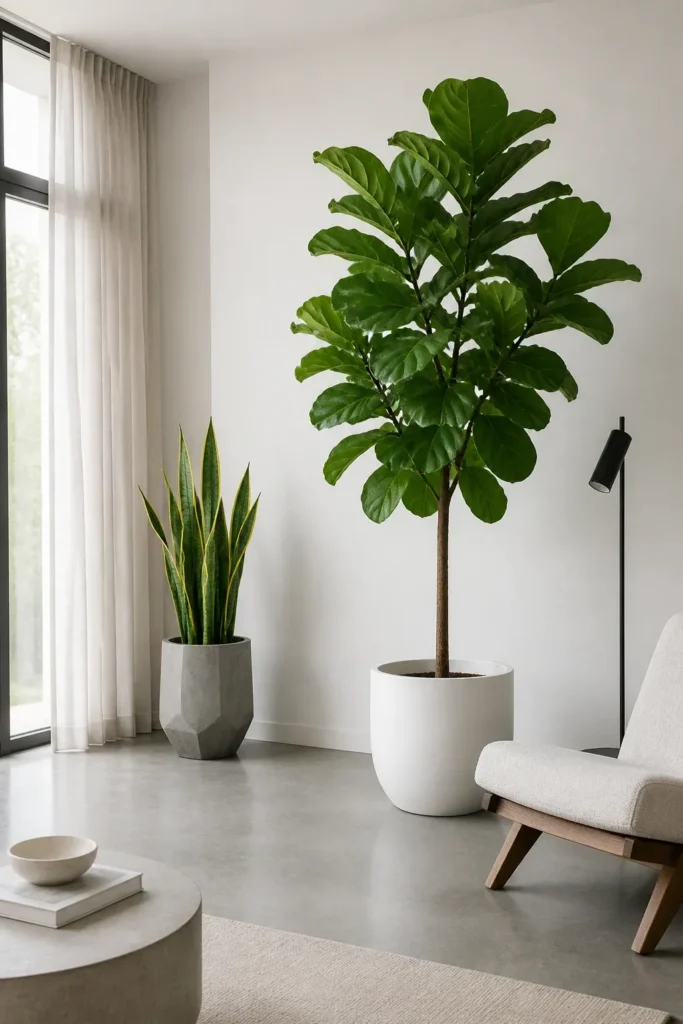
When you want to avoid clutter, the shape of the plant matters more than the number of plants you own. Look for species with strong, defined lines. A tall Fiddle Leaf Fig or a structural Snake Plant has a clear silhouette that stays within its own footprint. These plants act like pieces of living furniture rather than sprawling weeds.
Avoid plants with thin, wispy leaves that drop frequently or vines that grow uncontrollably in every direction. Instead, choose varieties that maintain their form as they grow. A single, large Monstera with well-defined leaves makes a much cleaner statement than five small, bushy plants scattered across a table. This approach keeps the floor and surfaces clear while still providing a bold green presence.
Using Negative Space to Highlight Greenery
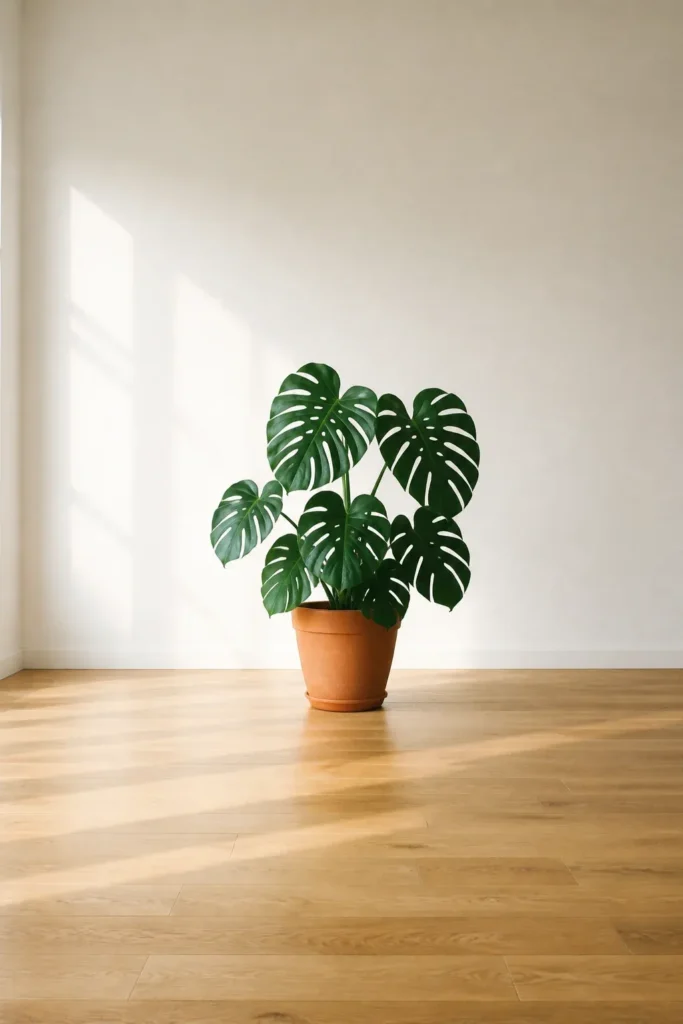
One common mistake is trying to fill every empty corner with a plant. In minimalist design, the empty space around an object is just as important as the object itself. By leaving plenty of open wall or floor space around a plant, you give it room to breathe and make it a focal point.
If you place a plant too close to other decor, the eye doesn't know where to land, and the area starts to look cluttered. Try placing one medium-sized plant in a corner with nothing else nearby. This creates a sense of calm and makes the greenery look like a curated choice. Negative space helps the room feel larger and emphasizes the natural beauty of the plant.
Choosing Monochrome Pots and Simple Containers
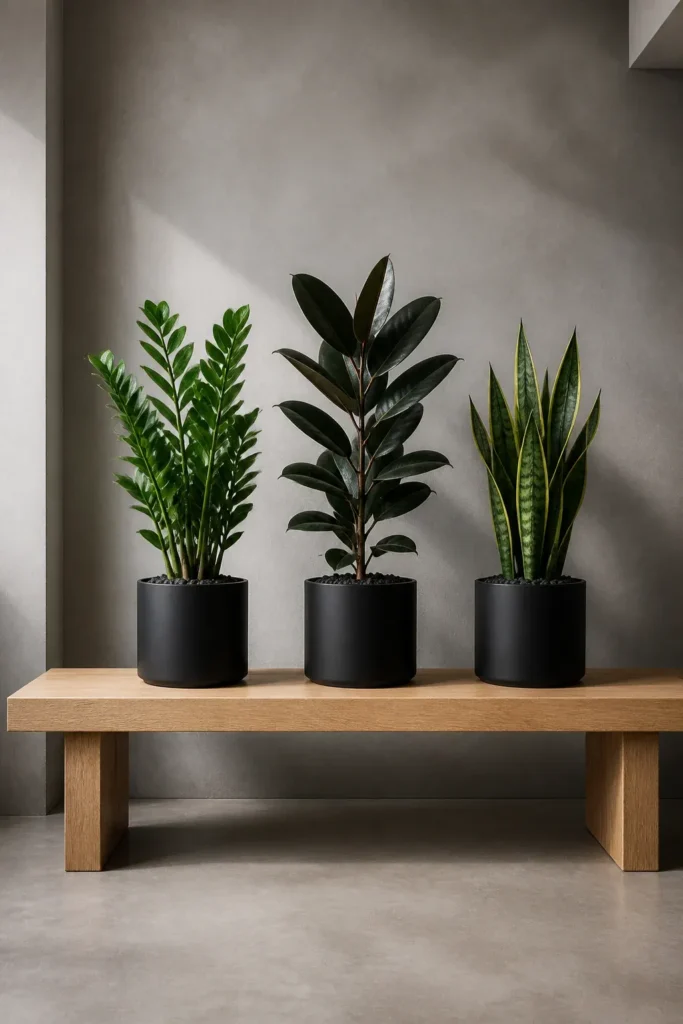
The containers you use have a huge impact on whether a room looks busy or organized. Using a variety of patterns, colors, and materials for your pots creates a lot of visual distraction. To keep things looking clean, stick to a monochrome palette. Matte black, soft white, or natural terracotta in consistent shapes work best.
When the pots match or belong to the same color family, they blend into the background. This allows the focus to remain on the green leaves. If you have different types of plants, using identical pots can tie them together and make the collection feel like a unified set rather than a random assembly of items.
Grouping Plants for Visual Impact Rather Than Variety
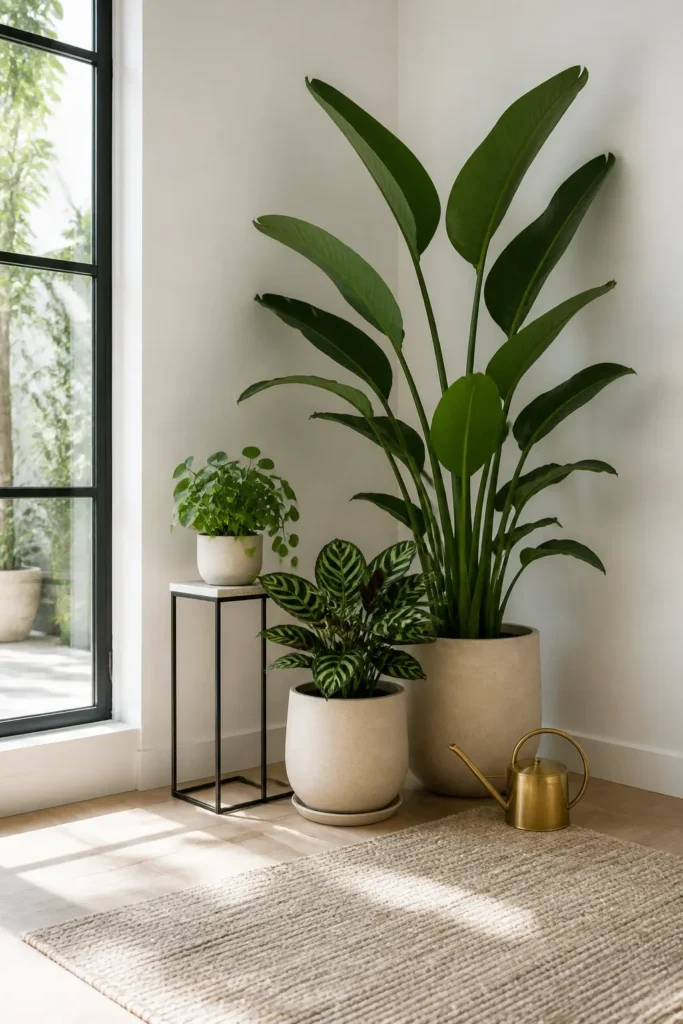
If you have several plants, don't spread them thinly across every surface in the house. This makes the whole home feel cluttered. Instead, gather them into one or two specific areas. Grouping plants together creates a small 'indoor garden' effect that is much easier on the eyes than having a single pot on every shelf.
When grouping, use the rule of three or vary the heights slightly, but keep the overall footprint small. This keeps your tables and desks clear for their intended use. By confining the greenery to one zone, you leave the rest of the room feeling open and tidy. It also makes watering and maintenance much simpler because everything is in one spot.
Utilizing Vertical Space and High Shelves
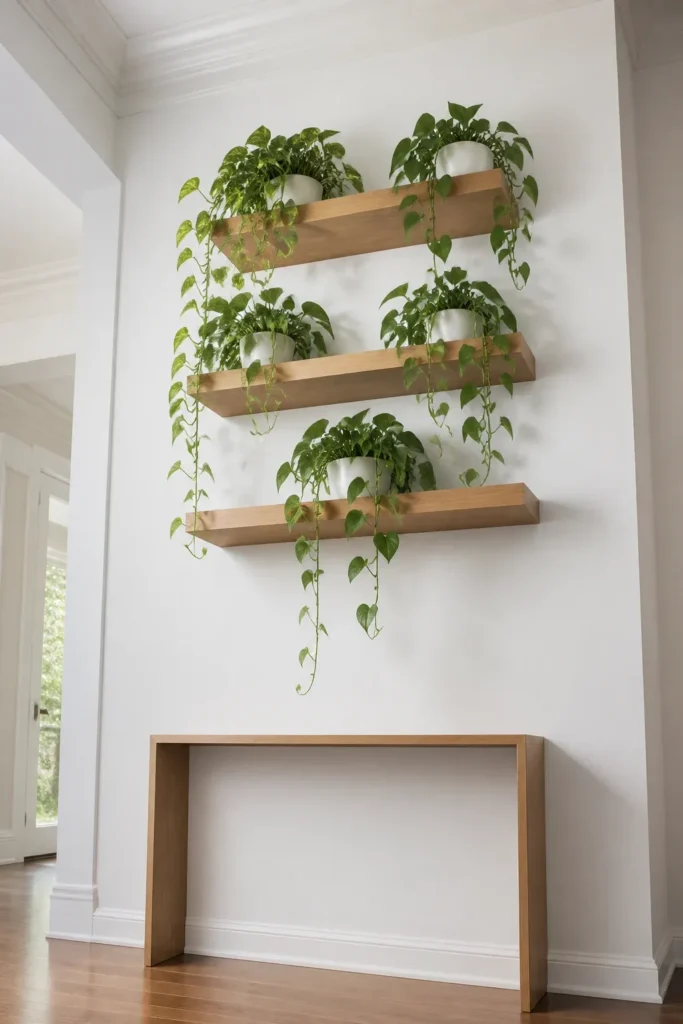
Keep your floor and eye-level surfaces clear by moving plants upward. Using high shelves or wall-mounted planters draws the eye toward the ceiling, which can make a room feel taller. This is especially helpful in small apartments where floor space is at a premium.
Floating shelves are a great way to display trailing plants like Pothos without taking up any usable surface area. Just ensure the placement doesn't interfere with walking paths or cupboard doors. By keeping plants off the floor and tables, you maintain the functionality of your home while still enjoying the lush feel of indoor nature.
Maintaining a Clean Aesthetic Through Regular Pruning
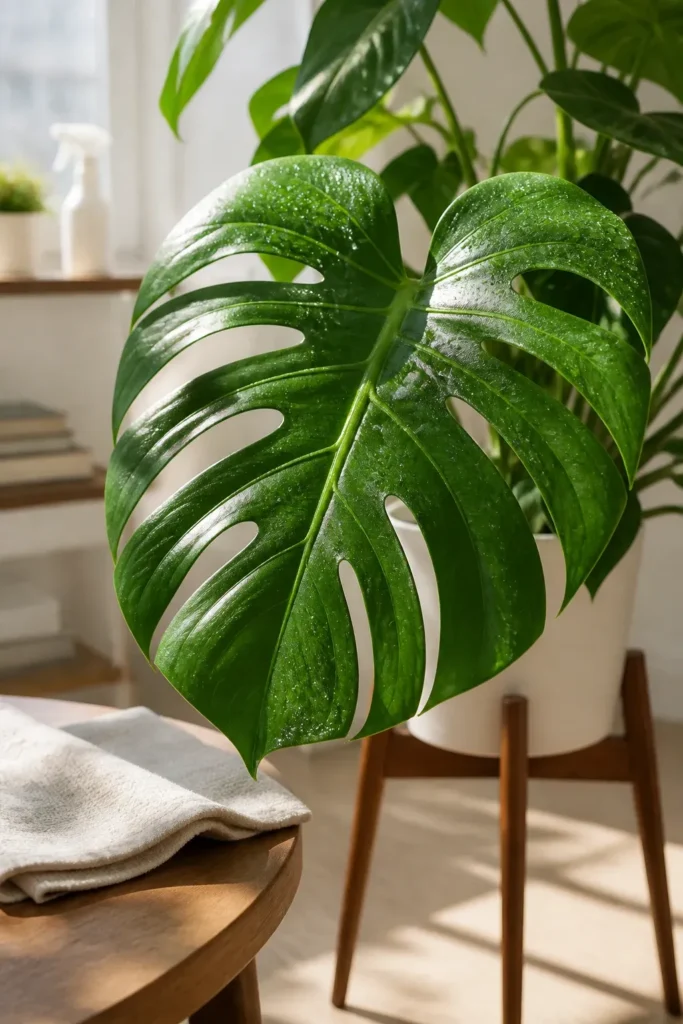
A plant that is overgrown or has brown, dying leaves will always look messy. To keep a minimalist look, you must be willing to prune. Snip off yellowing leaves immediately and trim back stems that are growing too far out of bounds. This keeps the plant's shape tight and intentional.
Cleaning the leaves is also part of maintenance. Dust buildup makes plants look dull and contributes to a 'stuffy' feeling in the room. Wipe the leaves with a damp cloth every few weeks. A healthy, shiny, well-trimmed plant looks like a piece of art, whereas an untended one just looks like more housework that needs to be done.
Bringing nature into your home does not have to result in a crowded or messy living space. By choosing plants with strong shapes, using consistent containers, and respecting negative space, you can create a home that feels both green and orderly. Start by selecting one or two high-impact plants and see how they change the mood of your room without adding to your daily clutter.