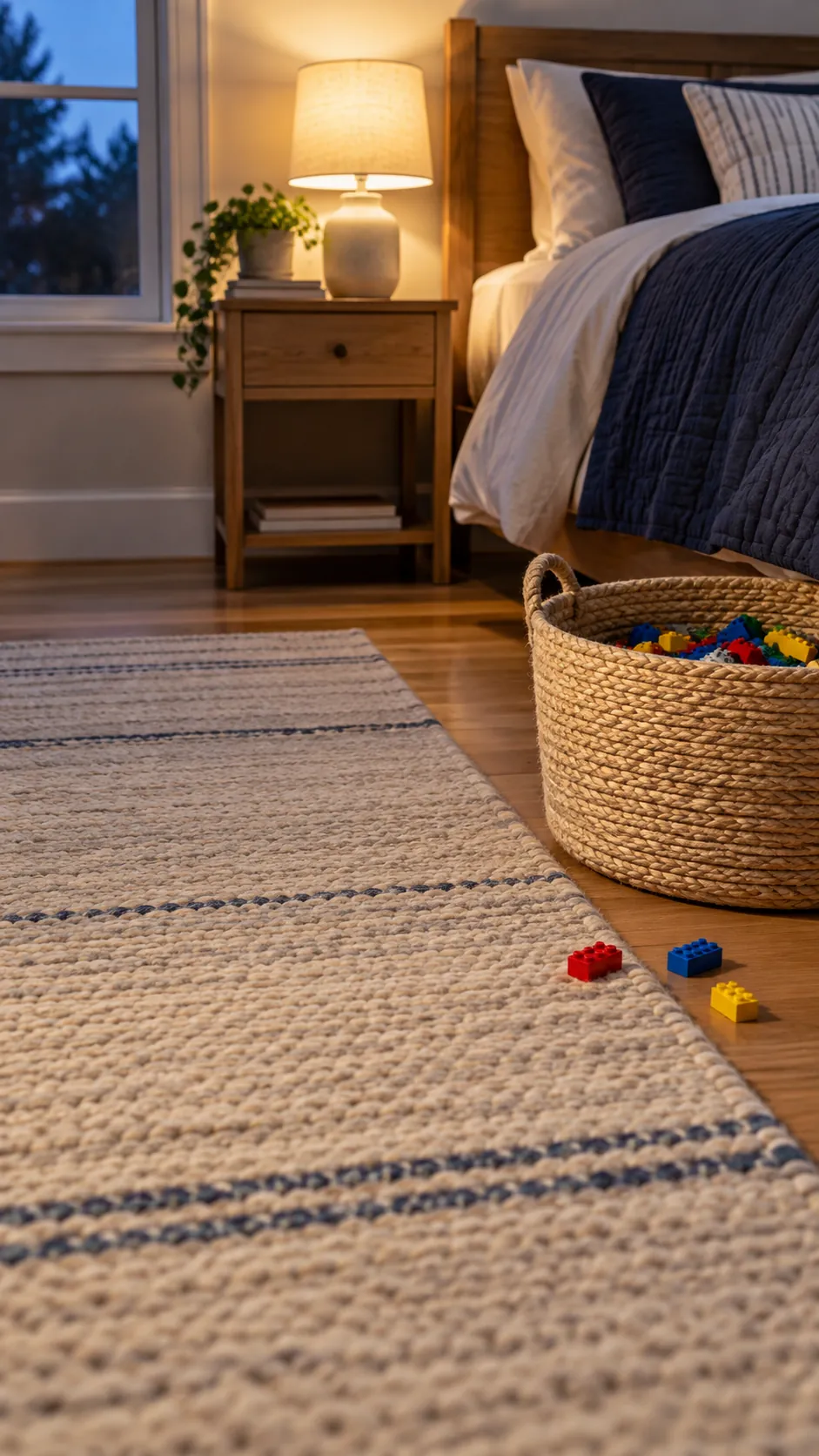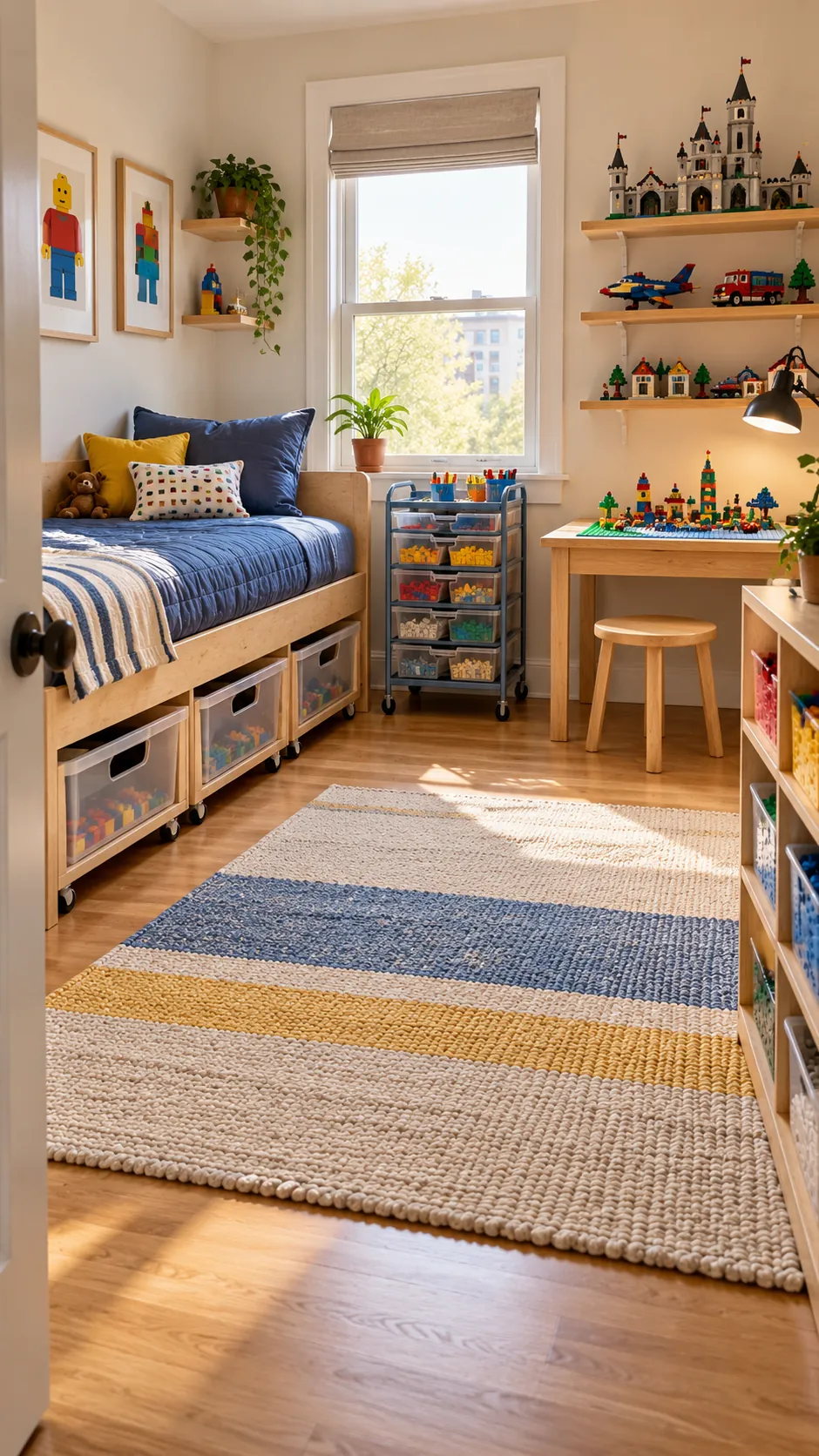
When the floor is both the building table and the walkway, storage must do more than hide bricks. A useful system makes pieces easy to find, protects work in progress, and clears the walking route before bedtime. Start with the way the child actually builds, then choose the least detailed sorting method that still makes cleanup predictable.
Low Rolling Drawers Under the Bed
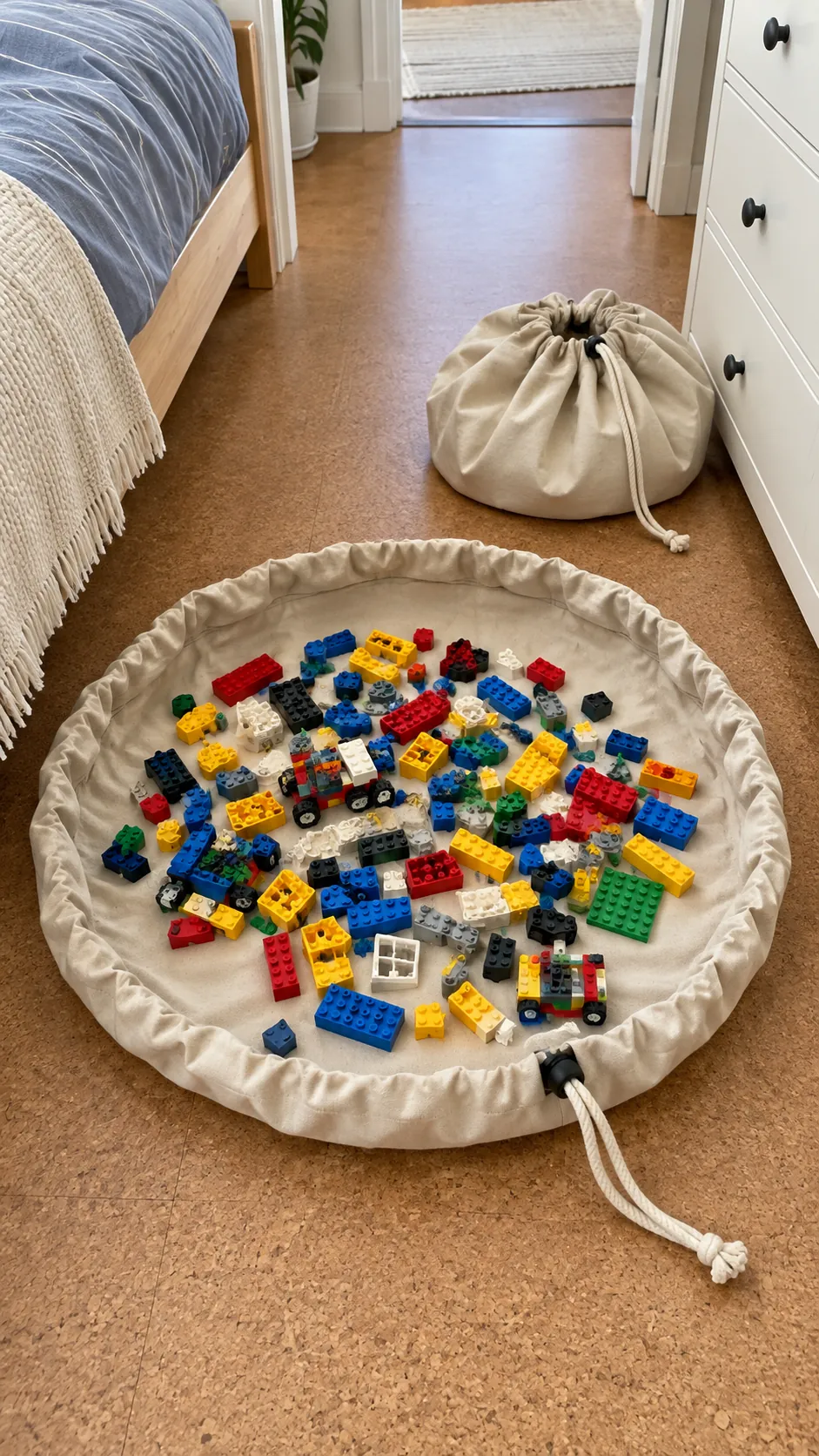
Wide shallow drawers let a child scan pieces without dumping a deep bin across the floor. Assign one drawer to common bricks, one to plates, and one to special parts so cleanup has only a few decisions. Choose wheels that track straight and handles that remain easy to reach under the bed.
A Play Mat That Closes Into a Bag
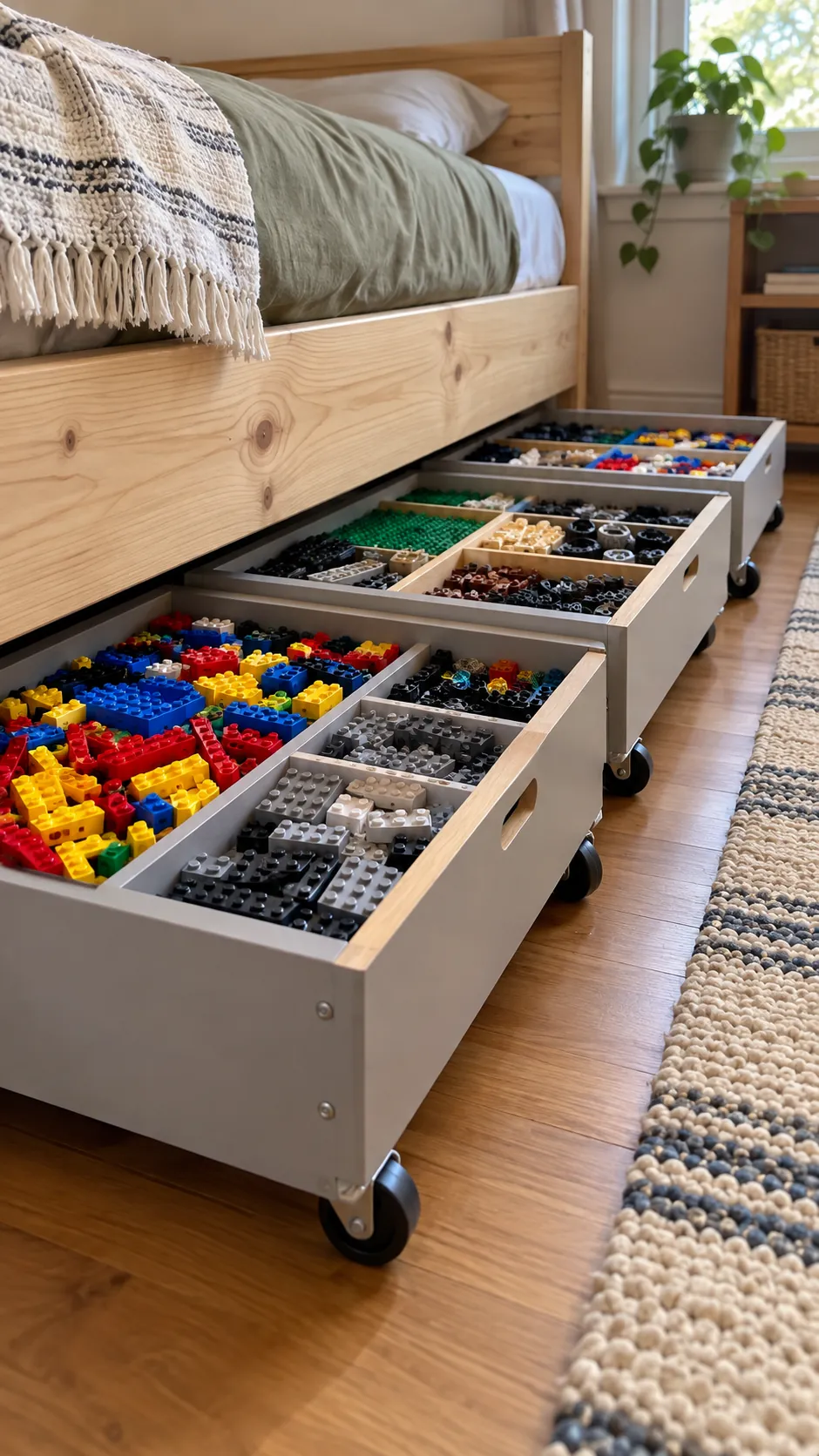
A drawstring play mat creates a defined building area and gathers loose bricks quickly when the floor must clear. Keep only a moderate mixed collection in it so the closed bag stays light enough for a child to move. Store detailed sets and tiny special pieces elsewhere because they can become hard to locate in a soft bag.
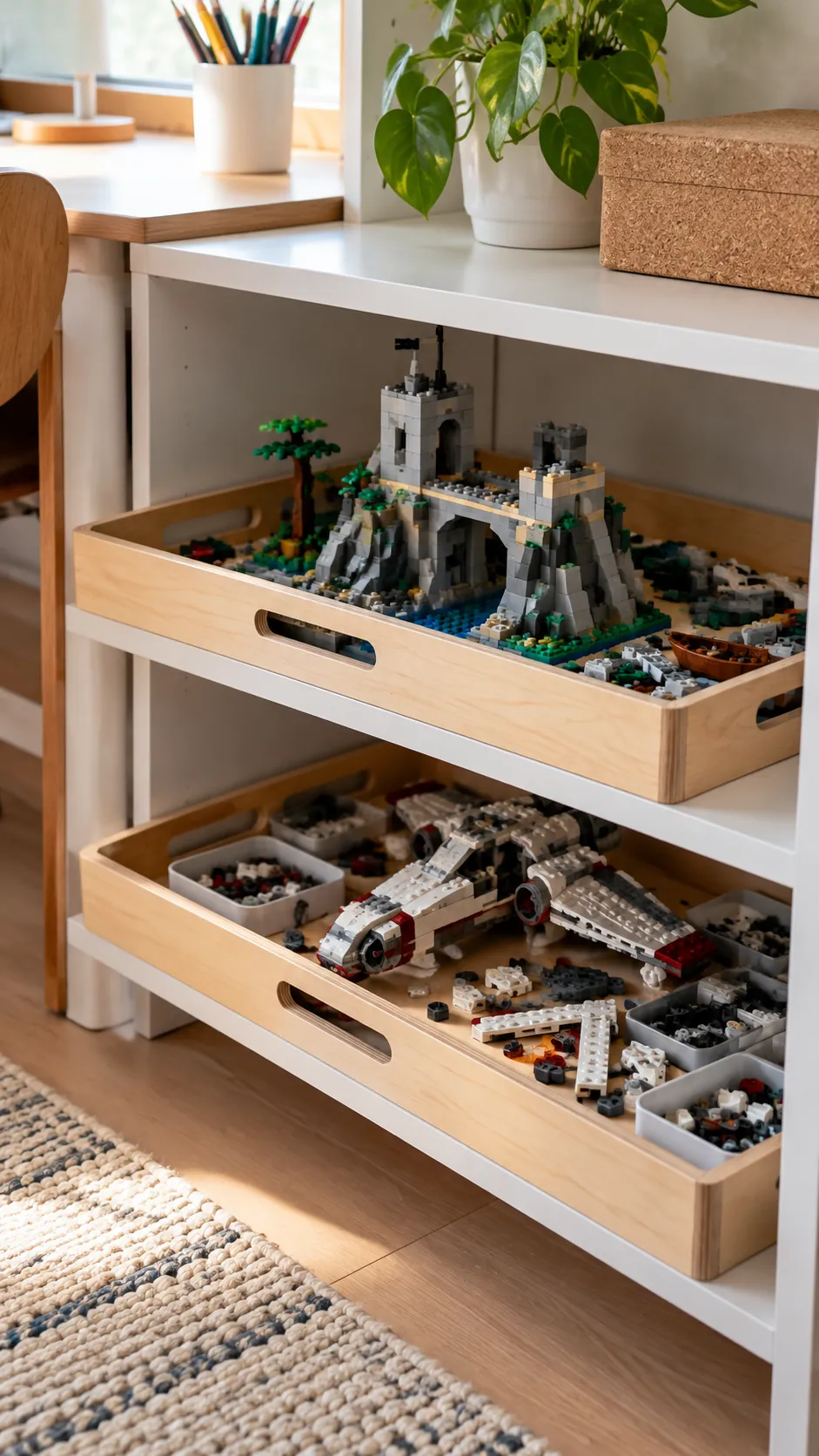
Shallow Trays for Active Builds
Give each unfinished model a rimmed tray that can slide onto a shelf without dismantling the work. The raised edge catches loose pieces while the rigid base protects fragile sections. Limit the number of active trays so every stalled project does not become permanent storage.
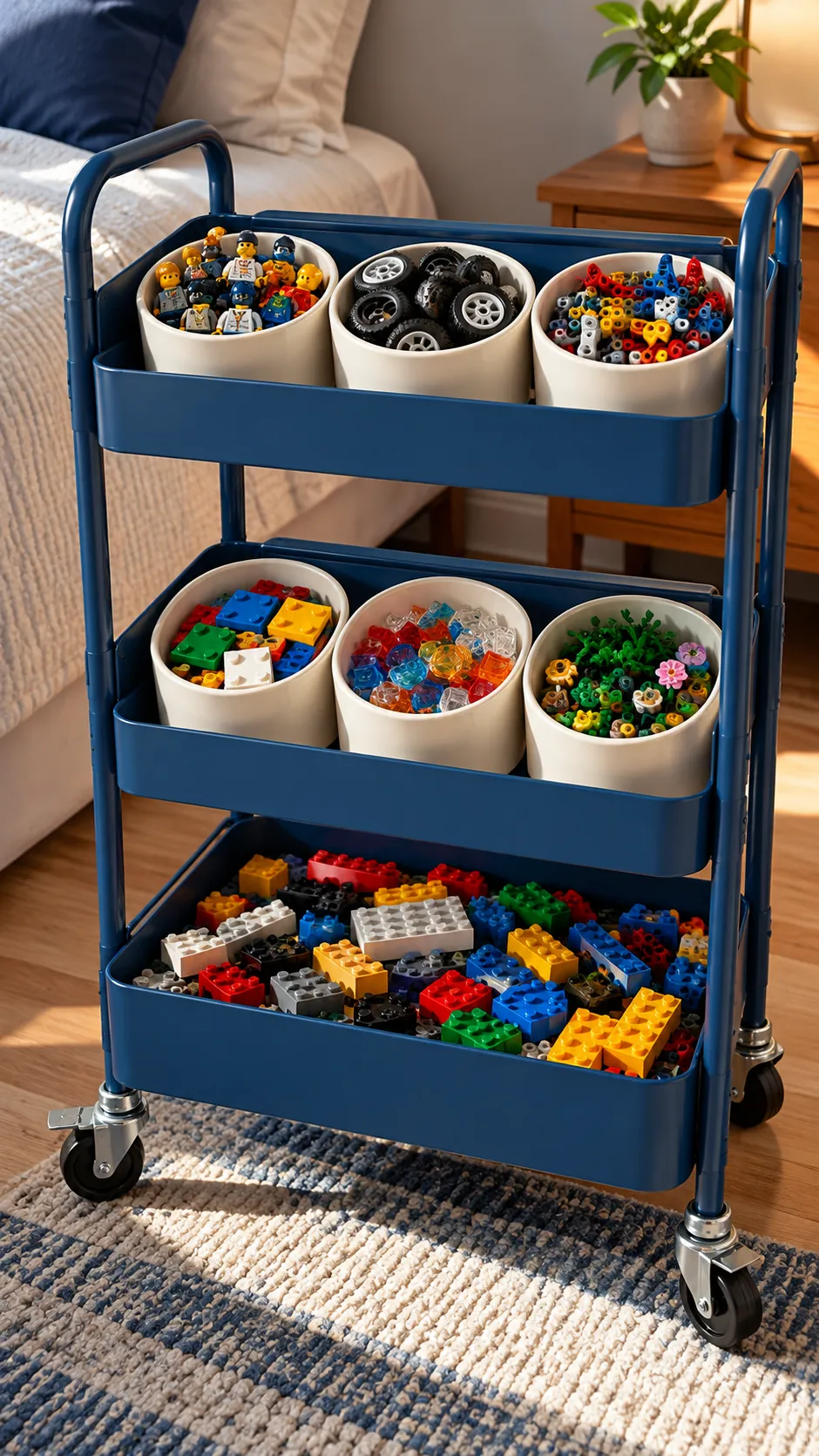
A Bedside Cart With Sorting Cups
A narrow rolling cart can park beside the play area during building and return to a corner afterward. Use removable cups for high use parts such as figures, wheels, connectors, and small tiles. Put bulk bricks on the lower tier so the cart stays stable when it moves.
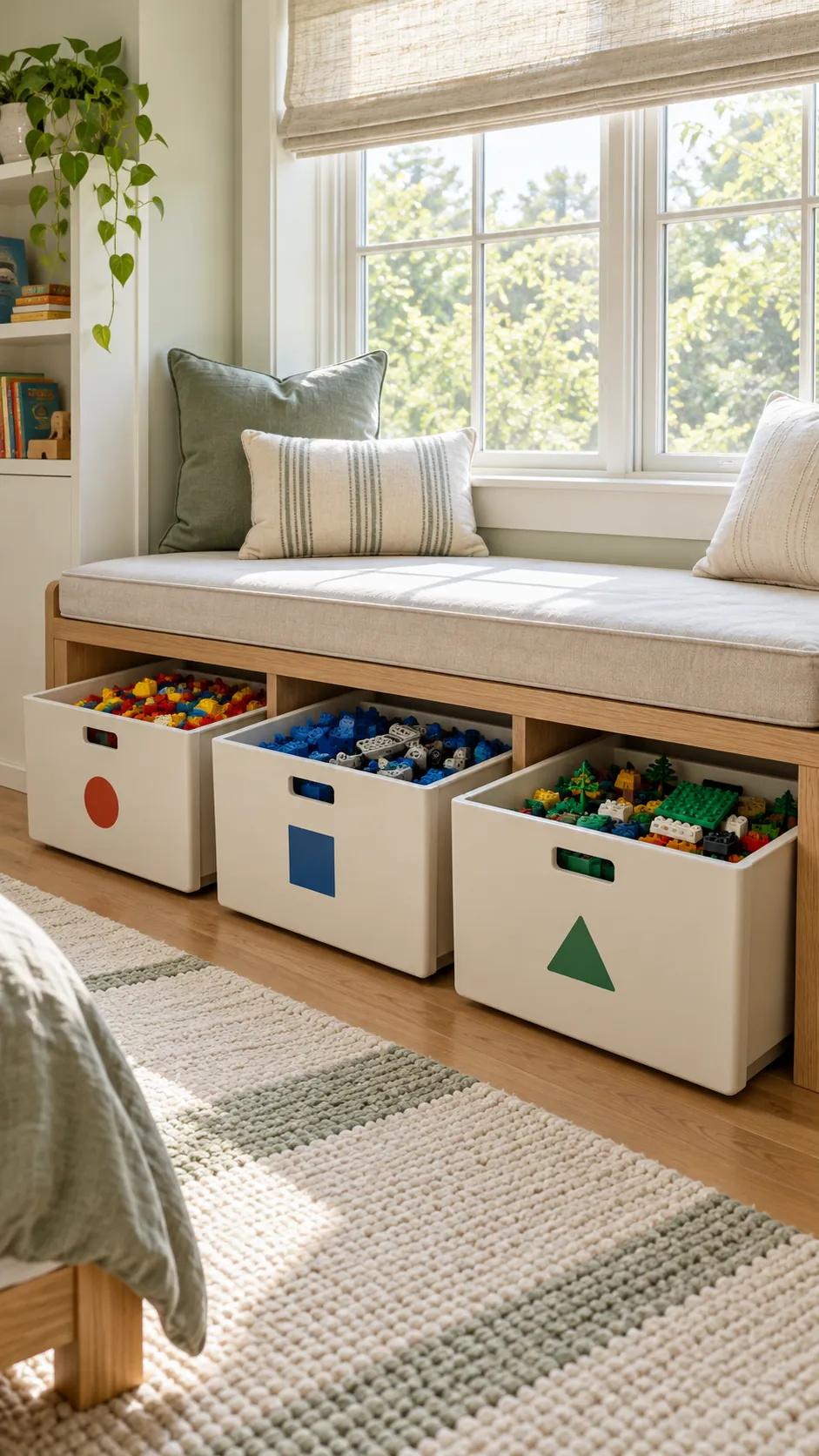
A Bench With Pull Out Brick Bins
A low bench turns one wall into seating, display space, and accessible brick storage. Fit broad bins beneath it and keep categories simple enough that a child can sort without help. Secure the bench and avoid lids that can pinch fingers during fast cleanup.
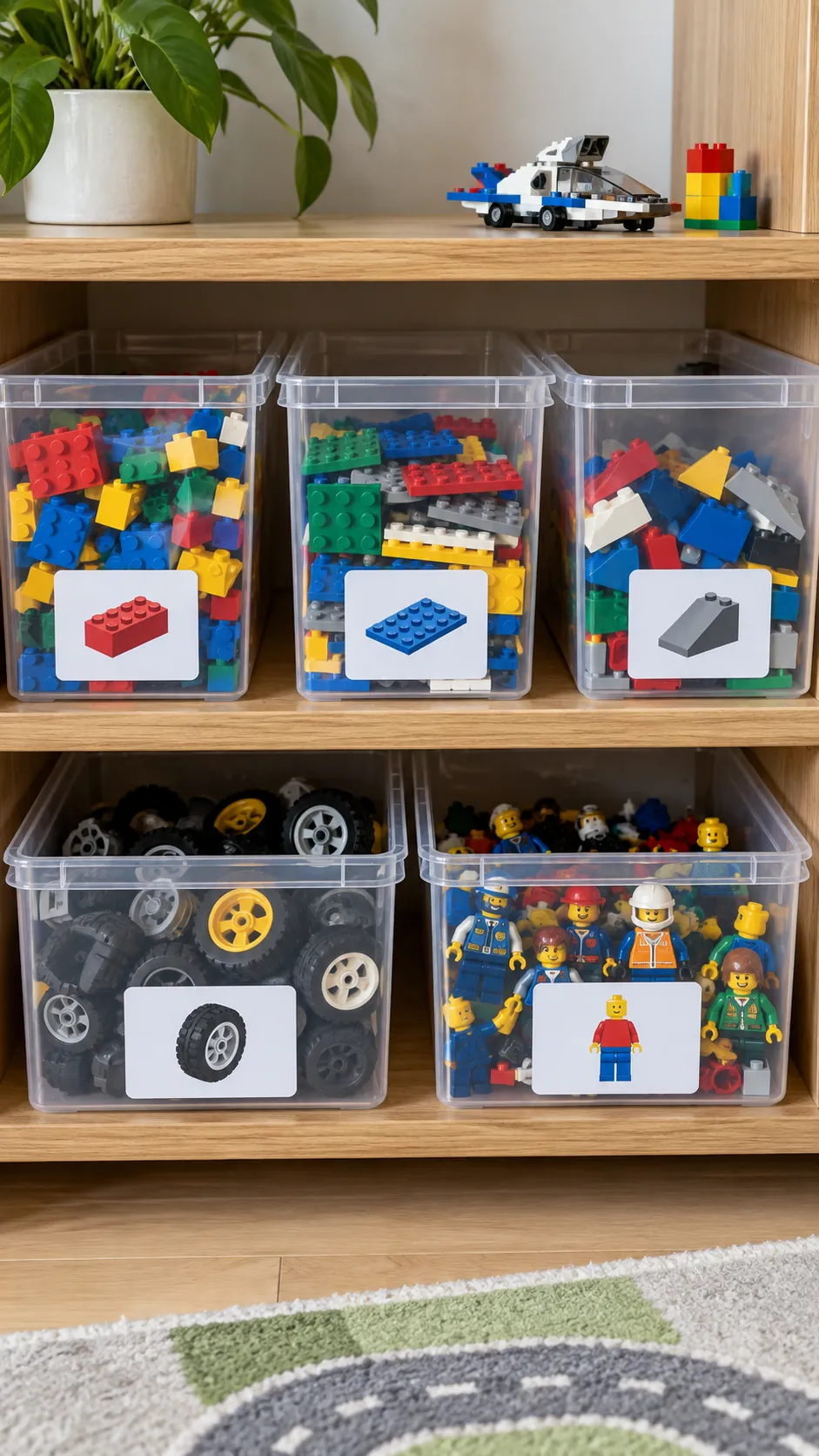
Clear Boxes Sorted by Part Type
Sorting by broad part type often works better than color because the needed shape is easier to spot. Use clear boxes for bricks, plates, slopes, wheels, and figures rather than dozens of tiny categories. Split a category only when its box becomes slow to search.
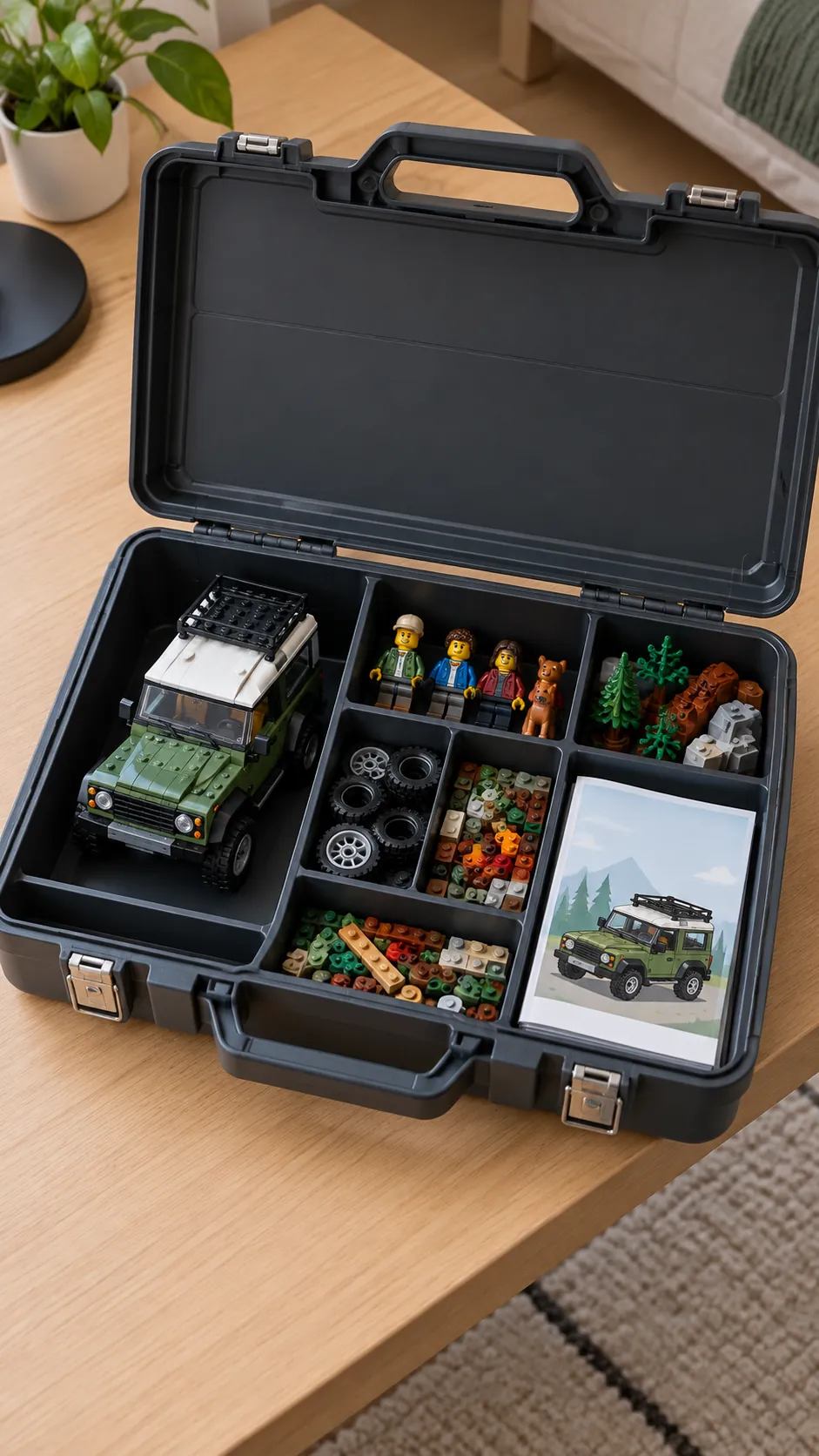
A Portable Building Case
A handled case lets building move from the bedroom floor to a dining table without carrying loose containers. Choose one with fixed dividers and a lid that closes securely even when held upright. Reserve it for a current theme or travel collection so it does not become too heavy.
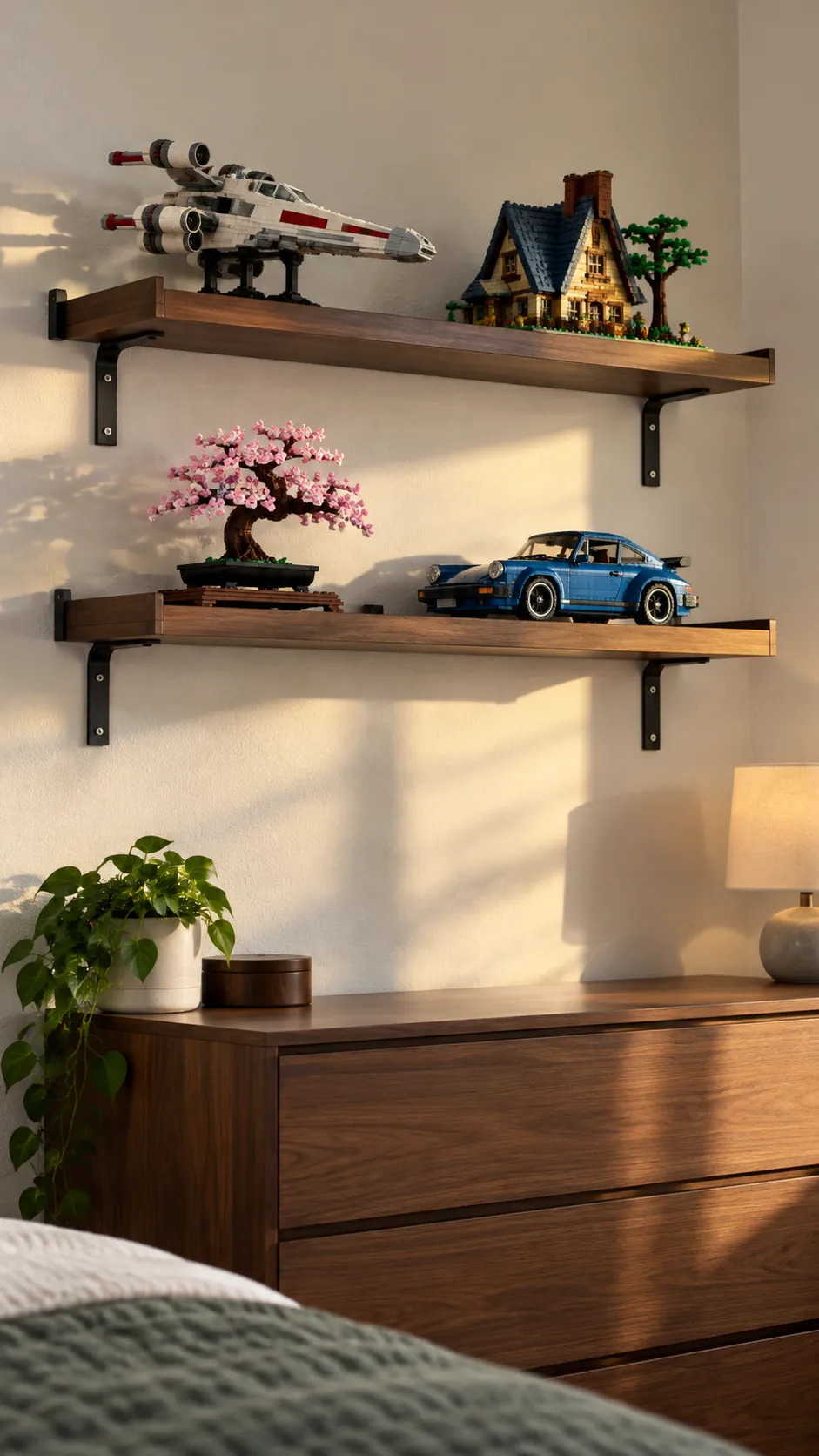
Wall Shelves for Finished Models
Finished models need a protected destination or they will occupy the play floor indefinitely. Install shallow shelves above furniture, with enough depth for the models and a raised front lip. Set a display limit, then photograph or dismantle an older model when a new one takes its place.
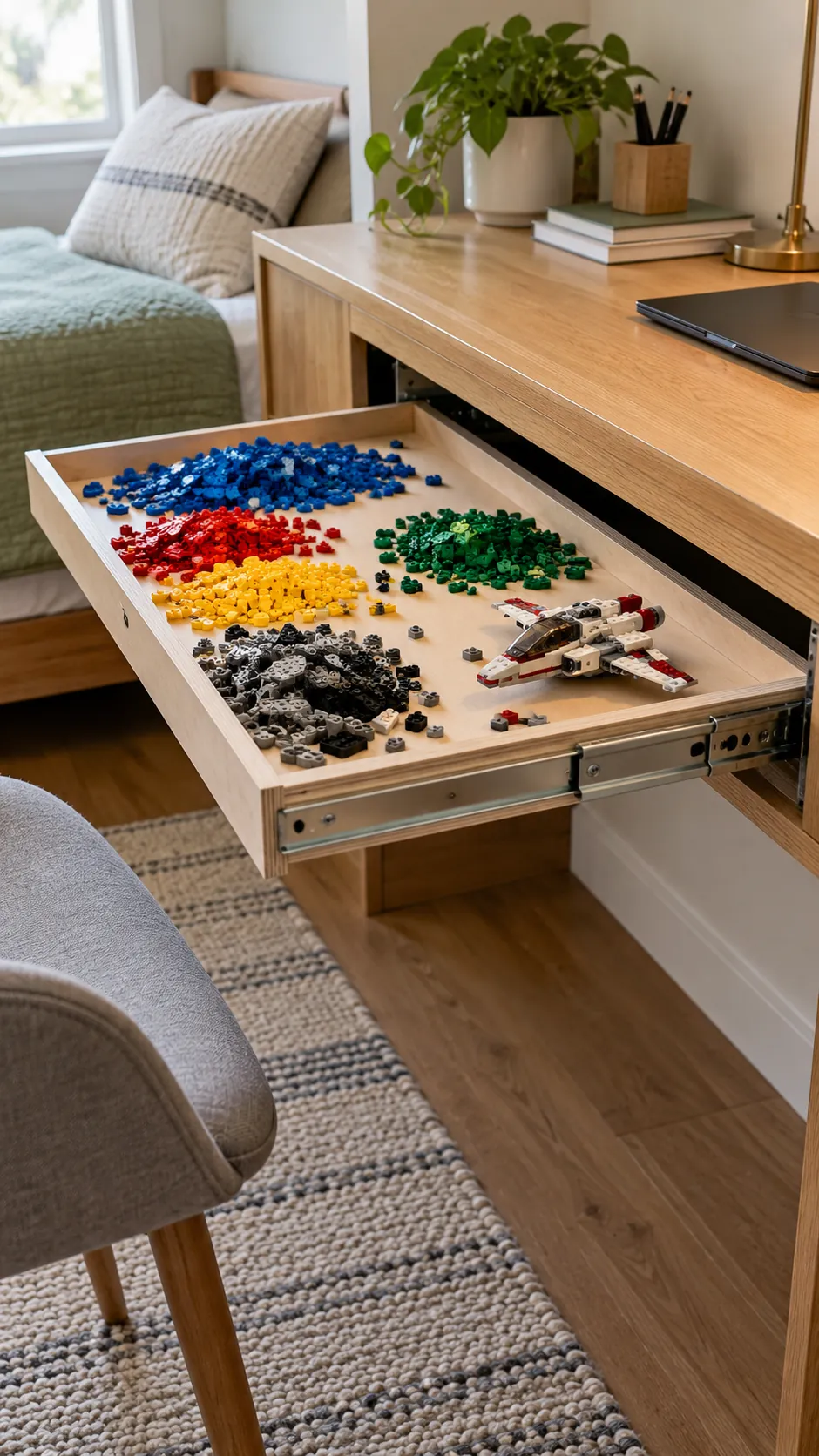
A Slide Out Sorting Board
A rigid board beneath a desk can provide a temporary sorting surface without claiming permanent floor area. Add a low edge so pieces stay aboard when the panel slides inward. Clear tall models before closing it and check that the runner can support the loaded board.
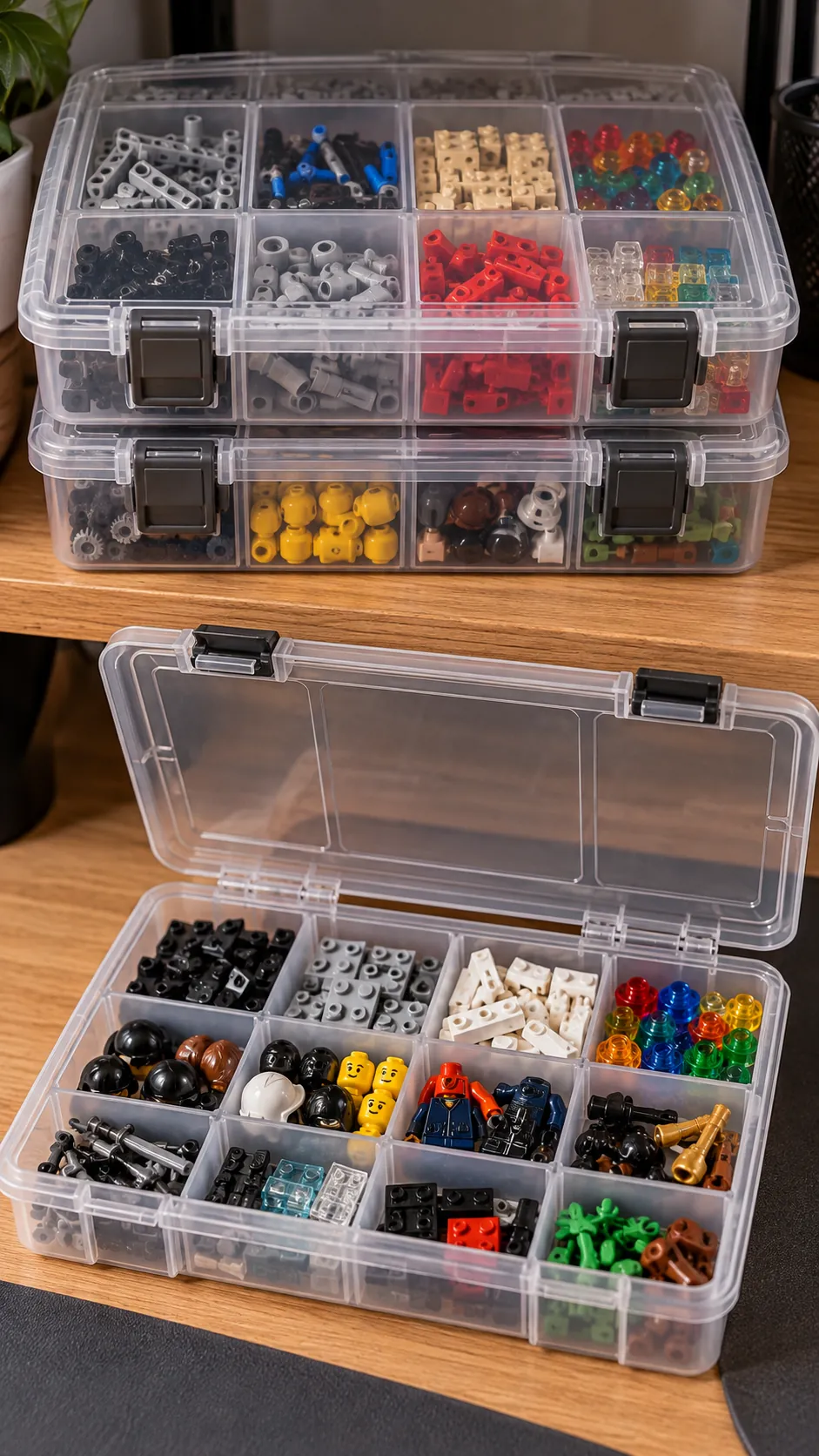
Stackable Tackle Boxes for Tiny Parts
Small divided boxes are useful for connectors, clips, figure accessories, and other pieces that disappear in larger bins. Choose fixed compartments so parts do not migrate when the box stands upright. Keep these boxes above toddler reach if very small pieces are present.
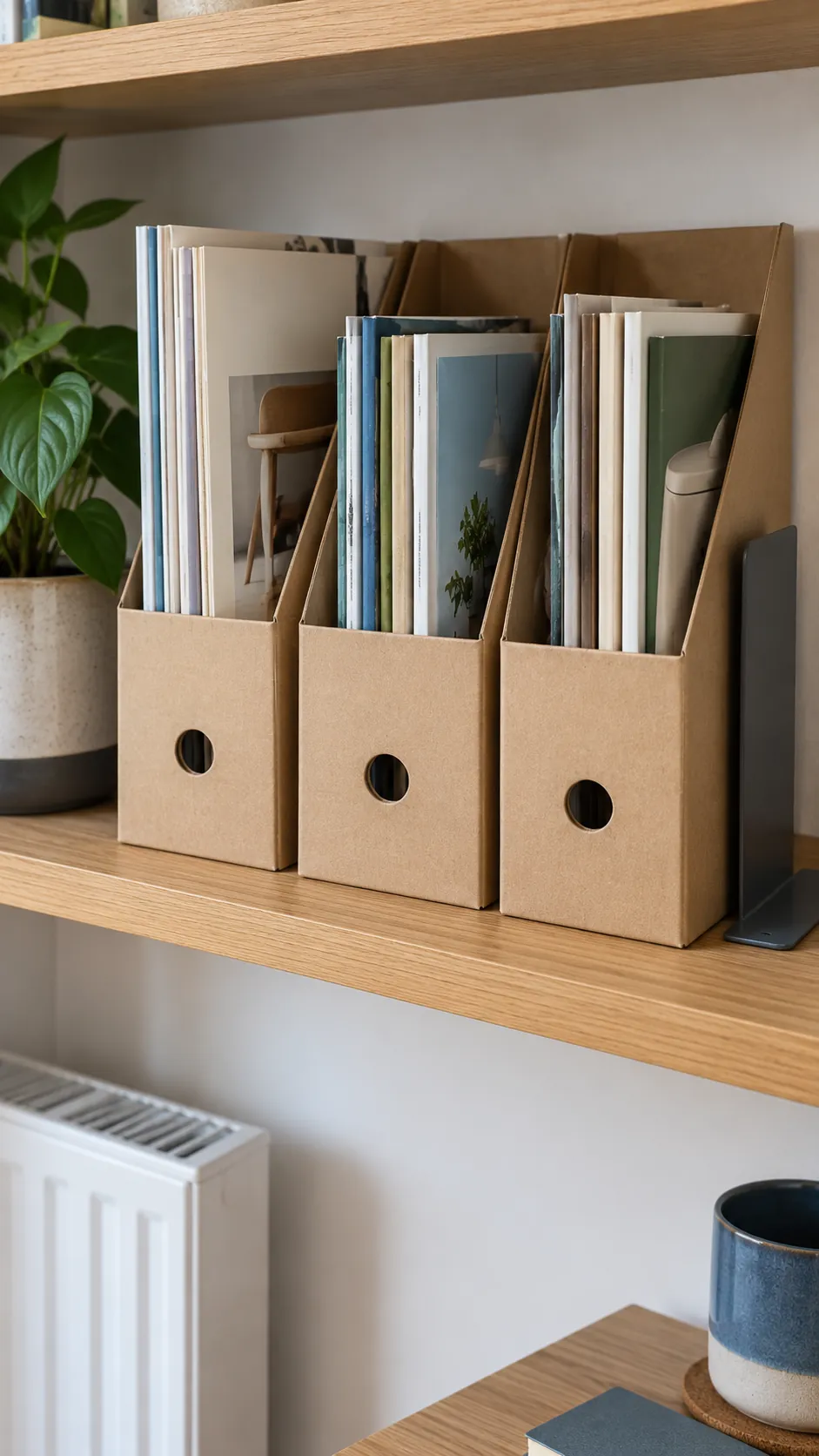
Magazine Files for Instruction Books
Instruction books last longer when stored upright instead of mixed with hard bricks. Use two or three magazine files to separate current builds, favorite sets, and archived instructions. Place the files on a shelf away from open drink cups and direct radiator heat.
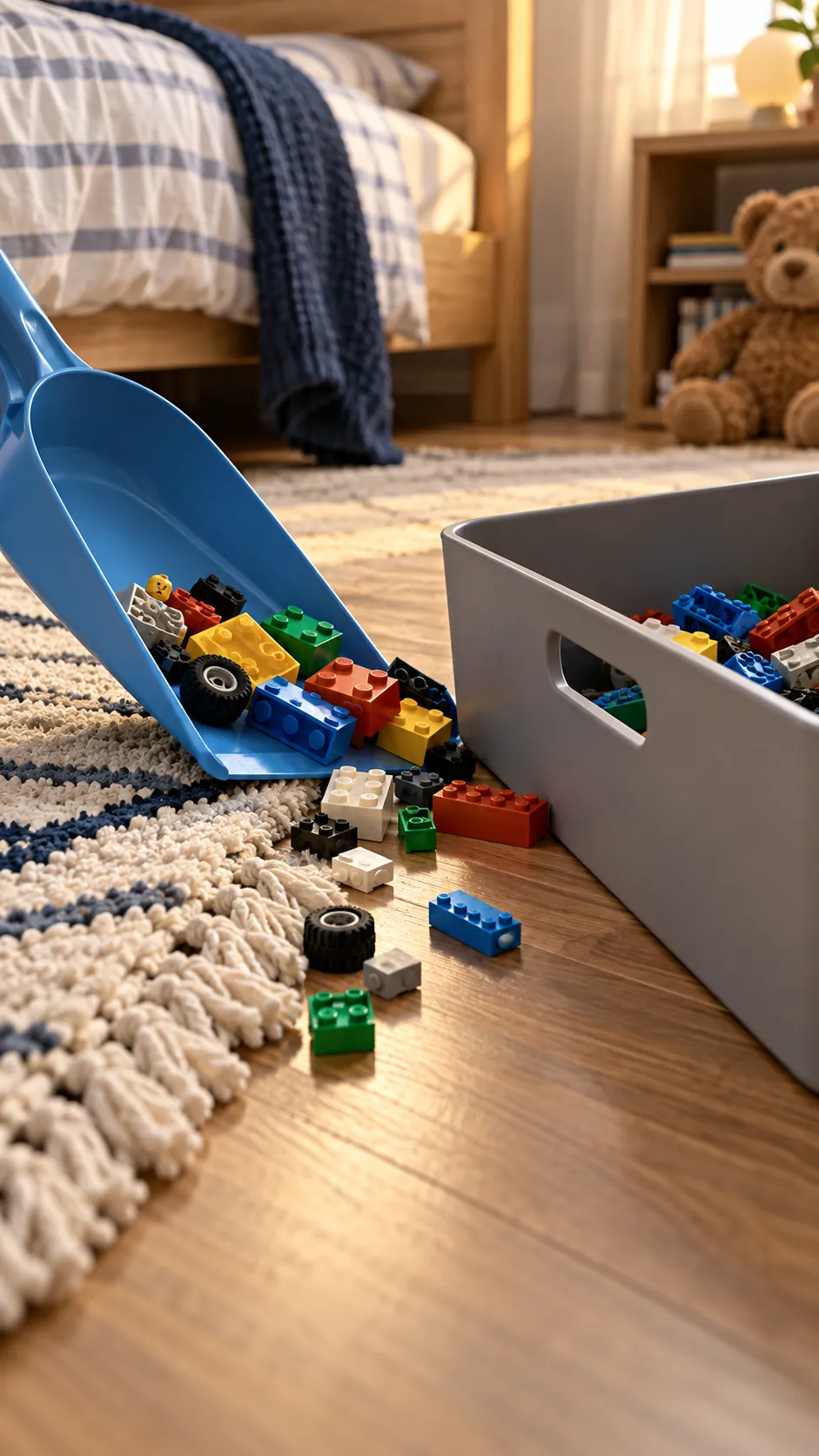
A Cleanup Chute Into a Floor Bin
A removable scoop or smooth chute can make the final floor sweep quicker for a mixed brick collection. Direct it into one broad floor bin, then sort only special parts during a later calm session. Inspect the path first so paper, fabric, and non brick toys do not enter the bin.
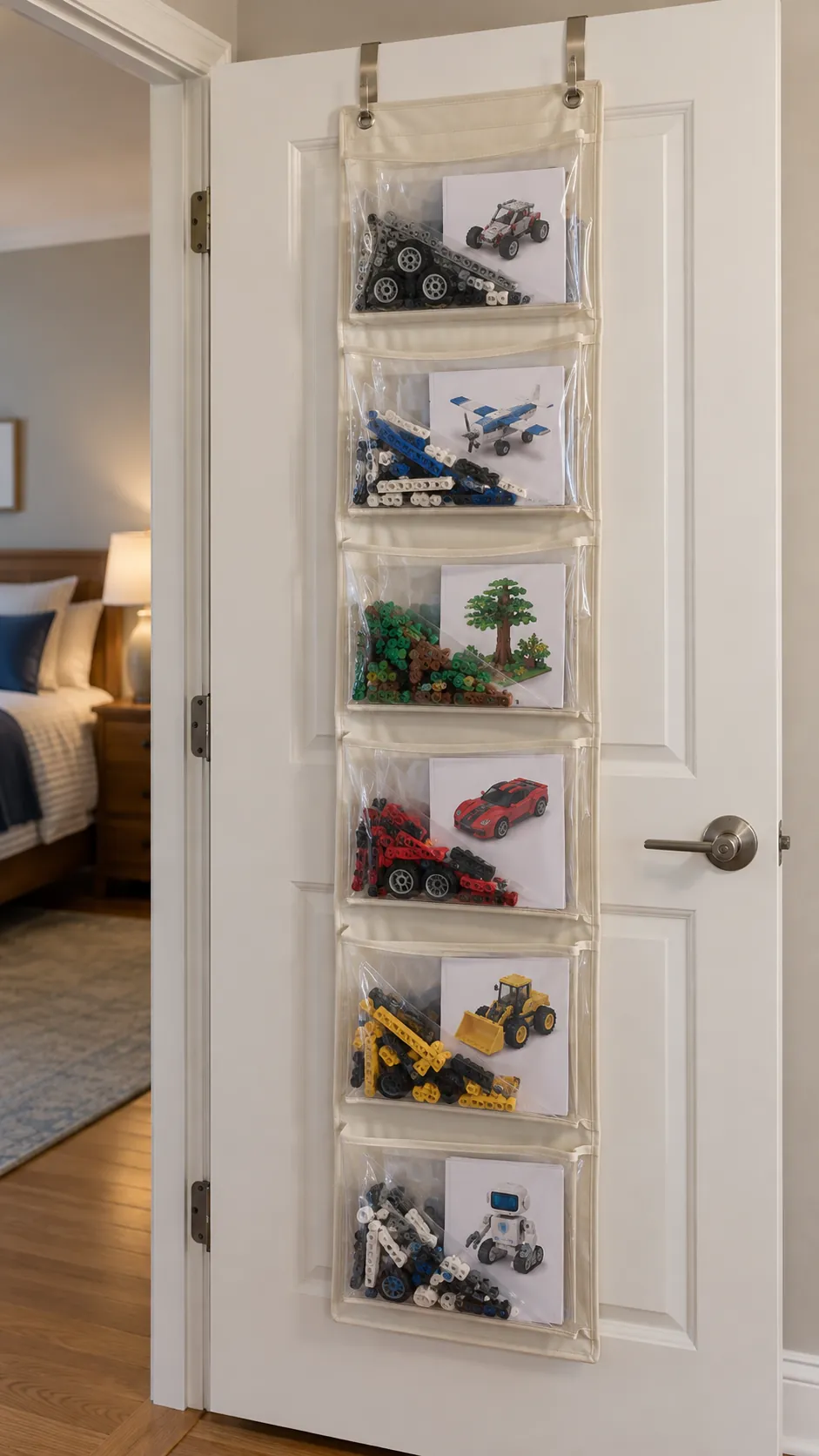
A Door Pocket System for Build Kits
Clear door pockets can hold small complete kits when shelf space is limited. Put one project in each pocket with its instruction booklet facing outward, but keep the load light enough for the door. Use this system only where the door can open fully without crushing the pockets.
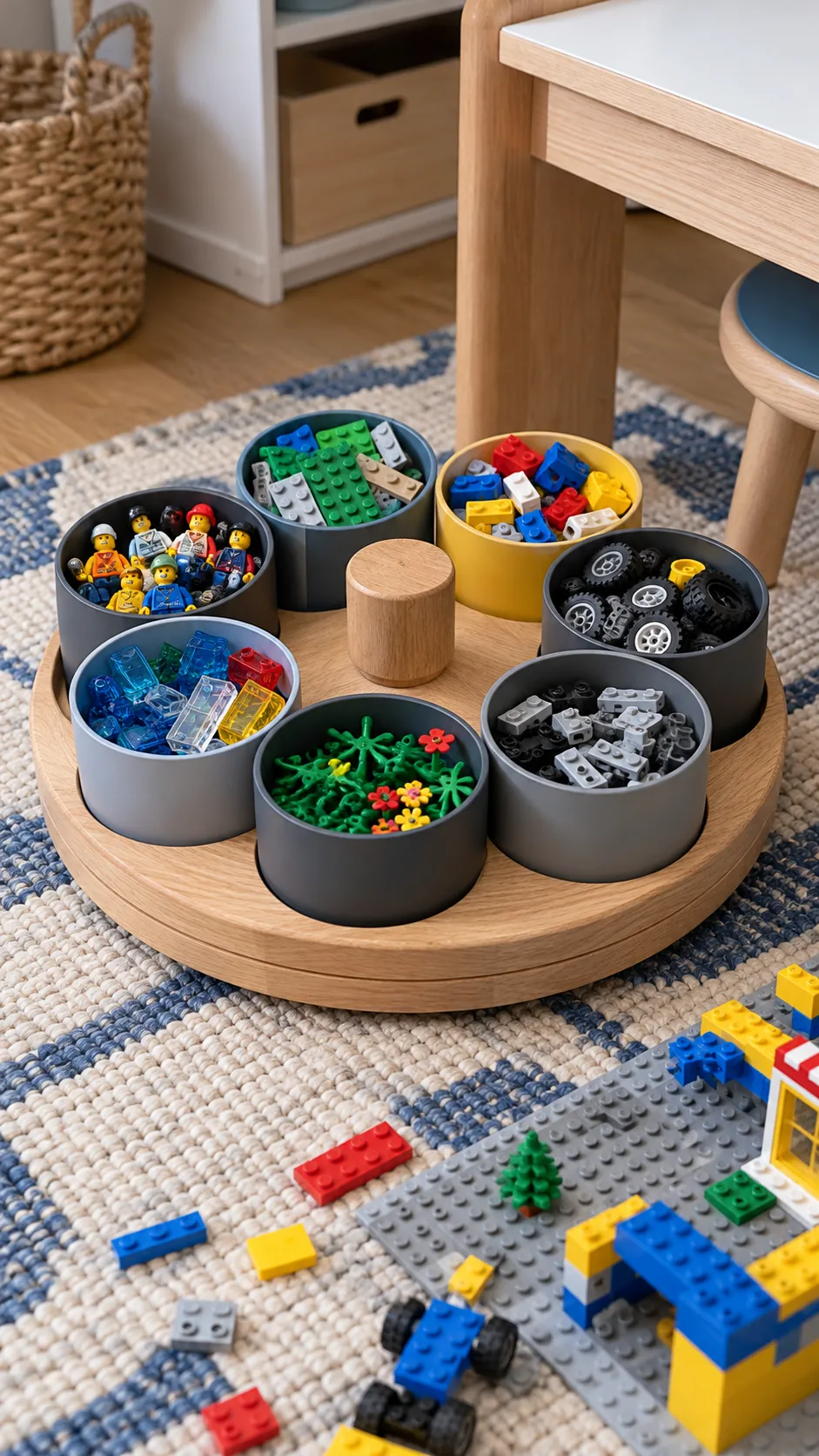
A Rotating Parts Caddy
A rotating caddy keeps frequently used pieces within reach while the child stays in one play spot. Fill a few removable cups with common connectors, wheels, figures, and tiles. Store it on a shelf between sessions so the floor returns to sleeping space.
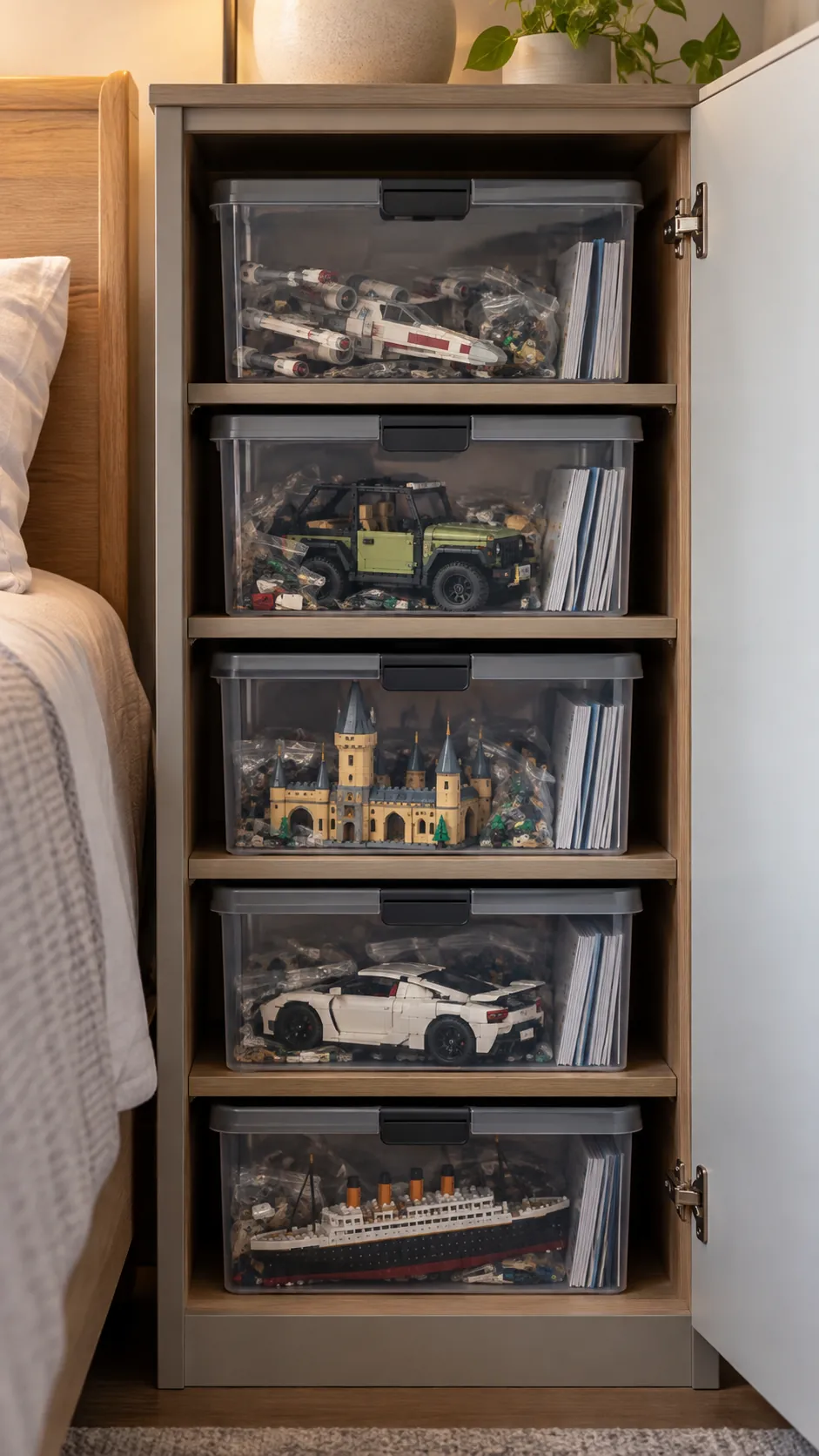
A Cabinet for Complete Sets
Sets that a child wants to rebuild need different storage from free building bricks. Place each complete set in its own lidded box with the instructions and any unique pieces. Use one cabinet shelf as the fixed capacity limit so collecting does not consume the bedroom.
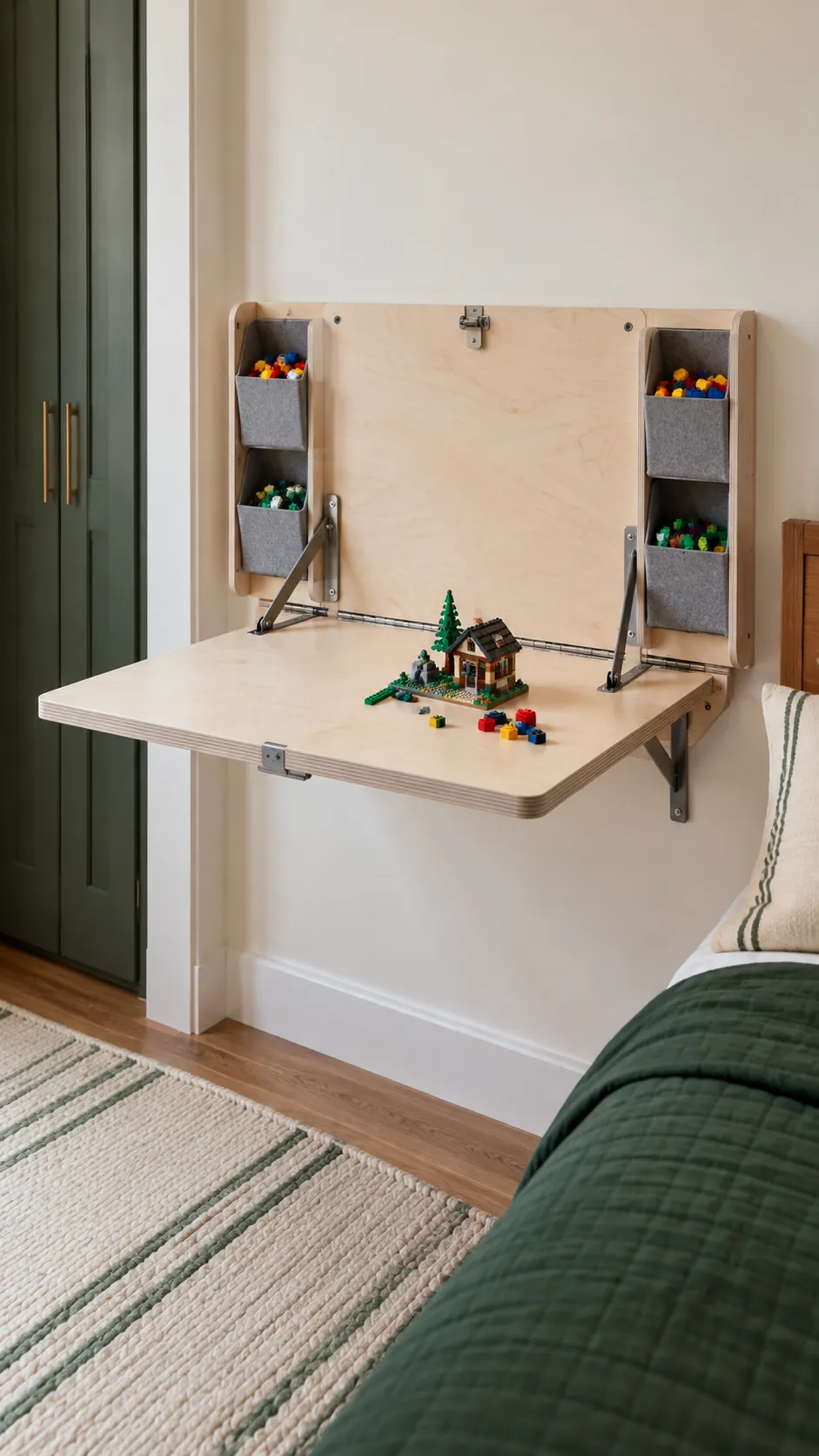
A Fold Down Building Table
A wall mounted table provides a firm build surface and folds away when the room needs open floor. Add shallow side bins that remain upright as the worktop moves. Only close the table after loose pieces and tall models have returned to storage.
A Nightly Floor Reset Basket
Keep one empty basket reserved for pieces that remain on the floor at the end of the day. A quick sweep restores a safe path even when there is no time for careful sorting. Empty the basket into the proper categories during the next building session so it never becomes a second unsorted collection.