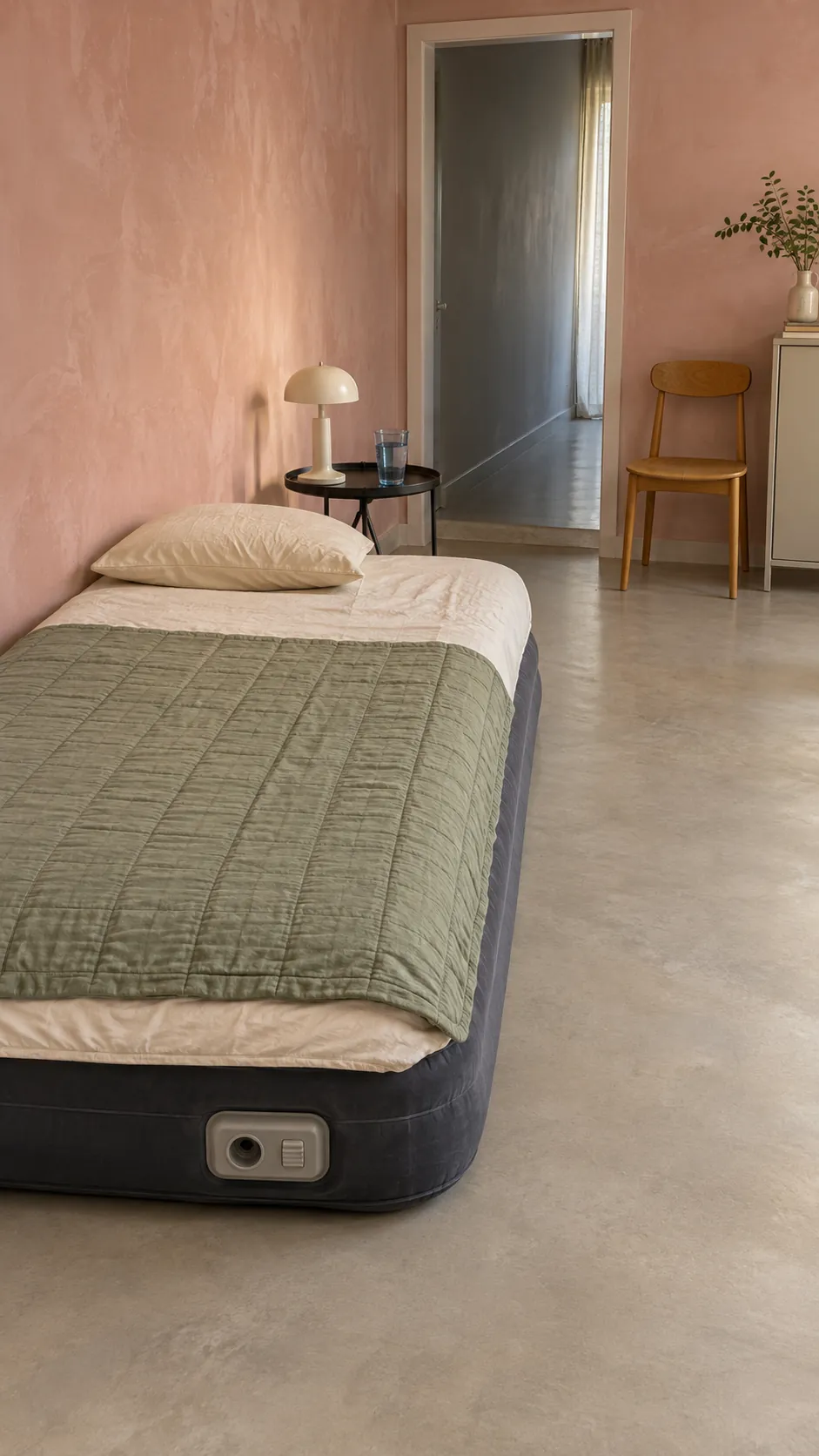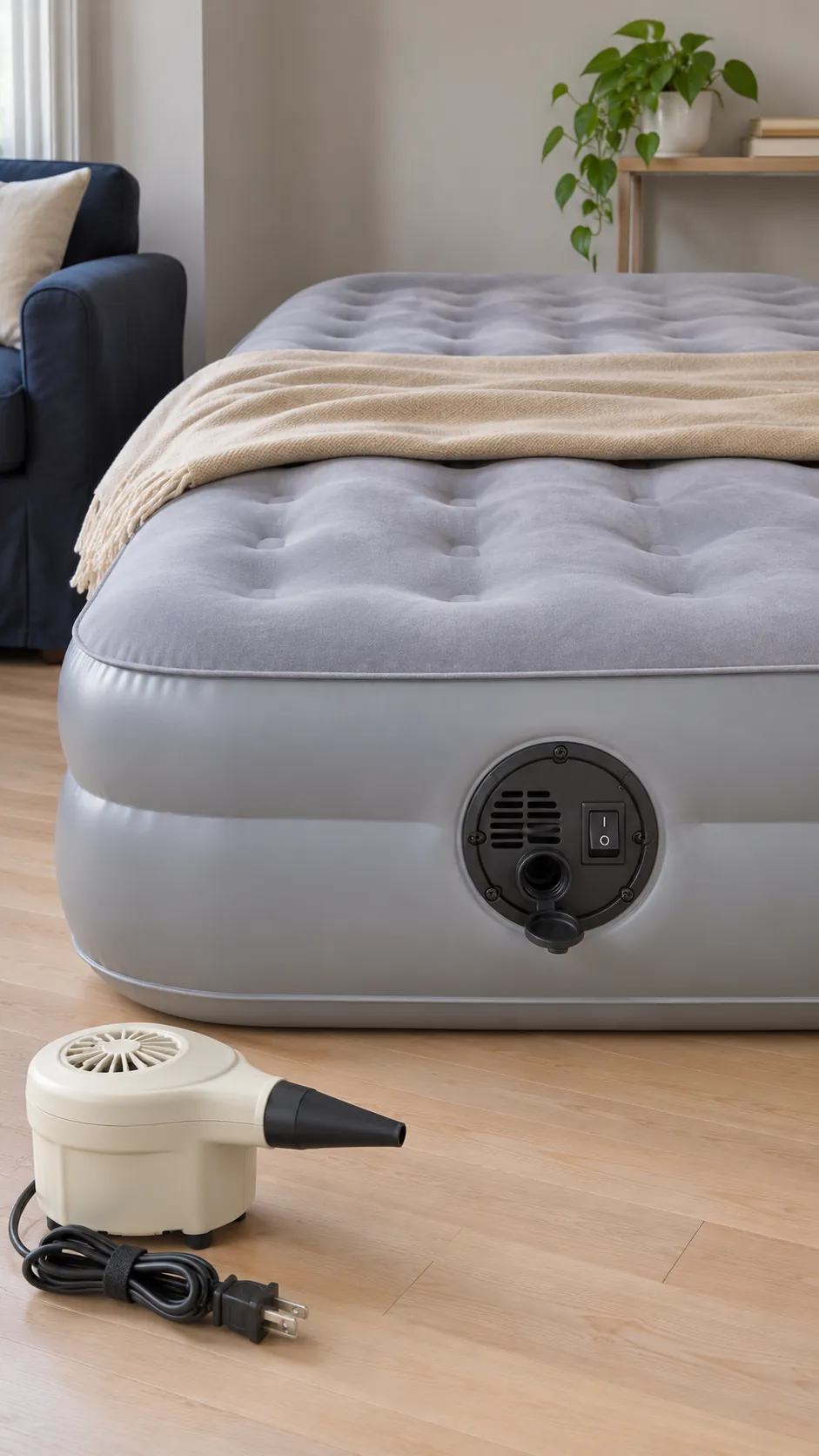
When the only outlet is behind the sofa, a cord can decide where your guest sleeps. Pick the spot for the inflated bed first and find out what power is within reach. A pump built into the mattress keeps the kit together. A separate pump gives you more choice about how and where you inflate it.
Use a built in pump when you set up in one spot
A built in pump makes sense for an air bed you always inflate near the same outlet. Keep the pump controls and any cord compartment accessible after the sheet goes on. Look for the inflate and deflate settings in the manual because some pumps do only one of those jobs.
Check the exact power source. A pump built into a mattress can still need a wall socket. If you want a manual fallback or a battery pump, look for a supported second valve before buying. Some built in systems have one and others do not.
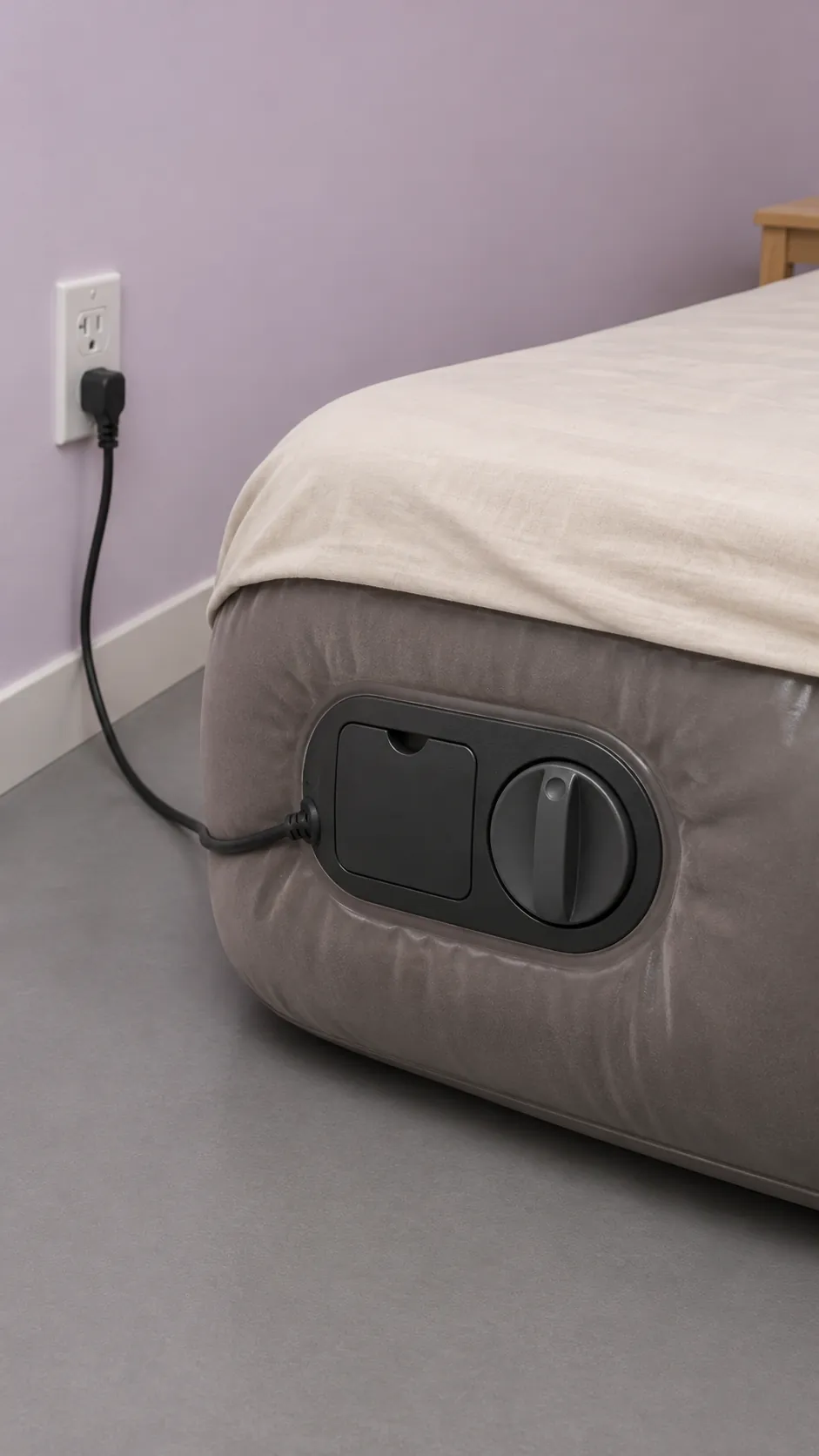
Choose an external pump when the bed moves between rooms
An external pump can work for different sleeping spots or more than one mattress, when the pump and valves are compatible. A charged battery pump can be handy away from an outlet. A manual pump removes the charging step if you are willing to do the work. Check that the actual pump is intended for low pressure air beds.
Check the connection in the box or go through the parts list before ordering. Confirm that an included nozzle fits the bed’s valve and find out whether the pump also draws air out. Store the adapter in a sleeve beside the pump. A spare pump is only useful if you can connect it.
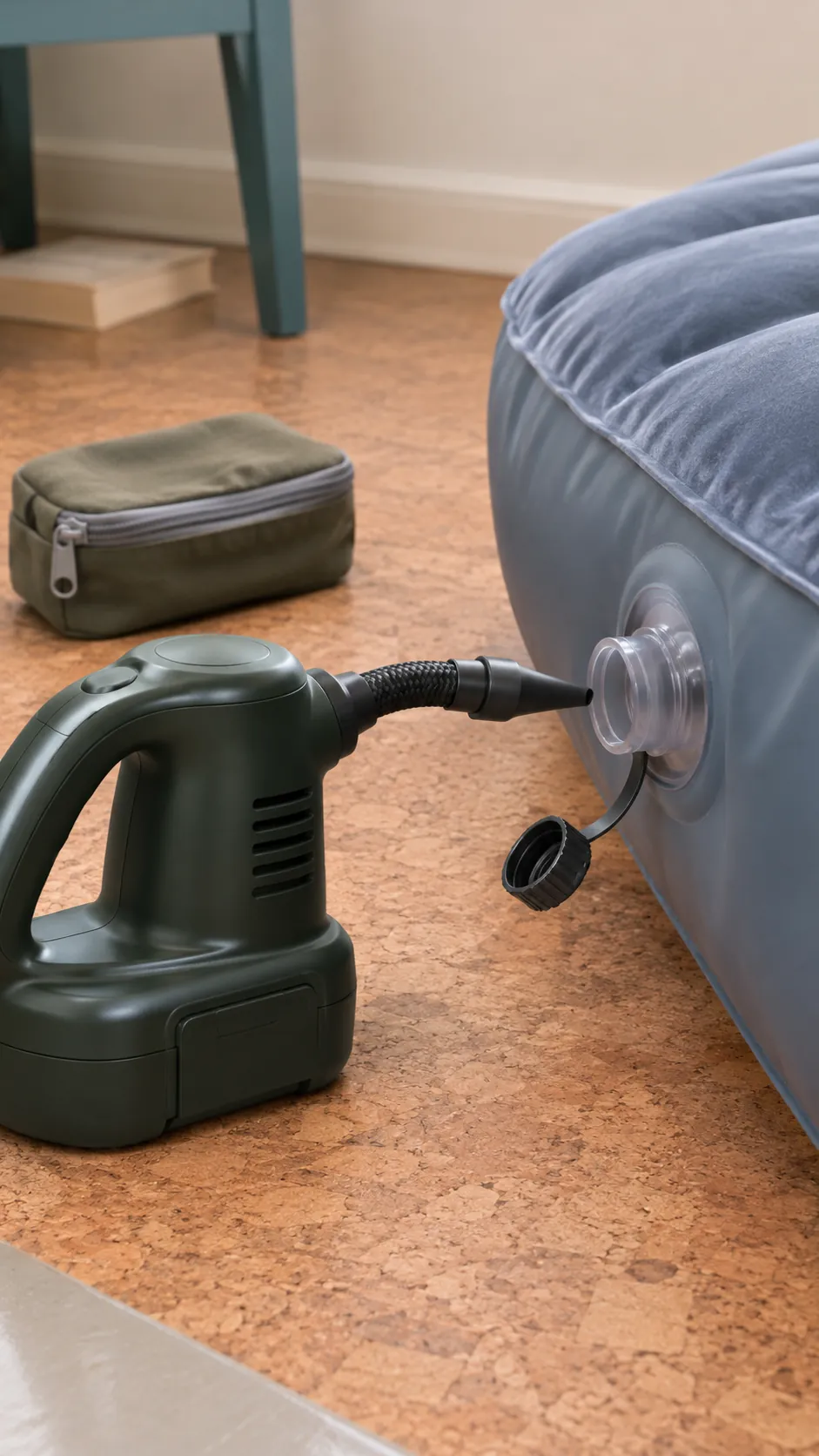
Check the outlet and the fully inflated footprint together
Measure the mattress at its stated inflated size and leave space to reach the valve or control dial. Try the furniture layout with the bed on the side of the room where the pump will operate. A bed that just fits across the room may leave no place to stand while you use an external pump.
Route the cord away from doors and walking paths. Follow the maker’s instructions about outlets and cord use. If the only route crosses the path to the bathroom, choose another bed position or consider a compatible cordless pump.
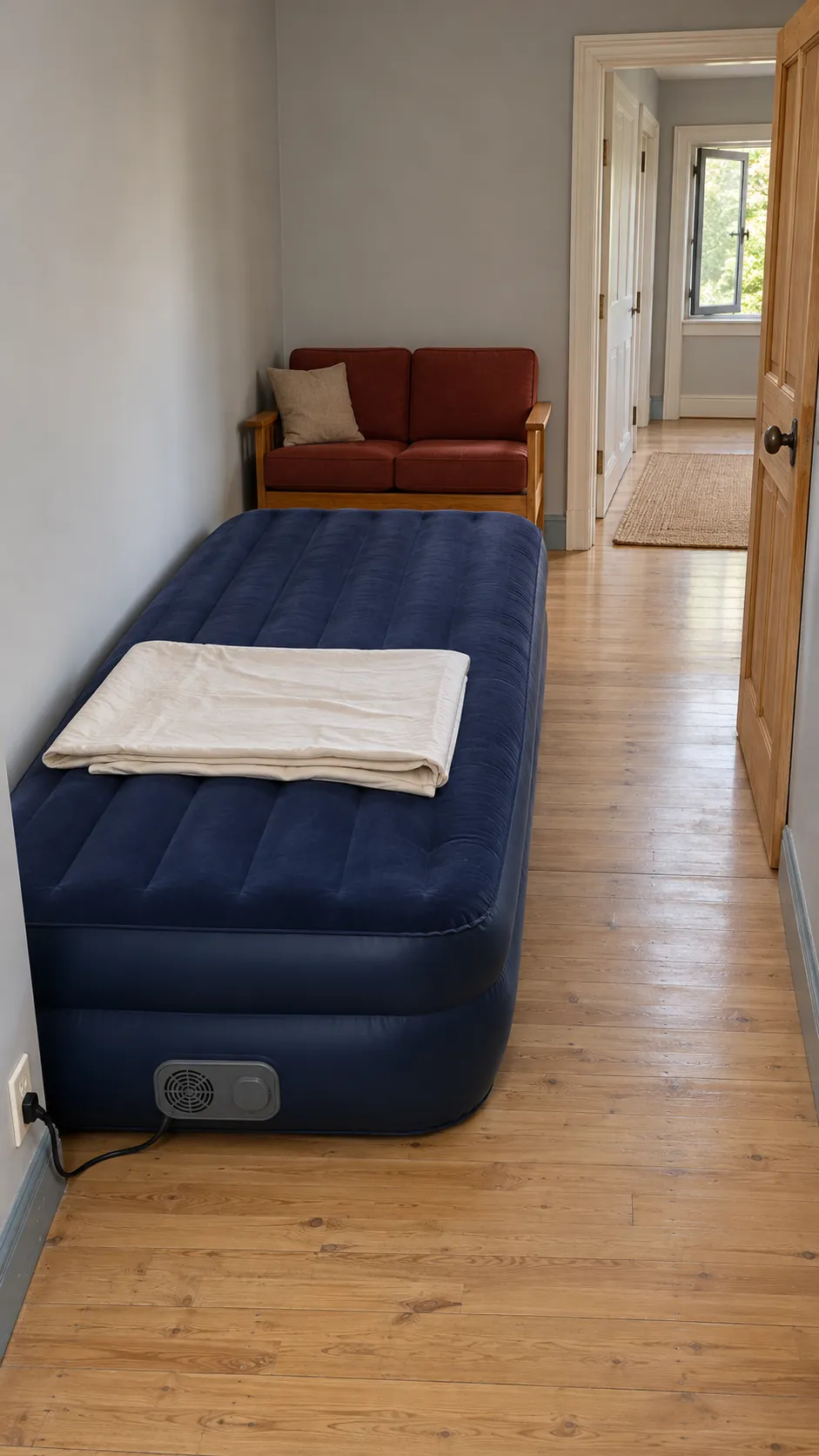
Test inflation and top it up before bedtime
Unpack and inflate the bed before the visitor arrives. Run the pump according to its instructions and pay attention to how loud it is in the room next door. Check the recommended firmness and close the valve or return the dial to its closed position as directed.
A new air mattress can soften as its material stretches or as the room cools. Check it again after it has been sitting for a while and add air within the maker’s limits if needed. If it keeps losing more air on the same test, check the seal and follow the maker’s leak check rather than assuming a different pump would fix it.
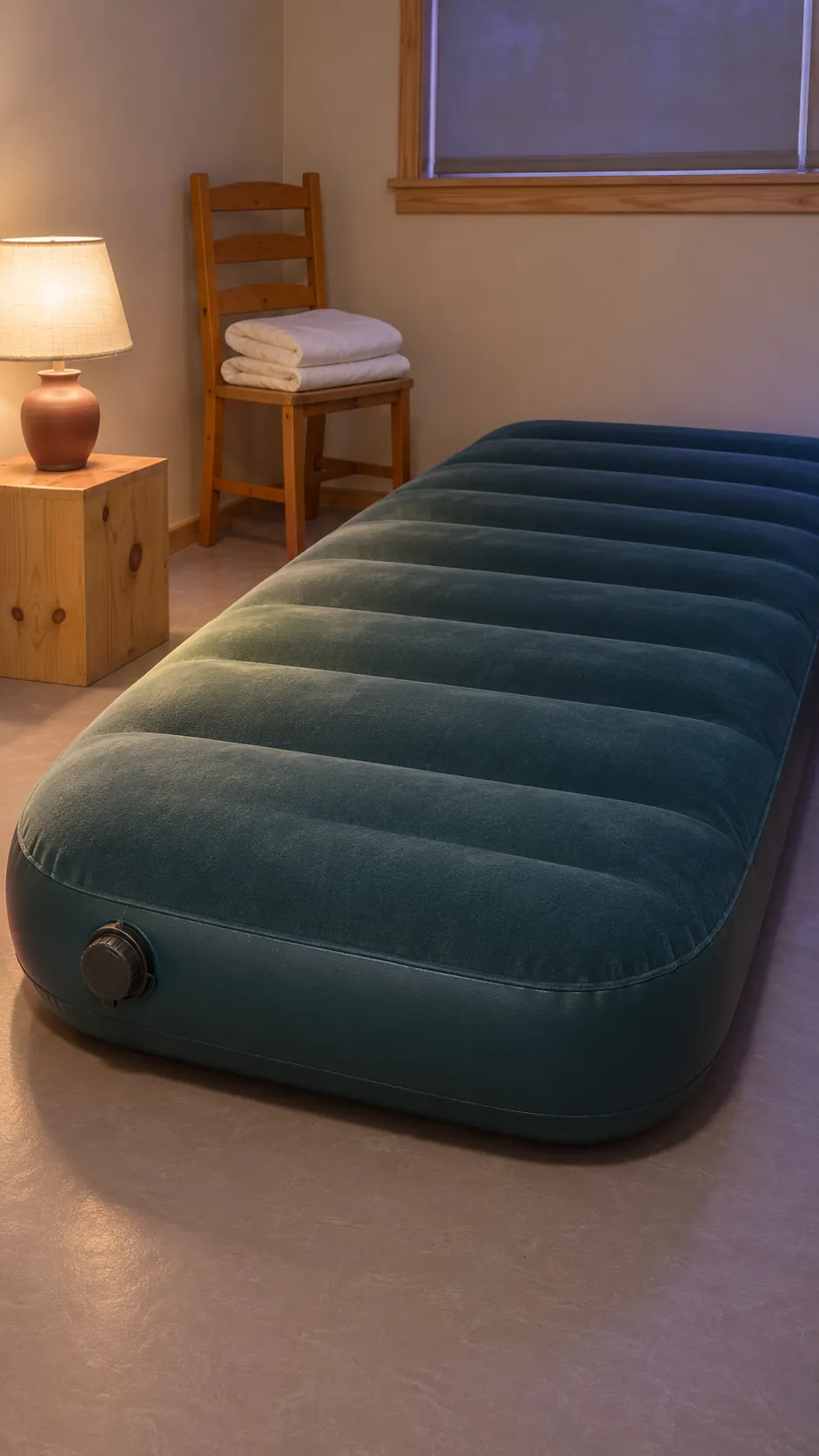
Make room for the cord, the valve and the pump in storage
Deflate the bed as directed and make sure its surface is dry before you fold it. With a built in pump, check where the maker wants folds to go around the rigid pump housing. Stow the cord in its pocket if the model has one. Avoid pressing a hard corner of the pump into folded vinyl.
With an external pump, store the nozzle and pump together in a separate pouch so they stay out of the folds. Measure the bundled mattress with its bag and give the pump a spot you will remember. If the pump uses batteries, follow its instructions for charging or storing them between visits.
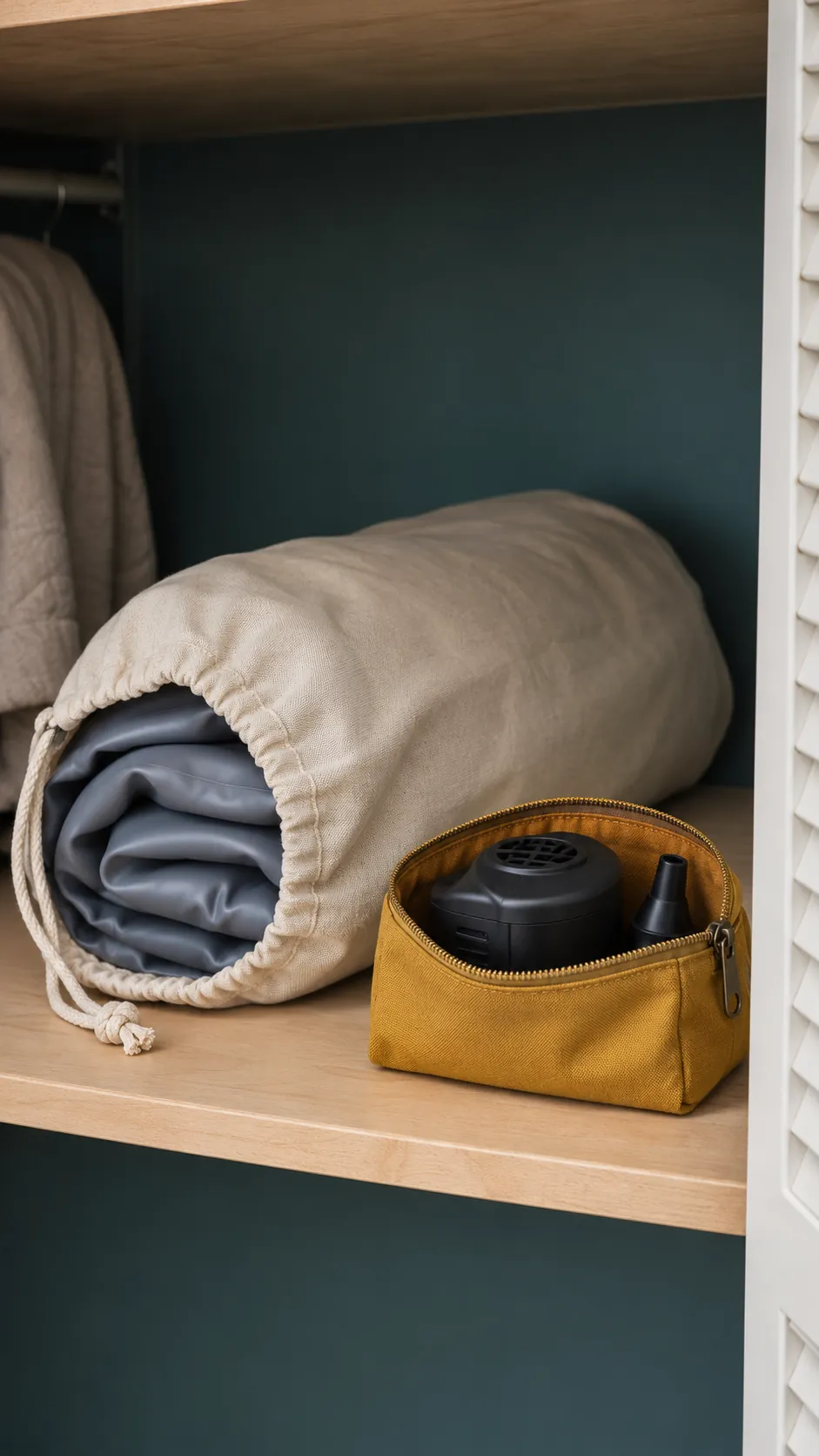
Pick the pump you can use when a guest is waiting
For frequent setup in one room, choose a built in pump if there is a nearby outlet and you can reach the controls. For a bed that moves around or a room with awkward outlets, choose a compatible external pump that works with the available power. Set the whole kit up once, deflate it and put it away. That test will tell you whether the pump fits your apartment as well as the bed does.