
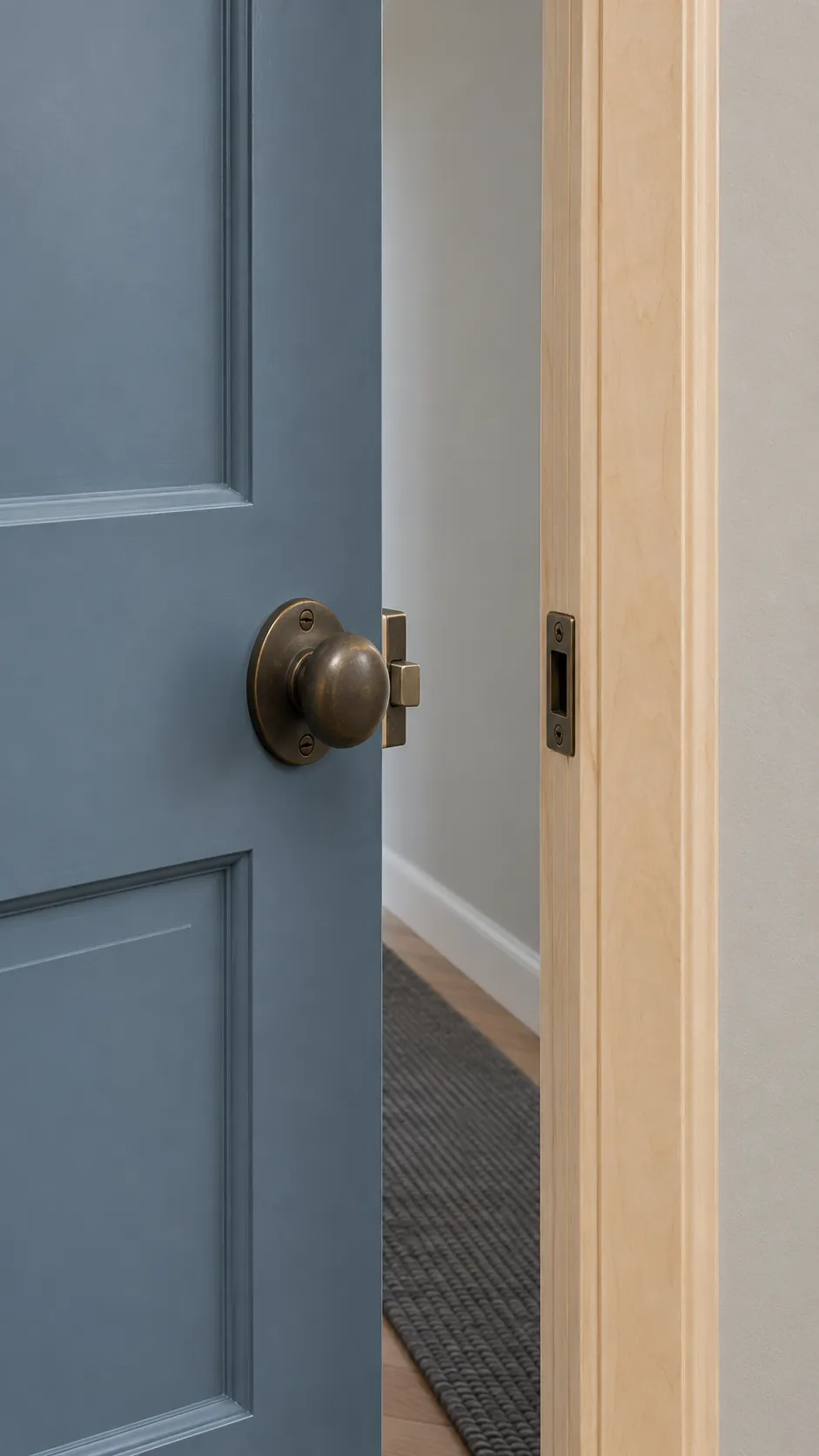
A door can click shut and still tap against the frame every time the heat comes on. If a light push on the closed door stops the sound, the latch may have room to move inside the strike plate. Check that movement before buying new hardware. On an ordinary interior door, a few minutes of testing can tell you which part needs attention.
Find out what moves when the door rattles
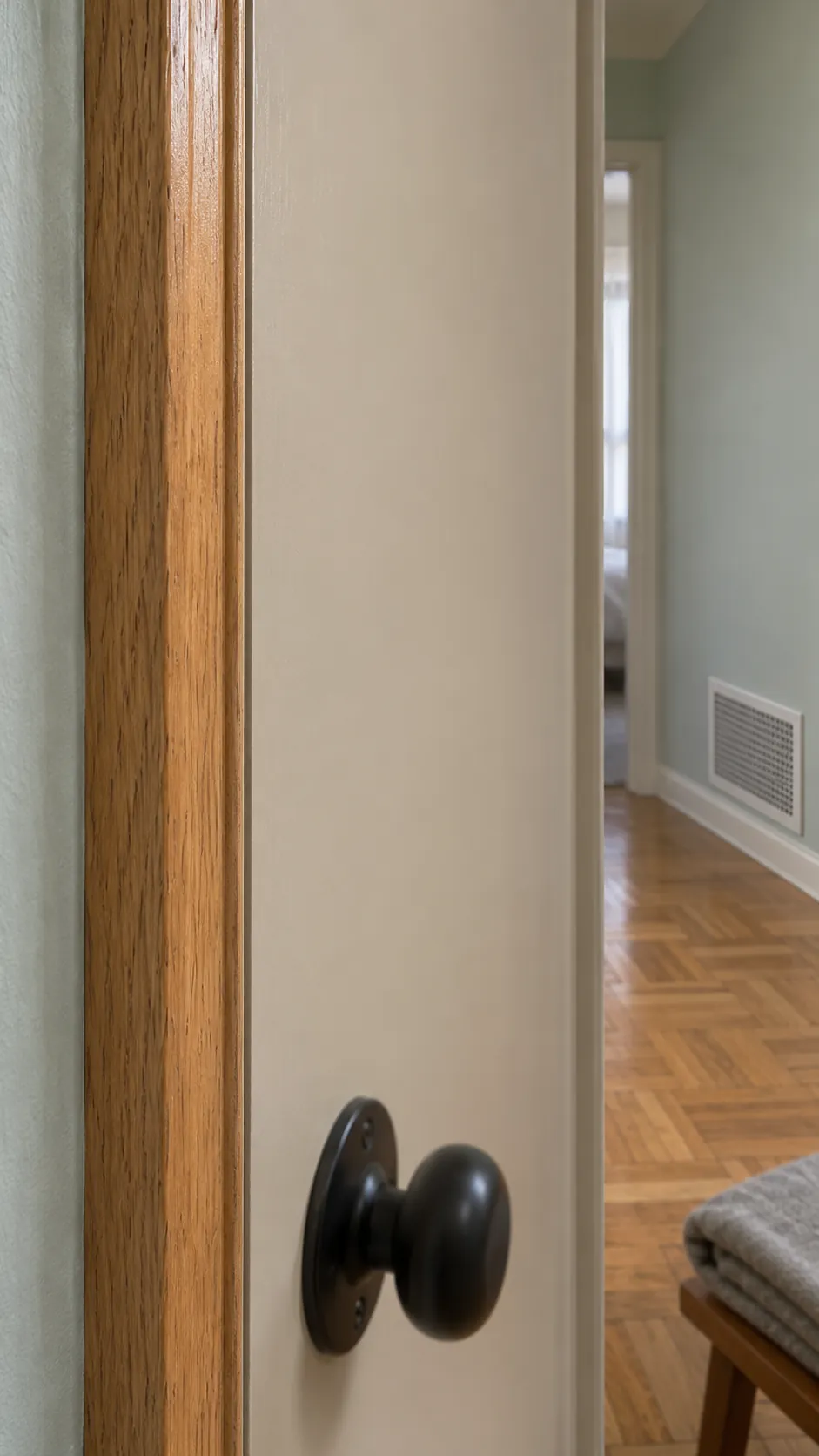
Close the door until the latch clicks. Without turning the knob, press the door gently toward the frame and let go. Then pull lightly on the knob. If the slab shifts while the latch stays engaged, check the fit between the latch, strike and door stop. If the knob or its round trim plate moves on its own, address that loose hardware first.
If the rattle only happens when the fan comes on or another door shuts, repeat the push test under those conditions. Air movement can make a small gap audible. A door that opens under a light pull without turning the knob has an engagement problem and needs that corrected before you tackle the noise.
Tighten hardware that shifts on its own
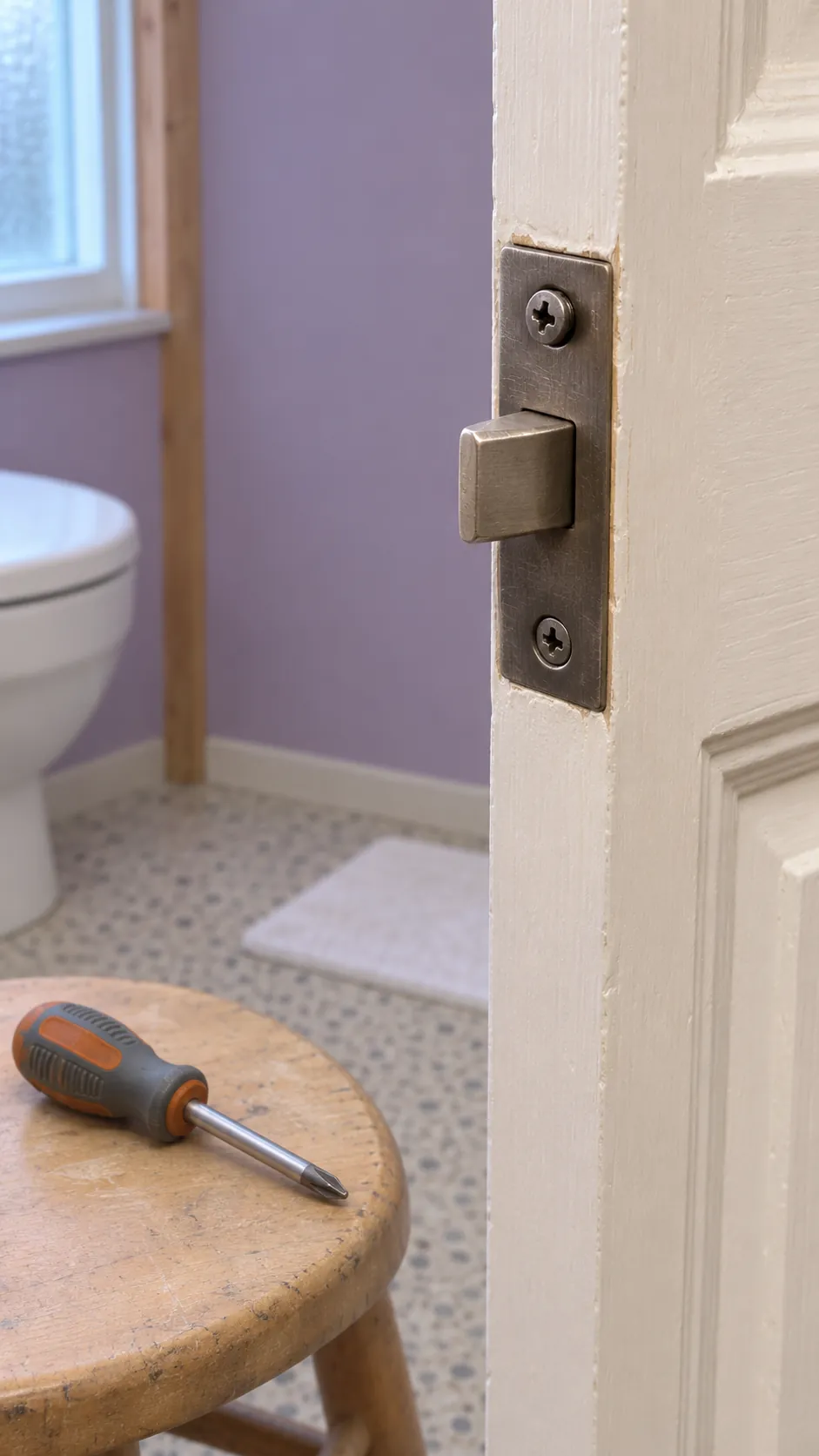
Open the door and check the screws on the strike plate, latch faceplate, knob trim and hinges. Use a screwdriver that fits and snug any loose screws by hand so the plates sit flush. If a screw turns without gripping, repair the fastening point before tightening again.
Look at the latch side gap as you close the door. A door that has sagged often shows a taper or a fresh rub mark near a corner. Get the door swinging and sitting square before moving the strike to meet a low latch.
Check where the latch meets the strike
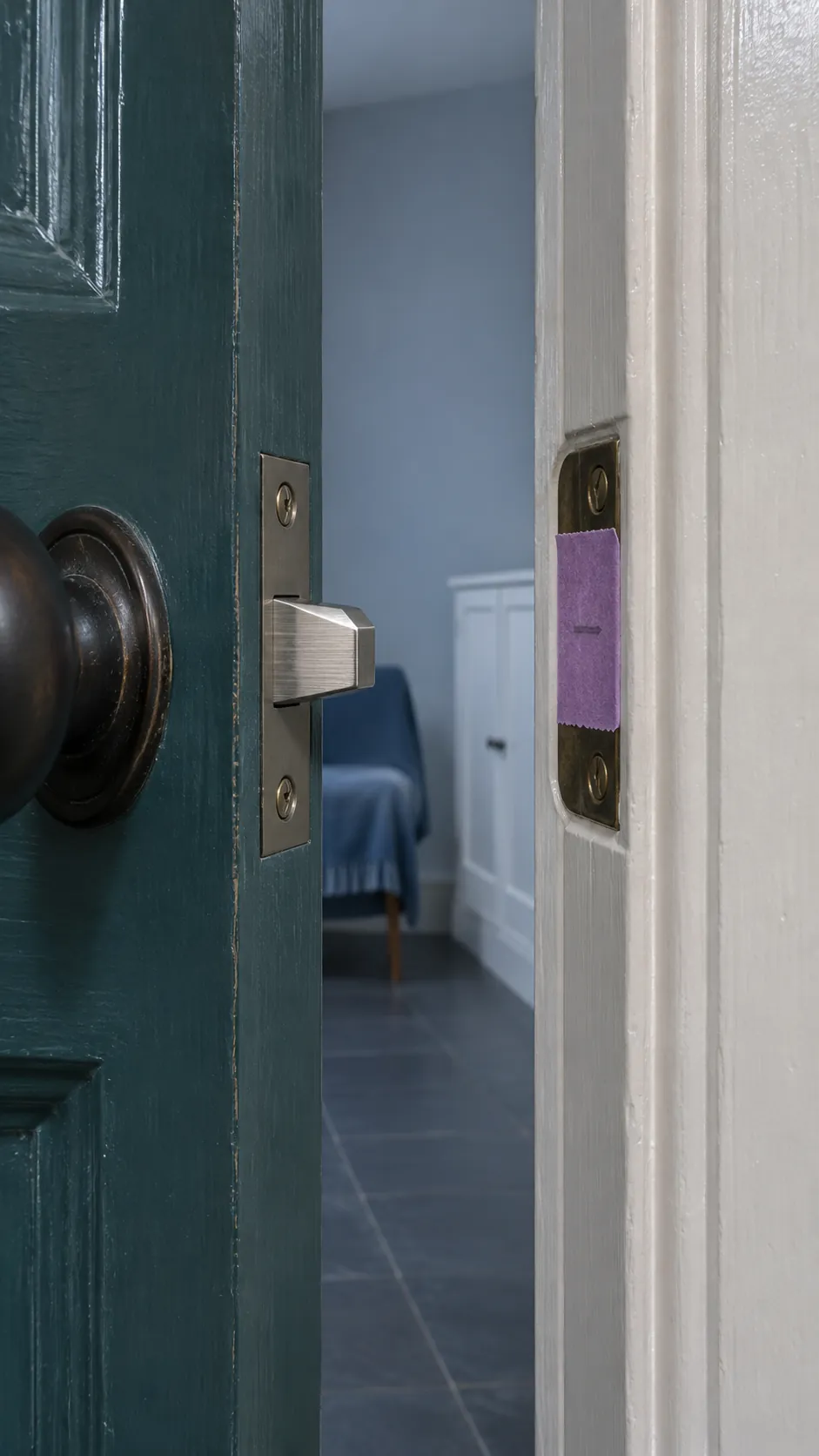
With the door ajar, compare the center of the latch bolt with the opening in the strike. If it is hard to see where they meet, cover the strike face with a small piece of removable painter’s tape. Apply a trace of pencil graphite to the end of the latch, then close gently to transfer a mark. Remove the tape before testing whether the bolt seats.
A mark above or below the opening suggests an alignment problem. If the bolt enters the opening cleanly but the closed door still moves toward and away from the stop, the strike opening may leave too much room in that direction.
Adjust a strike tab in small steps
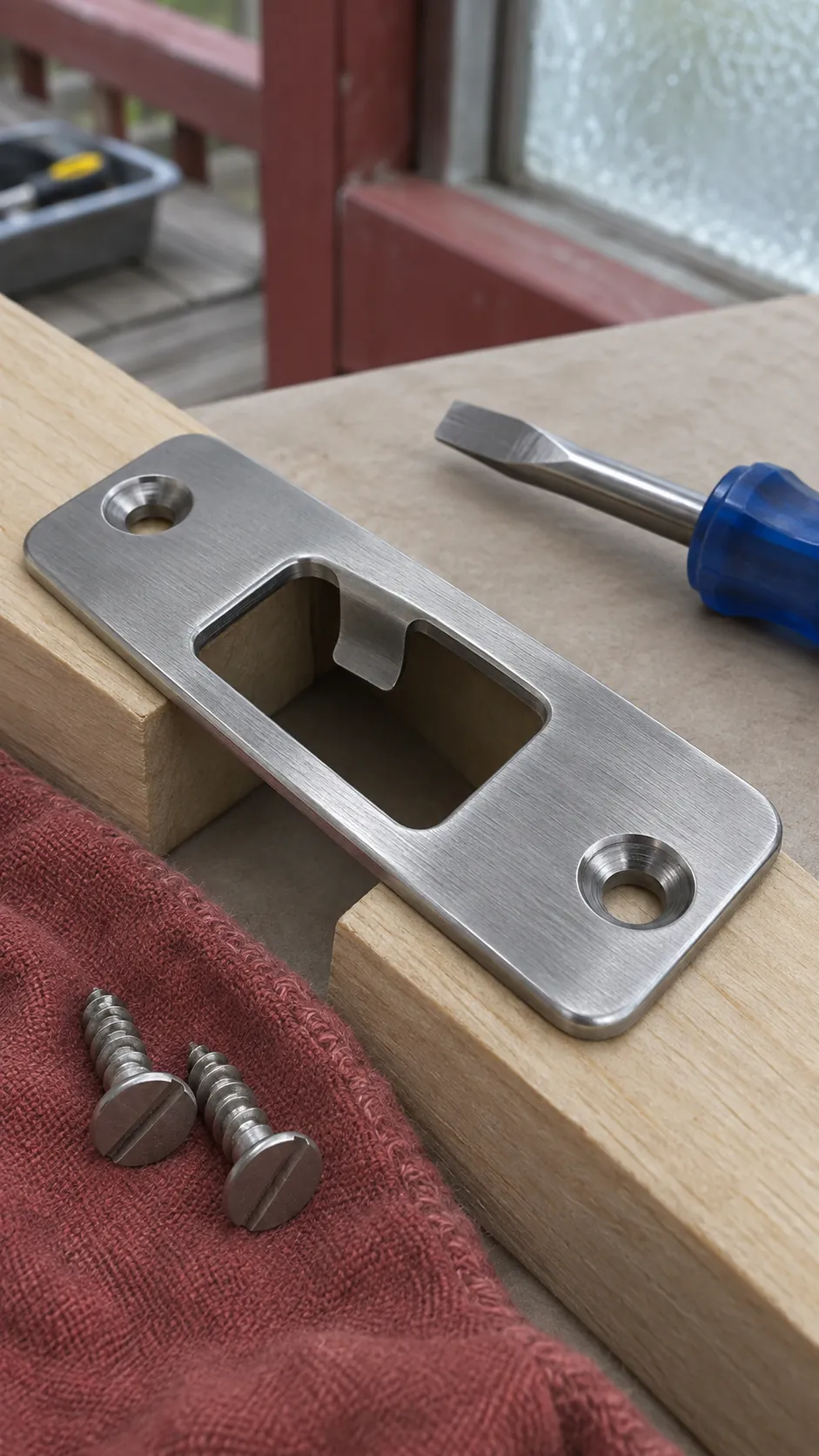
Some interior latch strikes have a small metal tab inside the opening. If the maker allows adjustment, open the door, loosen or remove the plate as needed, and move the tab a small amount so the engaged latch holds the door closer to the stop. Reinstall the plate before testing. Leave the fixed rim and screw holes alone.
Close the door with normal pressure. If you have to push harder to latch it or the knob is harder to turn, undo some of the adjustment. For plates without an adjustable tab, look for a compatible adjustable strike or reposition the existing one only after confirming the direction and the latch fit.
Use a thin bumper when the door taps the stop
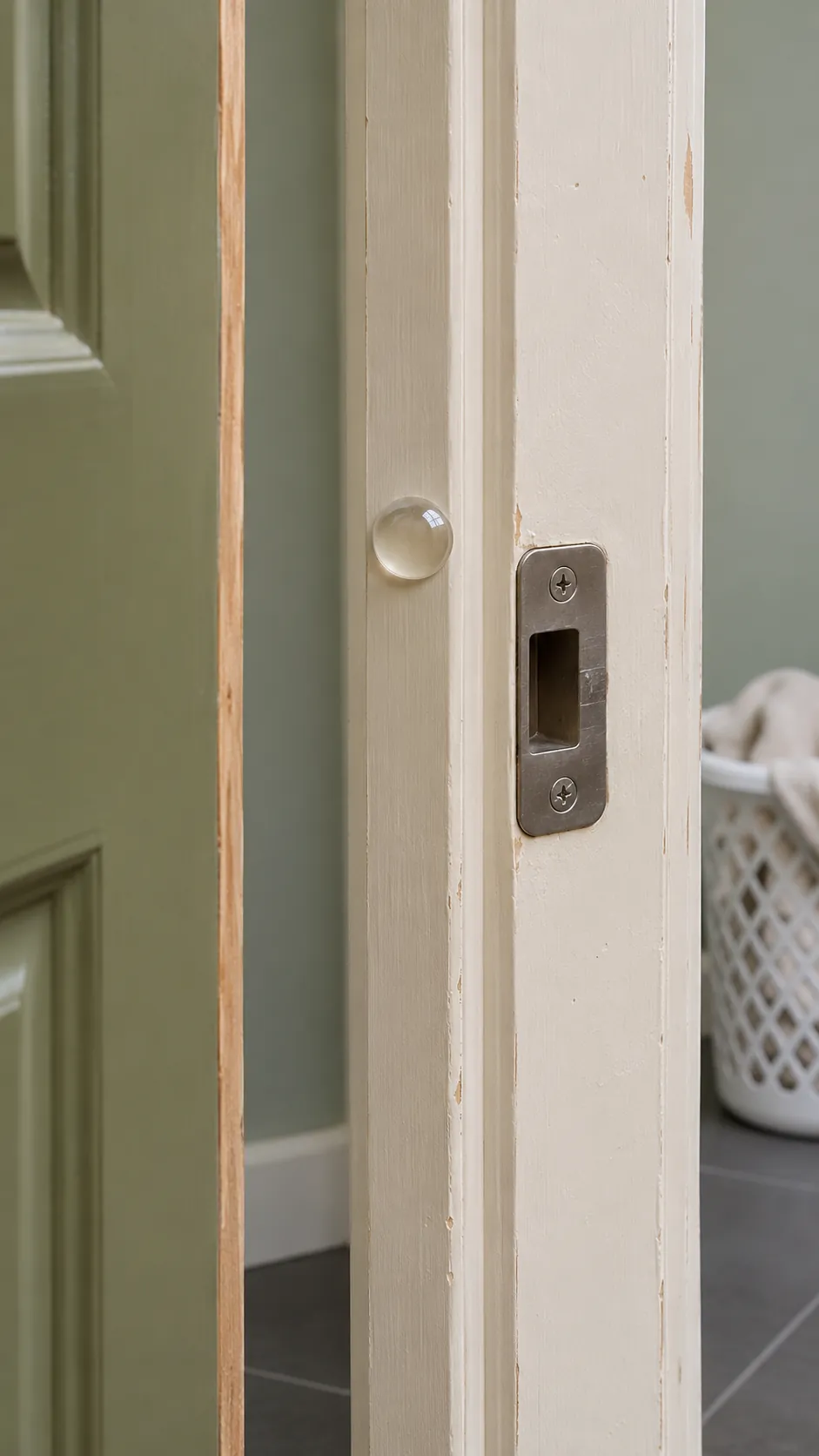
If the bolt engages fully but the slab still taps the stop, try a thin soft bumper on the stop trim at the contact point. Clean the surface and start with a small bumper on the latch side. Move or remove it if it twists the door or makes the latch miss the opening.
A bumper can cushion contact on a standard interior door. For moving trim, bent hardware or an exterior or rated door, use the appropriate repair or the maker’s guidance before adding anything that changes how it closes.
Check for a clean click without pressure
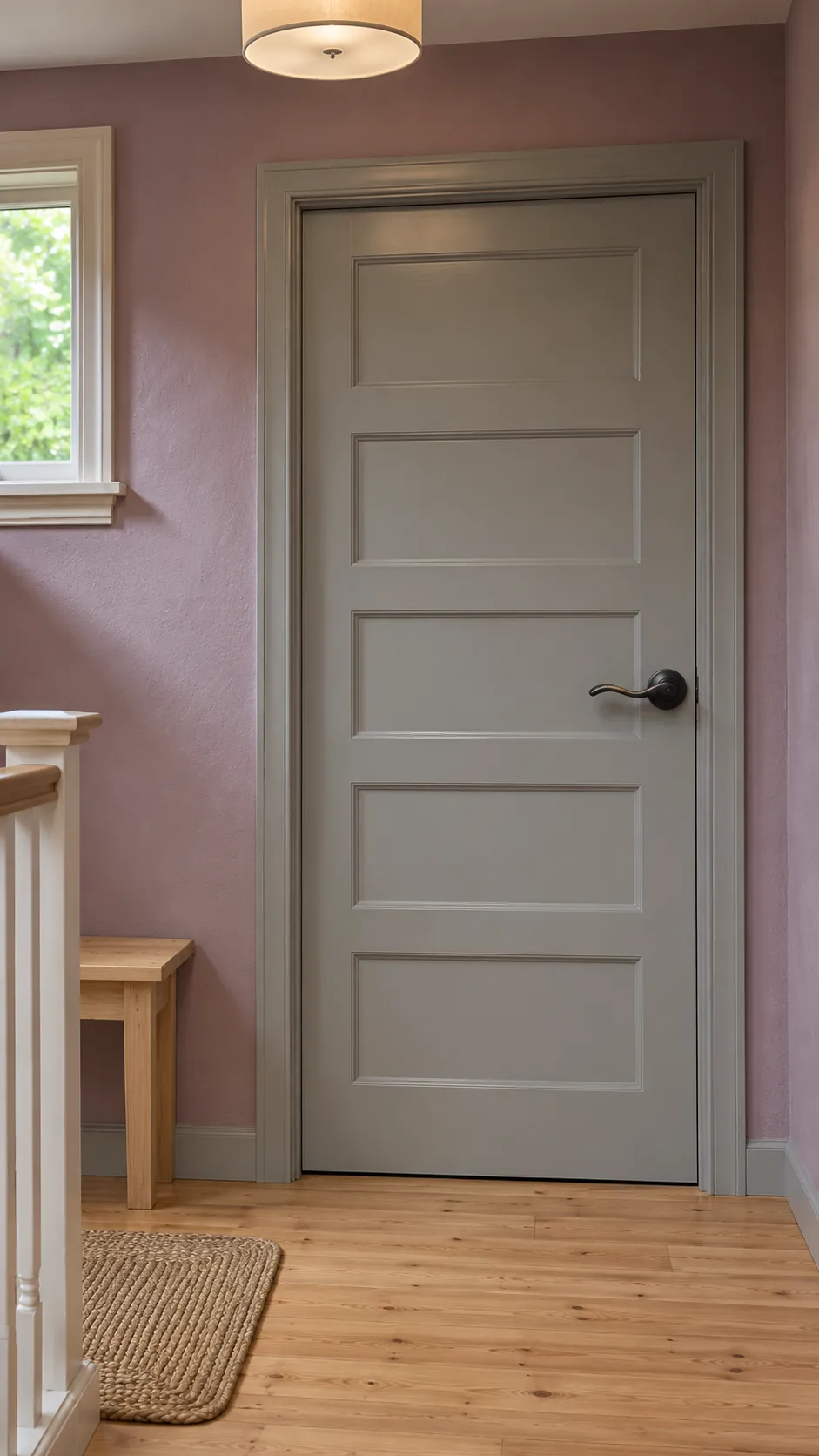
Open and close the door a few times. It should latch at normal closing speed, release with the knob and stay closed when you pull gently without turning it. Repeat the push test and listen while the fan runs if that used to trigger the rattle.
If the door only stays quiet when you shove it into place, take a little pressure off the tab or bumper and test again. The repair should keep the door quiet and preserve a latch that works with an ordinary push.