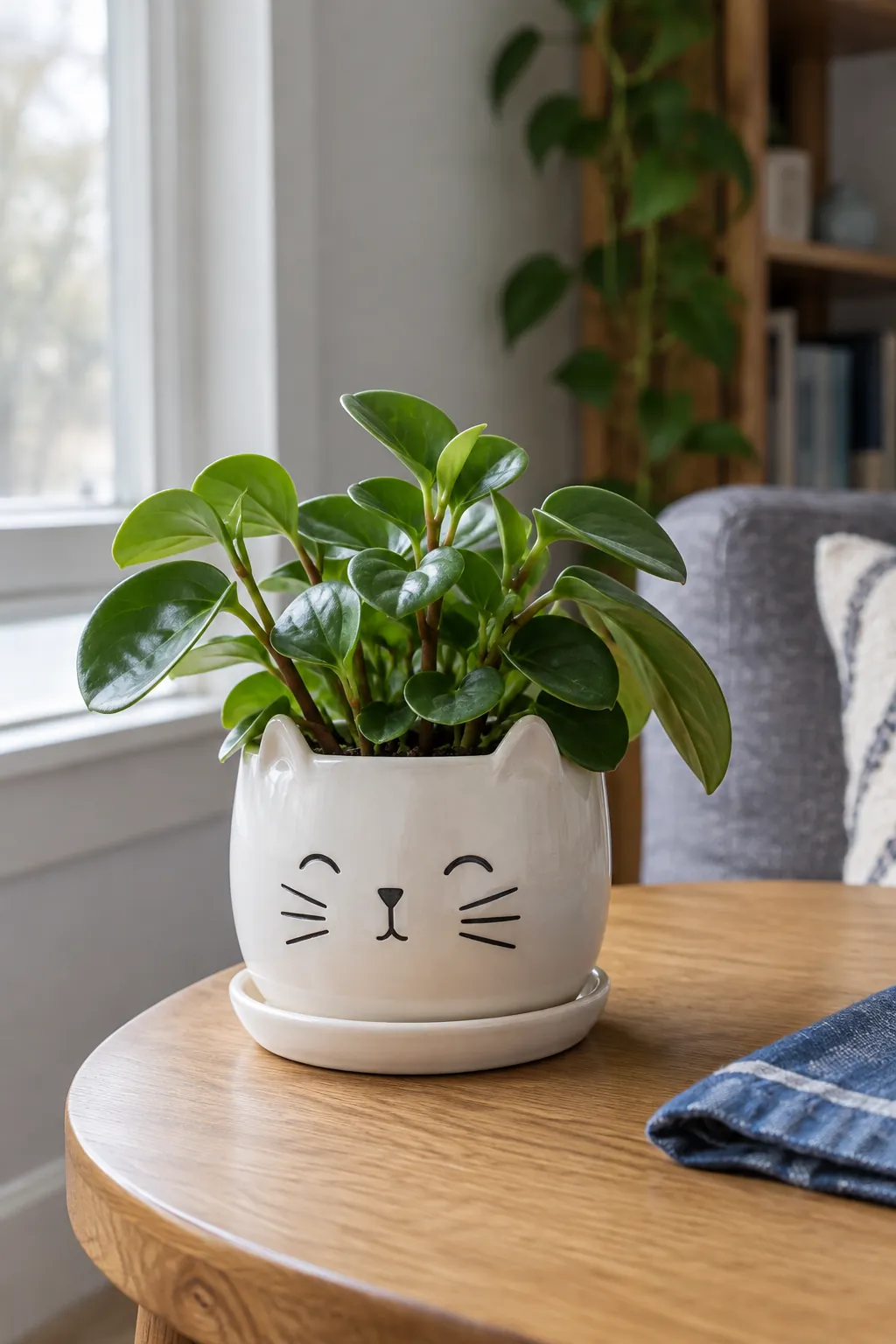
The little ears are easy to love. The harder part is finding a vessel that drains properly, fits the plant you own, and stays upright on the surface where you want it. Start with those practical details and the decorative choice becomes much easier.
Check the drainage before falling for the face
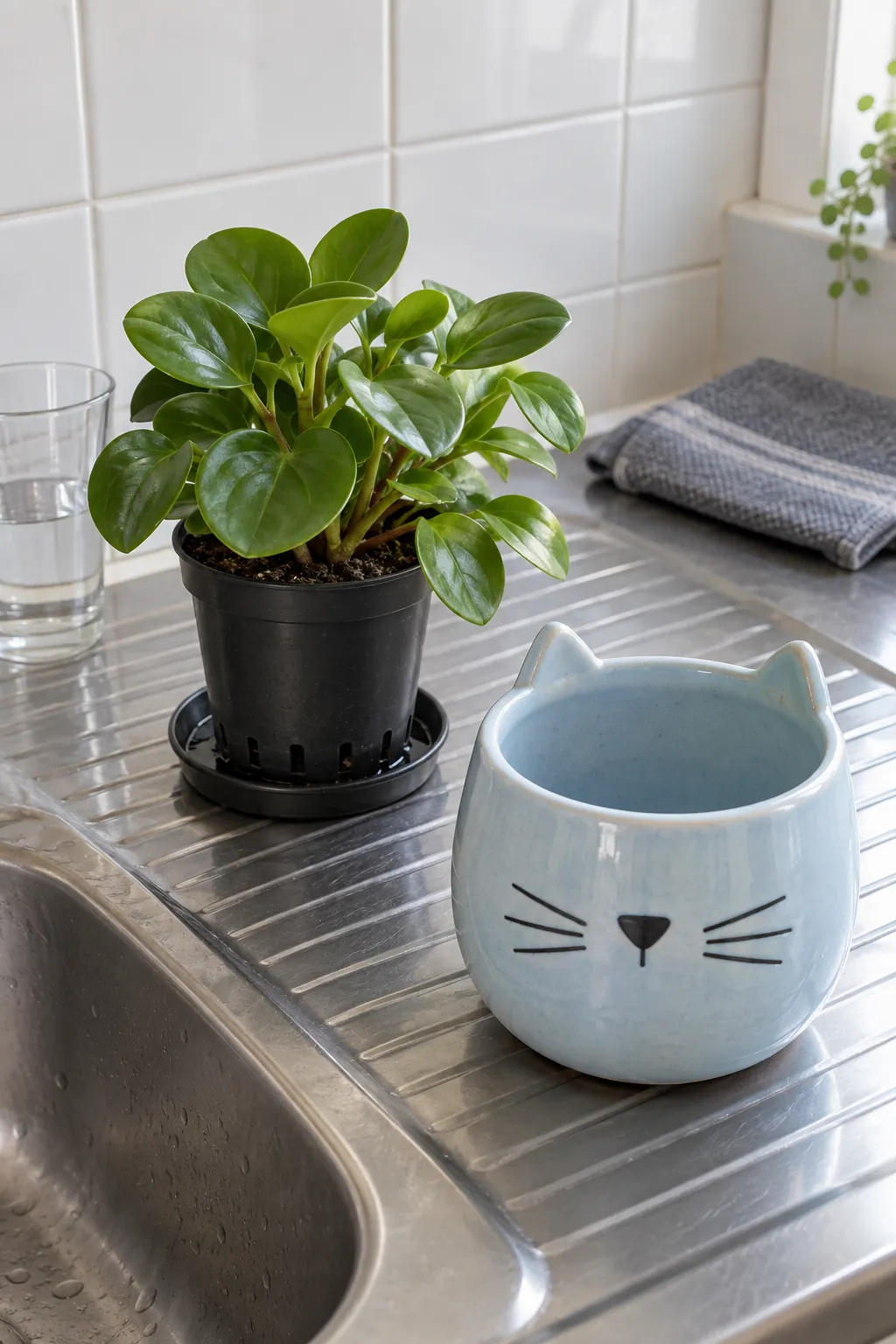
A smiling ceramic pot can hide a problem underneath: nowhere for excess water to go. Turn the planter over before buying it and look for an open drainage hole, a removable plug, or a clearly described inner pot system. A hollow decorative vessel without an outlet works best as a cachepot, which means the plant stays in a separate nursery pot inside it.
Take that inner pot out to water, let it drain thoroughly, and return it only after emptying the decorative shell. Gravel at the bottom does not replace a drainage hole. If you prefer planting directly into the cat pot, choose one with drainage and a saucer wide enough to catch runoff without soaking the surface beneath it.
Size the opening for roots, not ceramic ears
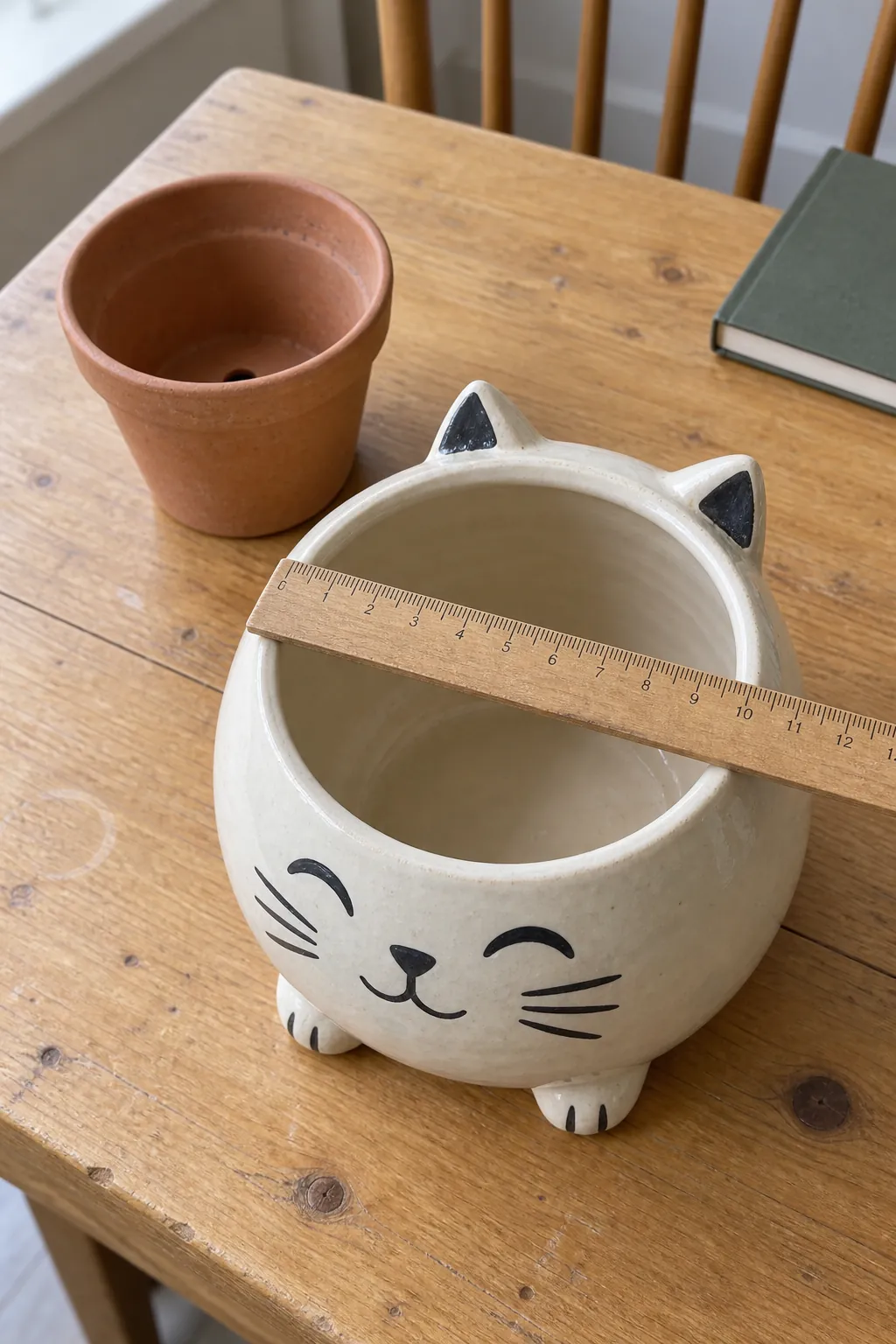
The outside width can be misleading when the planter has a tail, paws, or a round belly. Measure the internal opening and usable depth, then compare them with the nursery pot you already have. Leave enough clearance to lift the inner pot out without pulling on the plant.
An oversized vessel holds more damp potting mix than a small root system can use efficiently. When repotting is actually needed, move up modestly from the existing root ball rather than choosing a large pot purely for visual impact. A narrow neck is also awkward later: roots may expand into the belly and make removal difficult.
For online shopping, ask for the opening diameter, internal depth, drainage details, and whether a saucer is included. Those measurements tell you more than a styled photograph beside an object of unknown size.
Match the plant to the light you really have
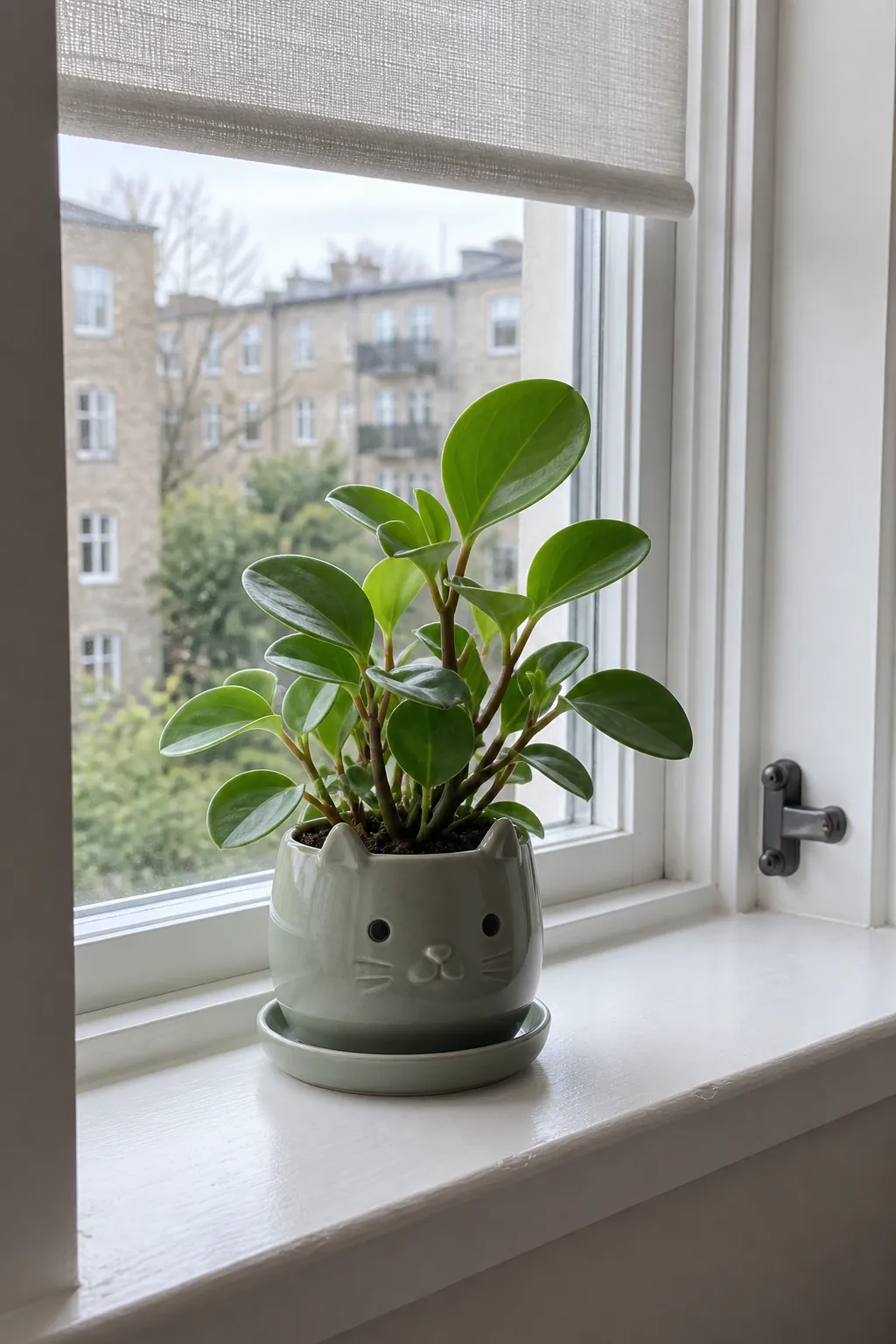
A compact peperomia can suit a bright spot with indirect light, while many rosette succulents need substantially stronger light to stay compact. Choose the plant for the window first, then choose a cat planter that fits its root ball. A decorative shelf deep inside a room is not automatically a suitable growing location.
Watch how sunlight moves across the intended surface over a day. A shallow windowsill may get intense afternoon sun even when the rest of the room feels dim, and leaves touching cold glass can suffer in winter. Keep the pot stable and give foliage enough space to grow without blocking a window latch.
Use a growing mix appropriate to the species and assess moisture before watering. A fixed weekly schedule ignores season, pot size, airflow, and the difference between porous terracotta and glazed ceramic.
Choose a stable setup when real cats share the room
A cat shaped container says nothing about whether its plant is safe for pets. Verify the exact botanical name against a reputable veterinary plant toxicity resource before bringing it into a home with a curious animal. Common names can cover different species, and even plants considered nontoxic can cause stomach upset when chewed.
Indexed Reddit discussions about living with houseplants describe cats reaching leaves, sitting in containers, and disturbing soil. The practical response starts with placement: use a broad, stable base away from jumping routes, and keep vulnerable plants in a space the animal cannot access. A high open shelf alone may not prevent access.
A planter is also separate from any hidden cat litter box project. Do not combine a growing container and a litter area, and avoid sharp soil deterrents or loose decorations that a pet could swallow. If chewing persists, discuss the behavior and suitable enrichment with your veterinarian.
Let the ceramic character do the decorating
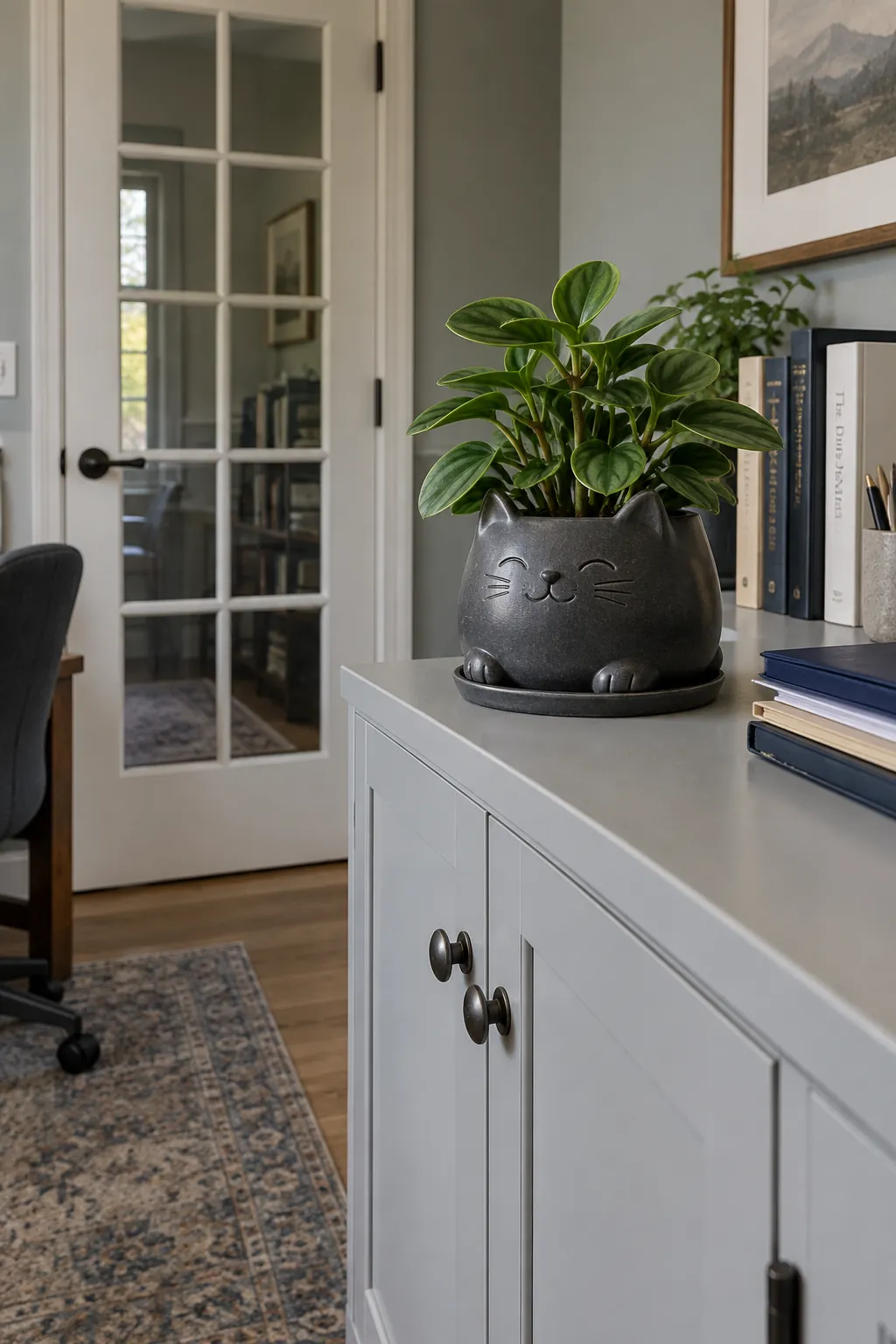
A white cat vase, an owl planter, and several funny plant pots can quickly compete on a small shelf. Give the cat piece a little breathing room and repeat just one of its colors in a nearby everyday object. The foliage can provide the movement while the vessel supplies the character.
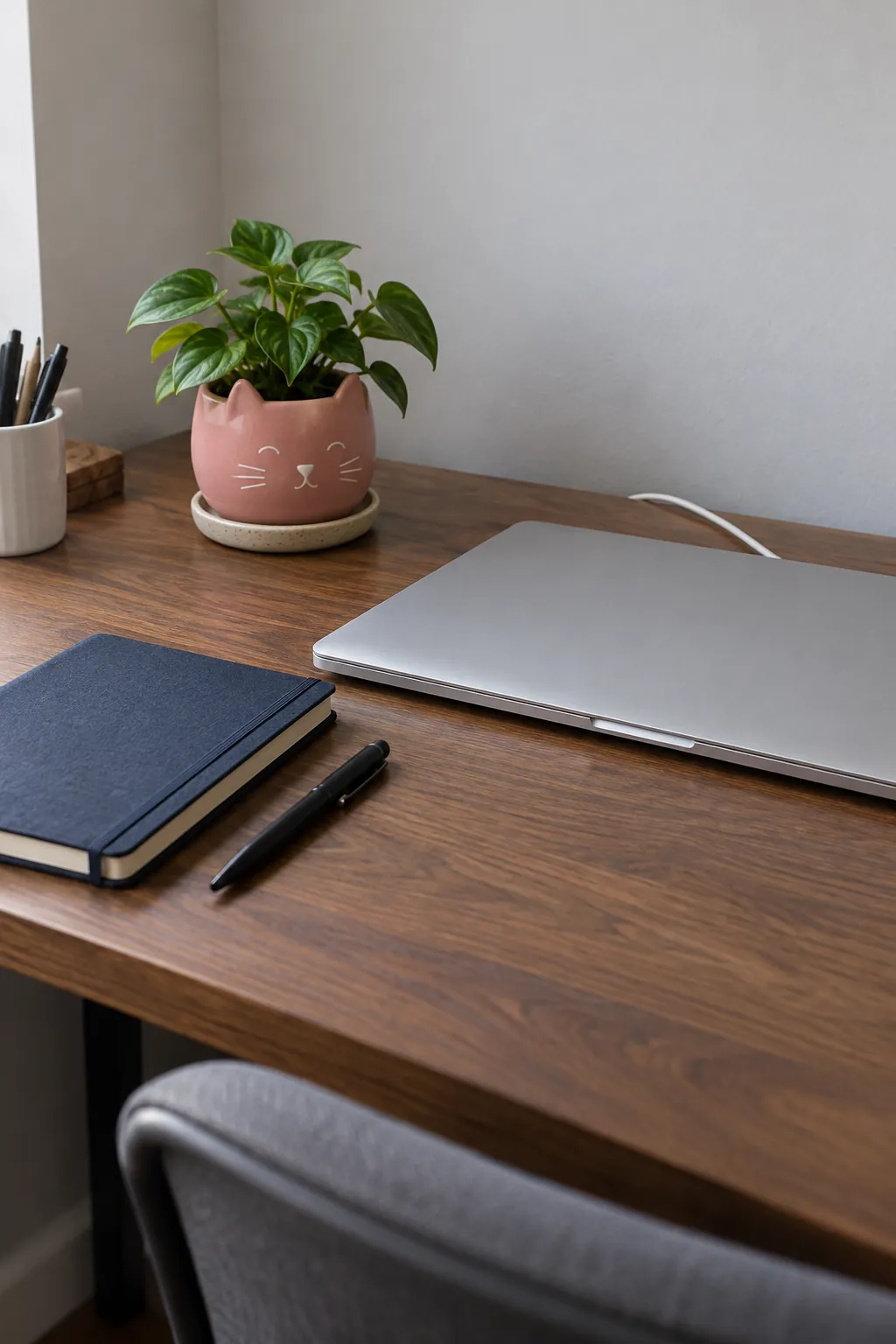
For a desk, a low pot keeps leaves out of the monitor sightline and makes watering easier to manage. On a kitchen shelf, keep the planter away from food preparation splashes and cooking heat. Cute plant pots work best when they fit the way the surface is already used, rather than forcing a new obstacle into it.
Make a painted version easy to maintain
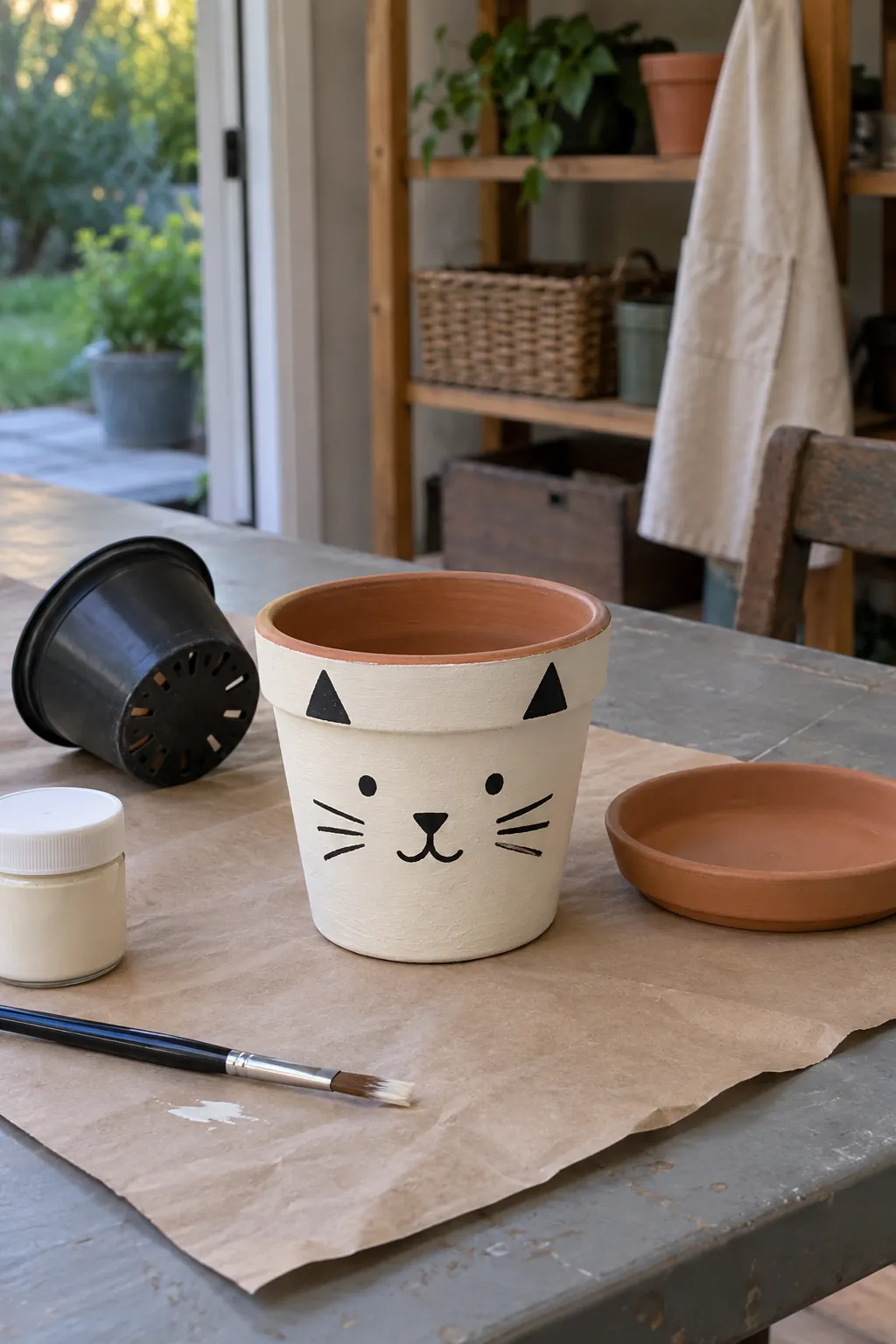
For a simple DIY version, start with a plain planter that already has drainage and paint a cat face on the outside. Follow the coating manufacturer’s surface preparation and curing instructions, and keep paint out of the drainage opening. Paint labeled for craft use is not automatically suitable for constant moisture or food contact.
A removable liner is especially useful when repurposing cat dishes or a decorative cat teapot. Keep those vessels decorative unless they have a suitable planting structure; a sentimental ceramic piece is rarely the best candidate for experimental drilling. Air dry clay also needs protection from watering and is better treated as an outer decorative shell than a reliable wet soil container.
Before putting the finished pot on furniture, water the plant somewhere washable and inspect the saucer and base for leaks. The best version is the one you can lift, drain, clean, and return without worrying about the surface below.