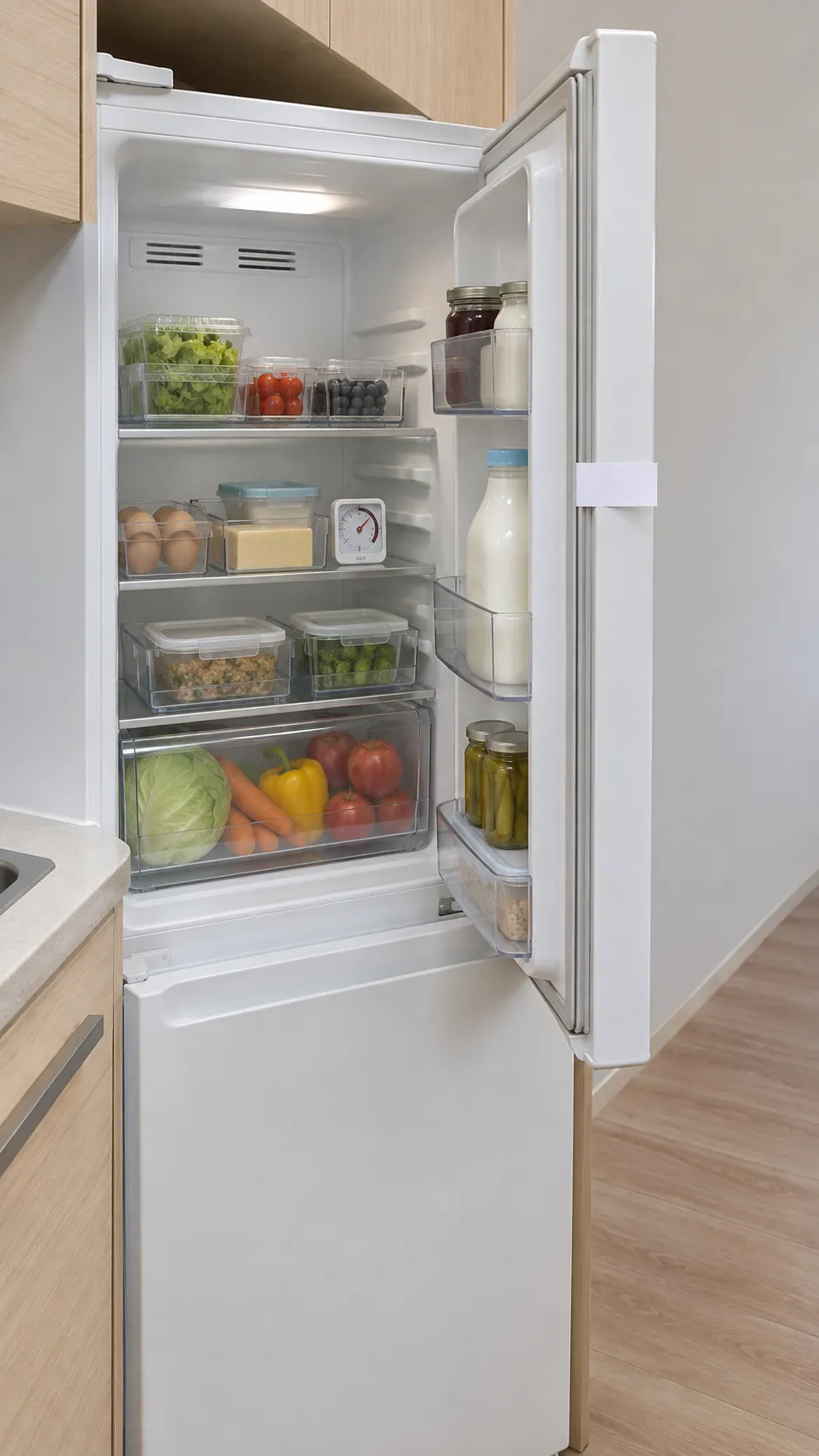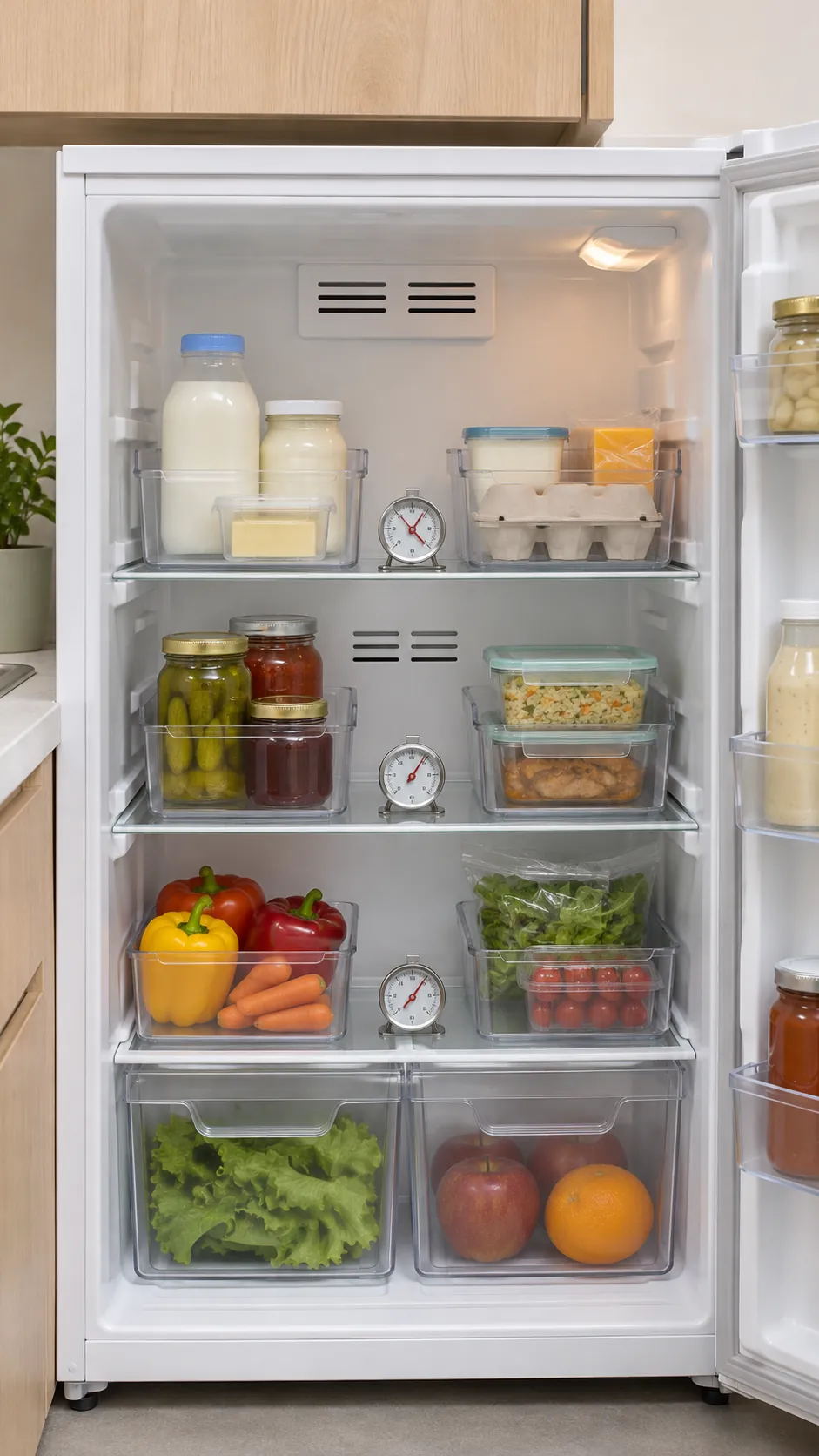
Clear bins can make a refrigerator look orderly while quietly blocking the paths that carry cold air. A full shelf is not automatically unsafe, but every organizer changes the space around vents, walls, and food. The reliable check combines visible clearance with temperature readings taken during normal use.
Find the supply and return air openings
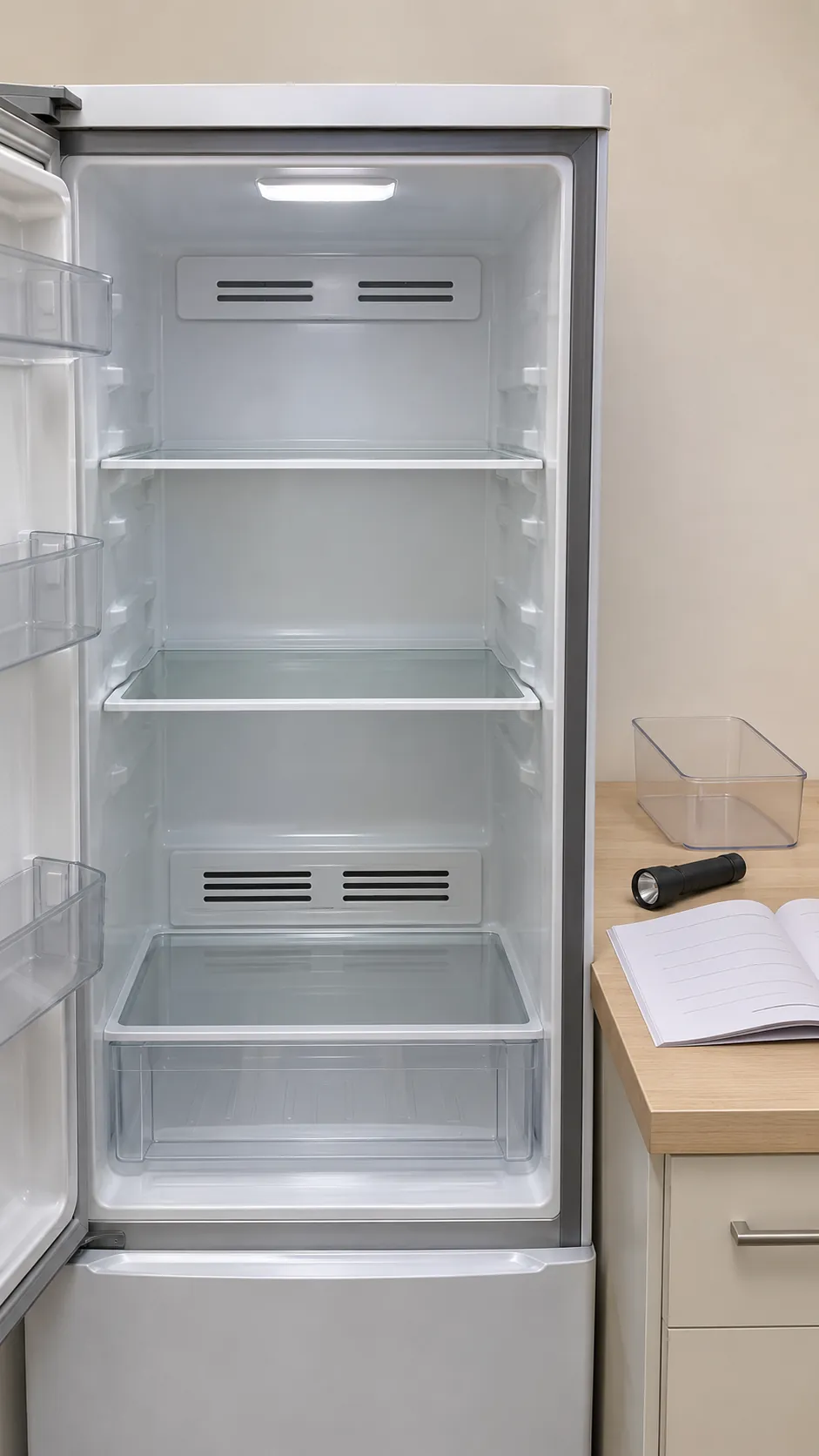
Read the appliance manual and inspect the back wall, ceiling, and shelf supports for air openings. Many refrigerators send cold air through one set of openings and pull warmer air back through another. Both paths matter. A bin that leaves the supply open can still block the return path.
Do not assume every slot is a vent, and do not remove covers. Use the manual to identify the parts you should keep clear. Look for containers pressed directly against the back wall, tall bins under ceiling openings, and liners that cover shelf gaps.
Record temperatures before moving organizers
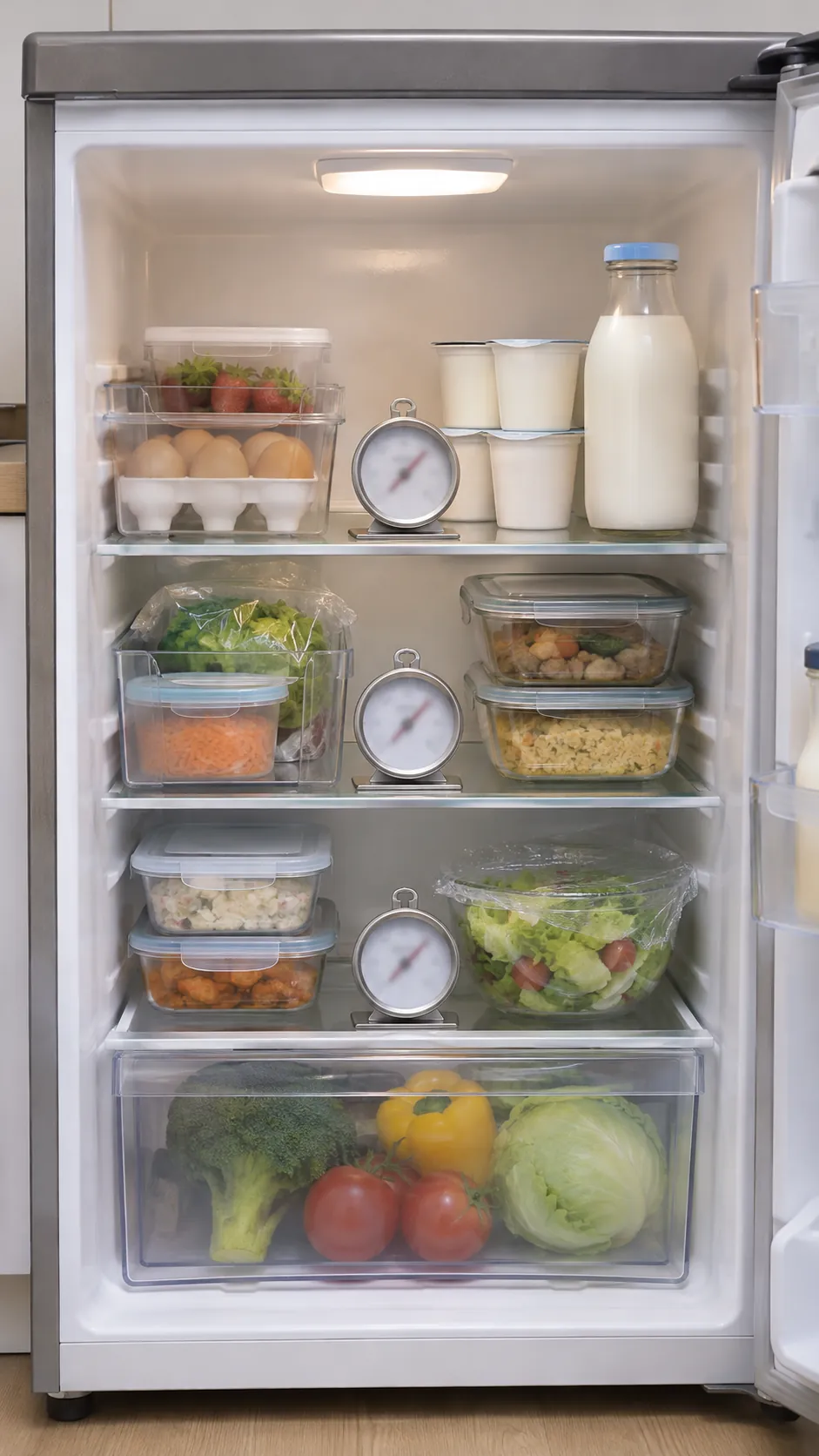
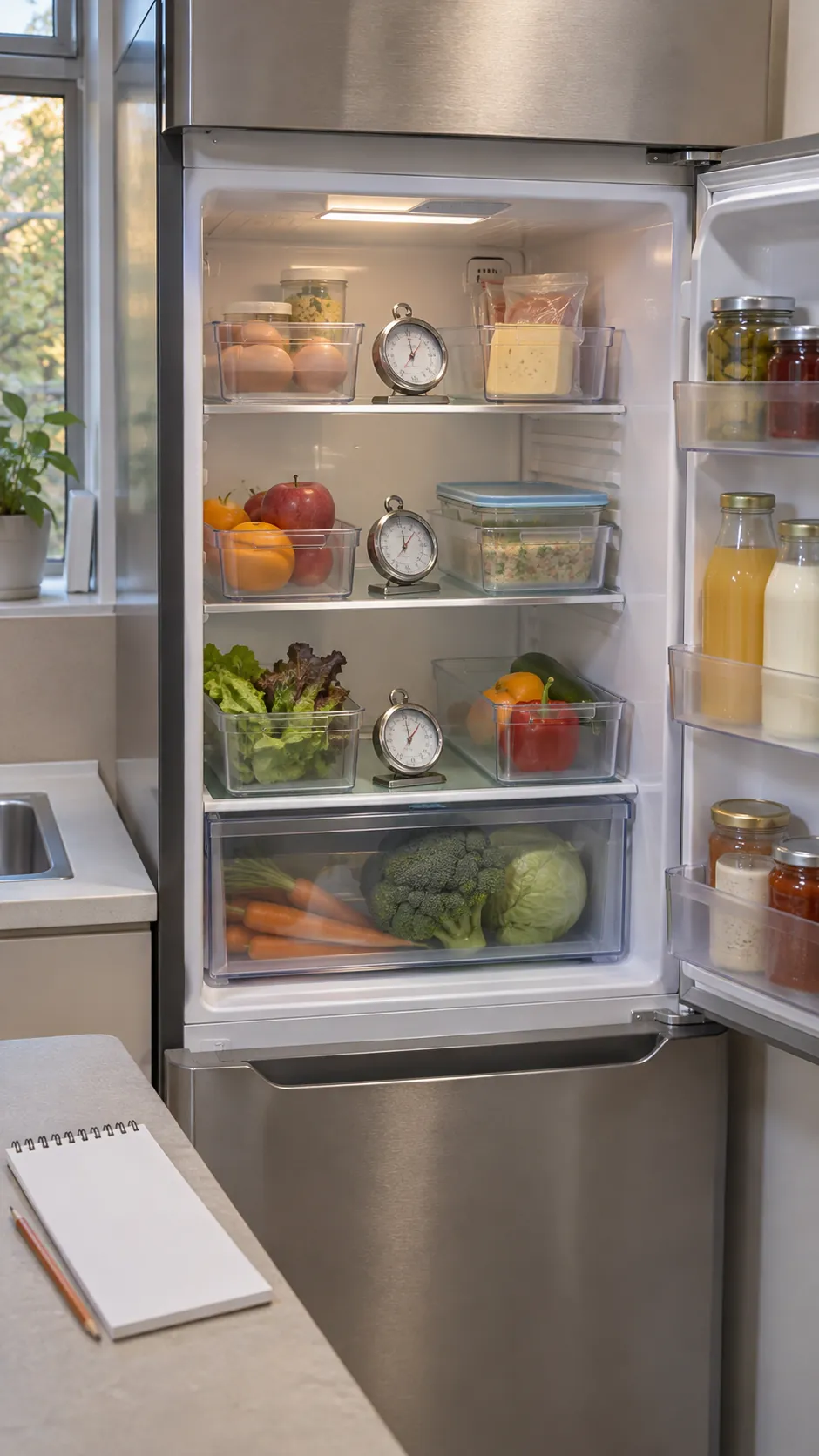
Place refrigerator thermometers on the upper, middle, and lower shelves. Keep them near food positions rather than touching a cold wall. Close the door and allow enough time for the refrigerator to return to normal operation. Record the readings after a quiet period and again after ordinary door openings.
The refrigerator compartment should generally stay at forty degrees Fahrenheit or below, which is about four degrees Celsius or below. Follow local food safety guidance and your appliance manual. One cold reading does not prove that every shelf is suitable, especially when organizers create isolated pockets.
Remove bins and inspect every clearance
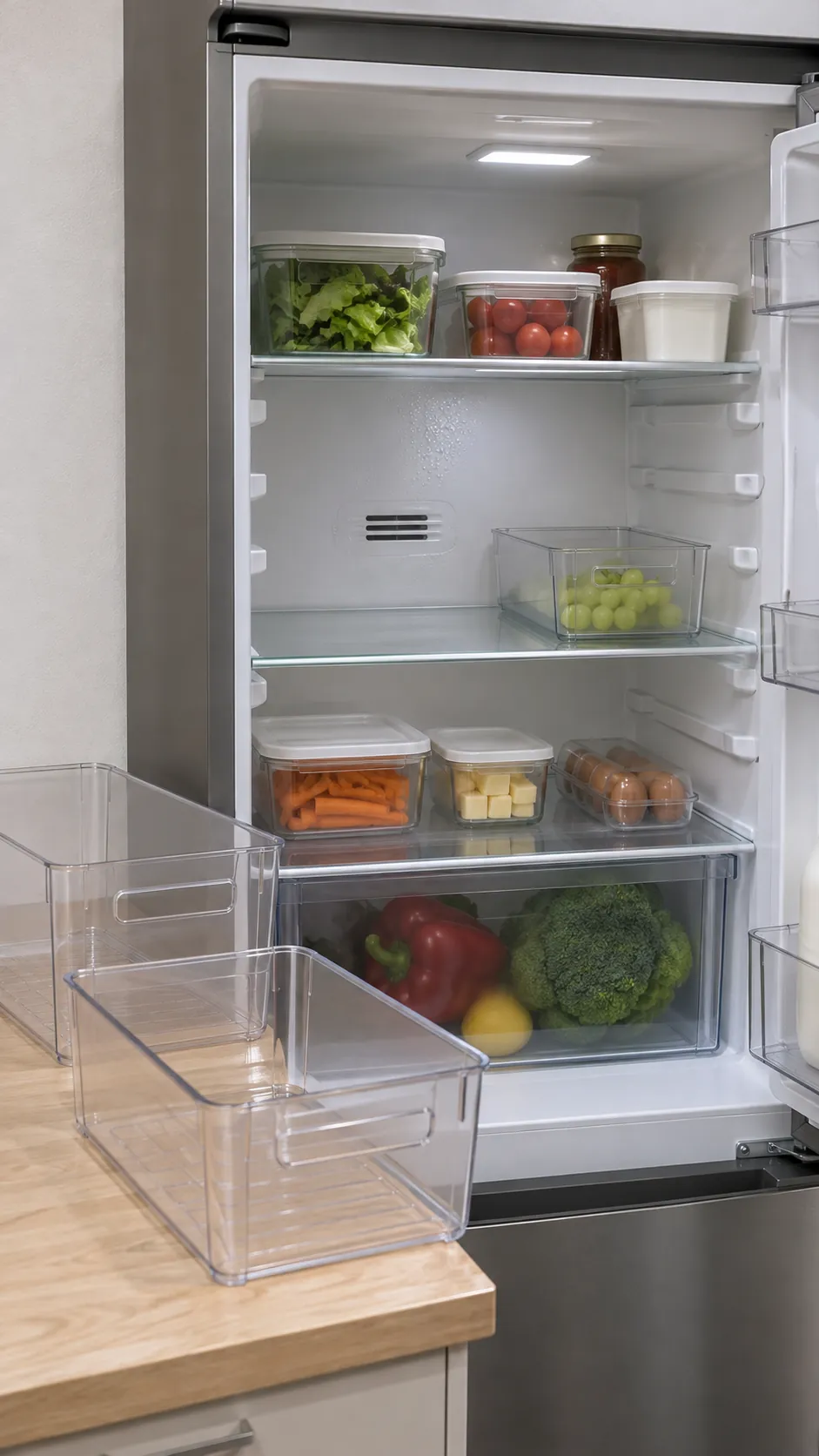
Take out one shelf of organizers at a time and look behind them. Check for hidden vents, moisture, frost, or packages touching the back wall. Compare the bin depth with the shelf depth. A bin that fits physically may still leave no path for air around its rear and side edges.
Return only the organizers that solve a real access problem. Very deep bins can turn a shelf into a solid block. A shorter bin or an open front tray may preserve visibility while leaving more room for circulation. Never cut, drill, or alter the refrigerator interior.
Create continuous air lanes around food
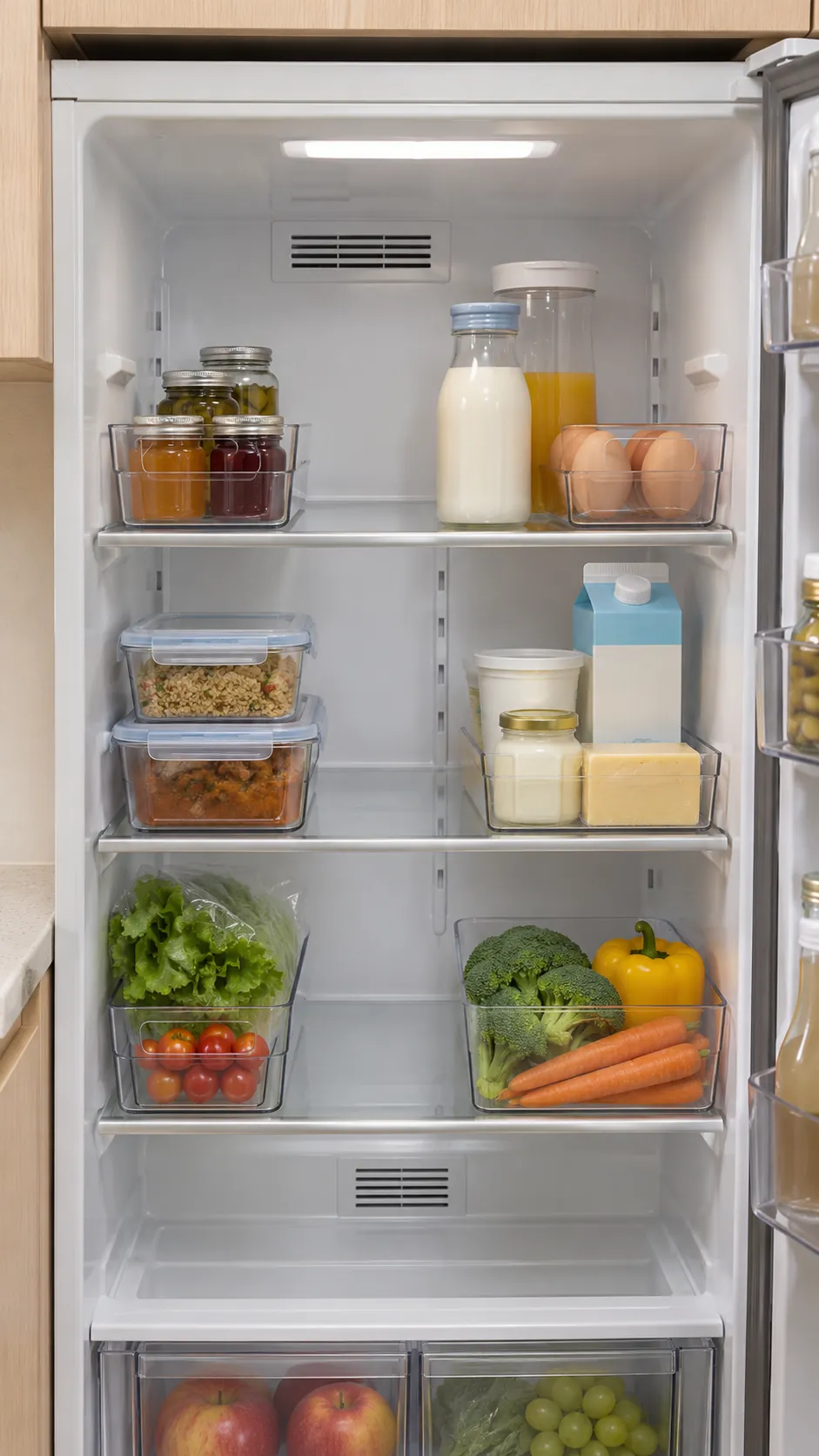
Leave space around identified vents and between large organizer groups. Keep food from pressing against the back wall. On wire shelves, avoid liners that seal every opening. On glass shelves, use the gaps designed into the appliance and do not bridge them with oversized trays.
Group small items inside bins, but avoid filling every bin to its top edge. Stagger tall containers so they do not form a wall across the shelf. The goal is not a large empty refrigerator. The goal is a connected path that lets cold air reach and return from each level.
Retest after normal door openings
Replace the thermometers in the same three positions and use the refrigerator normally for a day. Check them at consistent times. A brief change after the door opens is expected. Look for a shelf that stays warmer than the others or food near a vent that becomes partly frozen.
If readings vary, move one organizer at a time and test again. This isolates the cause. Do not compensate for a blocked path by immediately setting the control much colder, because that can freeze food near the supply opening while the blocked area remains warm.
Adjust the layout and monitor the seal
Keep the arrangement that produces stable readings and easy access. Move rarely used items away from vent areas, reduce duplicate bins, and leave clearance around the door sensor if the appliance has one. Make sure no organizer prevents the door from closing or presses packages into the gasket.
Recheck temperatures when you add a large grocery load or change the organizer layout. If the refrigerator remains too warm despite clear vents, a good seal, and correct settings, follow the manual troubleshooting steps or contact a qualified service provider. Organization cannot repair a mechanical fault.
A good layout is easy to verify. You can see the air openings, the door closes freely, and several shelf readings stay in the safe range during normal use.