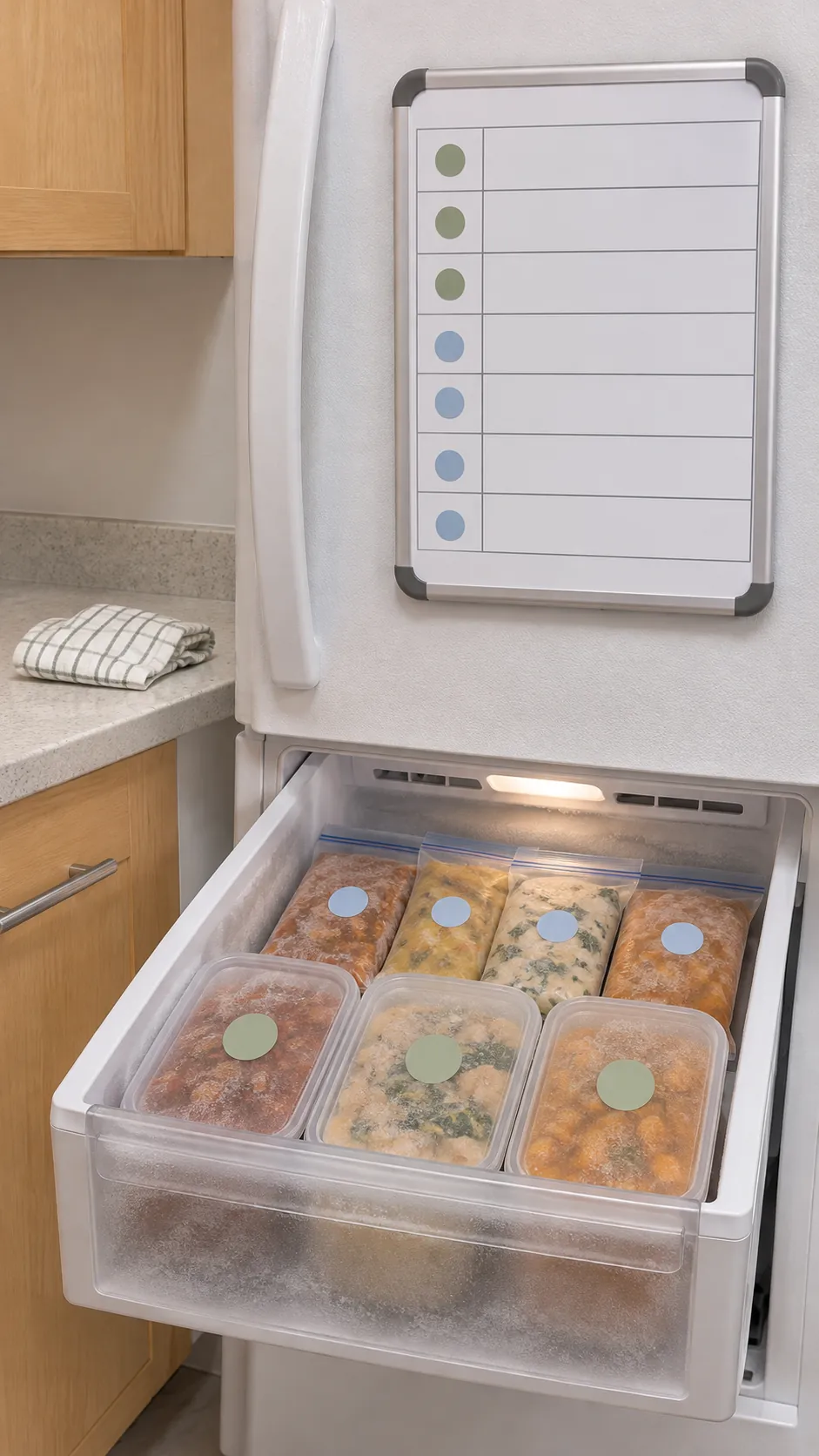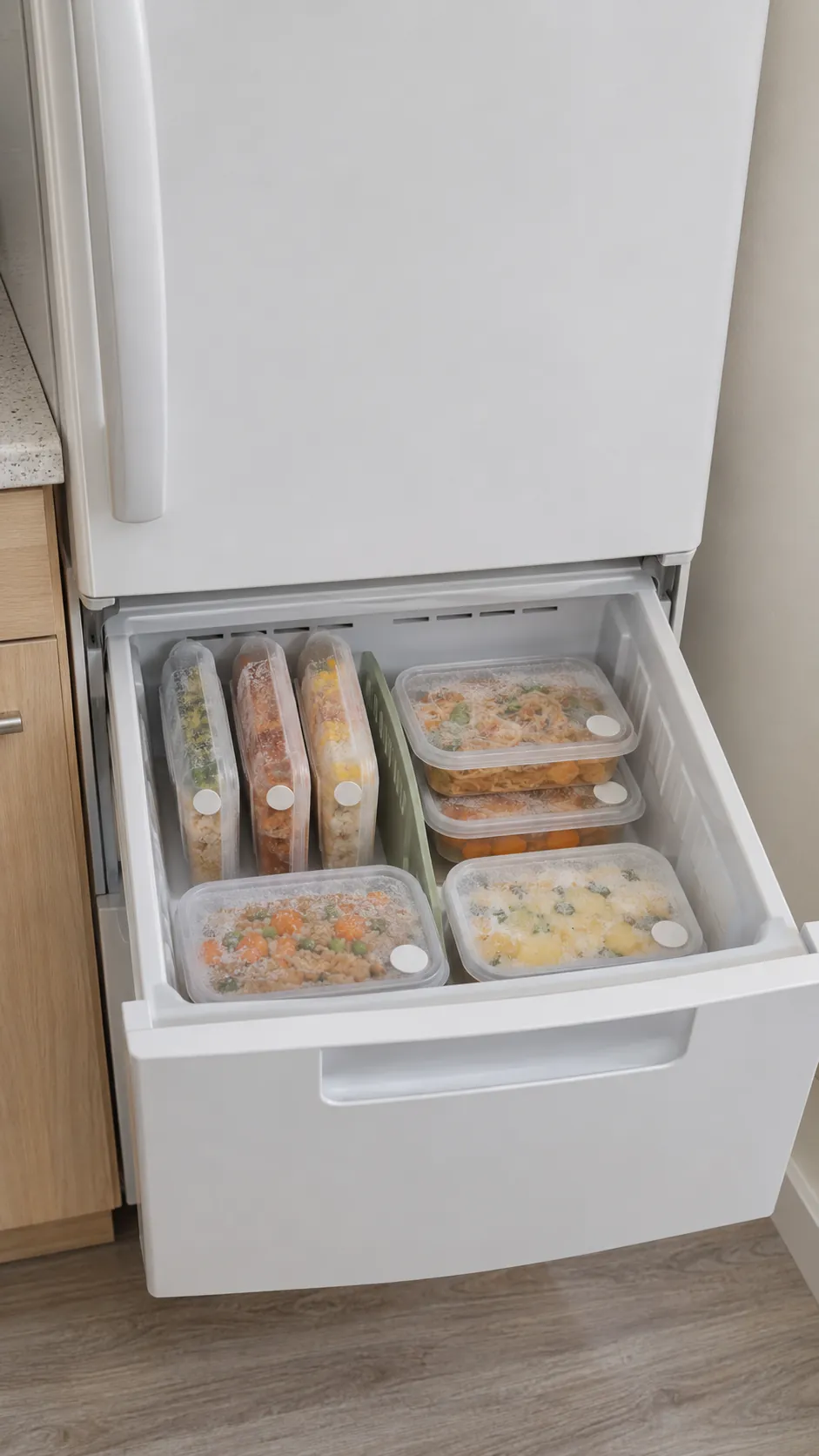
A small freezer drawer can hold seven useful meals when every package earns its space. The key is to plan around the drawer dimensions, portion meals before freezing, and use shapes that stack or file without blocking the drawer. A random mix of bowls, bags, and cartons wastes more room than the food itself.
Measure the drawer before choosing containers
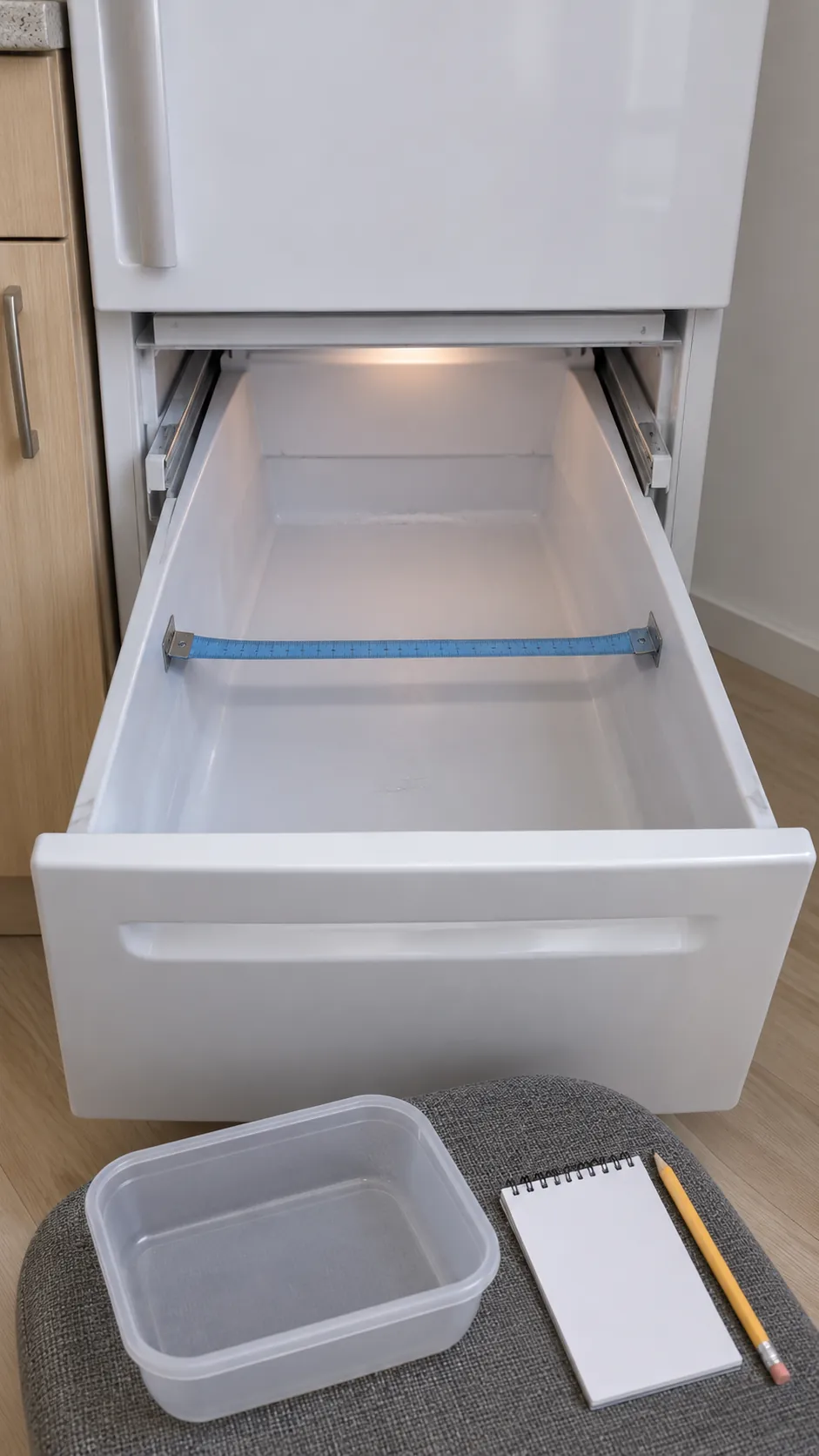
Empty the drawer and measure its usable width, depth, and height. Account for sloped walls, rails, handles, and any area that must stay clear for cold air. Measure the narrowest point, not only the largest opening. A container that fits at the top may catch when the drawer moves.
Test one empty container in the drawer before buying a set. Close the drawer fully and open it again. Then count how many identical containers fit with a small amount of clearance. Rectangular containers usually use corners better than round bowls, but the best shape is the one that fits your exact drawer.
Plan seven portions that you will actually eat
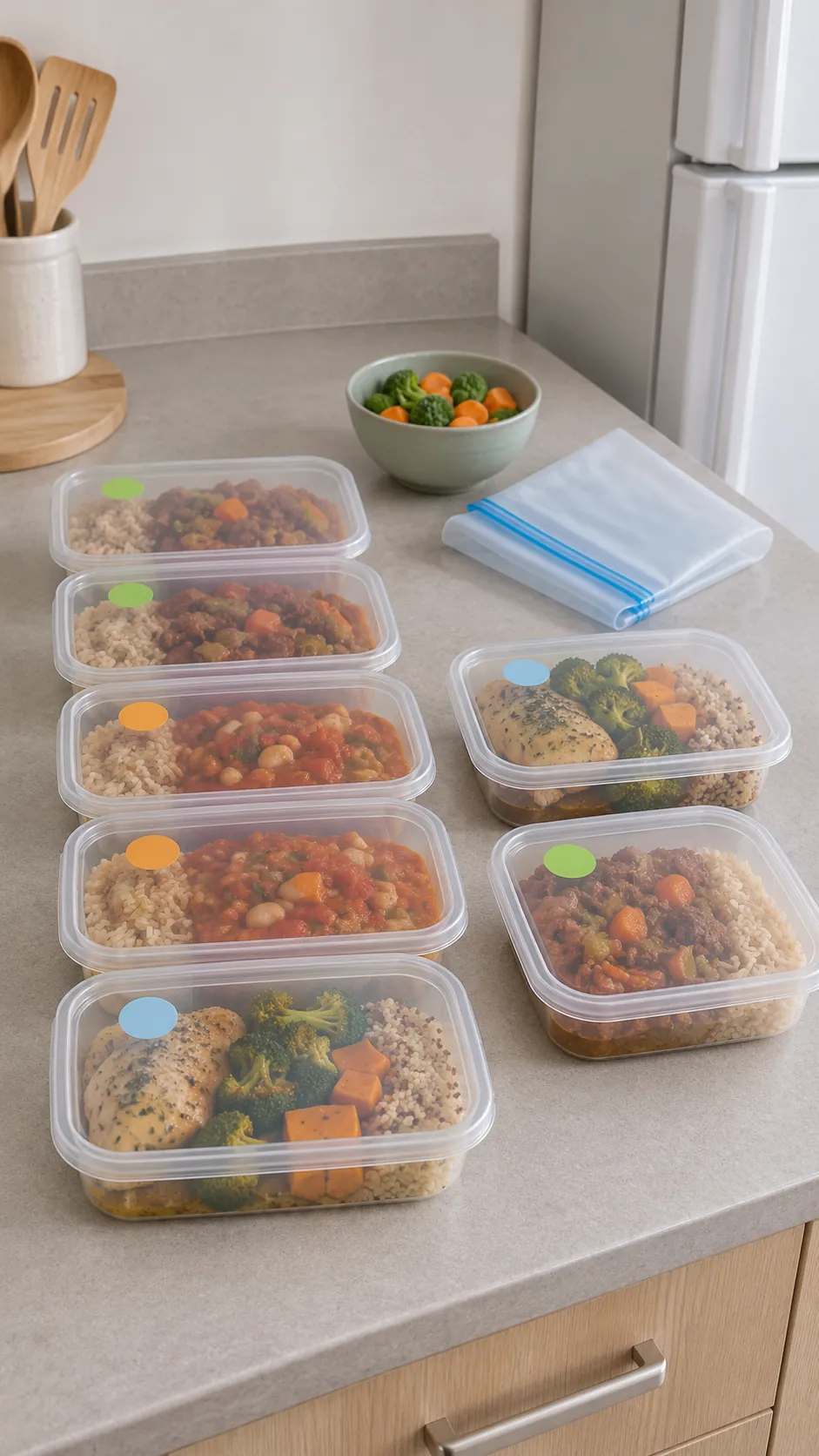
Choose seven portions based on your real week, not an ideal batch cooking plan. You may need five lunches and two dinners, or seven flexible meals. Include enough variety that the last portions still feel useful. A drawer full of one meal can become wasted space if you stop wanting it.
Keep portions modest and complete. Put bulky sides in the refrigerator when they keep well, and freeze the part that benefits from freezing. Soups, stews, rice dishes, pasta sauces, and cooked proteins can often fit in shallow portions. Leave headroom in containers because food can expand as it freezes.
Freeze meals in shallow consistent shapes
Shallow containers freeze more evenly and create predictable layers. Use the same outer dimensions when possible. If you use freezer bags, remove excess air, seal them carefully, and freeze them flat on a tray before filing them upright. Do not freeze a flexible bag around another package because the frozen shape may waste space.
Cool cooked food promptly before freezing according to safe food handling guidance. Do not leave a large hot batch at room temperature while arranging the drawer. Divide it into shallow portions so it cools and freezes efficiently. Keep seals clean so stacked packages do not leak or stick together.
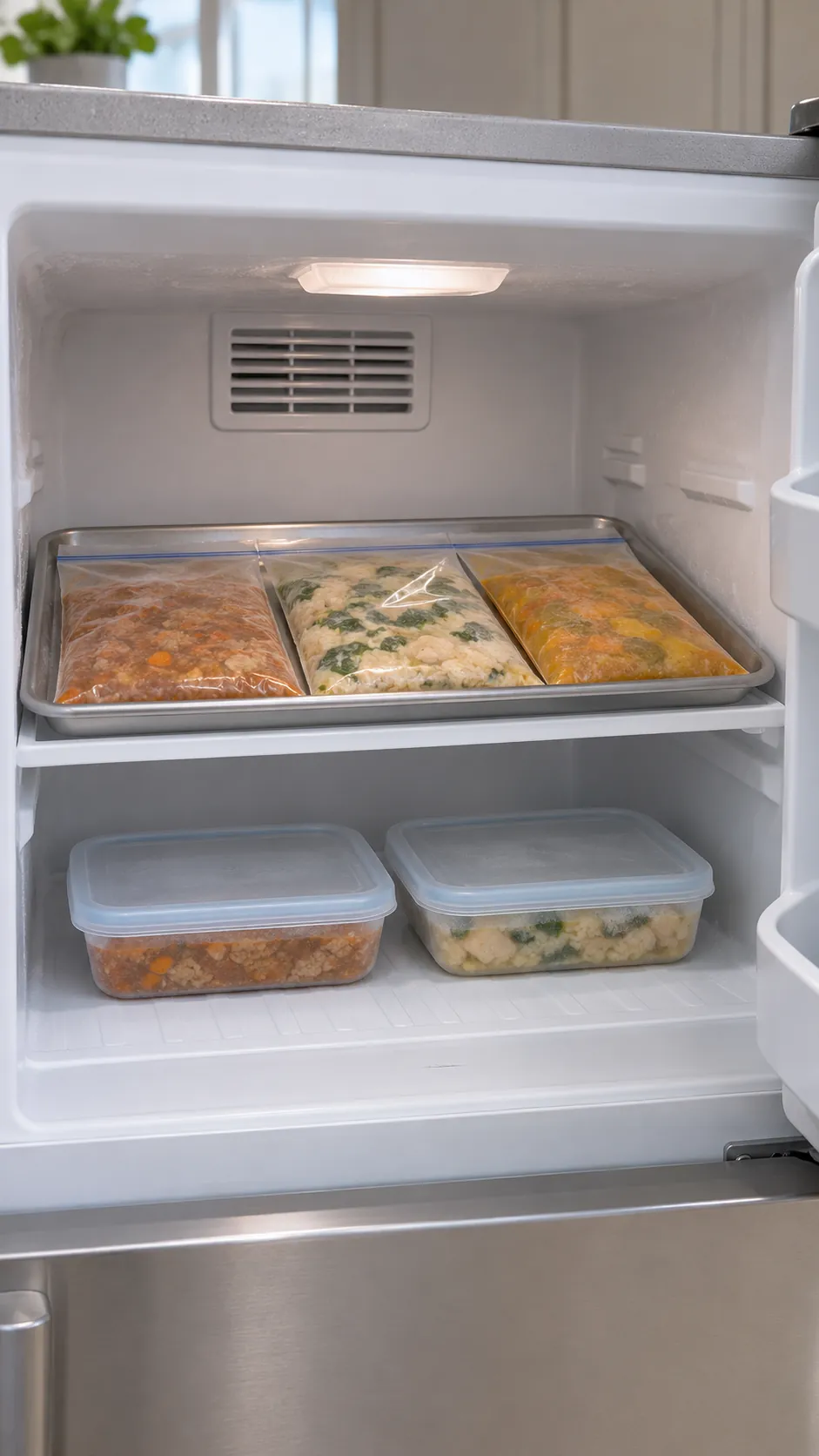
File meals so every portion stays visible
Once flat bags are solid, stand them like files with the sealed edges up. Stack rigid containers only when the stack remains below the drawer limit and each container can be removed without unloading everything. A simple divider can keep bags upright, but it must not jam the drawer or cover an air path.
Arrange meals by the order you expect to use them. Put the next two portions near the front and later meals behind them. If household members choose their own meals, group similar items together instead. The system should make one portion easy to remove without disturbing the other six.
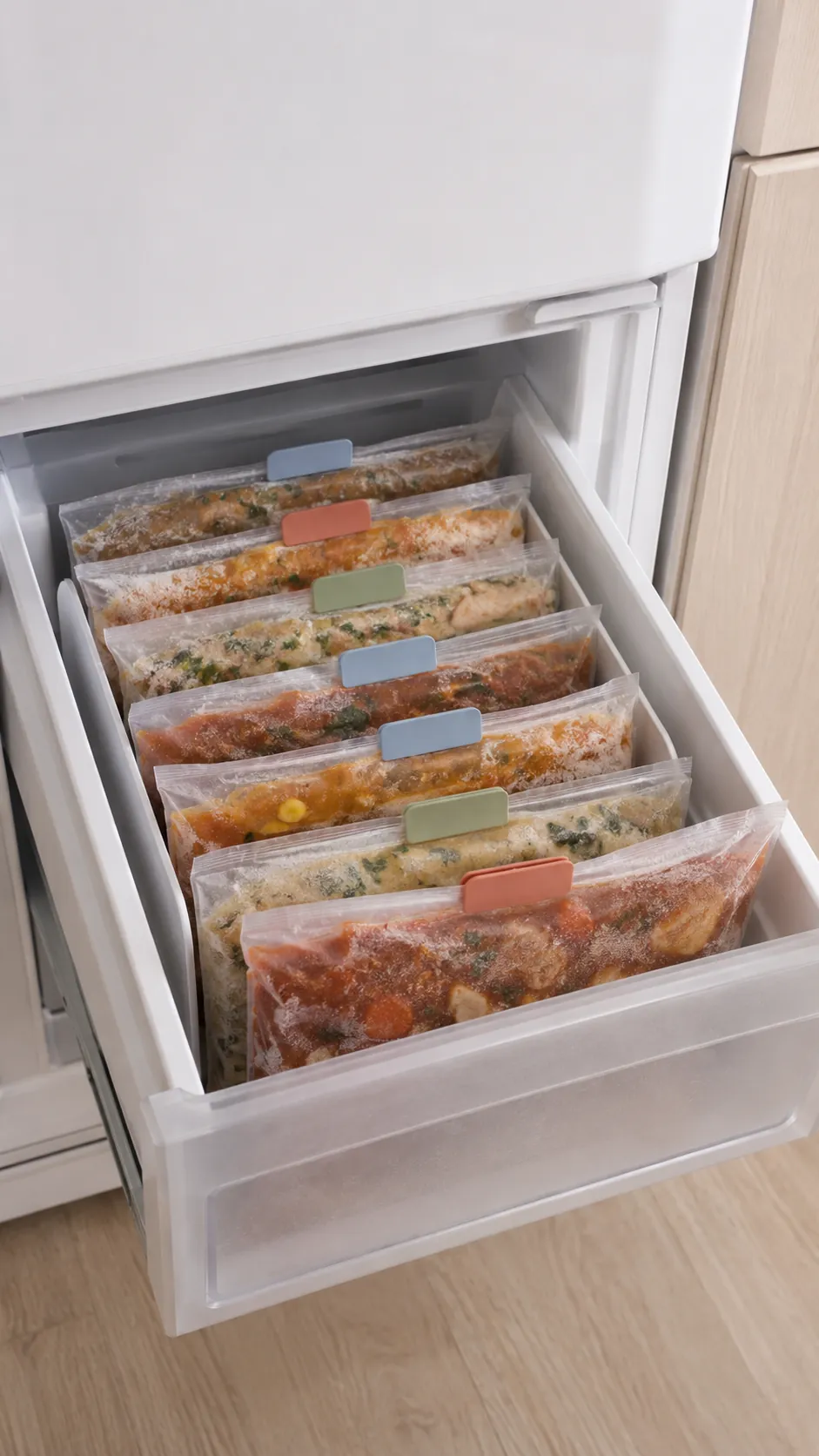
Protect airflow and full drawer travel
More food is not always better use of the drawer. Keep packages below the top edge and away from any visible vent or fan opening. Do not force a soft bag into a rail or hinge gap. A package that catches can stop the drawer from sealing, which can create frost and temperature problems.
After loading all seven meals, close the drawer slowly and check the gasket around the full opening. Open it again and look for shifted packages. If the drawer needs pressure to close, remove one item or change the package shape. Reliable closure matters more than fitting one extra portion.
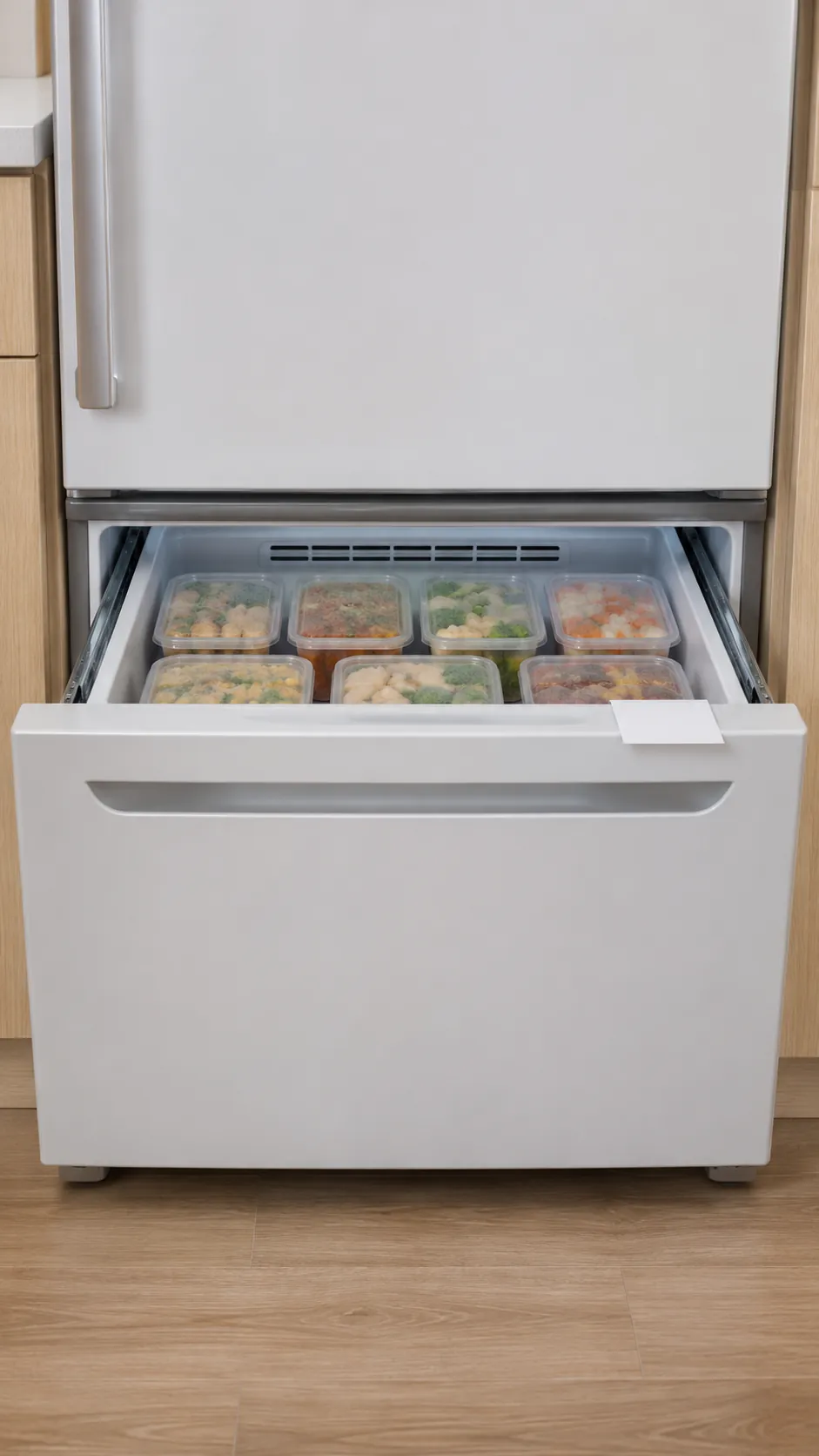
Label rotate and reset the drawer each week
Label each package with the meal name and freeze date before it becomes frosty. Use a simple inventory note outside the freezer if labels are hard to see. Remove one entry when you take a meal. This prevents a hidden older portion from remaining under the new weekly batch.
At the end of the week, bring the oldest suitable meal forward and wipe away loose crumbs or ice. Plan the next batch around the spaces that are actually available. If seven portions repeatedly crowd the vents or stop the drawer, store fewer complete meals and freeze only components that fit well.
A successful drawer is not packed solid. It closes without force, keeps every meal visible, and lets you remove tonight’s portion in one motion.