
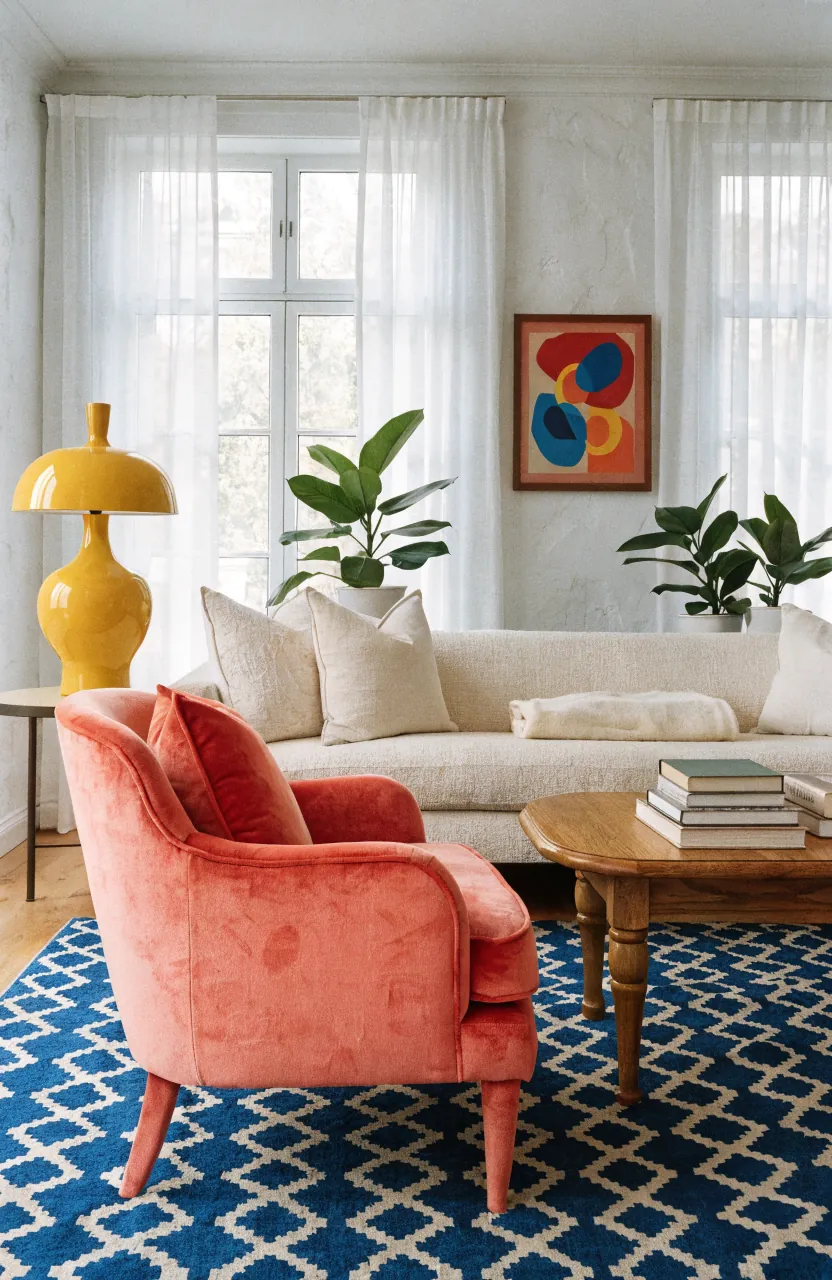
Colorful rooms are not just rooms with more paint. The best ones have rhythm: a few colors repeated in different materials, a calm place for the eye to rest, and one or two moments that feel a little brave.
That balance matters because color can go wrong in two opposite ways. It can feel too timid, like one lonely pillow in a beige room, or it can feel too loud, like every object is shouting. A colorful home aesthetic works when the color has a job.
Build The Room In Layers, Not All At Once
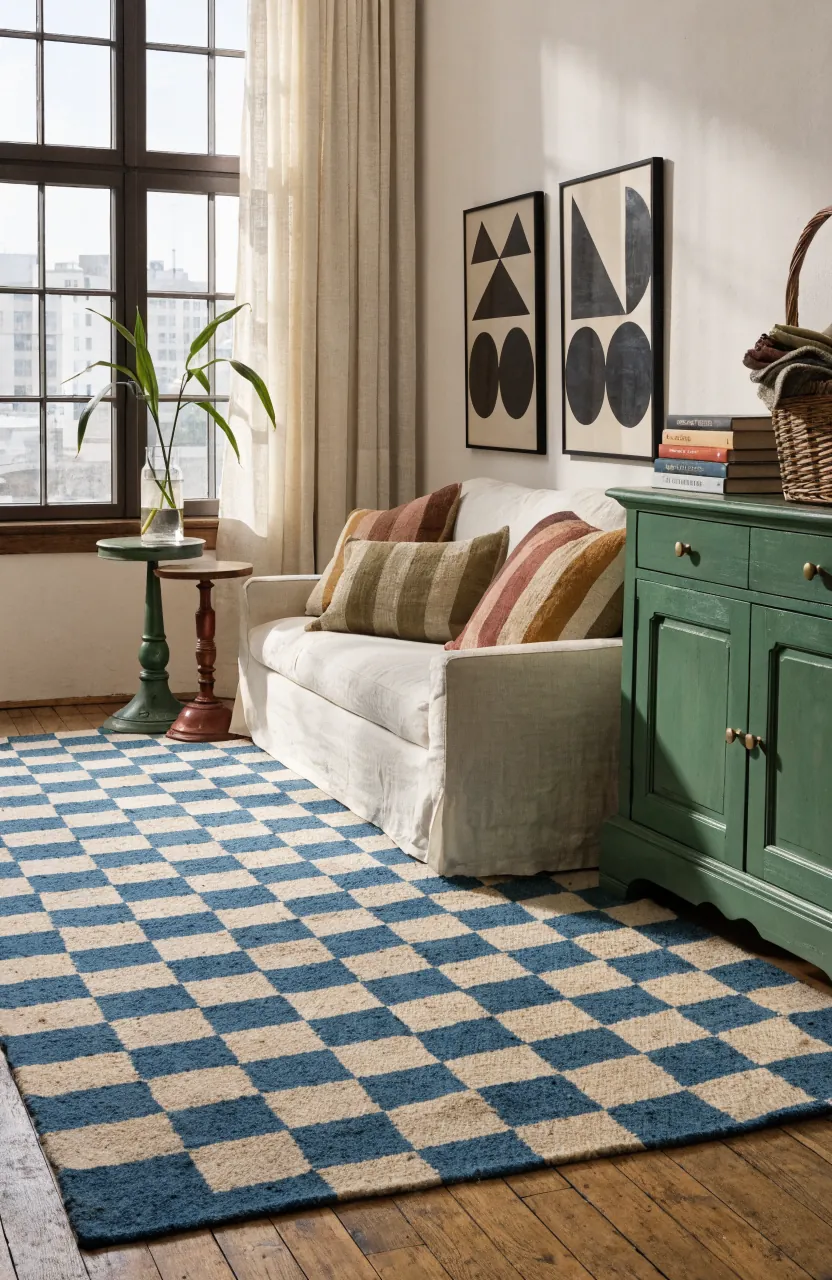
If you are nervous about colorful interior design, start with layers that can move: rugs, pillows, curtains, lamps, art, books, pottery, and a small painted cabinet. These pieces let you test a palette before the walls carry the whole decision.
A quiet wall color does not mean a boring room. Warm white, cream, pale clay, or soft greige can make bright room ideas easier to live with because the color comes from texture and repetition instead of one overwhelming surface.
Paint A Smaller Surface First
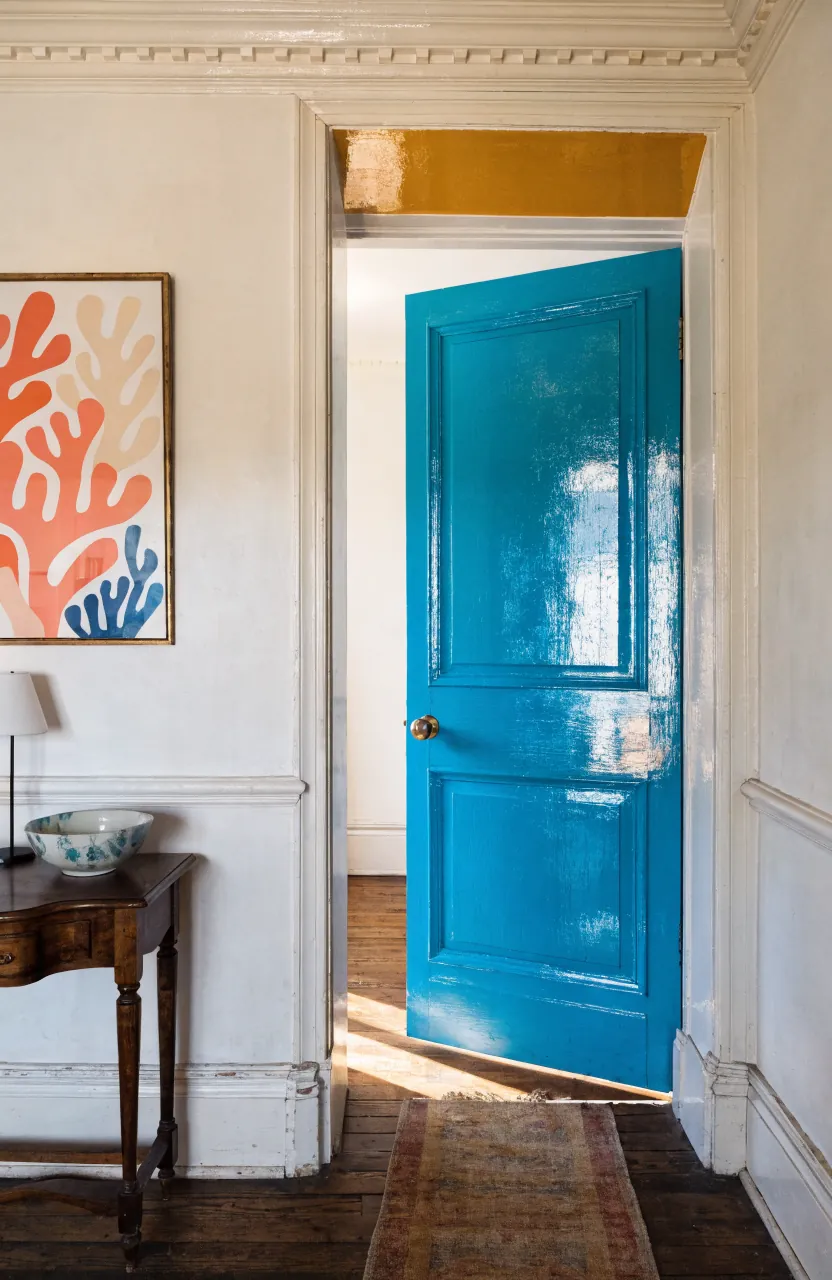
Not every colorful house interior needs four painted walls. A door, ceiling stripe, bookcase back, window trim, or small cabinet can add just as much personality with less risk. This is a good move if you rent, share the home with someone cautious, or keep changing your mind in the paint aisle.
For a stronger look, repeat that painted color somewhere else in the room. A turquoise door feels intentional when a blue ceramic bowl, artwork detail, or cushion picks it up across the space.
Keep Colorful Bedrooms Soft Around The Edges
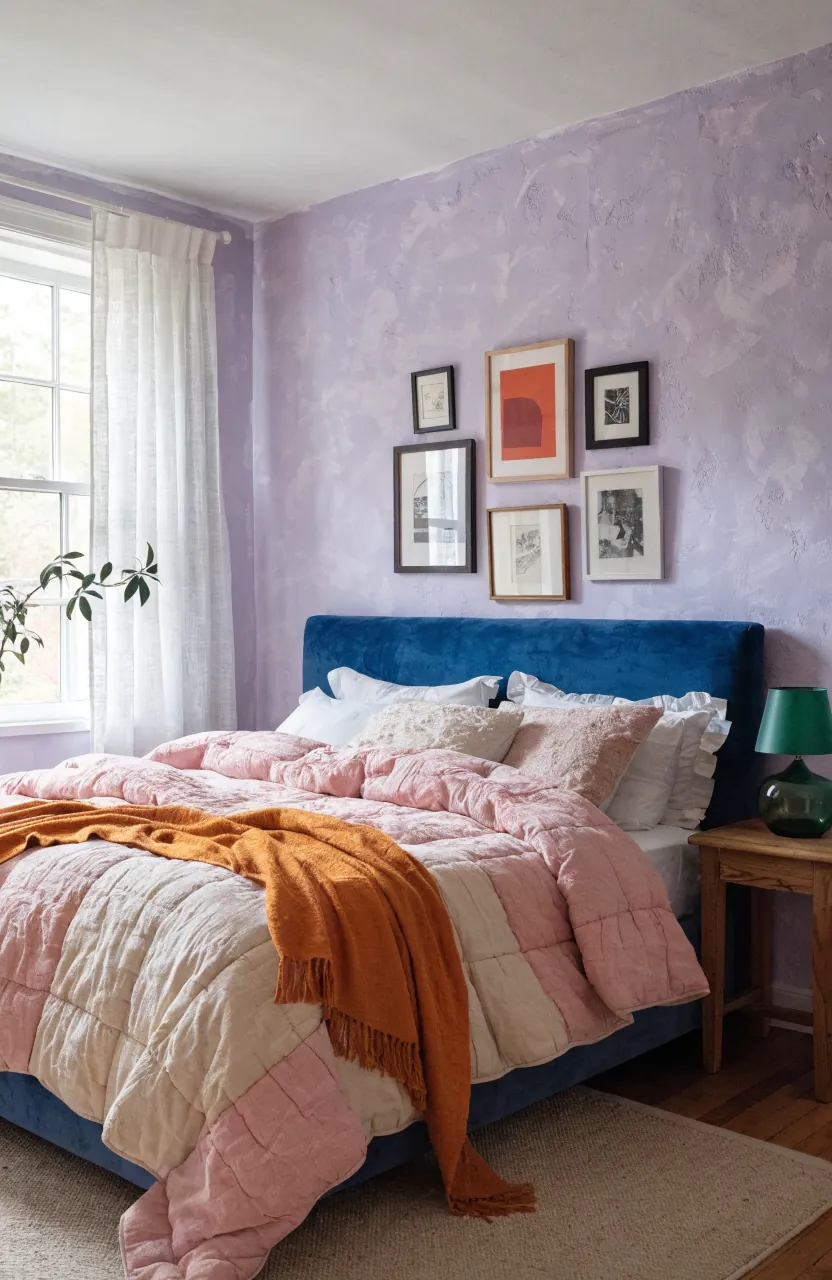
Colorful bedroom ideas work best when the big surfaces still feel restful. Try a muted wall color, one richer fabric color, and a warmer accent at the end of the bed. Lilac with deep blue, sage with rust, dusty pink with olive, or cream with saffron can feel bright without feeling busy.
The key is saturation. Choose colors that look like they have a little gray, brown, or cream mixed into them. They still read as color, but they are easier to sleep beside every night.
Make Funky Rooms Feel Collected Instead Of Random
Funky rooms can have mismatched furniture, vintage lamps, patterned rugs, and odd little objects, but they still need a pattern. Repeat two or three colors across the room so the eye can connect the pieces.
For example, an orange chair, a rust stripe in the rug, and a warm clay detail in the art can belong together. Add cobalt or green as the contrast, then let cream walls or wood floors calm the mix down.
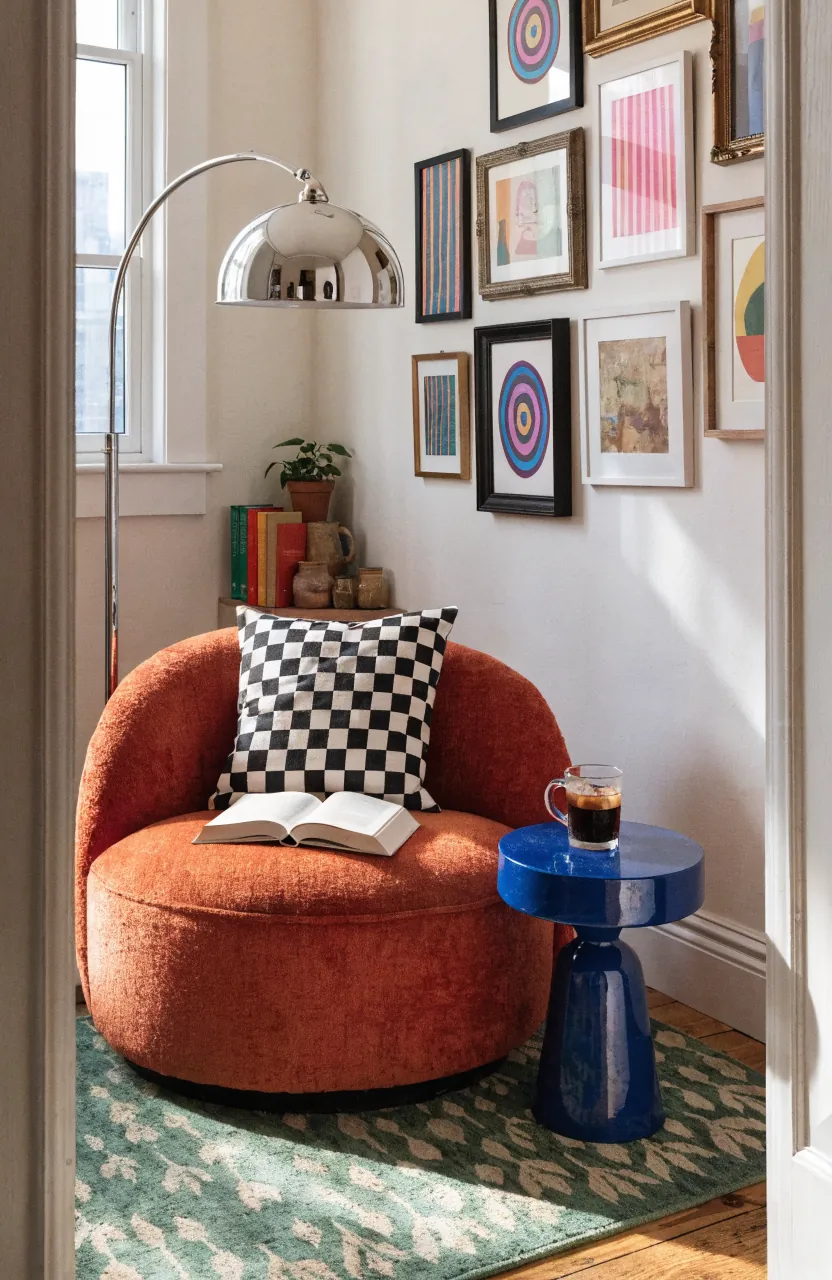
Let Everyday Spaces Carry Happy Color
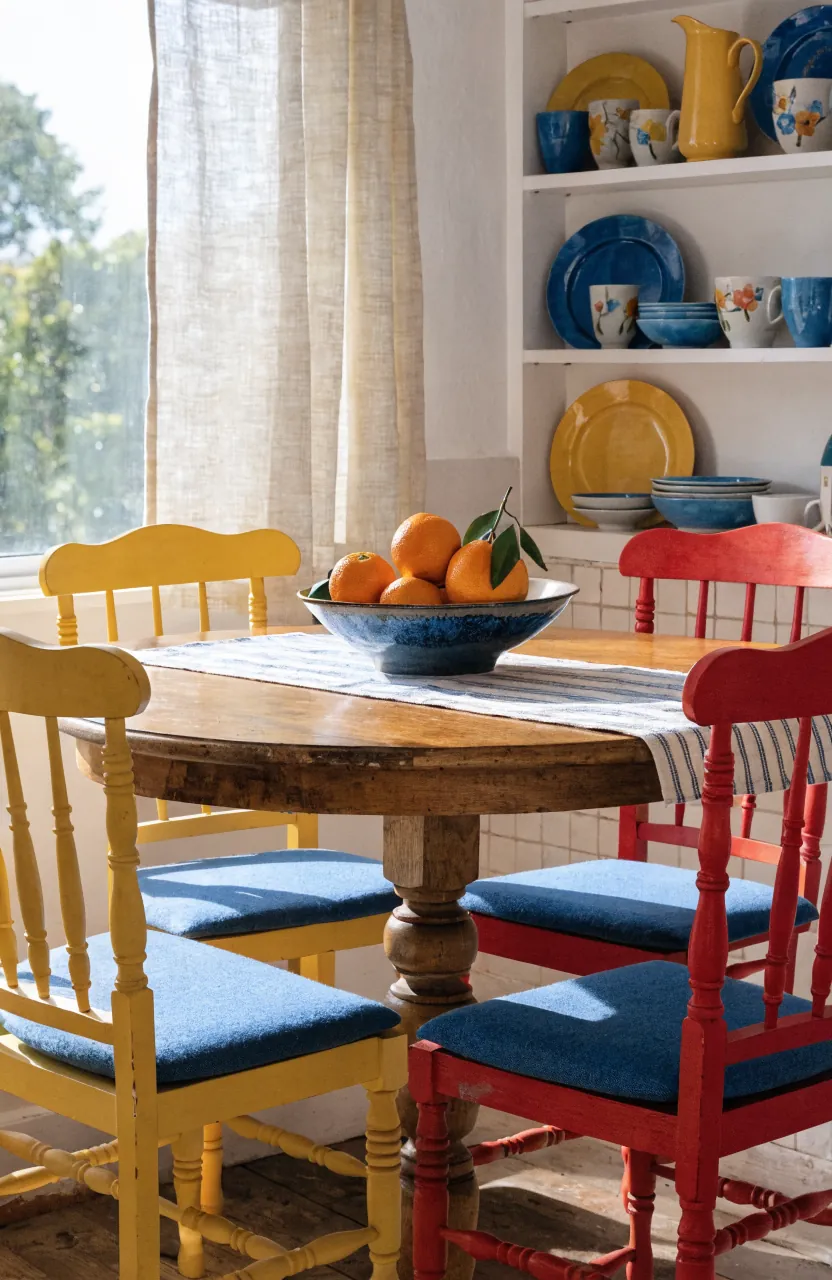
Some of the best colourful room ideas happen in practical spaces: a breakfast nook, kitchen shelf, laundry corner, entry bench, or home office. These rooms can handle cheerful color because they are active by nature.
Painted chairs, colorful ceramics, striped textiles, and fruit bowls can make a dining corner feel bright without turning it into a theme. Use color where daily life already has movement.
Leave Breathing Room Around The Strongest Color
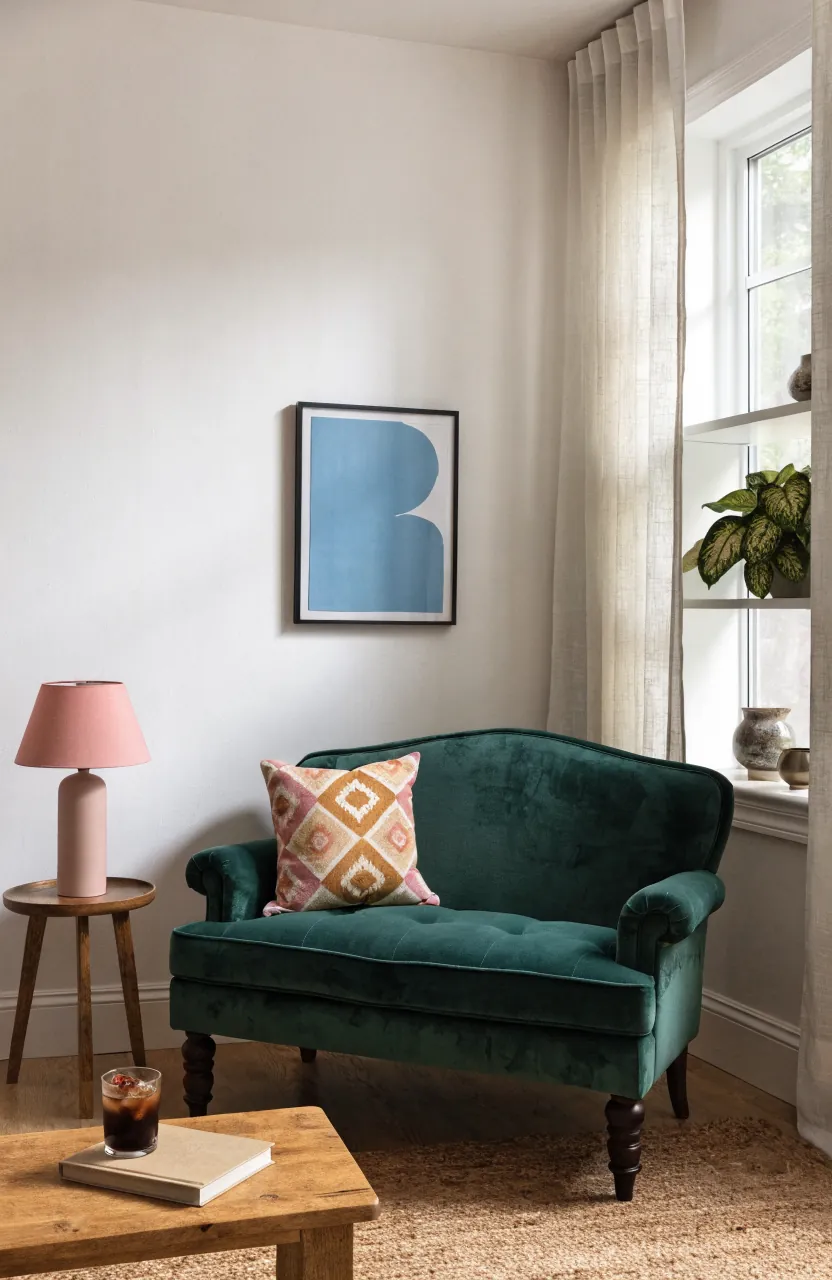
The most common mistake in colorful home interior styling is adding one more thing every time the room feels unfinished. Usually the fix is the opposite: remove two small objects and let the strongest color stand out.
A deep green loveseat, pink lamp, patterned pillow, and simple blue artwork can be enough. If the room has a strong focal color, give it quiet walls, natural materials, and a few blank spaces nearby.
The Simple Test For A Colorful Room
Stand at the doorway and name the three colors that matter most. If you cannot tell which ones are leading, the room probably needs editing. If one color appears only once, repeat it. If every color appears everywhere, choose one to become the star and let the others support it.
Colorful rooms should feel like someone with taste and a real life lives there. Keep the palette visible, repeat it with purpose, and leave enough quiet space for the joyful parts to actually be seen.