
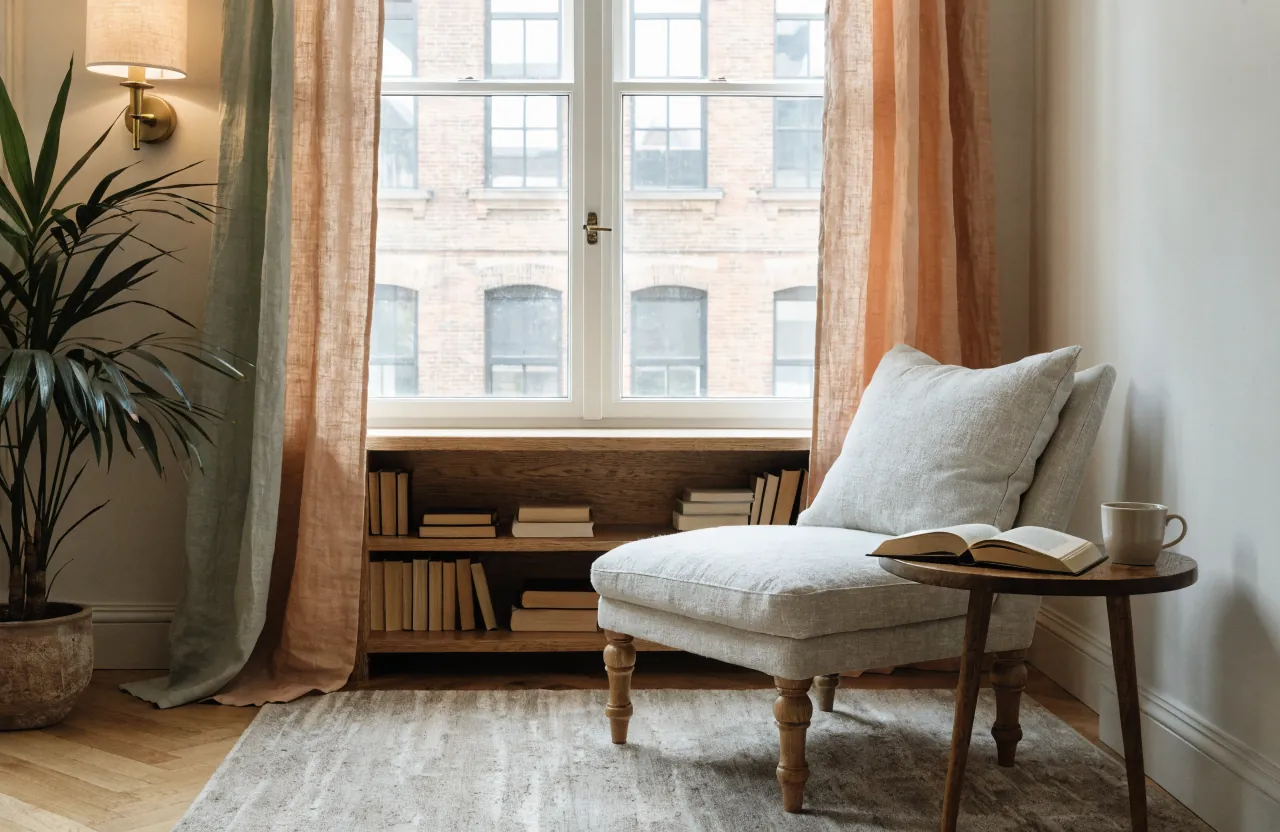
An empty window area already has the hardest part of a reading spot: natural light. What it usually lacks is comfort, storage, privacy, and a layout that makes the space feel chosen instead of forgotten. The goal is not to fill the window with furniture. The goal is to make the window useful without stealing its light.
A good window nook works in two moods. During the day, it uses soft daylight without glare. In the evening, it has enough warm lighting to read after the view goes dark. If you can solve those two needs, even a plain window wall can become a cozy reading nook you actually use.
Measure The Window Area Before Choosing Furniture
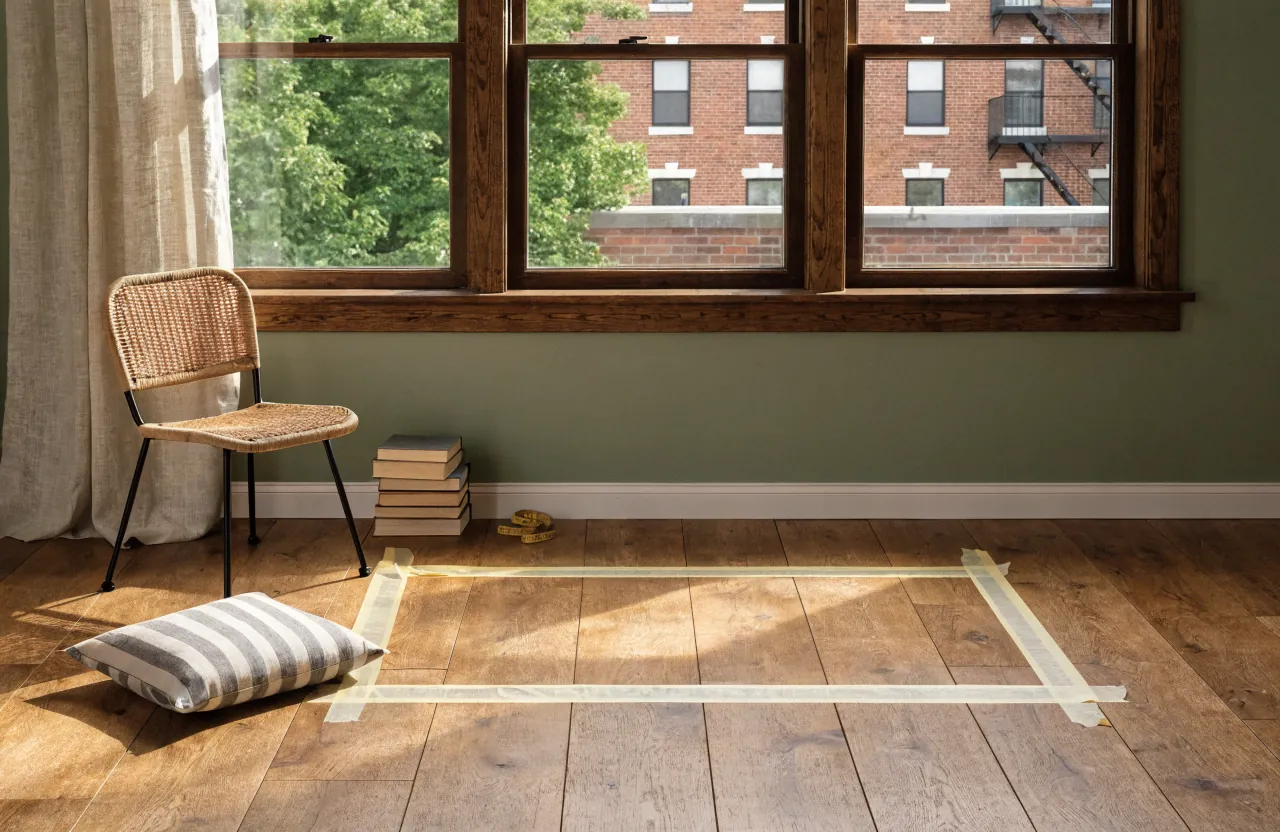
Start with the floor space, not the chair you saw online. Measure the width of the wall, the depth from the window to the walkway, and the height from the floor to the sill. Also note outlets, floor vents, radiator covers, curtain swing, and any door path nearby. A reading nook should make the room easier to enjoy, not harder to walk through.
Use painter tape to mark the footprint of a chair, bench, rug, or low shelf. Then walk past it. Sit near it. Open the curtains. This small test will tell you whether the window area can handle a window seat, a lounge chair, a compact chair corner, or only a narrow book ledge with a stool.
Choose The Right Seat For The Shape Of The Window
The best seat depends on the window area. A wide bay window can handle a built-in window seat or daybed. A flat wall with a tall window often works better with an armchair placed beside the glass. A narrow bedroom window might only need a compact chair and a low side table.
Do not assume a bench is automatically comfortable. Many window seats look inviting but have thin cushions, no back support, and nowhere to lean. If you build or buy a bench, use a cushion thick enough for real sitting and add support at the back or sides. If you prefer long reading sessions, a chair with arms may be more comfortable than a shallow bench.
When A Chair Works Better Than A Bench
- The window is tall and narrow.
- You need to keep access to curtains or a radiator.
- The wall is too shallow for a deep cushion.
- You want to angle the seat away from direct glare.
Angle The Seat To Use Natural Light Without Glare
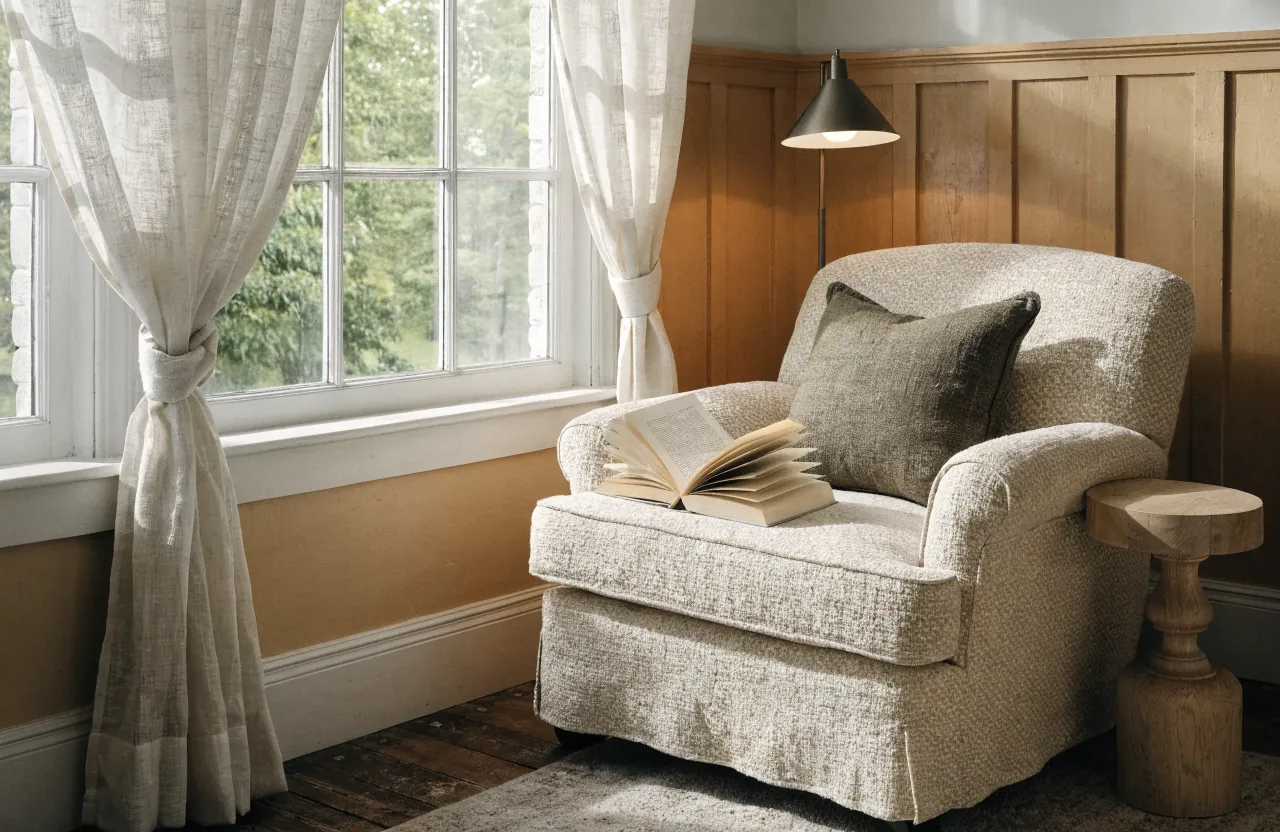
Natural light is the reason a window nook feels special, but direct light can be uncomfortable on a page or screen. Instead of facing the chair straight into the window, place it beside the window or at a gentle angle. This lets daylight fall across your shoulder and onto the book without forcing your eyes toward the brightest part of the room.
If the sun is strong in the afternoon, test the spot at the actual time you plan to read. A beautiful morning corner can become too bright by four o’clock. East-facing windows are often soft in the morning. South and west windows usually need more control, especially in summer.
Keep the view open when possible. Avoid tall furniture that blocks the glass. Low shelves, small tables, woven baskets, and plants give the window area function without making it feel closed in.
Build A Window Seat Only If It Will Be Comfortable
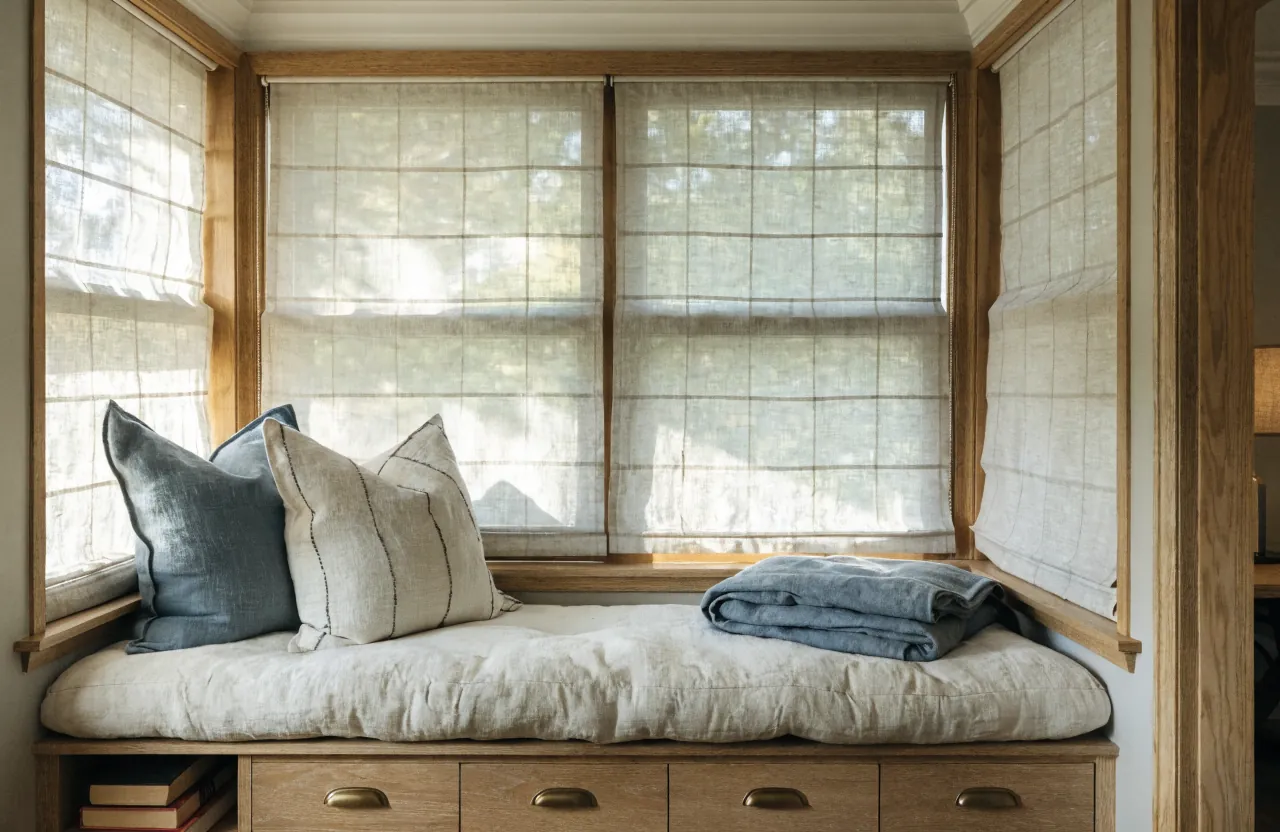
A window seat can be the dream version of a reading spot, but only when it is deep enough and soft enough. If the cushion is too thin, the bench becomes a decorative ledge. If there is no back support, you will sit there for five minutes and move back to the sofa.
For a more usable window seat, plan for a thick cushion, a few supportive pillows, and storage underneath. Drawers are easiest to use in a living room. A lift-top bench can work well in a bedroom or hallway, especially for blankets and seasonal books. Open cubbies are useful if you want visible book storage, but they need baskets or neat stacks to stay calm.
If you rent, create the effect without building anything. Use a low storage bench, a deep cushion, and a small side table. The reading nook can still feel built-in if the bench fits the window width and the textiles match the room.
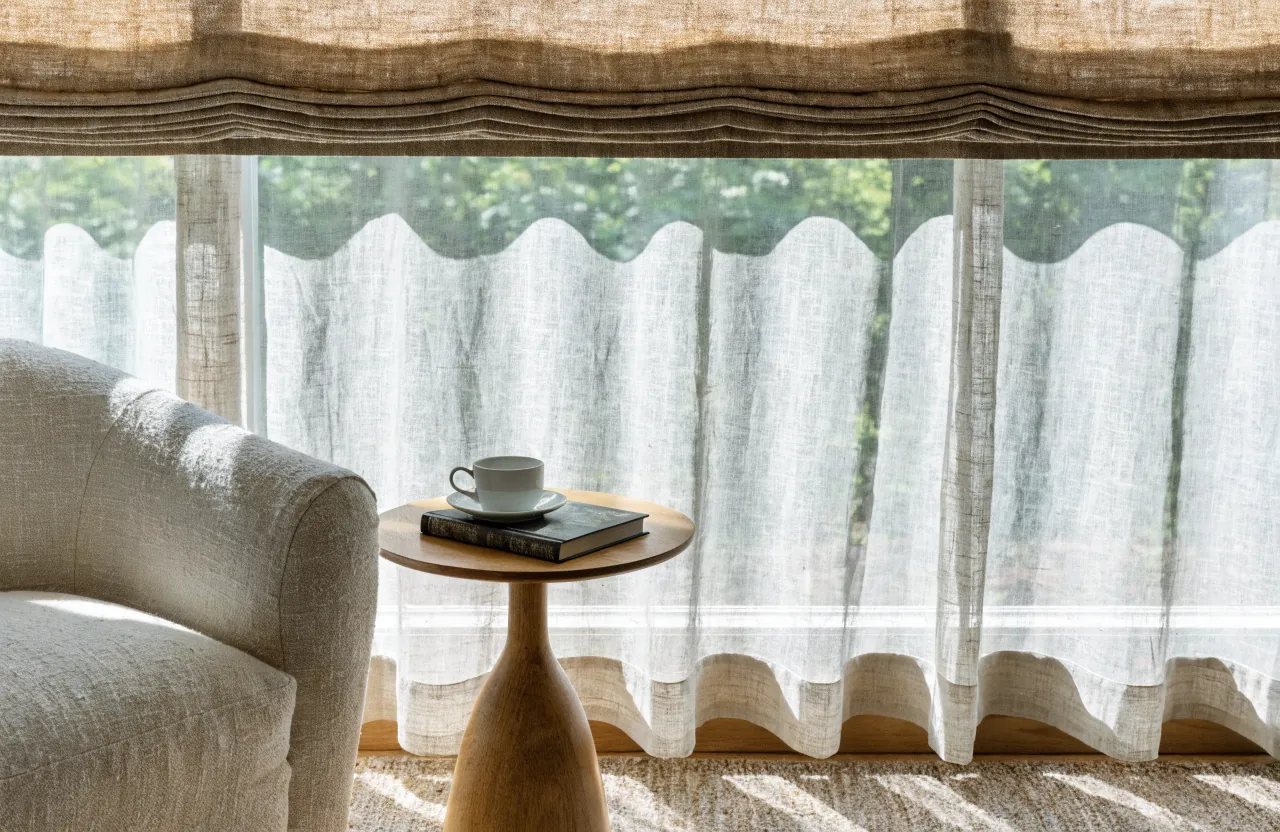
Control Light And Privacy With Soft Layers
A reading spot beside glass needs window treatments that do more than decorate. Sheer curtains soften daylight and make the window feel gentler. Roman shades control glare without taking up floor space. Privacy film can help if the window faces a sidewalk or nearby building, especially in a bedroom reading nook.
Layering is often the most flexible choice. Sheers keep the nook bright during the day. A shade or curtain panel gives privacy at night. Choose fabrics that move quietly with the rest of the room: linen, cotton, woven textures, or a simple natural shade. Heavy dark curtains can be cozy, but they may make a small window nook feel closed off if they block too much light.
A Simple Light-Control Formula
Use sheers for softness, a shade for glare, and a lamp for evening reading. That trio keeps the window nook useful across the whole day.
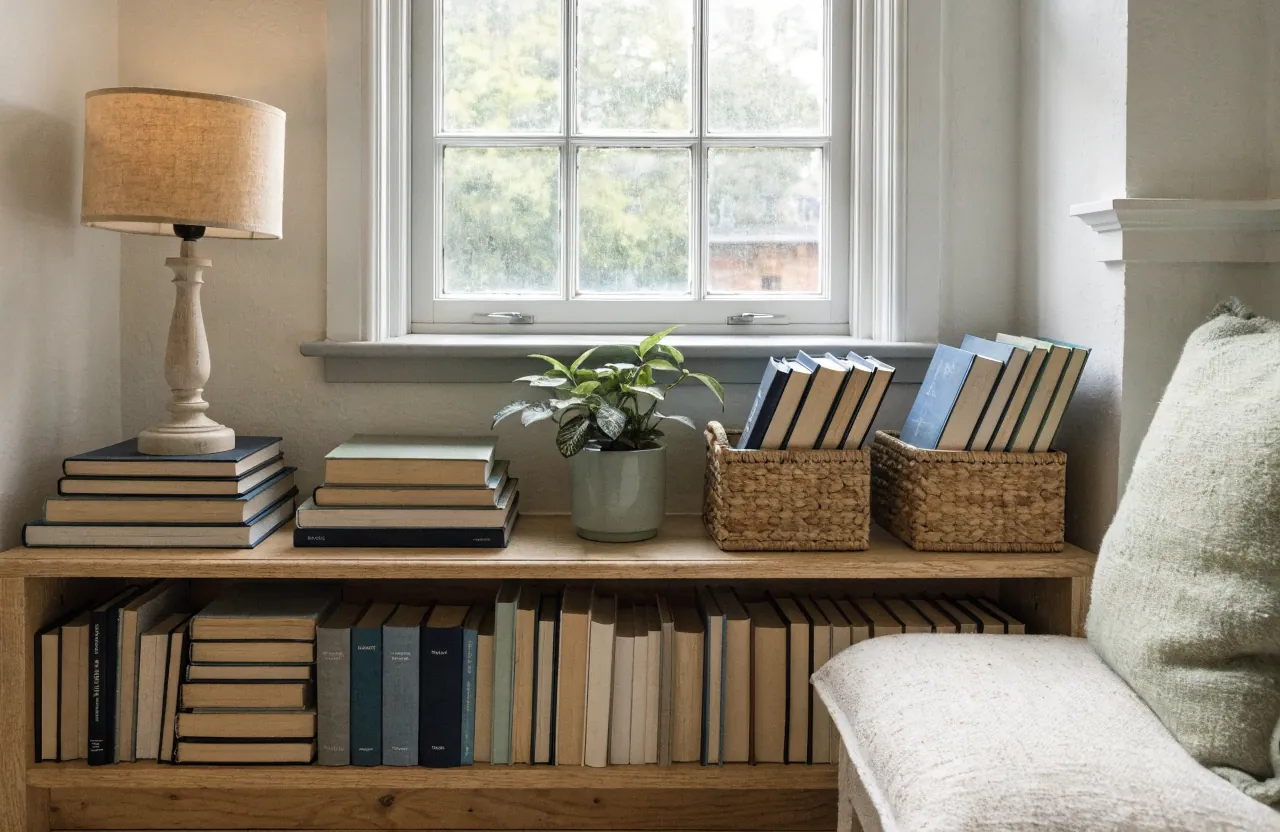
Add Book Storage Without Blocking The Window
The easiest way to ruin a window area is to place tall storage in front of the light. Keep book storage low, narrow, or off to the side. A low shelf under the sill can hold current reads, baskets, and a small lamp. A narrow bookcase beside the window can create a home library feeling without covering the glass.
If the sill is deep, use it carefully. A few books, a small plant, and a candle can look lovely. A crowded sill makes the window harder to clean and can block the light that made the spot appealing in the first place. The best bookshelf decor for a window nook stays below the sightline and leaves room for the view.
For a small apartment, try a rolling cart, wall ledges, or a storage ottoman. The point is to keep the next book within reach while preserving the natural light.
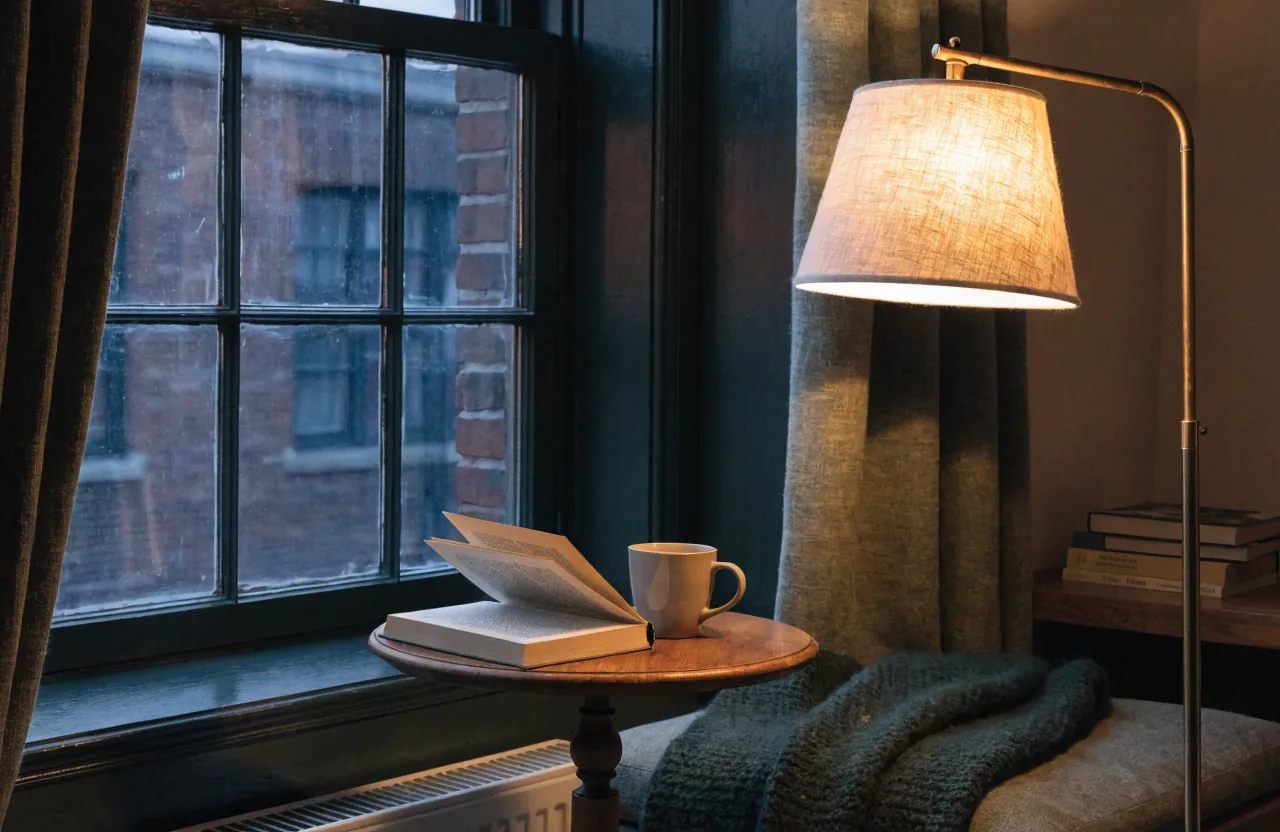
Do Not Forget The Lamp
A window reading spot still needs lighting after sunset. Once the glass turns dark, the nook can feel cold unless you add a warm lamp. Place the lamp behind or beside the seat so the light lands on the page. A small table lamp works if you have a side table. A floor lamp is better when the window area is tight.
Warm bulbs make the corner feel softer. Adjustable lamps are especially helpful because they can follow your reading posture. If the nook is part of a bedroom or living room, put the lamp on a dimmer or use a smart bulb so the reading space can shift from practical brightness to quiet evening glow.
Finish With Textiles That Make The Spot Feel Settled
A rug, pillow, and throw are not just decoration. They make the window area feel anchored. Use a rug to connect the chair, table, and shelf. Add one supportive pillow, not a mountain of cushions. Keep a blanket nearby if the glass makes the area cooler in winter.
Color can help too. If the nook feels washed out because of bright natural light, add one grounded tone: olive, rust, navy, cocoa, or charcoal. The contrast gives the reading space depth while still letting the window stay bright.
The Window Nook Formula
To turn an empty window area into a reading spot, use this order: measure the space, choose a comfortable seat, angle it for natural light, add glare control, keep book storage low, place a warm lamp, and anchor everything with one soft rug or textile layer.
When those basics are right, the window becomes more than a pretty patch of light. It becomes a reading space that works in the morning, in the afternoon, and after the room goes quiet at night.