
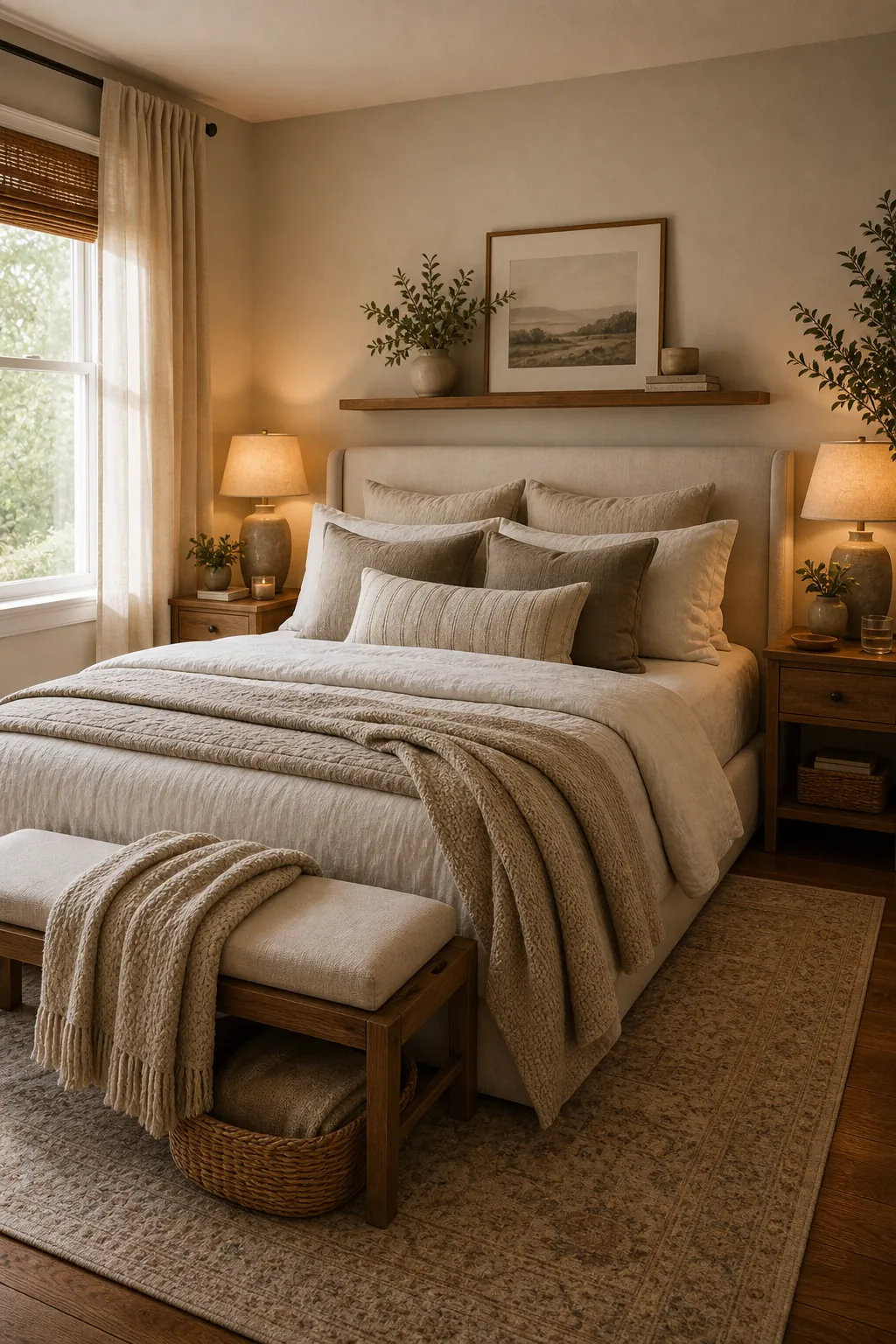
Neutral colors can make a couple bedroom feel calm, but they can also fall flat if every surface is the same shade of beige. The difference is layering. Warm neutrals need texture, contrast, soft lighting, and a few natural accents so the room feels shared and alive.
A good neutral bedroom does not avoid color completely. It uses quiet color carefully. Wood, brass, greenery, and warm textiles are what keep neutral decor from feeling cold.
Layer Several Warm Neutrals on the Bed
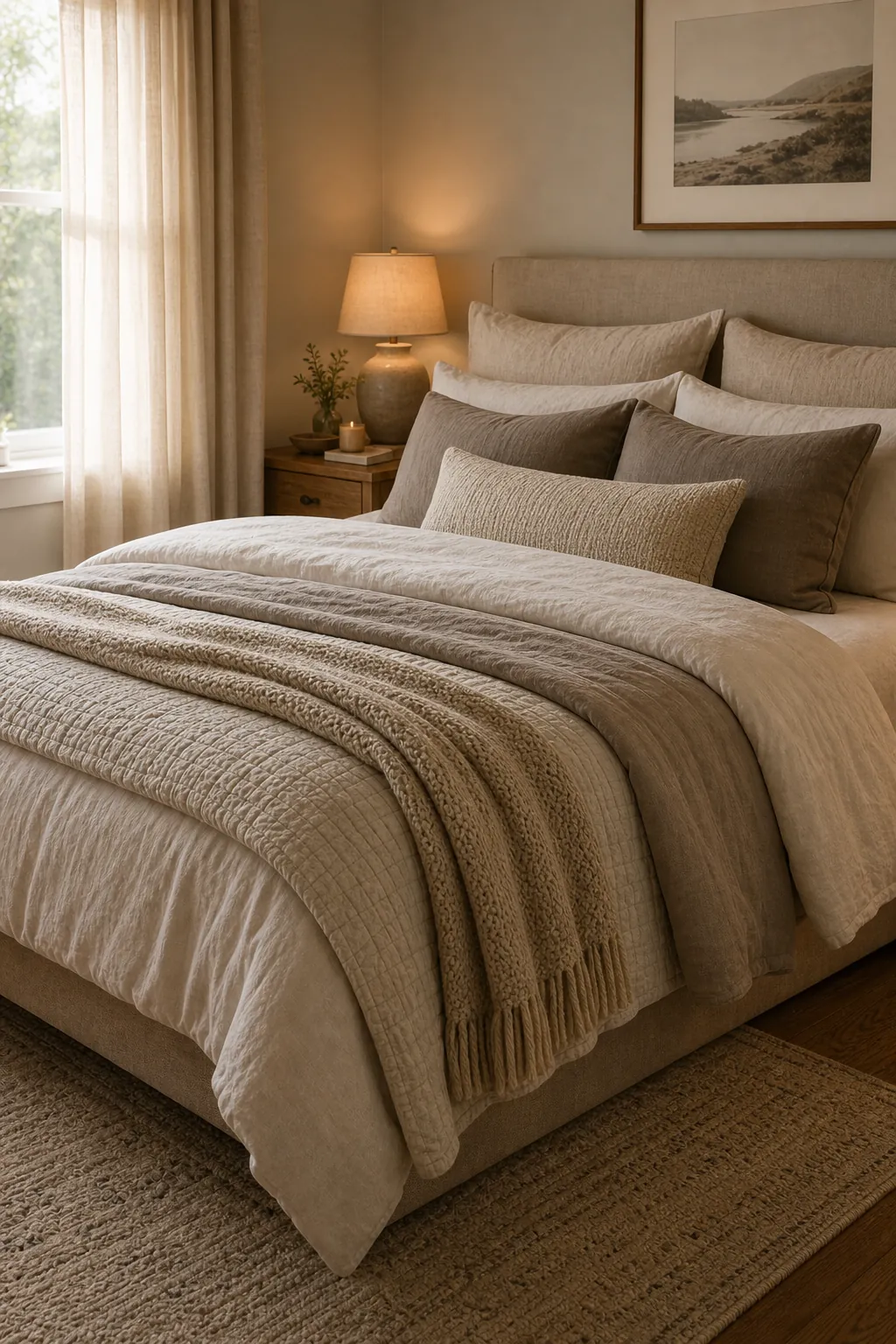
The bed is the largest color surface in the room, so start there. Instead of one flat white duvet, layer warm white sheets, an oatmeal coverlet, a taupe quilt, and one soft beige or sage throw. Each layer should be close in tone but different enough to read.
This is especially useful in a shared bedroom because it feels calm without leaning too feminine or too stark. Neutral bedding works best when the texture changes before the color does.
Add Contrast With Wood and Brass
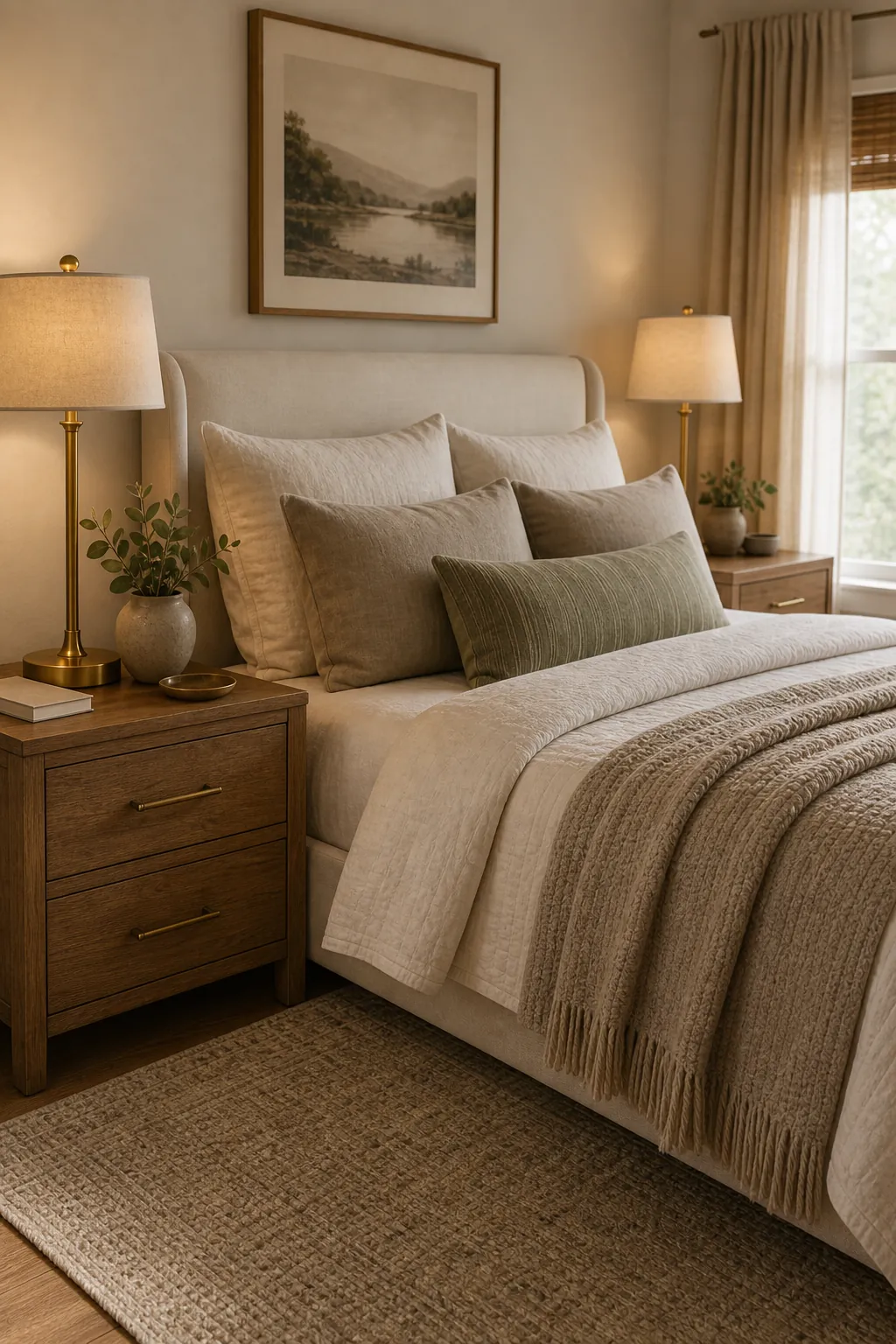
Neutral bedroom decor needs a few materials that catch the eye. Natural wood nightstands, brushed brass lamps, or warm metal hardware can create contrast without introducing loud color. The room still feels soft, but it no longer feels unfinished.
Choose finishes that feel warm rather than shiny. Small material contrast gives neutral colors structure.
Use Texture Like a Color
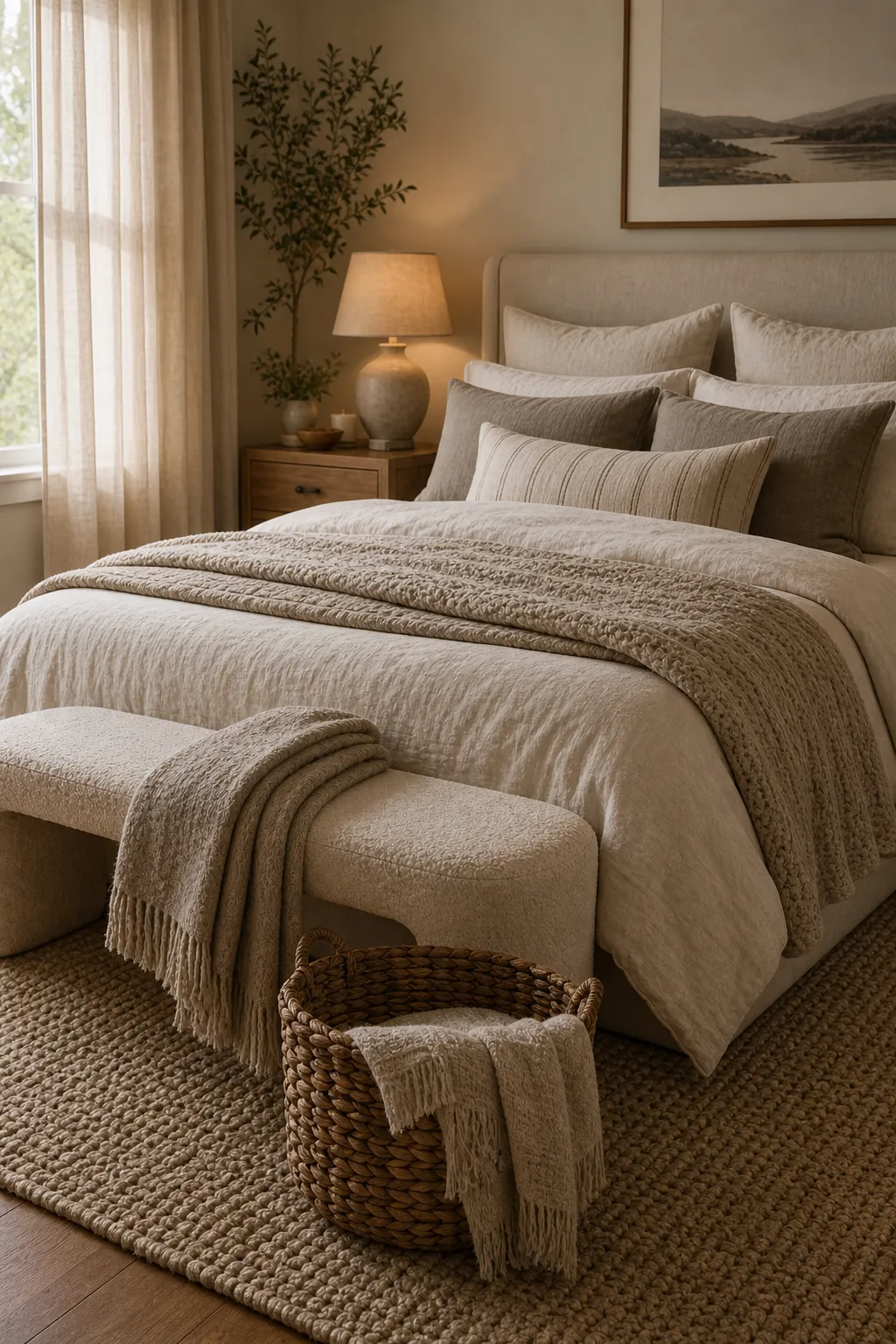
In a neutral bedroom, texture does the work that bright color would do elsewhere. A woven rug, linen duvet, boucle bench, basket, ceramic lamp, and soft curtains all make the same quiet palette feel deeper.
Look at the room from the doorway. If every surface is smooth, add something woven, quilted, ribbed, or matte. Texture is how warm neutrals become cozy instead of plain.
Keep the Lighting Warm and Low
Soft lighting matters more in a neutral room because the palette reflects every light temperature. Cool bulbs can make beige and taupe look gray. Warm bedside lamps, filtered curtains, and low light sources make the same colors feel softer.
Use at least two lighting points near the bed. A modern bedroom can still feel cozy when the light is layered and warm.
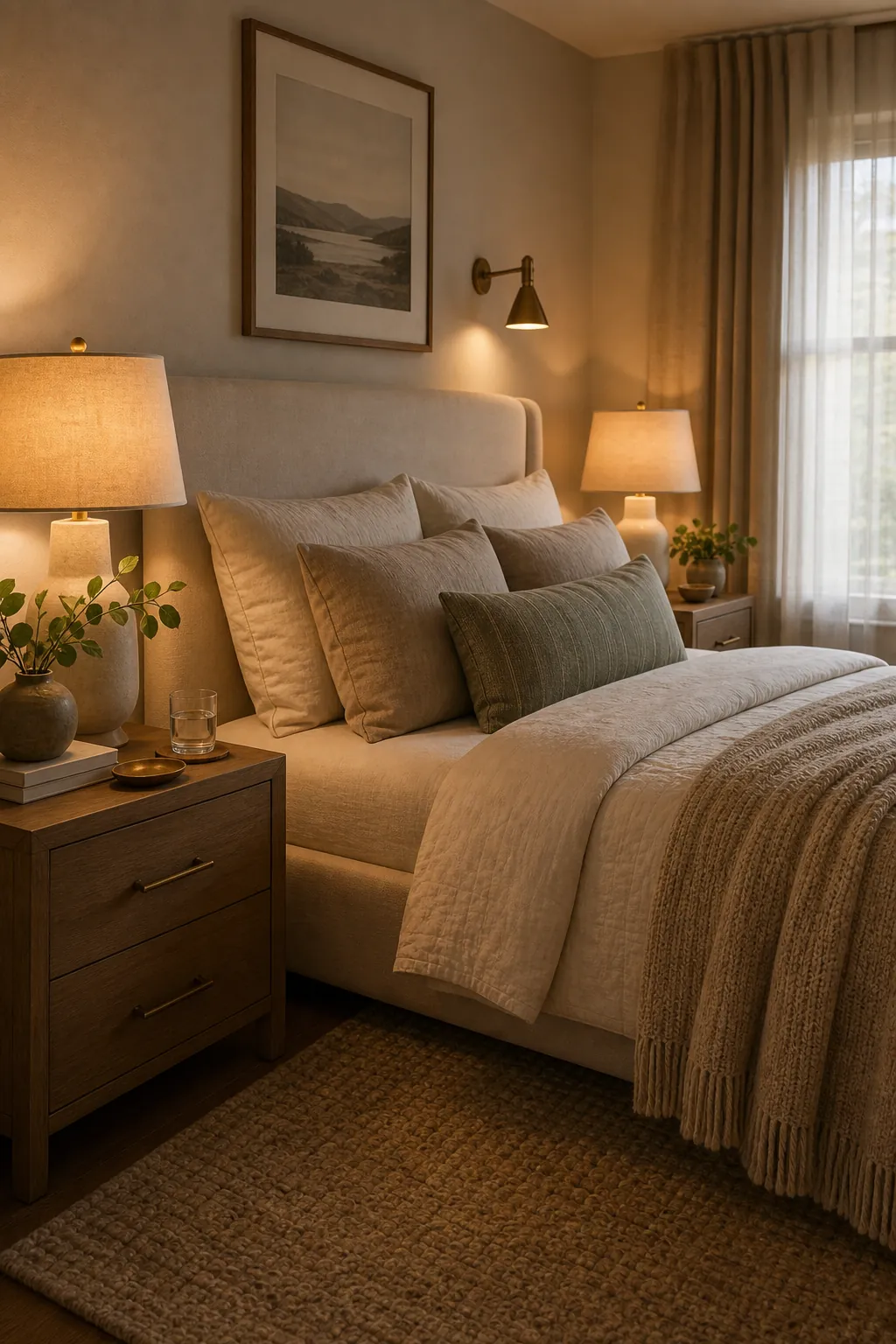
Use Greenery as the Quiet Accent
A plant is often the easiest accent for a neutral couple bedroom because it adds life without changing the palette. One healthy plant on a nightstand, dresser, or in a woven basket can break up all the warm whites and taupes.
Keep the pot simple: ceramic, wood, or woven fiber. The greenery should feel like a natural pause in the room, not a loud color statement.
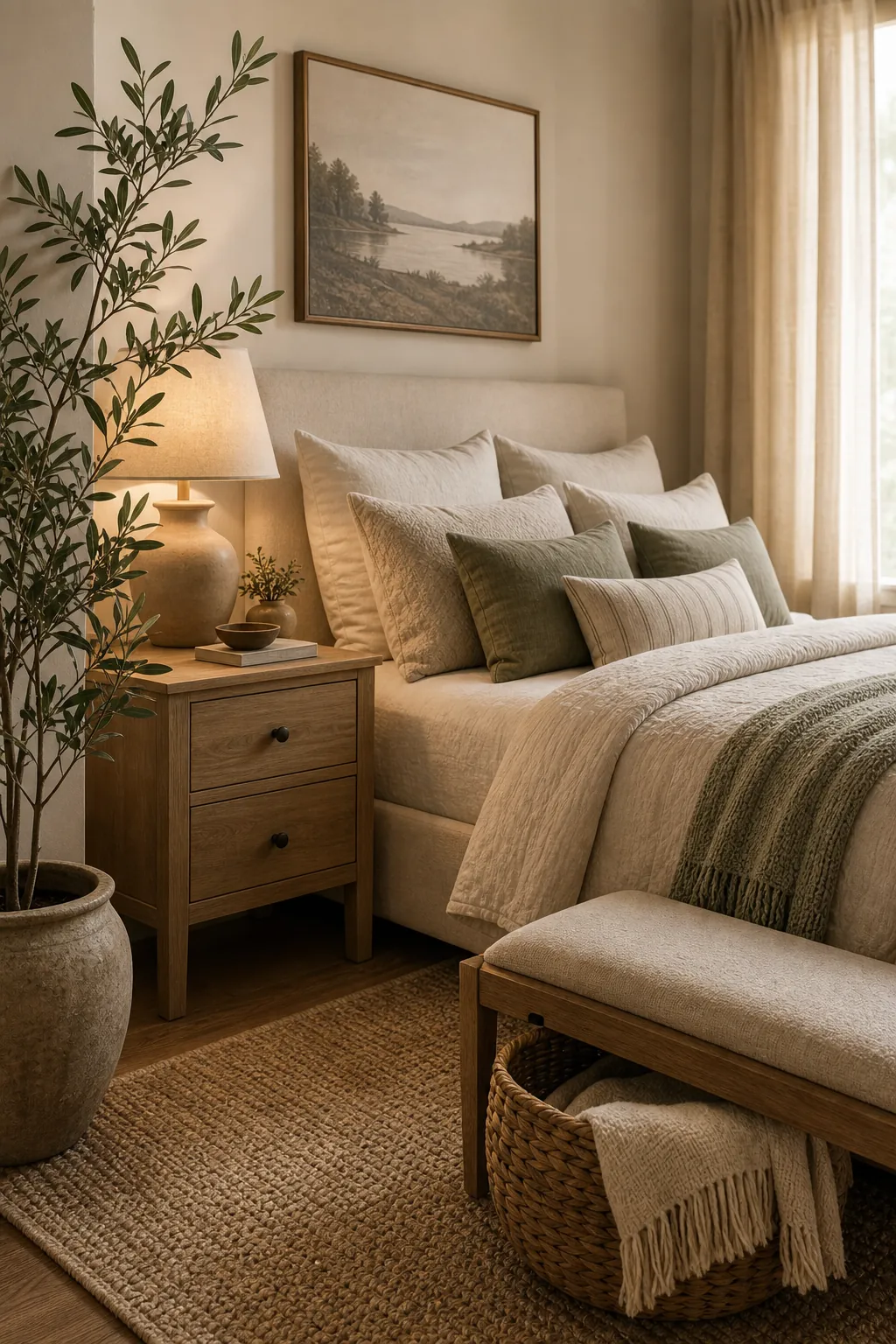
Choose Wall Decor That Stays Quiet
Wall decor can make a neutral bedroom feel finished without making it busy. Use one large framed piece, two smaller frames, or a slim ledge with a small object and plant. Keep the tones soft so the art supports the room instead of interrupting it.
Wood frames are especially useful because they repeat the warmth from the nightstands or bench. The wall should add shape and balance, not visual noise.
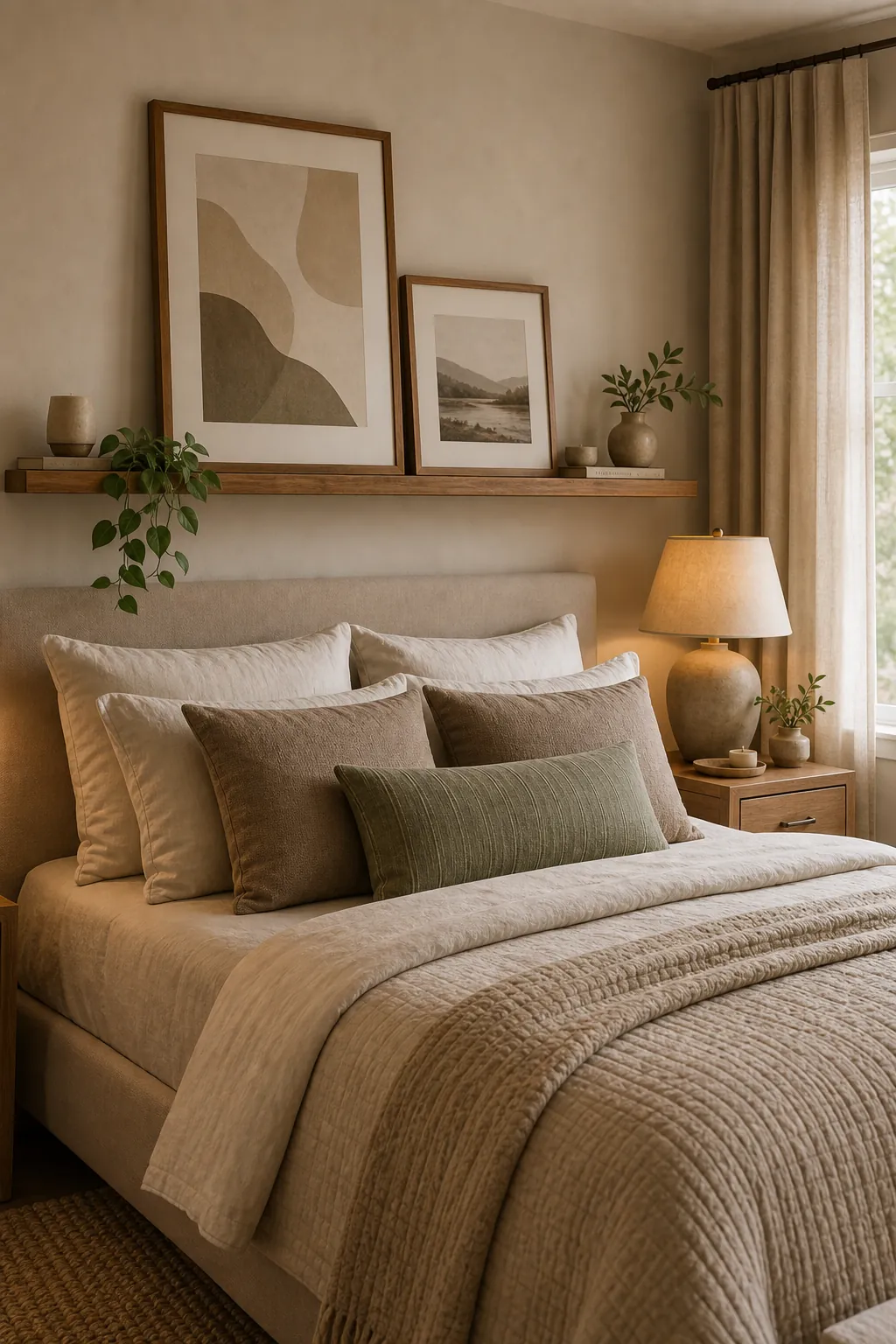
When neutral colors are layered with warmth, contrast, texture, and light, the bedroom feels calm without becoming empty. That is the balance a shared bedroom needs most.