
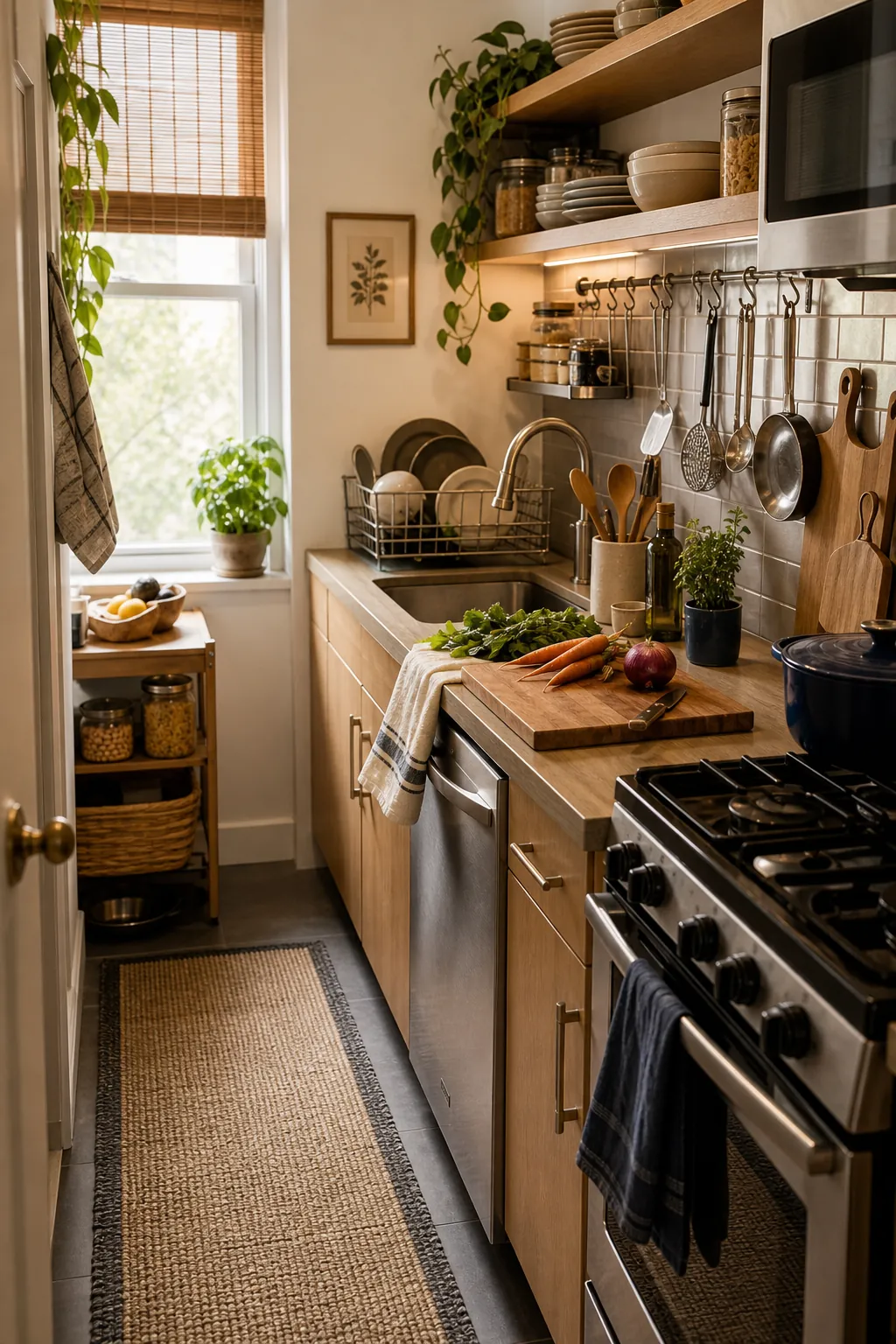
A small kitchen that only looks tidy is different from a small kitchen that can handle real cooking. If you chop vegetables, wash pans, prep lunches, and cook several times a week, the kitchen has to protect counter space, keep tools close, and make cleanup predictable.
The best small kitchen ideas start with workflow. Store things where you use them, keep one prep zone clear, and move everyday tools off the counter when they do not need to sit there.
Protect One Real Prep Zone
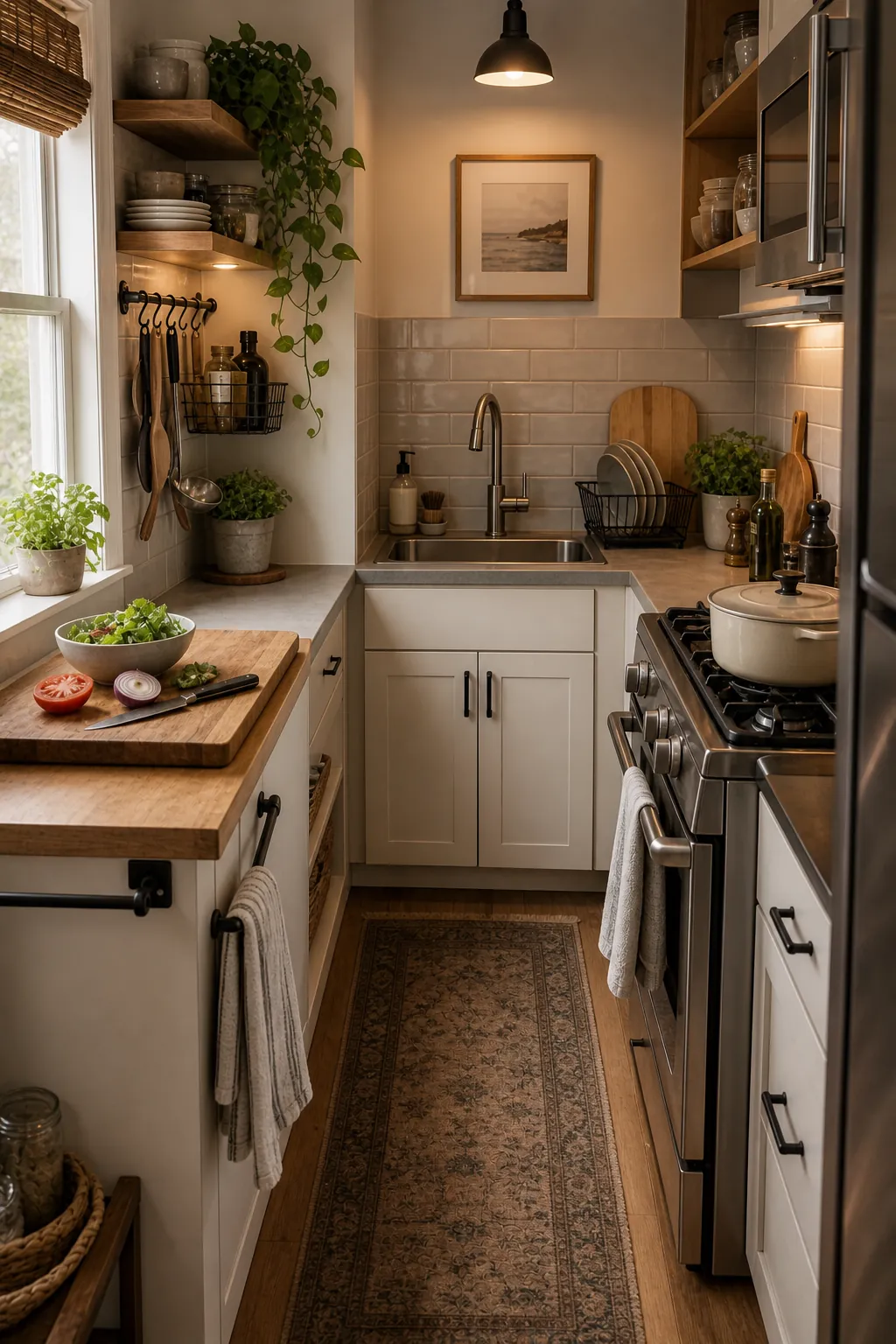
People who actually cook need a clear rectangle of counter more than they need another decorative shelf. Choose the part of the counter closest to the sink or stove and treat it as protected meal prep space. Keep only the tools you use during prep within arm’s reach.
A cutting board, bowl, knife, and towel are enough for most daily cooking. If the counter is always covered, the kitchen will feel smaller than it is.
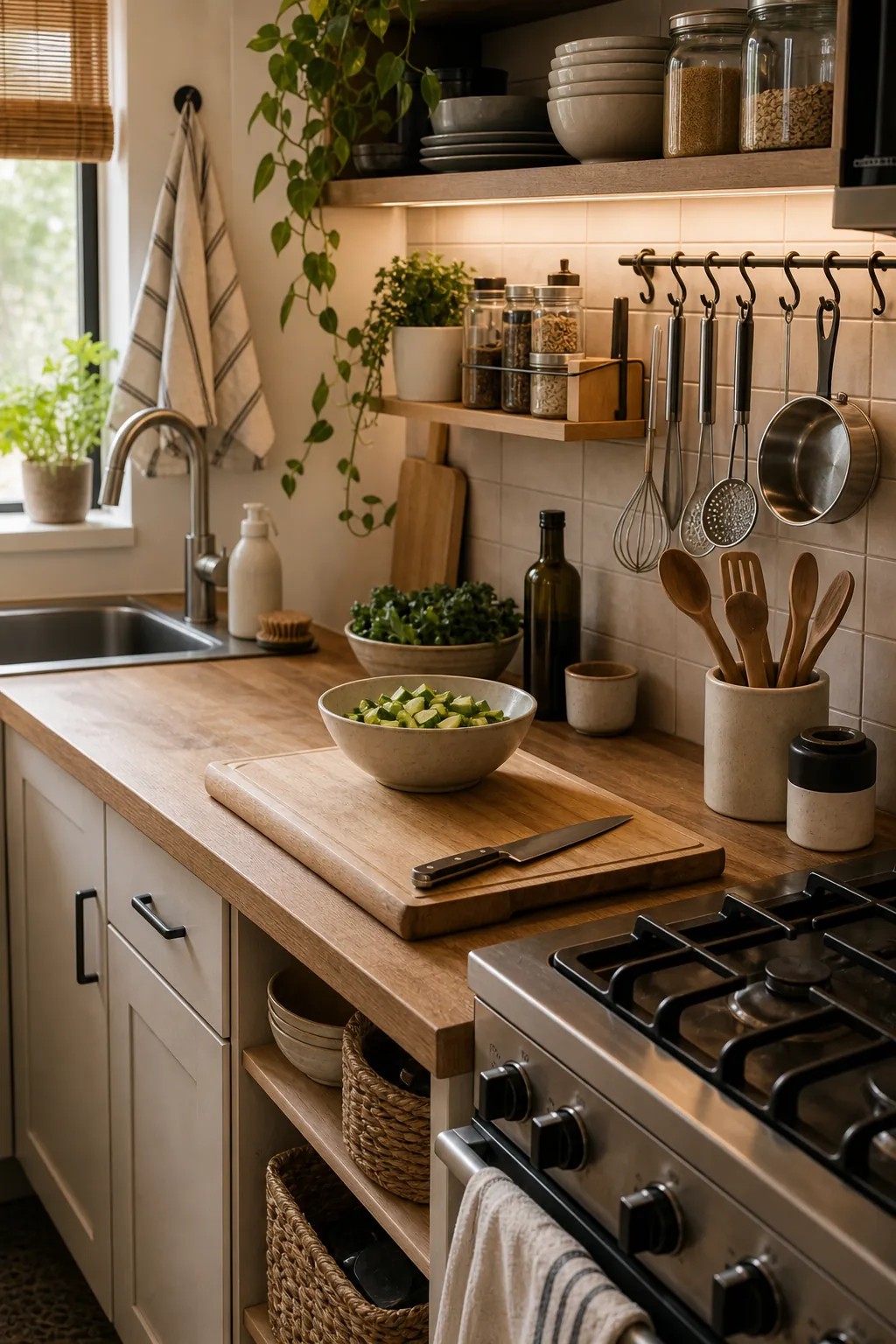
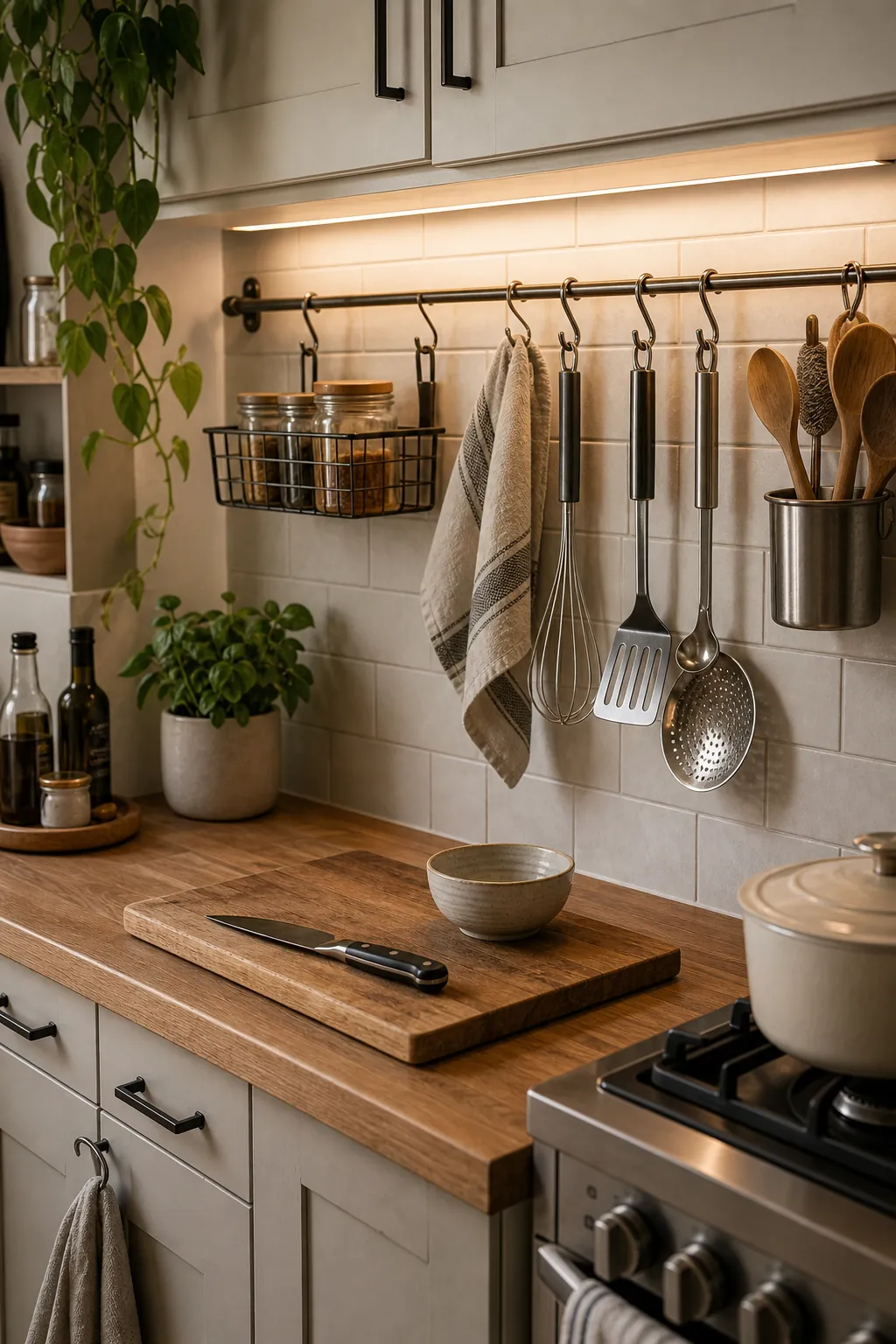
Use Rails for the Tools You Reach For Daily
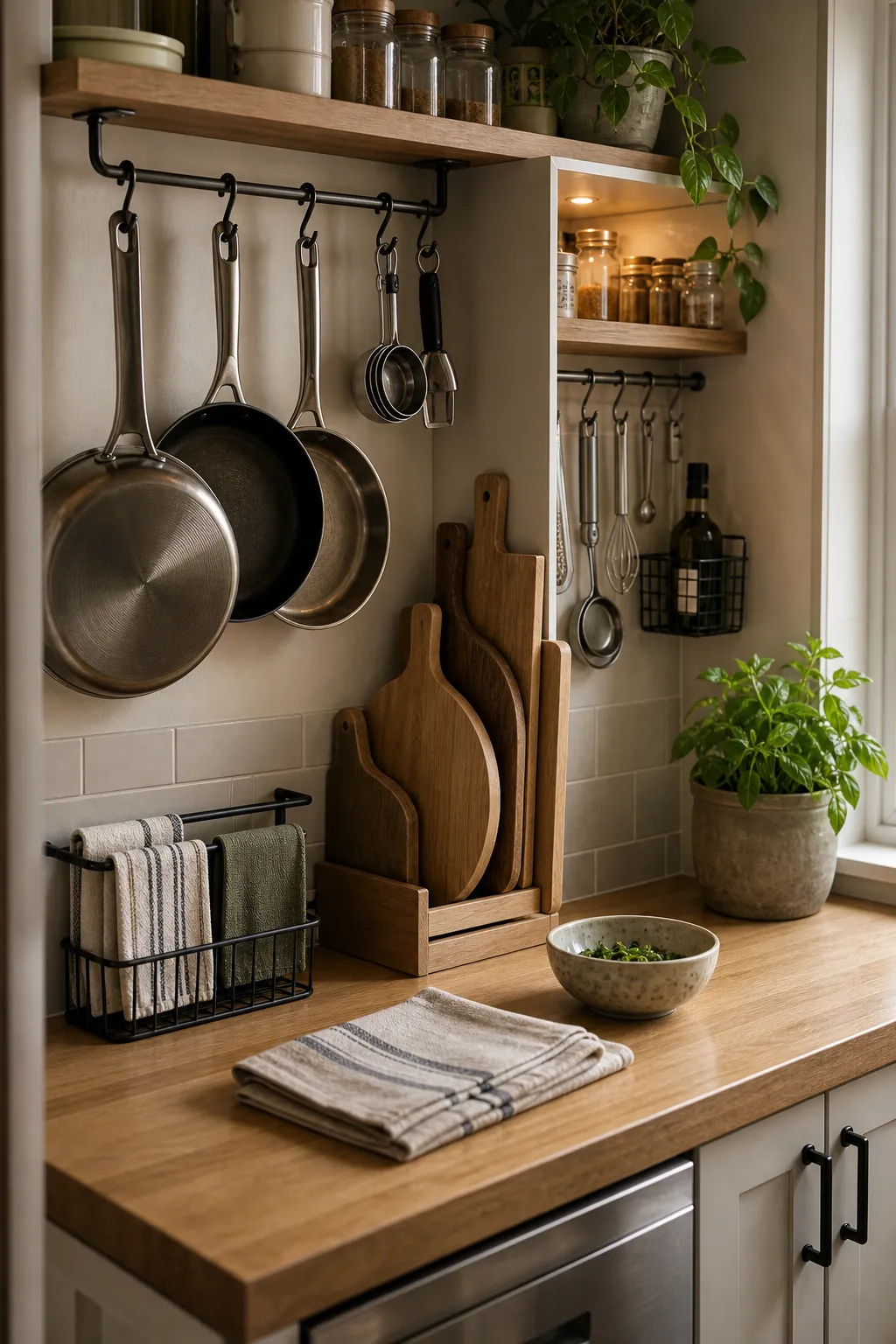
Rails and hooks work well in a compact kitchen because they keep the most-used tools visible without taking over drawers. Hang spatulas, small pans, towels, and a tiny basket for garlic or clips, but stop before the wall becomes crowded.
The rail should make cooking faster, not turn into a display. Only hang what earns its place during the week.
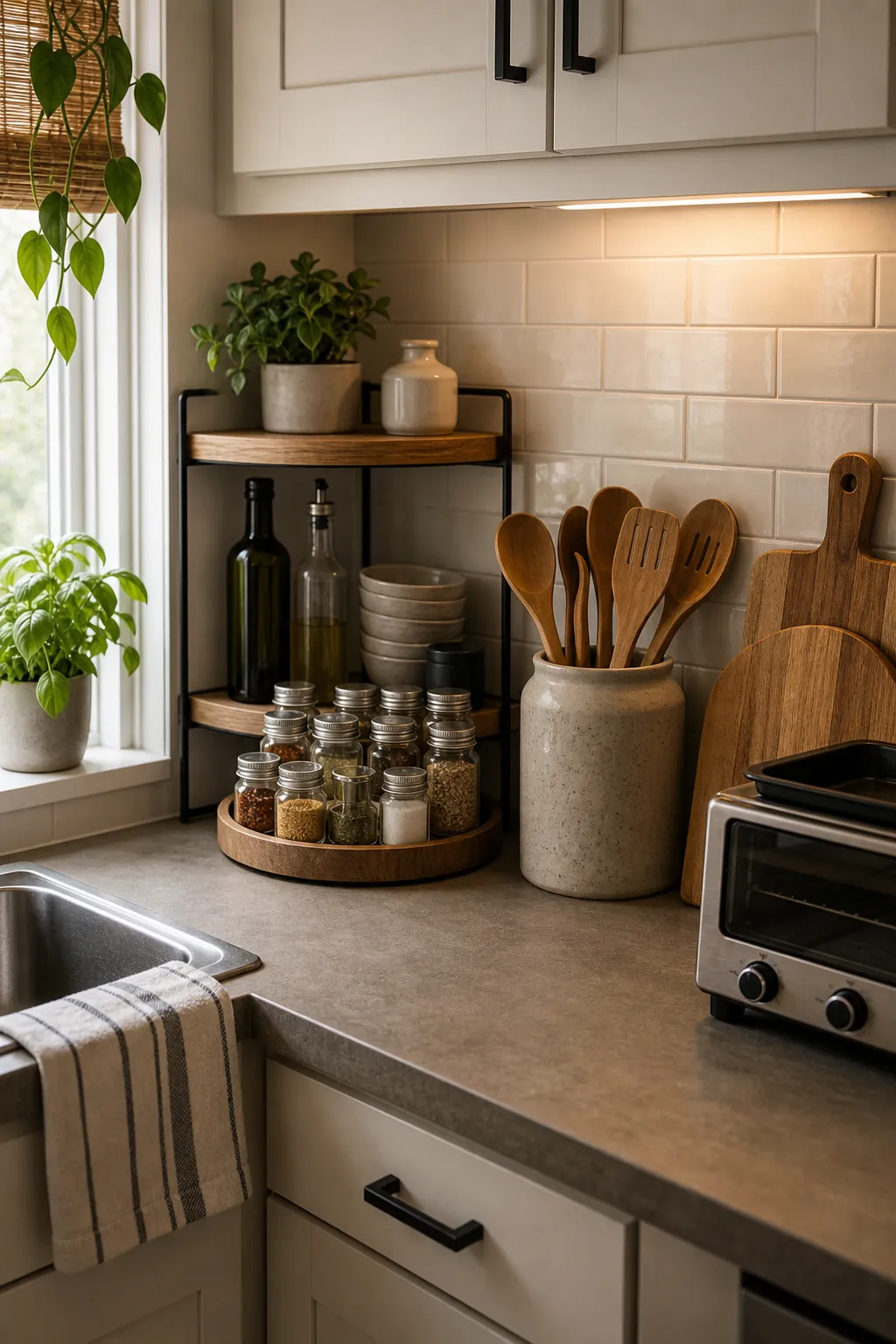
Put Counter Storage in a Boundary
Some items do need to stay on the counter: salt, oil, utensils, spices, or the board you use every day. The trick is giving them a boundary. A small tray, corner shelf, or crock keeps them from spreading across the work surface.
Boundaries are what make counter storage feel intentional. When the storage has an edge, the prep space can stay open.
Respect the Cooking Triangle, Even When It Is Tiny
In a small kitchen, the sink, stove, and prep counter may be close together. That can be a strength if the path between them stays clear. Keep pans near the stove, knives and boards near the prep area, and dish tools near the sink.
Do not store daily cooking items across the room just because a cabinet is empty there. A practical kitchen layout follows the cooking steps.
Store Boards and Pans Vertically
Cutting boards, sheet pans, lids, and small skillets waste space when they are stacked flat. Store them upright in a narrow slot, on a rail, or on a shallow shelf so you can grab one without unloading a pile.
This is one of the most useful kitchen organization moves for daily cooking. Vertical storage turns awkward items into accessible tools.
Build a Compact Pantry Zone
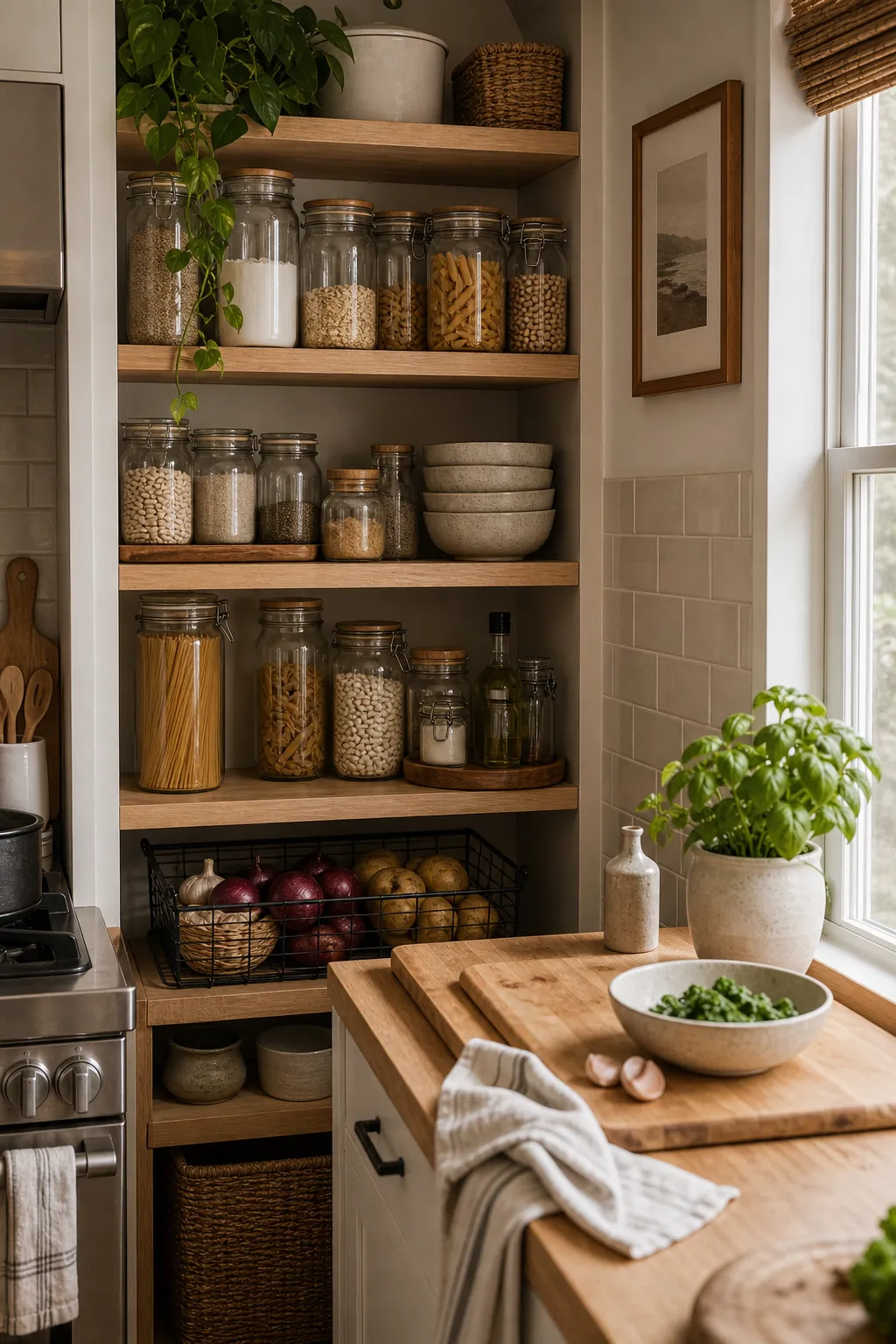
If you cook often, pantry basics should be easy to see. Use one shelf, cart, or narrow cabinet for the ingredients you reach for every week. Keep the jars simple, group like items, and leave heavier backups somewhere lower.
The pantry zone should support cooking, not become another countertop. Ingredients are most helpful when they are visible, contained, and close to the prep area.
A small kitchen for real cooking does not need to be empty. It needs every inch to have a job. When prep space, storage, and layout support the way you cook, the kitchen feels bigger because it stops fighting you.