
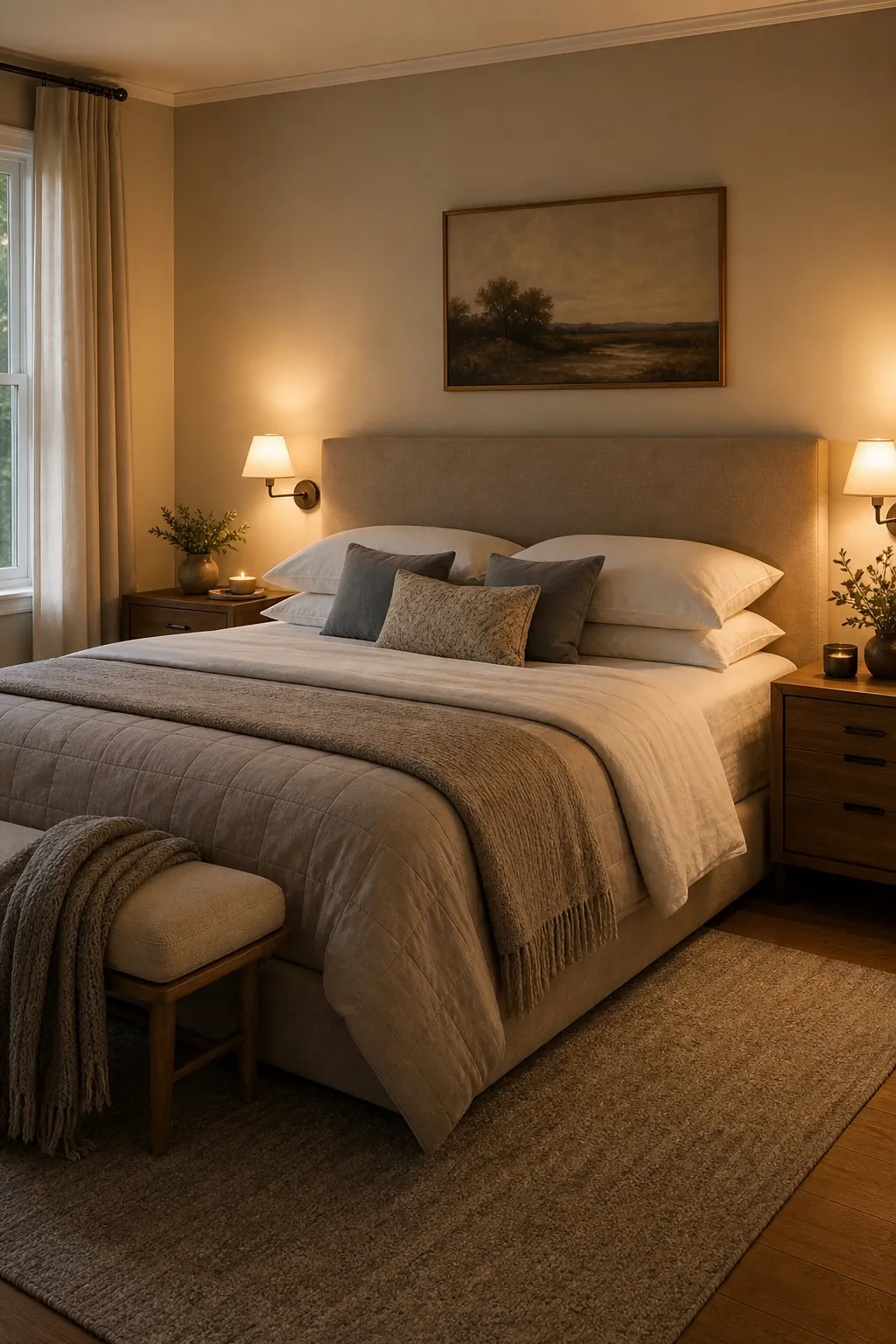
A calm hotel bedroom does not feel good because every piece is expensive. It feels good because the room makes fewer demands on you. The bed is easy to enter, the light is low, the surfaces are edited, and nothing important is buried under visual noise. For a couple bedroom, that matters even more because two sets of habits have to land in one quiet room.
The best couple bedroom ideas with a calm hotel feel usually start with restraint. You are not trying to copy a hotel suite exactly. You are borrowing the parts that make a room feel rested: layered bedding, warm lighting, clear bedside zones, soft surfaces, and simple storage. That combination can make a normal bedroom feel more polished without turning it into a room you are afraid to live in.
Start With the Feeling, Not the Furniture
Before buying a new bed frame or matching tables, decide what the room should feel like at night. Most people asking for a hotel style bedroom are really asking for a room that feels less busy. They want calmer light, smoother bedding, fewer visible chores, and a place where both people can wind down without negotiating around clutter.
That is why a calm bedroom plan should begin with three checks: what you see from the doorway, what you touch when you get into bed, and what each person needs within reach. If those three zones feel edited, the room starts to feel intentional even when the furniture is simple.

Build the Bed Like a Quiet Centerpiece
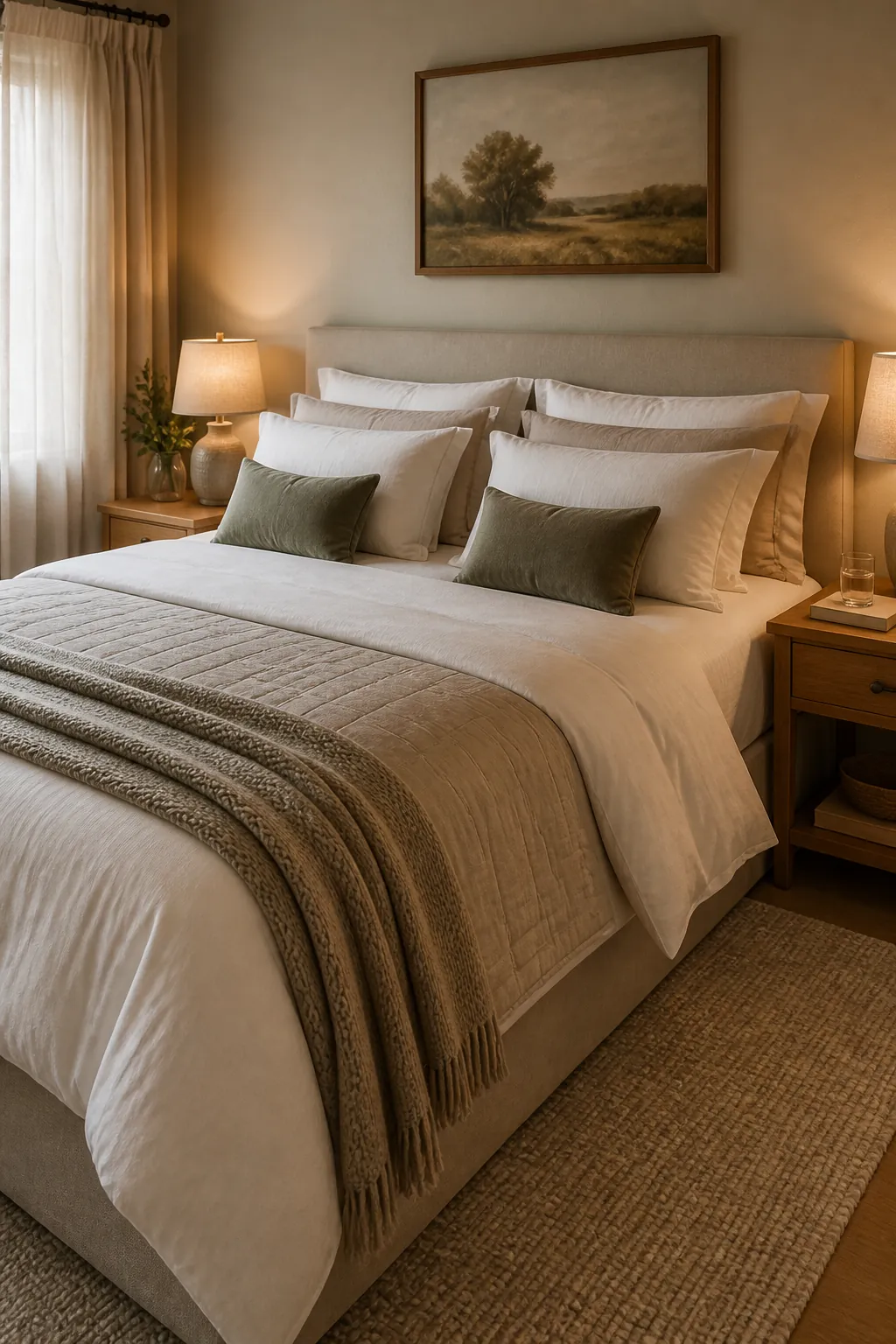
The bed is the biggest visual object in the room, so it has to carry the calm. Hotel beds work because they look generous without looking fussy. Use crisp sheets, two sleeping pillows for each person if the bed size allows it, a folded quilt or coverlet, and one textured throw near the foot. Keep the palette tight: warm white, oatmeal, greige, taupe, soft gray, muted sage, or dusty blue.
Layered bedding should not become a pile of pillows that has to be removed every night. A couple bedroom stays calmer when the bed can be reset in two minutes. Choose fewer pieces with better texture: cotton sheets, a linen duvet cover, a quilt with soft structure, and one throw that adds weight without making the bed look crowded.
Use Warm Lighting Instead of One Bright Ceiling Light
The fastest way to lose the hotel feel is to rely on one overhead light. It flattens the room, makes shadows harsh, and turns a bedroom into a task space. Soft lighting does the opposite. It creates small pools of light where they are needed and lets the rest of the room fall quiet.
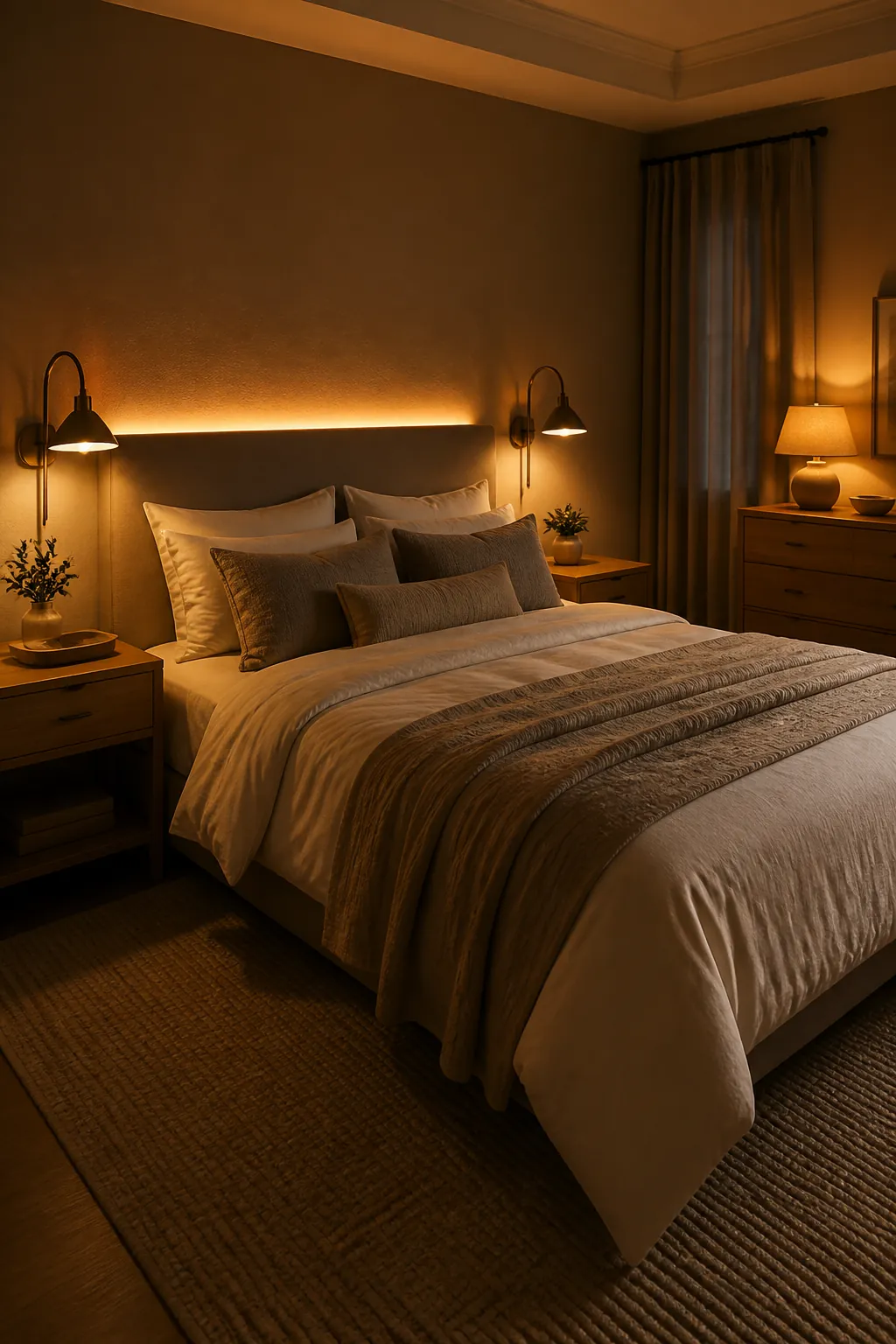
For a couple bedroom, give each person a controllable light source. Bedside lamps, plug-in sconces, or slim pendants all work. Add one indirect glow if possible, such as a low dresser lamp or a hidden warm strip behind the headboard. Use warm bulbs, not cool white bulbs. The room should feel softer when the lights are on, not more exposed.
Make the Two Bedside Zones Balanced, Not Identical
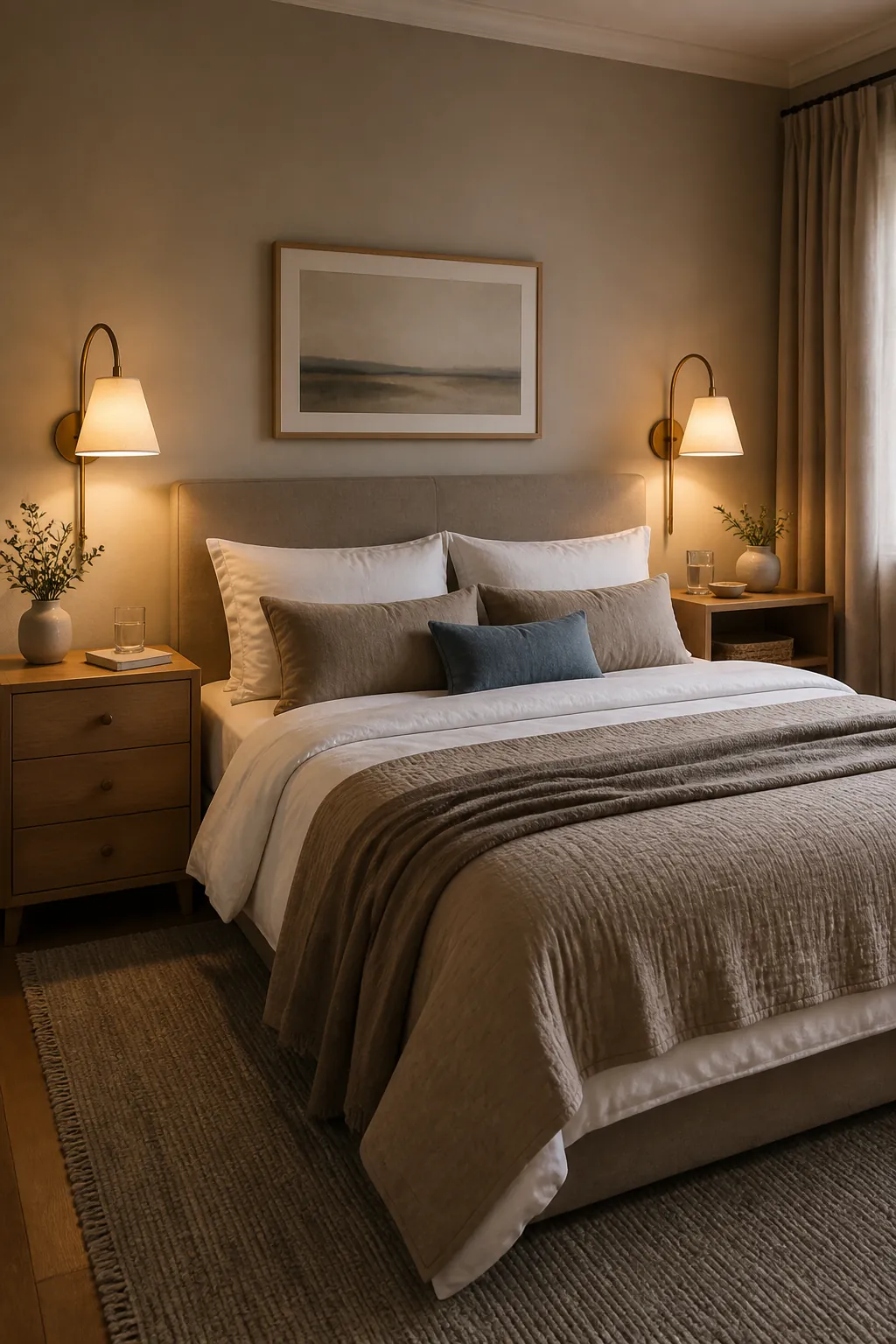
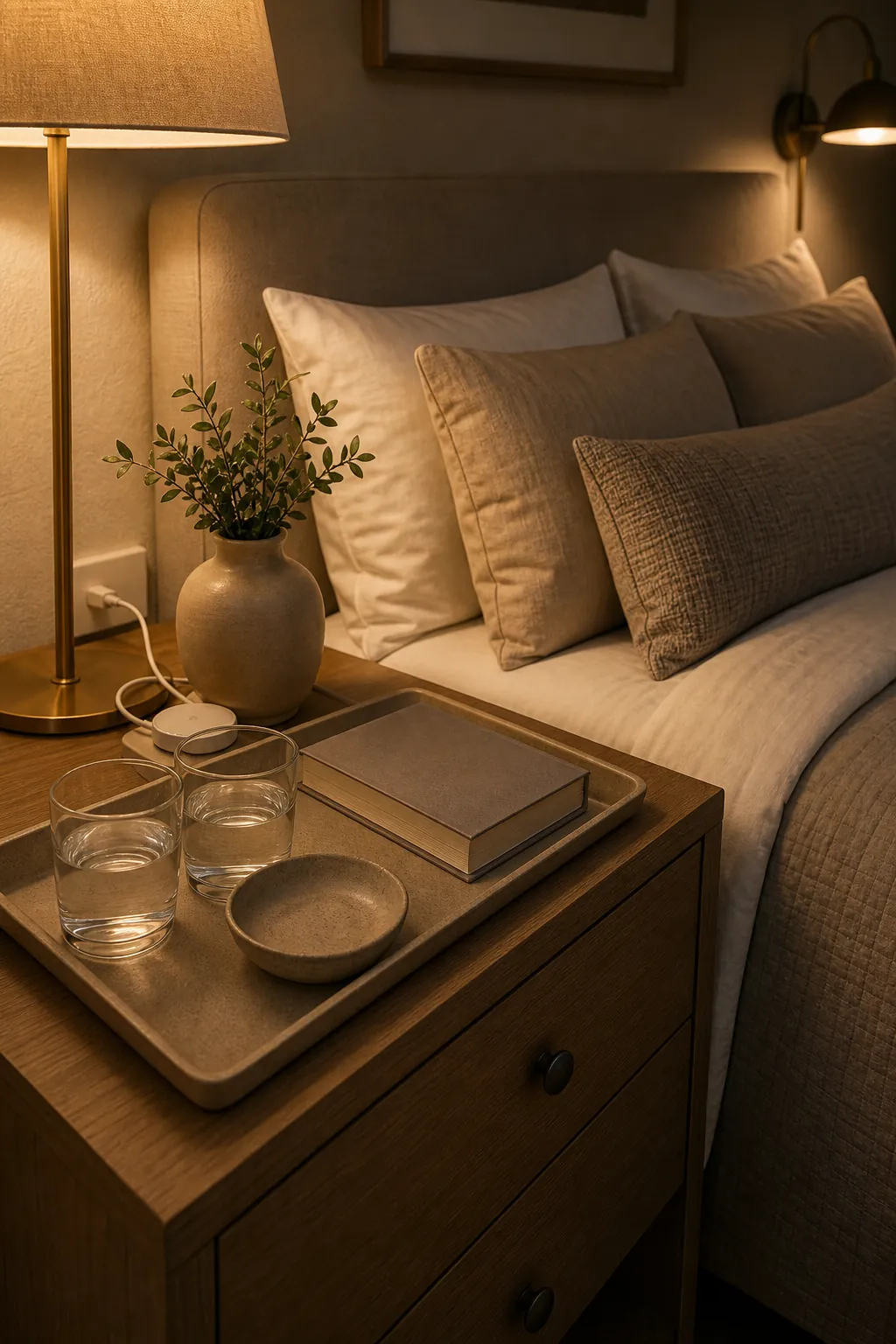
Matching nightstands can look tidy, but they are not required. What matters is that both sides feel considered. One partner might need a drawer for chargers and glasses. The other might prefer an open shelf, a book stack, or a small tray. The room feels calmer when the two sides share a language, even if the furniture is not exactly the same.
Repeat one or two anchors: the lamp shape, wood tone, hardware finish, pillow color, or height of the bedside surface. Then let the details vary. Balanced does not mean mirrored. Balanced means neither side looks temporary, forgotten, or overloaded.
Hide the Daily Mess Before You Style Anything
Luxury bedroom decor often looks calm because the mess has somewhere to go. In a real couple bedroom, that means you need storage before styling. A tray is helpful, but it cannot solve chargers, sleep masks, books, tissues, jewelry, watches, receipts, and everything else that appears beside a bed.
- Use closed storage for private clutter: chargers, medication, skincare, notebooks, and small personal items.
- Use a tray for the top layer: water glass, jewelry, glasses, or one daily-use object.
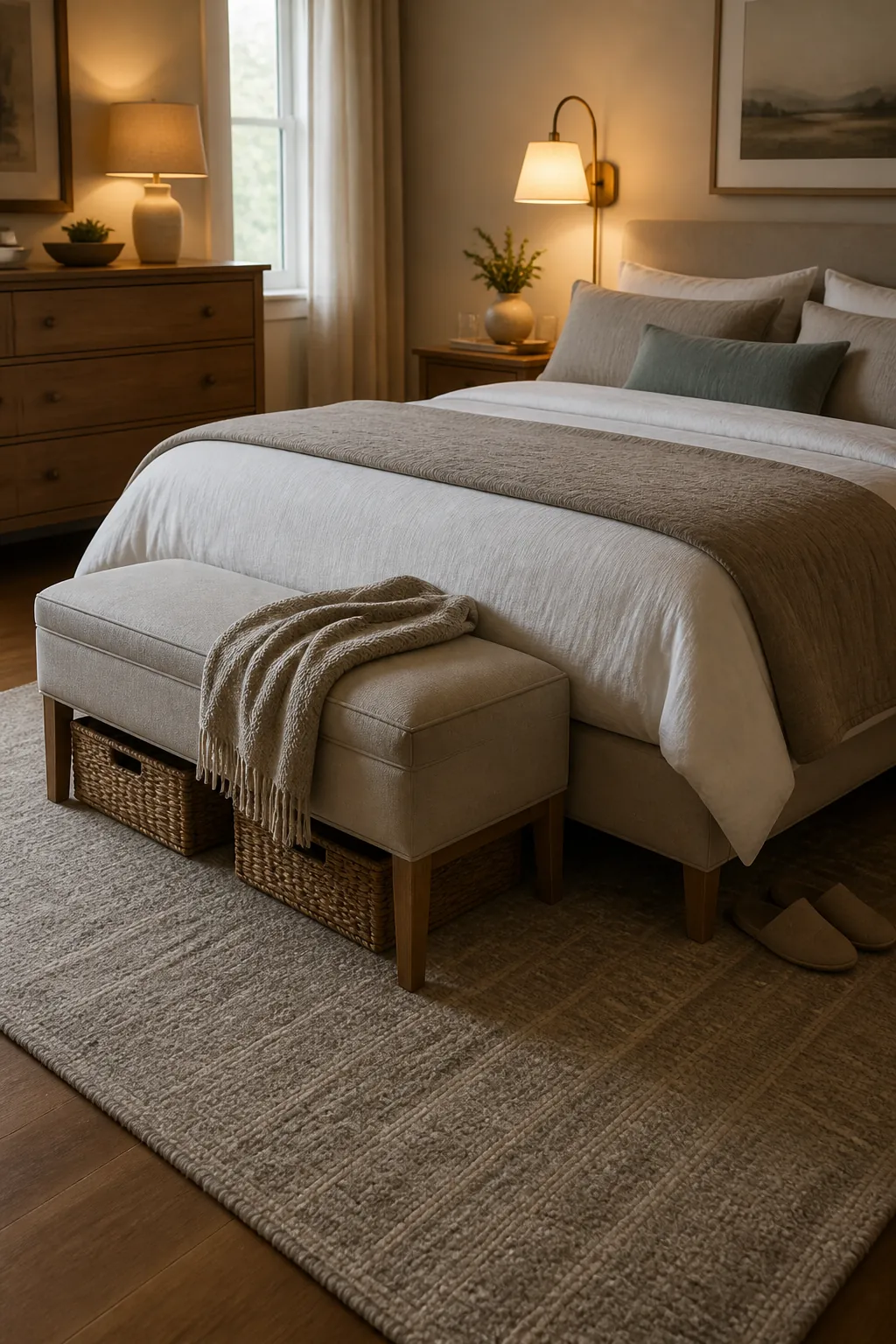
- Use under-bed storage carefully: keep bins low, closed, and pulled back so the floor still reads clean.
- Use a bench or ottoman only if it stays useful: it should hold a throw, support getting dressed, or hide extra bedding.
The goal is not emptiness. It is control. When storage is discreet, the room can hold real life without losing the calm hotel feel.
Soften the Room With Curtains, Rug, and Upholstery
A calm bedroom is partly visual and partly physical. Hard floors, bare windows, and thin bedding can make a room feel unfinished even when the color palette is pretty. Soft materials absorb sound, reduce visual sharpness, and make the room feel more restful.
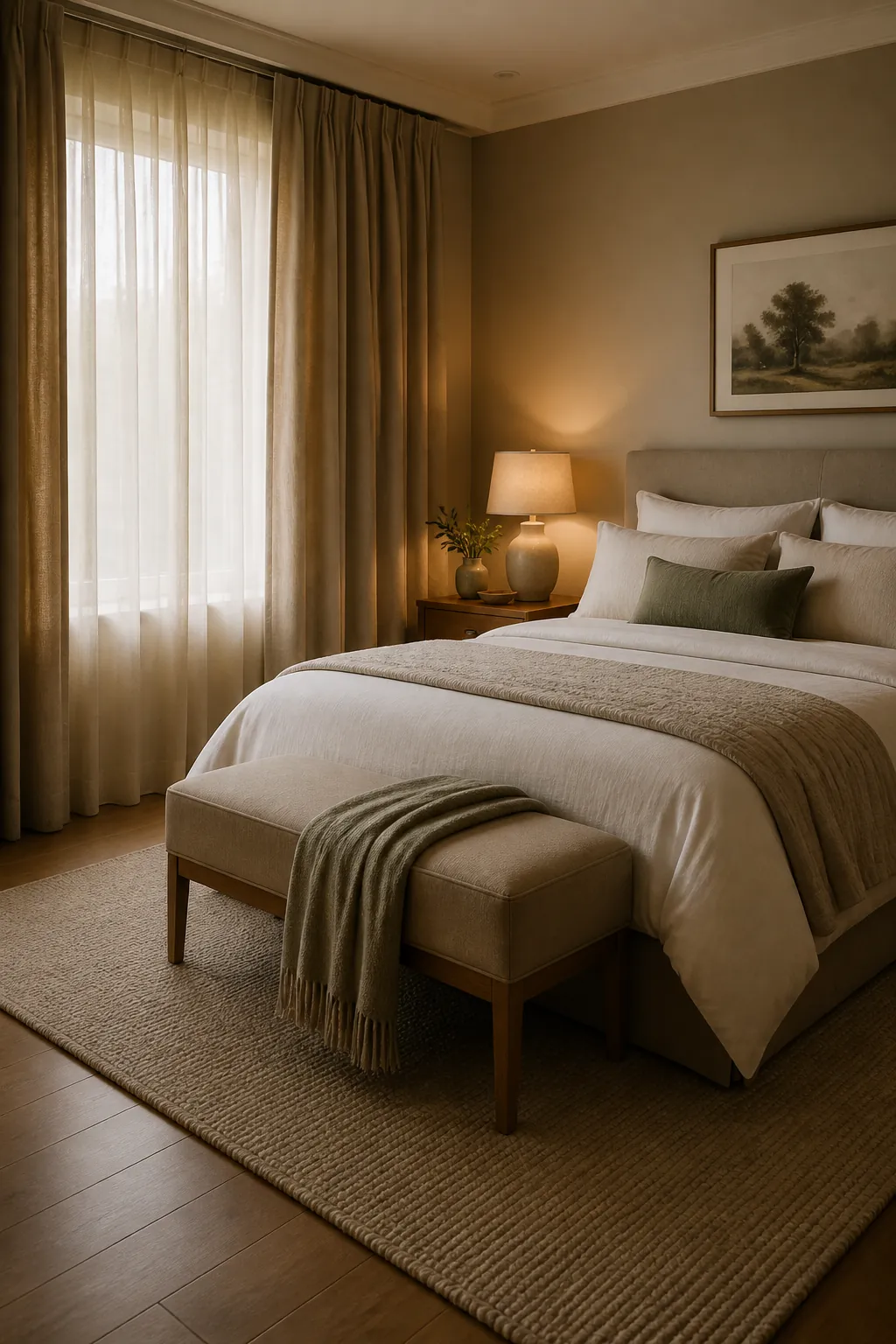
Hang curtains wider and higher than the window if the room allows it. Use a rug large enough to step onto from both sides of the bed. Choose an upholstered headboard or add softness through large pillows if the frame is hard. These are not just decorative choices. They change the way the bedroom feels when two people move through it in the morning and settle into it at night.
Keep the Palette Warm, Even if You Love Neutrals
Neutral bedroom decor can turn cold quickly when every surface is bright white, gray, or shiny. A hotel feel usually works better with warm neutrals: ivory, cream, oatmeal, mushroom, taupe, warm gray, pale wood, and soft brass. Those tones keep the room quiet without making it feel bare.
If the room starts to look flat, add contrast through texture instead of adding more color. Pair smooth cotton with nubby linen, matte ceramic with warm wood, a flatweave rug with a plush throw, or crisp sheets with a quilted coverlet. The bedroom will feel layered without becoming busy.
Create a Simple Evening Reset
The calmest bedrooms have a small routine built into the room. Before bed, the top of each nightstand should be easy to reset: water goes in one spot, jewelry or glasses land in a tray, the book returns to its stack, and chargers have a visible route that does not tangle across the floor.
This is where the hotel style becomes livable. A hotel room feels good because it gets reset. Your bedroom will not have housekeeping, so the system has to be simple enough to repeat when you are tired. If the room can be put back together in five minutes, it will stay calm for more than one weekend.
The Rule That Makes the Room Work for Two People
For a couple bedroom, the hotel feel should never come at the cost of daily comfort. A room that looks beautiful but gives one person no storage, no reading light, or no landing place will not stay peaceful. The better rule is simple: give both people the same level of ease, then edit everything else.
Start with the bed, warm the lighting, balance the bedside zones, hide the daily mess, and soften the surfaces. Those choices do more than decorate the room. They make the bedroom easier to share, easier to reset, and easier to enjoy at the end of the day.