
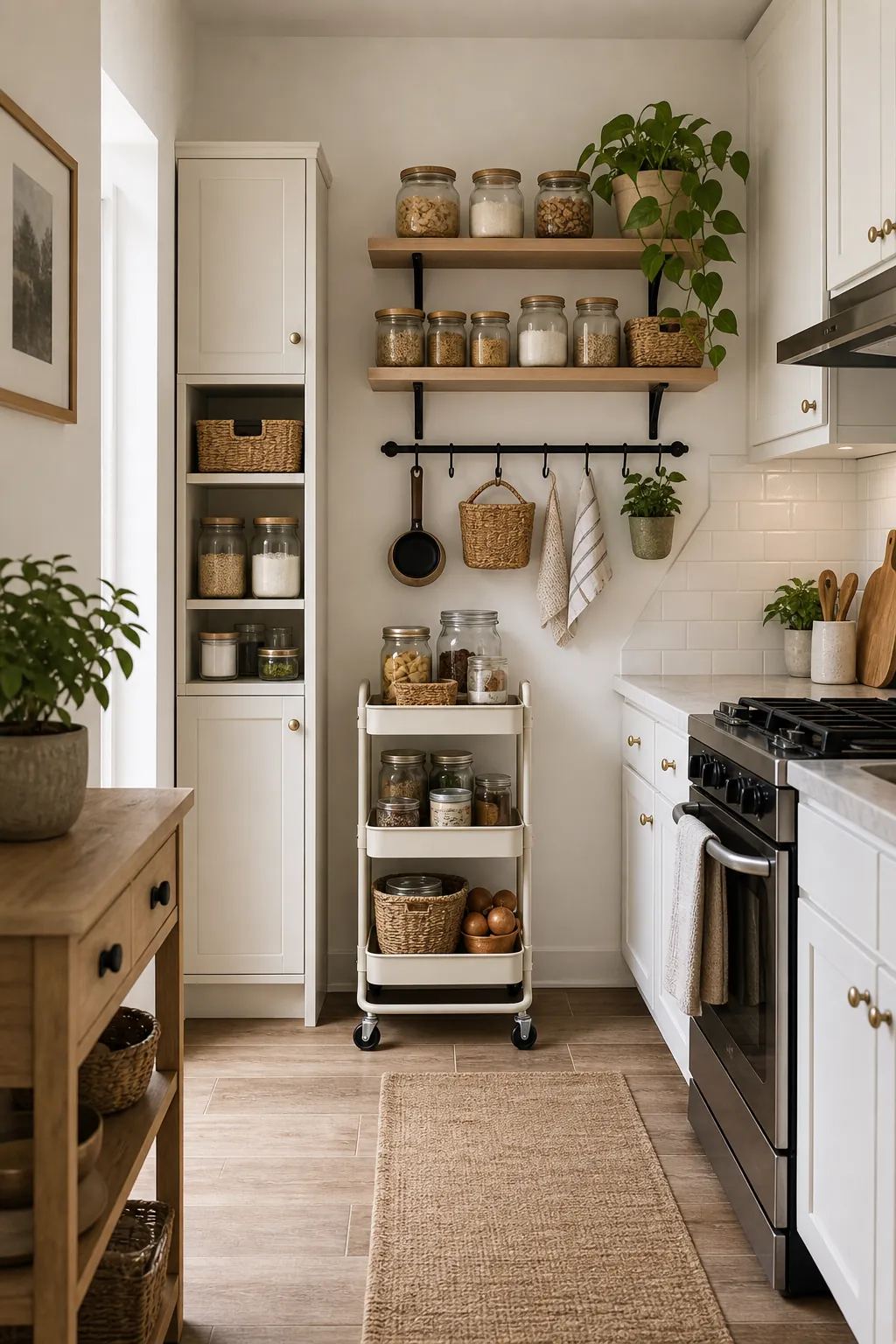
A small kitchen without a pantry can feel unfair at first. Every grocery trip seems to create a new problem: pasta boxes on the counter, cans pushed into random cabinets, snacks disappearing behind mixing bowls, and one awkward bag of onions that never has a real home. The issue is not just storage. It is that the kitchen has no clear system for what should be visible, hidden, movable, or used first.
The best small kitchen pantry alternatives do not try to fake a walk-in pantry. They divide pantry jobs across the parts of the kitchen you actually have: cabinets, wall shelves, carts, narrow gaps, baskets, and a simple weekly reset. Once each job has a place, a tight kitchen can feel much easier to cook in.
Start by Sorting Pantry Jobs, Not Pantry Products
Before buying containers, divide your pantry items by how they behave. Daily-use items need to be reachable. Backstock needs to be grouped and hidden. Heavy items need low storage. Snacks need a clear boundary. Spices need visibility. Baking supplies need to stay together. When everything is simply called pantry storage, it all fights for the same few shelves.
A compact kitchen works better when each category gets a specific type of home. Open storage is for items you use often and can keep tidy. Closed storage is for visual clutter. Movable storage is for overflow. Narrow storage is for the gaps that would otherwise be wasted.

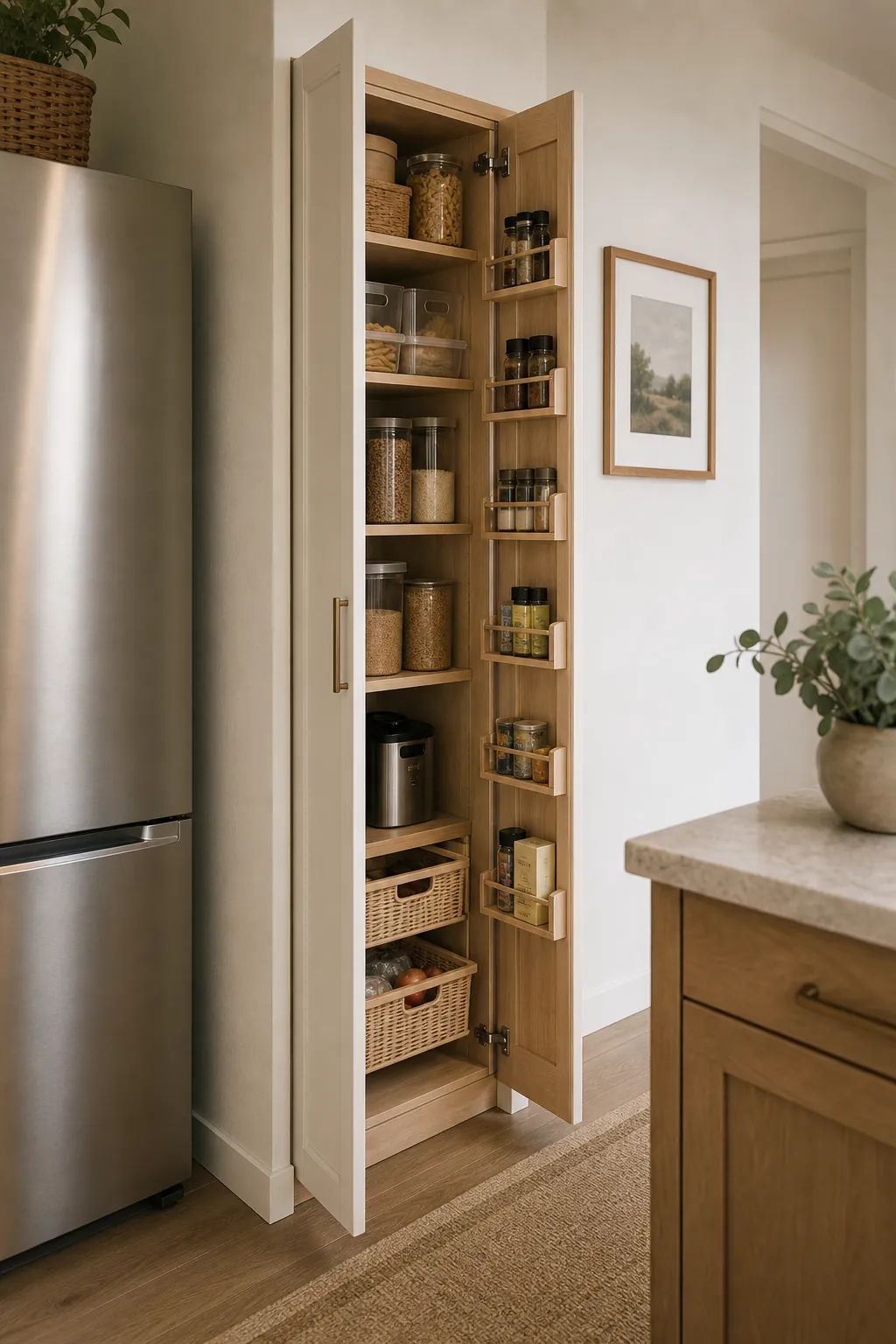
Use a Narrow Cabinet When You Need Hidden Storage
If your kitchen has one blank wall, a shallow cabinet can become the closest thing to a real pantry. The key is depth. A deep cabinet sounds helpful, but in a small kitchen it often turns into a dark pile where old food disappears. A narrow cabinet keeps rows visible and lets you group supplies without losing the back half of the shelf.
Use the cabinet for dry goods, baking supplies, oils, paper goods, or small appliances that do not need to live on the counter. Keep heavy items low and lighter baskets higher. If the cabinet is freestanding, choose one that is stable, shallow, and tall enough to use vertical space without making the walkway feel tight.
Let a Rolling Cart Handle Flexible Overflow
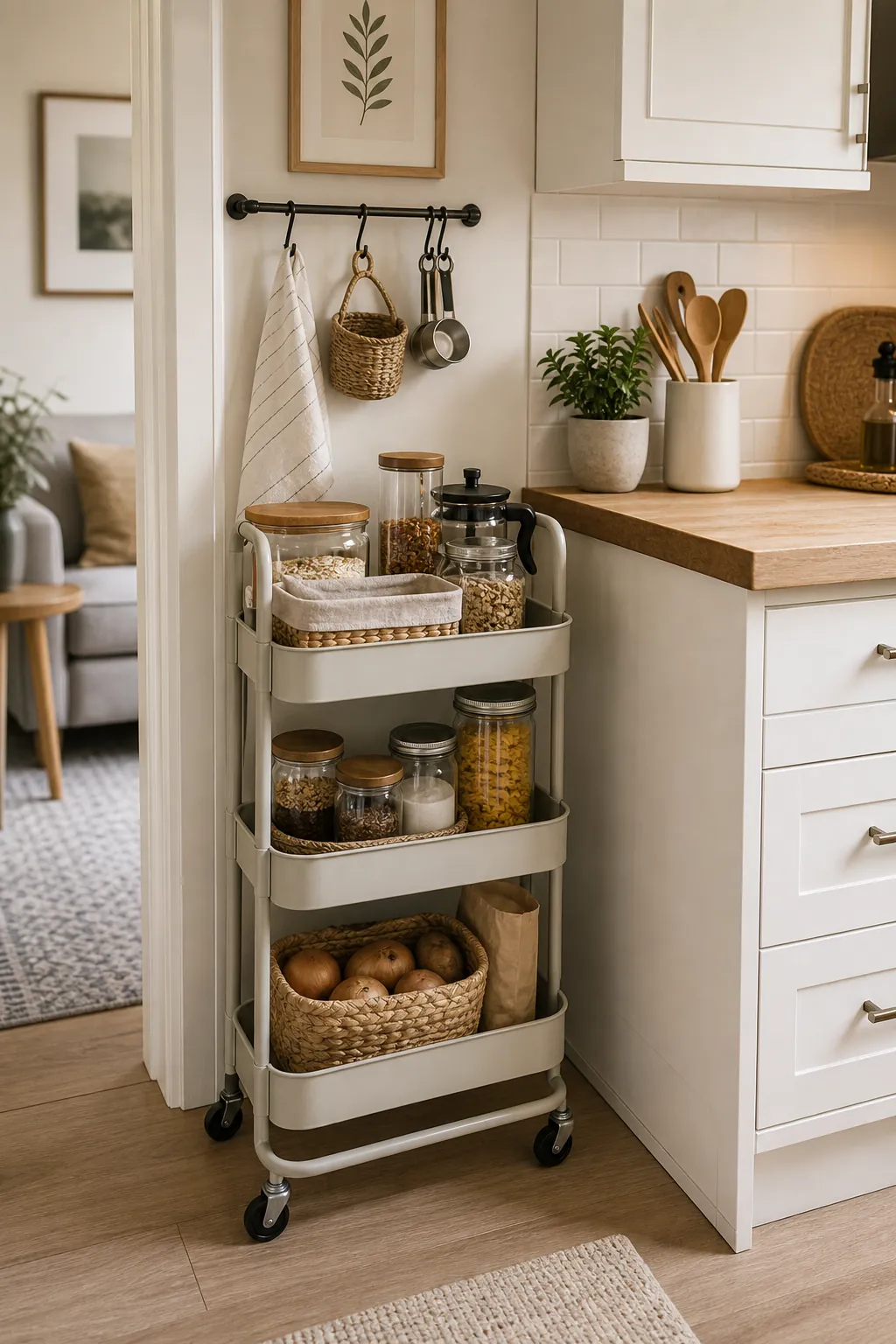
A rolling cart works well when the kitchen has no single permanent spot for pantry overflow. It can hold breakfast supplies, snack bins, baking ingredients, onions, potatoes, coffee gear, or small appliances. It is especially useful in rentals because it adds storage without drilling into walls or replacing cabinets.
The mistake is treating the cart like a second junk drawer. Give each tier a job. Put the heaviest items on the bottom, daily items in the middle, and light baskets or grab-and-go snacks on top. If the cart blocks a walkway, it is too wide or in the wrong place. A good rolling cart should move easily and disappear back into its parking spot after cooking.
Use Wall Shelves for the Items That Stay Neat
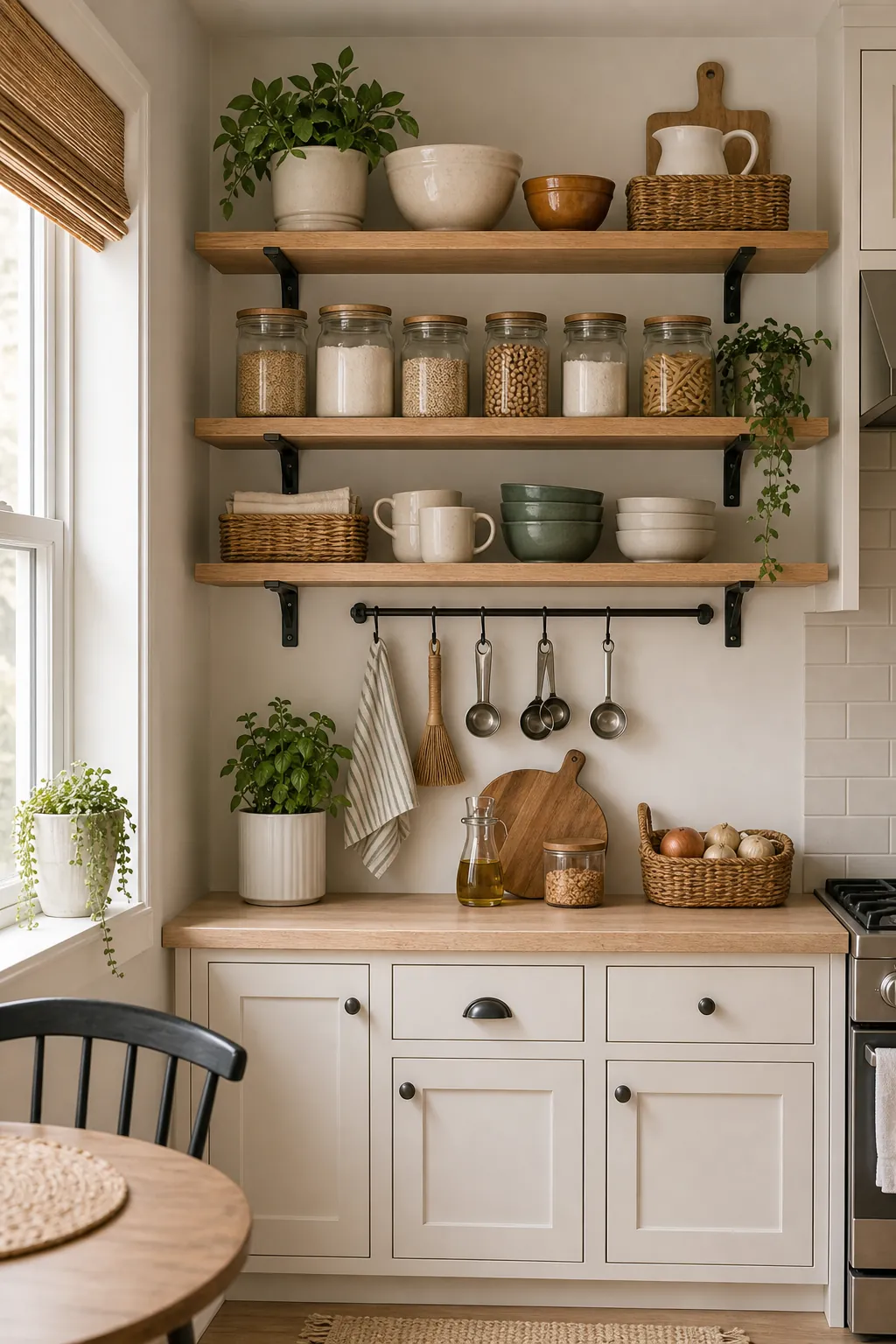
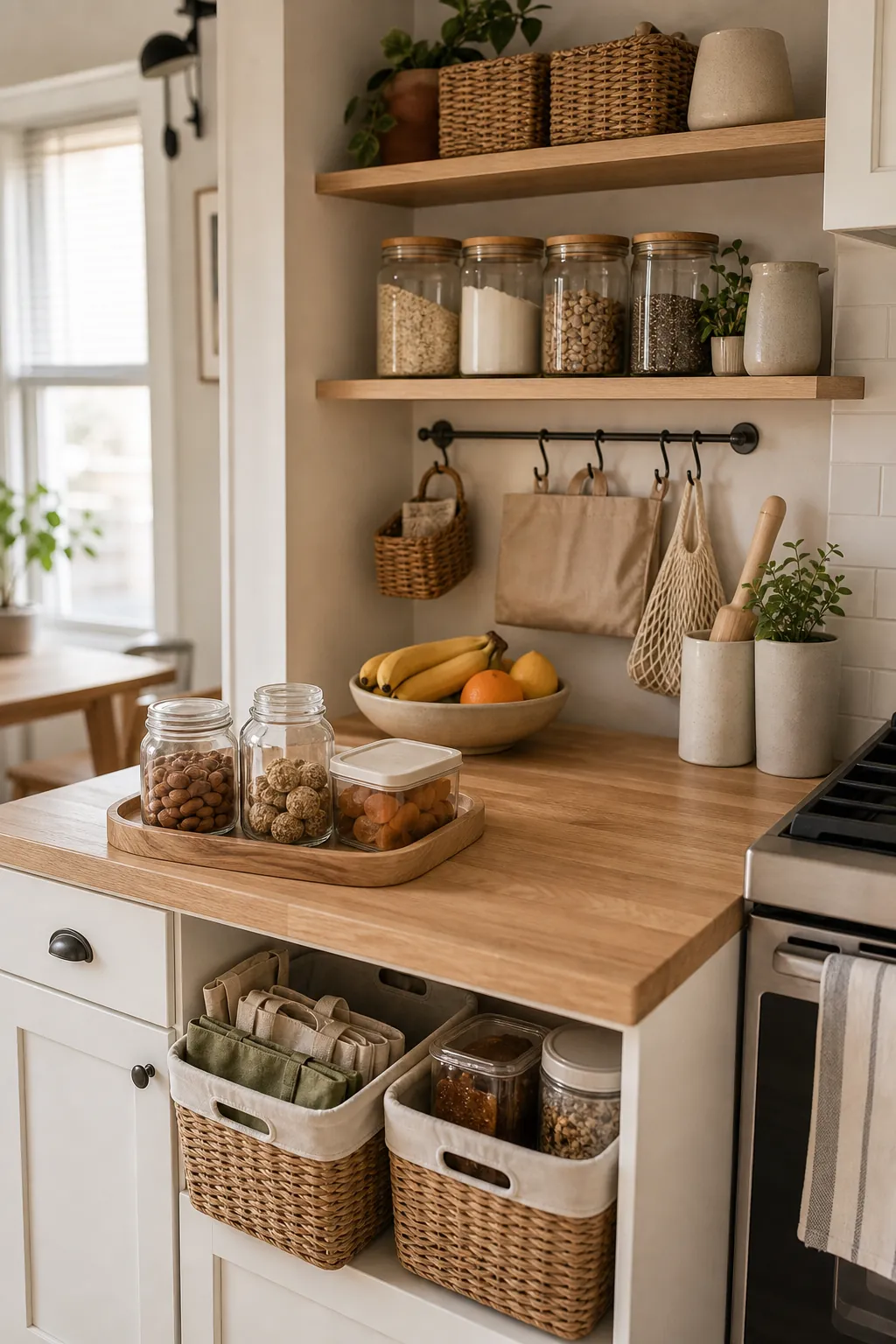
Wall shelves can be a strong pantry alternative, but only for the right items. They are best for jars, baskets, mugs, bowls, tea, coffee, cookbooks, or ingredients that look calm when grouped together. They are not the best place for every half-used bag, bright package, or backup item you own.
Use shelves to remove pressure from cabinets, not to display every food item. Decant only what you actually use often. Keep baskets for ugly packaging. Leave space between groups so the wall does not become visual clutter. In a tight home, open storage has to earn its place by being both useful and easy to maintain.
Make Existing Cabinets Work Harder Before Adding More Furniture
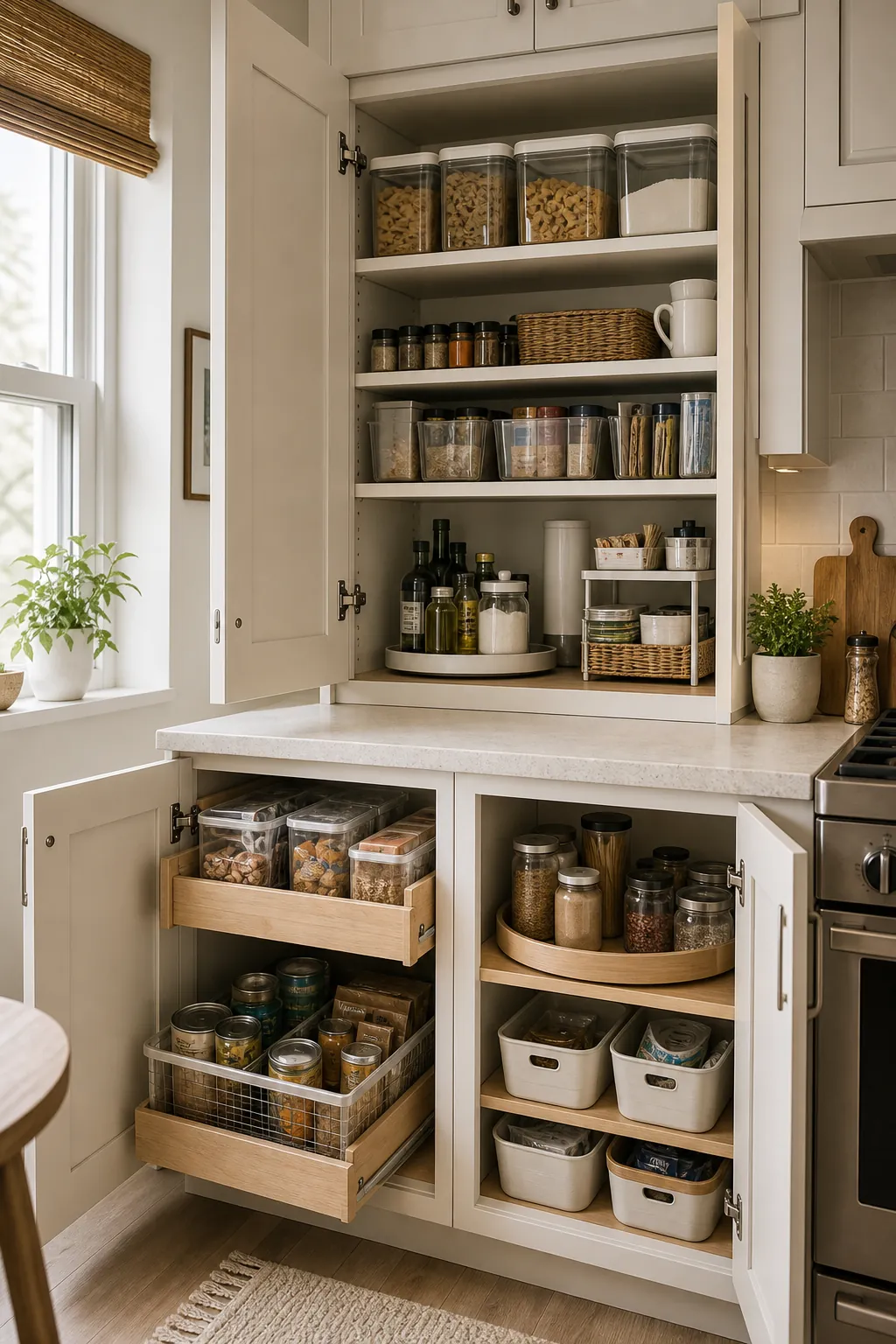
Most no pantry storage problems are partly cabinet problems. Cabinets often waste height, hide corners, and mix categories that should never live together. Before adding another shelf unit, check whether your current cabinets can do more with risers, turntables, bins, pull-out baskets, or drawer dividers.
- Use shelf risers for cans, bowls, mugs, and short jars.
- Use turntables for oils, vinegars, sauces, and small condiments.
- Use clear bins for snacks, baking packets, tea, coffee, and backup items.
- Use drawer dividers for wraps, bags, measuring tools, and small kitchen supplies.
- Use pull-out baskets when deep lower cabinets swallow dry goods.
Good cabinet storage is not about making every item visible at once. It is about making every category easy to pull out, use, and put back without emptying half the shelf.
Turn Narrow Gaps Into Real Storage
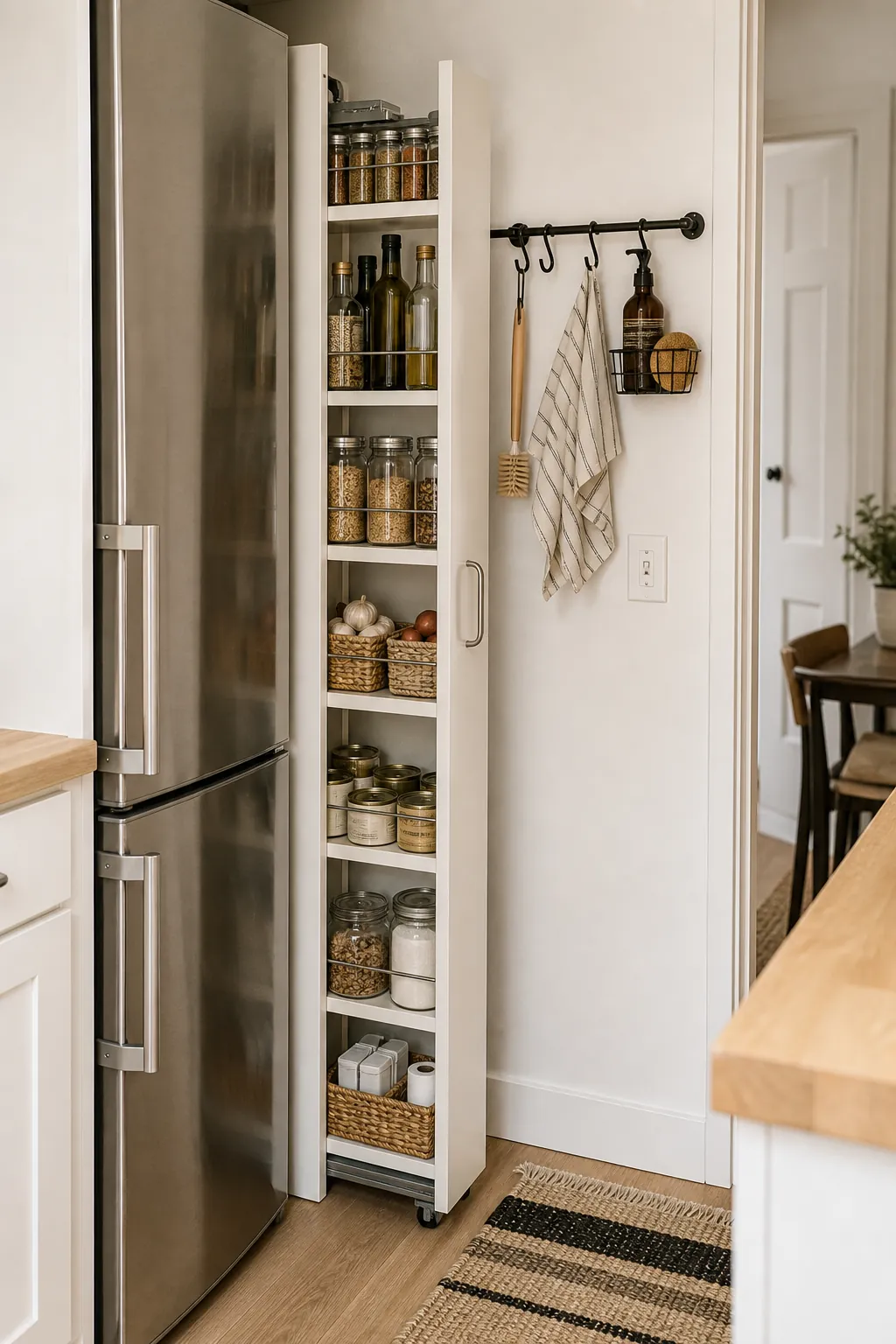
Small kitchens often have awkward gaps beside the refrigerator, at the end of a cabinet run, near a doorway, or between an appliance and the wall. Those spaces are too small for normal furniture but useful for skinny storage. A narrow pull-out rack, wall rail, slim shelf, or hook system can hold spices, oils, wraps, towels, and small backup items.
The rule is to keep narrow storage light and specific. Do not overload a skinny rack with every heavy can you own. Use it for items that match the depth and are easy to see. When a tight gap gets one clear job, it stops feeling like wasted space and starts acting like a small pantry extension.
Keep Backstock Separate From Daily Cooking Items
A small kitchen becomes chaotic when daily ingredients and backup supplies share the same shelf. You reach for rice and knock over two unopened pasta boxes. You look for olive oil and find three backup condiments first. Separating backstock is one of the simplest kitchen organization upgrades.
Daily items should live near where you cook. Backstock can live higher, lower, on a rolling cart, in a lidded basket, or in a nearby dining cabinet. The only rule is that it must be grouped. A single backstock bin for unopened dry goods is often better than spreading overflow across five cabinets.
Create a Weekly Reset So the System Does Not Collapse
No pantry system survives without a reset. Small kitchens have less margin for duplicates and half-empty packages, so a five-minute weekly check matters. Before grocery shopping, pull the snack basket, check the backstock bin, look at the cart, and make sure no category is overflowing into counter space.
This reset does not need to be complicated. Move open packages forward, combine duplicates, clear expired food, and decide what should not be bought this week. The best small space storage system is not the one with the most containers. It is the one that keeps telling you what you already have.
The Best Pantry Alternative Is Usually a Mix
One product rarely solves a no-pantry kitchen. A narrow cabinet might hold dry goods, wall shelves might handle jars and mugs, a rolling cart might hold flexible overflow, and cabinet organizers might make the original storage usable again. Together, those small moves create a pantry system without needing one pantry closet.
Start with the biggest pressure point first. If food is always on the counter, add closed storage. If cabinets are full but badly organized, fix the cabinet storage. If overflow changes every week, try a cart. If the room has empty vertical space, use wall shelves carefully. A tight kitchen does not need more random storage. It needs the right pantry alternative for each job.