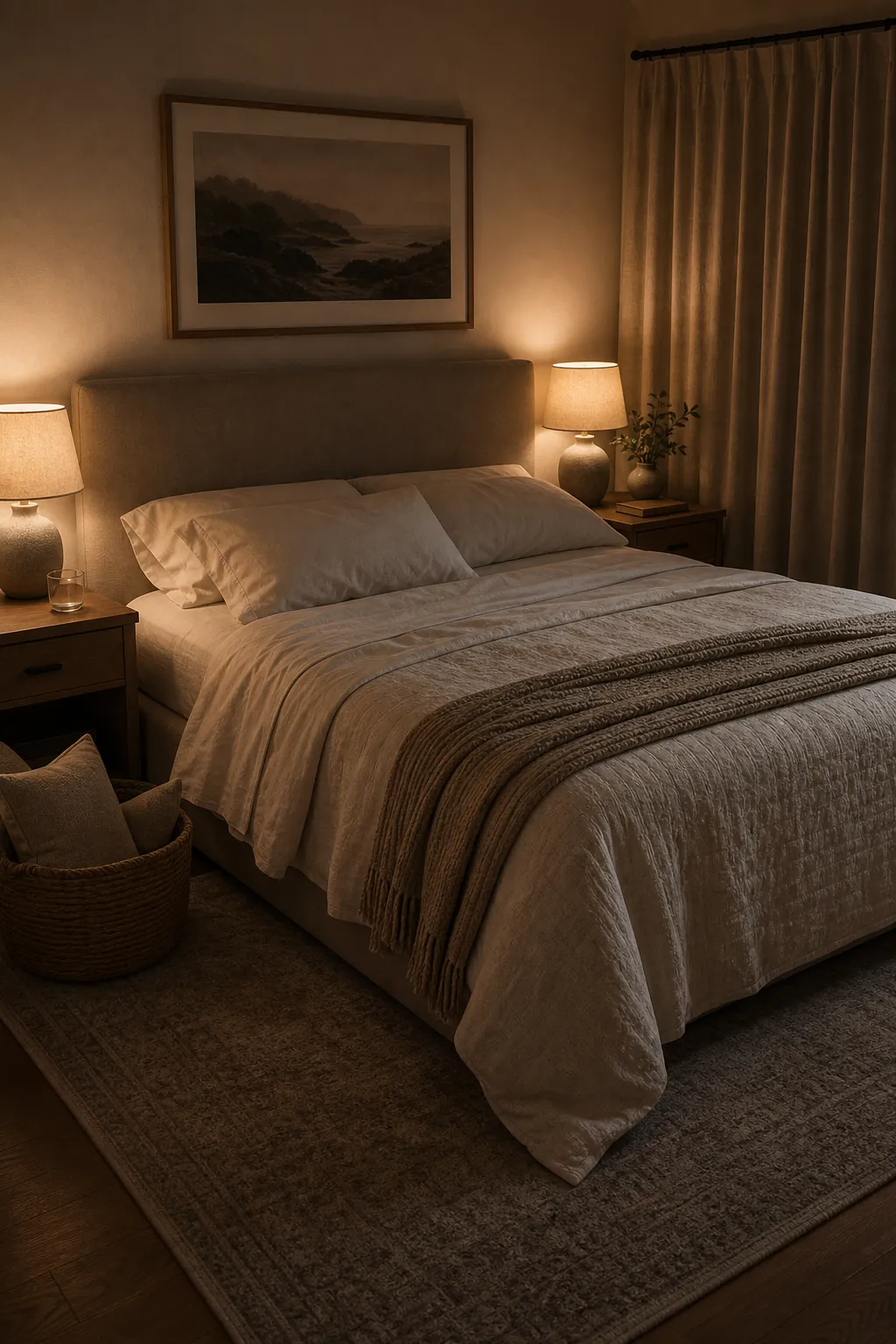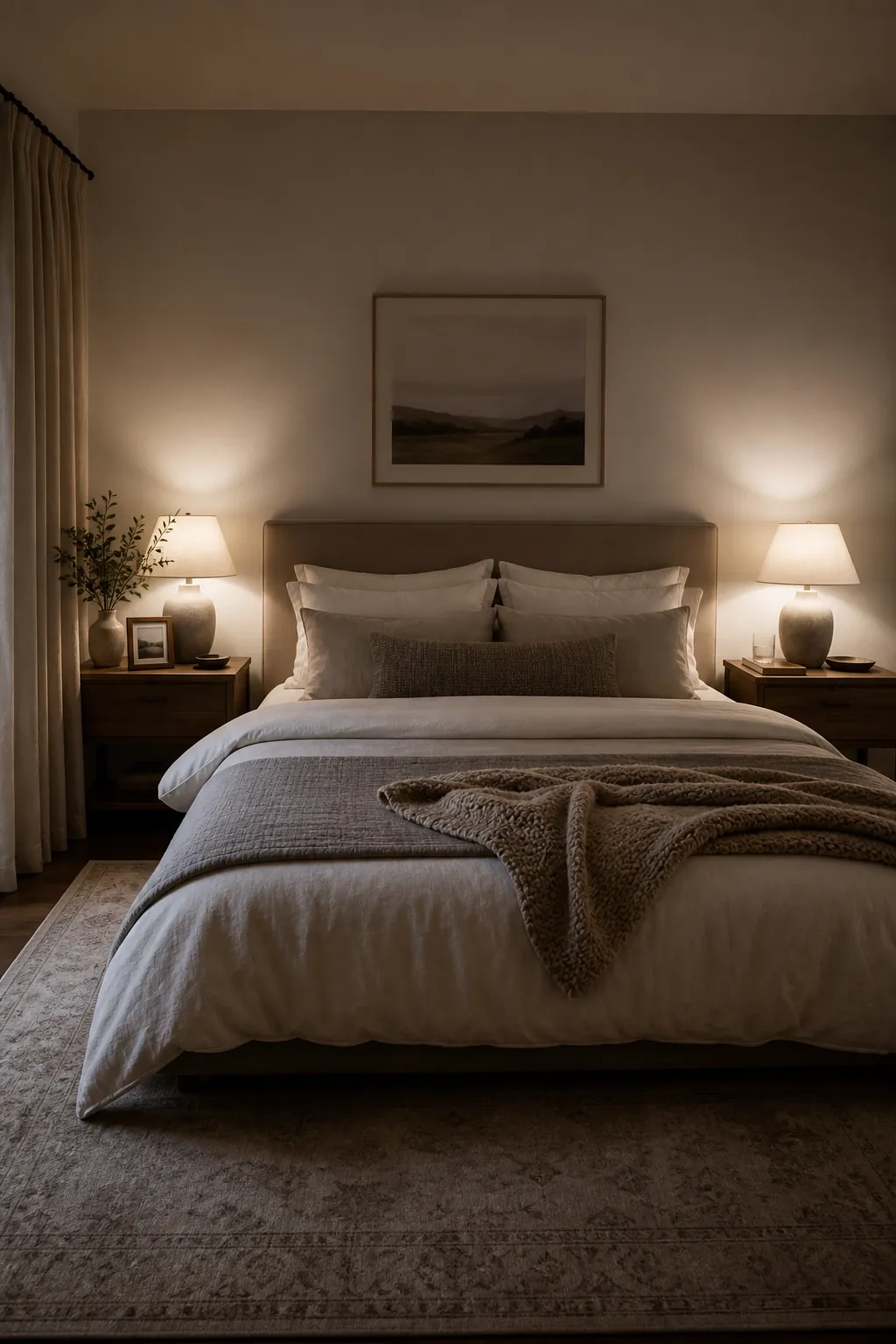
A softer nighttime mood in a couple bedroom usually does not come from one dramatic purchase. It comes from the small decisions that make the room feel calm when both people are tired: the lamp that replaces the bright ceiling light, the bedding that feels layered without becoming a daily chore, the rug that quiets the floor, and the storage spot that keeps tomorrow’s clutter from landing on the nightstand.
The best Couple Bedroom styling ideas respect two things at once: the room needs to look warm and intimate, but it still has to function for two real people. If the space only photographs well, it will start annoying someone by the second night. If it is purely practical, it can feel like a pass-through room instead of a place to settle together.
Use this as a room-by-room reset for the last hour of the day. The goal is a Warm Bedroom that feels relaxed after dark, uses Soft Lighting instead of glare, and gives each partner enough comfort to actually enjoy the space.
Start With Lower, Warmer Light
If the bedroom still relies on one bright overhead fixture at night, fix that before buying more decor. People repeatedly describe overhead lighting as the thing that makes a bedroom feel practical, exposed, or even cold. A lamp at eye level or below changes the room faster because the light comes from the side, not from straight above your face.
The easiest nighttime mood upgrade is a three-layer lighting plan: one dimmable general light for cleaning and getting dressed, one soft lamp on each side of the bed, and one very low accent glow for the final wind-down. The last layer can be a small shaded table lamp, a warm wall sconce, or an LED strip hidden behind a headboard or dresser.
Choose warm bulbs for evening use, then keep them dim. Warm white light feels more restful than cool white light, and it is easier on the person who is ready for bed while the other is still reading. For a Shared Bedroom, separate bedside controls matter as much as the fixture style. Each person should be able to turn off their own side without crossing the room.
Make the Bed Layered, Not Fussy
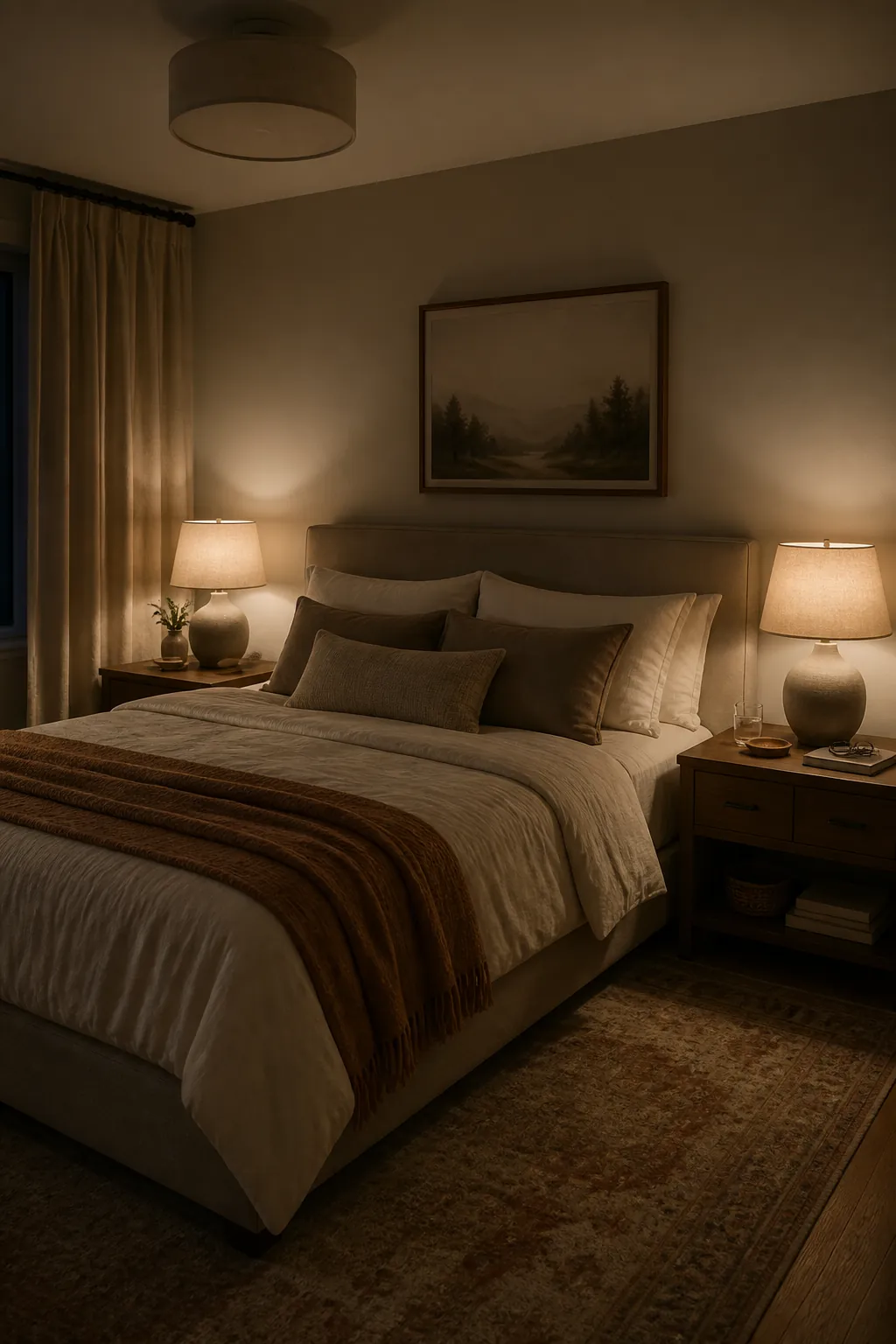
Layered Bedding is the visual center of most bedroom styling, but couples often disagree on how much is too much. One person wants the bed to look finished. The other sees five decorative pillows and thinks about moving them every night. The sweet spot is a bed that looks considered in the daytime and clears easily at bedtime.
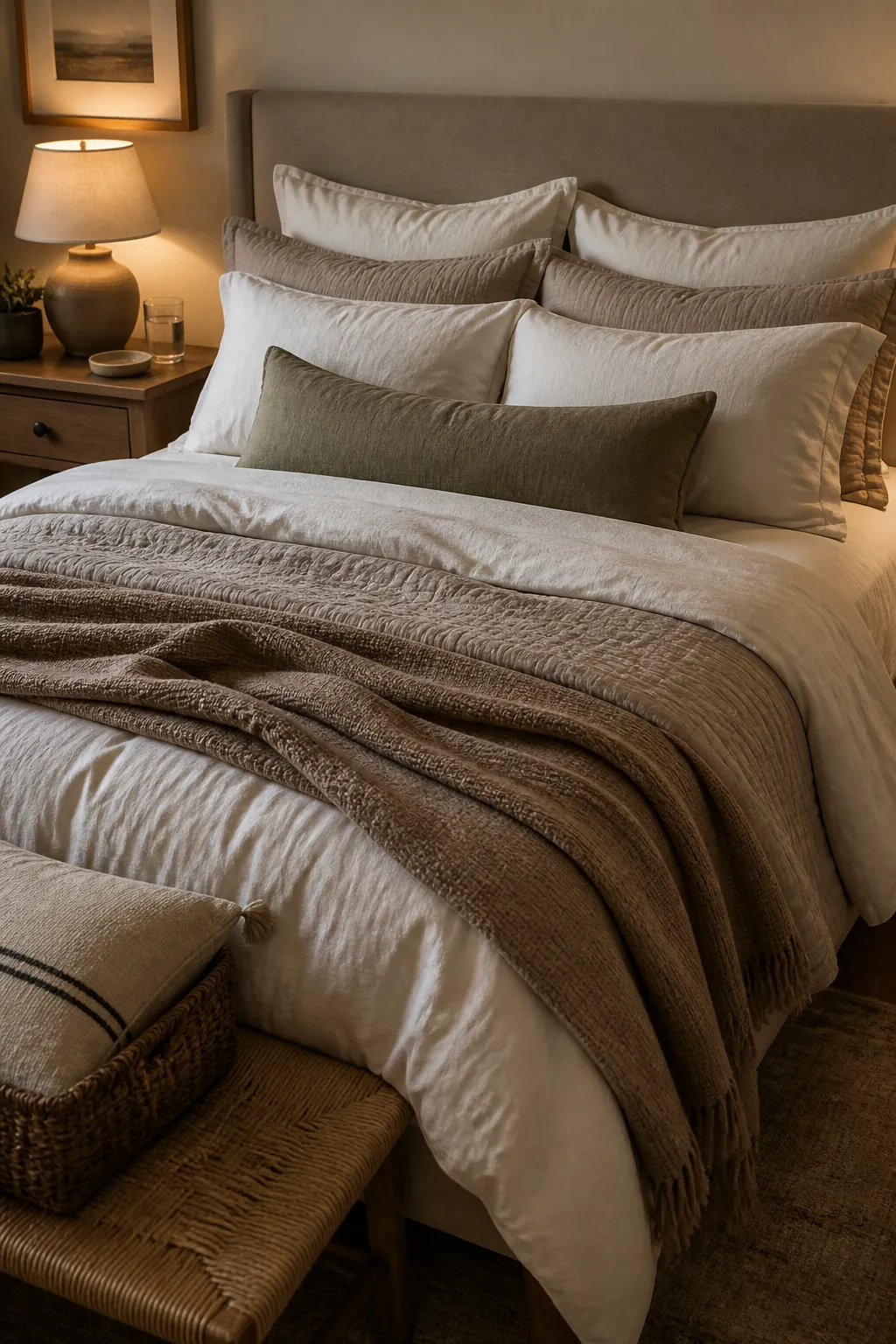
Start with two sleeping pillows per person if you use them, then add one long lumbar pillow or two shams in front. Finish with a quilt, coverlet, or folded throw at the foot. That gives the bed texture, depth, and warmth without creating a pile that ends up on the floor. If an item has no nighttime home, it will become clutter, so place a basket, bench, or low chest near the bed for the pillow and throw layer.
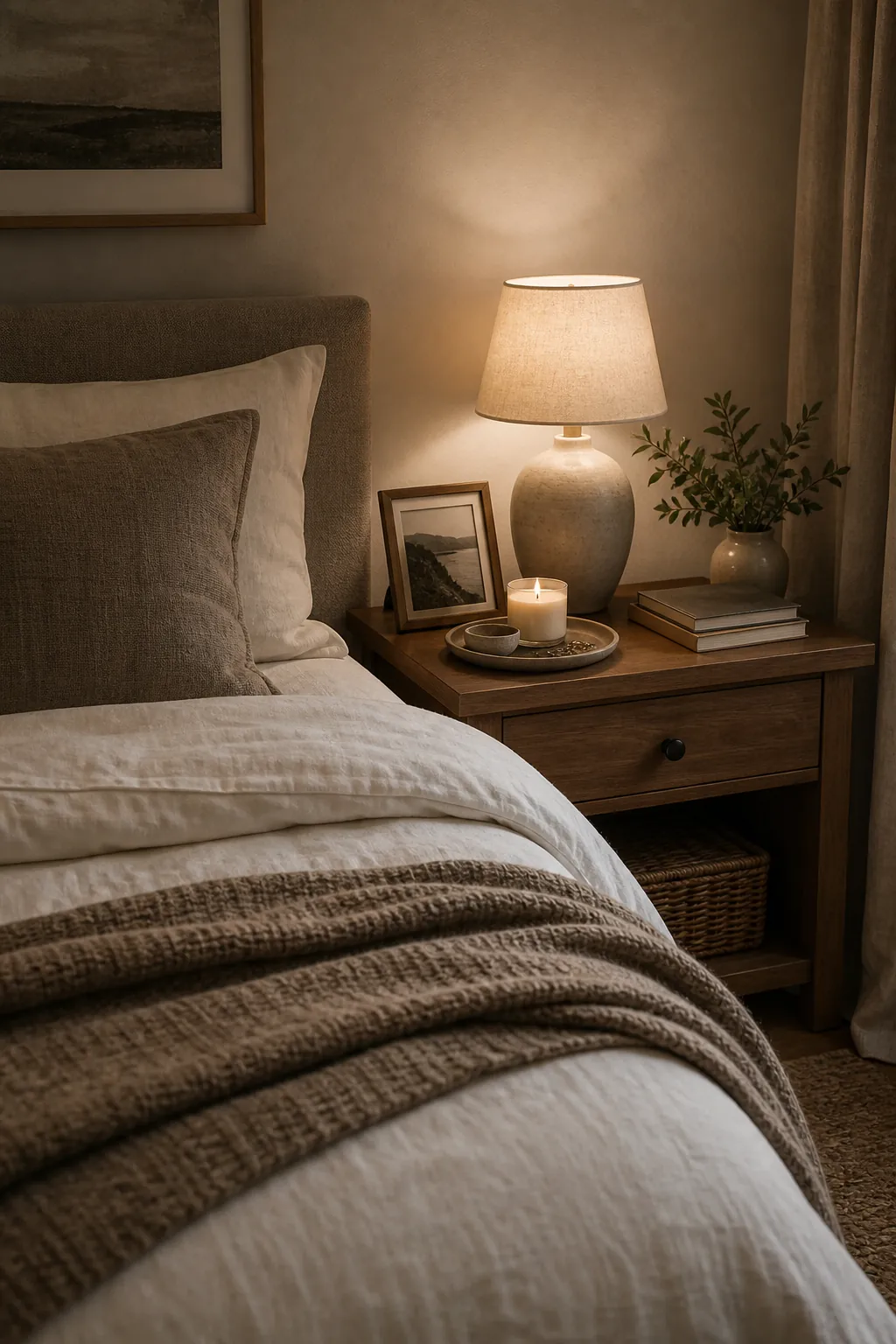
For a softer mood, use touchable materials rather than shiny ones. Washed cotton, linen, matelasse, waffle weave, boucle, velvet, and knit throws all catch low light beautifully. A Cozy Bedroom does not need heavy bedding year-round; it needs visible layers that can be adjusted as the season changes.
Use a Shared Palette With Personal Accents
A couple bedroom goes wrong when one style completely wins and the other person feels like a guest. Instead of choosing a rigid theme, choose a shared palette first. Warm whites, mushroom, oatmeal, clay, muted olive, deep taupe, soft charcoal, dusty blue, and quiet terracotta all work because they feel adult without turning the room sterile.
Let the largest surfaces stay calm, then use accents for personality. The duvet, curtains, rug, and wall color can hold the room together. Art, books, a patterned pillow, a small vase, or a framed travel photo can bring in each person’s taste without making the bed fight the walls.
This is where Bedroom Decor becomes emotional instead of random. A pair of matching lamps can give symmetry, but the objects on each nightstand do not need to match. One side can hold a small stack of books, the other a ceramic tray and a framed photo. Balanced does not mean identical.
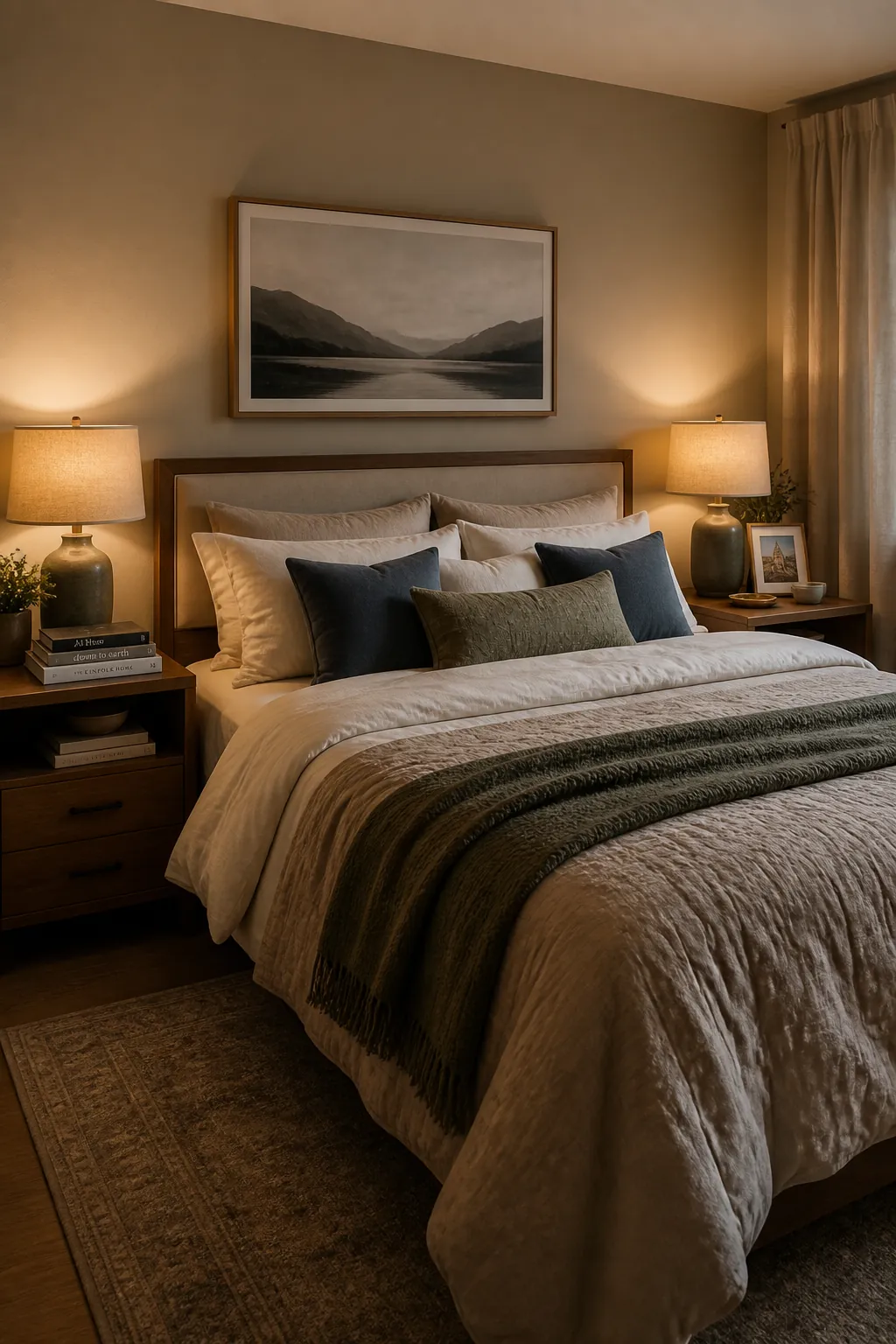
Build the Nightstand Around the Last Ten Minutes
The nightstand is small, but it controls the mood more than people expect. If it is covered with chargers, receipts, hair ties, water glasses, and half-read books, the room feels busy even when the bed is made. For a calmer Nighttime Mood, style the nightstand around what actually happens in the last ten minutes before sleep.
Keep the visible surface simple: a lamp, a coaster, one current book, and a small tray for loose items. Hide the rest in a drawer, basket, or charging station. If both people charge phones in the room, route the cords behind the table and use a low-profile dock or cable clip. The goal is not minimalism for its own sake. The goal is fewer little visual problems at the exact moment the room should be telling your brain to slow down.
If one partner reads and the other sleeps earlier, choose a shaded lamp, wall sconce, or clip-on reading light with a focused beam. This keeps the room intimate without making the early sleeper negotiate with a bright lamp every night.
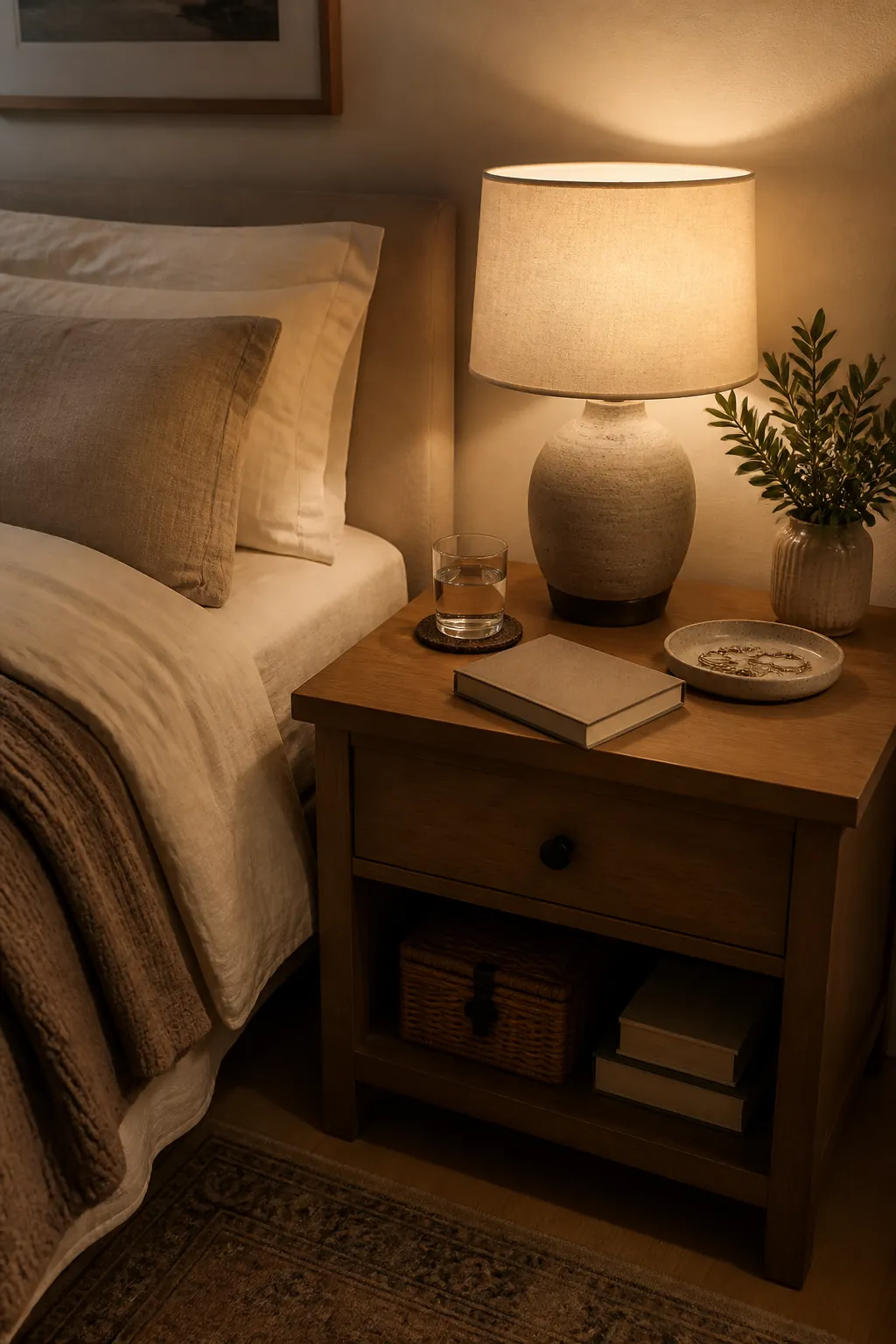
Soften the Floor and the Edges
A bedroom can have beautiful bedding and still feel unfinished if the floor is bare, the furniture is all hard angles, or the curtains stop too short. Softness should not live only on the bed. Put it underfoot, at the windows, and around the corners of the room.
A rug large enough to extend beyond both sides of the bed makes the room feel quieter and more intentional. Curtains hung close to the ceiling make the wall feel taller and soften window glare. A fabric headboard, upholstered bench, woven basket, rounded lamp base, or draped throw breaks up hard surfaces. These details create a Relaxing Bedroom without asking the room to become overly romantic or precious.
If the room is small, skip bulky furniture and use softness in flatter ways: a runner beside the bed, linen curtains, a wall-mounted sconce, and a single textured pillow. The mood comes from texture and light, not from filling every open space.
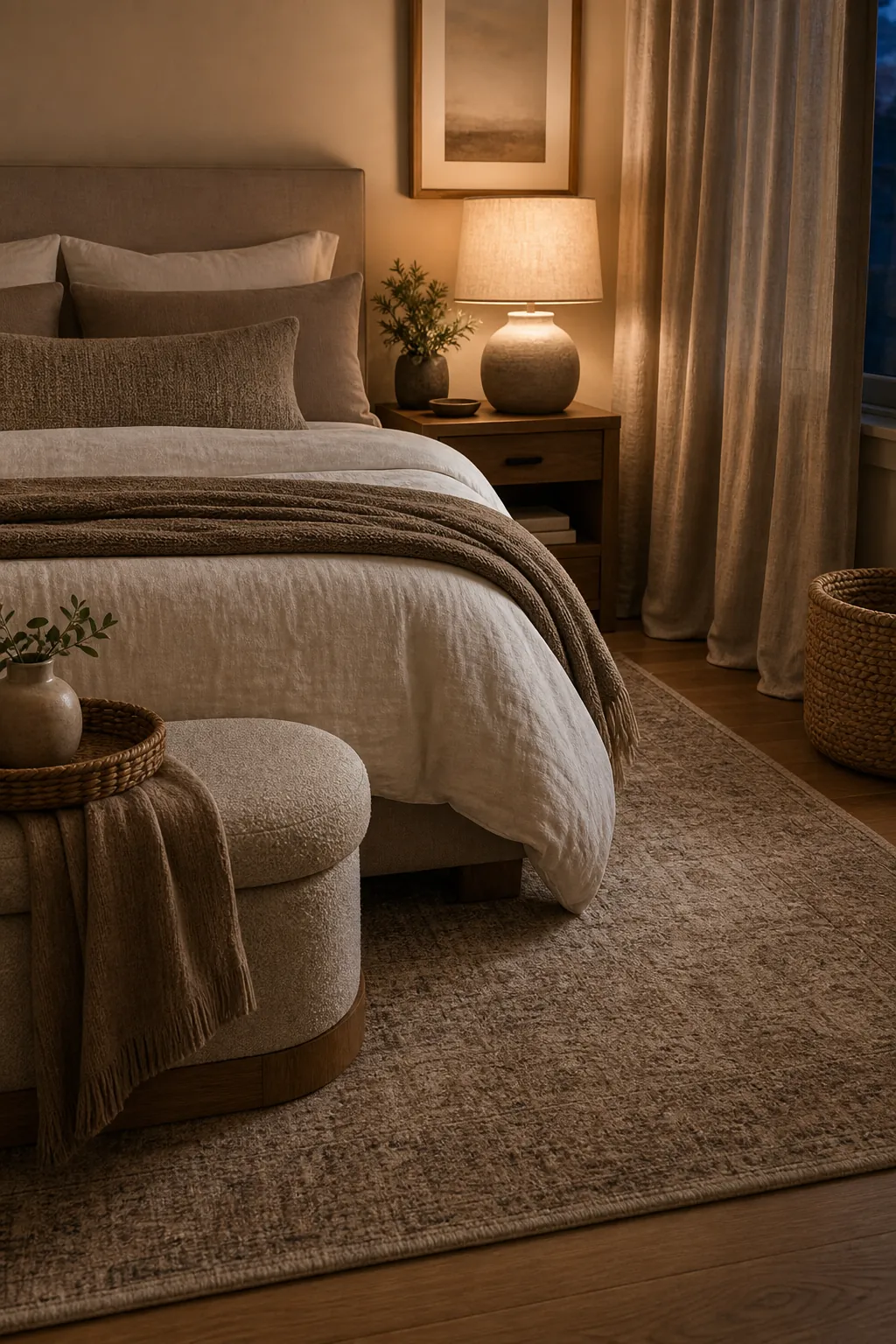
Give Clutter a Nighttime Landing Zone
Most bedroom clutter is not really decor failure. It is a missing landing zone. Clothes need a place before they become a chair pile. Decorative pillows need a place before they hit the floor. Glasses, watches, books, and chargers need one predictable surface. A couple bedroom has twice the habits, so the storage has to be easier than the mess.
Add one closed or semi-closed storage piece near the bed: a lidded basket, storage bench, small dresser, or nightstand with drawers. Keep the visible styling soft, but make the hidden storage practical. If the room looks beautiful only when both people behave perfectly, the design is too fragile.
This is especially helpful for Bedroom Styling that includes throws, extra pillows, sleep masks, lotions, or reading materials. The softer the room looks, the more important it is to protect that softness with simple storage.
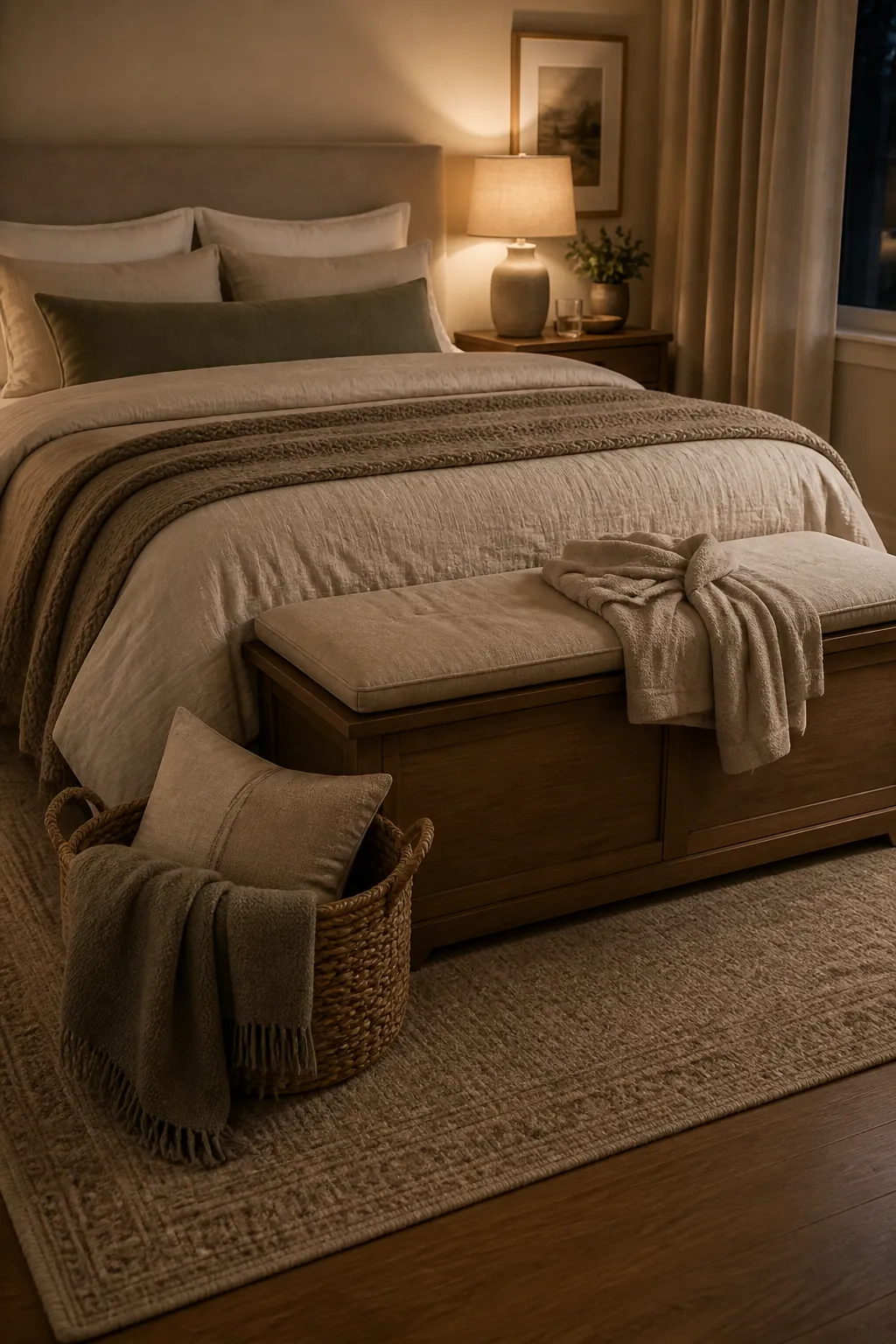
Keep the Romance Quiet
A romantic bedroom does not need red sheets, giant bouquets, or a hotel suite mood. In a real home, romance often feels better when it is quiet: flattering light, clean bedding, a room that smells fresh, and a few objects that mean something to both of you.
Choose art with a personal connection, but keep it calm enough for sleep. A black-and-white travel photo, a small framed wedding image, a landscape from a place you both love, or abstract art in the room’s palette can feel intimate without becoming overly sentimental. The best couple bedroom decor gives the relationship a presence without turning every wall into a memory board.
If you like candles, use them as part of the evening ritual, not as the only mood source. A candle on a tray, a dim lamp, and clean sheets will feel softer than a dozen scattered objects. Keep scent subtle, especially in a shared room, because one person’s cozy fragrance can be another person’s headache.
Create a Two-Person Wind-Down Routine in the Room
The final styling layer is not something you buy. It is how the room behaves after dark. A Soft Lighting plan, cleared nightstands, easy bedding storage, and warm textures all support a routine where the room gradually gets quieter.
Try a simple sequence: turn off the overhead light, switch on the bedside lamps, put decorative pillows in their basket, fold the throw to the foot of the bed, lower the room temperature if needed, and keep screens away from the pillows. If one person stays awake longer, they use their own reading light. If one person gets cold, the throw is within reach. The room works because it gives both people comfort without asking either one to manage the whole mood.
That is the difference between a decorated bedroom and a bedroom that actually feels softer at night. The first looks finished in the afternoon. The second welcomes both people back when the day is done.