
Everyday clutter is rarely a sign that you are bad at tidying. In a small home, it usually means the objects you touch all day have no short, obvious route back to where they belong. Keys land on the counter because the hook is too far away. Mail becomes a pile because the recycling bin is in another room. Chargers wander because they are useful in three different places and stored in none of them.
The fix is not buying more bins. The fix is designing everyday item storage around the way you actually move through your home. Small home storage works when it makes the right action easy: drop the bag, empty the pocket, charge the phone, put the blanket away, sort the paper, clear the surface, and reset the room before the mess starts spreading.
Use this as a whole-home system, not a shopping list. Start with the items that appear on your surfaces every day, then give each one a nearby home that is easy to reach, easy to see, and easy to reset.
Start Where Clutter Lands First
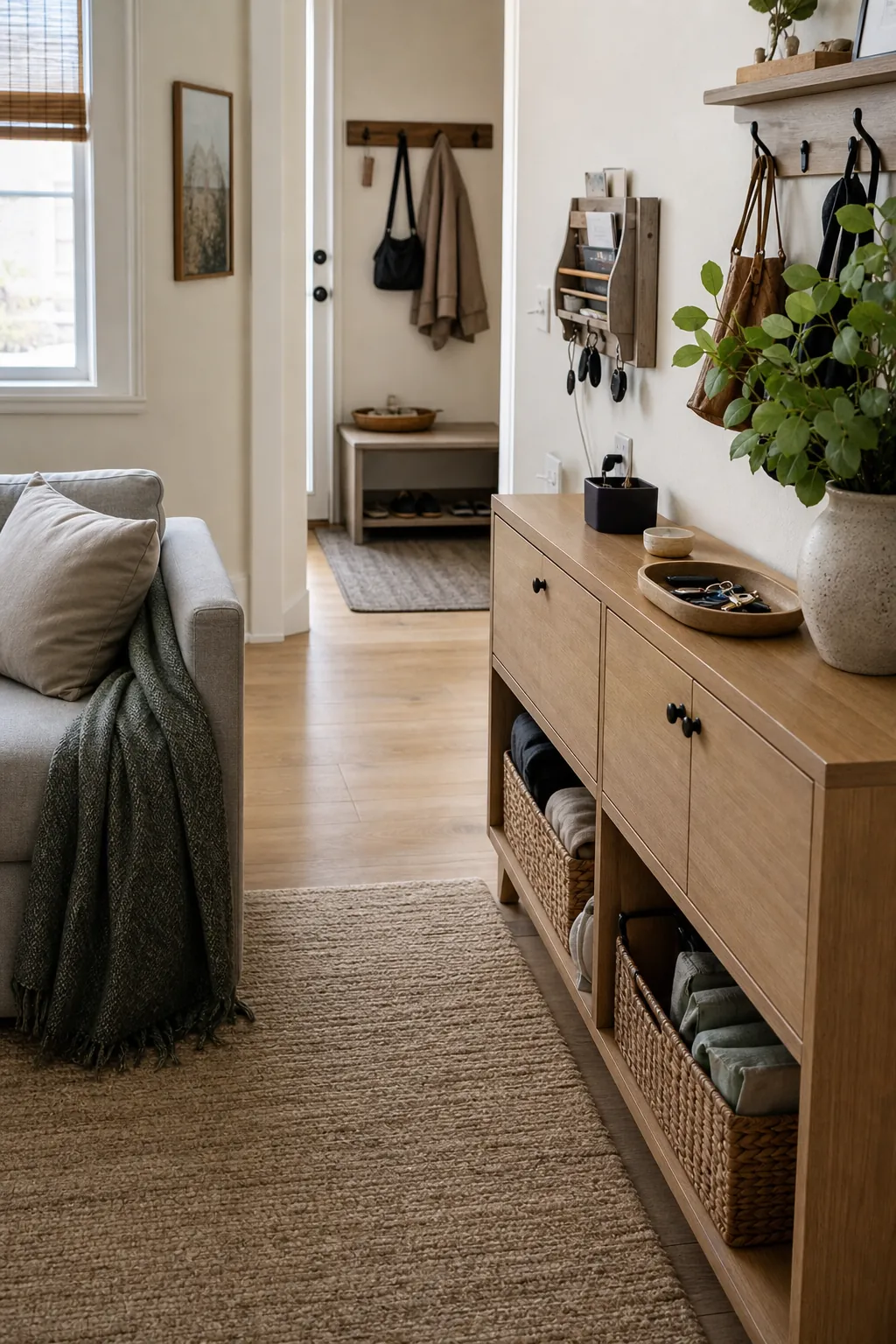
The entry is usually the most important storage zone in a small home because it catches the first wave of stuff: keys, sunglasses, bags, shoes, packages, receipts, dog leashes, umbrellas, and mail. If you do not build a drop zone here, the whole apartment becomes the drop zone.
A good drop zone does not need a mudroom. It needs one place for the hand, one place for the shoulder, one place for the floor, and one place for paper. That might mean a slim wall shelf, two hooks, a shoe basket, and a narrow mail tray. The point is to stop items at the door before they reach the kitchen counter or sofa.
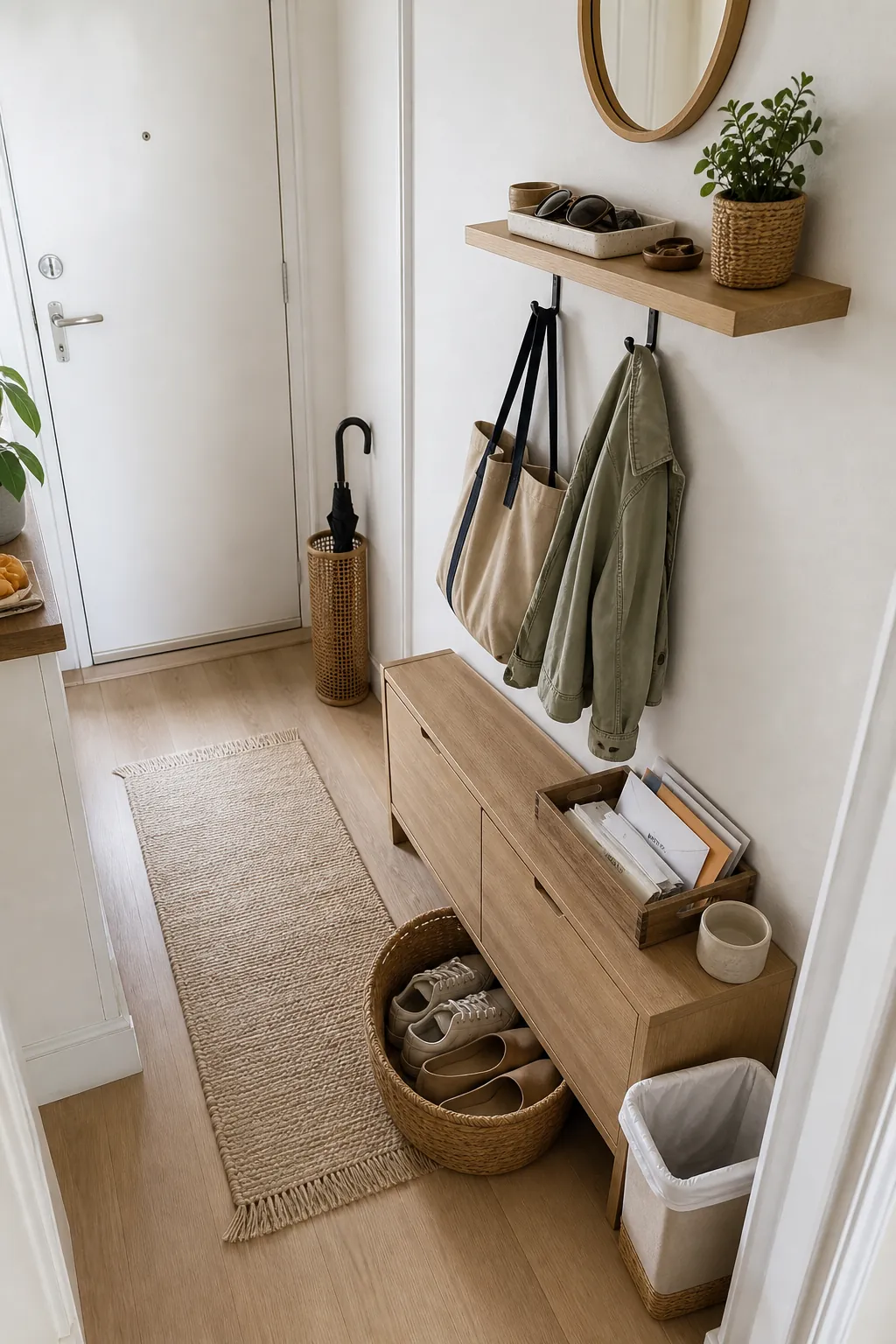
- Keys and sunglasses: use a small tray or hook at hand height, not a drawer across the room.
- Bags and totes: hang them on strong hooks so they do not eat floor space.
- Shoes: use one basket for daily pairs and move rarely worn shoes out of prime space.
- Mail: keep the tray close to recycling so junk paper leaves before it becomes a pile.
If your entry has no floor space, go vertical. Hooks behind the door, a wall rail, a shallow shelf, or a mounted pocket organizer can do more than a bulky bench in a tight hallway.
Give Small Items Tiny Homes, Not Big Bins
Small things create the most visual noise because they scatter. Coins, lip balm, earbuds, batteries, receipts, nail clippers, reading glasses, remote controls, and charging cords are not large enough to demand attention one at a time, but together they make a room feel unfinished.
The mistake is throwing all of them into one miscellaneous basket. That basket feels helpful for two days, then becomes a junk drawer without the drawer. Better small space organization uses micro-homes: a bowl for coins, a cable box for chargers, a drawer cup for remotes, a tray for nightstand items, a pouch for receipts you actually need, and a bin for batteries or small tools.
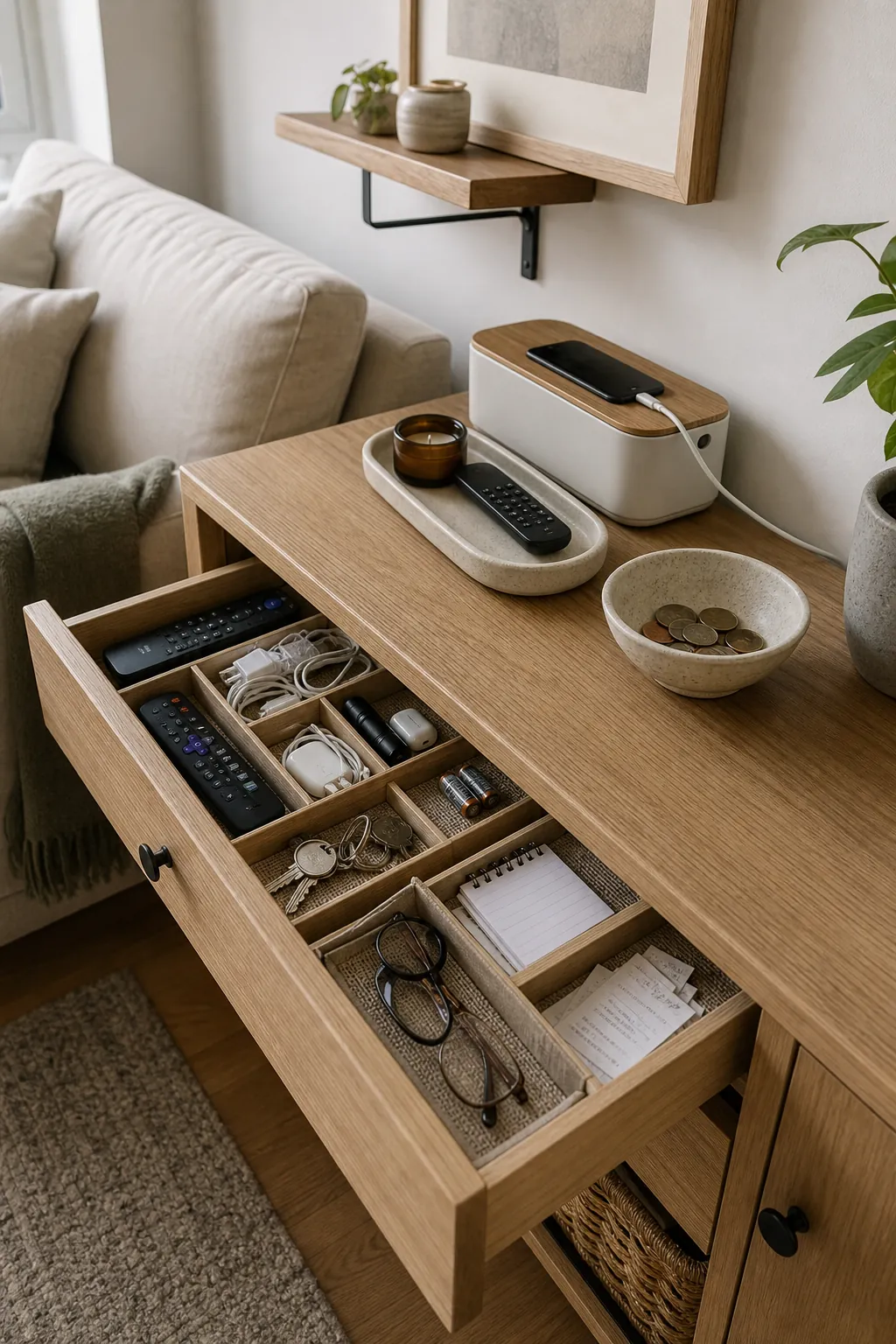
Keep each micro-home near the place where the item is used. If you clean your glasses by the sofa, the cloth belongs near the sofa. If you open packages at the kitchen counter, scissors belong near the kitchen counter. Storage that matches your habits is easier to maintain than storage that matches a perfect floor plan.
Use Basket Storage With Rules
Basket storage is useful in a small home, but only when the basket has a job. A basket labeled in your mind as random stuff will quietly become a place where decisions go to die. A basket for winter hats, pet toys, current reading, clean hand towels, or reusable shopping bags is different. It holds one category and makes that category easier to put away.
Before adding a basket, ask two questions: What exact item family lives here? and How will I know when this basket is full enough to edit? If you cannot answer both, you may be hiding clutter instead of controlling it.
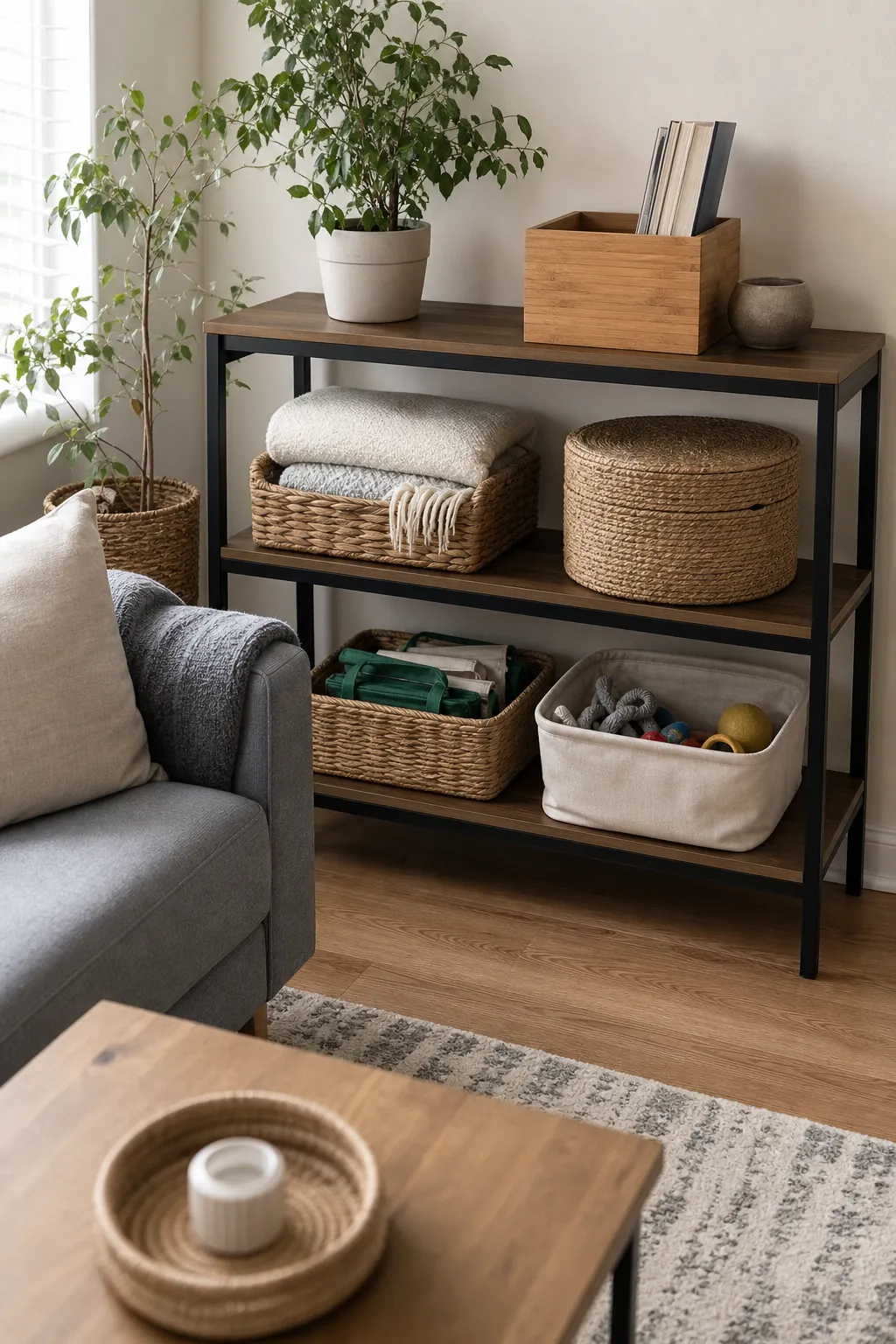
- Use open baskets for items you reach for daily, like throws, slippers, or pet supplies.
- Use lidded baskets for visual clutter, like cords, backup toiletries, or craft supplies.
- Use clear bins inside closets and cabinets when forgetting the contents is the bigger problem.
- Use one basket per category. Mixing paper, tech, medicine, and toys makes every reset slower.
Hide the Fussy Stuff, Not the Things You Need Daily
Hidden storage creates calm, but it has to be used carefully. The items you use every day should be easy to reach. The items that look messy, tangle easily, or create visual noise can go behind doors, inside drawers, under seats, or in lidded boxes.
This is where small furniture can work harder. A storage bench can hold shoes, bags, or extra linens. A sideboard can hide cables and office supplies. A bed drawer can take off-season clothes. A narrow cabinet can become an everything closet for light bulbs, batteries, tape, small tools, and backup household goods.
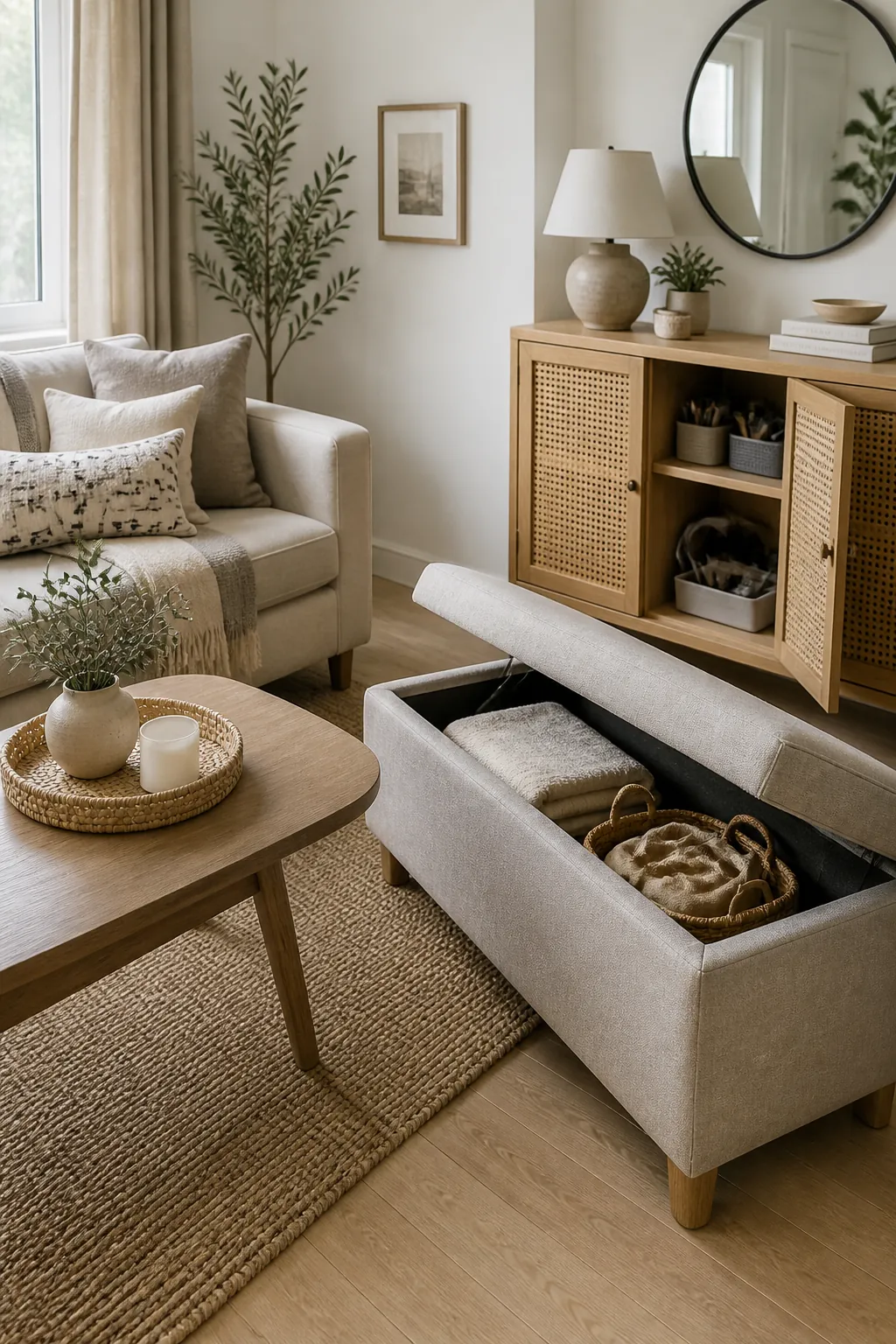
The goal is not to hide everything. A room with no visible life can feel staged and inconvenient. The better goal is quiet surfaces and easy access: a coffee table with one tray instead of five loose piles, a nightstand with only evening essentials, and a media cabinet that swallows cables instead of letting them spread across the floor.
Store by Frequency, Not by Room Name
Apartment storage gets easier when you stop asking where an item is supposed to live and start asking how often you use it. Daily-use items deserve the easiest reach. Weekly items can live one step away. Occasional and seasonal items can go high, low, under, or behind.
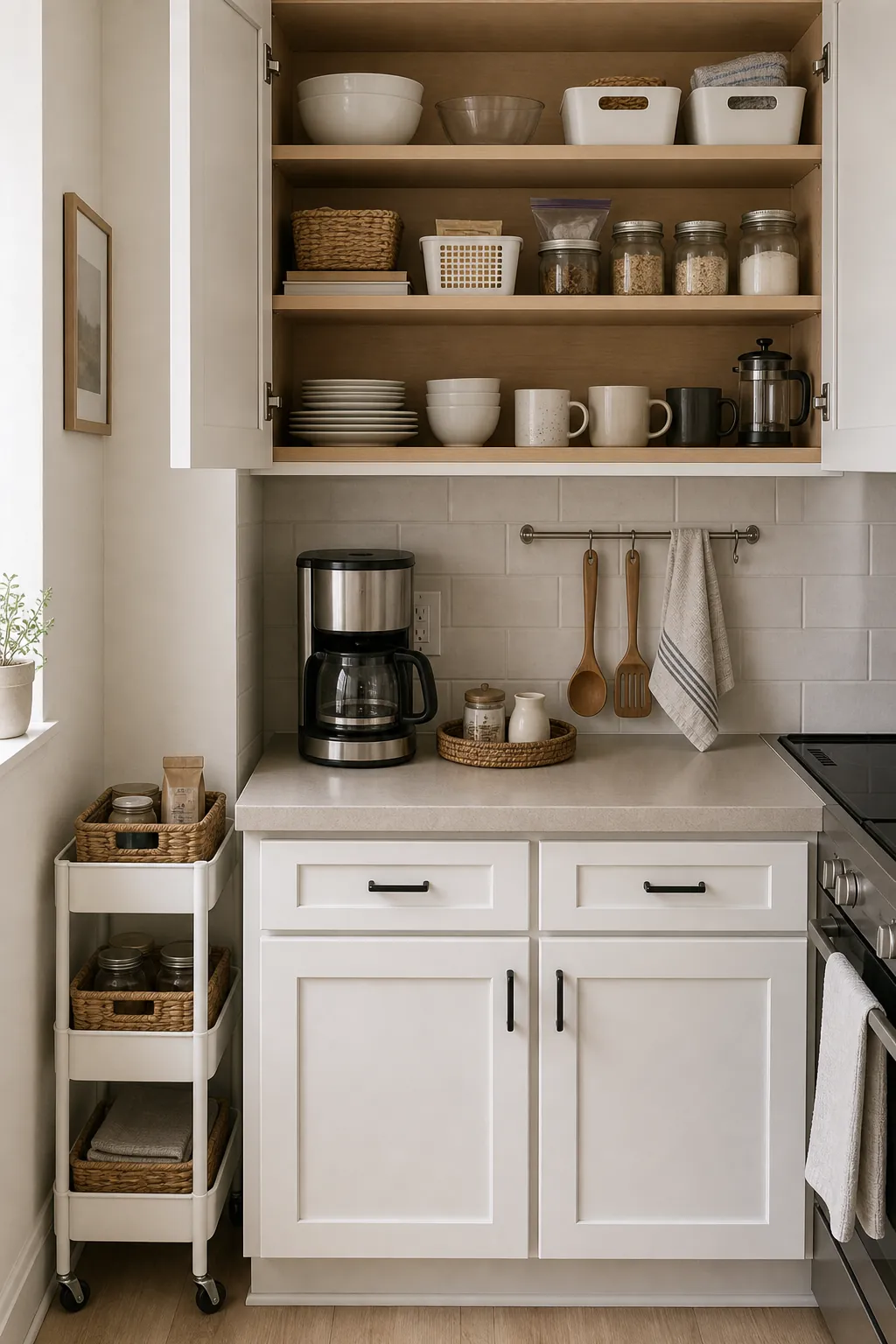
- Daily: keys, bag, wallet, phone charger, everyday dishes, coffee supplies, current shoes, daily toiletries.
- Weekly: cleaning kit, laundry supplies, extra towels, hobby tools, paperwork in progress, backup pantry items.
- Occasional: guest bedding, seasonal decor, luggage, holiday dishes, special tools, out-of-season clothing.
This one shift prevents prime space from being stolen by things you rarely touch. If the blender comes out twice a month, it should not sit on the only stretch of counter you use every morning. If backup toiletries are crowding daily skincare, move the backups to a higher shelf and keep only the active items in the bathroom drawer.
Make Every Surface Earn Its Job
In a small home, a surface can become storage by accident. The dining table becomes a mail station. The sofa arm becomes a charging station. The kitchen counter becomes an office. That is normal, but if every surface has every job, the home will look busy even after you clean.
Choose one main job for each surface, then give the stray items a nearby container. The coffee table can hold one tray for remotes and coasters. The desk can hold work items only. The kitchen counter can keep one daily appliance and one landing tray. Small home storage should protect surfaces, not fill them.
Build a Reset That Takes Less Than Ten Minutes
Clutter control is not one heroic weekend cleanout. It is a short reset that works even when you are tired. The smaller the home, the more often it needs a quick return to baseline because one loose pile can affect the whole room.
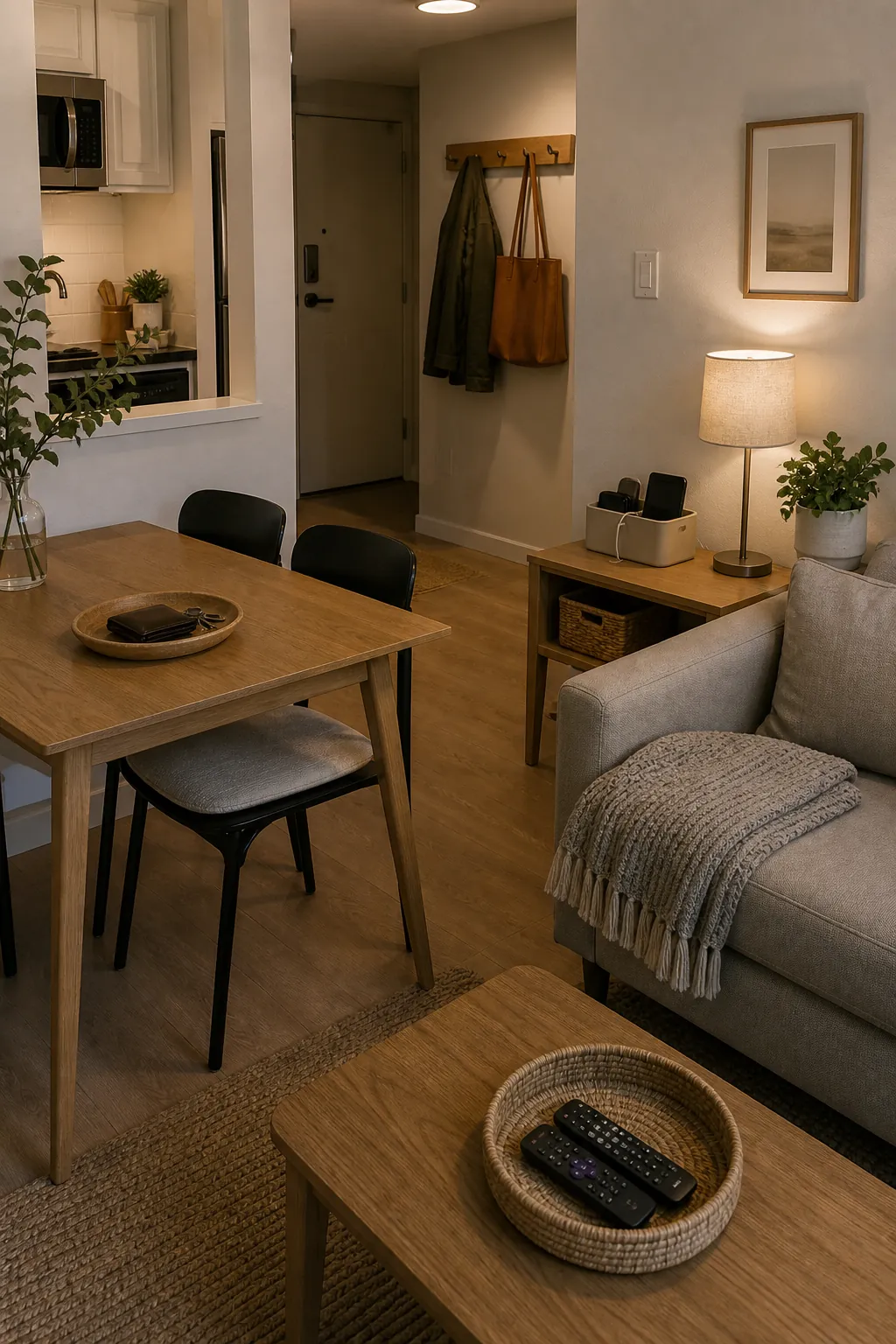
- Return keys, wallet, bag, and shoes to the entry drop zone.
- Clear the main table and counter before paper spreads.
- Fold the throw blanket and return remotes to one tray.
- Put chargers back into the cable box or charging station.
- Move one full basket or bin to its proper cabinet, shelf, or closet.
If the reset takes longer than ten minutes, the system is too complicated or too far away from the mess. Move storage closer, reduce the number of decisions, and remove duplicates before buying another organizer.
What to Fix First If the Whole Home Feels Crowded
Start with the areas that affect your day the most. You do not need to organize every closet before your home feels better.
- Entryway: stop the spread of bags, shoes, paper, and keys.
- Kitchen counter: remove duplicate mugs, extra bottles, unused appliances, and paper piles.
- Living room surfaces: give remotes, blankets, chargers, books, and pet items a defined home.
- Bathroom drawer: keep daily toiletries in reach and backups somewhere else.
- Bedroom floor: add a laundry landing spot and move off-season items under the bed or high in the closet.
The best storage ideas are the ones you will actually use on an ordinary weeknight. Give every frequent item a nearby home, let baskets hold categories instead of chaos, use hidden storage for the fussy stuff, and keep your prime space for the items that earn it every day. That is how a small home starts feeling calmer without needing more square footage.