
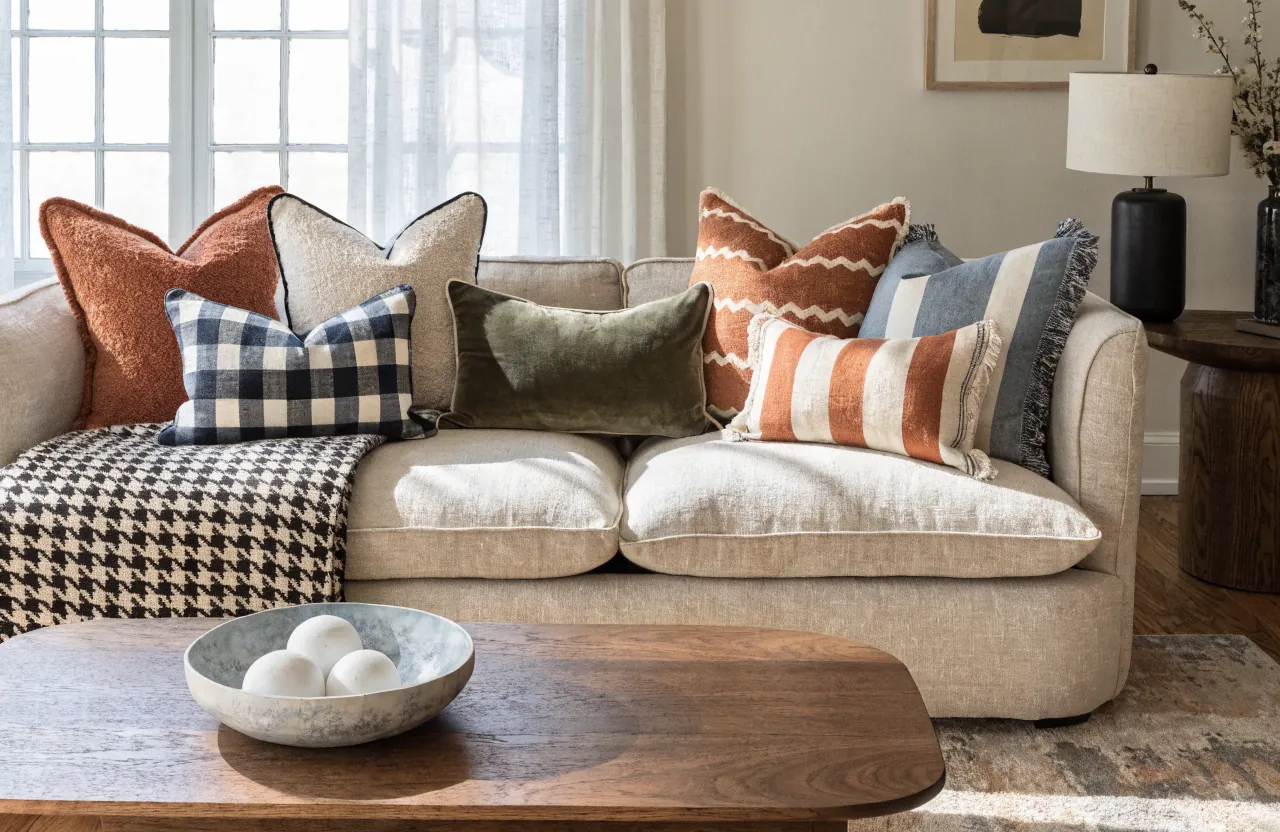
Decorative pillows are small, but they can expose every weak spot in a room. A sofa can look flat because every pillow is the same size. A bedroom can feel unfinished because the color is safe but the texture is missing. A pretty patterned pillow can look random because nothing else in the space repeats even one of its colors.
The best pillow styling does not start with buying more pillows. It starts with giving every pillow a job: one anchors the palette, one brings texture, one adds pattern, and one creates the color moment. When those jobs are clear, decorative pillows feel intentional instead of cluttered.
Build the palette before you buy the pillows
A pillow mix is easier to control when it has two or three colors that already belong to the room. Pull one tone from the rug, one from the art, and one from a wood, metal, or fabric finish. Neutrals count. Ivory, charcoal, taupe, camel, and soft black can do as much work as blue or rust when the texture is strong.
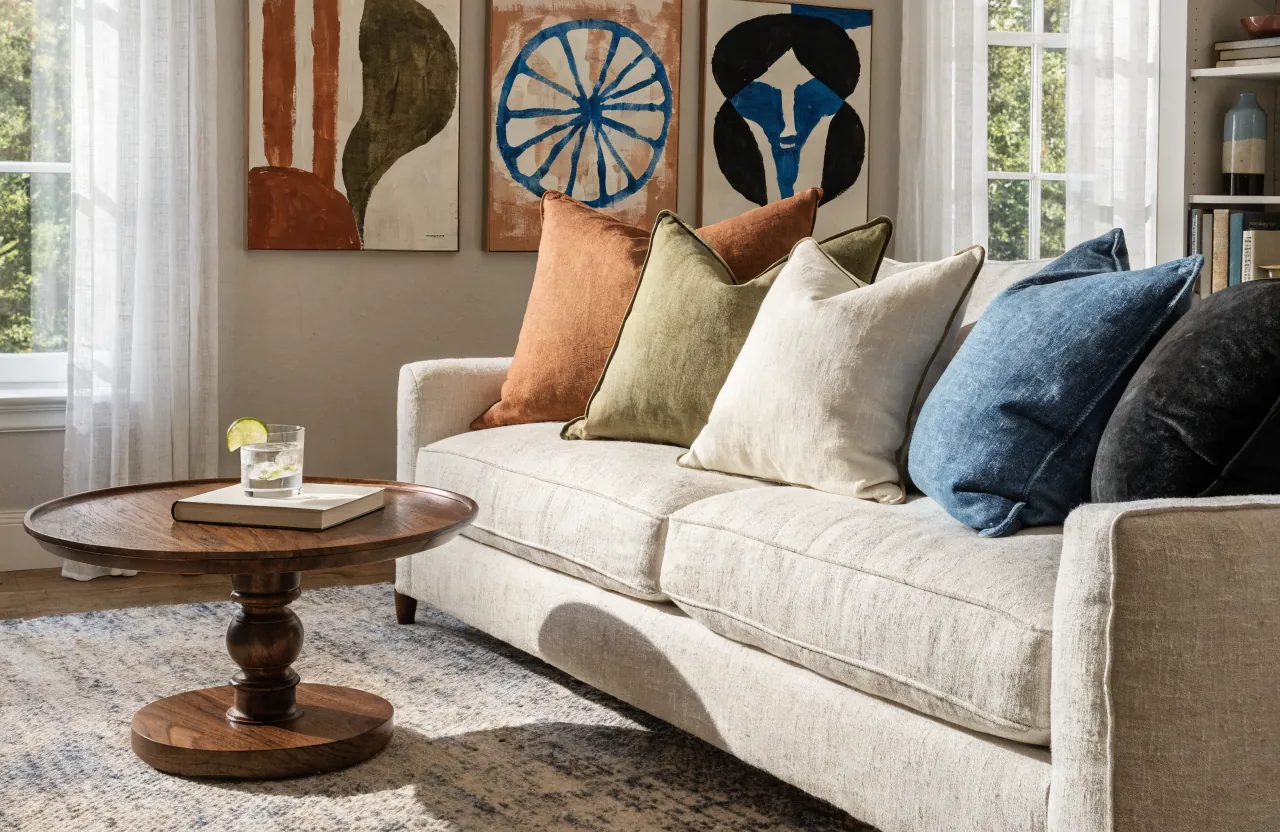
If pattern mixing makes you nervous, choose one pillow that already contains your palette. Then build around it with one quiet solid, one textured neutral, and one accent that repeats a smaller color from the hero pillow. This keeps colorful pillows from looking like they arrived from a different room.
Use texture when the room needs depth, not noise
Texture is the difference between a calm room and a flat room. A neutral sofa with six smooth cotton pillows can still look unfinished, while three pillows in boucle, washed linen, and velvet can feel layered without adding busy pattern. This is why textured pillows are useful in small rooms, rental spaces, and bedrooms where you want softness more than drama.
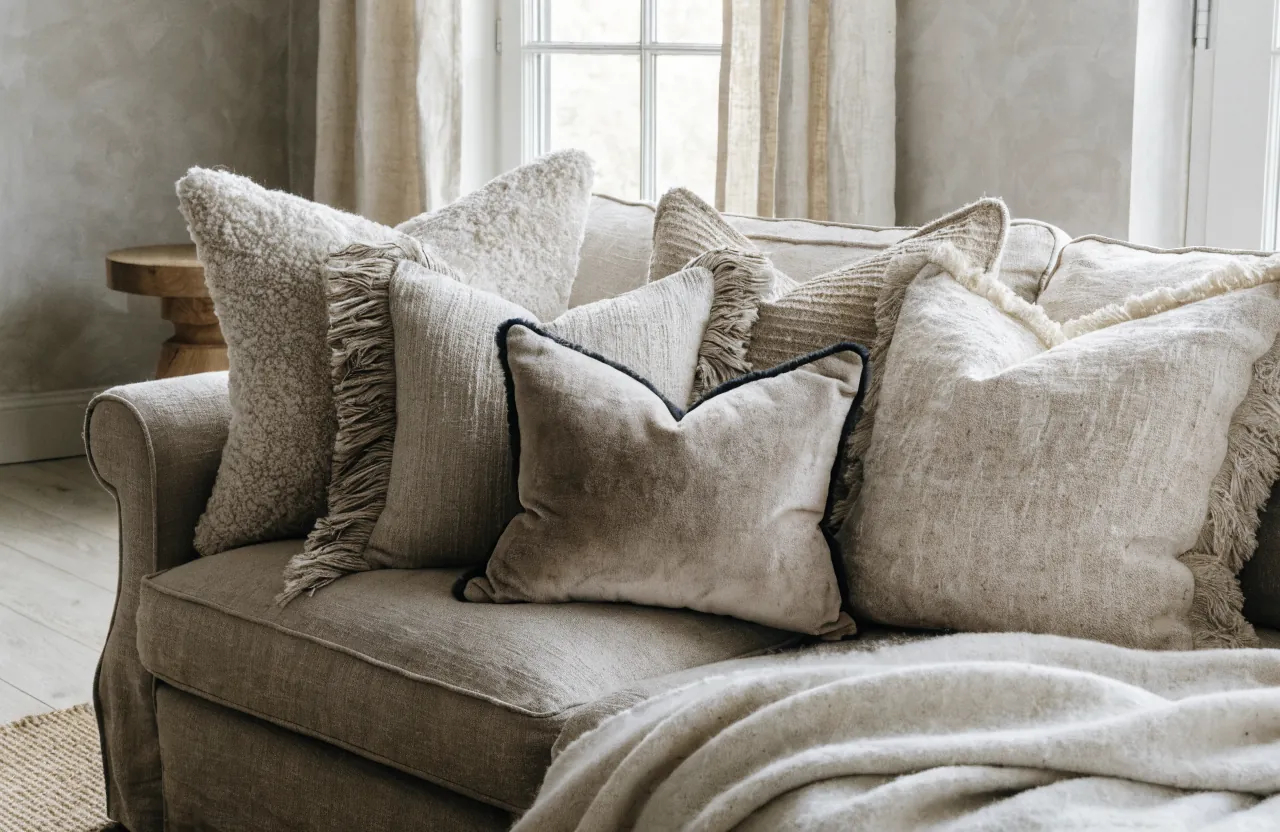
Think in contrasts. Pair a nubby pillow with a smoother linen one. Add a velvet lumbar in front of a rough weave. Let fringe, embroidery, ribbing, or a heavy cotton slub create the interest. The room stays quiet, but the eye has somewhere to land.
Let one pattern lead, then vary the scale
Patterned pillows work best when they are not competing for the same role. One large floral, one narrow stripe, and one tiny block print can sit together because each pattern speaks at a different volume. Three medium-scale prints, even in matching colors, often feel tense because they fight for attention.
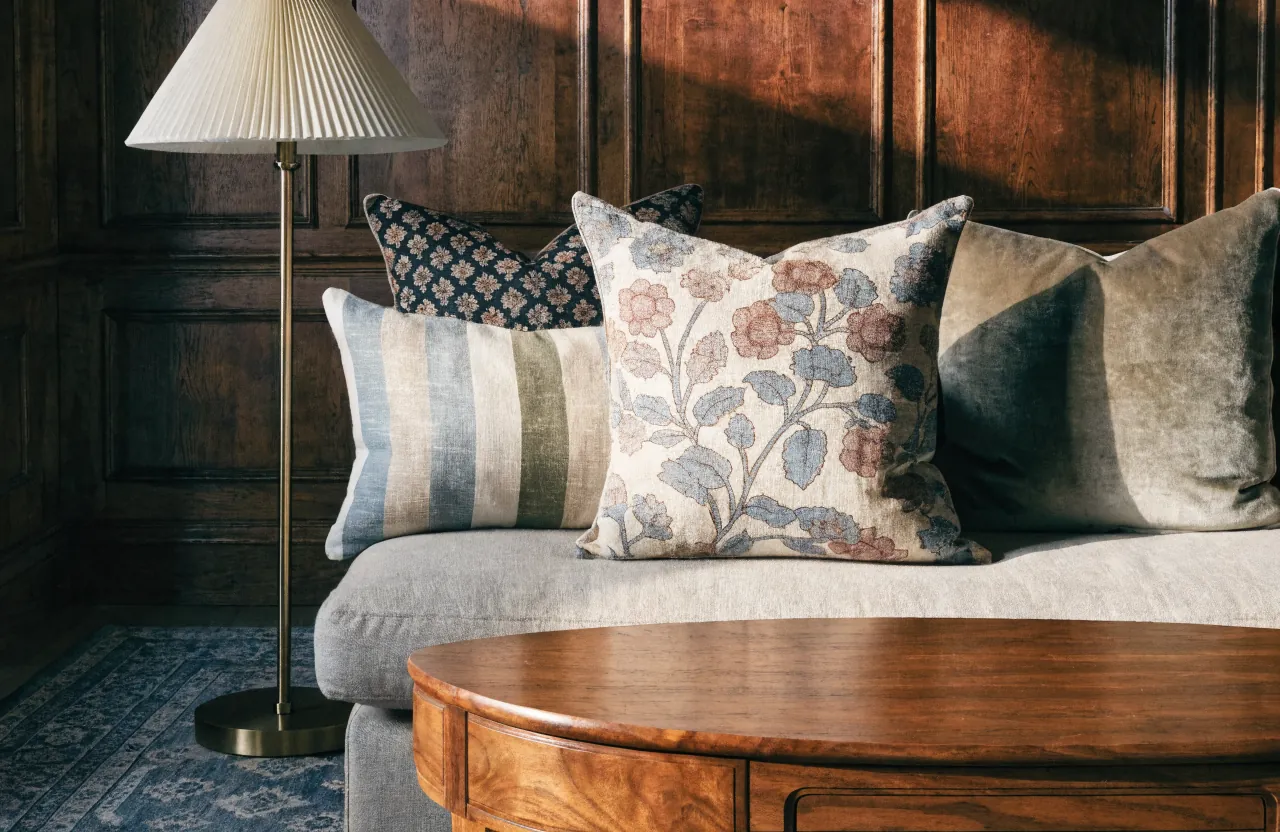
A simple rule: choose a hero pattern, a supporting pattern, and a rest pillow. The hero can be floral, geometric, plaid, ikat, or abstract. The supporting pattern should be smaller or more linear. The rest pillow can be solid, textured, or almost tonal so the arrangement has a place to breathe.
Match pillow size to the furniture
Tiny pillows make a large sectional look accidental. Oversized pillows can swallow a compact chair. Scale matters before color does. A full sofa usually needs larger corner pillows first, then medium squares or a lumbar in front. A small loveseat may only need three strong pillows. A lounge chair often looks best with one excellent pillow instead of a pile.
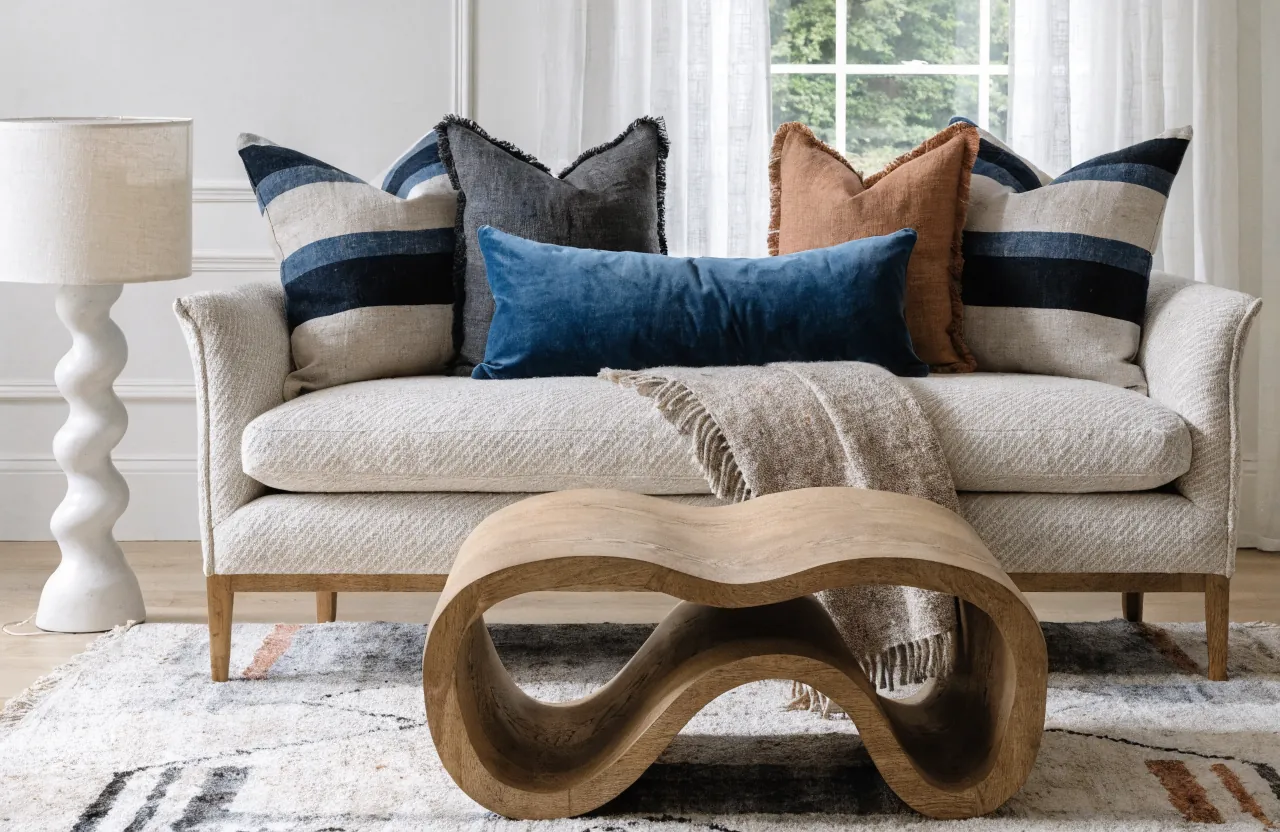
For sofa styling, start with the outside corners because they create the frame. If the sofa is deep or boxy, use fuller inserts and at least one pillow with structure. If the sofa is sculptural or has a curved back, keep the pillow count lower so the furniture shape still reads.
Spread color across the room
Colorful pillows look more sophisticated when the color is repeated somewhere else. A rust pillow feels intentional when the same warmth appears in a wood bowl, a book spine, a lamp shade, or a tiny thread in the rug. A blue pillow looks less lonely when the art, curtains, or throw carries a related tone.
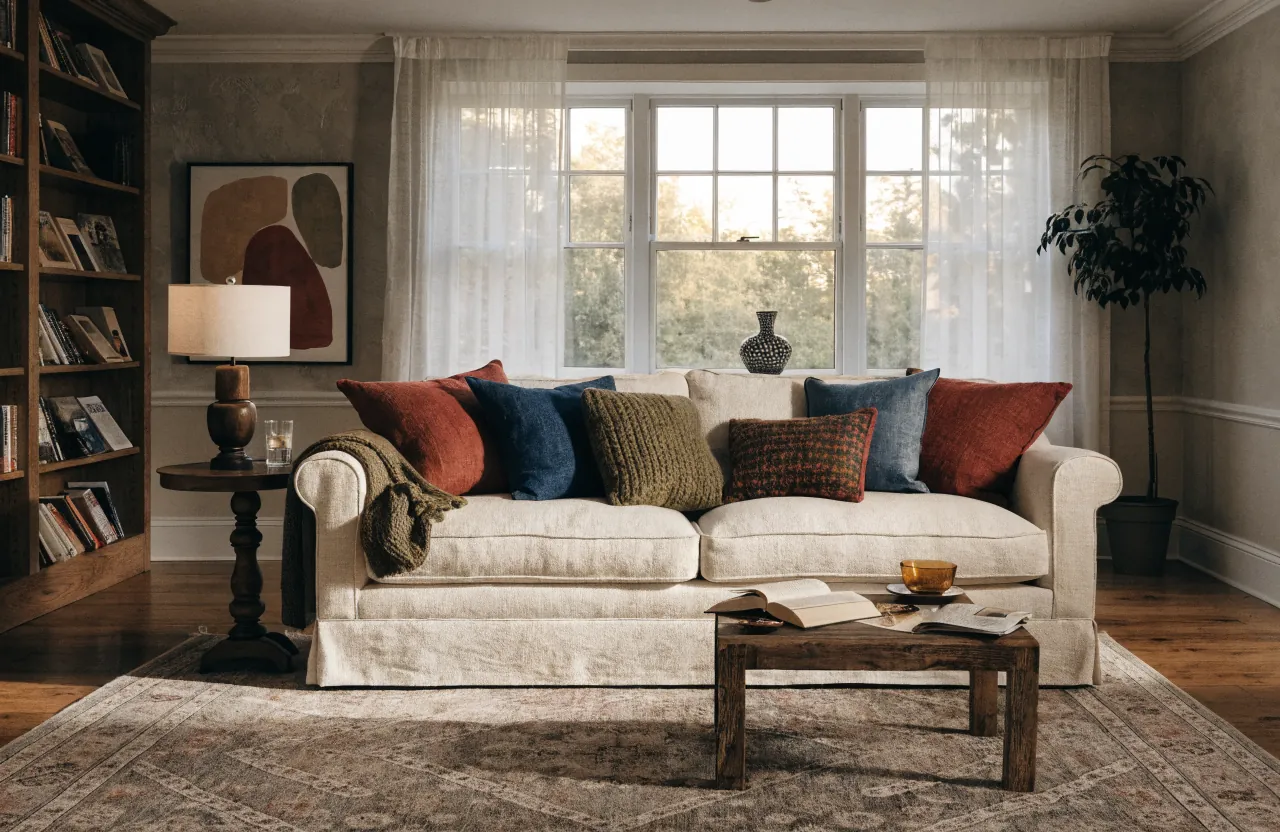
Avoid parking all of one color on a single side of the sofa. Sprinkle it. If one corner has a patterned pillow with blue, let the opposite side use a solid blue-gray, a small stripe, or a throw with a similar undertone. This balance matters more than perfect symmetry.
Soften the bed with fewer, better layers
Bedroom pillows should feel generous, not like a nightly obstacle course. Stack the sleeping pillows or shams at the back, add one row of decorative pillows, then finish with a long lumbar or bolster if the bed still needs shape. A folded quilt or throw at the foot of the bed can repeat the palette and make the pillow styling feel connected to the bedding.
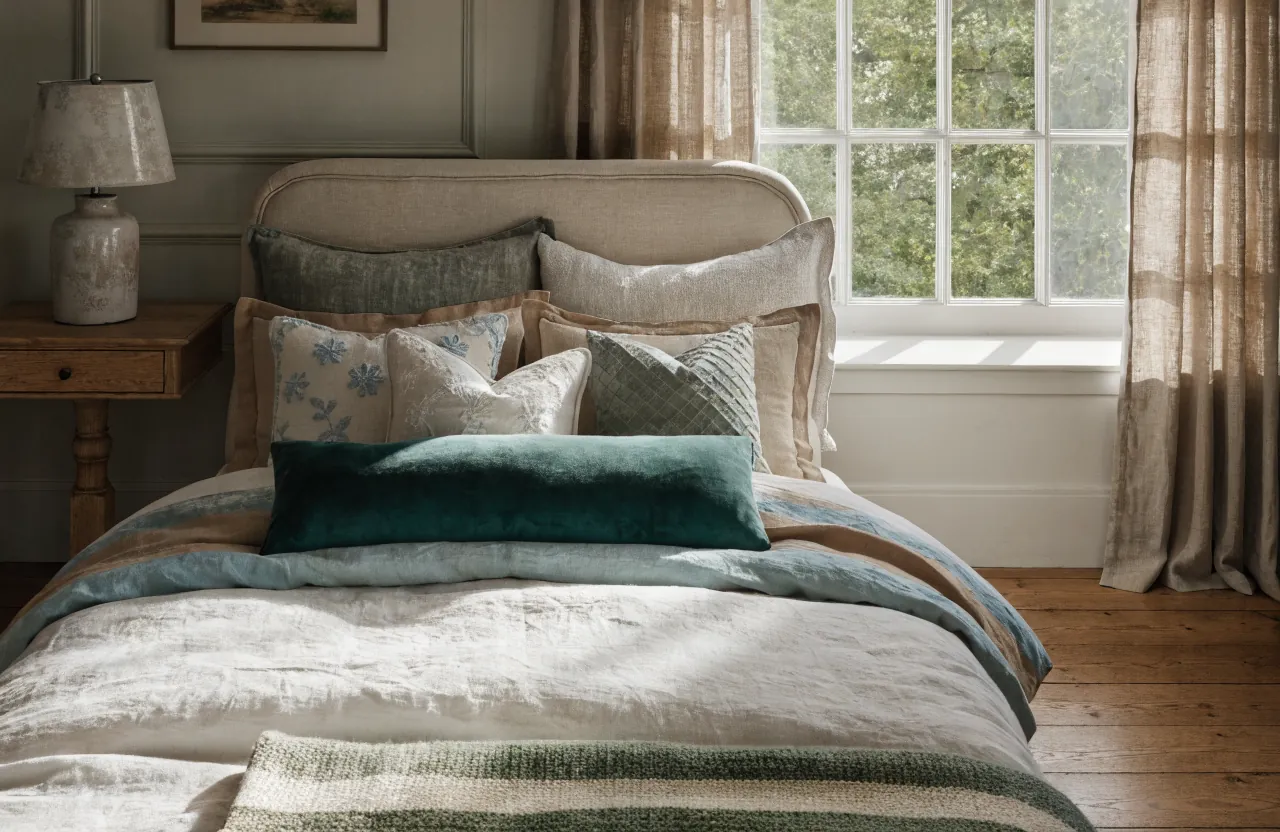
If the room is neutral, use texture first: matelasse, linen, velvet, embroidery, chunky knit, or a subtle woven stripe. If the room already has strong color, let the bed pillows calm it down with ivory, clay, mushroom, sage, or faded blue instead of adding another loud accent.
Make seasonal swaps small and deliberate
You do not need a full pillow wardrobe for every season. Keep the base pillows steady and swap one or two covers. In spring, a faded floral or block print can lighten the room. In summer, washed linen and soft stripes feel easy. In fall, velvet, wool, rust, olive, and chocolate add weight. In winter, boucle, cable knit, and deeper contrast make soft decor feel warm.
The strongest decorative pillow ideas are rarely the loudest ones. They work because the texture, pattern, and color are pulling in the same direction. Once the palette is set, the scale is right, and the room repeats the accent color in a few quiet places, even a simple pillow mix can make the whole space feel more finished.