
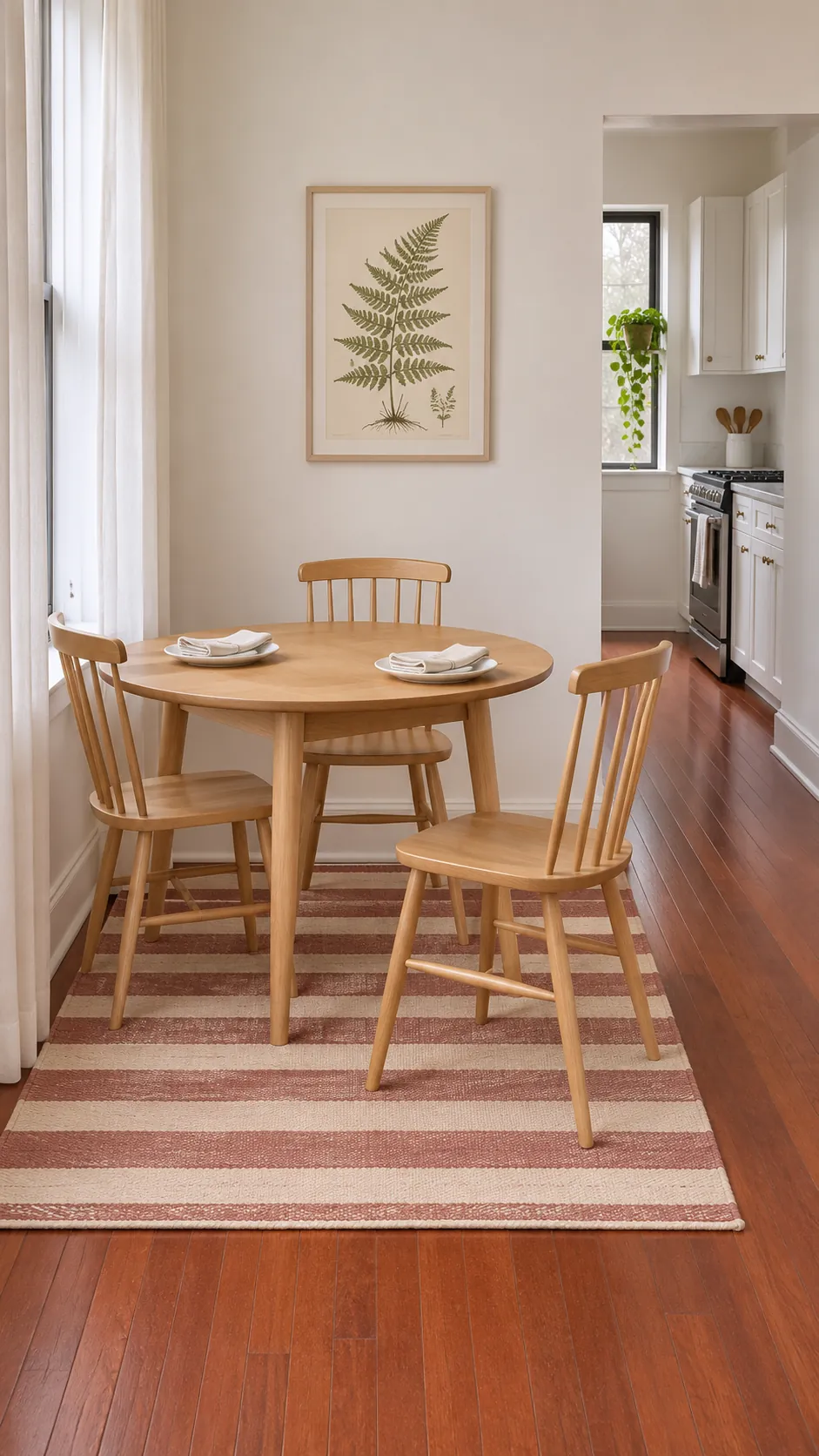
Listen for the snag when you pull a chair out. If its back feet keep dropping over the rug edge, dinner will feel awkward no matter how well the colors work. Test that movement first, then decide whether a rug is worth the extra cleanup in your room.
Measure the chair’s full travel
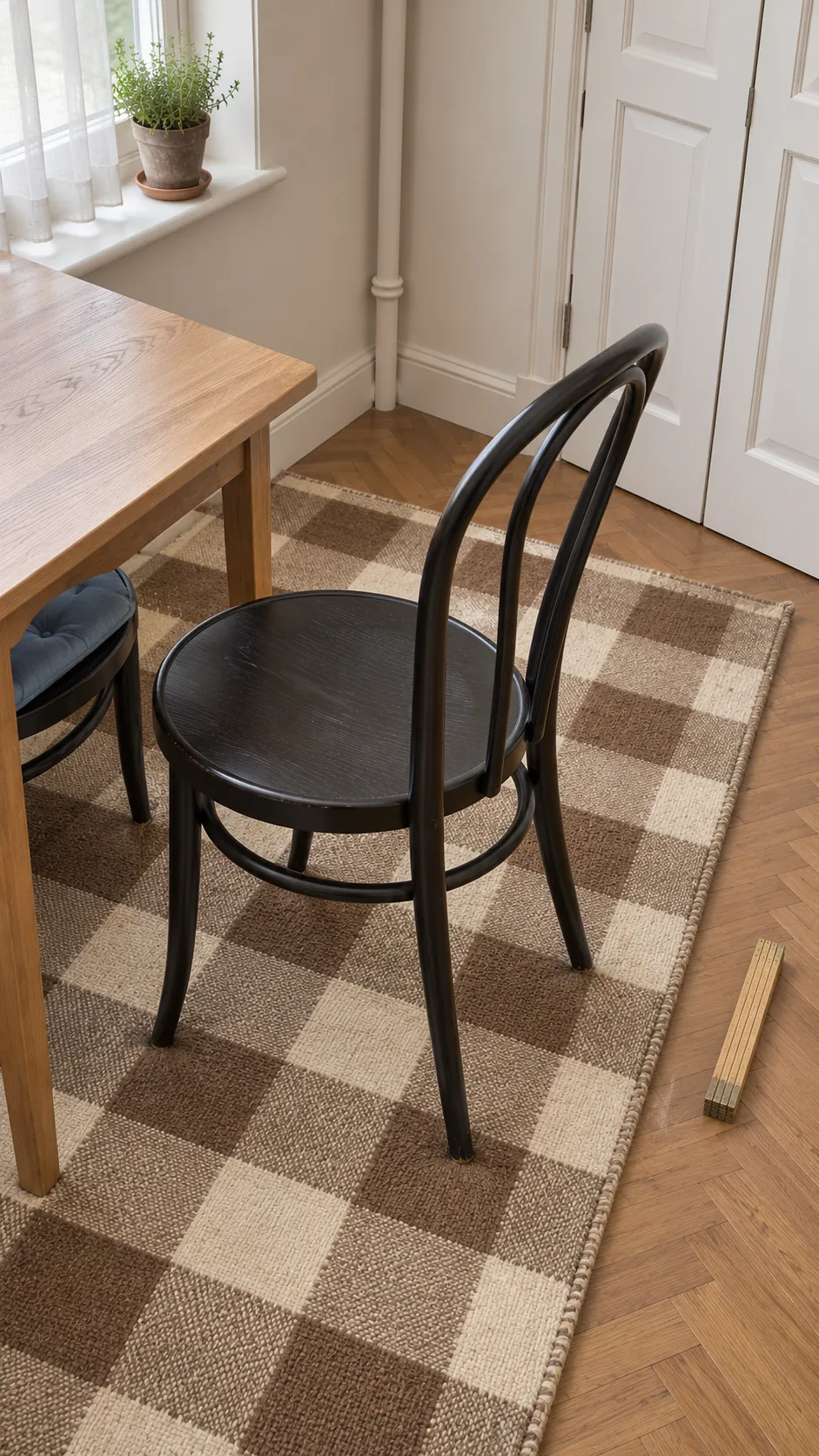
Pull the chair back far enough to sit down and stand up naturally. Measure from the table edge to the furthest back foot in that position. Repeat on the sides where people sit. Start with 24 inches of extra rug on each occupied side as a rough shopping estimate and use the actual chair test to adjust it.
For a 36 by 48 inch table with seating on all sides, that starting allowance gives you an 84 by 96 inch rug. Tape that outline onto the floor before you order. If it meets a cabinet, catches a door or crowds the walking route, bare floor may work better.
Use bare floor when the room is a passage
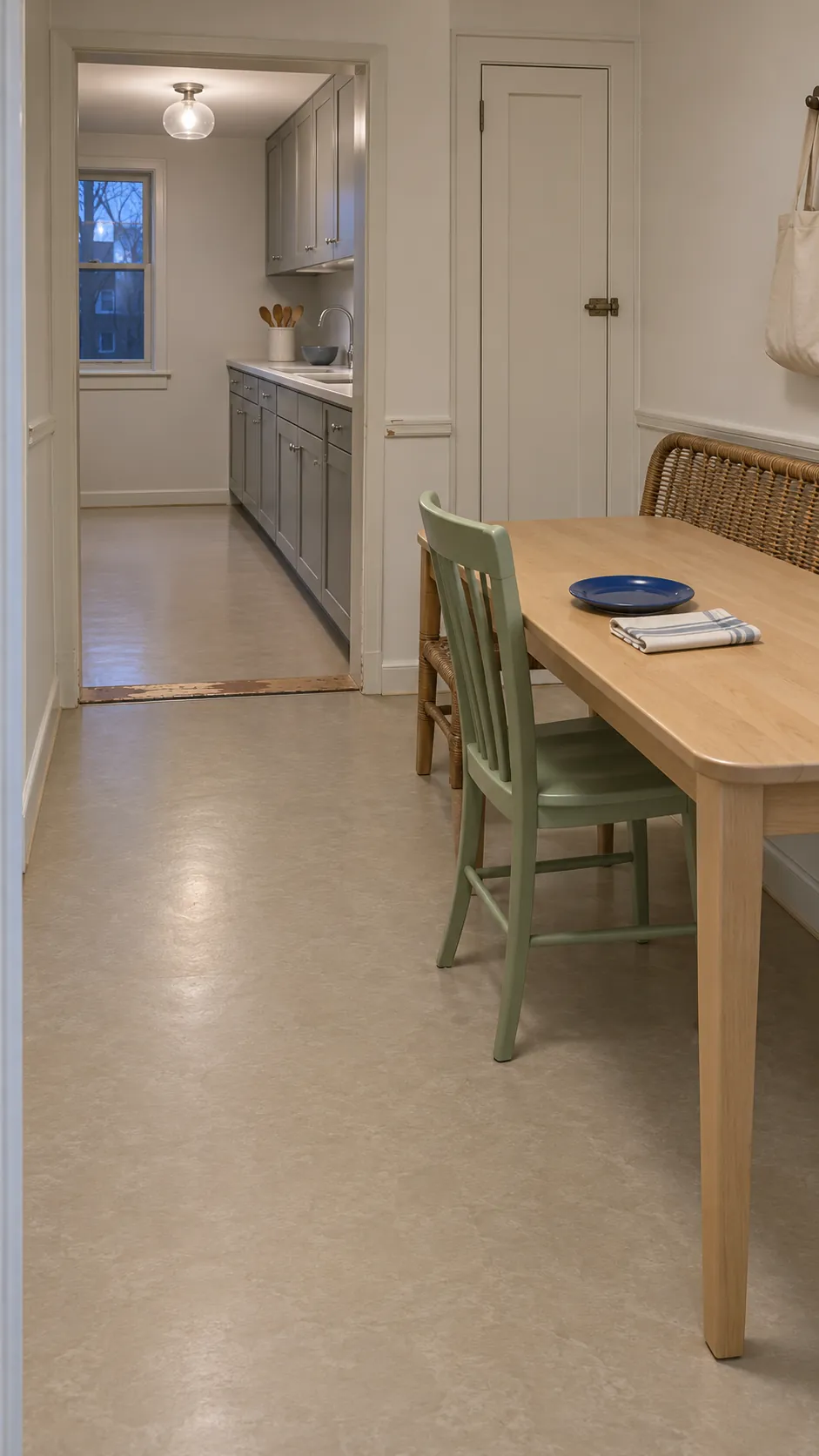
In a dining nook where people cross behind the chairs to reach the kitchen, a rug edge can land exactly where feet and chair legs pass. Bare floor gives both a continuous surface. Use floor compatible pads on chair feet and replace them when grit builds up or the pads wear thin.
Keep the weave flat if you use a rug
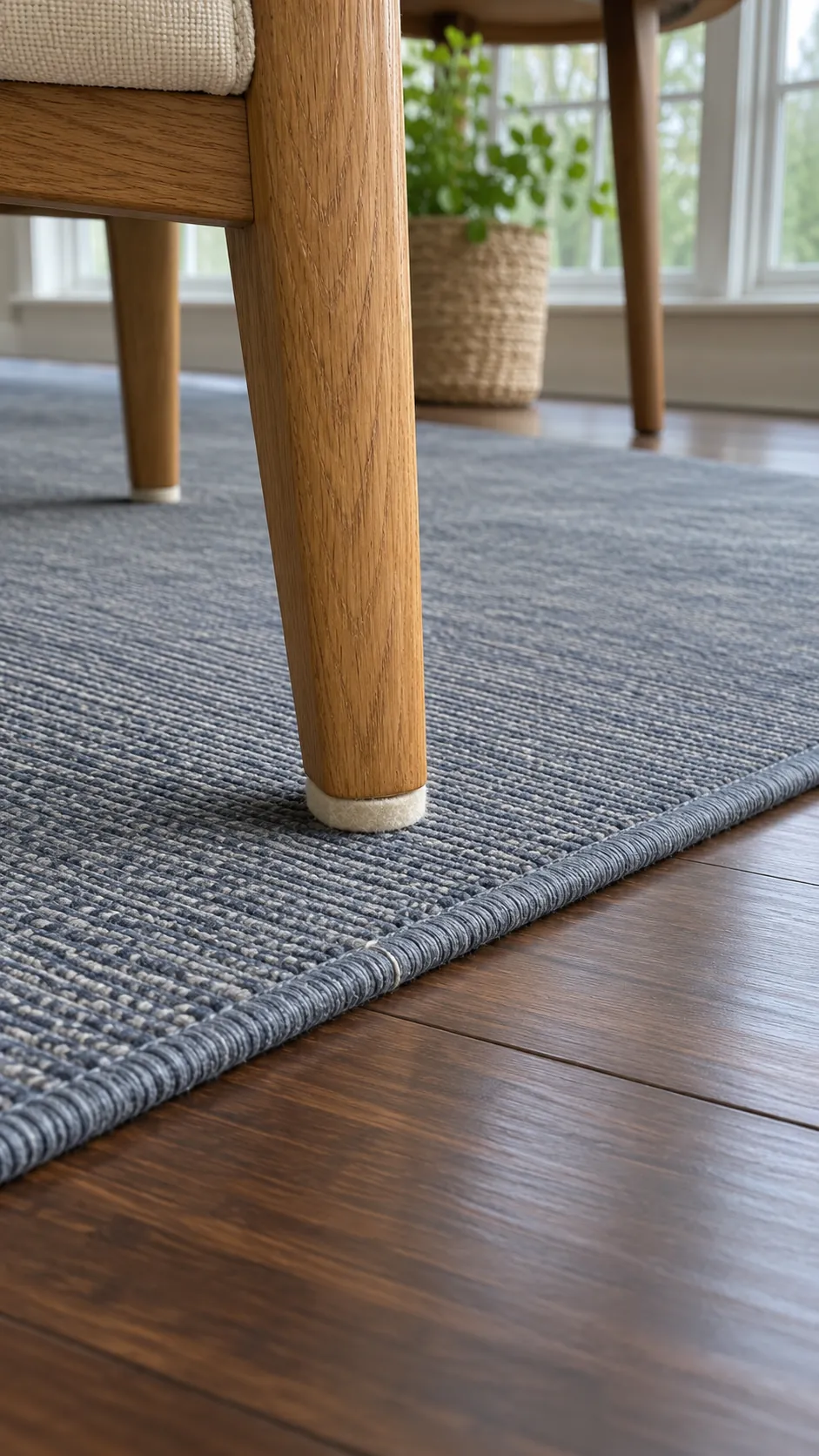
Slide one chair over the sample, if you can. A thin flatweave with a tightly bound edge usually lets chair legs move more easily than a thick pile or loose fringe. Use a thin rug pad designed for both your type of rug and your flooring. A pad that extends past the edge can lift the very place you need to keep flat.
Check what washable means for your rug
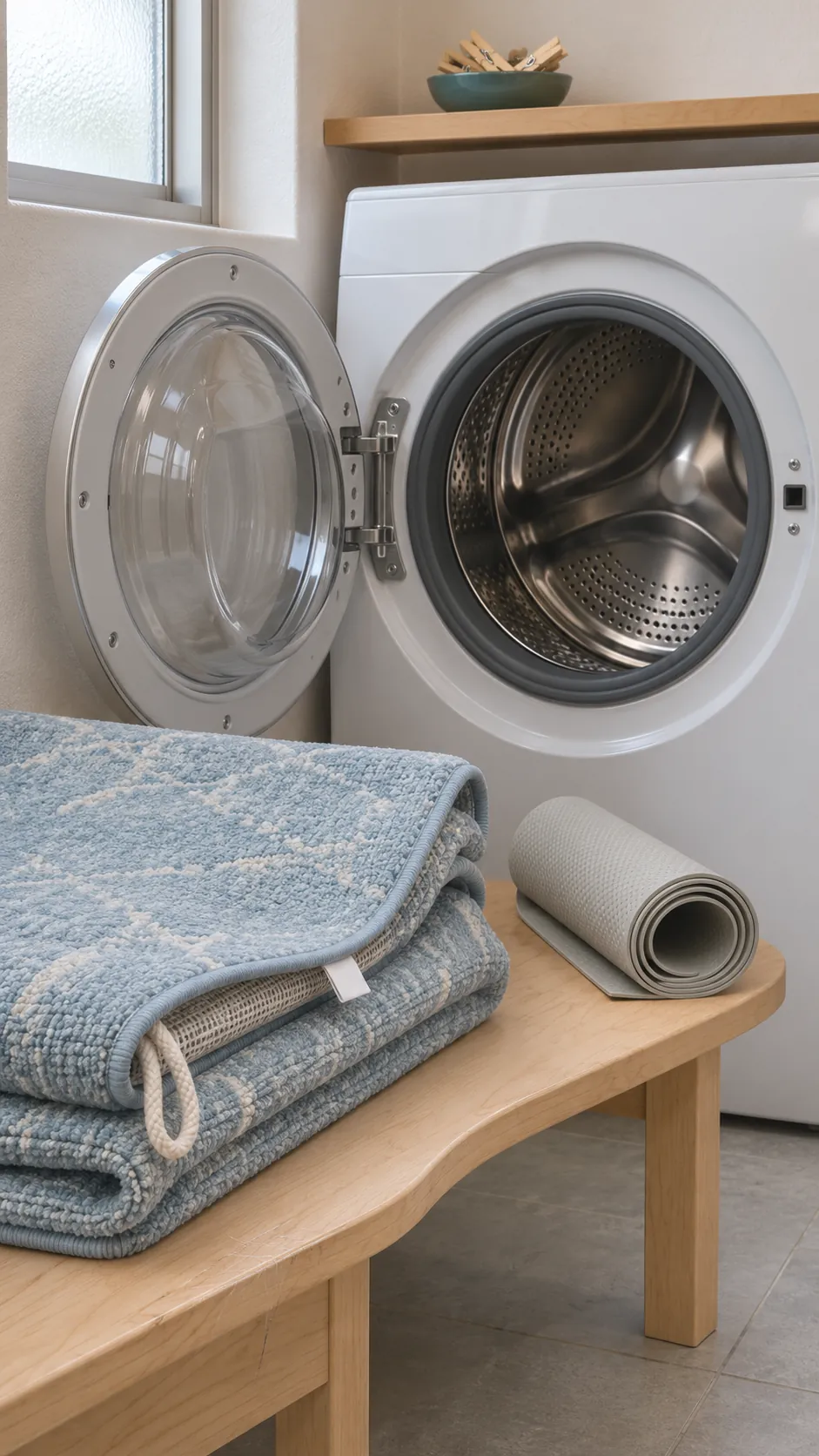
Read the care label and compare the rug’s size and weight with your machine’s limits. Some large rugs need a bigger drum, and some have a removable washable cover with a separate pad. Look up drying instructions before buying. A large rug that must air dry flat needs somewhere to go while the dining chairs are in use.
For everyday crumbs, check how the maker recommends vacuuming. For spills, blot promptly and follow their instructions before using water or detergent.
Use texture above the floor if the rug won’t fit
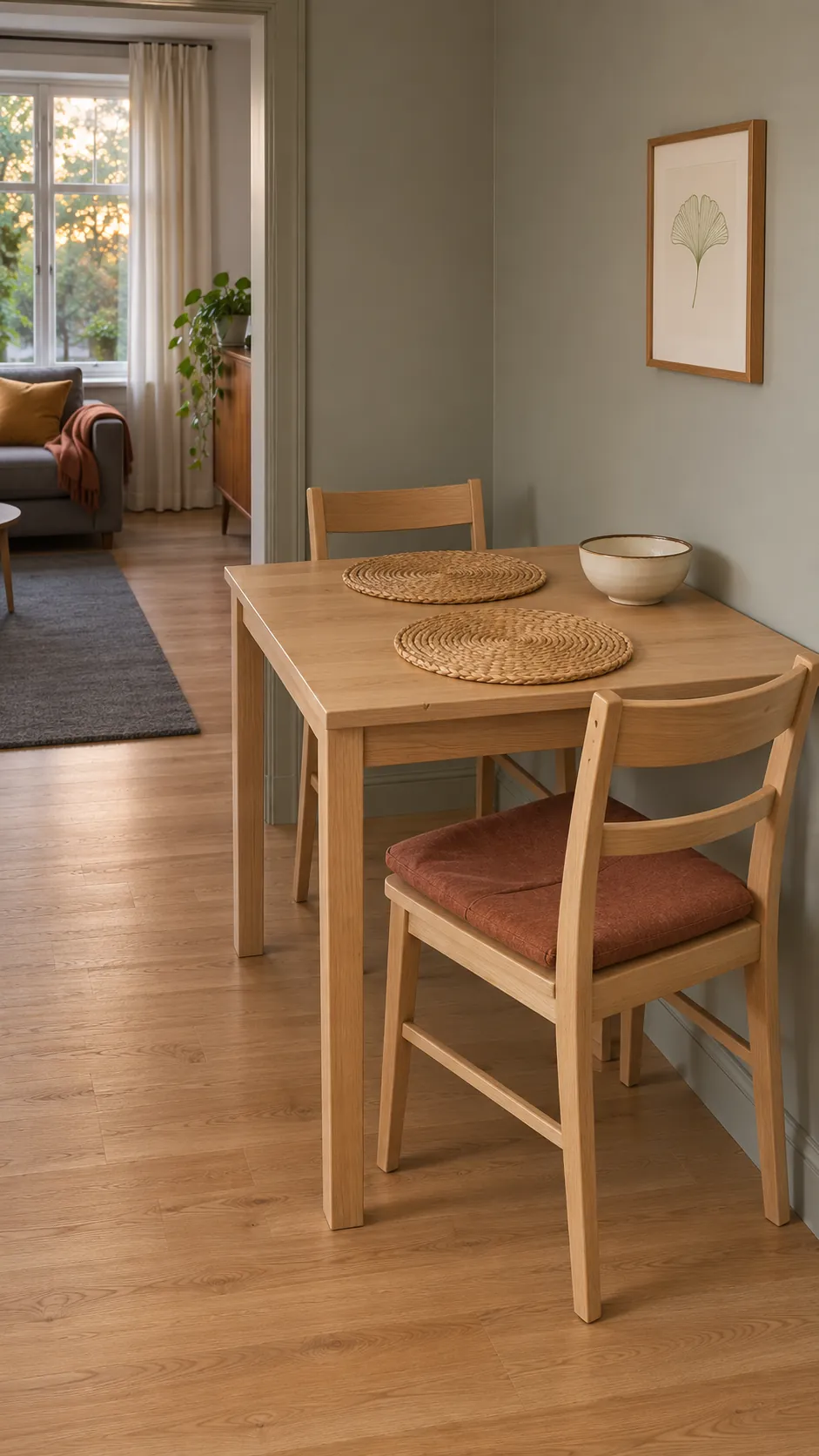
A rug can give the table a visual boundary in a room that also serves as the lounge. When the only size that clears the chairs would meet the sofa rug, give the dining area its own texture with woven placemats or a table runner instead. You still get a distinct dining spot with an uninterrupted floor between rooms.
Choose for the cleanup you actually do
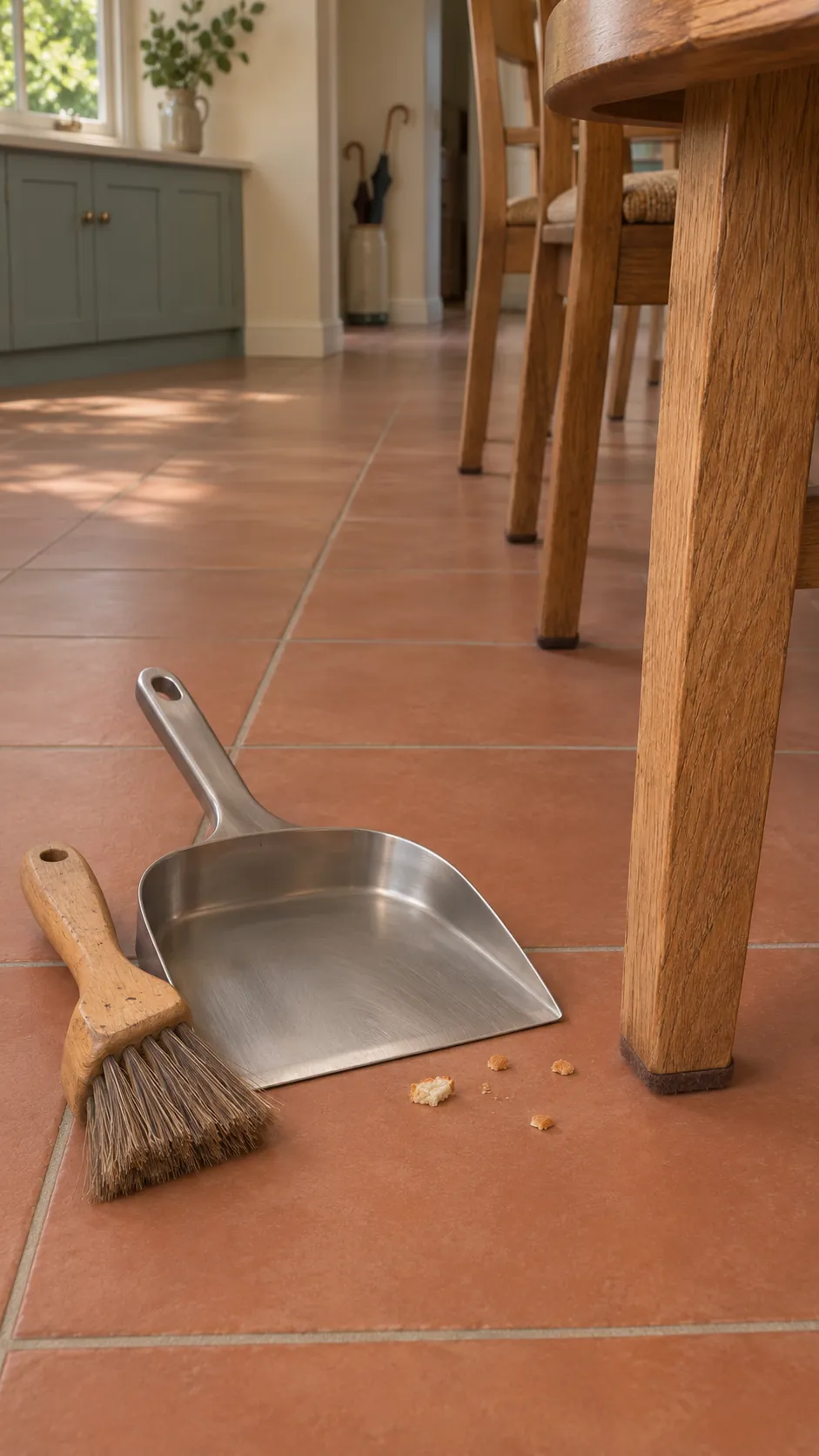
For frequent spills or food dropped by young children, a bare hard floor is usually the quicker choice. Sweep grit first and use the cleaner your flooring maker recommends. On a rug, a surface spill may need attention on the back and at the pad as well, especially if liquid soaks through.
Try the area bare for a week if you’re unsure. Notice whether you miss warmth underfoot or mostly appreciate an easier sweep. When a rug solves a problem you feel every day, the chair test gives you the smallest size to look for.