
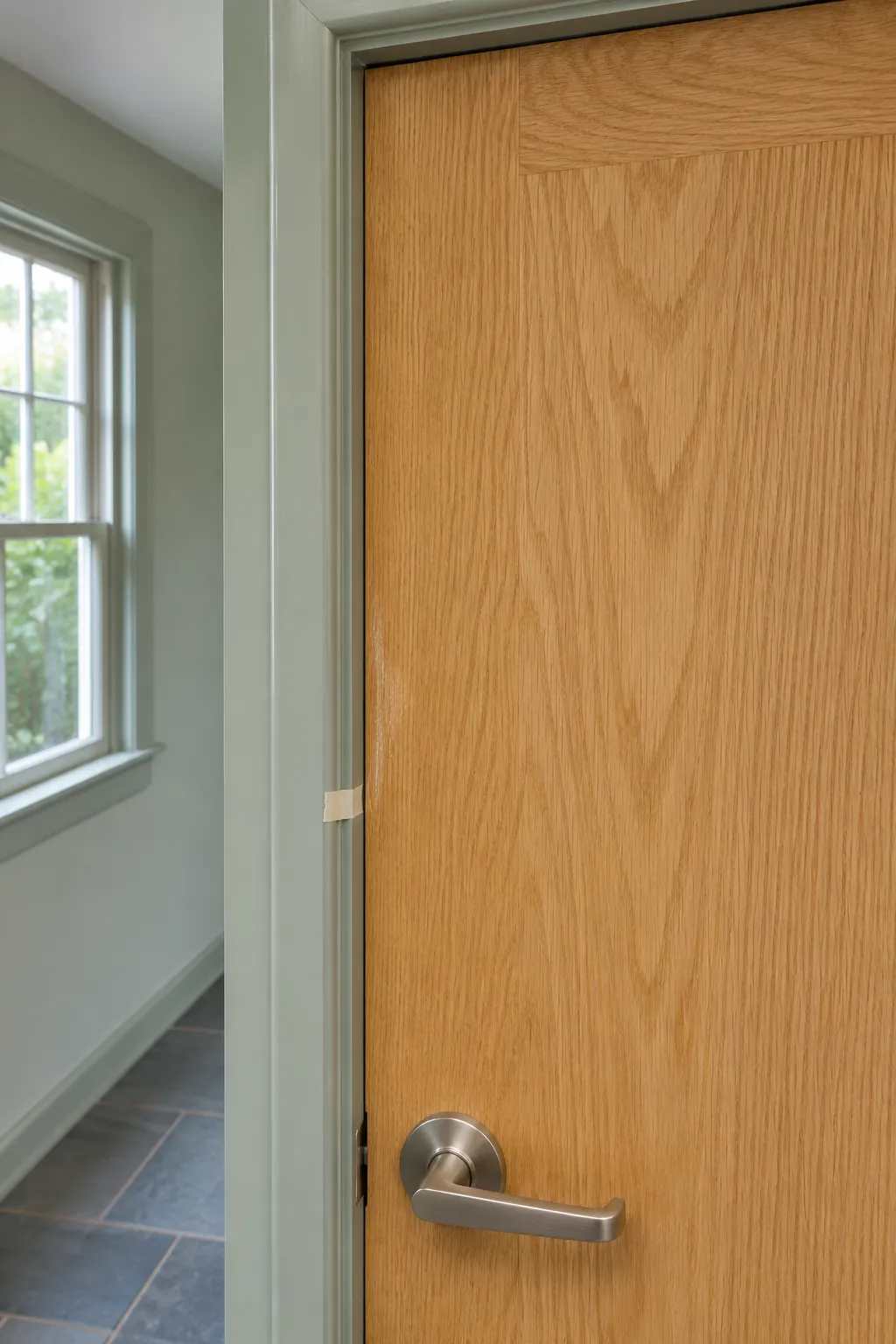
A door that closes easily in winter may drag across the jamb after a week of wet weather. Before you reach for a plane, find the rubbed spot and see whether it stays tight when the room dries. A few checks can save the clearance you will need when the season changes.
Find where the door rubs
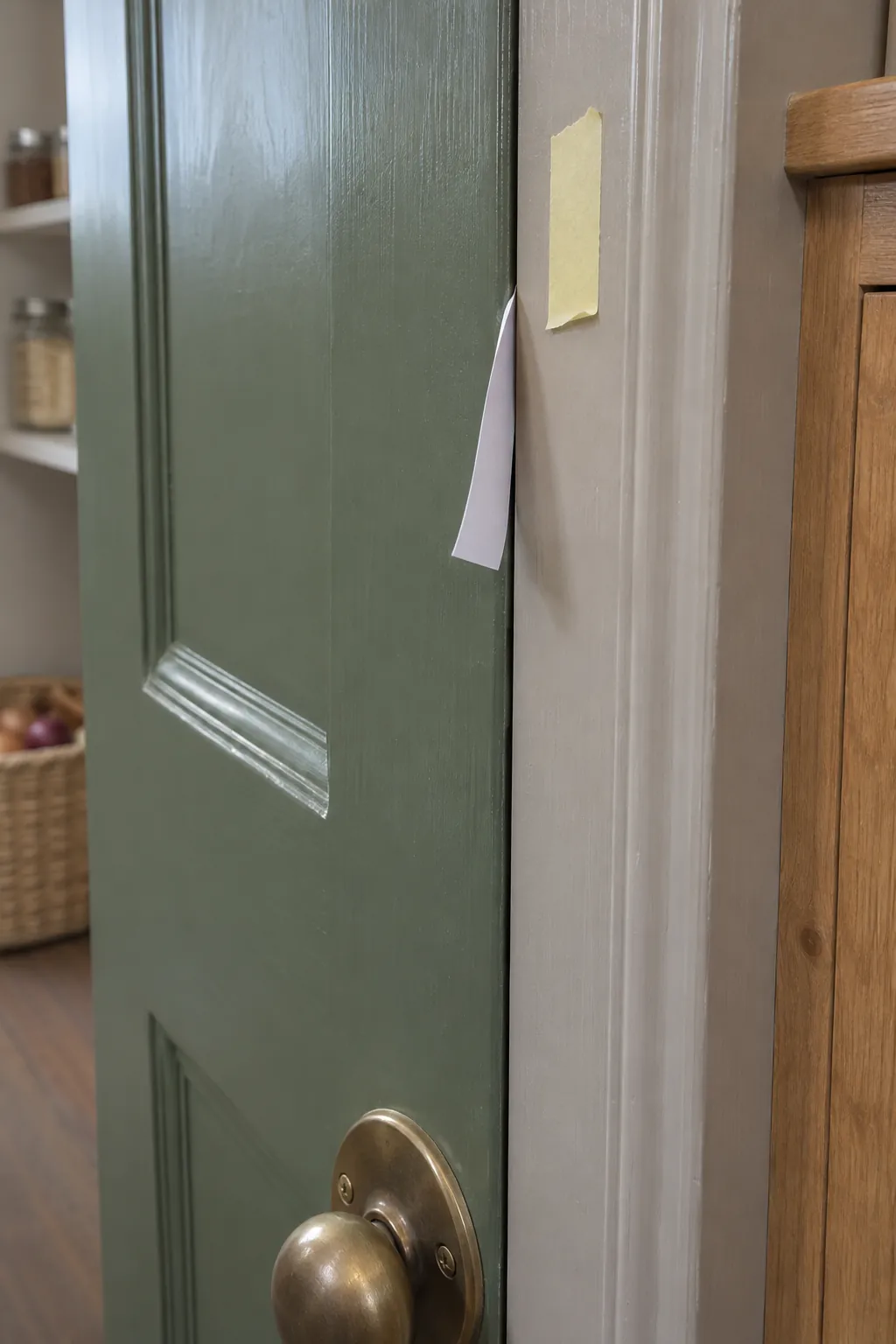
Push the door gently until it first binds. Look for a shiny patch in the paint or slide a strip of paper down the seam to find where it catches. Mark that spot on a piece of painter’s tape. A tight stretch along the latch edge can point to swelling. A single tight upper corner with a widening gap above the opposite side calls for a hinge check.
Check the hinges before blaming the weather
Open the door a little, lift gently at the handle and watch whether a hinge leaf moves against the frame or the slab. Support the door and snug loose screws with a hand screwdriver. If a screw spins, repair the hole before judging the gap. Hold the latch back and close the door gently to separate edge rubbing from a latch that hits the strike.
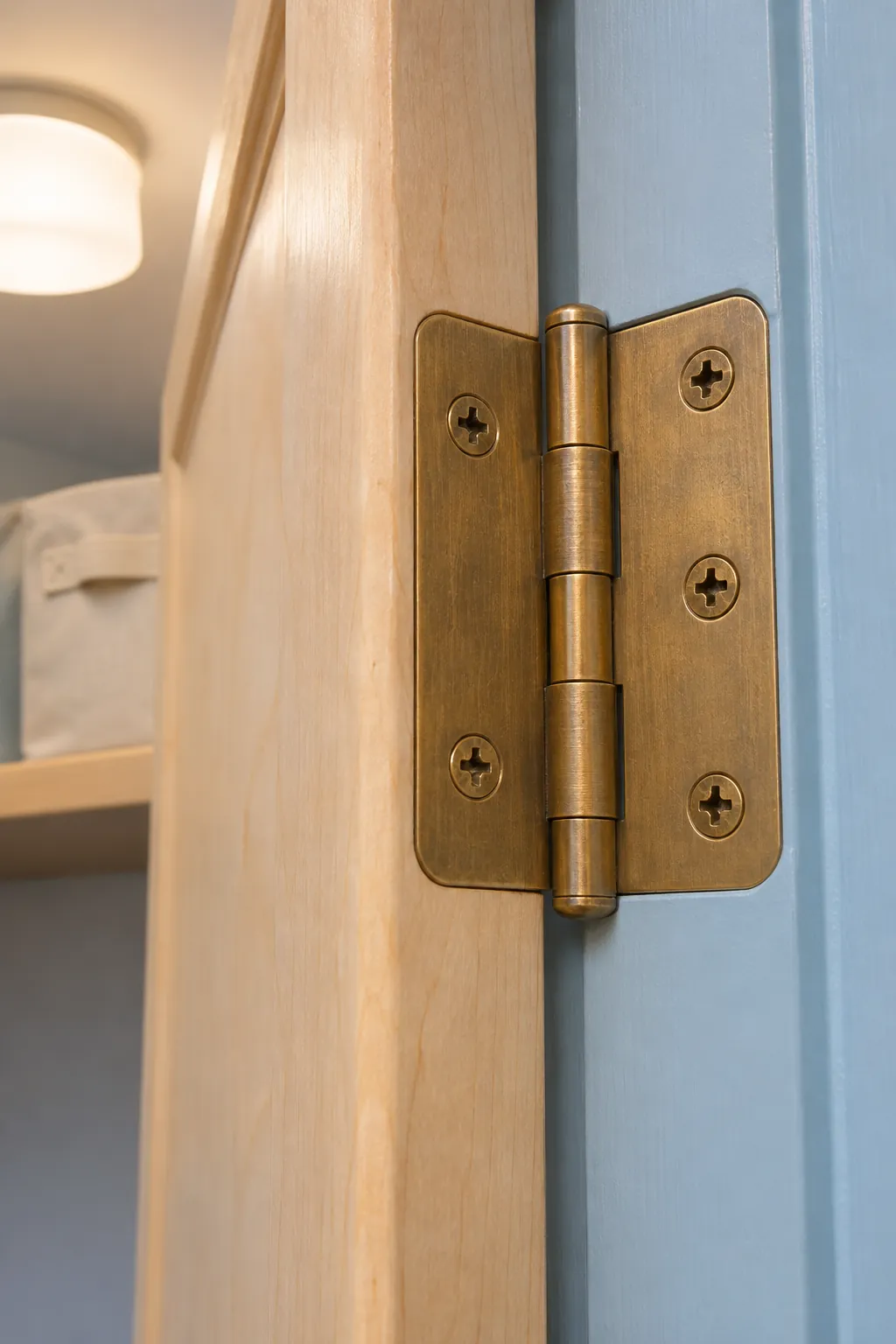
Compare the current gap with a photo from a dry month if you have one. If several doors have started sticking at once or a crack near the frame is getting larger, have the frame or the surrounding structure checked before trimming.
Lower the moisture and give the wood time
Set a hygrometer near the door to see whether humidity stays high after showers or through several damp days. Run a vented bathroom fan during and after a shower. Air conditioning or a dehumidifier can help when the outdoor air is also humid. The EPA advises keeping indoor relative humidity below 60 percent, ideally between 30 and 50 percent where practical.

If the jamb feels damp, the paint blisters or the wood is soft, check for a leak or condensation source before adjusting the door. Give intact wood time to adjust after the air dries and test the marked spot again. A door that clears once the room dries can keep its existing fit.
Remove a little wood only if the rub persists
If the same spot still catches after humidity and hardware checks, confirm the door material and its allowed trim depth. A solid wood door can usually take a light pass with a sharp hand plane. A hollow core door has a limited wood edge, and a metal, composite or fire rated door needs the maker’s instructions before trimming.
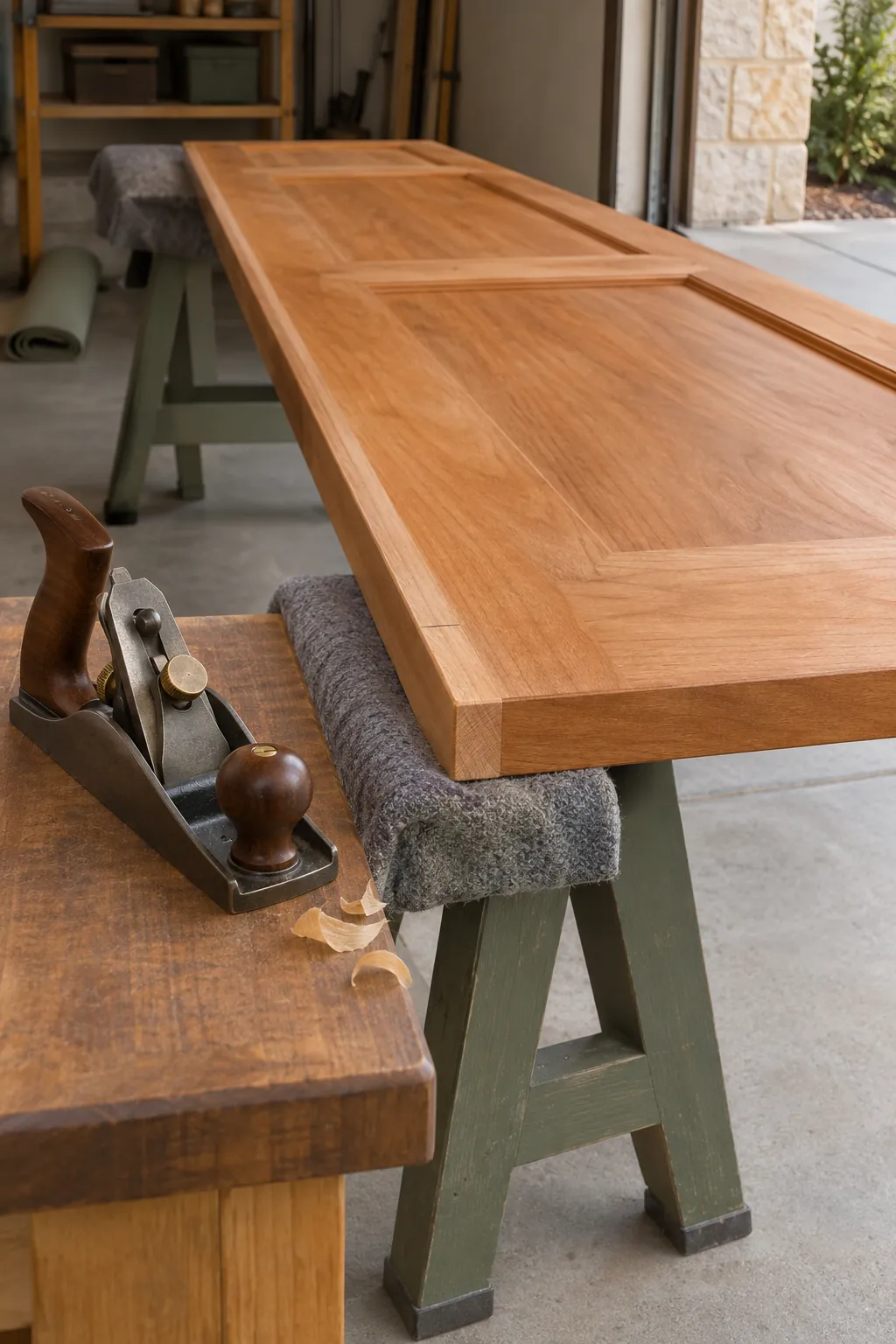
Take the door down with help if needed and secure it on padded supports. Work with the grain and take shallow passes only where you marked the rub. Near the end of an edge, work inward to avoid splitting the corner. Test the fit as you go. Removing too much wood while the door is swollen can leave a wide gap in dry weather.
Seal exposed wood after the fit is right
Smooth the trimmed spot according to the finish manufacturer’s directions, remove dust and coat the exposed wood with the specified primer, paint or compatible clear finish. Check the top and bottom edges for missed bare areas. Follow the door maker’s instructions for which surfaces to seal, and let the finish dry before the edge contacts the jamb.
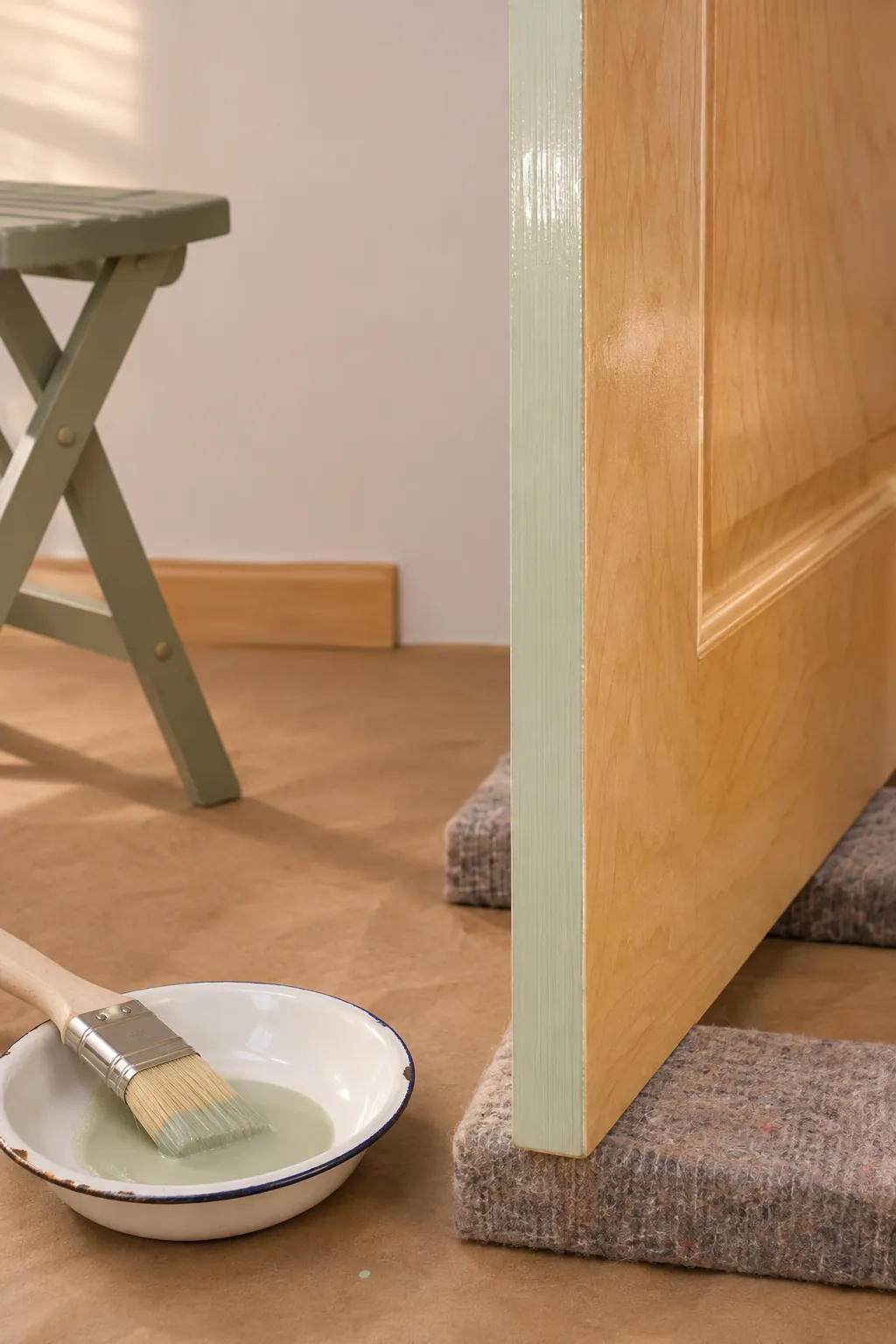
A finish slows moisture exchange. The door can still change size with the season, so maintain a little clearance and keep indoor moisture under control.
Check the same spot after the next humid spell
On the next humid day, close the door slowly and check the spot you marked. The edge should clear the jamb and the latch should catch without a shove. If it still binds, note the humidity and where it touches before making another cut.
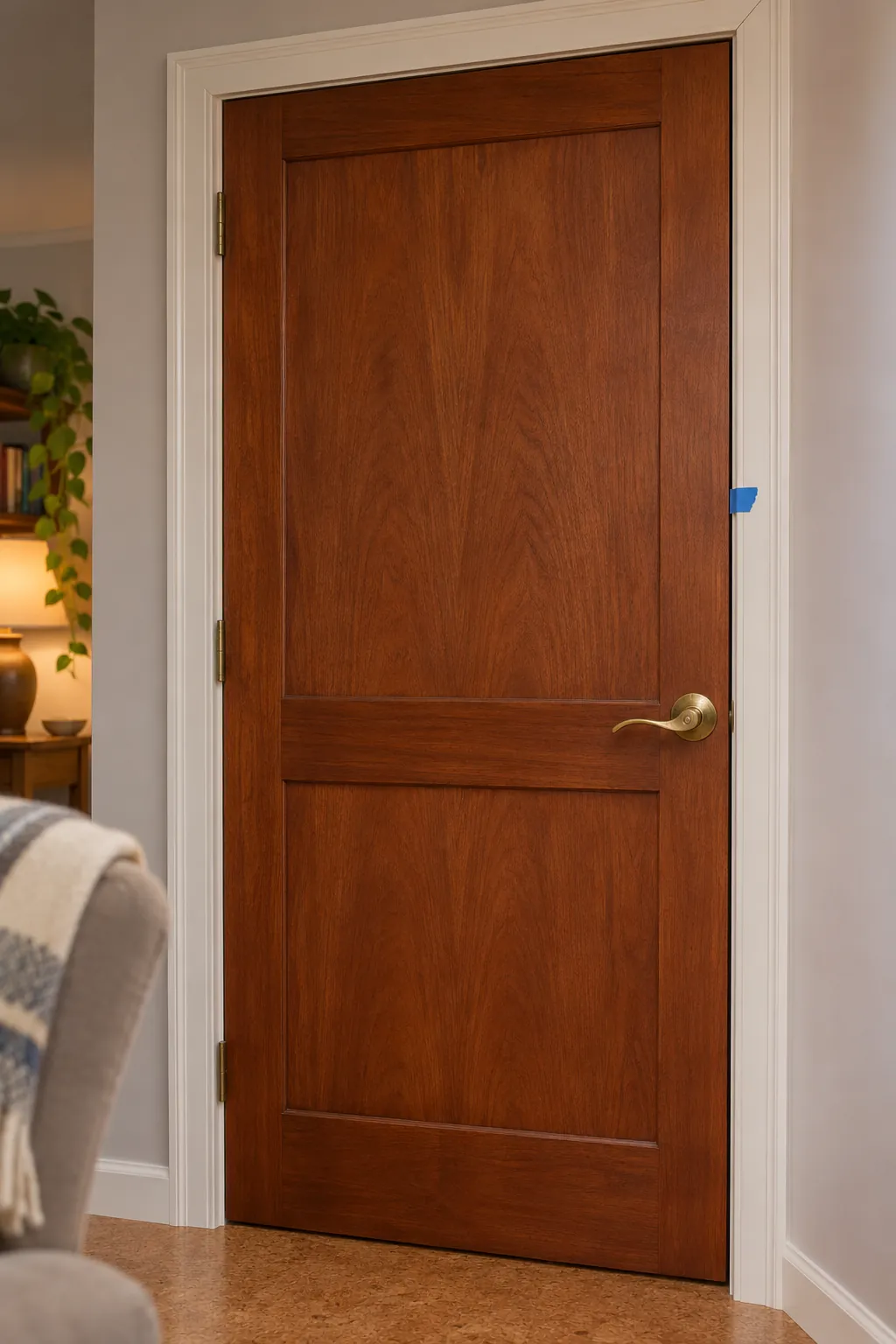
If the rub returns in a different area or the seam changes sharply even at a steady humidity, check the jamb or door for movement. You will have a record of where and when the door sticks, which makes the next repair easier to choose.