
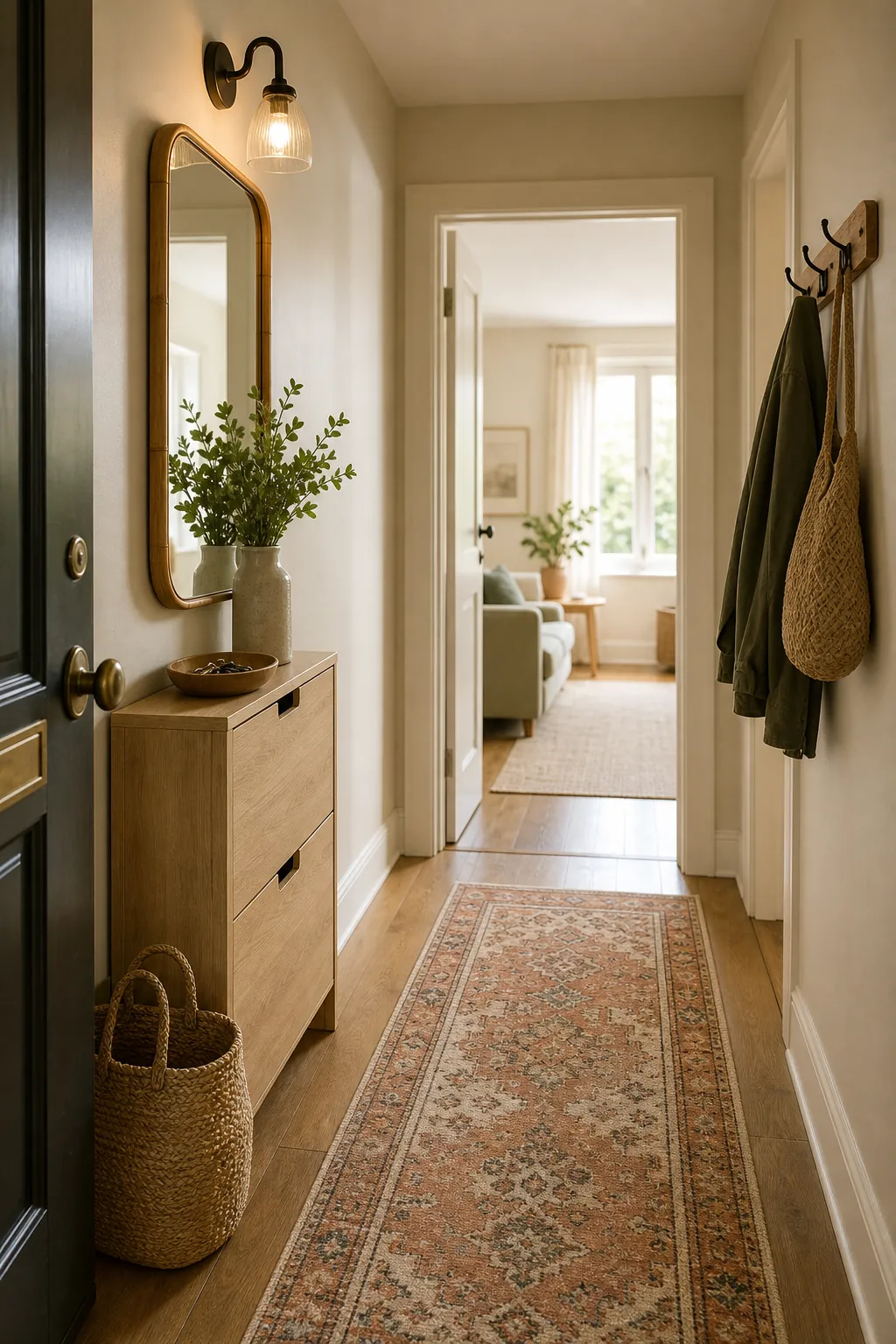
A hallway asks a practical question before it asks a decorating question: can people move through it without squeezing past clutter, stumbling through dim light, or stepping over shoes?
That is why the best hallway decor ideas are rarely about filling every blank wall. A better hallway feels calmer in the first five seconds. It gives coats, keys, bags, mail, shoes, and guests a clear place to land. It carries light farther. It gives the eye one good reason to keep moving instead of turning the space into a narrow storage lane.
The most useful angle is this: treat the hallway as a transition zone, not a tiny room you need to over-decorate. The right Entryway Decor, Runner Rugs, Wall Decor, Lighting Ideas, and Home Organization choices can make even a tight pass-through feel intentional.
Start With the Walking Lane
Before buying anything, stand at the front door or the busiest end of the hall and walk through with your arms full. That tells you more than any inspiration photo. If your hip bumps a console, if a door hits a shoe basket, or if two people cannot pass without turning sideways, the hallway is already telling you what not to add.
For narrow hallway decor, the walking lane is the design. Keep floor pieces shallow, keep bulky baskets away from door swings, and avoid placing furniture on both sides unless the hall is genuinely wide. One useful side is usually better than two decorated sides.
- Use wall-mounted storage before freestanding storage.
- Choose furniture that is no deeper than the space can comfortably spare.
- Leave the visual weight on one wall so the other side can breathe.
- Check door swings, closet access, and robot-vacuum clearance before committing.
Build a Drop Zone Where the Mess Actually Lands
A hallway usually fails because daily objects do not have a fast home. The prettiest Foyer Ideas will not survive if keys, dog leashes, sunglasses, mail, and shoes all compete for the same random surface.
The fix is a small, honest drop zone near the entry point. A slim shoe cabinet, a narrow shelf, a few strong hooks, and one tray can do more than a full console table. If your hallway is very tight, mount the shelf instead of using furniture. If you have a mudroom-style entry, add closed storage first and styling second.
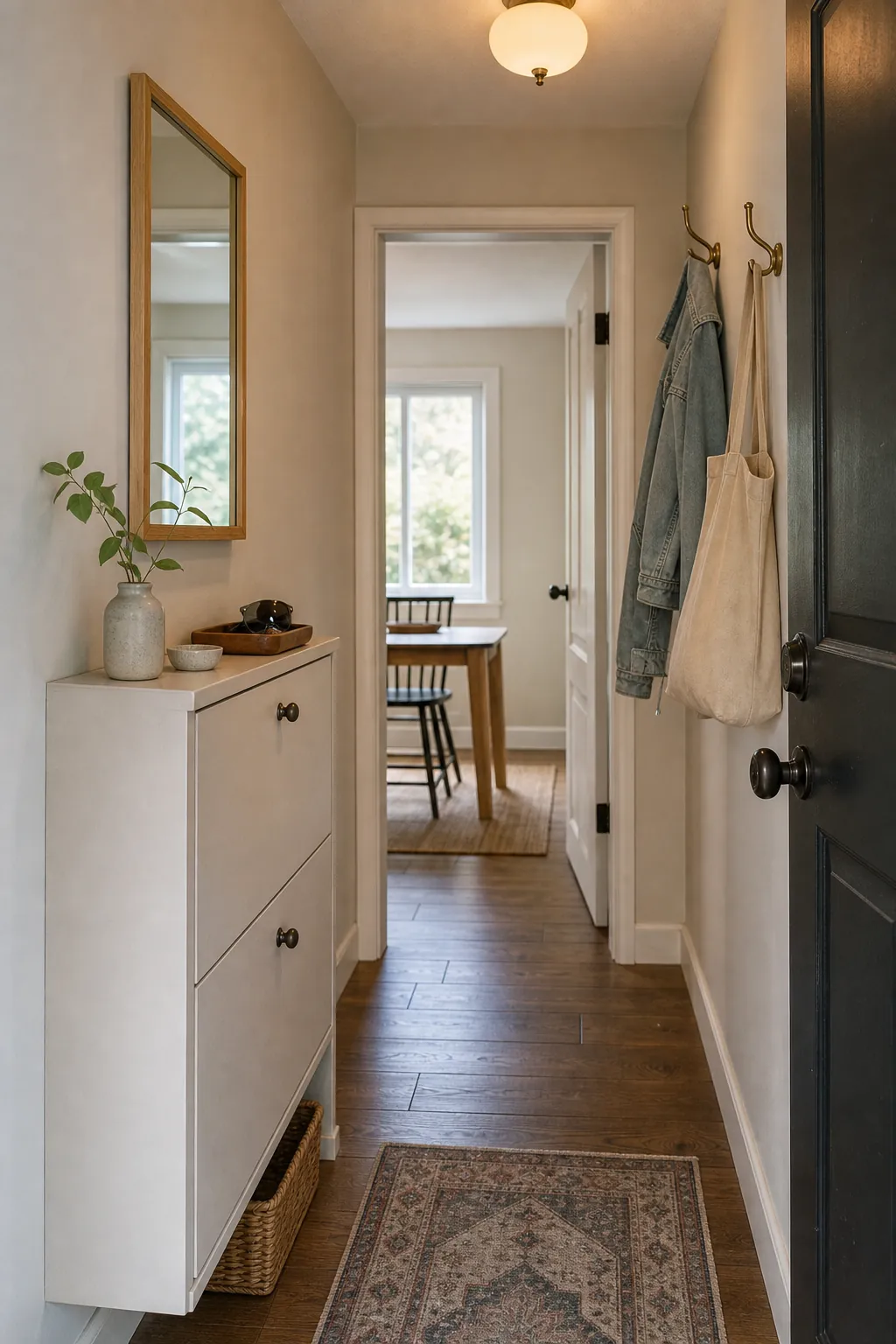
Think in daily motions: shoes off, coat up, keys down, bag parked. If the storage is not where the habit happens, it will not be used. That is especially important in Small Space Decor, where one misplaced item can make the whole entry feel messy.
Use a Runner Rug to Guide the Eye
Runner Rugs are one of the fastest ways to make a hallway feel finished, but scale matters. A runner that is too skinny can exaggerate the tunnel effect. A runner that is too short can look like a mat that lost its purpose. Aim for a length that connects the main entry points, with enough floor showing on each side to look deliberate.
For a long narrow hall, a subtle horizontal or broken pattern can soften the bowling-alley feeling. For a busy family entry, a washable runner with medium contrast hides wear better than a flat pale rug. If doors open across the runner, check pile height before you buy.
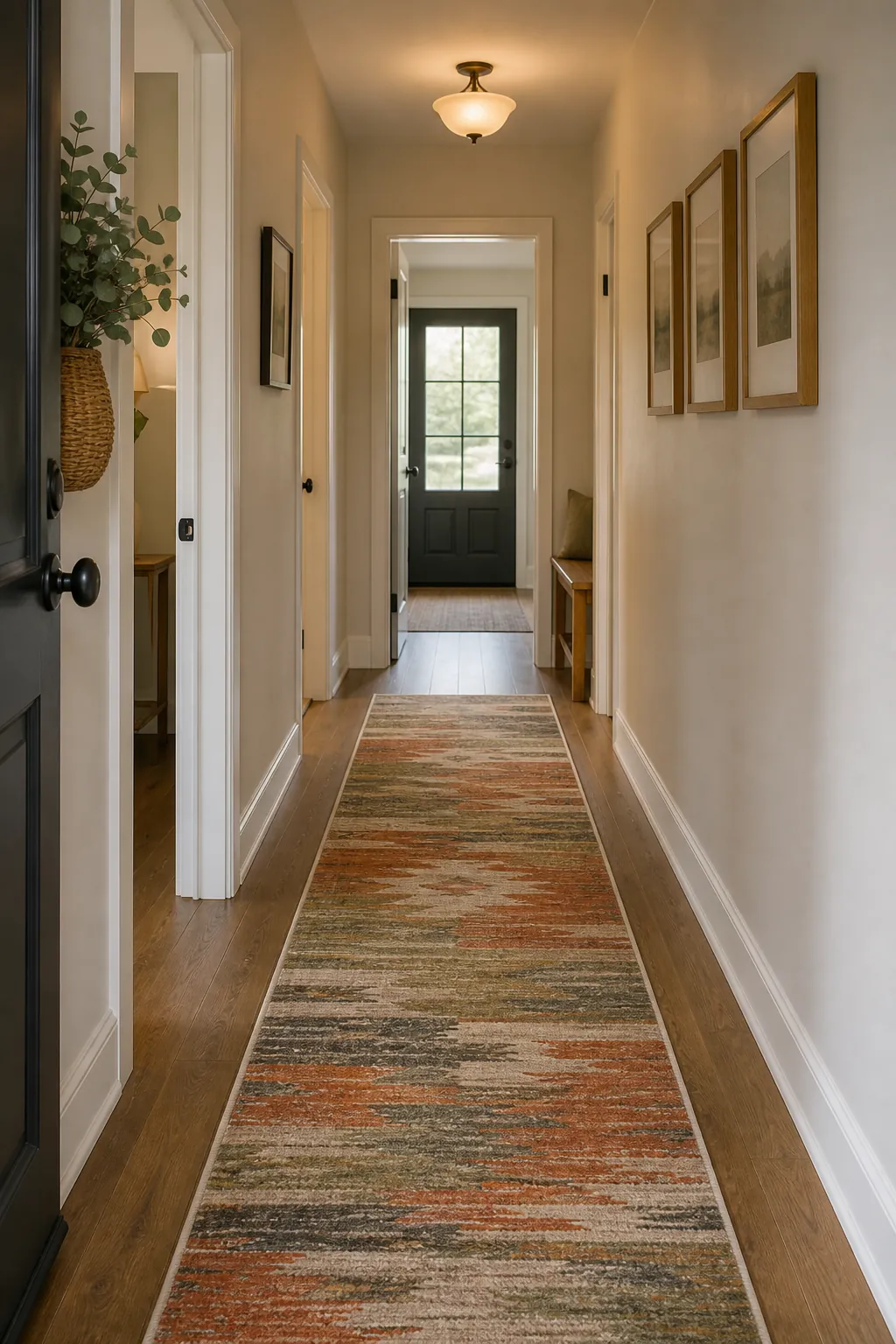
A good rug does more than add color. It tells the body where to walk, protects high-traffic flooring, and visually joins a front door, stair landing, and room openings. The rug should make the hallway feel longer in a graceful way, not thinner in a nervous way.
Fix the Lighting Before Adding More Decor
Dark hallways make every object look heavier. A gallery wall feels busier. A shoe cabinet feels bigger. Wall color looks flatter. Before you solve the space with more Home Decor, solve the light.
If you can change fixtures, a low-profile flush mount with diffused glass is often better than a harsh single bulb. In a long hall, two smaller lights can work better than one central fixture. If wiring is not an option, rechargeable sconces, battery picture lights, plug-in lamps near the entry, and motion night lights can still improve the feeling of the walk-through.
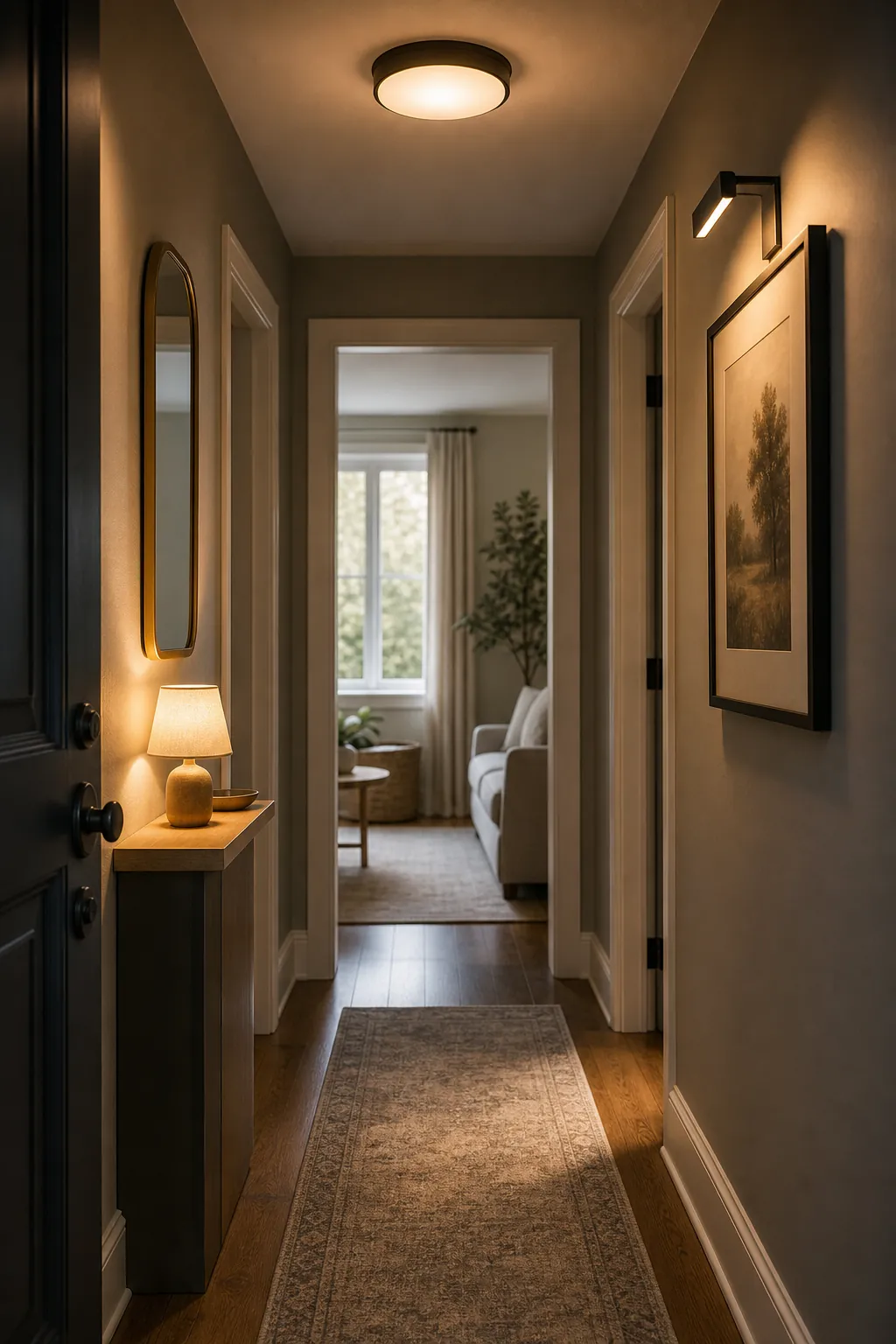
Choose warm, clear light for welcome and enough brightness for function. Hallway lighting should make the next step obvious. That matters more than a dramatic fixture that looks good in a product photo but leaves the far end dim.
Decorate One Wall With Intention
A hallway does not need art on every wall to feel decorated. In fact, two competing walls can make a tight corridor feel busy. Pick the side that is seen first, has fewer switches and vents, or naturally carries the eye toward the next room.
For Wall Decor, repetition is your friend. A set of similar frames, a row of small pieces with matching mats, one large vertical piece, or a controlled family photo grid will feel calmer than scattered art in mismatched sizes. Keep frames slim, hang them securely, and avoid deep ledges where shoulders and bags will hit them.
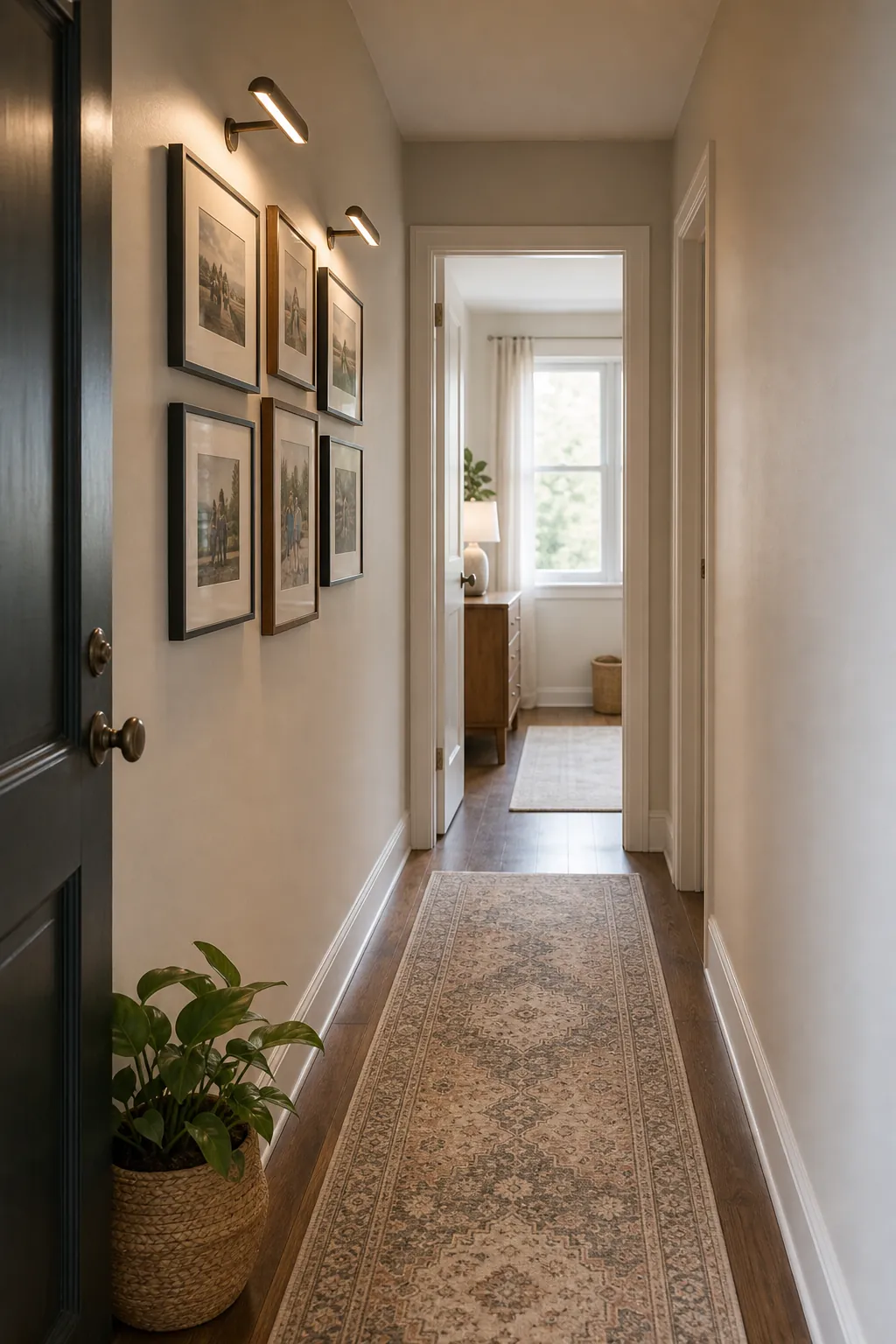
The test is simple: when you glance down the hall, can you understand the decor in one look? A clear rhythm feels designed. Random filling feels like clutter.
Use Mirrors for Light, Not Just for Style
A mirror can make an entryway feel larger, but placement matters. The best mirror reflects light, a clean wall, a doorway, or a good view into the next room. The worst mirror doubles the sight of coats, open shelves, laundry, or a pile of shoes.
Near the door, a mirror also gives the hallway a useful pause point. A full-length mirror works well when it does not block the walking lane. A smaller mirror over a slim cabinet can make a compact Foyer Idea feel complete without needing a bench, table, and art all at once.
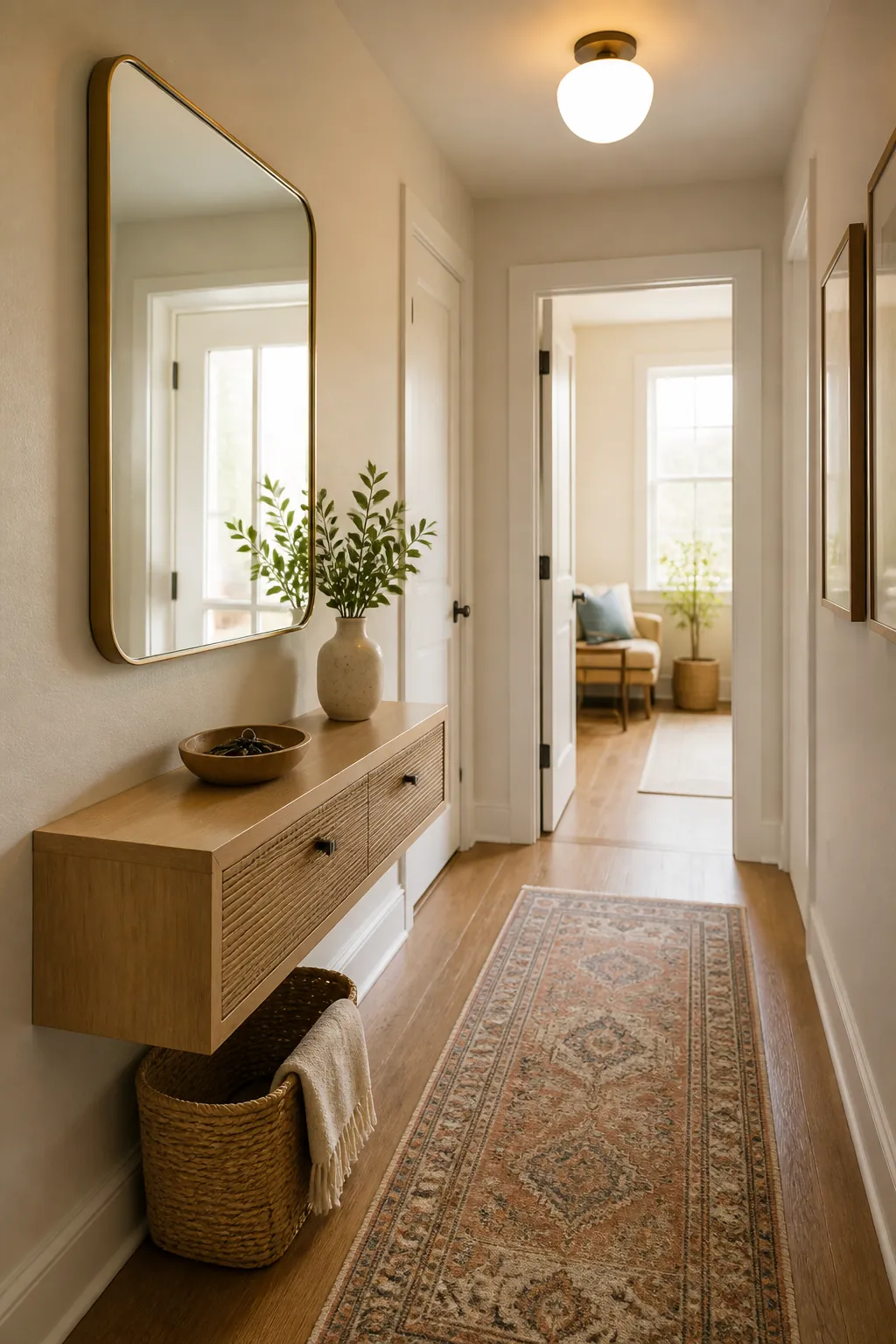
If you already have a mirror at the end of the hall, you may not need another large one. Try a smaller decorative mirror, or put the visual energy into lighting and rug color instead. The mirror should borrow brightness, not multiply the mess.
Choose Storage That Disappears Into the Wall
The most practical hallway storage is often the least dramatic. Peg rails, wall hooks, closed shoe cabinets, shallow cubbies, narrow floating shelves, and labeled baskets can make the space work without announcing themselves.
For Mudroom Ideas in a hallway, divide storage by behavior. Everyday coats get the easiest hooks. Occasional bags go higher. Shoes go behind a closed front if visual clutter bothers you. Mail needs one tray, not three. Seasonal extras should leave the hallway entirely.
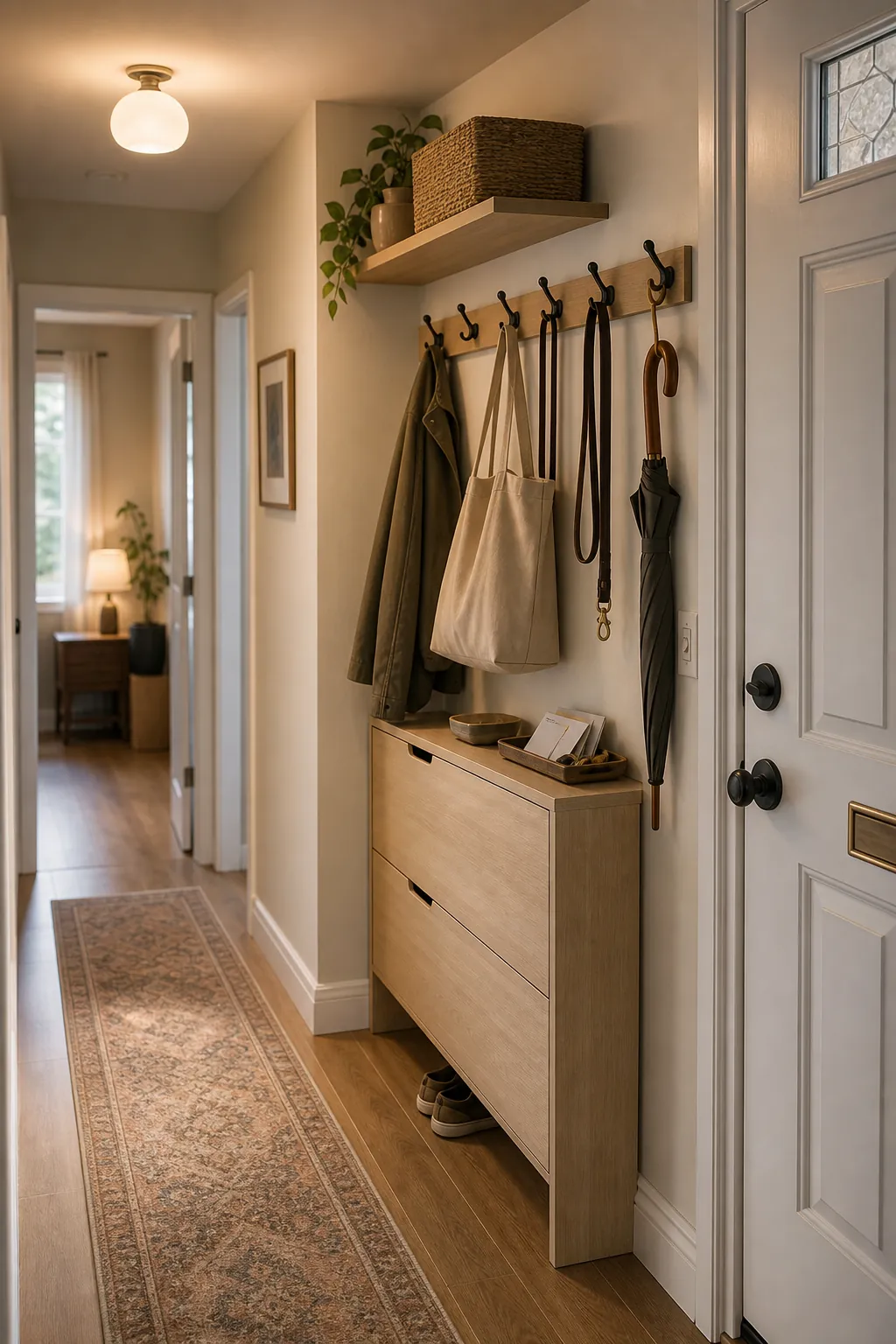
Do not make every hook available to everyone. That is how a useful wall becomes a public pile. Limit the visible storage to what the hallway can carry gracefully. Home Organization works best when the system has boundaries.
Add Texture Without Stealing Width
When a hallway is too narrow for furniture, use the surfaces you already have. Panel molding, beadboard, washable wallpaper, a painted lower wall, a grasscloth-style texture, or a tonal trim color can add depth while staying nearly flat.
This is where natural materials can make a hallway feel warmer without making it busier. A woven shade at a nearby window, bamboo or rattan baskets on a high shelf, a wood-framed mirror, or a linen-textured wallpaper can soften hard floors and painted doors.
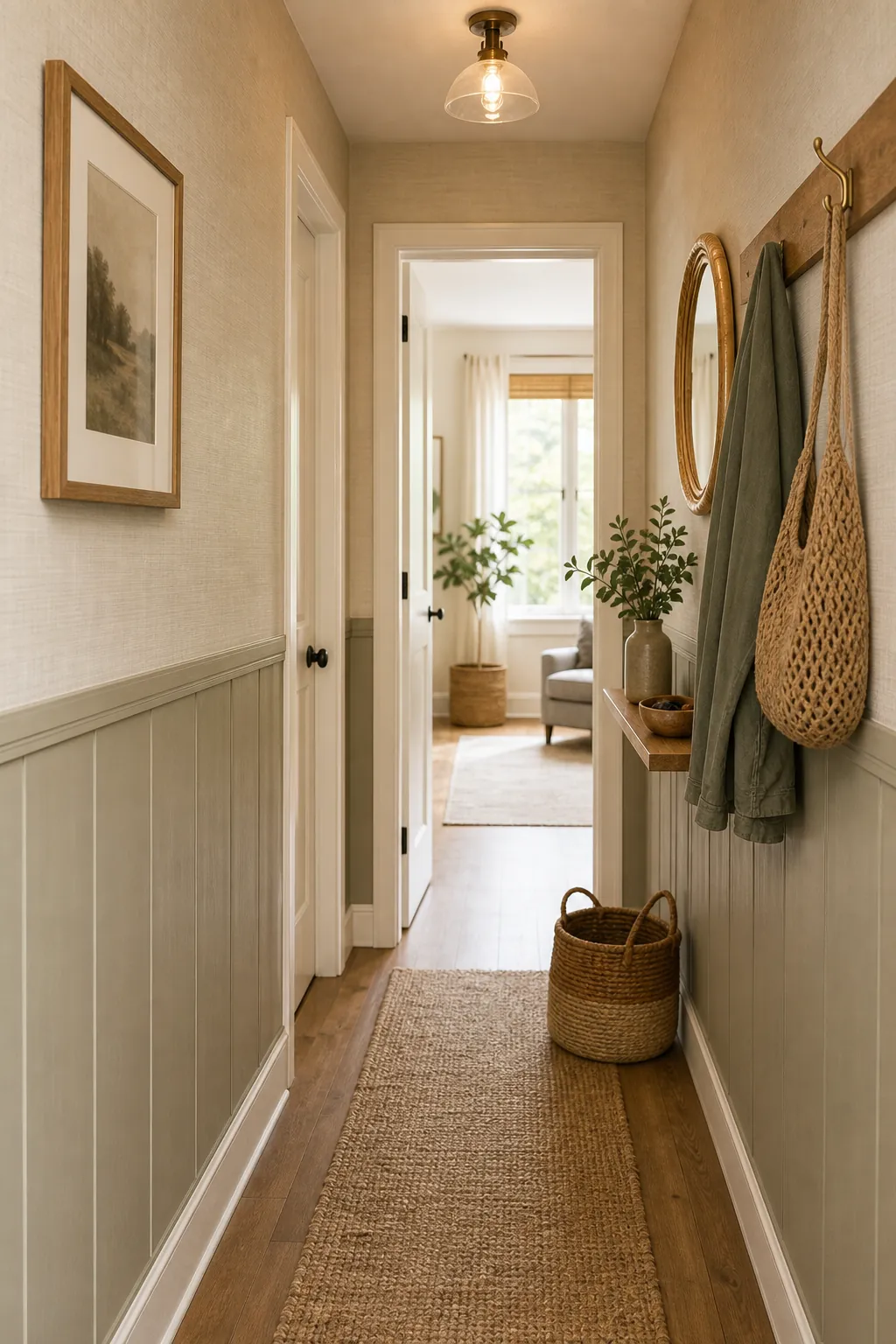
Texture is especially helpful when you cannot paint, renovate, or add sconces. Peel-and-stick wallpaper, removable hooks, framed textiles, and renter-friendly lighting can still change the mood. The goal is depth, not bulk.
Make the End of the Hall Feel Like a Destination
Long hallways often feel unfinished because the eye has nowhere satisfying to land. If the end wall is blank, dark, or filled with a random door, the whole walk can feel flat. Give that end point one quiet anchor.
A vertical artwork, a narrow mirror, a small plant stand where space allows, a painted door, a picture light, or a strong runner ending can help. Keep it simple. The end of the hallway should pull the eye forward, not stop traffic.
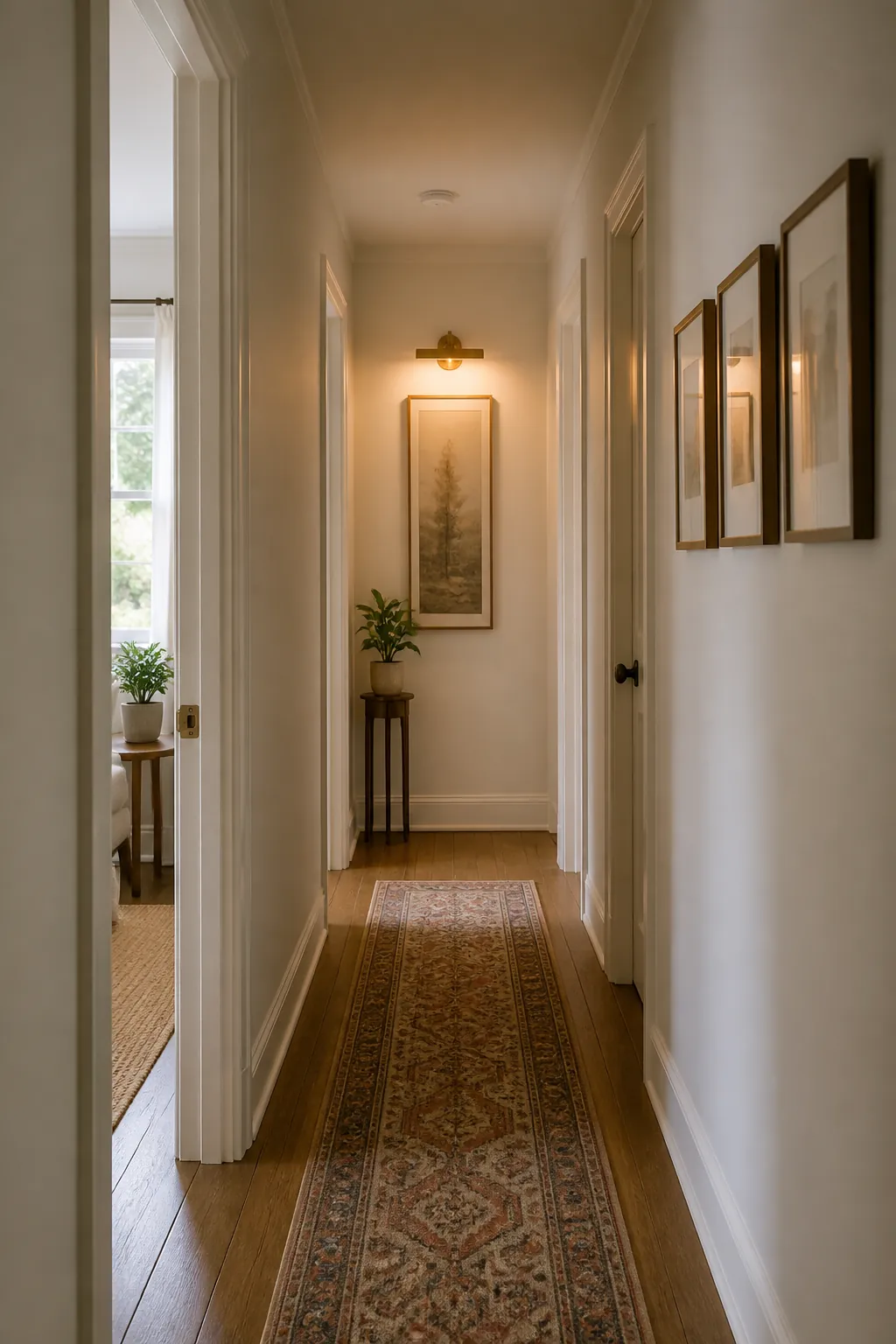
This trick is useful in apartments, older homes, and small entries because it changes the feeling of distance without requiring floor space. A hallway feels better when the view has a finish line.
Create a Reset That Takes Less Than One Minute
The final layer of hallway design is not decor. It is maintenance. A hallway collects the evidence of daily life faster than almost any other space, so the reset needs to be fast enough that people actually do it.
Keep one basket for items leaving the house, one closed place for shoes, one tray for keys, and one hook per daily coat or bag. At night, clear the floor and return the drop zone to zero. In the morning, the hallway should feel like a helpful path, not yesterday’s unfinished task list.
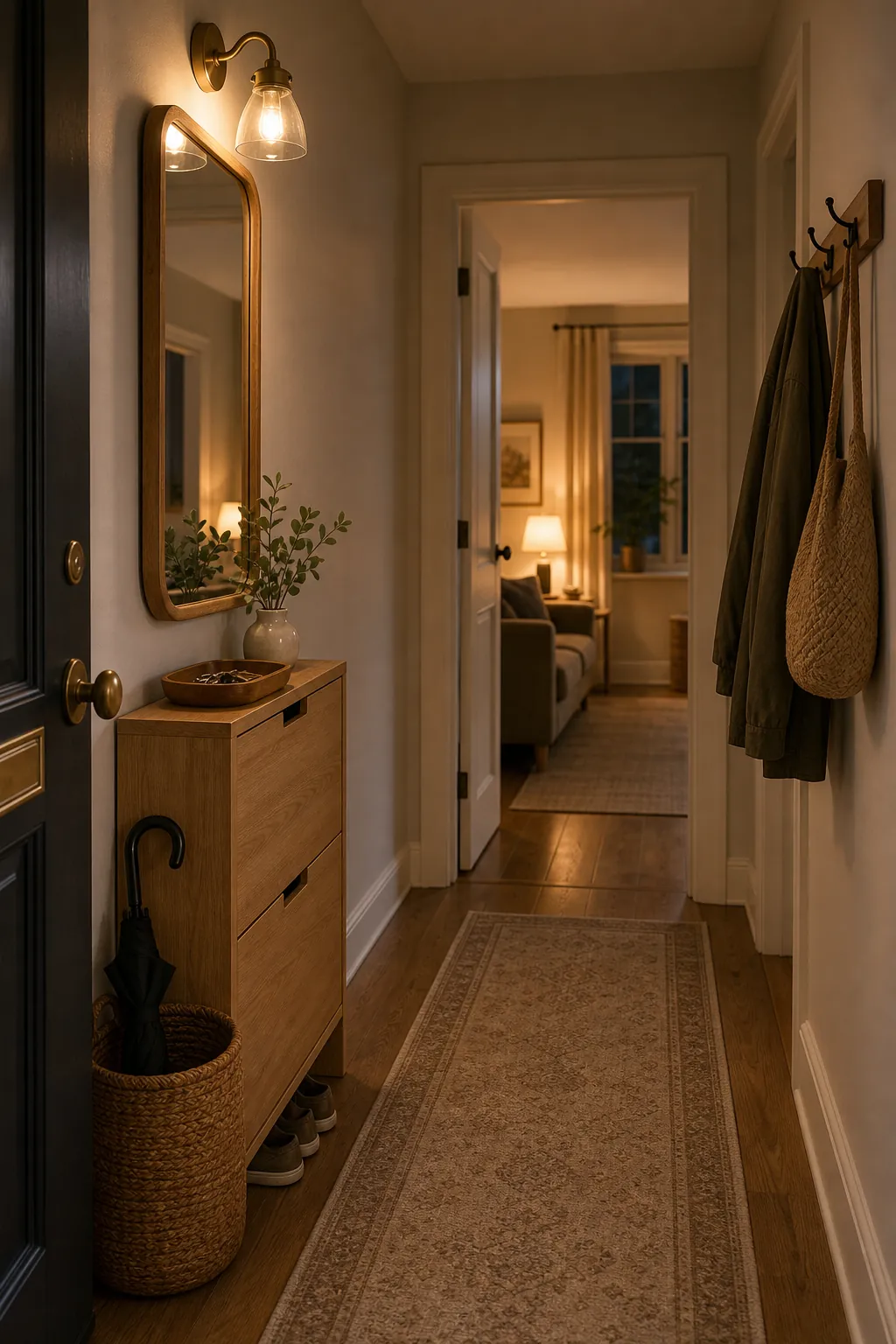
That is the difference between a styled hallway and a better hallway. The better one supports the walk-through every single day. Choose fewer pieces, better lighting, smarter storage, and one strong visual rhythm, and the space will feel designed without fighting the way you live.