
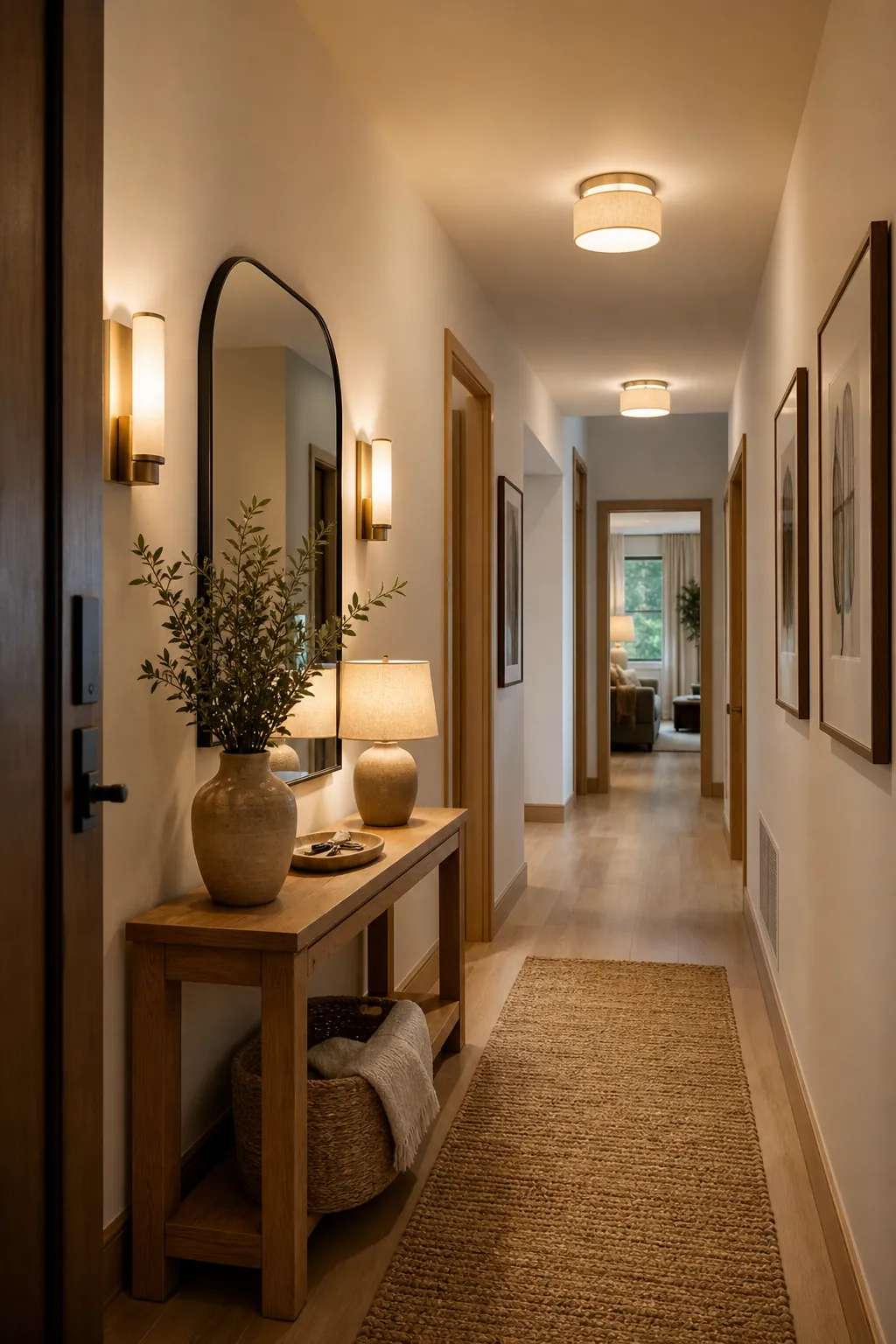
A hallway is easy to treat like leftover space. You pass through it, drop shoes there, maybe hang a mirror or a few frames, and then wonder why the whole home still feels a little flat. The problem is often not the hallway decor. It is the light.
Good hallway lighting does three things at once: it helps people move safely, makes the entryway feel welcoming, and gives nearby rooms a warmer first impression. The best plan is rarely one bright fixture in the center. It is usually a small mix of ceiling light, wall glow, reflected light, and practical light where you actually use the space.
The ideas below are written for real homes: narrow halls, low ceilings, awkward doors, dark corners, runner rugs, mirrors, storage benches, mudroom zones, and foyers that need personality without blocking the walkway.
Spread the light instead of blasting one spot
The most common hallway mistake is relying on one ceiling fixture and asking it to solve everything. It creates a bright patch under the light, darker ends, and shadows around doors. In a long or narrow hallway, that contrast makes the space feel tighter.

A better approach is to repeat lower-intensity light along the length of the hall. Think of it as a rhythm: a flush mount near the entry, another near the turn, or small recessed lights that wash the floor and walls evenly. Even light feels calmer than one dramatic bright spot.
- For a short hallway, one attractive flush mount may be enough if the walls and floor are light.
- For a long hallway, use two or more fixtures so the ends do not fall into shadow.
- For a dark hallway with no windows, choose warm bulbs and a dimmer before adding more decorative pieces.
- For a hallway with art, place light where it touches the wall, not only the floor.
Bulb choice matters too. For most indoor home lighting, a warm color temperature around 2700K to 3000K usually feels more comfortable than cool white. If your hallway has paint, wood, art, or natural textures, look for good color rendering so those materials do not look dull or gray.
Use wall sconces when the hallway needs warmth
Wall sconces are one of the easiest ways to make hallway lighting feel designed instead of purely functional. They bring light closer to eye level, which is why they can make a plain passage feel more like part of the home.

The key is scale. In a narrow hall, skip bulky fixtures that stick out too far. Choose slim sconces, shaded sconces, or low-profile up-and-down lights. Frosted glass, fabric shades, and indirect light are usually easier to live with than clear glass and exposed bulbs. If you can see the bare bulb from normal walking height, glare may become the thing you notice most.
Sconces work especially well beside a mirror, over a slim console, between framed prints, or near the point where the foyer becomes the hallway. They also help when ceiling placement is blocked by attic access, air returns, beams, or old electrical boxes.
Choose low-profile ceiling lights for low ceilings
A pendant can look beautiful in a tall foyer, but it can make a low hallway feel crowded. If your ceiling is low or the hallway is narrow, low-profile lighting is usually the safer and better-looking choice.
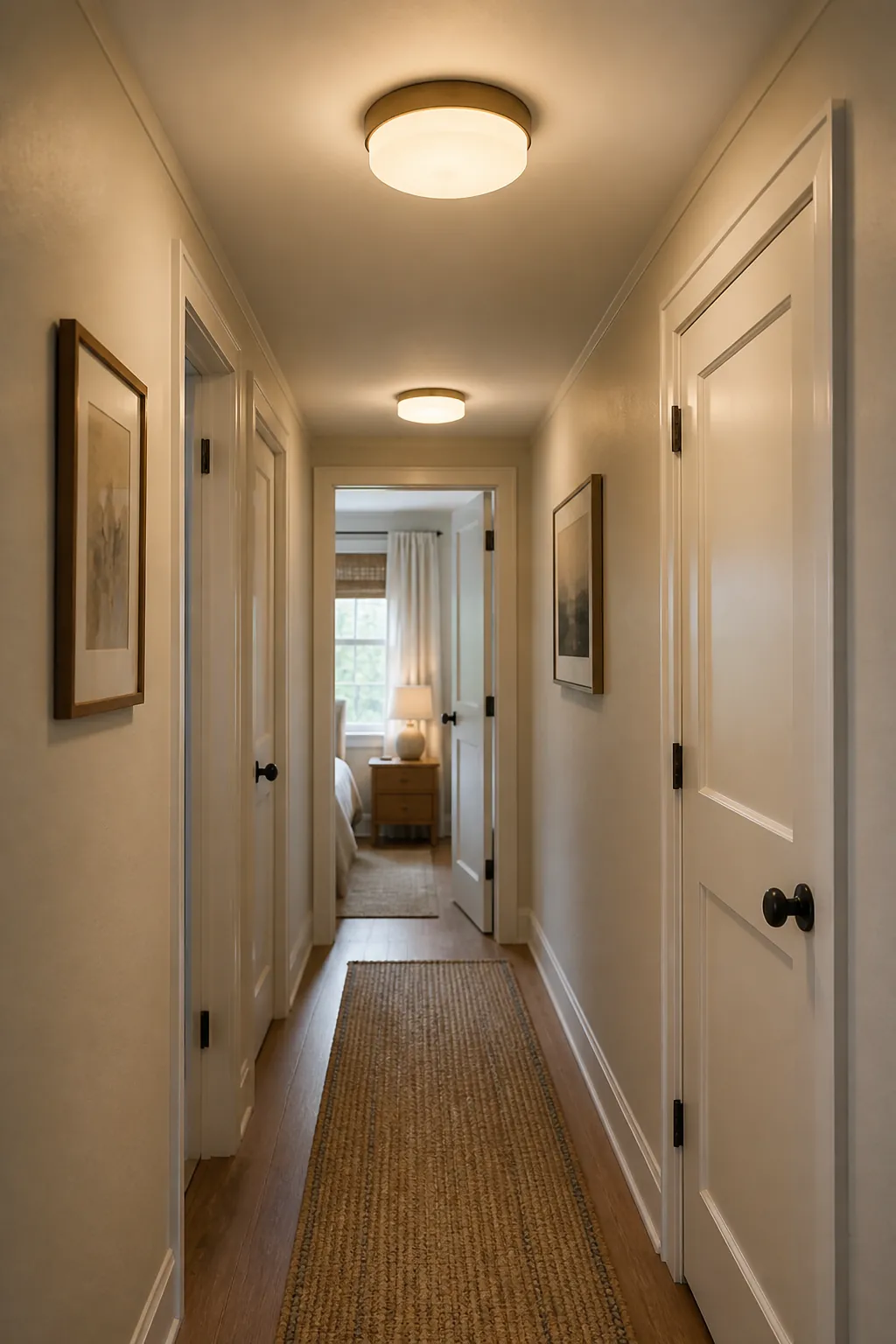
Look for flush mounts, semi-flush fixtures with shallow drops, or small recessed lights. A white or simple fixture can visually disappear into the ceiling, while a warmer metal finish can make the hallway feel more finished. For small space decor, this is the balance to aim for: enough personality to look intentional, not so much fixture that the ceiling feels lower.
If you are replacing old fixtures, confirm whether you have a standard electrical box, an old fixture opening, or a layout that needs new wiring. Hardwired changes are worth planning carefully, and a licensed electrician is the right person for new electrical work.
Make entryway lighting feel like a welcome
Entryway lighting has a different job from the light in the middle of the hall. It sets the mood before anyone sees the living room or kitchen. This is where a fixture can be more expressive: a lantern-style flush mount, a small pendant in a taller foyer, a pair of sconces, or a lamp on a narrow table.
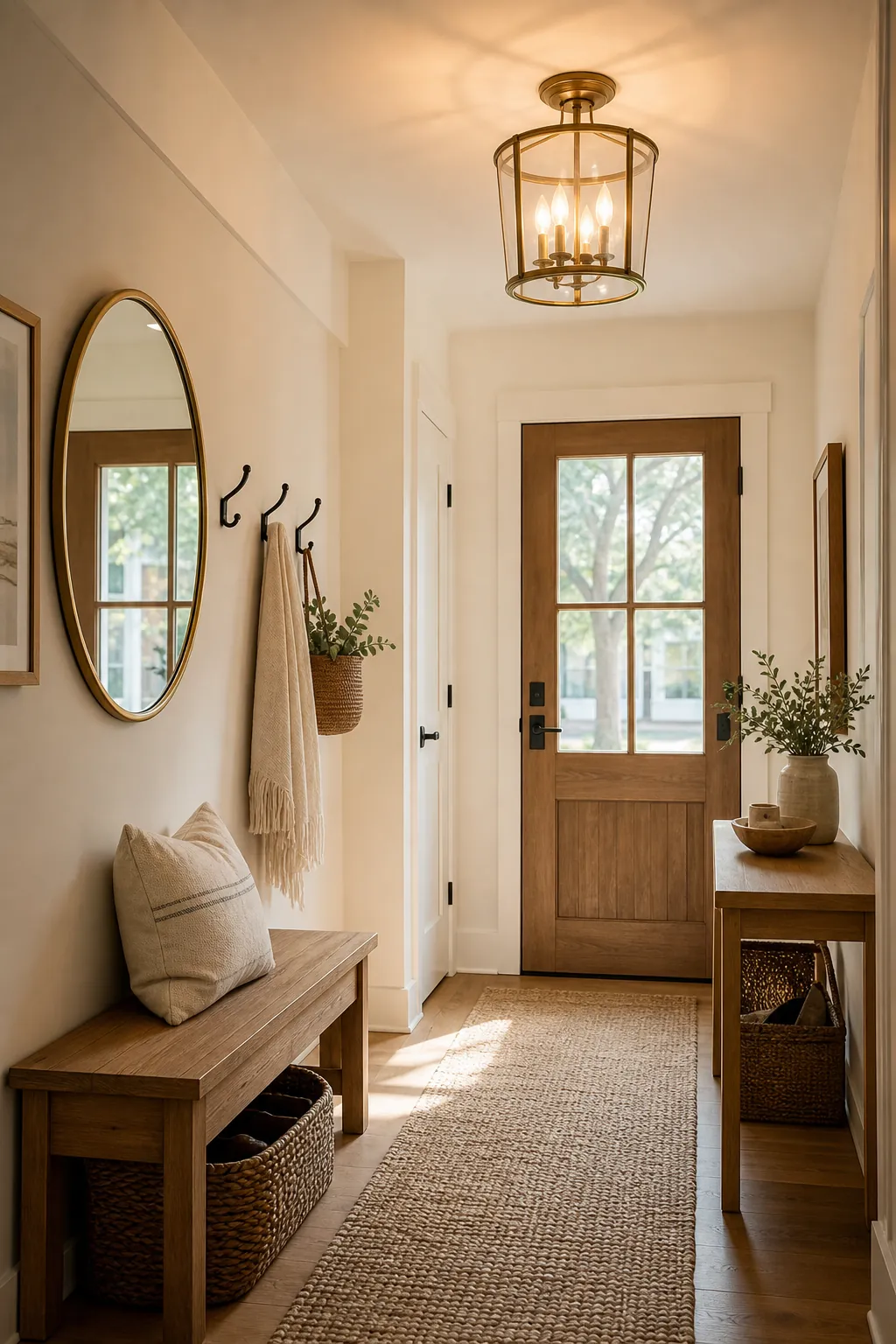
The fixture does not need to be large. It needs to connect with the rest of your entryway decor. If you already have a runner rug, woven basket, wood bench, or natural textures, repeat one of those tones in the lighting finish. Black can look crisp, aged brass can warm up white walls, and woven or linen shades can soften a foyer that feels too hard.
This is also where many foyer ideas go wrong. A dramatic fixture can be beautiful, but the everyday test is simple: can you unlock the door, set down keys, see shoes, and greet someone without the light feeling harsh? The entry should feel clear first, decorative second.
Use mirrors, art, and lamps to borrow light
Lighting does not work alone. A mirror can bounce light from an adjacent room. Pale trim can keep the hallway from feeling boxed in. Art can give sconces or ceiling lights something to touch. A small lamp can make an entry table feel useful instead of staged.
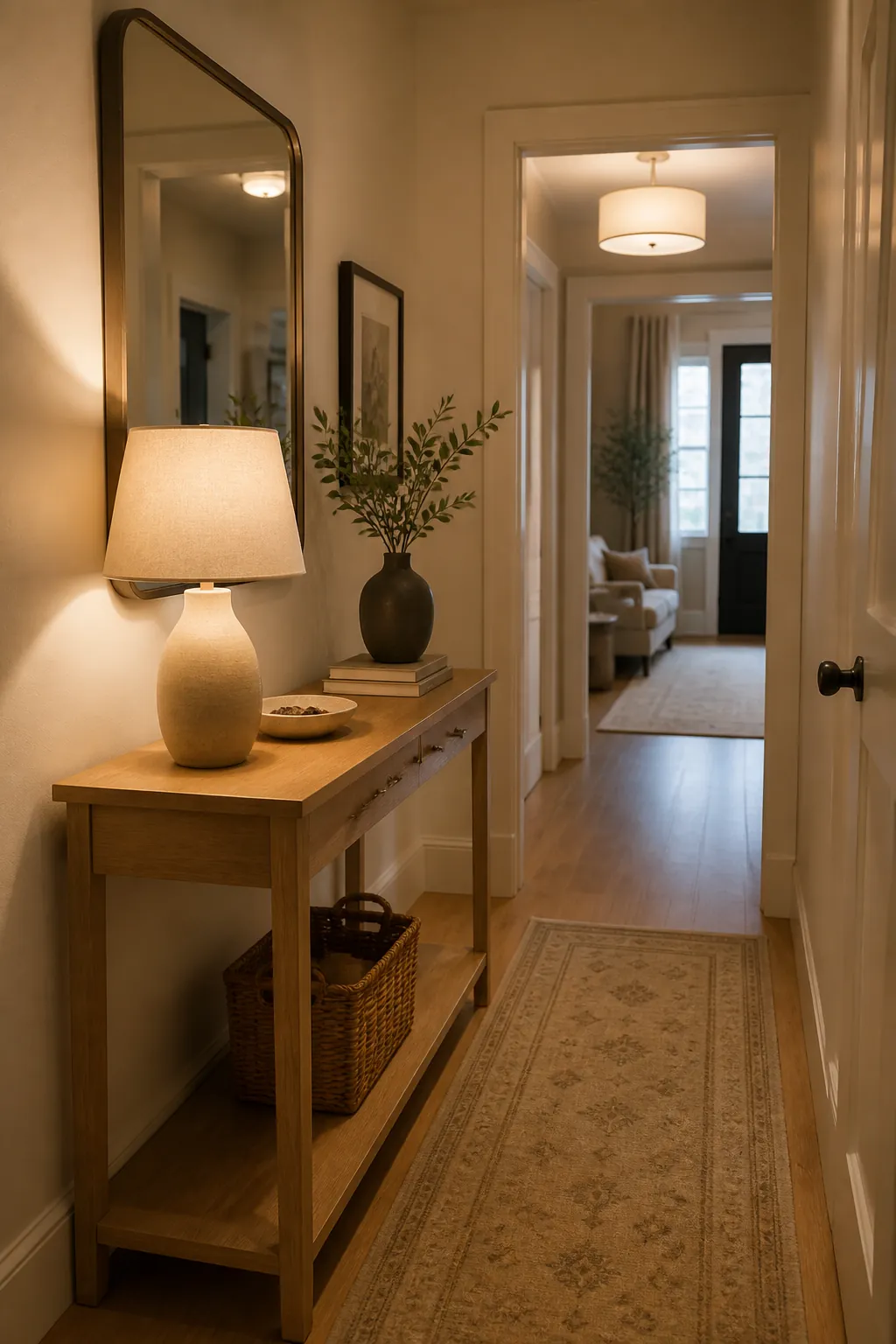
If your hallway feels empty, try pairing light with one anchor. A mirror plus sconces can widen the feeling of the wall. A console plus lamp can give keys, mail, and a tray a proper place. A runner rug can pull the eye forward so the hallway feels less like a tunnel. These are hallway decor choices, but they work better when the lighting supports them.
Keep the walkway clean. In a tight hall, choose a shallow console, a wall-mounted shelf, or a plug-in sconce with a tidy cord cover. The goal is not to fill the hallway. The goal is to give the light a reason to feel warm.
Add practical light where storage happens
Some hallway lighting should be beautiful, but some of it should simply help the home run better. If your hallway connects to a mudroom, closet, laundry area, stairs, or garage door, task lighting can remove daily friction.
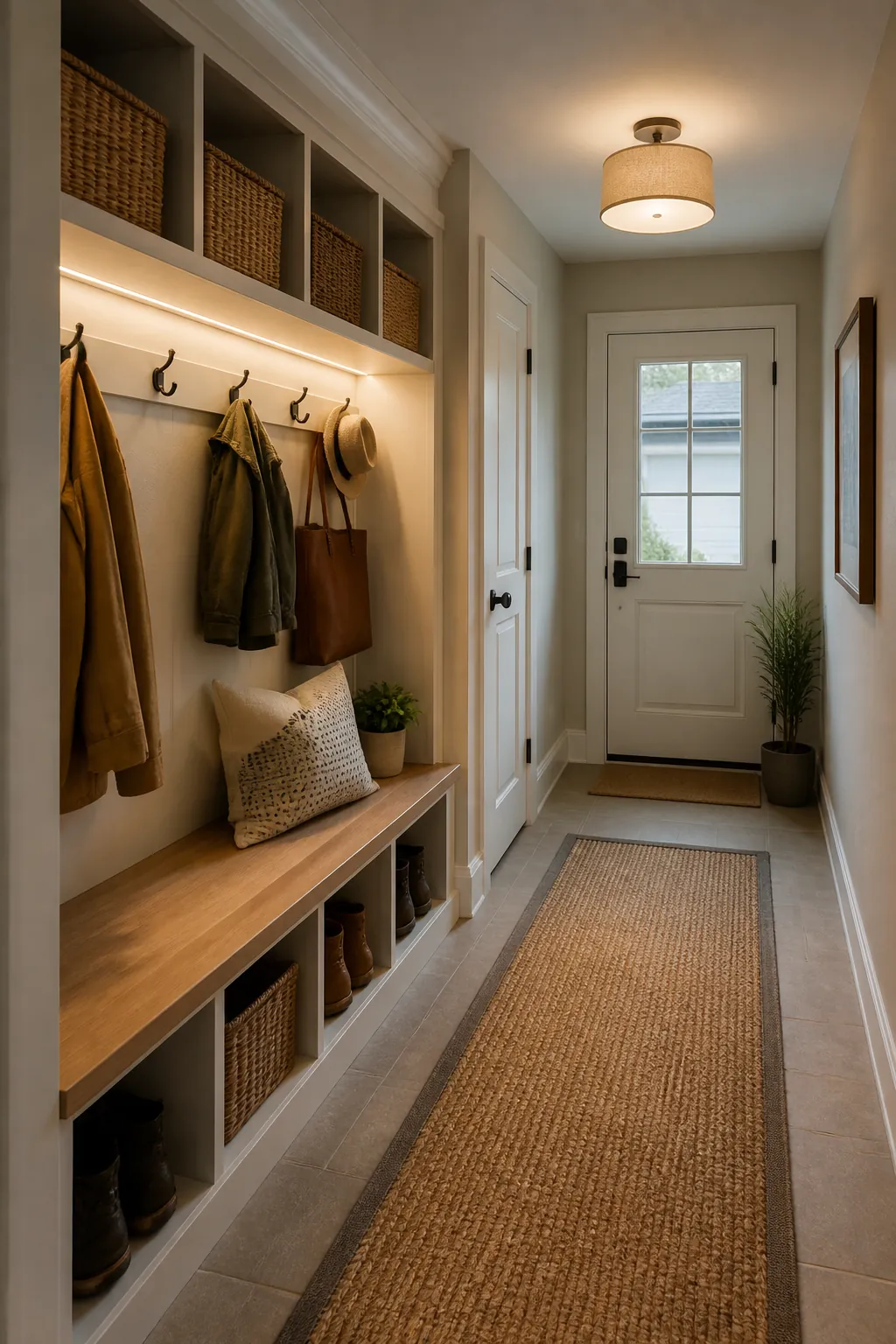
Motion-sensor lighting inside a closet, a small ceiling light near a bench, or an LED strip under a shelf can make home organization easier. This is especially useful for school bags, shoes, coats, dog leashes, recycling, and the small things that collect by the door.
For mudroom ideas, focus on where hands actually go. Light the hooks, the bench, and the baskets. If the light only lands in the center of the floor, the storage still feels messy because the useful parts stay shadowed.
Match the lighting idea to the hallway problem
Before buying a fixture, name the real problem. A dark hallway, a low ceiling, a bare entry, and a narrow passage do not need the same solution.
- The hallway is long and uneven: repeat ceiling lights or small recessed lights so brightness travels through the whole space.
- The hallway feels sterile: use warmer bulbs, shaded sconces, a lamp, or natural materials near the entry.
- The ceiling is low: choose flush mount or low-profile fixtures instead of pendants.
- The walls feel blank: add wall sconces, art lighting, or a mirror that reflects nearby light.
- The entry is cluttered: combine entryway lighting with a narrow storage piece, hooks, baskets, and a runner rug.
- The hallway is too narrow for furniture: keep the floor clear and use ceiling light, slim sconces, brighter trim, and wall-mounted decor.
The best hallway lighting ideas are not about making the hallway the loudest part of the home. They are about making the transition feel smooth. When the light is warm, even, and placed where life actually happens, the entryway feels better, the hallway decor makes more sense, and the rooms around it feel more connected.