

A drop zone sounds practical until it becomes the place where every bag, shoe, receipt, dog leash, package, and half-opened piece of mail lands. The problem usually is not that the entryway has no storage. It is that the storage is too visible, too deep, too hard to use, or too vague.
The goal is not to make your entryway look empty. A real home needs a landing place. The goal is to make the landing place look deliberate, shallow, edited, and easy to reset. A good drop zone should help you leave the house faster, come home with less friction, and still look calm when someone walks through the door.
Use these ideas whether you have a small mudroom, a narrow hallway, a foyer wall, or one awkward corner near the garage door. The best entryway organization starts by deciding what this space is allowed to hold, then choosing pieces that make clutter harder to spread.
Start with a tight edit, not more baskets
If your drop zone always looks messy, the first fix is not buying another organizer. It is deciding what can actually live there. Most messy entryways fail because they are asked to store too many categories at once: daily shoes, off-season boots, backpacks, umbrellas, sports gear, returns, mail, packages, dog supplies, hats, gloves, and random things that need to go upstairs.
A tidy drop zone works better with a stricter rule: only items used today or tomorrow get prime space. Everything else needs a secondary home. That might mean one pair of shoes per person near the door, with extras in closets or bedrooms. It might mean the current backpack hangs in the entry, while sports bags live in a garage bin. It might mean incoming mail gets one small tray, not a whole console surface.
This edit matters because visual clutter is cumulative. A pair of shoes can look casual. Six pairs look like a system failure. One woven basket can look intentional. Four mismatched bins can make a small space feel busier than before.
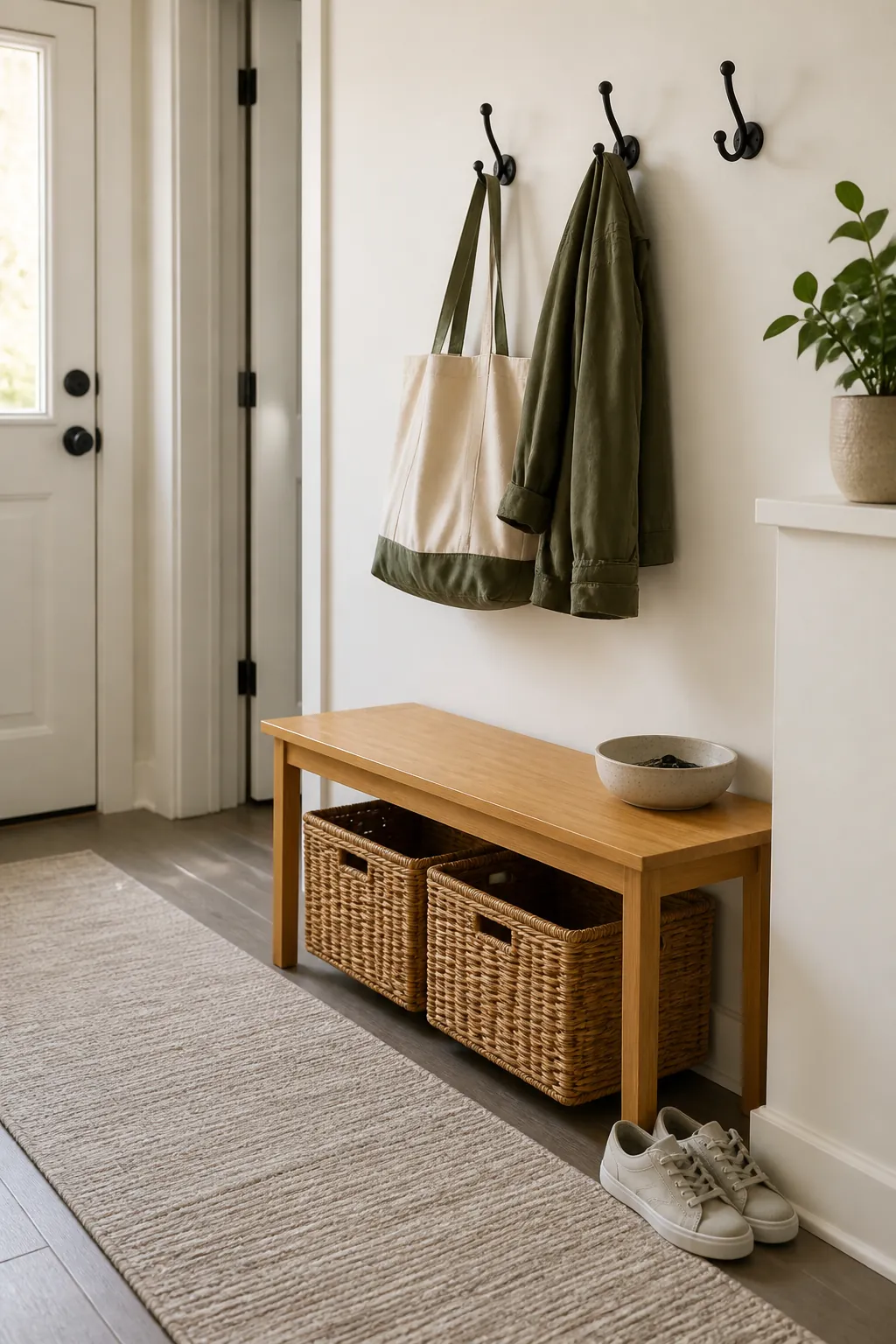
Choose one anchor piece that makes the area look built in
The fastest way to make a drop zone look less messy is to give it one visual anchor. Without an anchor, hooks, baskets, shoes, and bags look like separate decisions. With an anchor, the same items read as one designed entryway decor moment.
In a small space, the best anchor is usually shallow and vertical. A slim bench with storage underneath, a wall-mounted shelf with hooks, a narrow shoe cabinet, or a hall tree can all work. The important detail is depth. Deep benches often become piles because items disappear behind other items. Very deep cubbies can invite stacking. Shallow storage keeps everything visible enough to use, but contained enough to look neat.
If your entryway opens directly into a living room, choose an anchor piece that looks more like furniture than utility storage. A warm wood bench, a closed-front shoe cabinet, bamboo or rattan baskets, a simple peg rail, and a natural runner rug can make the drop zone feel like part of the hallway decor instead of a temporary dumping ground.
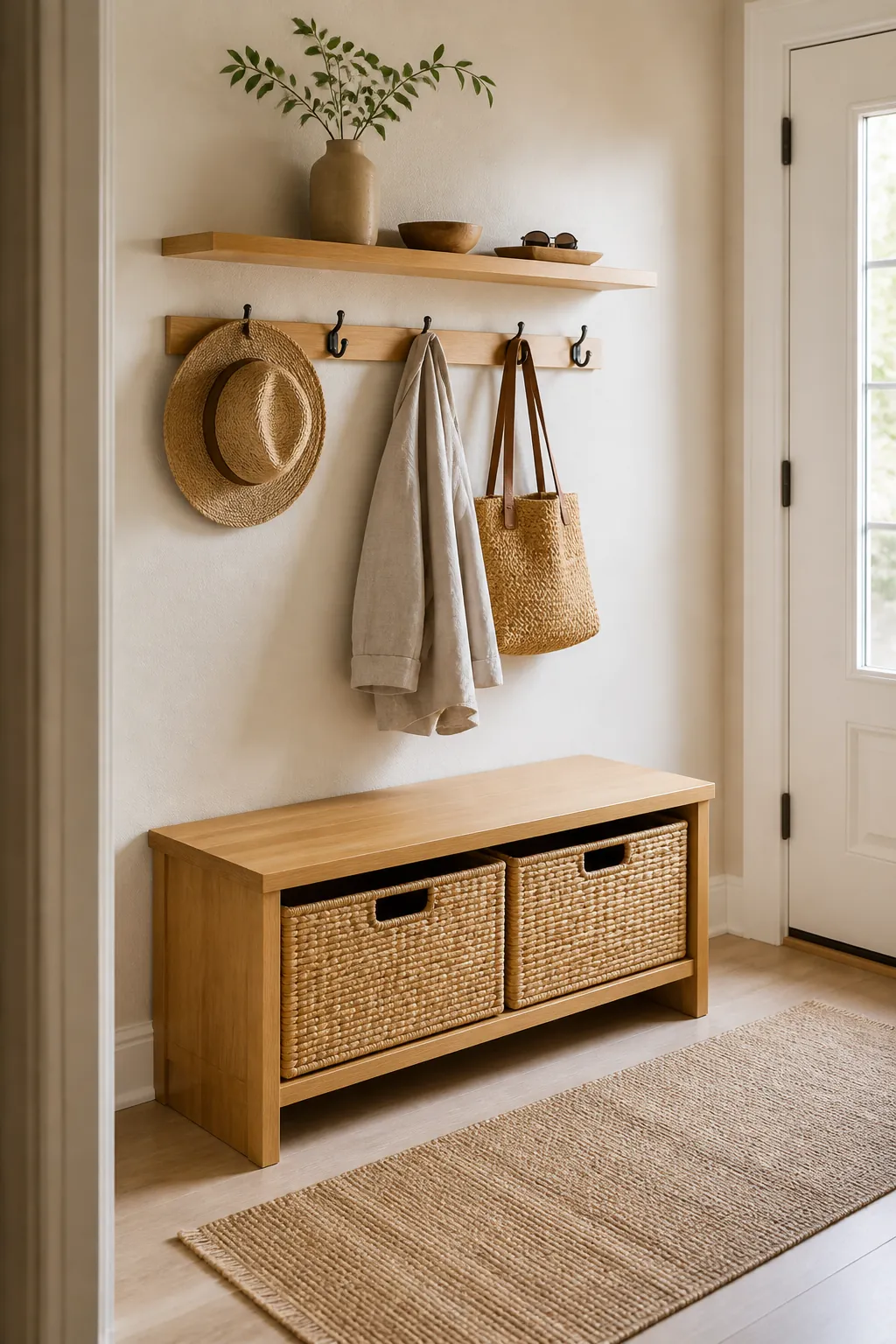
Give shoes, bags, mail, and keys separate landing spots
A drop zone looks messy when every item has the same instruction: put it somewhere over there. That is not a system. It is a pile with furniture around it.
Break the space into small jobs. Shoes need a floor-level place that is easy to reach. Bags and jackets need hooks strong enough for daily use. Keys, sunglasses, and wallets need a shallow tray or small wall shelf. Mail needs a single vertical sorter or basket, not a broad tabletop. Dog leashes, umbrellas, and reusable totes need their own hook or narrow bin.
The trick is to avoid making one surface do every job. A console table can look pretty in photos, but if it holds mail, keys, school forms, gloves, packages, and water bottles, it will always look unfinished. A better setup uses separate, obvious homes for each daily category. When the homes are small, the clutter has a limit.
For family entryway organization, assign one hook or cubby per person. Keep the youngest child’s hook low enough to reach. If kids cannot complete the routine in one step, the routine will eventually live on the floor.
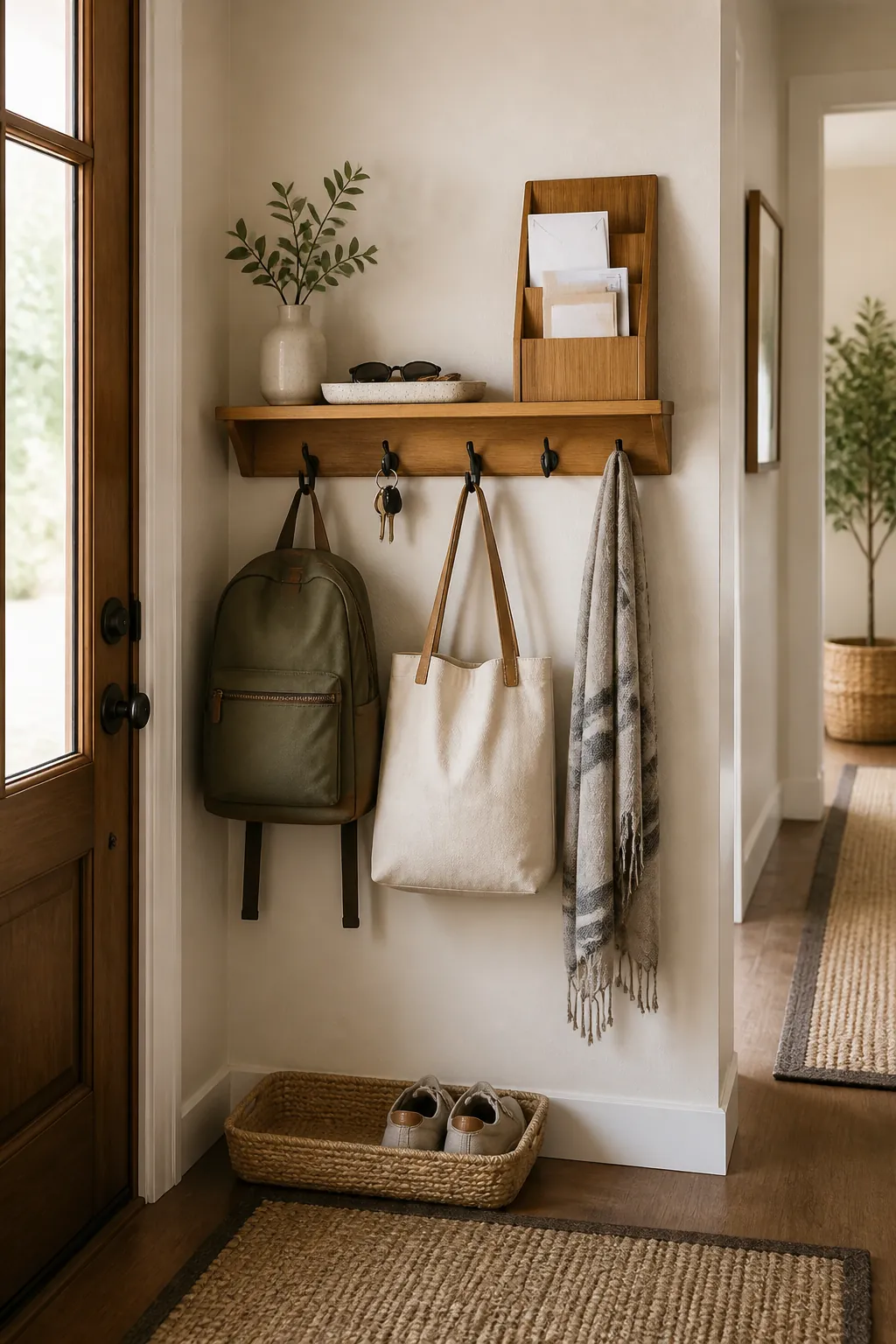
Hide volume, display only the clean lines
Open storage is convenient, but too much open storage makes a drop zone look busy even when it is technically organized. Shoes have different shapes. Backpacks sag. Jackets hang unevenly. Mail creates jagged edges. If all of that is visible from the main room, the area will feel messy before it is actually out of control.
Use closed or semi-closed storage for the categories with the most visual noise. Shoes can go in a tilt-front cabinet, a lidded woven basket, or a bench with a clean front. Winter accessories can sit in matching baskets. Returns and outgoing items can use one attractive bin with a firm weekly reset rule.
That does not mean everything needs a door. Hooks are still useful because they make bags and coats easy to grab. The balance is the point: hide the messy shapes, leave the useful actions visible. A few hooks above a simple bench look calm. A wall covered with bags, jackets, hats, scarves, and totes looks like storage overflow.
If the space is part of a foyer or open hallway, repeat materials to calm it down. Choose baskets in one finish, hooks in one metal, and a bench or shelf that echoes nearby wood tones. Small space decor depends less on the number of items and more on whether the eye can understand the area quickly.
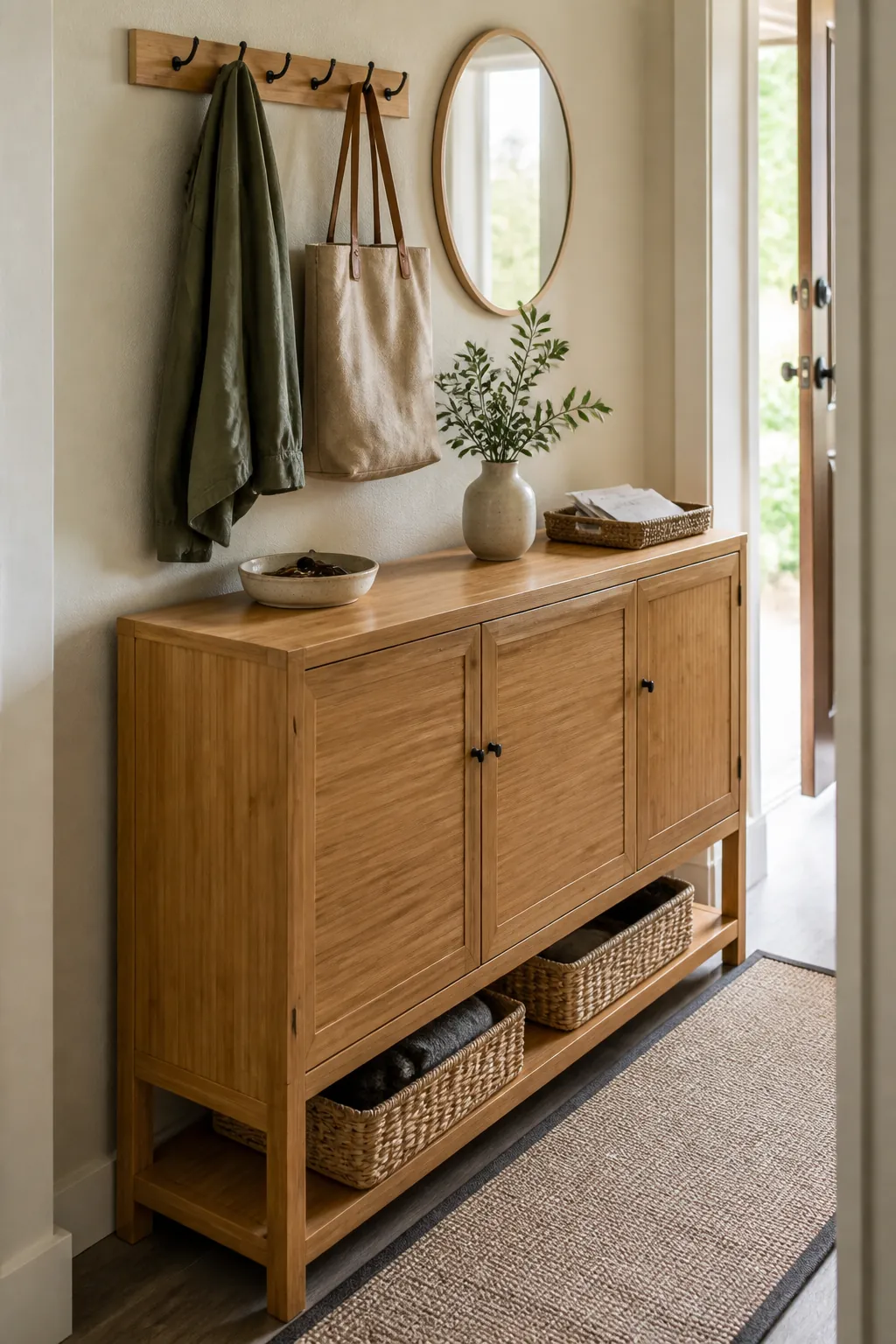
Protect the walkway so the drop zone does not spill outward
A narrow entryway can look messy simply because the walking path is blocked. Even beautiful storage feels wrong if a coat sticks into the doorway, a bench is too deep, or shoes spread past the rug. Before choosing more mudroom ideas, measure the path people actually use when they enter.
Leave the door swing clear. Keep bulky coats away from the first step inside. Use vertical storage where the floor is tight. A shallow shoe cabinet can work better than a wide rack because it gives back walkway space. If the entry is very narrow, hooks, wall baskets, and a floating shelf may do more than a full bench.
A runner rug can help define the zone, but it should not become a clutter boundary that shoes cross every day. Pick runner rugs that are easy to clean, low enough for the door to clear, and long enough to visually connect the door with the storage wall. The rug should say, “This is the entry path,” while the storage says, “This is where things land.”
The cleanest drop zones usually have a visible edge. It might be the end of the bench, the end of the runner, or a basket that holds the daily shoes. When the zone has an edge, clutter has somewhere to stop.
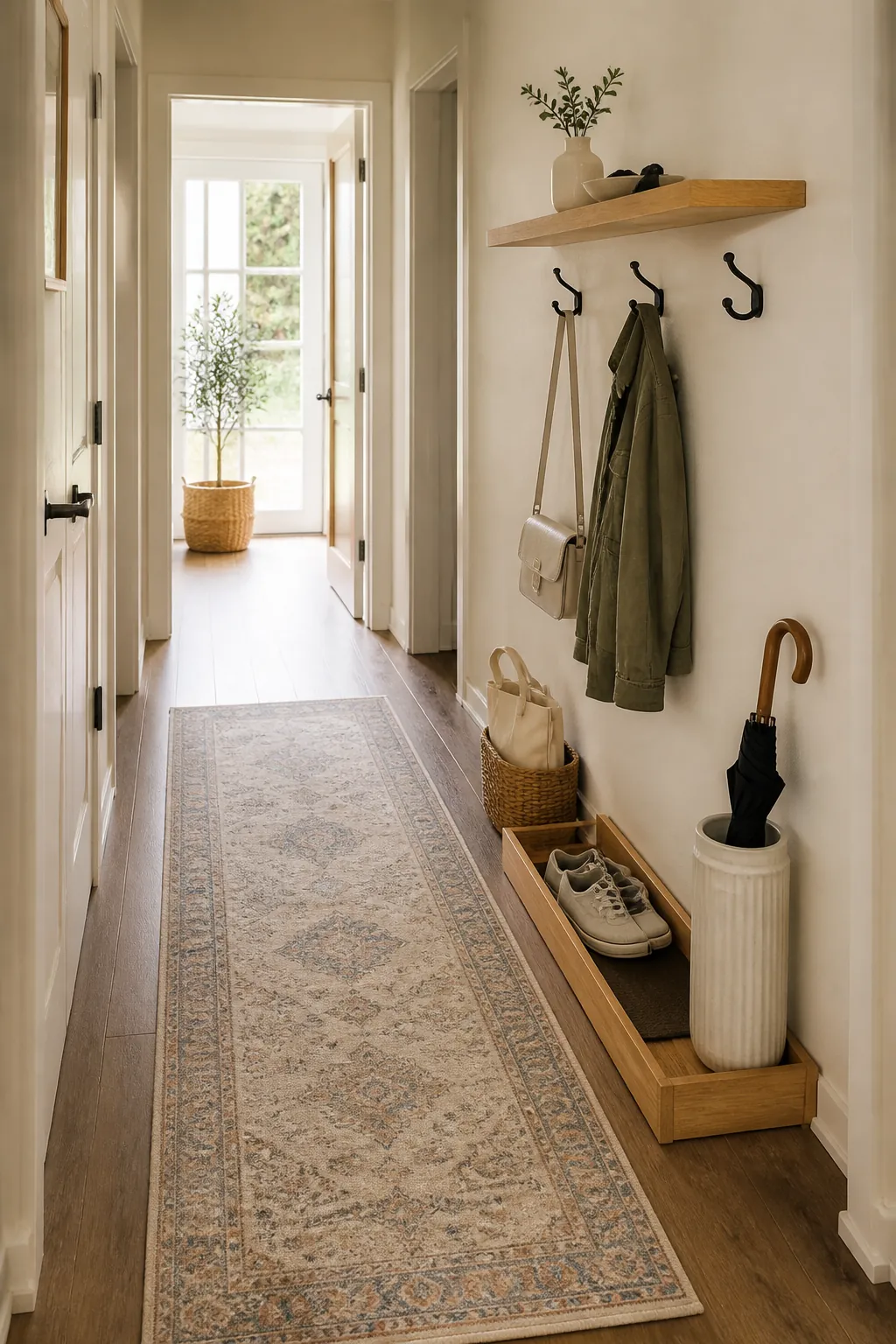
Make the reset easier than the mess
The best home organization system is the one people will use when they are tired. A drop zone has to work at the exact moment your hands are full and your attention is low. If the routine requires opening three doors, sorting four categories, and walking to another room, it will fail on busy days.
Use one-step moves for the items that cause the most mess. Shoes slide onto a low shelf or into one open basket. Backpacks go on hooks, not inside a cabinet. Keys land in a tray, not a drawer. Mail stands upright in one sorter so it does not spread. Hats and gloves go in person-specific baskets instead of one shared bin where everything gets tangled.
Then add one short reset habit. At night, return extra shoes to closets. Once a week, empty the mail basket. Before the weekend, clear outgoing returns and donation bags. The drop zone should not be a permanent archive. It should be a working station for the next 24 to 48 hours.
If you share the space with kids, label by person rather than category. A child may not care about “winter accessories,” but they can understand “your basket.” Keep hooks sturdy, baskets light, and expectations visible. The less explaining the system needs, the cleaner it will look.
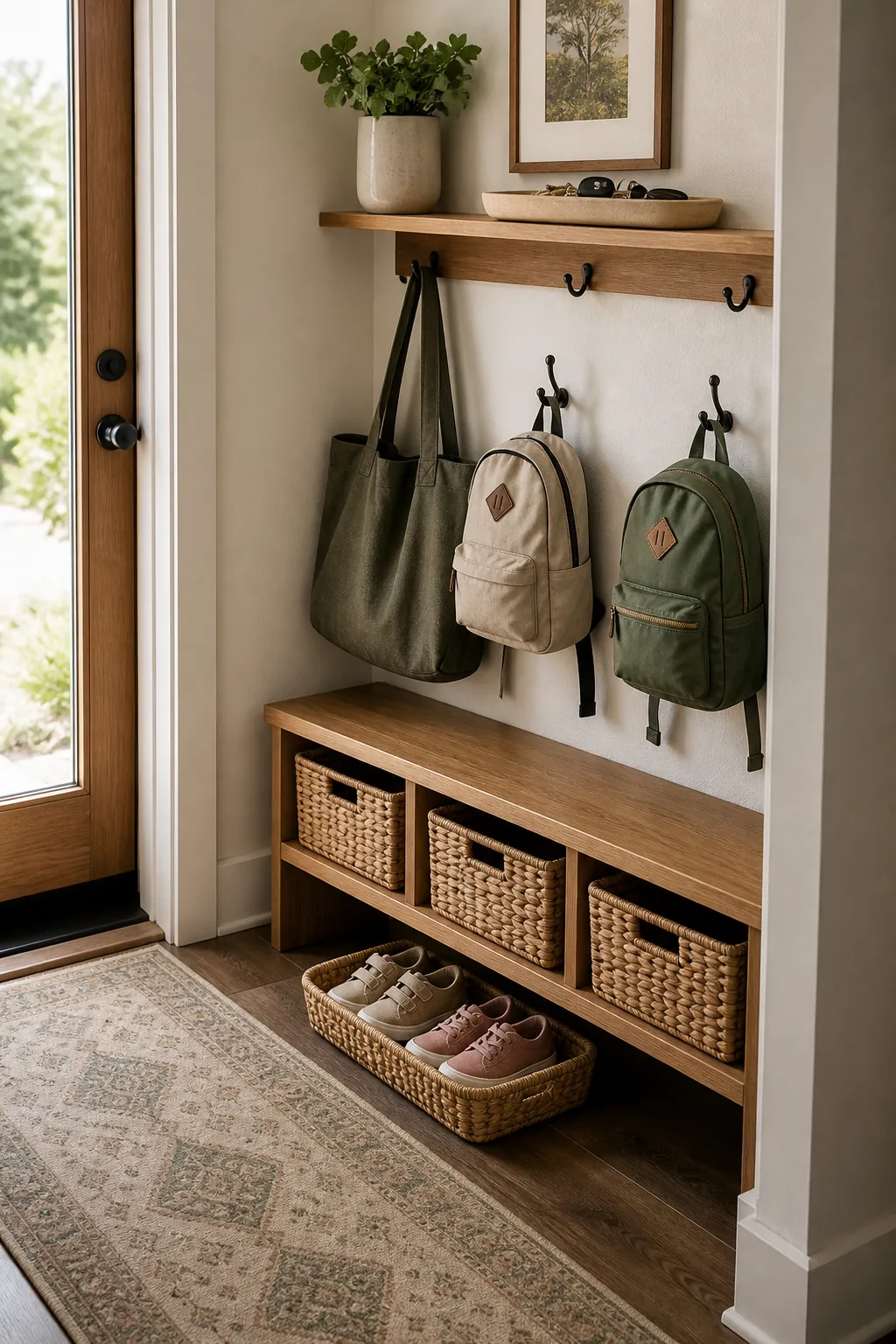
A simple formula for a drop zone that looks intentional
If you are starting from scratch, use this formula: one shallow anchor piece, one shoe solution, one hook zone, one small surface for keys and mail, one attractive catchall basket, and one washable runner rug. That is enough for most entryway decor needs without turning the space into a storage wall.
- For a tiny foyer: use a floating shelf, two or three hooks, a slim shoe cabinet, and a narrow runner.
- For a small mudroom: use a bench with closed baskets, hooks above, and one bin for outgoing items.
- For a family hallway: use person-specific hooks and baskets, plus a firm one-pair-of-shoes rule.
- For an open living room entry: choose furniture-like storage in natural finishes so the drop zone blends with the room.
The real test is not whether the drop zone looks perfect after a full cleanout. The test is whether it still looks decent on a normal Tuesday. If the system limits volume, keeps the walkway open, and gives every daily item a fast landing spot, the entryway can do its job without announcing every errand, backpack, and pair of shoes at the door.
A drop zone should make home feel easier the moment you walk in. Keep it shallow. Keep it edited. Let the useful pieces show, and hide the visual noise. That is what makes an entryway look organized instead of merely full of organizers.