
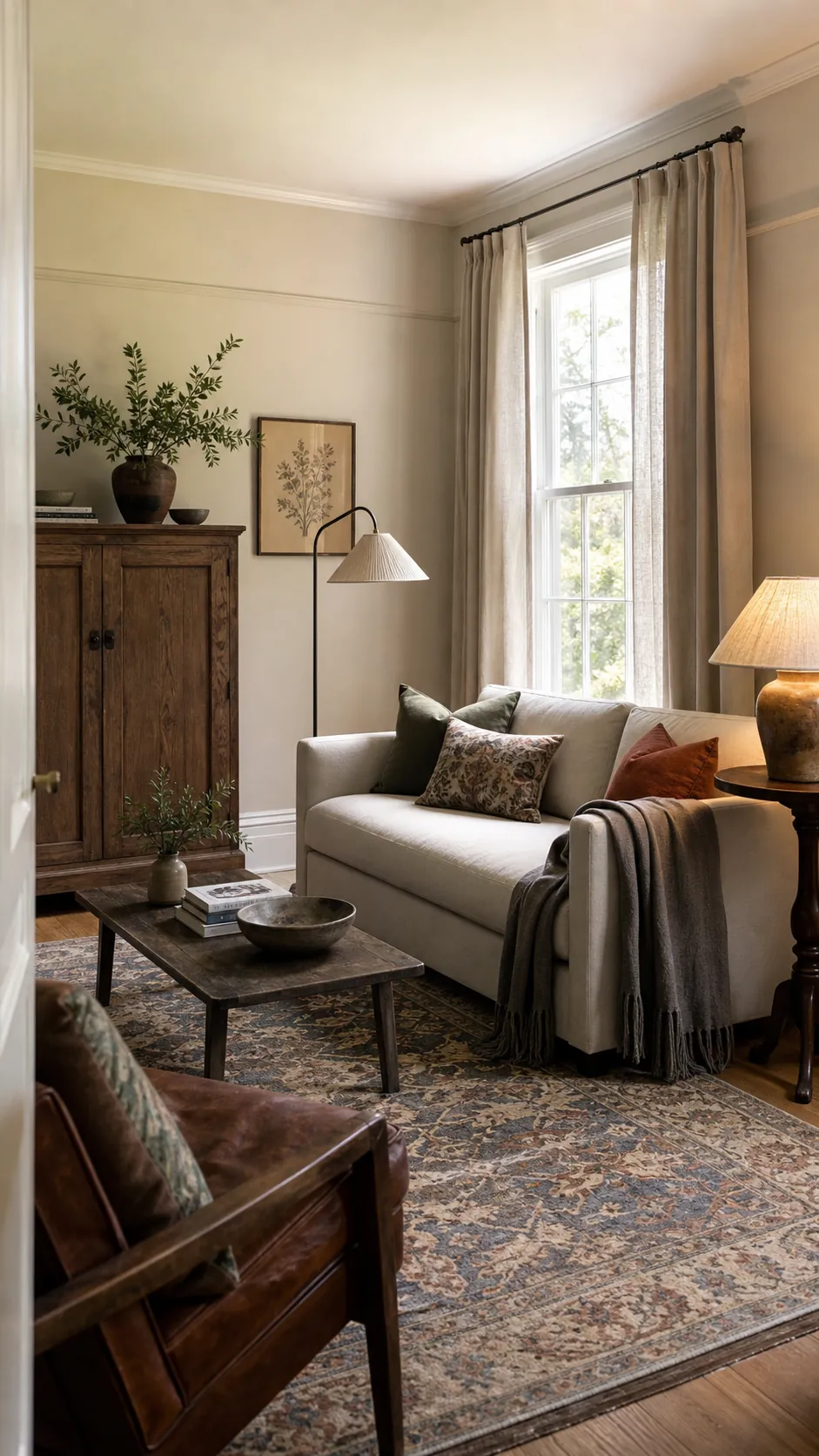
A plain room does not need a pile of antiques to feel like it belongs in a character home. It needs depth, evidence of touch, and a few convincing edges. Flat rooms usually suffer from uniform lighting, smooth matching surfaces, undersized personal details, and architecture that disappears into one color.
The most believable plain room makeover works from the room outward: improve its boundaries, give the light somewhere to fall, introduce one substantial piece with age, and only then add smaller vintage decor. That order creates old house charm without making a new room look like a stage set.
Give the Room a Stronger Edge
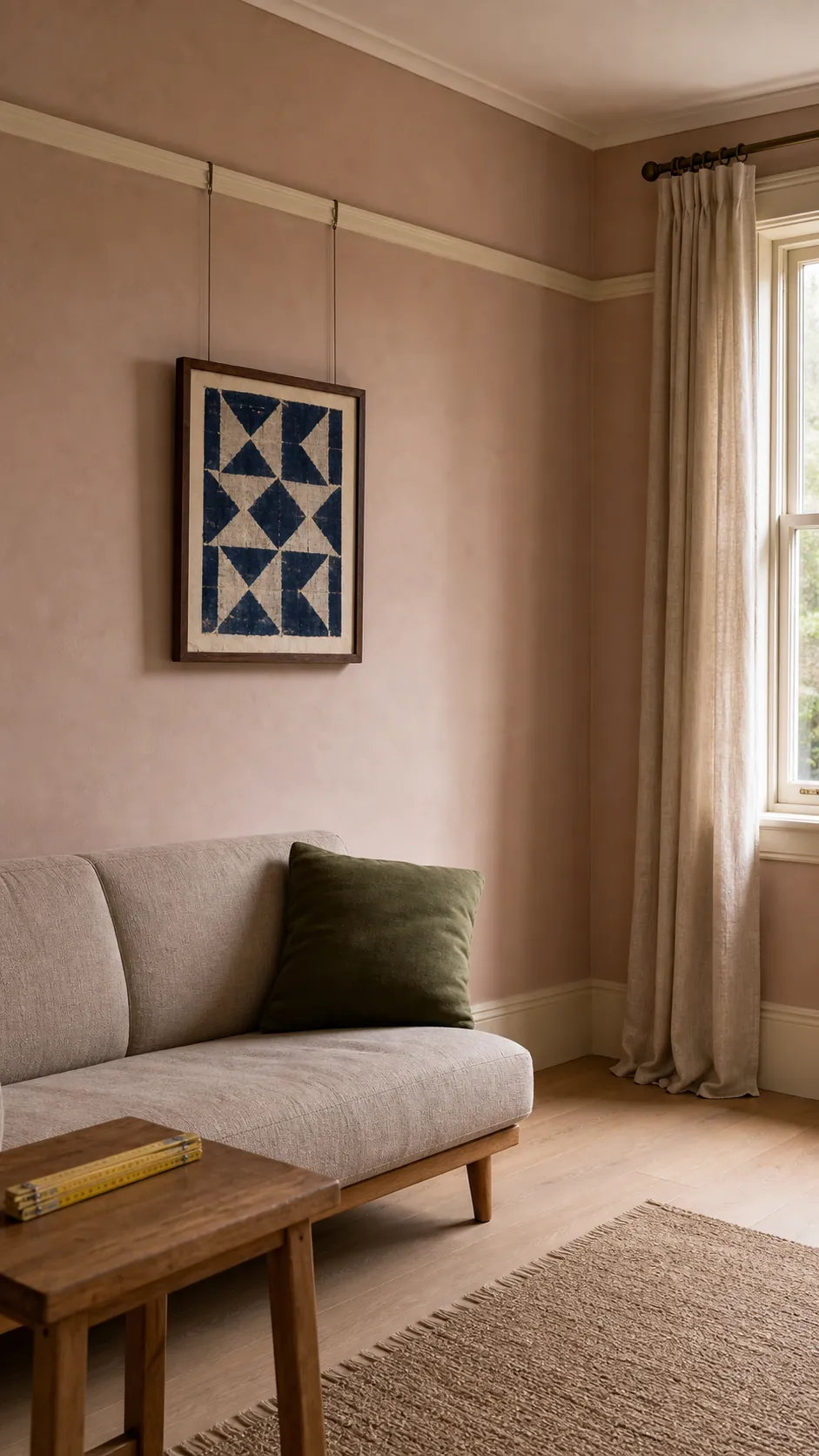
Old rooms often feel grounded because openings and walls have a visible beginning and end. In an owned home, modest timber window trim, a simple picture rail, deeper baseboards, or a plain ceiling cornice can restore that sense of proportion. Match the scale to the ceiling height; oversized molding in a small room looks applied rather than inherited.
Renters can create a similar edge with full-length curtains mounted high and wide, a painted freestanding bookcase, or a large textile hung from a removable rail. One continuous boundary is stronger than many tiny decorative gestures.
Replace Flat Light With Small Pools
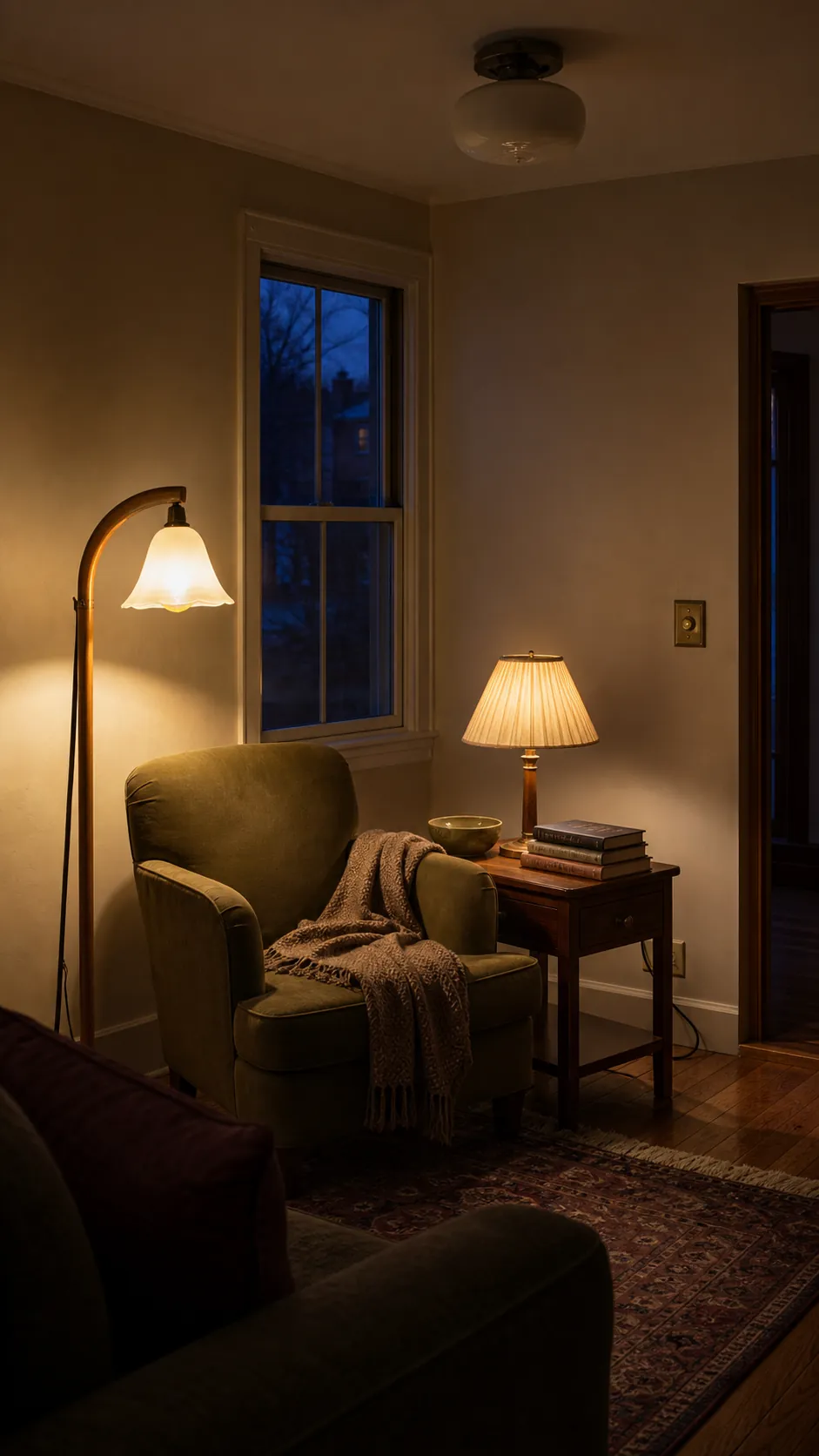
A bright ceiling fixture can make every surface feel equally important—and equally lifeless. Use the overhead light when you need it, but let table and floor lamps shape the room in the evening. Two or three low sources reveal plaster, wood grain, book spines, and fabric folds.
Choose bulbs with the same warm-neutral color temperature so the room feels coherent, then vary shade materials rather than bulb color. Linen, pleated paper, and opaque glass each soften light differently. Keep cables safe and switches reachable from the places where you sit.
Anchor the Space With Aged Wood
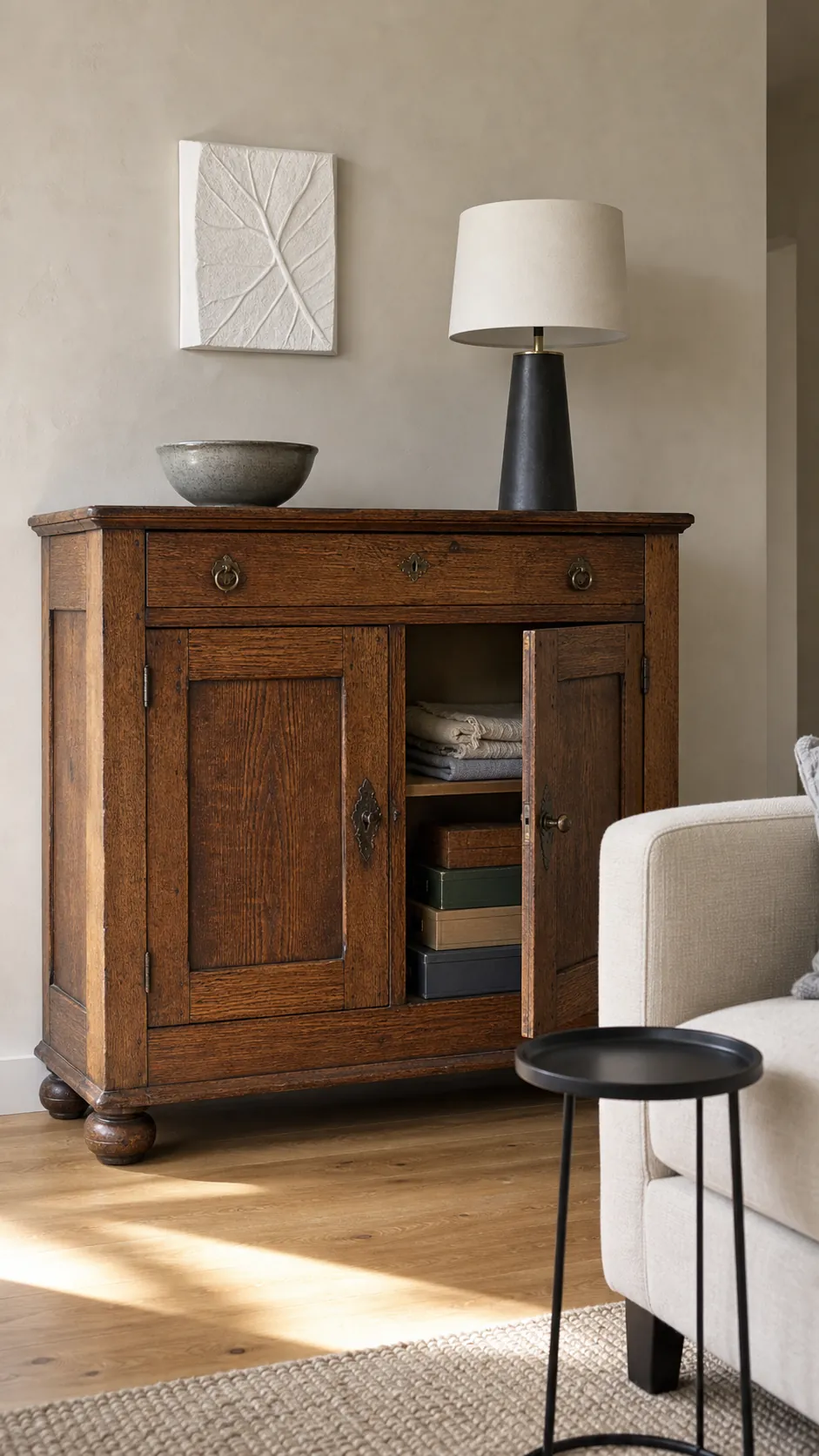
One real wood piece does more for a collected home than six distressed accessories. Look for a table, cabinet, chest, or chair with useful proportions, sound joints, and a finish that shows age honestly. Scratches are welcome; wobble, active woodworm, and drawers that cannot function are not.
Let that piece carry visual weight. A dark oak cabinet against a pale wall or a scrubbed pine table beside a modern sofa creates productive contrast. Do not try to match every wood tone. Repeating one undertone elsewhere—in a frame, tray, or chair leg—is enough.
Let Textiles Soften the Architecture
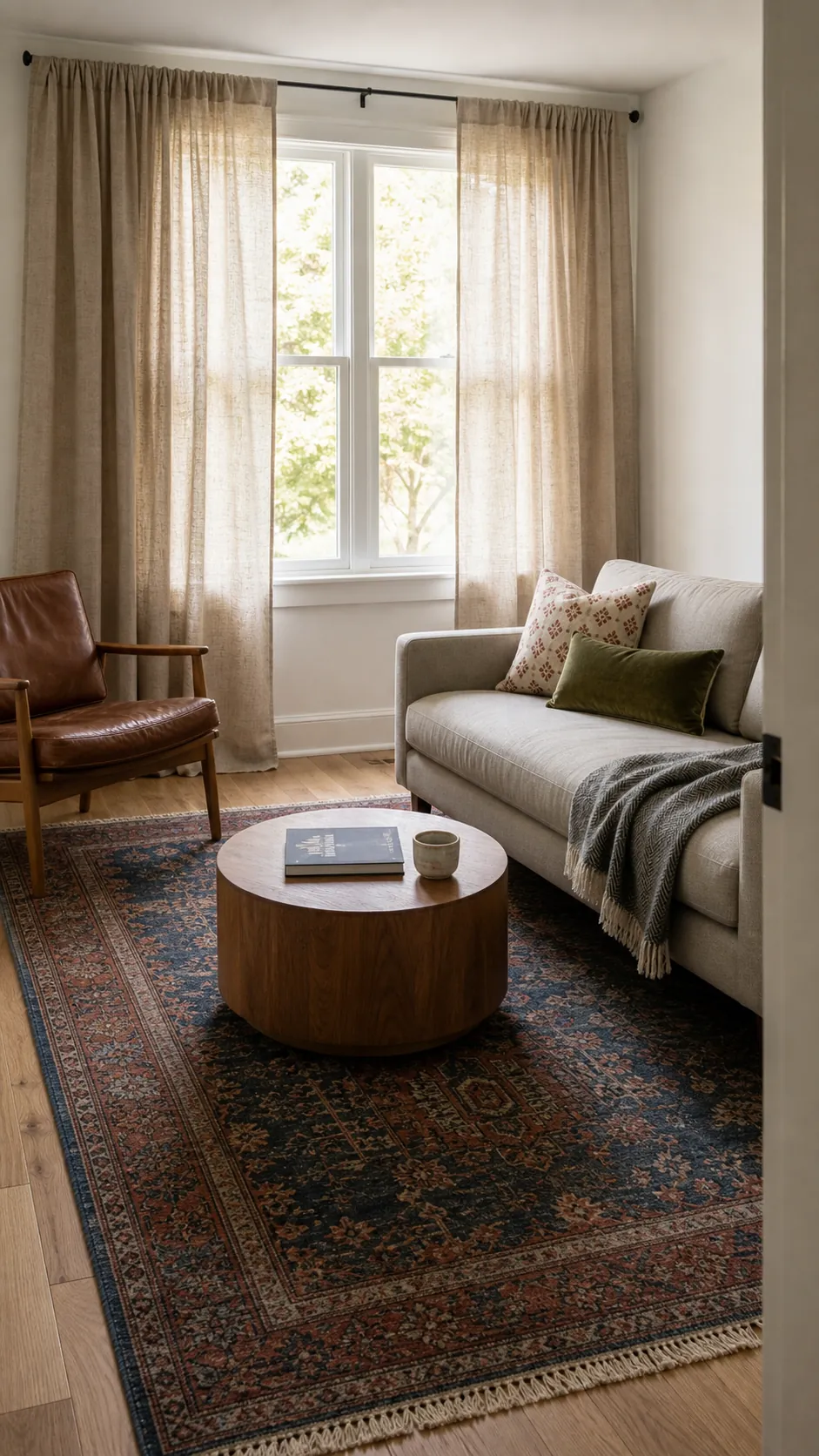
Textiles bring the irregularity that blank drywall and smooth flooring lack. Start with the largest plane: curtains that reach the floor or a rug large enough to connect the main furniture. Then add one or two tactile layers such as washed linen, a wool throw, velvet, or block-printed cotton.
Avoid scattering many tiny patterns. Choose one textile with a visible motif, one with texture, and quieter supporting fabrics. The room will feel warm without becoming busy, and the materials will improve acoustics as well as appearance.
Hang Something You Would Keep
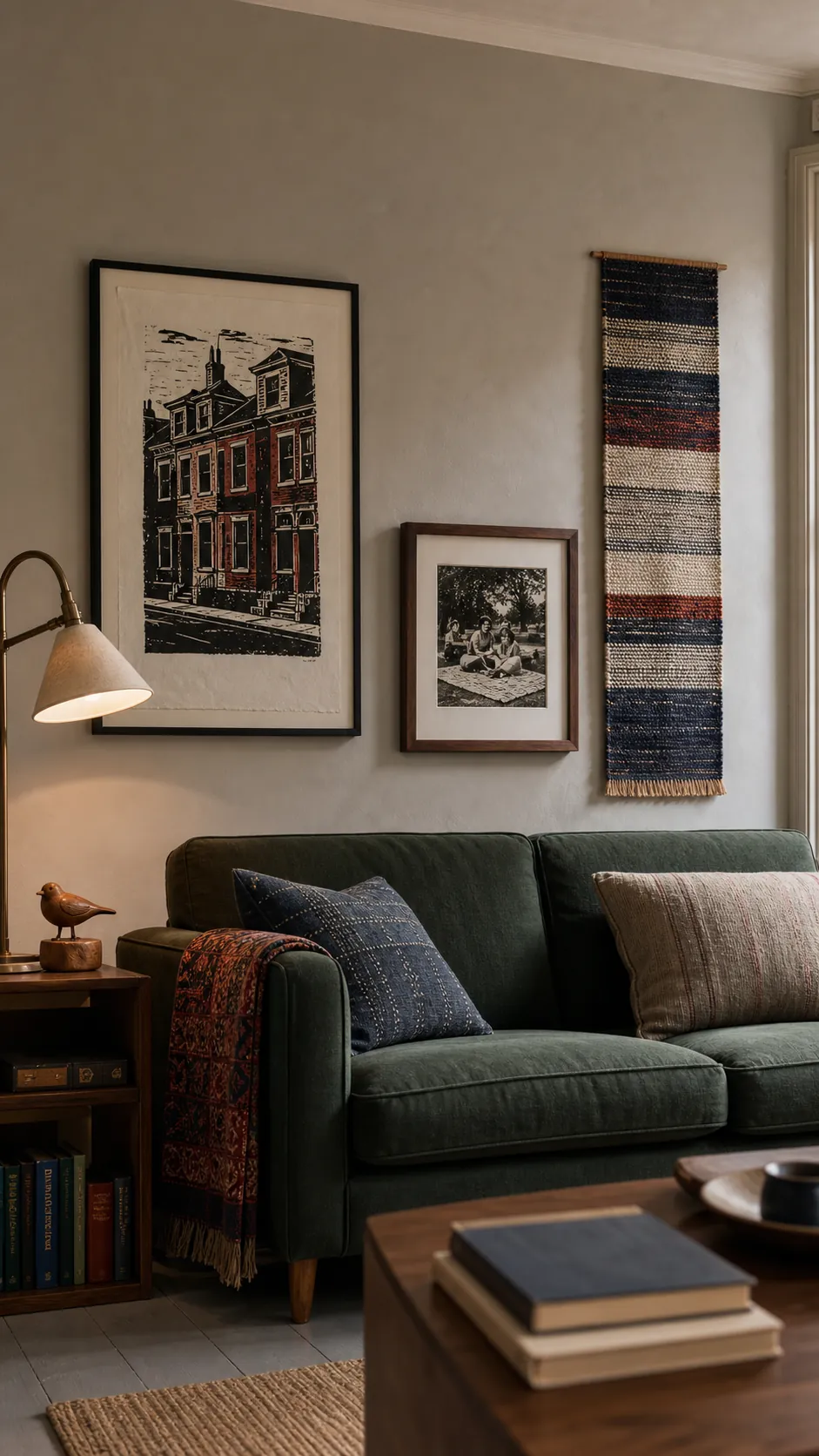
Generic art makes a room feel staged because it reveals nothing about the person who lives there. Wait for a piece you would move to the next home: a local print, family photograph, textile, map connected to a journey, or original work from a student or market.
Scale matters more than quantity. One confident piece can hold a wall, while a group works best when it has a real relationship—shared subject, maker, trip, or family history. Hang art in conversation with furniture, not stranded near the ceiling.
Mix Eras Instead of Building a Set
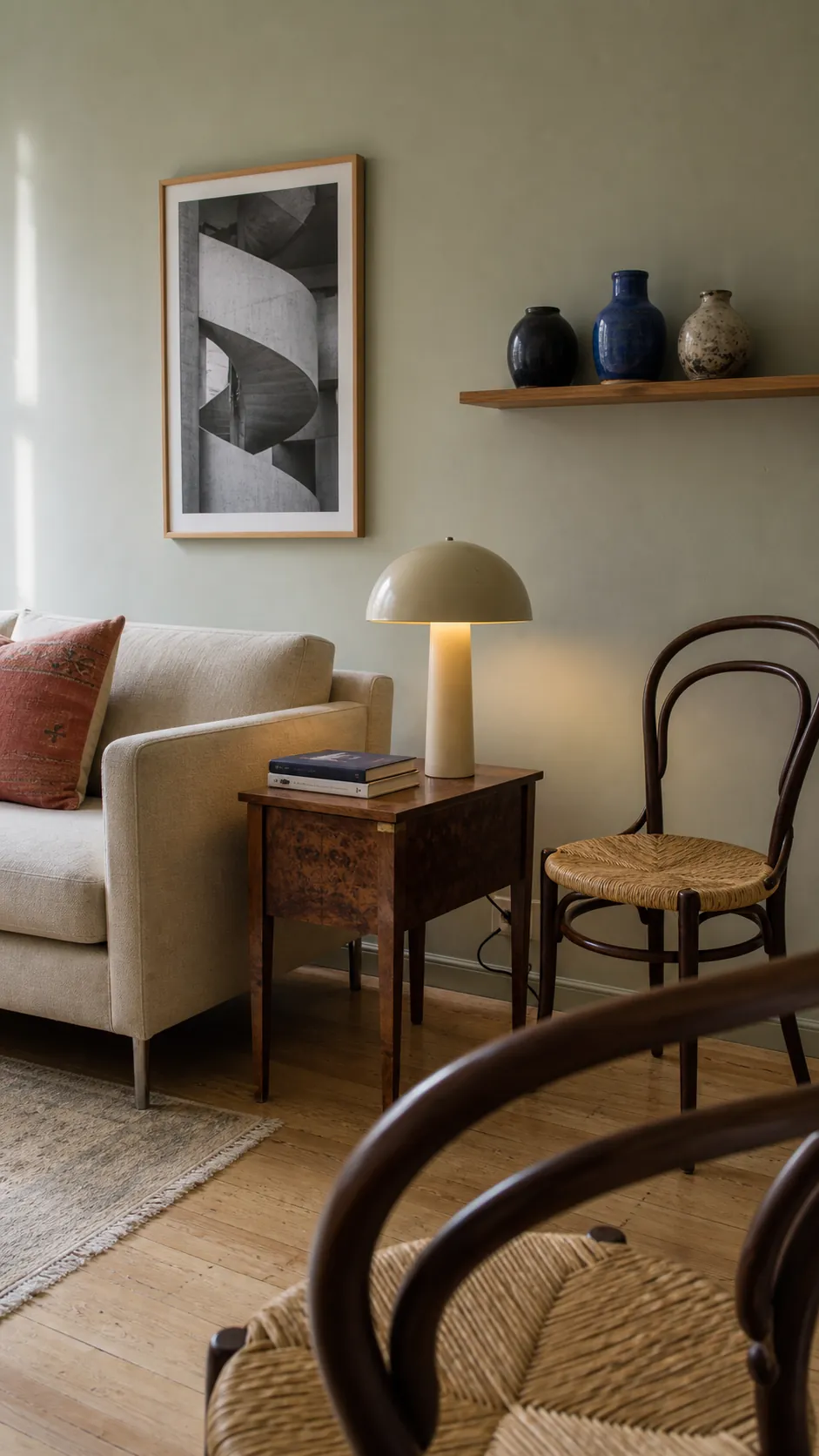
A convincing vintage living room is rarely frozen in one decade. Keep the comfortable modern sofa, then add a 1930s side table, a 1970s lamp, and an older handmade bowl. The contrast lets each object retain its identity and prevents retro home decor from feeling like a themed rental.
Use shape and material to create the connection. A repeated curve, dark metal detail, or muted accent color can bridge different periods. Edit before adding: if every surface already has an object, remove a few so the pieces with meaning can register.
Stop Before the Room Becomes a Costume
Old house charm comes from restraint as much as patina. Step back and identify the strongest architectural line, the aged furniture anchor, the dominant textile, and the personal object. If a new purchase does not strengthen one of those threads or solve a real need, leave it behind.
Live with each layer before adding the next. Watch how daylight changes the wall color, whether the lamp serves your routine, and where books and cups naturally land. A plain room gains character when its surfaces begin to record a life—not when every corner announces a style.