
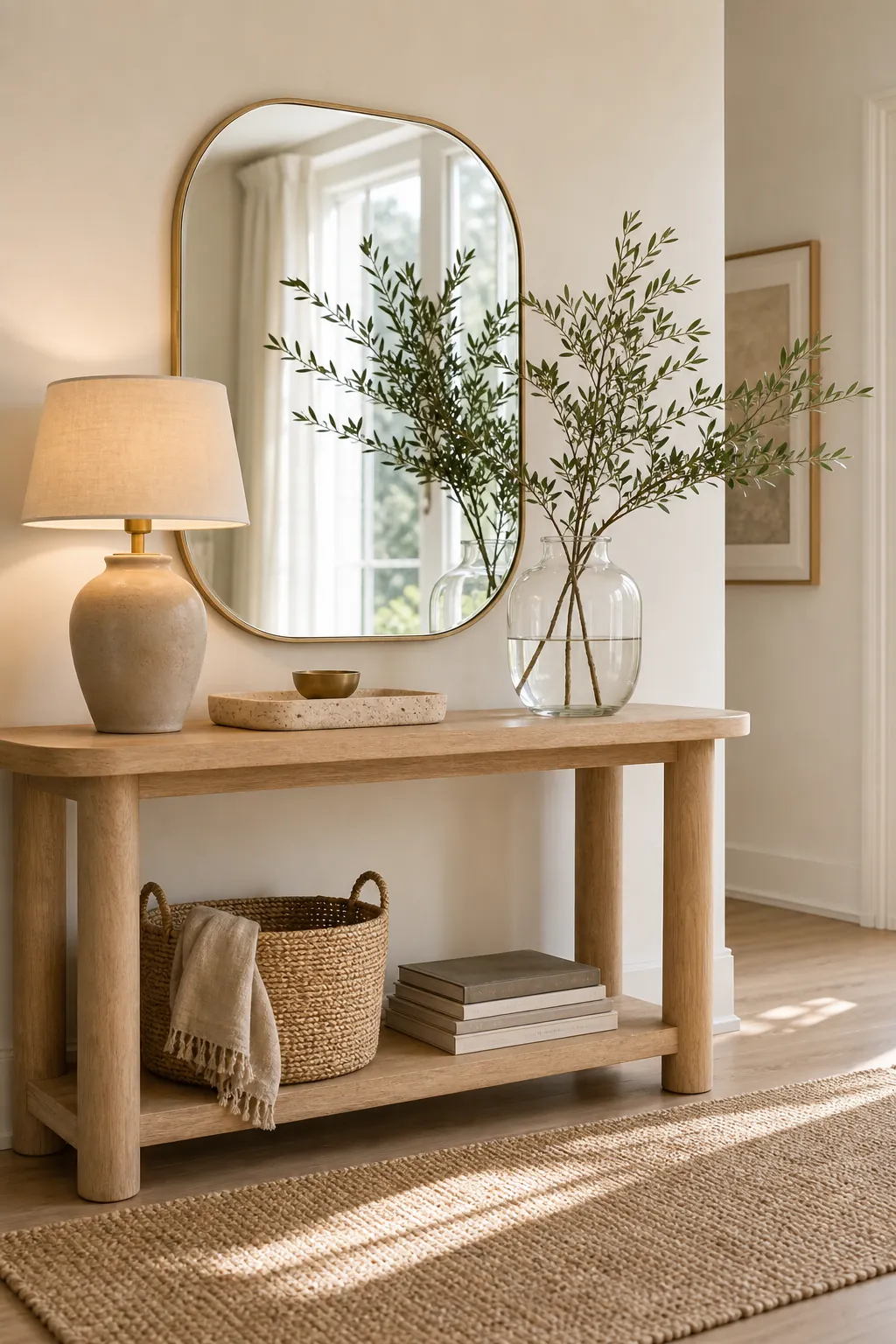
Earthy decor usually goes wrong in one predictable way: every choice is warm, heavy, matte, and low contrast. The room may have beautiful wood decor, terracotta, olive, clay, and woven texture, but once those pieces sit together under weak light, the space can feel smaller than it is.
The fix is not to avoid earth tones. It is to build the room like a light plan first and a color palette second. Keep the largest surfaces bright, let texture carry the natural feeling, and use deeper earthy pieces as anchors instead of background noise. That is how earthy interiors stay calm, cozy, and fresh rather than cave-like.
Start With a Light Base, Then Add the Earth
If the sofa, rug, wall color, curtains, and largest cabinets are all deep brown, rust, charcoal, or forest green, even good daylight has to work too hard. A light base gives natural home decor somewhere to breathe. Think warm white walls, oatmeal upholstery, light oak, ivory wool, flax linen, pale jute, and soft greige. Then bring in clay, olive, walnut, and umber through pieces you can actually see.
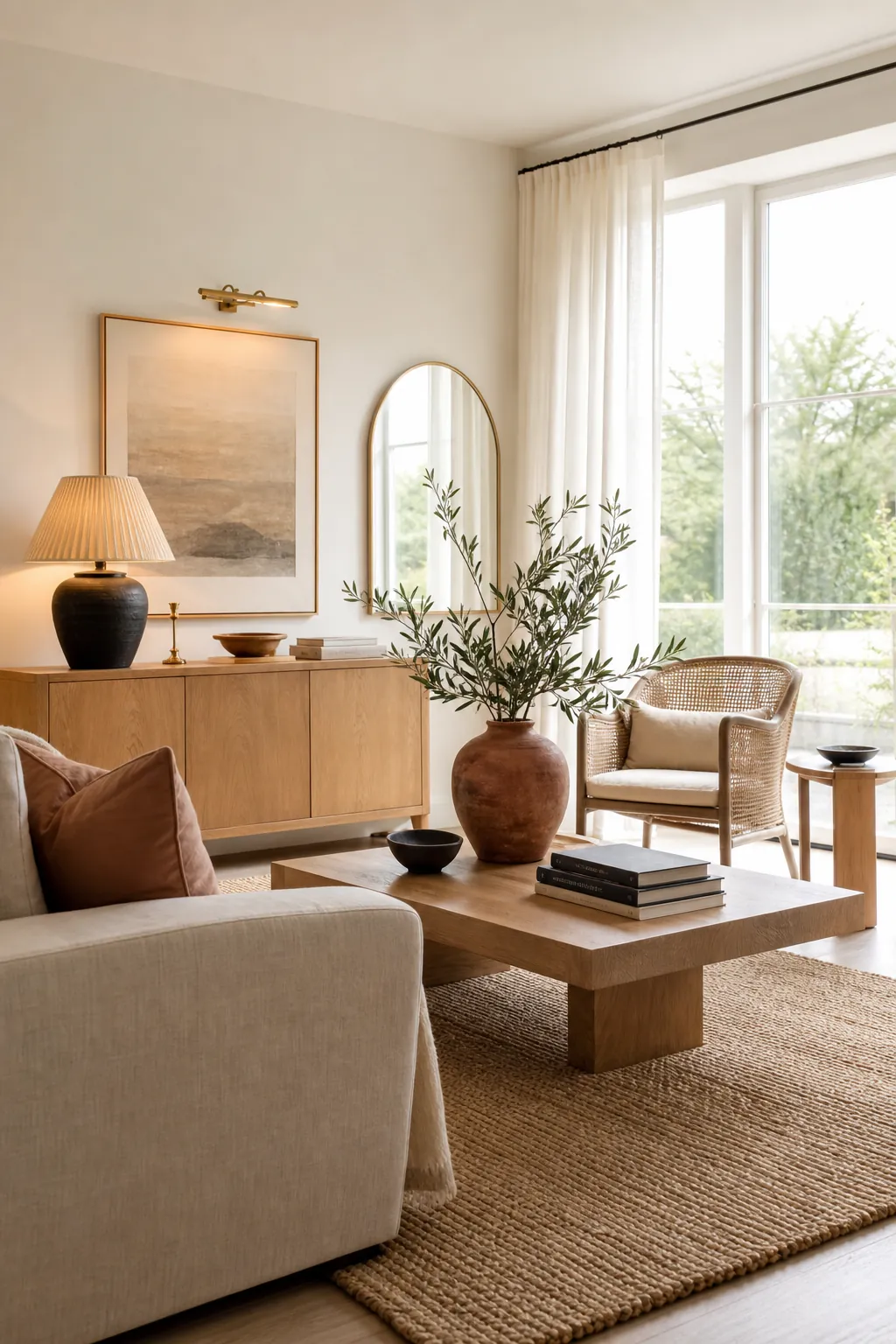
This is especially useful in a cozy living room where people often want comfort without losing brightness. Let the big pieces reflect light and let the small-to-medium pieces create the earthy mood. A cream sofa with terracotta pillows usually feels warmer than a dark brown sofa with cream pillows because the larger surface is doing more visual work.
Choose Earth Tones With Air in Them
Some earth tones absorb light more aggressively than others. Chocolate, espresso, blackened bronze, and deep moss can be beautiful, but they need contrast. For an easier room, choose earth tones that have a dusty, mineral, sun-washed quality: sand, mushroom, clay, wheat, stone, muted olive, pale terracotta, and warm taupe.
Those colors still read as organic modern decor, but they do not flatten the room. They also mix well with neutral home decor because they sit between color and texture. Instead of asking, “Is this earthy?” ask, “Will this still look good when the sun goes down?” If the answer depends on perfect daylight, choose a slightly lighter version.
Layer Lighting Before You Add More Decor
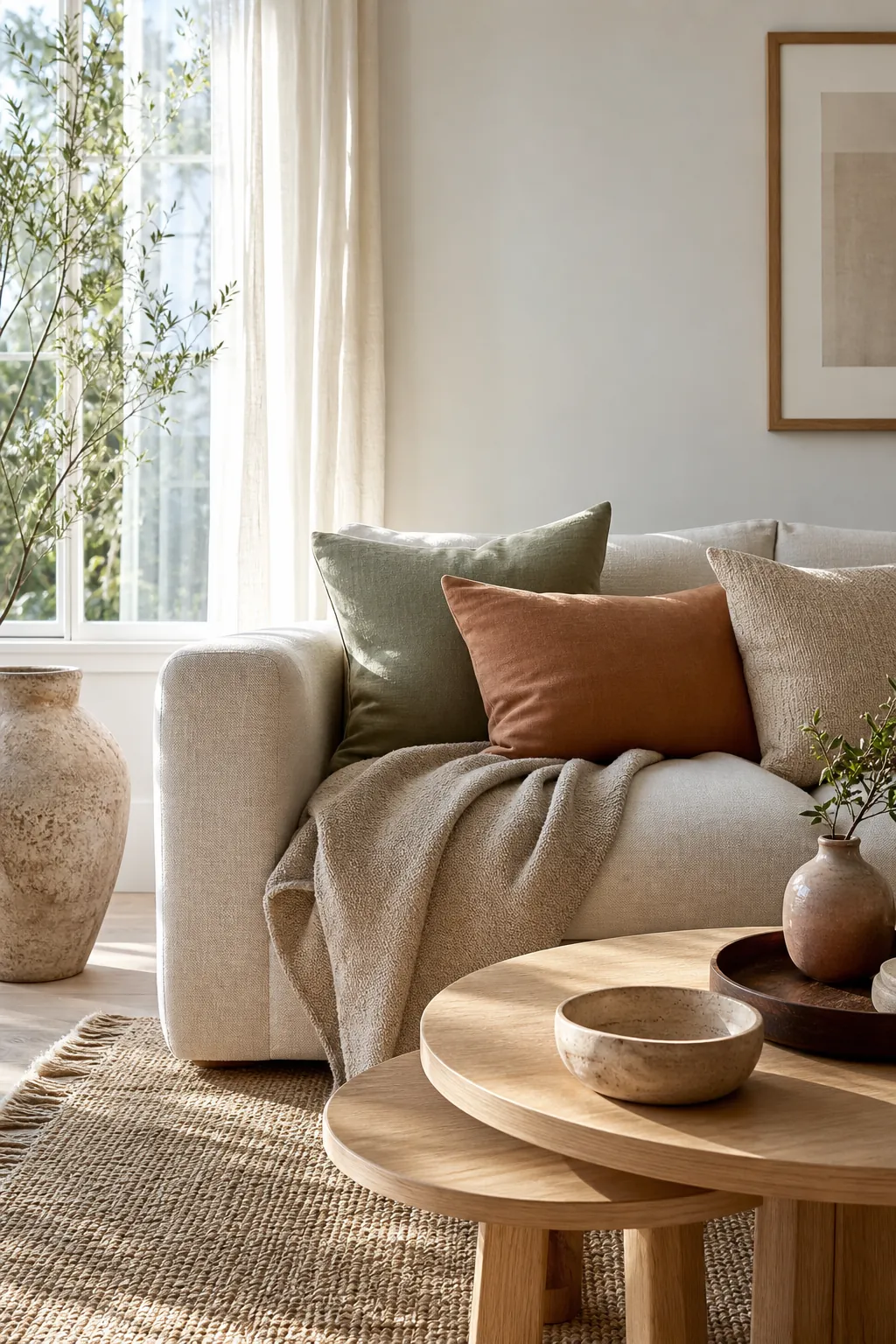
Moody natural decor needs lighting discipline. If the only light source is one ceiling fixture, every woven basket, matte pot, dark branch, and wood table will create more shadow. Add light at different heights: a floor lamp by a chair, a small table lamp near the sofa, a picture light over art, and warm bulbs that do not turn clay and wood orange.
The goal is not to make the room bright like a showroom. The goal is to avoid dead corners. Earthy rooms feel expensive when the shadows are intentional, not accidental. A lamp near a walnut cabinet, a pale shade beside an olive pillow, or a brass sconce above a plaster wall can keep warm minimalist decor from becoming visually heavy.
Use Texture Instead of Darker Color
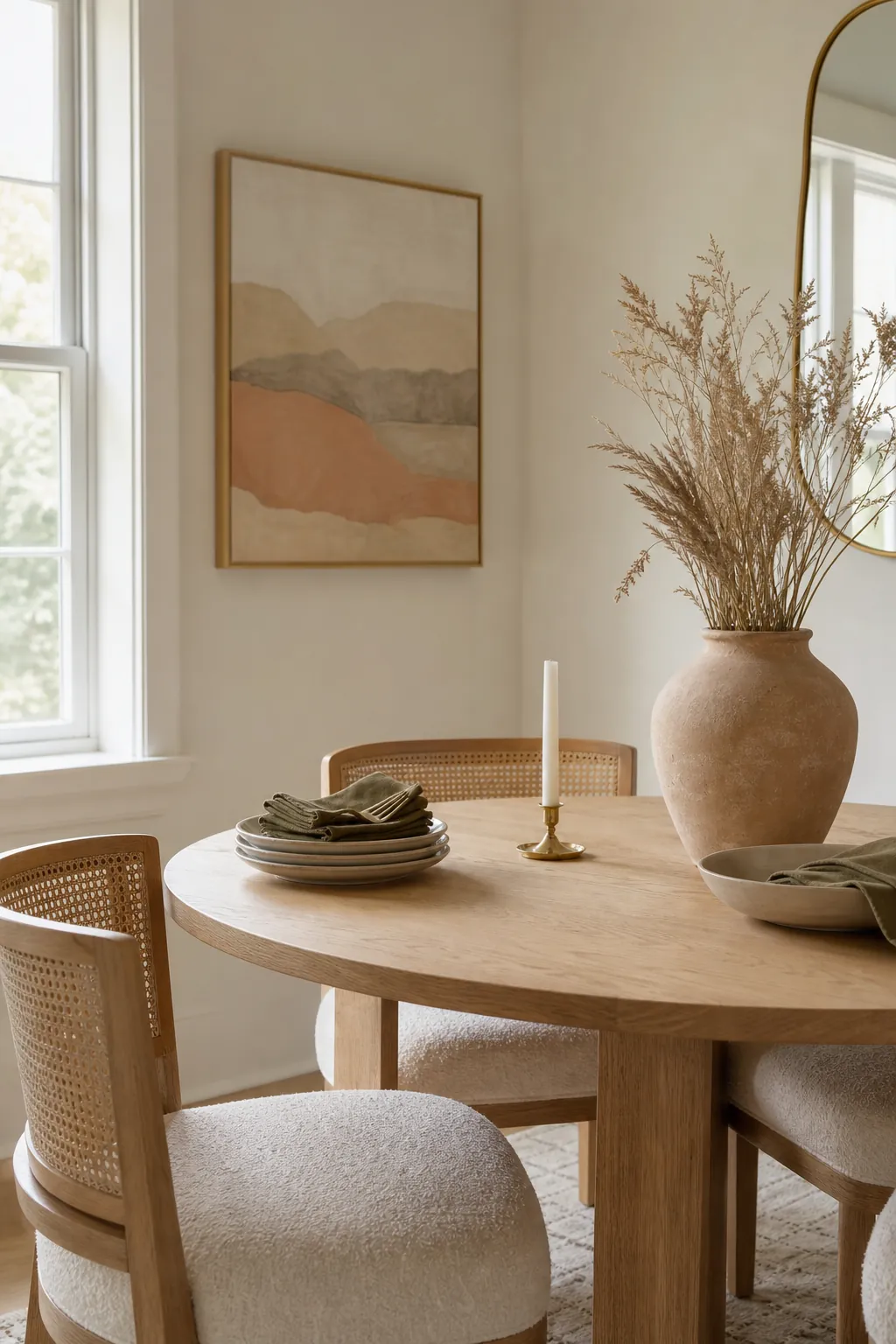
When a room feels flat, the instinct is often to add a darker color. In earthy interiors, that can quickly make the space feel dim. Try texture first. Linen, cane, jute, seagrass, raw ceramic, travertine, limewash, oak grain, boucle, and wool all add depth without stealing as much light as dark paint or heavy furniture.
This is where natural home decor is strongest. A pale room can still feel grounded when the materials are tactile. A woven shade can do more than a dark lampshade. A nubby cream rug can do more than a brown rug. A matte clay vase can do more than another dark pillow. Texture gives the room warmth without forcing every object to be darker.
Let One Moody Piece Be the Anchor
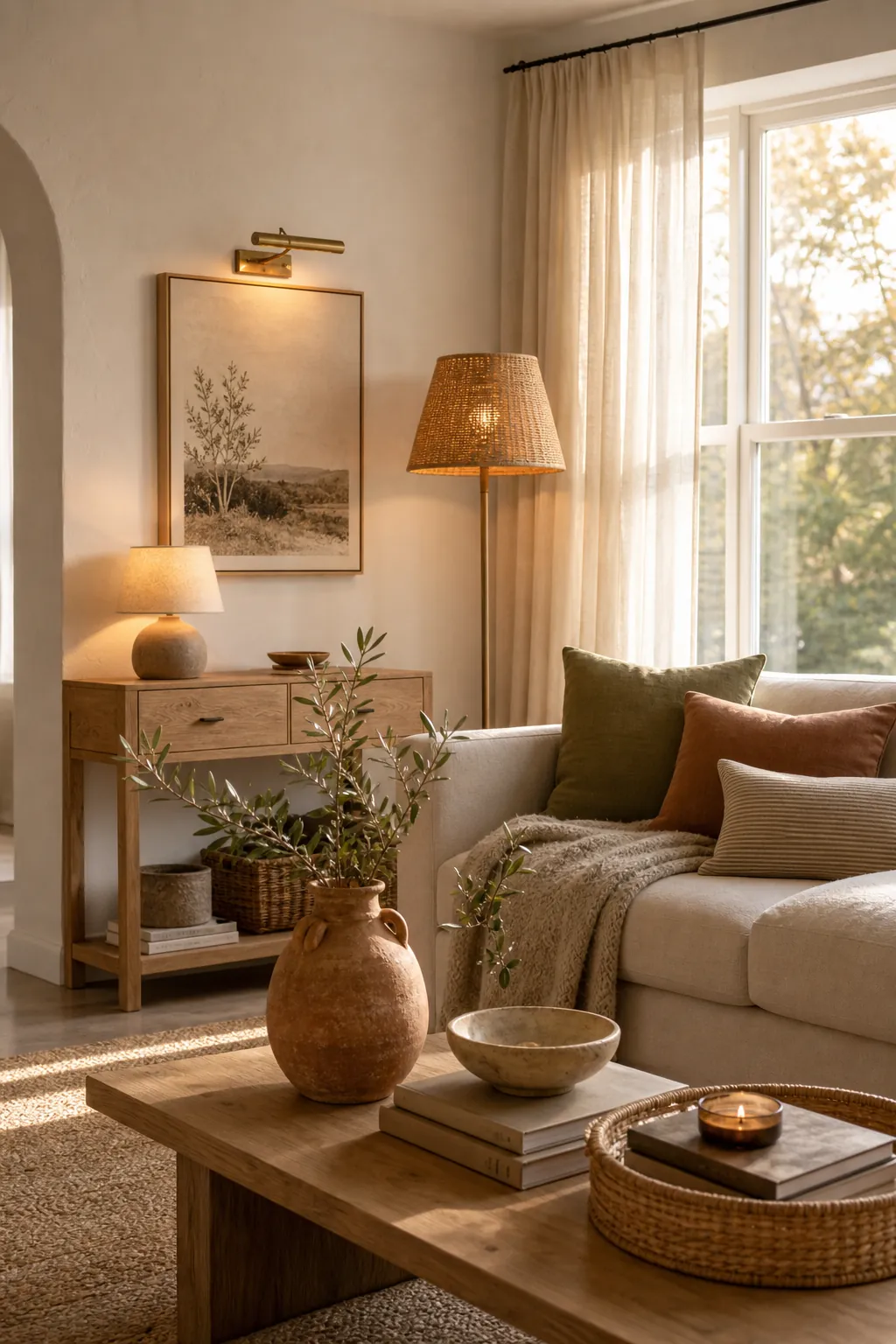
A room does not need to be pale everywhere. In fact, one deeper earthy piece can make the light surfaces look more intentional. A walnut cabinet, smoky olive chair, bronze lamp, charcoal frame, or dark stone bowl can create structure. The mistake is repeating that depth everywhere until the room loses its highlights.
Use a simple ratio: one darker anchor, two or three medium earth tones, and plenty of light surfaces around them. In a cozy living room, a mushroom-brown chair can look rich beside a cream rug and sheer curtains. On a console, a bronze lamp can feel grounded when the wall behind it is warm white. Contrast is what makes moody natural decor feel styled instead of gloomy.
Add Light-Bouncing Details
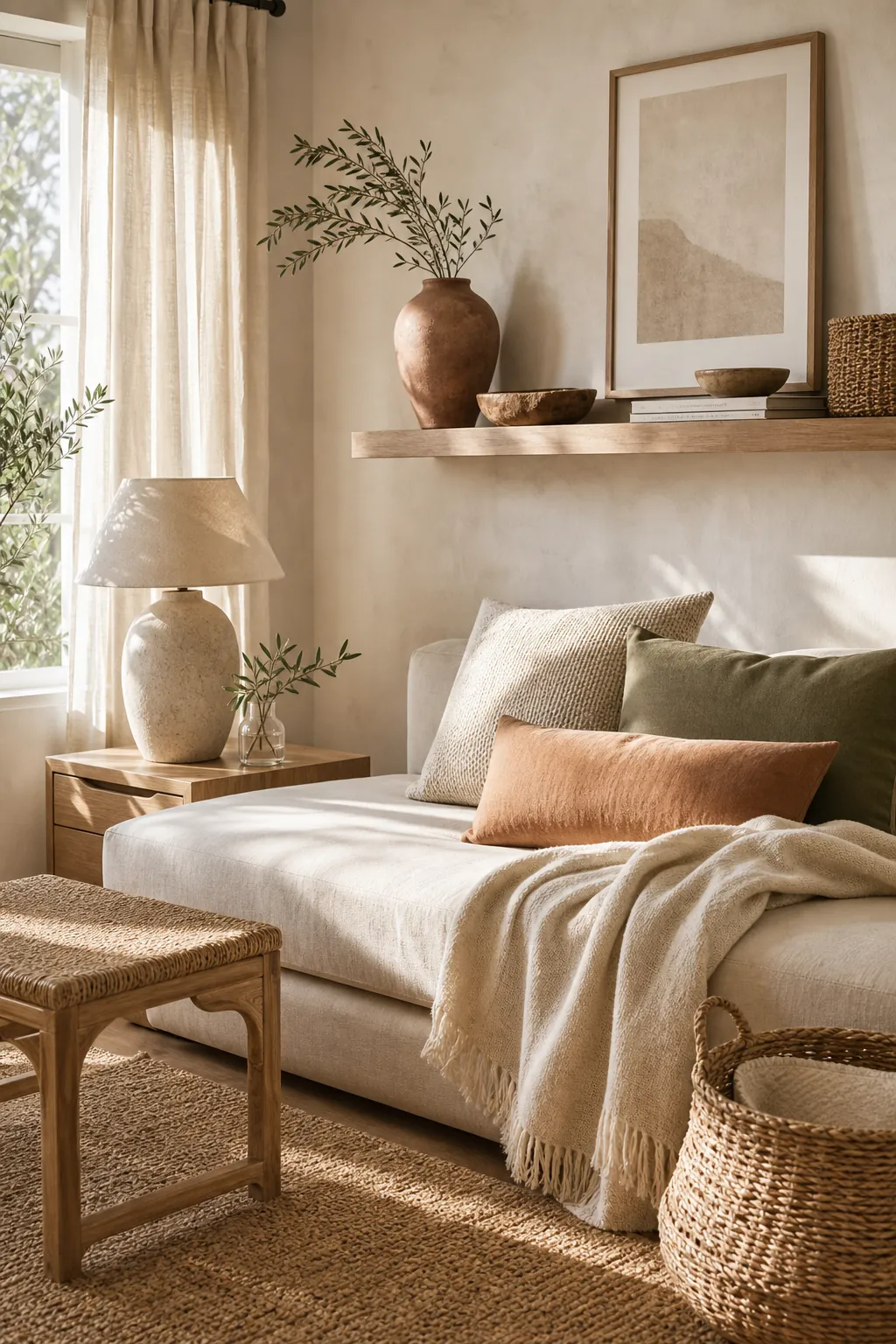
Earthy does not have to mean everything is matte. A mirror, clear glass vase, brass bowl, glazed ceramic lamp, pale stone tray, or satin wood finish can keep the room alive. These pieces do not make the space feel glam if the shapes are simple and the palette stays natural.
Place reflective details where they actually help: across from a window, near a dark cabinet, on a side table in a shadowed corner, or above a console that would otherwise feel flat. The best calming home details are quiet, but they still catch light. That small sparkle keeps earth tones from turning muddy.
Edit the Room So the Natural Pieces Can Breathe
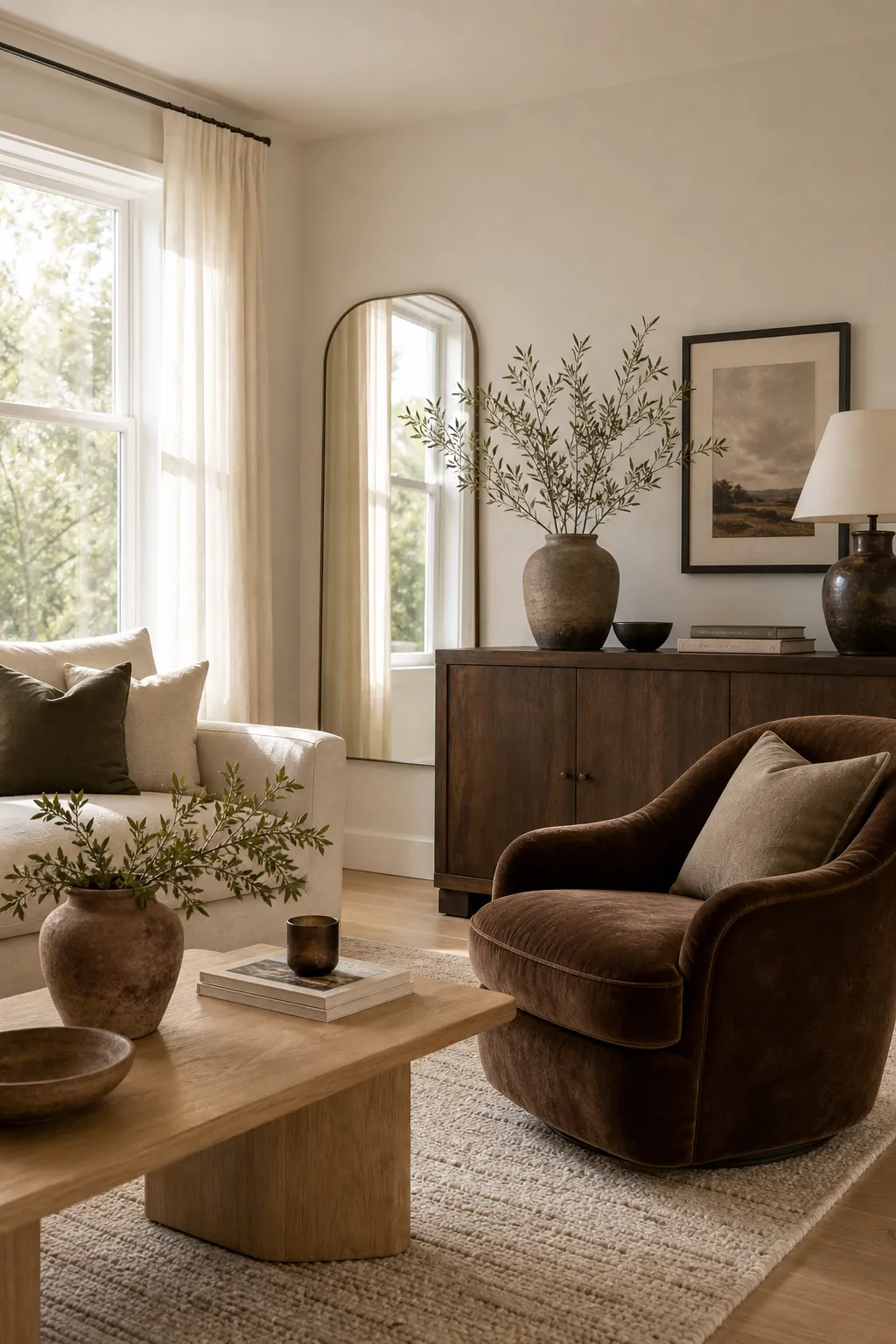
Too many small earthy objects can make a room feel darker even when each item is beautiful. Five tiny vases, three baskets, a stack of dark books, a heavy tray, and several brown pillows can blur together. Use fewer pieces with better scale. One large branch arrangement, one woven basket, one generous ceramic bowl, and one warm wood table often feel calmer than a dozen small accents.
Negative space is part of the palette. Leave some wall visible. Let the top of a console show. Keep the window treatment light. Choose plant shapes that frame the window rather than covering it. Earthy decor works best when the room still has air, light, and a few clean edges.
The easiest formula is simple: pale foundation, tactile natural materials, controlled earth tones, layered lighting, one darker anchor, and a few light-catching details. That combination gives you a warm, grounded room without losing the brightness that makes it livable every day.