
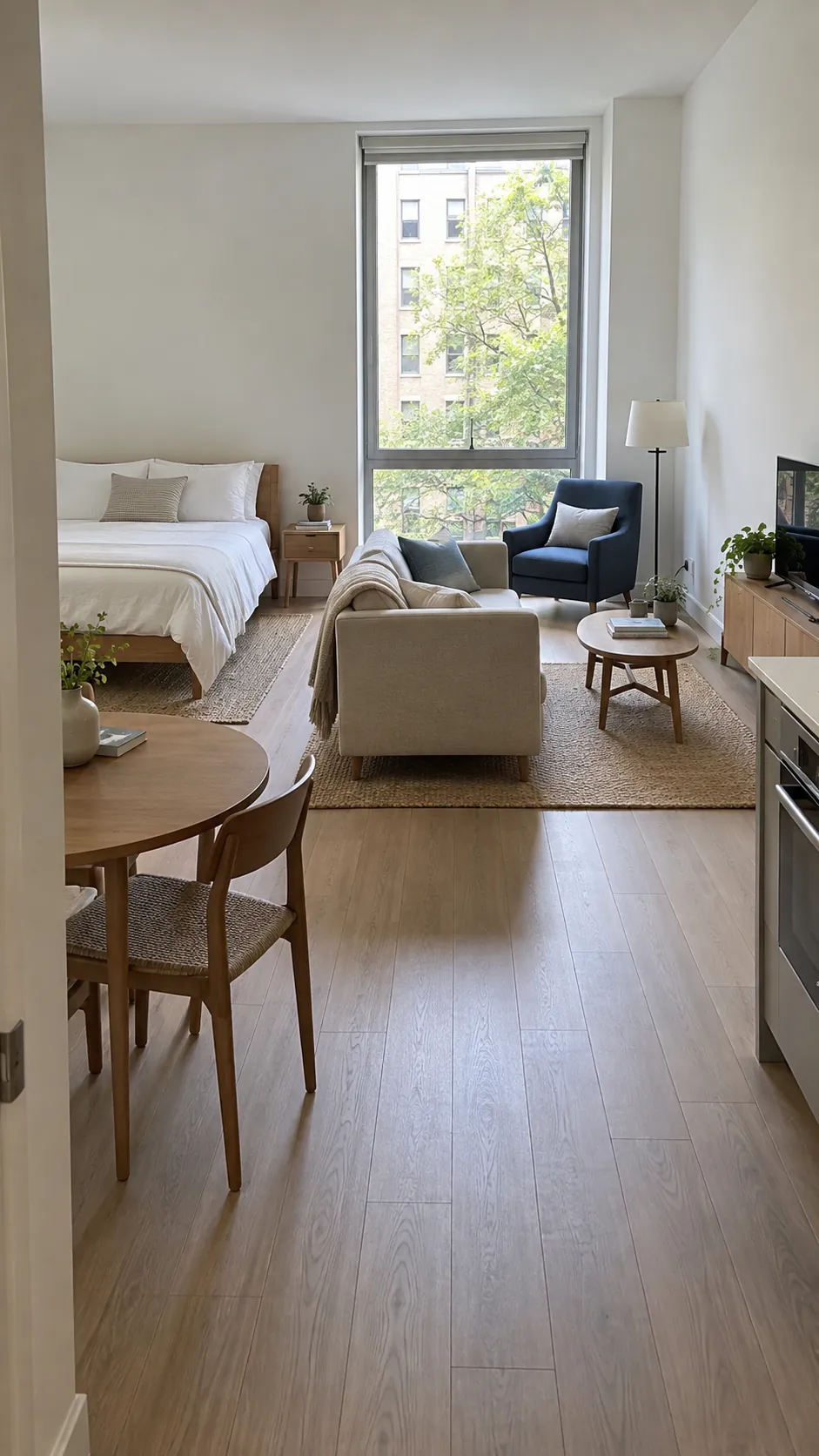
If you have to squeeze past the bed to reach the closet, another storage basket will not fix the room. The first job is to give everyday movement enough space, then decide which activities deserve a permanent footprint. A studio can feel settled without hiding every sign that someone sleeps there.
Map the routes before moving furniture
Measure the room and sketch its outline, including the kitchen, bathroom door, closet openings, windows, outlets and any fixed heating equipment. Draw doors in their open positions rather than as lines on the wall. Record furniture at its actual depth, including handles and projecting bed frames, so your studio apartment layout reflects the space you can really use.
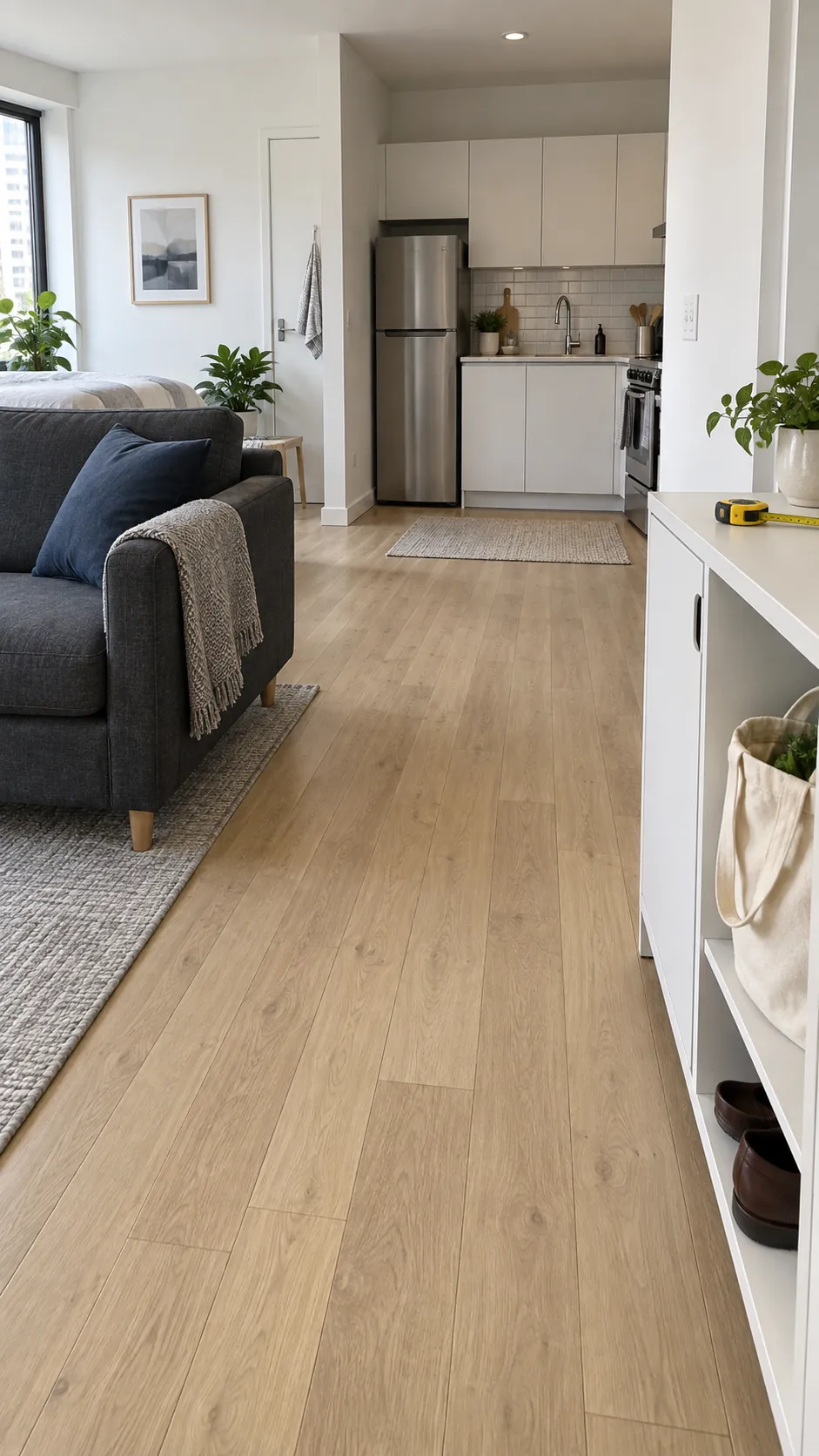
Trace the journeys you make most often: front door to kitchen, bed to bathroom, and closet to dressing space. Start with roughly 36 inches for a comfortable main route where the room permits, then test it against your own mobility needs and any applicable access requirements. Keep exits, ventilation and required clearances unobstructed; a suggested furniture gap is not a substitute for local rules or manufacturer instructions.
Use removable tape to mark a proposed sofa or table footprint before buying anything. Open the closet, carry a laundry basket along the route, and pull out a dining chair. An arrangement that fails these simple tests needs fewer obstacles, even if its floor plan looks tidy.
Place the bed where it causes the fewest compromises
Try the bed against a solid wall away from the kitchen working area and the direct view from the entrance. An alcove can make a useful sleeping zone, provided it has suitable ventilation and does not block required access. Avoid claiming the only window for a tall headboard or solid partition when the rest of the room depends on that light.
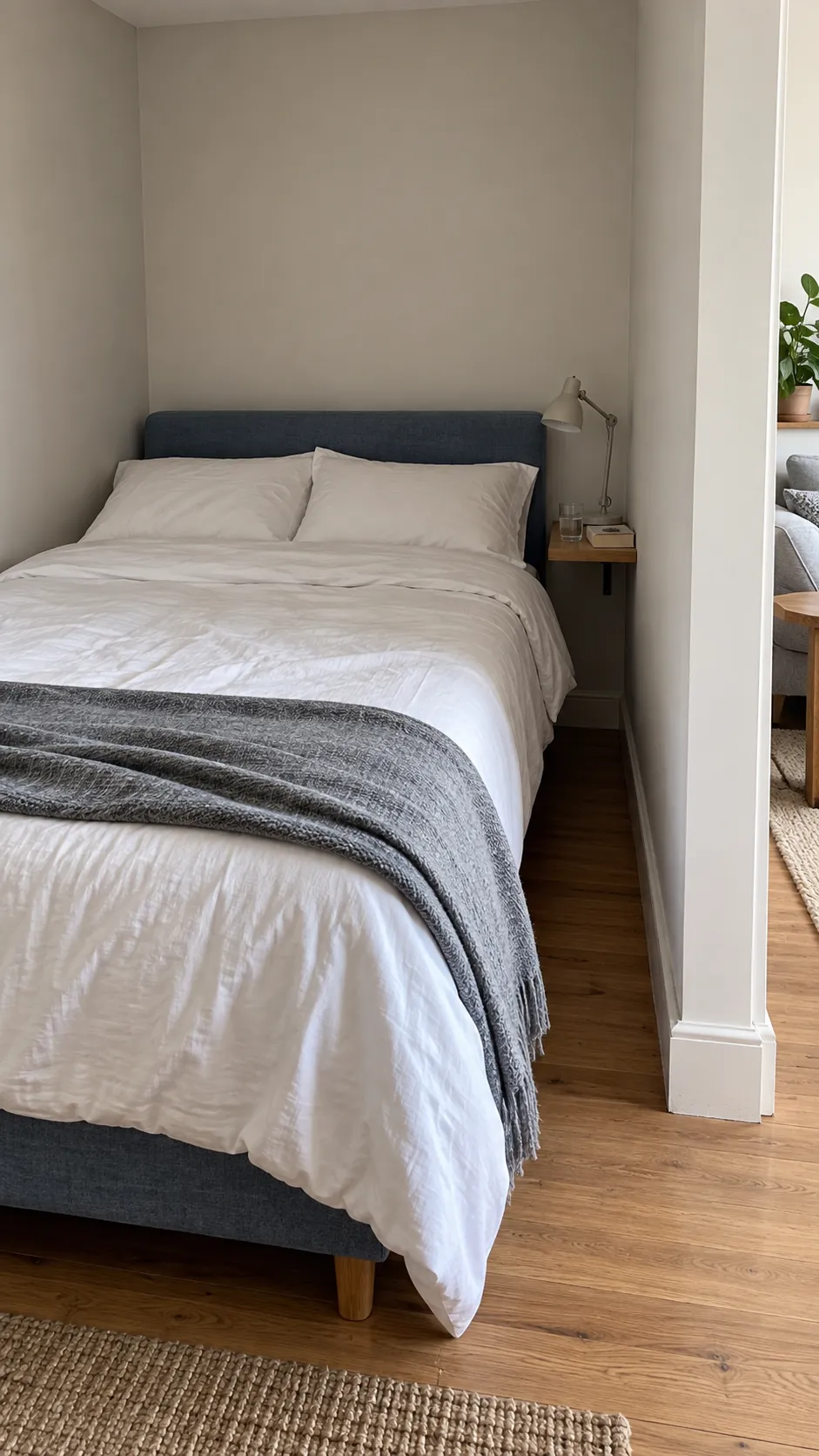
For one sleeper, placing a side against the wall can free useful floor area, but changing sheets becomes harder. For two sleepers, access from both sides may matter more than fitting another chair. Test the route at night with the room in its normal sleeping configuration, including any open drawers or charging leads.
Divide the view without dividing all the daylight
A sleeping area divider only needs to interrupt the sightline that bothers you. A low dresser at the foot of the bed can screen bedding from a seated guest while leaving the upper part of the room open. A curtain offers more visual privacy, but it will not provide the sound isolation of a separate bedroom.
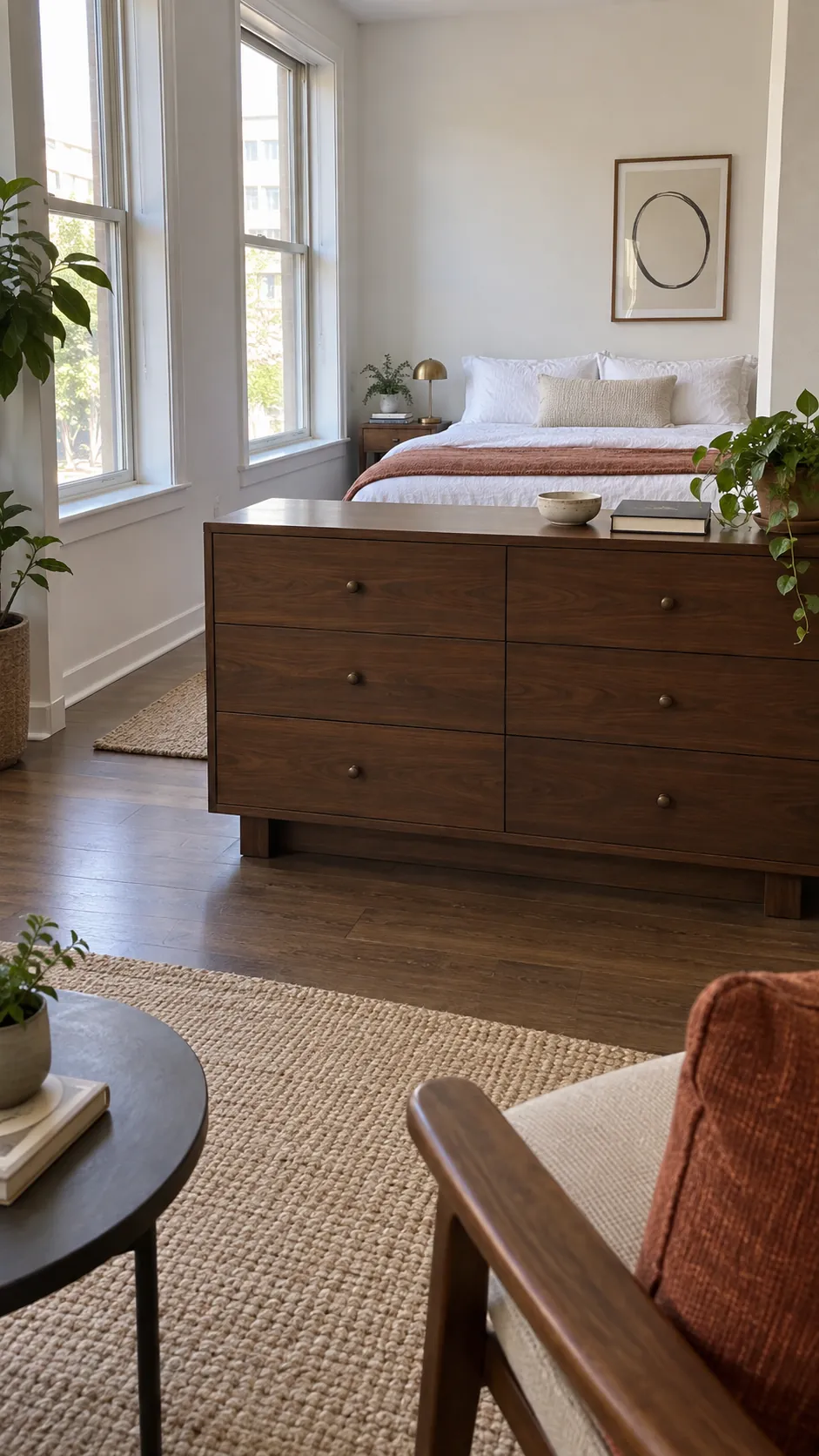
Choose the divider after placing the bed and protecting circulation. If you use shelving, follow the manufacturer's anchoring instructions and check landlord permission before drilling. Keep curtains away from heaters and cooking surfaces, and do not position any divider across a required exit or the room's only practical air path.
Rugs and lighting can establish apartment zoning without a physical screen. Let the sitting area have its own rug and reading lamp, while the bed uses a quieter pool of light. In a very narrow room, these cues may work better than giving valuable width to a freestanding partition.
Choose seating for the room you use every day
Arrange the main seat around the activity you actually repeat, whether that is reading, watching television or talking with a guest. A compact sofa facing a wall can make more sense than a sectional that sends its chaise into the route to the bathroom. Try moving existing furniture before replacing it; a different orientation can solve a problem that shopping only makes more expensive.
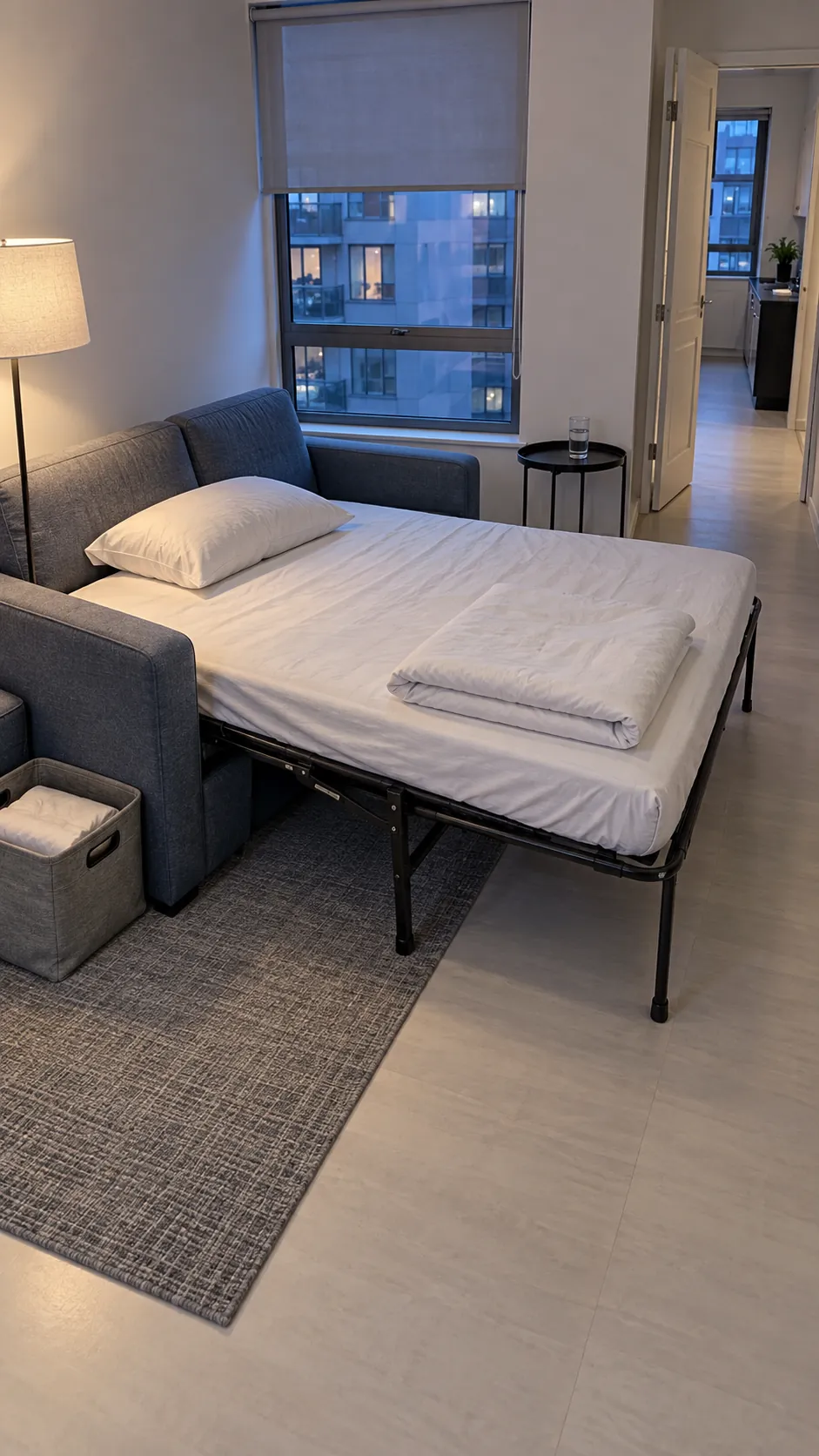
If you need a sofa bed layout, measure the fully opened bed and identify where the coffee table will go each night. Include somewhere to store the bedding within easy reach. A conversion that requires moving three other pieces is unlikely to feel convenient after a long day.
Use a light side table or nesting tables when a fixed coffee table makes circulation awkward. Keep charging cables along the wall rather than across the walking route.
Let dining and work share deliberately
A dining area in a studio can be a small table near the kitchen instead of a separate dining suite. Position it so a pulled out chair does not cut off the entrance or collide with a cabinet. A drop leaf table is useful only if you have room to use its expanded surface when you need it.
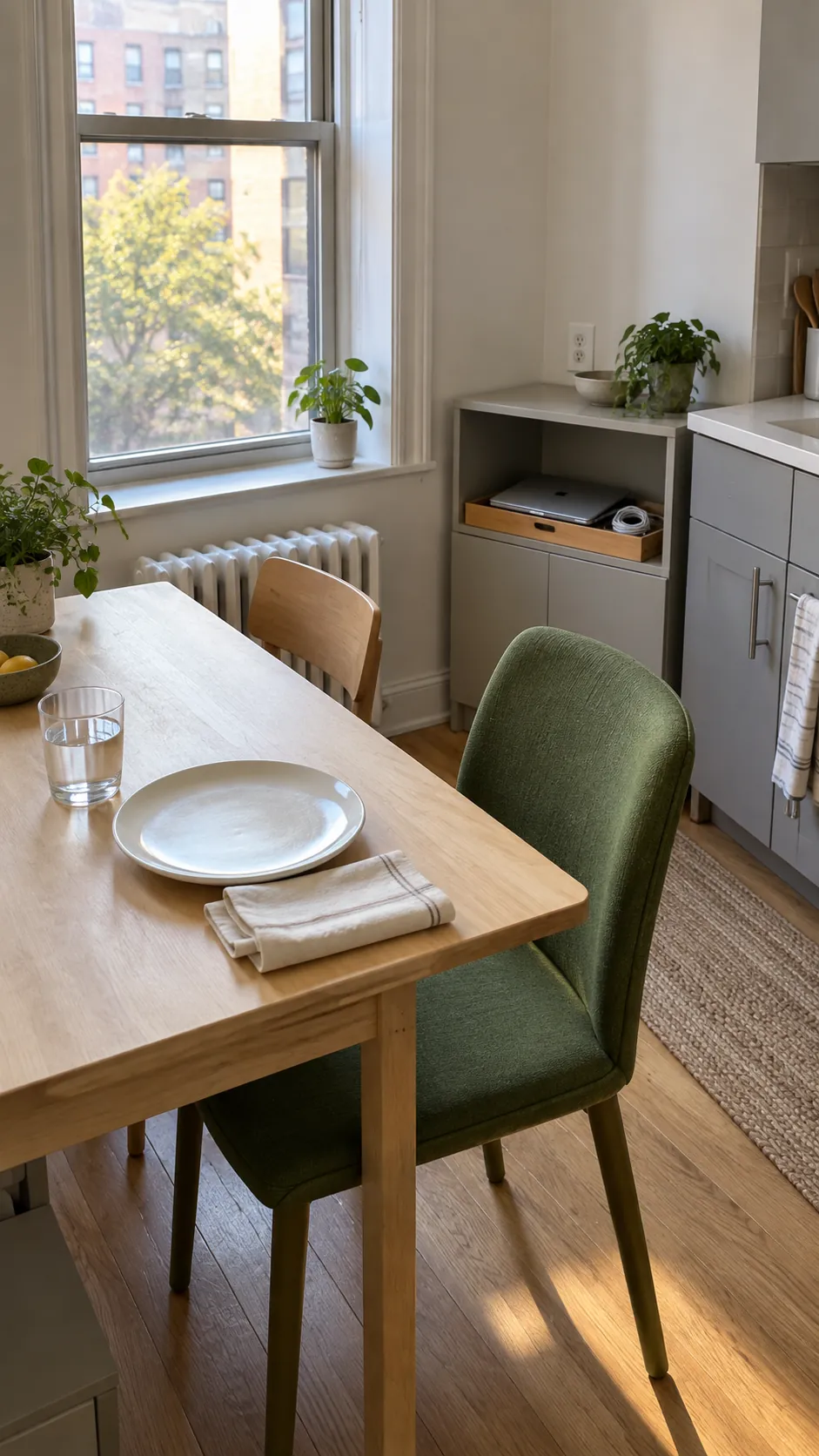
If the same table handles work, give the laptop, charger and papers a nearby storage spot so dinner does not require a complicated clearing ritual. A shallow tray can hold a portable setup, while a closed drawer keeps small supplies from taking over the surface. Choose a chair comfortable for the hours you actually sit there rather than buying a stool solely because it tucks away.
Place a screen roughly perpendicular to a bright window when possible to limit glare, then check it at the time you normally work. Keep the window accessible for opening and cleaning. When your work equipment must remain assembled, a dedicated compact desk may be the better tradeoff, with meals at a smaller occasional table.
Do not add both a desk and dining set simply because a conventional home has them. Reserve permanent floor space for your permanent routines.
Put storage where clutter begins, then test the layout
Small studio storage works best when it follows the object rather than the empty corner. Put a shallow shoe solution near the door, everyday clothes near the dressing spot, and spare bedding close to the bed. Measure the clearance for drawers and underbed bins before treating that space as usable storage.
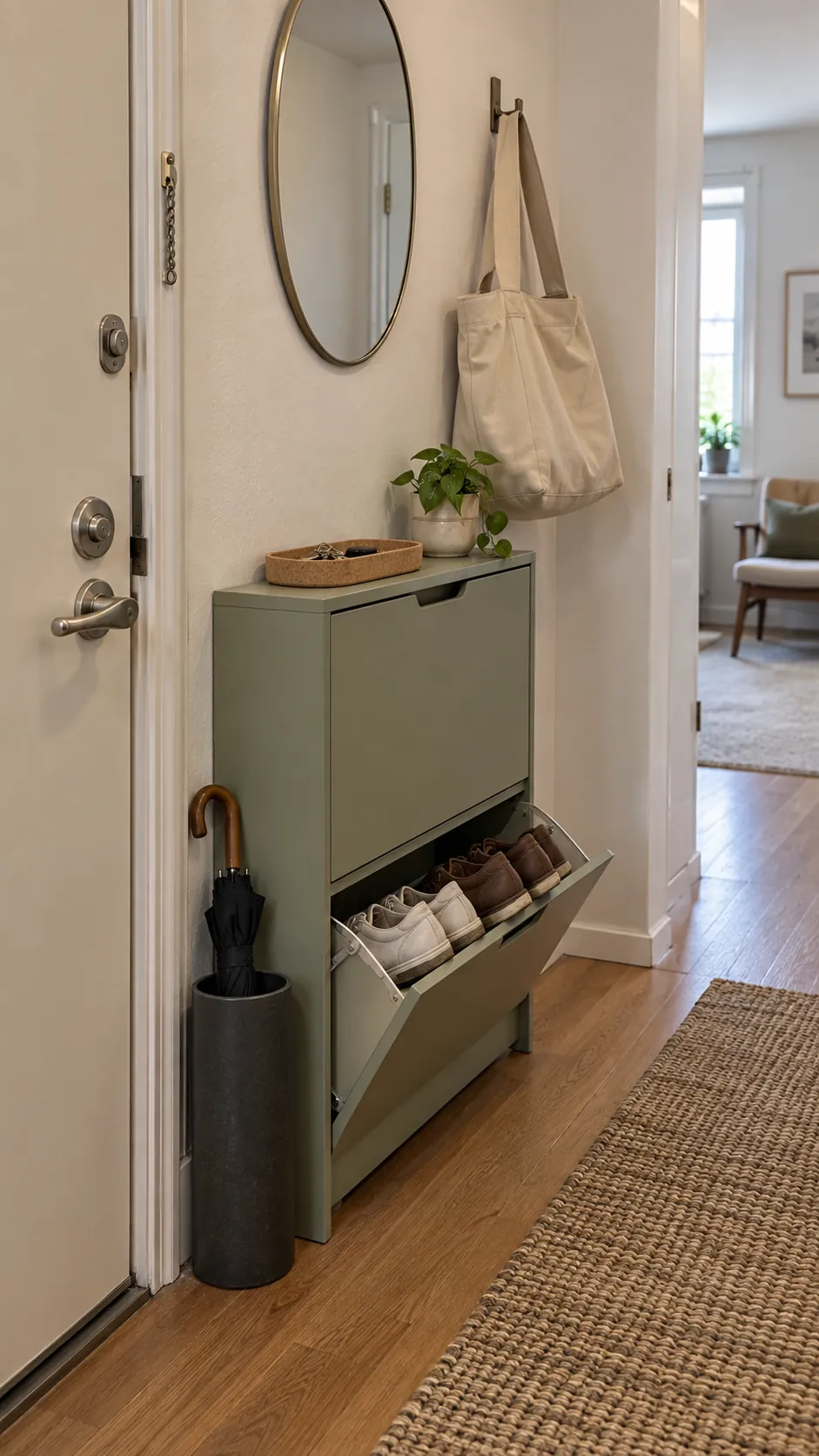
Closed storage can quiet a busy open plan apartment, while one accessible shelf is useful for items you reach for often. Avoid filling every wall with separate small units: their combined footprint and edges can make the room harder to navigate. Keep heavy items low and secure furniture as its manufacturer requires.
Live with the arrangement for several ordinary days before adding decorative pieces. Notice where bags land, which chair blocks a drawer, and whether preparing the bed feels like a chore. Move the item responsible for the repeated problem, then test again; the successful layout is the one that makes your daily route easier.