
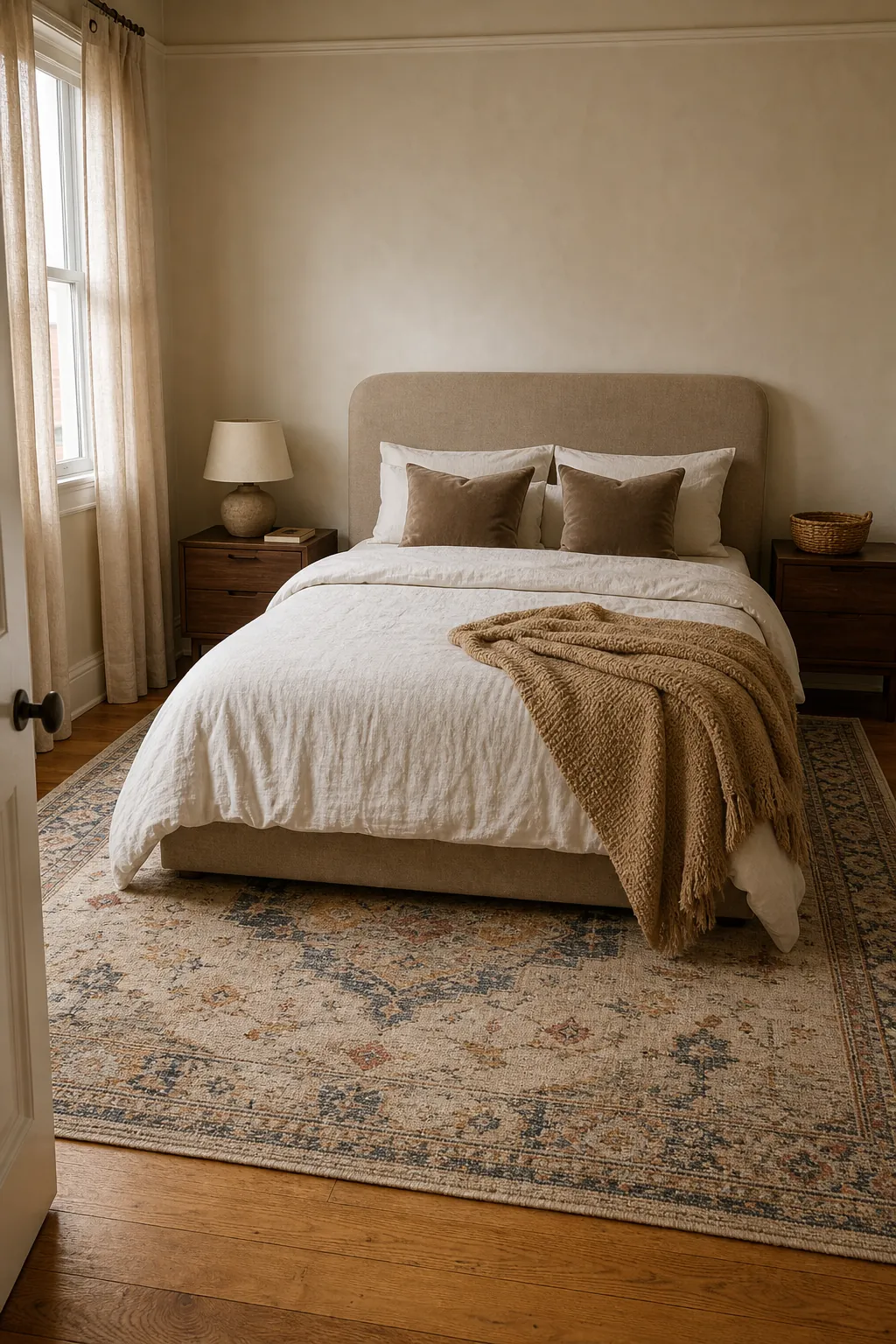
A beige bedroom rarely needs “more beige.” What it usually needs is a floor layer with enough scale, contrast, and texture to make the bed feel anchored. That distinction matters: a rug can be quiet without disappearing, and colorful without turning a calm room into a busy one.
The most reliable way to choose a bedroom rug is to make the decisions in the right order. Start with placement and size, identify the room’s undertone, choose the amount of contrast you want, and only then compare patterns and materials. This keeps an attractive rug from becoming an expensive fix for the wrong problem.
Choose a contrast direction before you shop
Stand in the doorway and decide what feels missing. If the room looks washed out, the rug needs visible contrast. That does not automatically mean a saturated color. A warm taupe field with dark brown lines, a faded rust-and-blue pattern, or an ivory rug with a chunky high-low weave can all create separation from beige bedding.
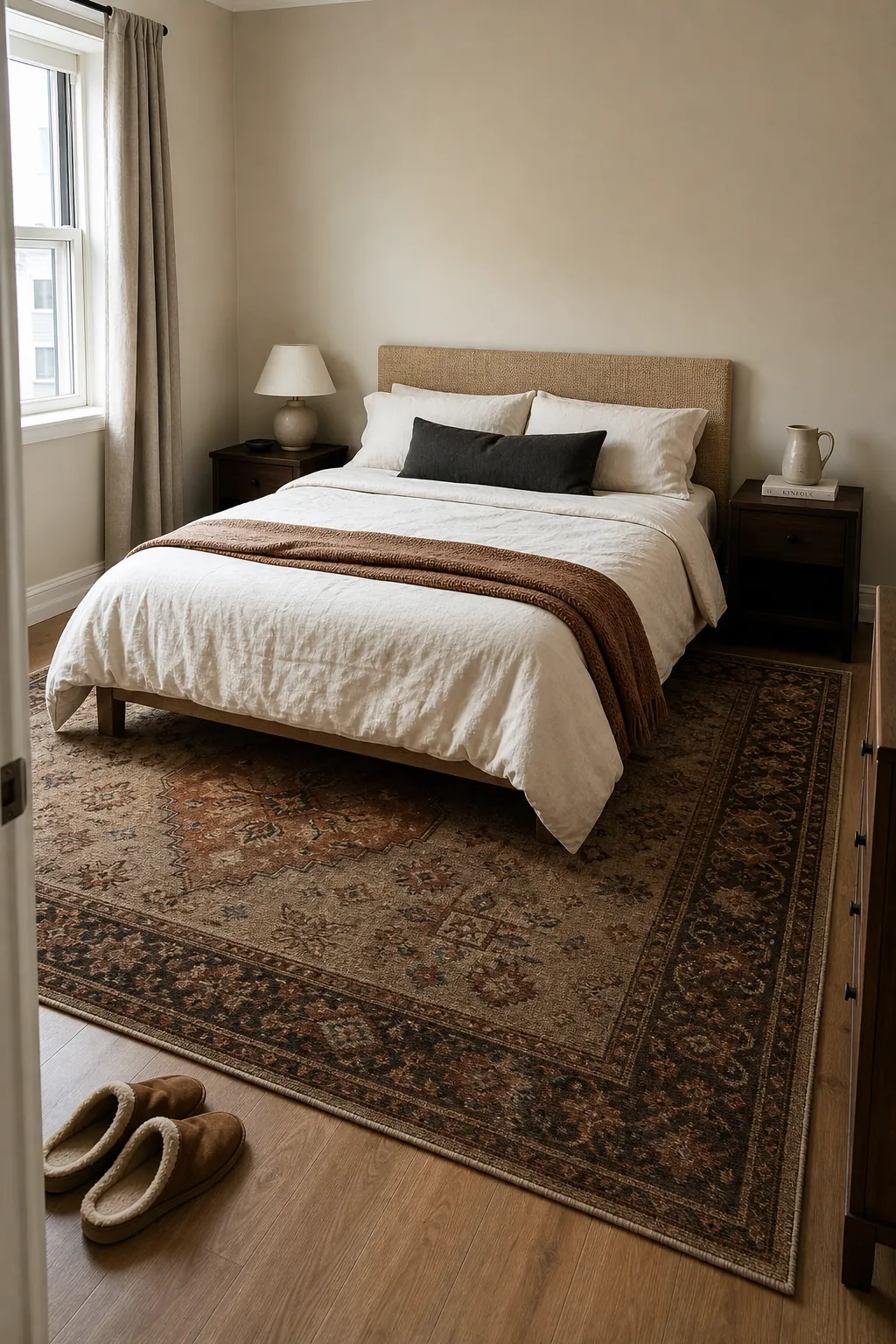
If the bedroom already contains strong wood grain, dark furniture, patterned curtains, or colorful bedding, a quieter rug can be the better choice. Look for a cream, oatmeal, camel, or greige rug that is clearly lighter or darker than the floor. An exact match between floor, rug, and bed is the combination most likely to look flat.
A useful test is to take a quick phone photo and view it in grayscale. If the bed, floor, and rug sample collapse into one tone, the design will depend entirely on texture. That can work beautifully, but the texture must be obvious from the doorway—not only visible when you touch it.
Measure from the bed, not from the empty floor
A rug that is too small makes the bed look as if it is balancing on a mat. For a full, queen, or king bed, aim for a rug that extends roughly 18 to 24 inches beyond the exposed sides and foot. The exact product size matters less than whether your feet land on the rug when you get out of bed and whether the visible borders feel balanced.
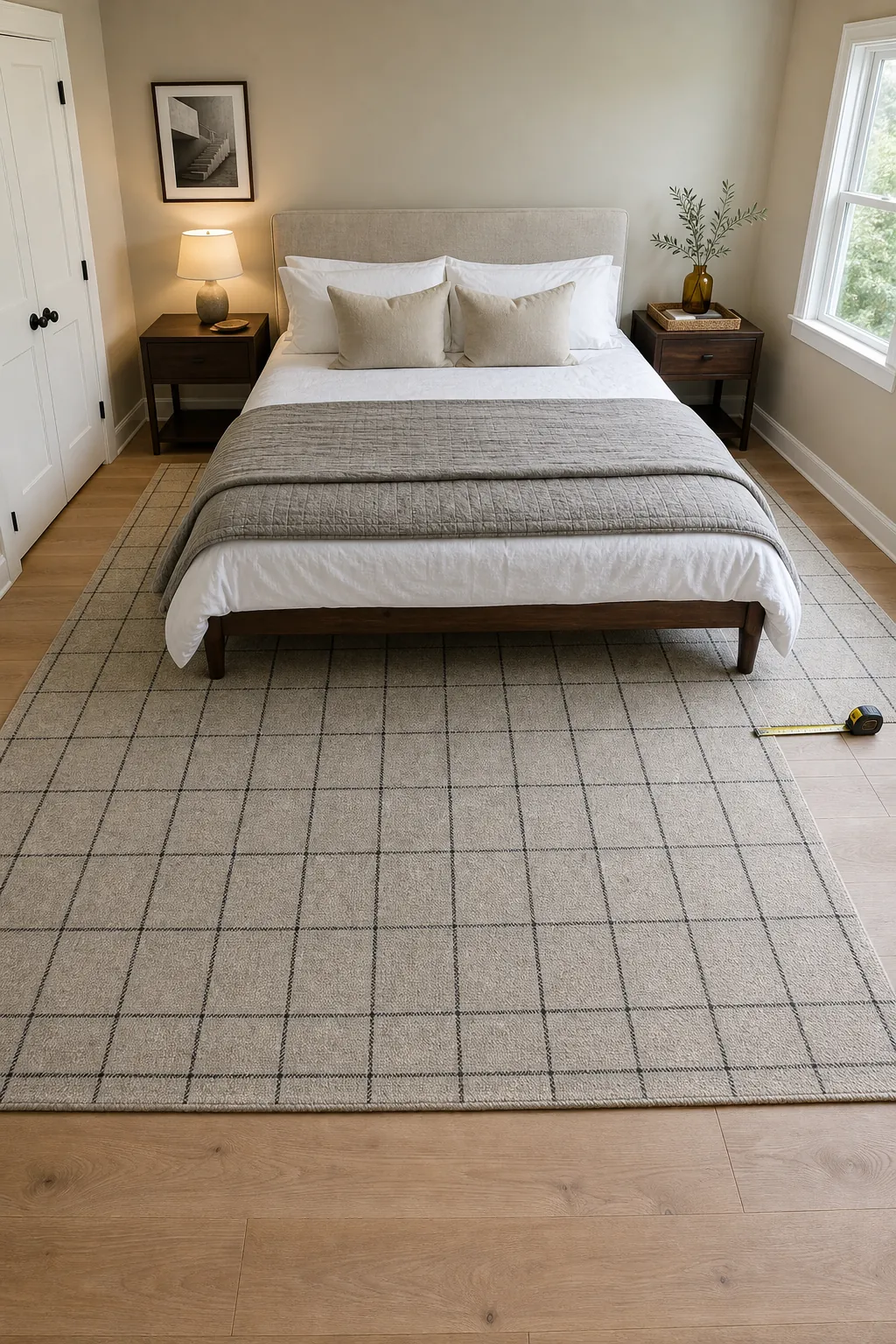
There are three practical layouts. A large rug can sit beneath the bed and nightstands for the most generous look. A slightly smaller rug can begin in front of the nightstands and run beneath the lower two-thirds of the bed. In a tight room, two washable runners can sit along the bed sides. The second layout is often the best balance of cost and visual weight.
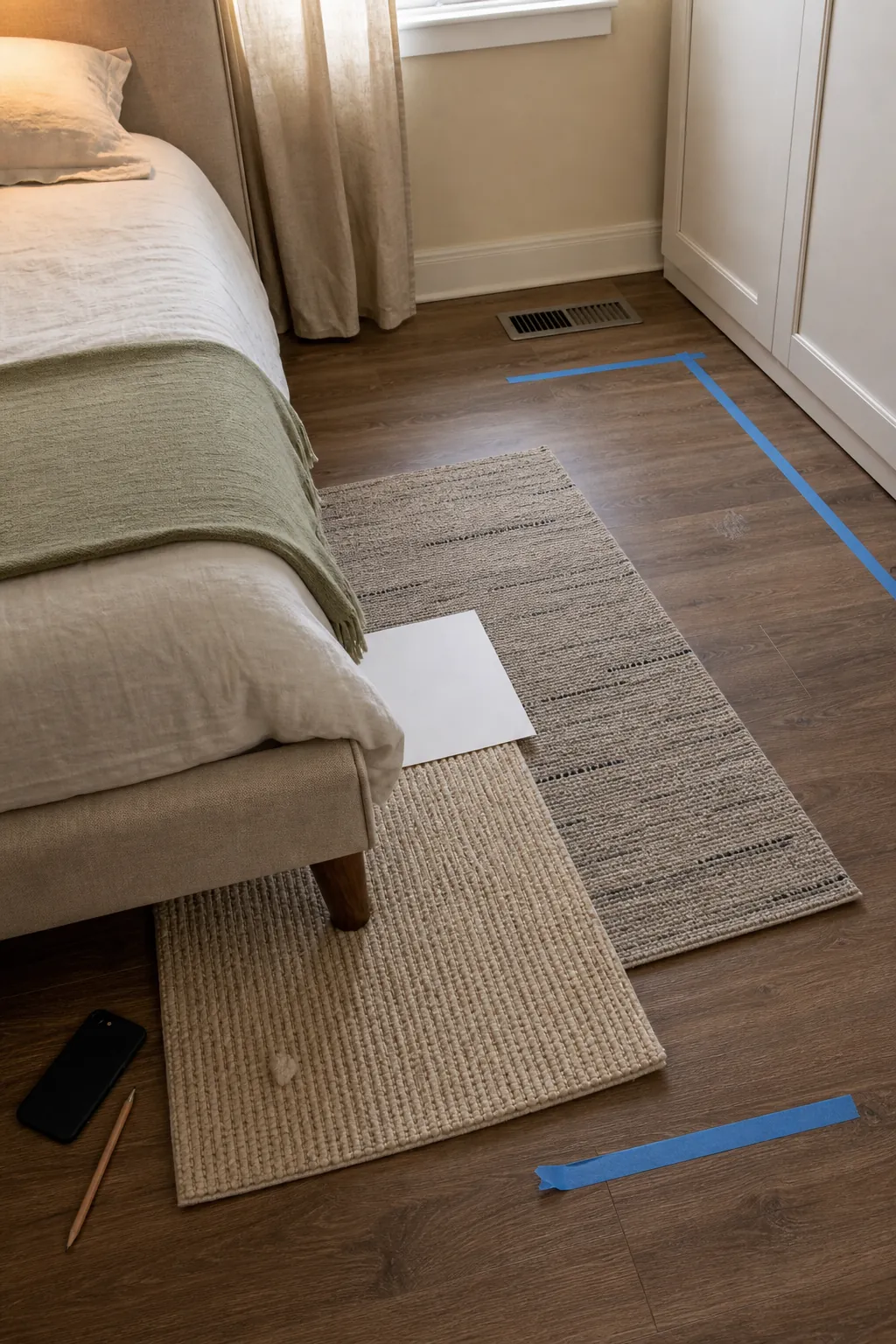
Before buying, mark the proposed rug corners with painter’s tape. Open doors and drawers, walk the normal route from bed to closet, and check that the rug will not crowd a floor vent. This ten-minute test reveals proportion problems that a product photo cannot.
Match the undertone, then add separation
Beige is not one color. Some beige leans yellow or honey, some reads pink or peach, and some sits closer to gray. Place a white sheet of paper beside the wall, headboard, and bedding in daylight. The comparison makes the hidden undertone easier to see.
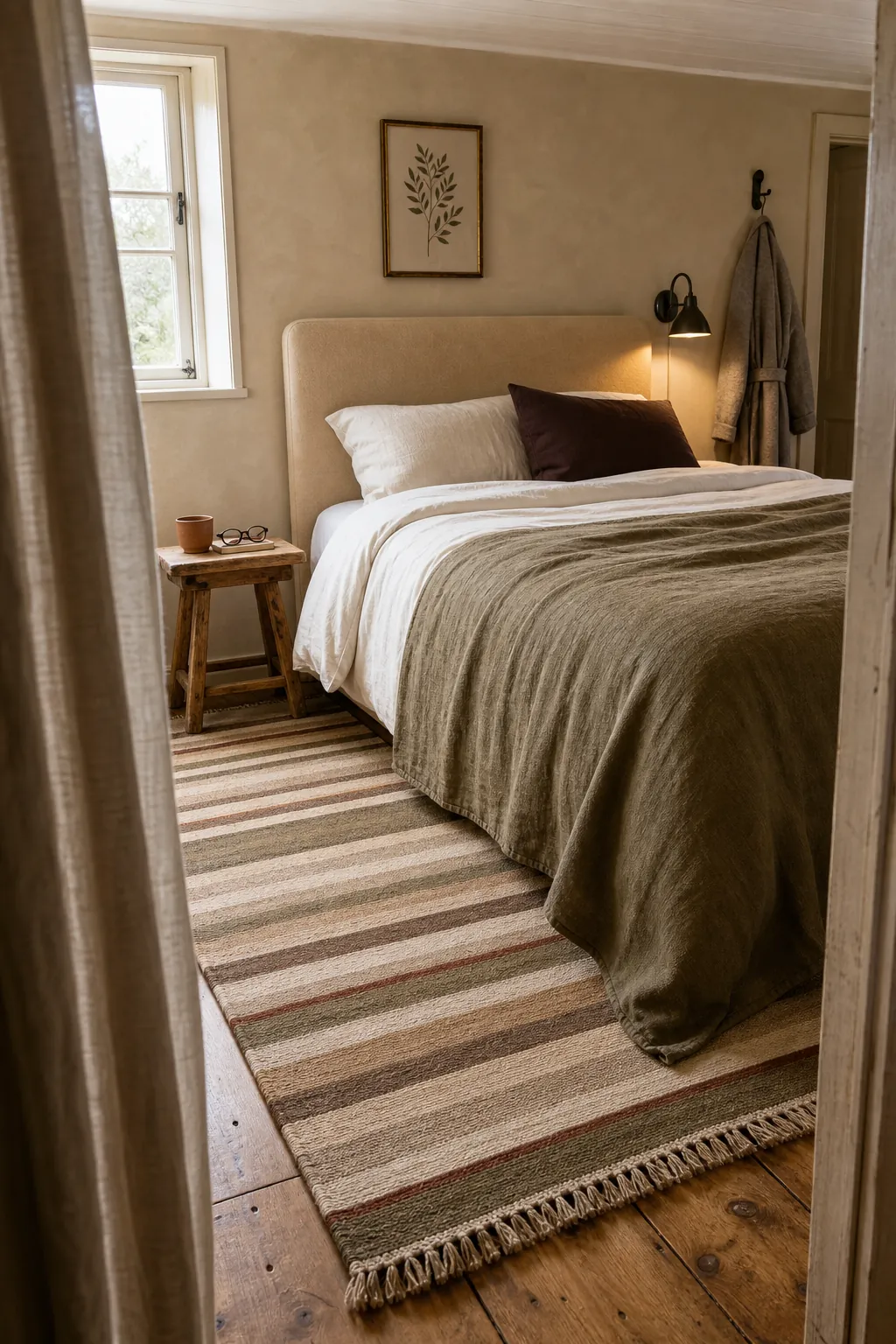
Warm beige works naturally with camel, rust, muted olive, burgundy, chocolate, and warm blue. Greige and cooler beige are comfortable beside charcoal, mushroom, dusty blue, muted plum, and blue-green. You do not need a perfect color match; you need colors that look intentional in the same light.
Be cautious with a rug that contains a lot of yellow when the room is cool greige, or a steely gray rug in a honey-beige room. The mismatch can make one surface look dirty. Order the smallest returnable size or a swatch and view it morning, afternoon, and at night. Screen color is not a dependable substitute for the room’s actual light.
Let texture do the work in a neutral scheme
If you want a tonal beige bedroom, texture is the source of depth. Look for bouclé-like loops, a ribbed wool construction, a subtle checkerboard, braided bands, or a cut-and-loop pattern. These surfaces create small shadows, so an oatmeal rug remains visually distinct from smooth beige bedding.
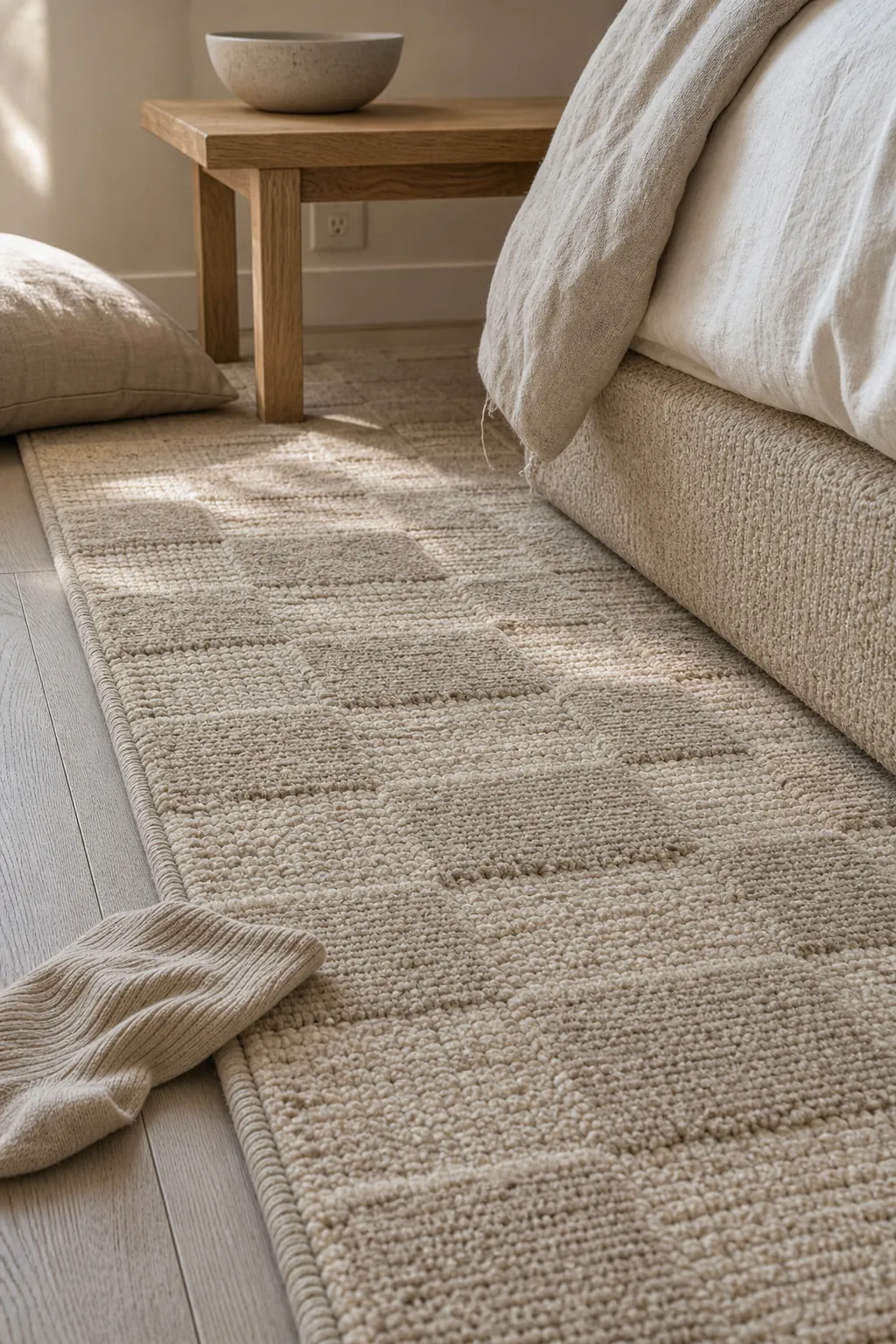
Texture should also suit daily life. Deep shag feels soft but catches dust and makes a frequently moved storage drawer harder to operate. A dense low or medium pile is easier to vacuum while still feeling comfortable under bare feet. If pets sleep in the room, avoid loose loops that can snag claws.
Layering is useful when you already own a durable jute or sisal rug but want more softness. Add a smaller wool or washable rug across the lower half of the bed. Keep the upper rug low enough that the layers do not create an awkward step, and use pads approved for both surfaces.
Use pattern to connect the room’s accent colors
A patterned rug is often the easiest answer to a “sad beige” room because it provides a palette rather than one demanding accent. Choose a design that includes the bedroom’s beige plus two or three supporting colors. Repeat one of those colors in a throw, cushion, lampshade, or small ceramic object.
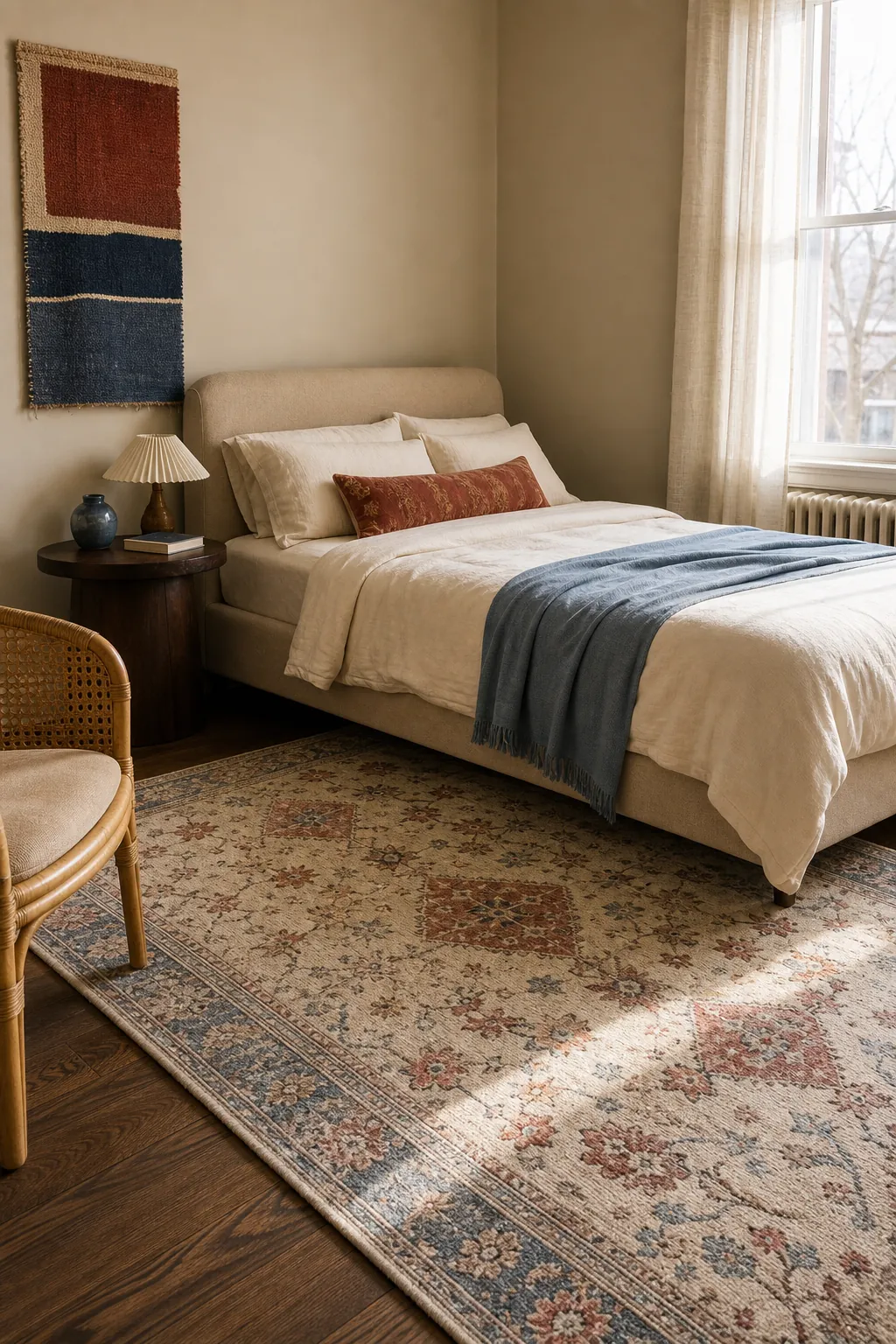
For a calm room, favor a distressed pattern, a wide stripe, an irregular geometric, or a design with generous open space. A sharply repeated small motif can feel busier once it covers most of the floor. If the duvet is already patterned, choose a rug with a larger, simpler motif or let texture replace pattern.
Do not force every accessory to match the rug. Two repeated notes are enough. A rust line in the rug might return in one lumbar cushion; a muted blue might appear in a bedside vase. The rug should organize the color story, not turn the room into a matching set.
Choose a fiber that fits bare feet and real maintenance
Wool is a strong bedroom choice because it is resilient, insulating, and naturally comfortable, though it often costs more and can shed when new. Cotton flatweaves are lighter and sometimes washable, but they usually need a good rug pad. Synthetic low-pile rugs offer stain resistance and a lower entry price, making them practical for rentals, children’s rooms, and homes with pets.
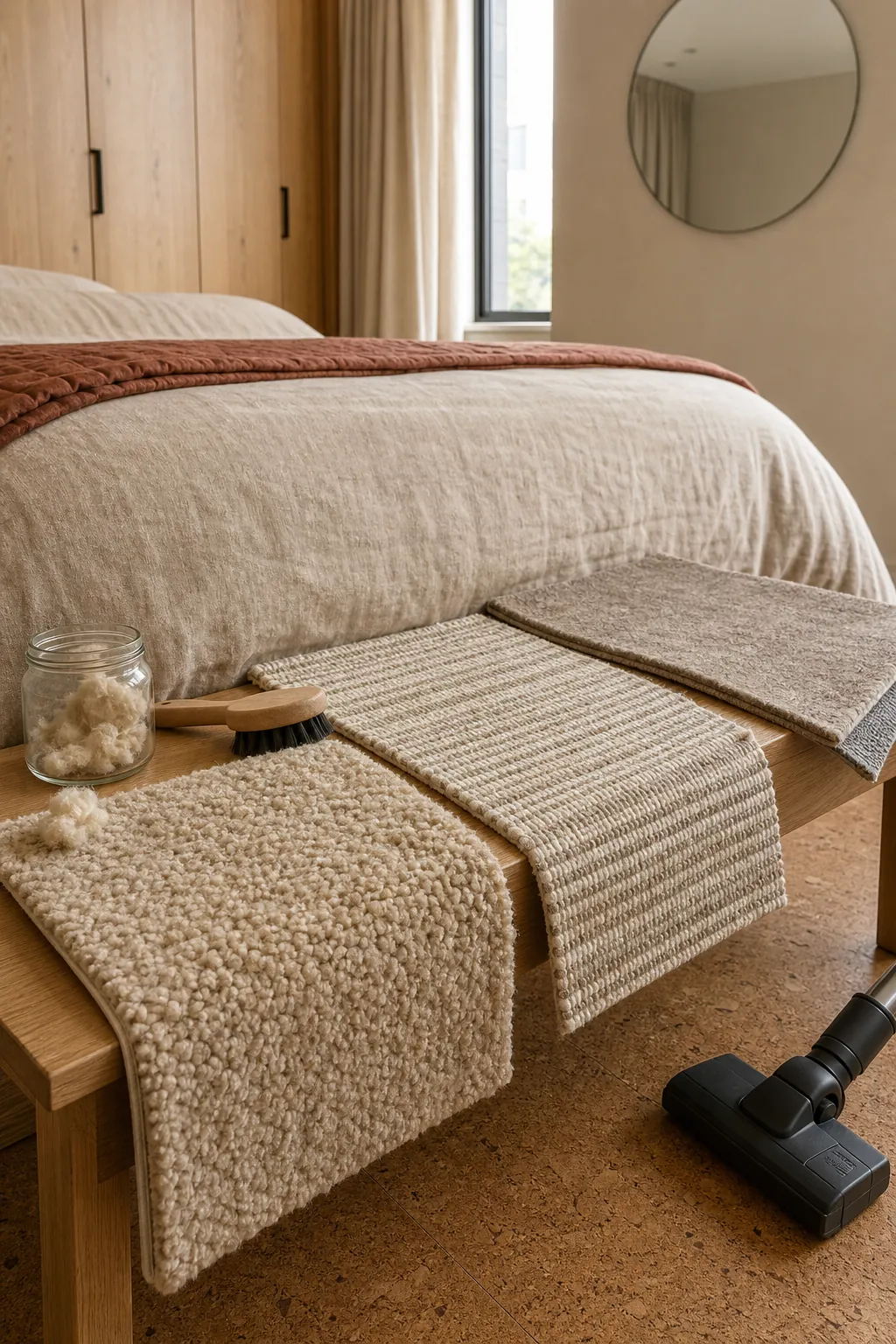
Natural jute and sisal add excellent visual texture, but some weaves feel rough underfoot and can be harder to spot-clean. Touch a sample with the inside of your wrist if possible; it is a better softness test than pressing with your palm. For any rug on wood, laminate, or tile, use a correctly sized non-slip pad to reduce movement and protect the floor.
Also compare care instructions before price. A pale rug that needs specialist cleaning may be a poor bargain in a high-traffic room. A lightly mottled or heathered surface usually hides lint and small marks better than a perfectly solid ivory field.
Make the final decision in the bedroom
Narrow the search to two options that meet the size, undertone, texture, and maintenance requirements. Then compare them in the room rather than continuing to browse hundreds of attractive rugs. Put the sample beside the floor, bed upholstery, duvet, and curtains. Check it in daylight and under the lamps you use at night.
The better rug is the one that makes the bed area feel complete before you add more decor. Its edge is visible, its texture survives the neutral palette, and its color relates to the room without copying every surface. When those conditions are met, a beige bedroom feels layered and calm—not flat.