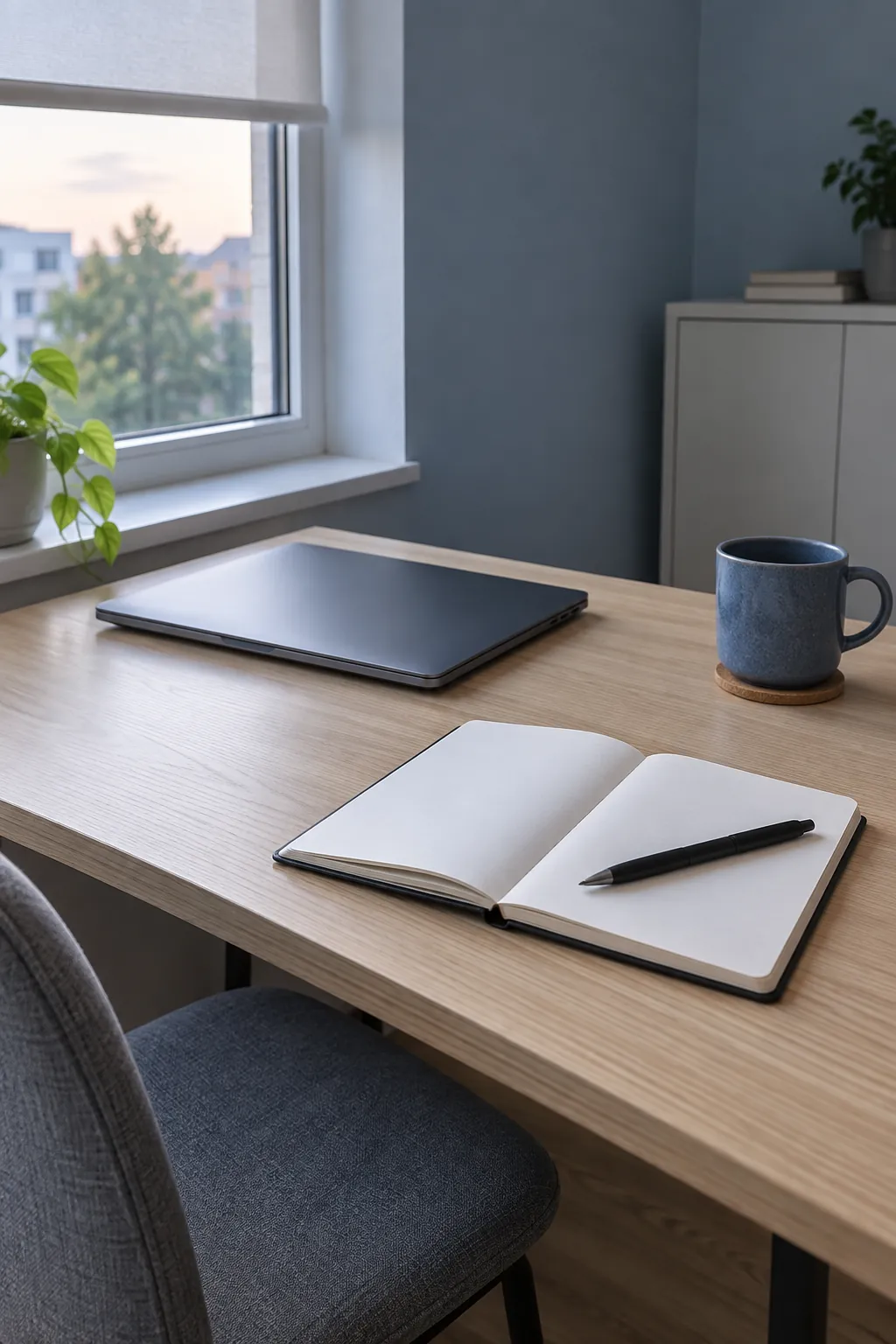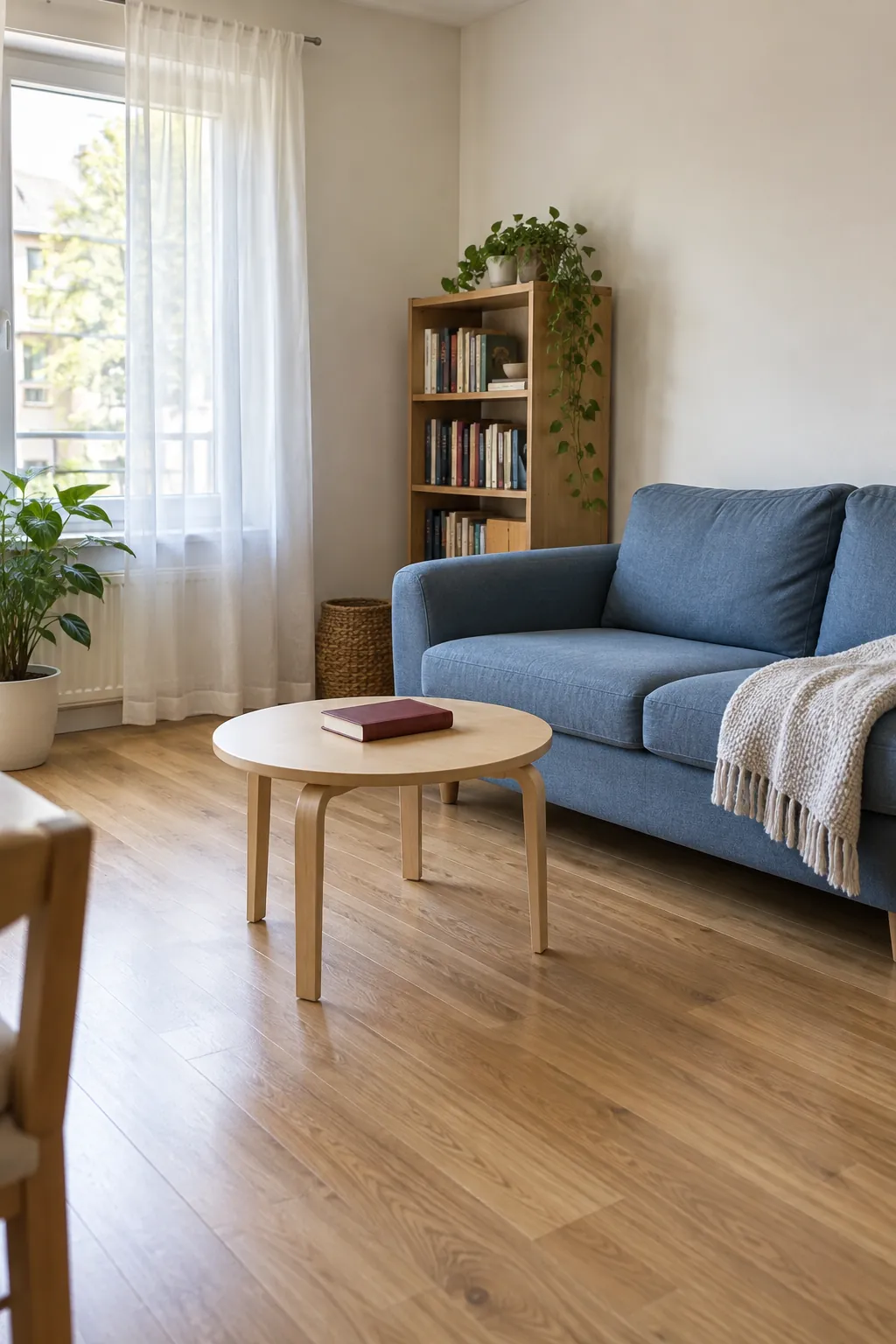
You can want less to tidy without wanting an empty home. The useful starting point is a daily frustration: a table you cannot eat at, clothes you cannot find, or cupboards that make cooking harder. Work toward removing that friction, and let the number of possessions follow your actual needs.
Decide what a simpler home needs to do
Choose one concrete outcome before touching a drawer. You might want to prepare breakfast without clearing the counter, put laundry away in one trip, or sit down to read without moving a pile. A useful minimalist home reset supports an activity you care about rather than an appearance you feel obliged to copy.
Write that outcome in your own words and use it to judge decisions. Keeping a comfortable reading chair and favorite books can serve a simpler life better than selling them to make a room look sparse. Color, hobbies, family routines, accessibility equipment, and adequate emergency supplies all belong in a home when they support the people who live there.
Finish one small area before opening another
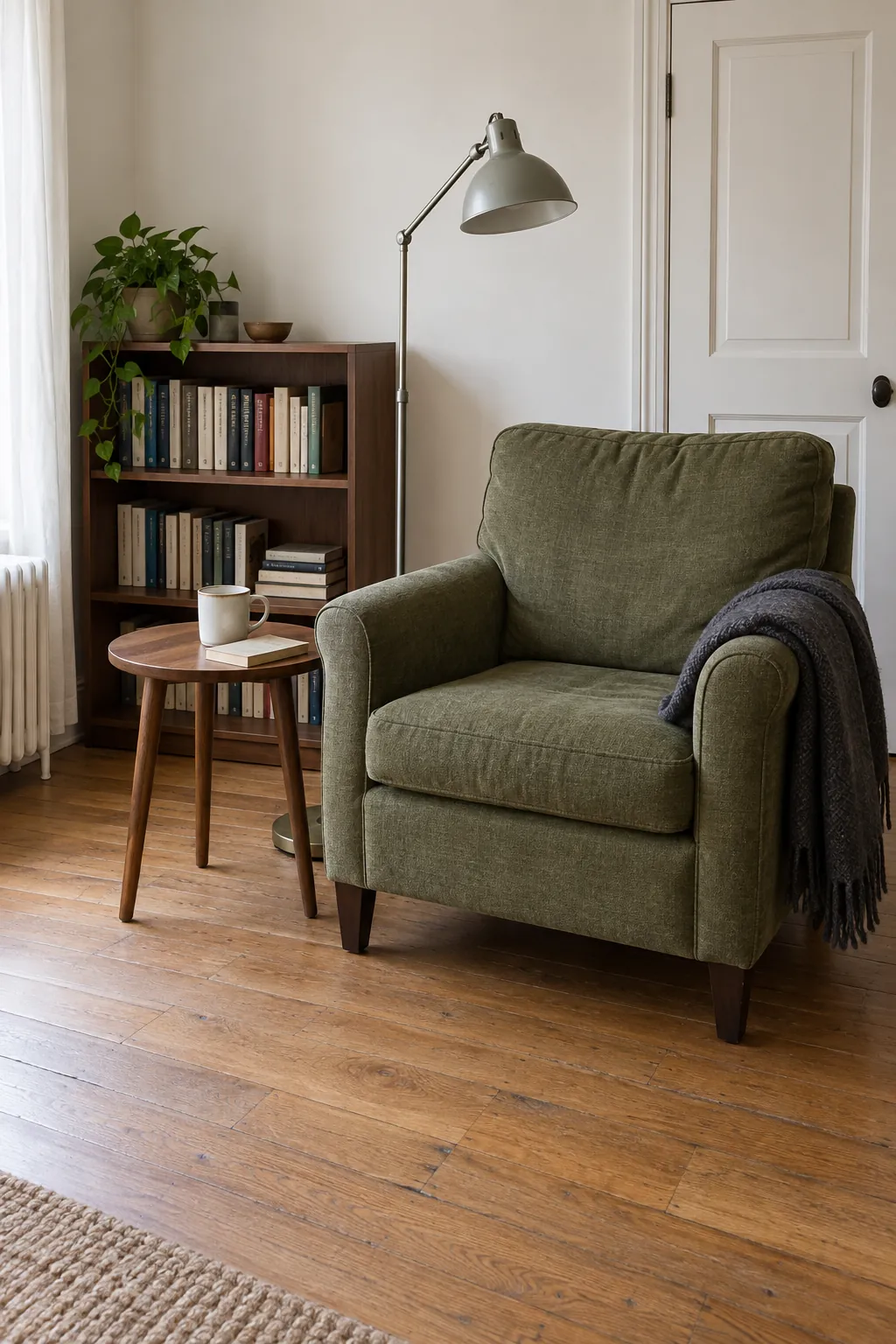
Begin with a single drawer, one shelf, or a small patch of counter whose contents are mostly yours. Choose ordinary items with few emotional ties, and set a short working period that suits your energy. Leave time at the end to put retained items back and take rubbish or recycling to the right place.
Remove obvious rubbish first, return misplaced belongings next, and then assess the remaining objects. Ask whether each one has a current use, whether another item already does that job, and whether keeping it is worth its space and upkeep. Avoid emptying an entire room when you cannot finish it; a completed drawer gives you a working system to repeat on a different day.
Separate practical uncertainty from sentimental value
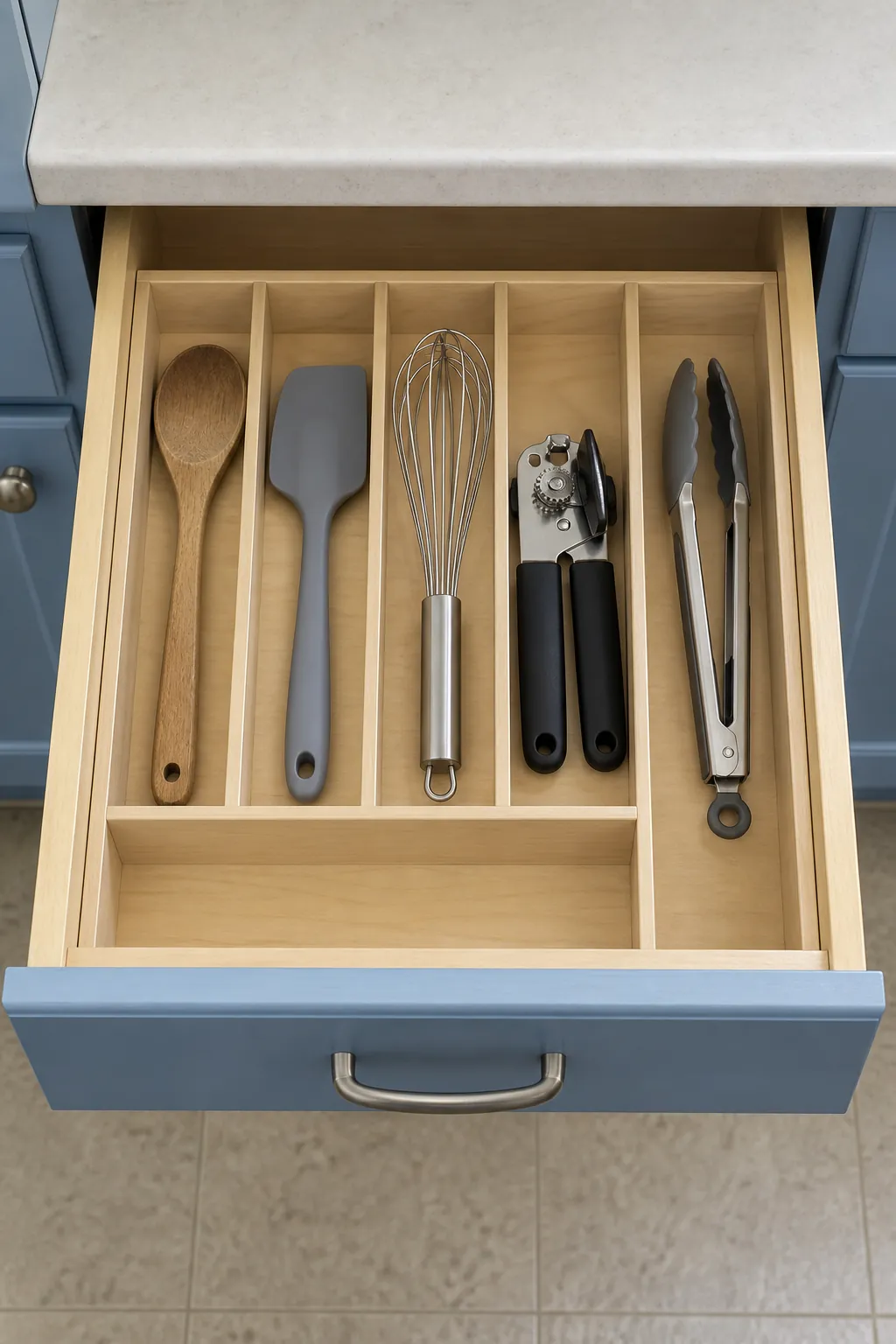
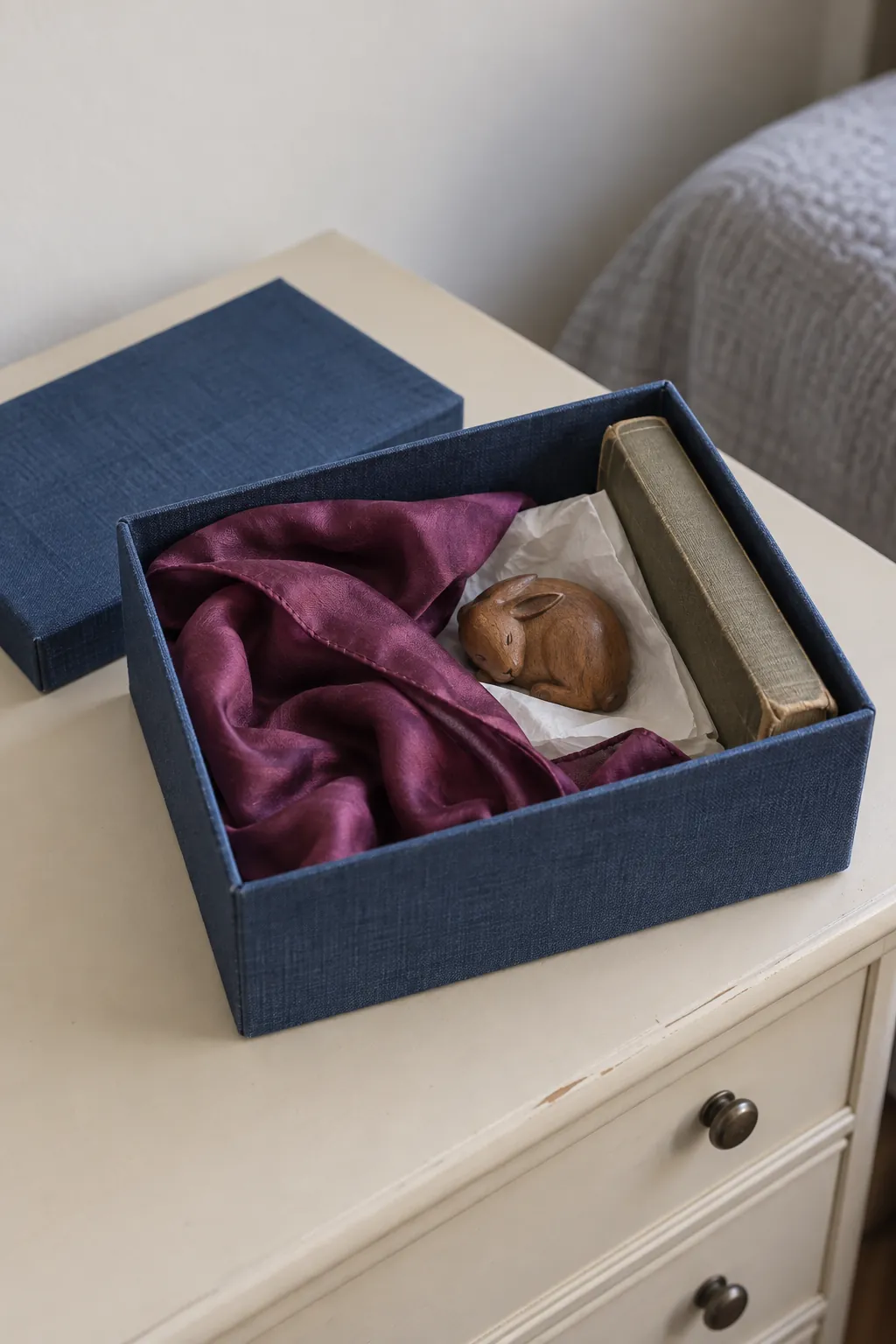
Not every uncertain object needs an immediate answer. For replaceable items you rarely use, a small holding box can provide a trial period: record what is inside and choose a review date that fits the item’s season or purpose. Store it somewhere accessible and retrieve anything you need, rather than treating the box as a promise to discard its contents.
Give sentimental items a different kind of attention. An inherited scarf or a favorite childhood book may matter even if it has no frequent practical use, and keeping a selected memory box is compatible with intentional possessions. Photographs can preserve some memories, but they do not replace the meaning of every physical object.
Postpone decisions that feel rushed, especially during grief or a major life change. Do not apply a casual trial box rule to legal documents, medication, safety equipment, or belongings owned by someone else. The aim is fewer unwanted obligations, not regret created by an arbitrary deadline.
Let your storage set a useful boundary
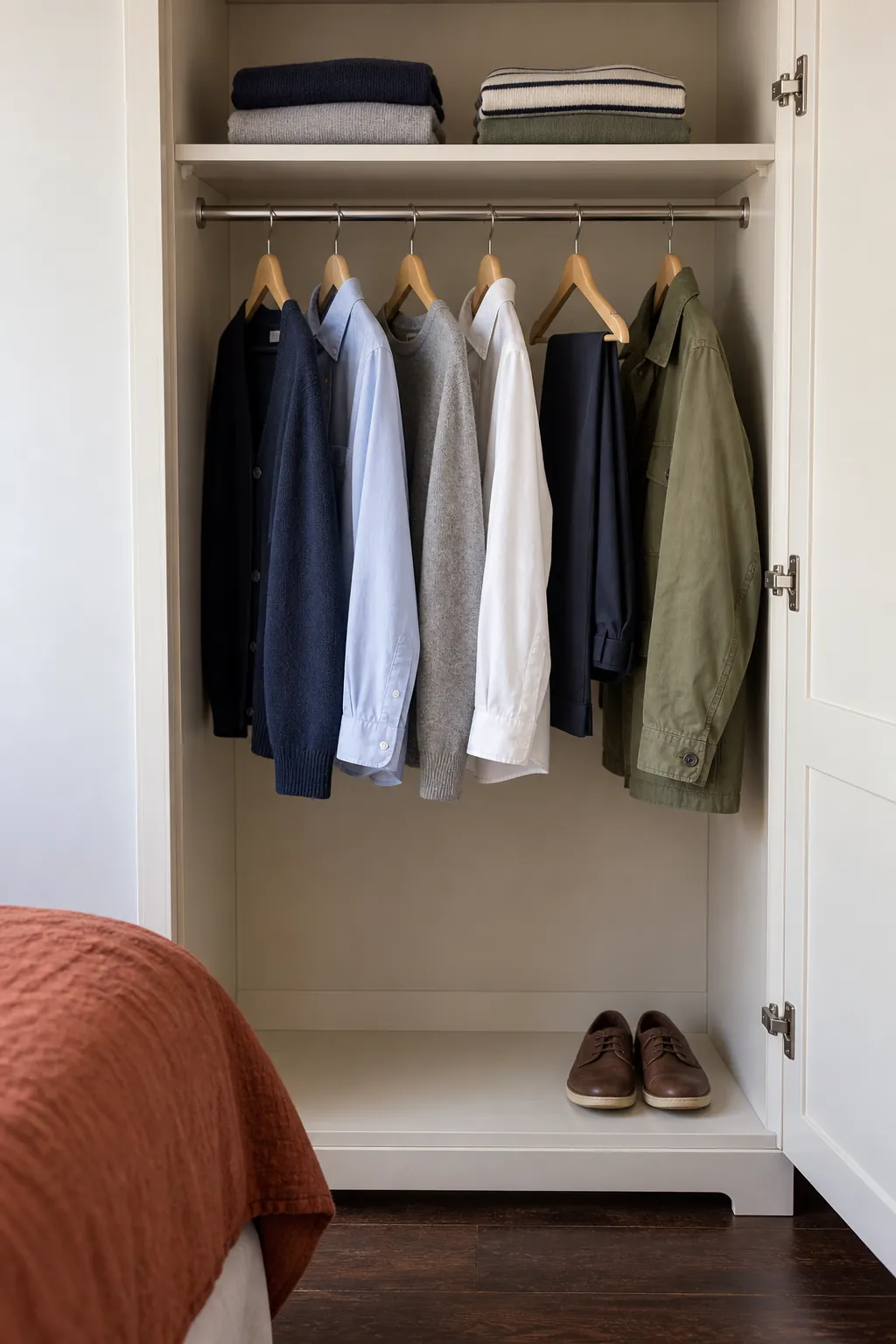
Gather one category together and compare its size with the space you can comfortably give it. Clothes should be reachable without pulling several garments off their hangers, and a cupboard should open without an avalanche. If the category does not fit, review unused duplicates before buying another cabinet.
Your capsule home essentials depend on your circumstances. Someone who cooks every day, hosts relatives, or needs spare bedding for care routines will keep different quantities from a person living alone. Use the space limit to reveal choices, then adjust the boundary if it fails a real household need.
Complete the exit before starting another pile
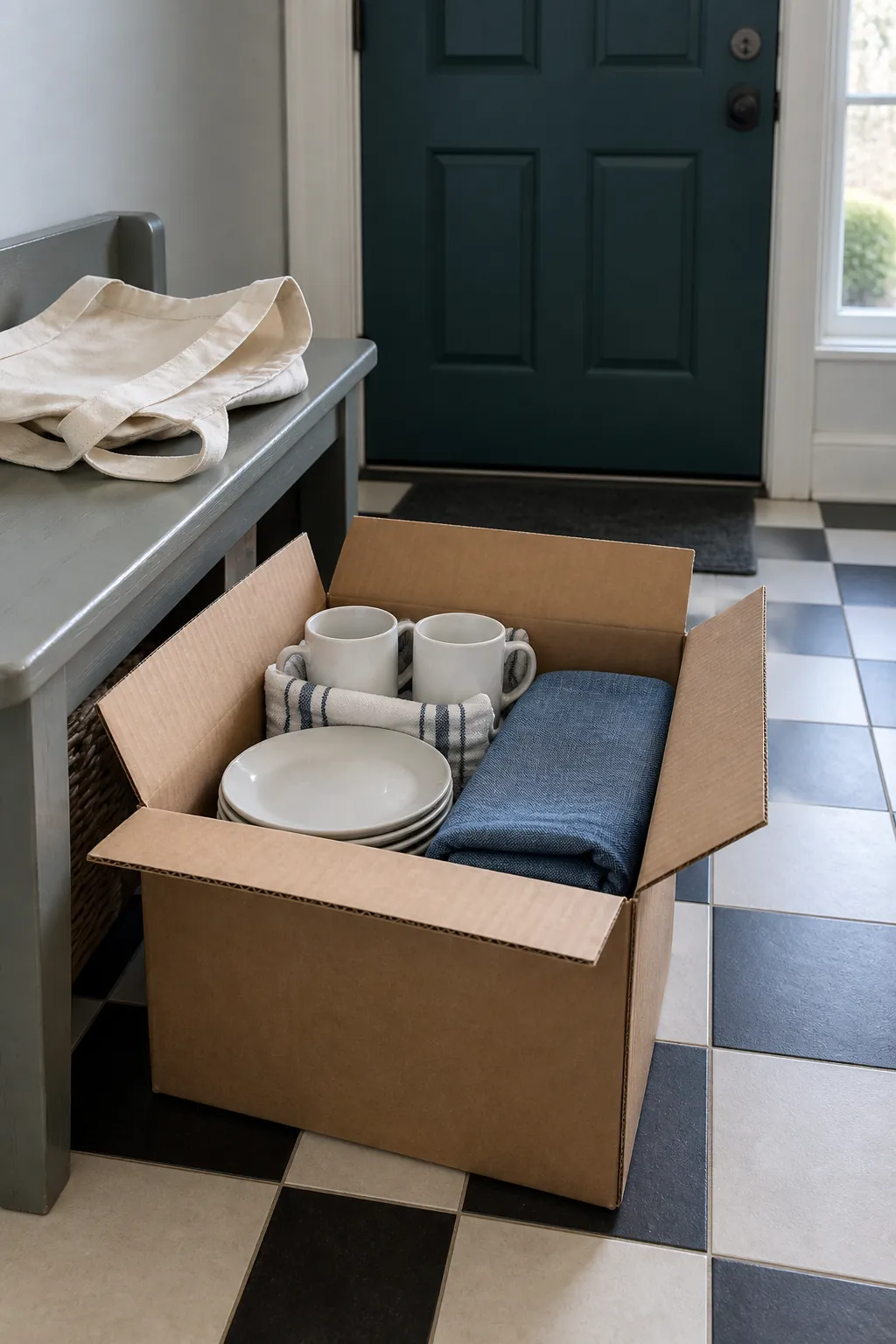
A bag beside the door is still something to manage until it leaves. Confirm what a donation service accepts, keep items clean and usable, and choose a realistic drop off or collection date. Recycle or dispose of unsuitable goods through the appropriate local route instead of passing the problem to a charity.
Sell an item when its likely return justifies photographs, messages, storage, and collection arrangements. Give the listing a review date so an unsuccessful sale does not become permanent hallway storage. Handle personal documents securely, and clear personal data from electronics before transferring them.
Slow new arrivals and keep the gains useful
Before a nonessential purchase, identify the job it will do, where it will live, and what you already own that might work. A short waiting period can separate a passing impulse from a recurring need. The one in one out rule can help a stable category such as everyday mugs, but it should not force you to discard a useful item merely to justify shopping.
Agree on shared spaces with the people who use them and ask before moving or donating their possessions. Choose a brief weekly reset to return items to their homes and notice which categories keep overflowing. A sustainable clutter free lifestyle leaves you able to use the table, find your clothes, and enjoy your belongings; when those tasks work, you do not need to keep removing things to prove you are a minimalist.