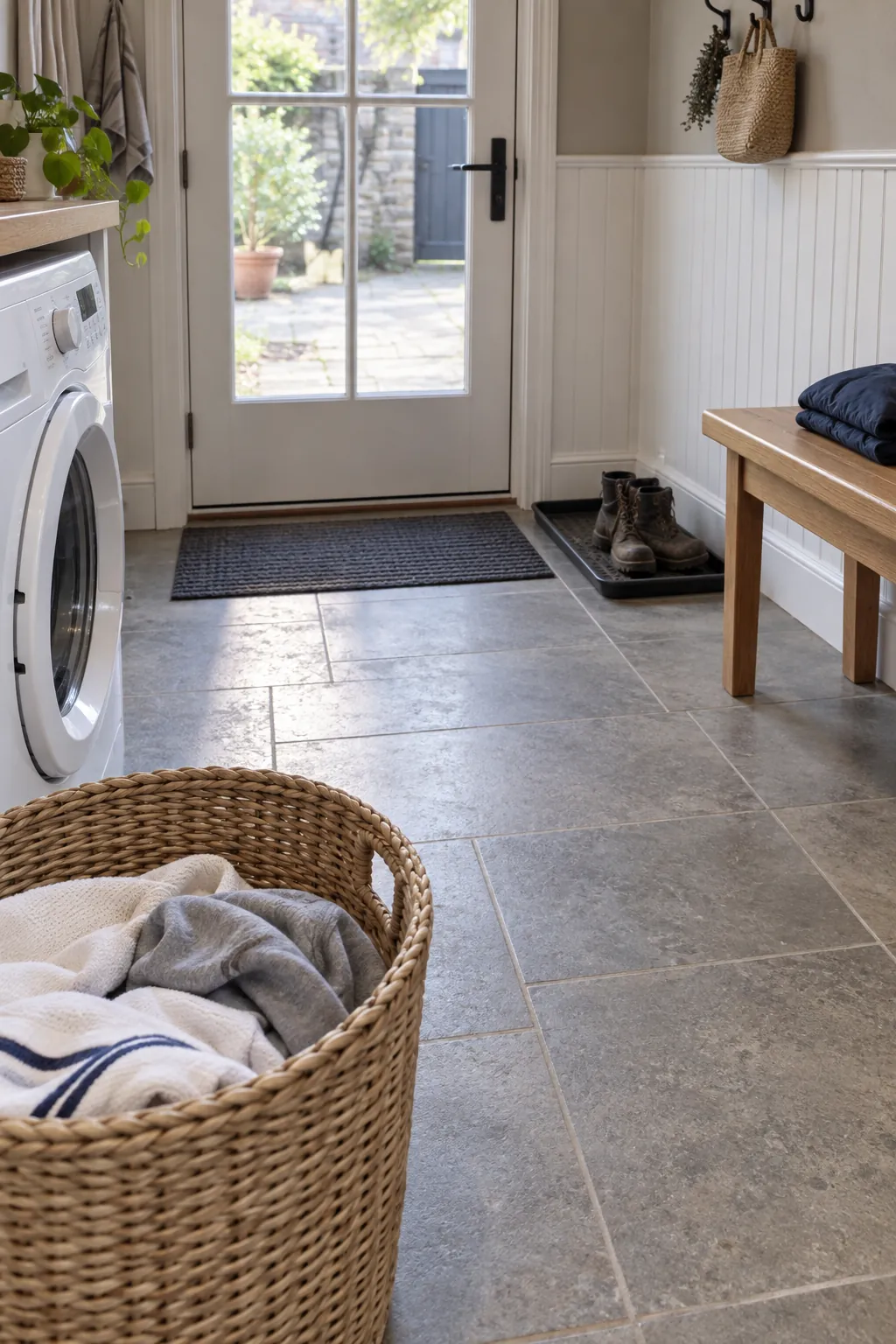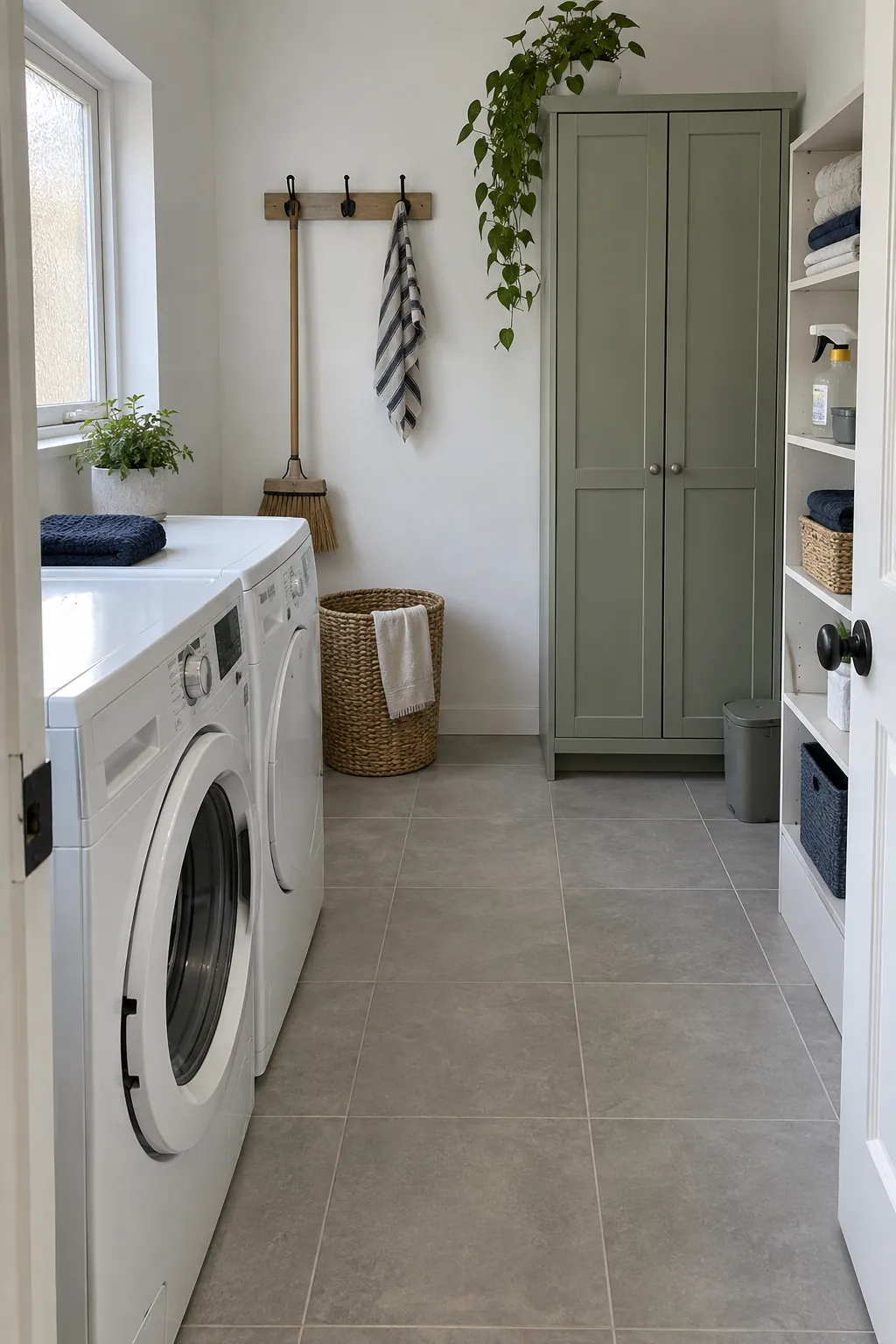
If getting the mop means moving a laundry basket and catching a falling broom, the room needs clearer boundaries before it needs more containers. Start by protecting the space required to wash, clean, and reach your equipment. Then give the supplies that support those jobs a home you can reach without rearranging everything else.
Clear the working space before choosing storage
Open the room door and each appliance door fully, then walk through carrying your usual laundry basket. Anything you have to step over or move is occupying working space. Set those objects aside temporarily and measure the remaining wall width, shelf depth, and usable height before buying a utility shelving system.
Keep shutoff valves, electrical panels, ventilation openings, and equipment service access unobstructed. Appliance and heating equipment instructions determine their required clearances, so an apparently empty gap is not automatically storage space. Avoid placing shelves where a leak could soak supplies or where reaching a bin would require leaning across a hot surface.
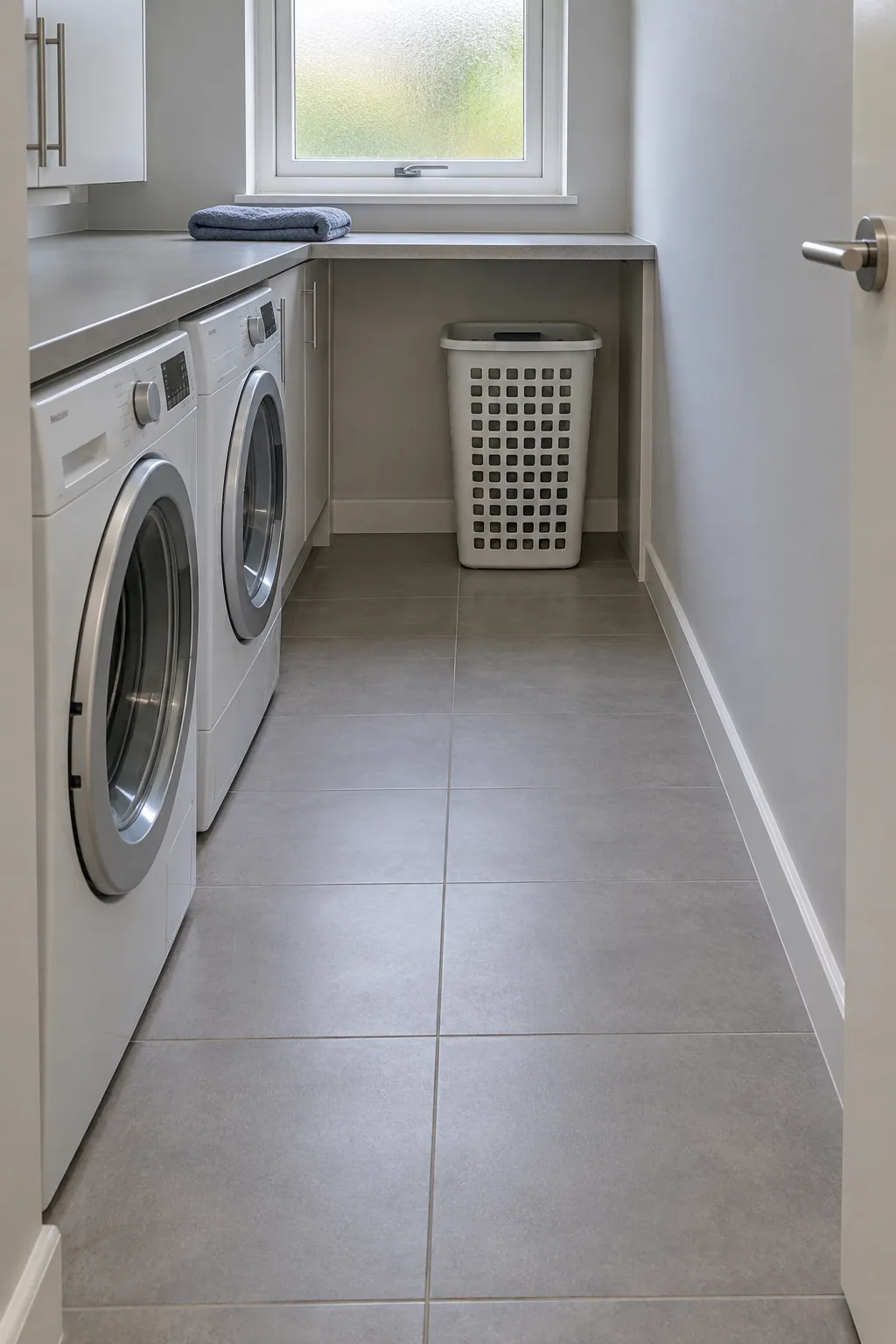
Sort supplies by the job they actually do
Work through one shelf at a time so the whole room does not become an unfinished sorting project. Separate laundry products, surface cleaners, dry cloths, spare household supplies, and occasional repair tools. Put items that belong elsewhere directly into a return basket, and check local disposal guidance for unwanted chemicals instead of pouring them down a drain.
Compare duplicate tools by function: two brooms may be useful if one stays outdoors, but three worn indoor dustpans do not need three storage positions. Keep the best tool for each routine task and release usable extras through an appropriate donation route. This makes cleaning supply organization a decision about what you use, rather than an exercise in fitting every object back into the room.
Make daily supplies easy to reach and chemicals secure
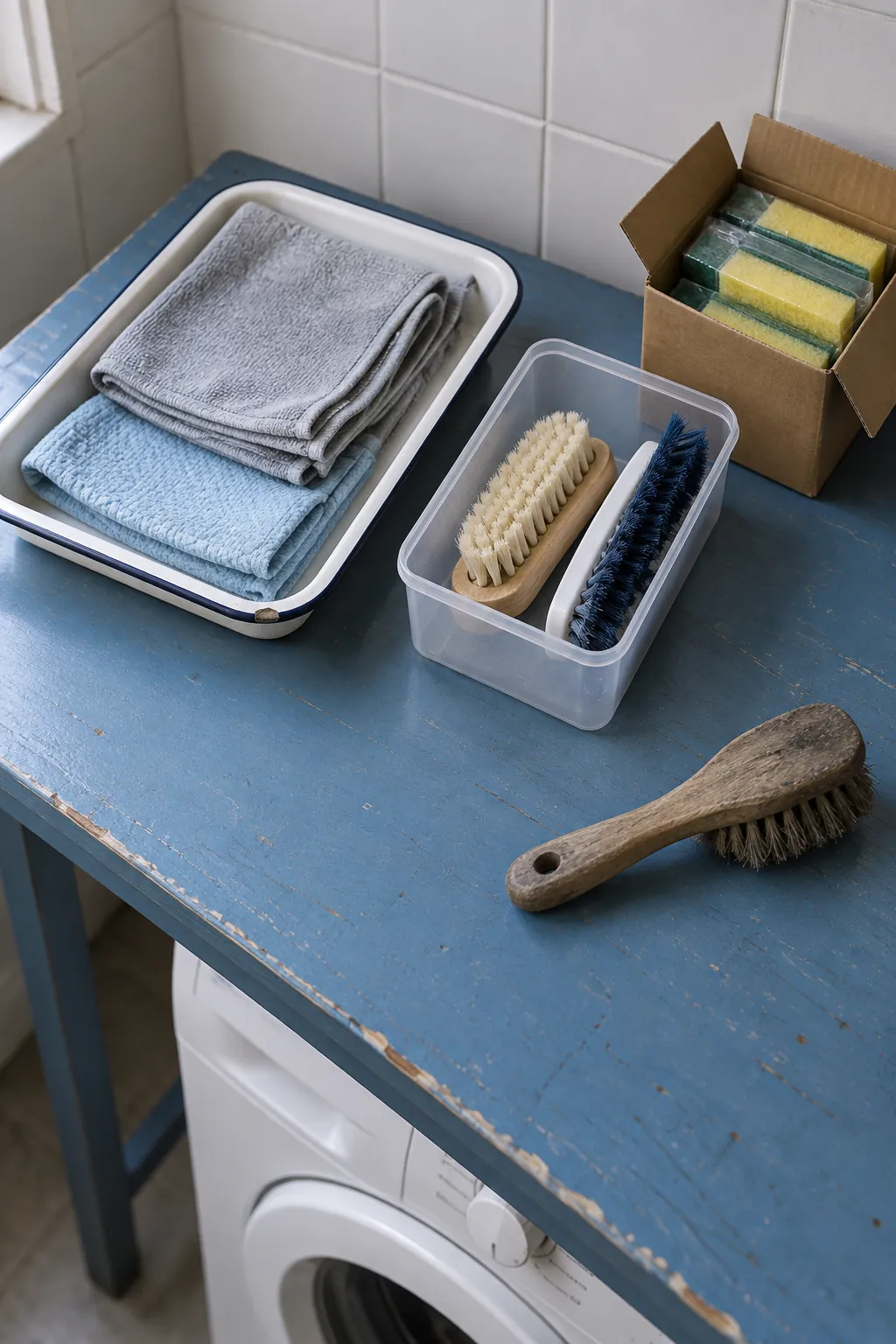
Give frequently used dry cloths and brushes the easiest shelf to reach. Store cleaning chemicals upright in their original labeled containers, following the storage directions on each product. A washable tray can catch small drips, but it does not make incompatible products safe to store together.
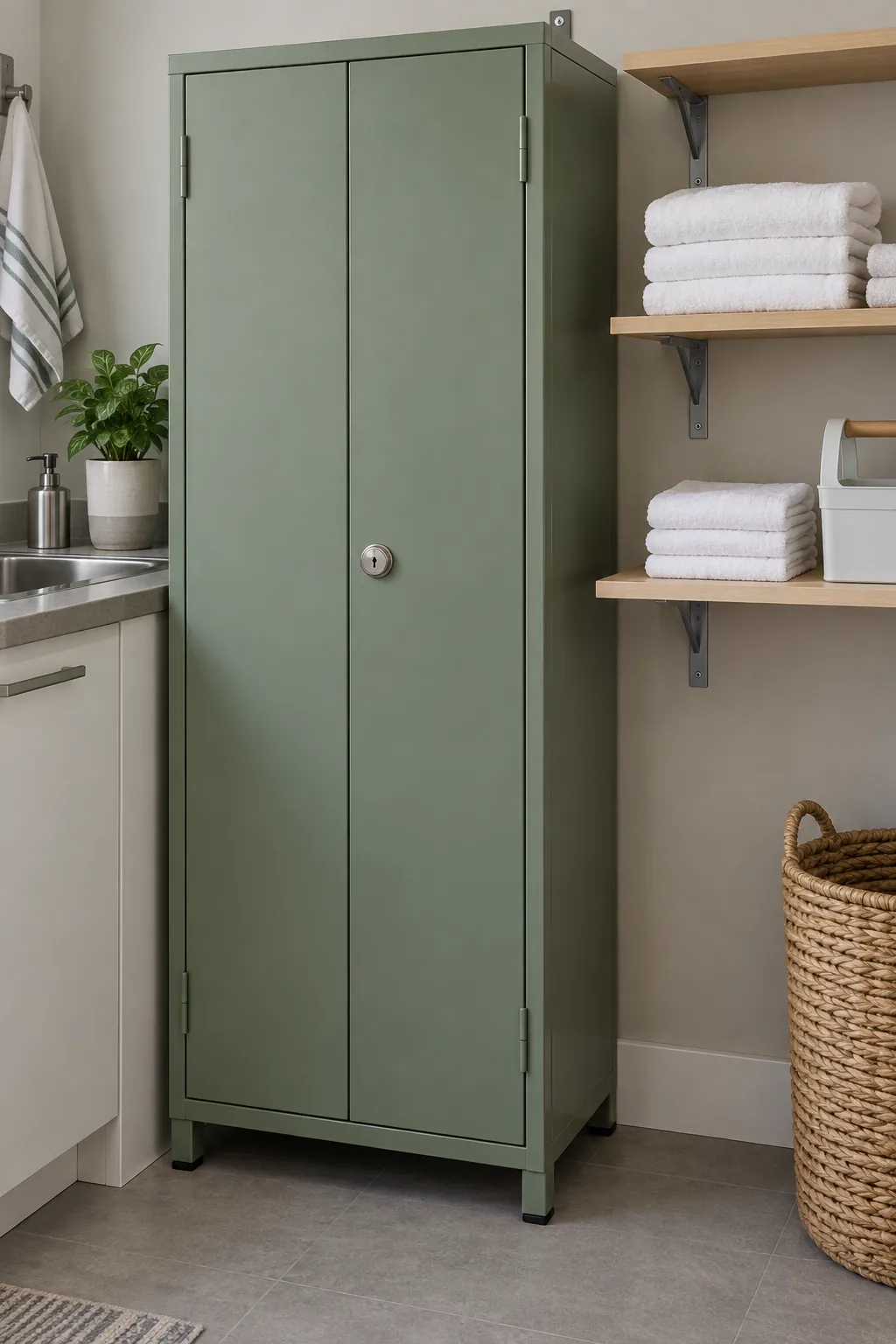
Keep bleach separate from acids and ammonia products, and never mix cleaners. If children or pets can access the room, use suitable locked storage for hazardous products; a high shelf alone is not reliable protection. Keep a portable cleaning caddy light enough to carry comfortably, return products to secure storage afterward, and leave food containers out of the system entirely.
Do not hide product instructions behind decorative labels or decant detergent into drink containers. Pretty matching bottles can remove exactly the information someone needs when using a cleaner or responding to an exposure.
Give long tools a narrow vertical home
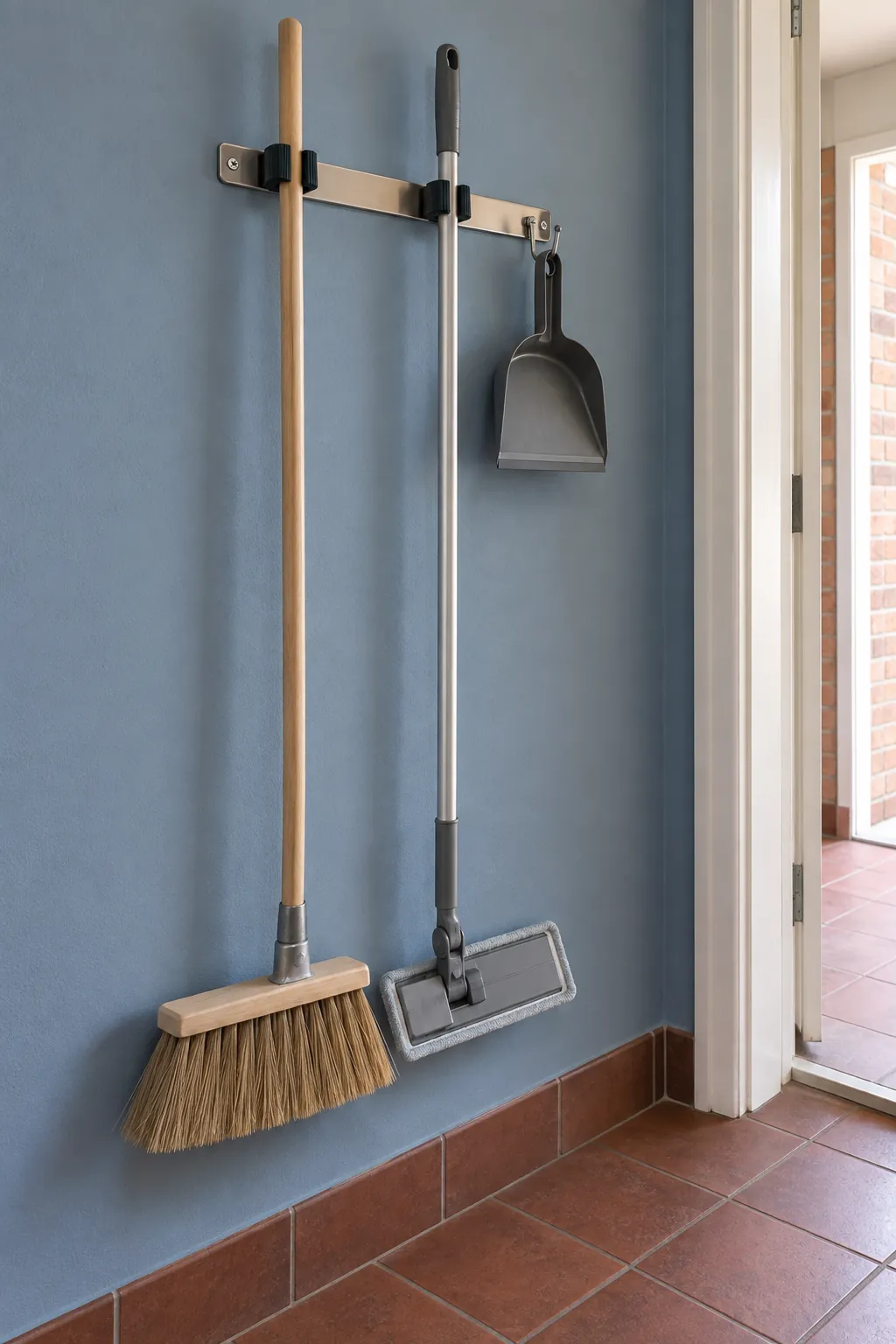
A broom, mop, and dustpan are easier to return when each has its own holder rather than sharing a leaning pile. Look for an unused wall strip that leaves the door swing and appliance access clear. Match wall mounted tool storage to the tool weight and wall construction, and check for concealed pipes or wiring before drilling.
For a rental, use only a permitted mounting method with an appropriate weight rating and compatible surface. A stable freestanding tool rack may suit the room better than adhesive hooks on damp paint. Let wet mop heads dry with ventilation before enclosing them, and keep charging equipment away from wet areas according to its instructions.
Fit shelves and bins around your real inventory
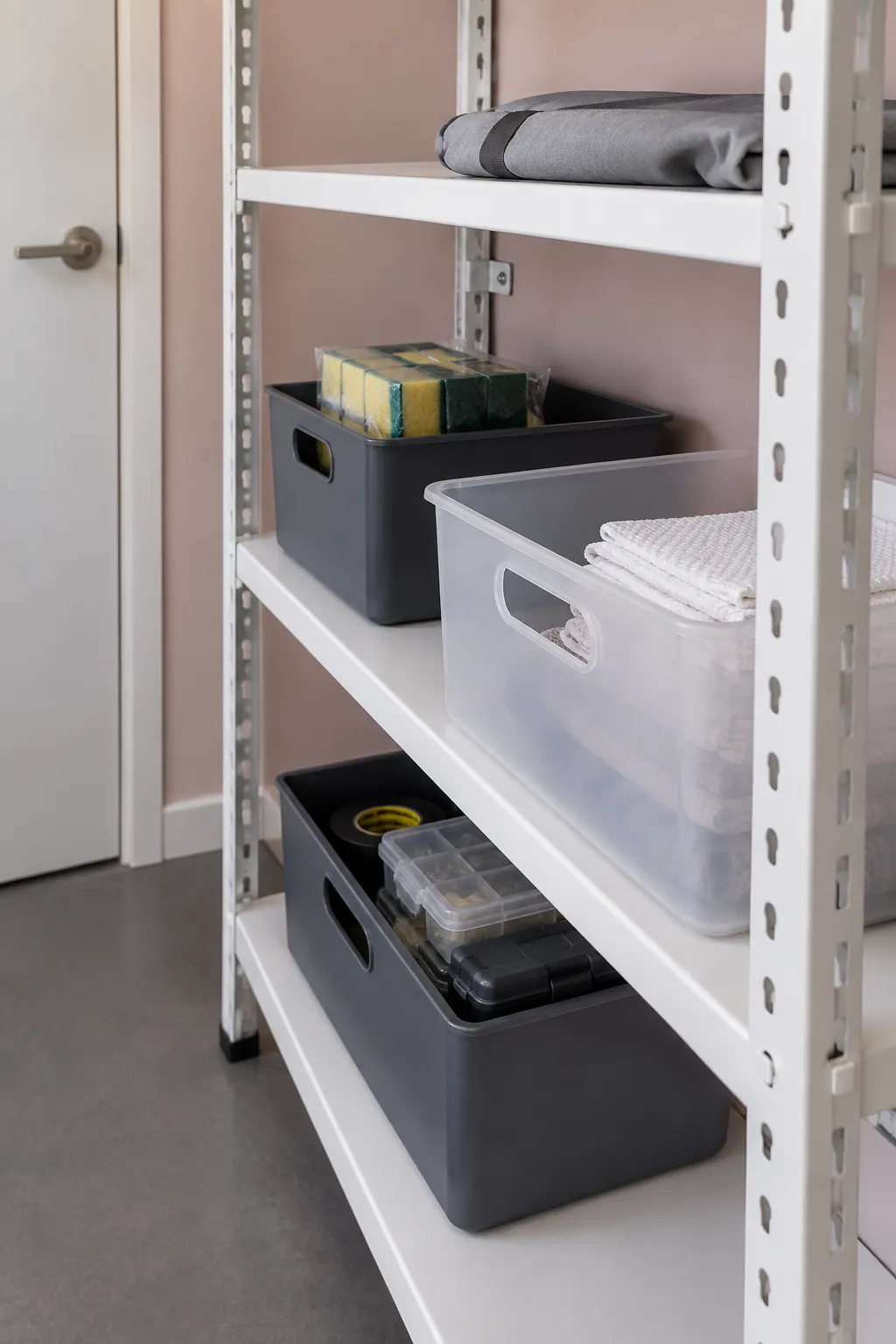
Choose household supply bins after sorting, using the actual shelf measurements and the largest object in each category. A shallow bin that pulls out easily can be more useful than a deep basket with a hidden second layer. Leave enough space above it to grip the handle without scraping your knuckles.
Keep heavy items low, respect the shelf load rating, and secure furniture when its manufacturer requires it. Use upper shelves for lightweight, occasional supplies such as spare cloths, while keeping moisture sensitive items away from damp walls and plumbing. Put a simple category label on each bin so another household member can return things without asking.
Keep laundry and arrivals from taking over again
In a laundry and mudroom combo, separate dirty shoes from clean laundry with distinct landing places. A washable shoe tray near the entrance and a basket beside the washer prevent both categories from spreading across the floor. If a folding surface is always buried, remove stored objects from it and give those objects a shelf of their own.
Test the small utility room layout through an ordinary week before buying more storage. Notice where items actually land, then move a hook or basket closer to that point when access and safety allow. Finish laundry day by returning tools, putting dry cloths away, and checking supplies before shopping; the useful measure is whether the next load can begin without clearing a path.