
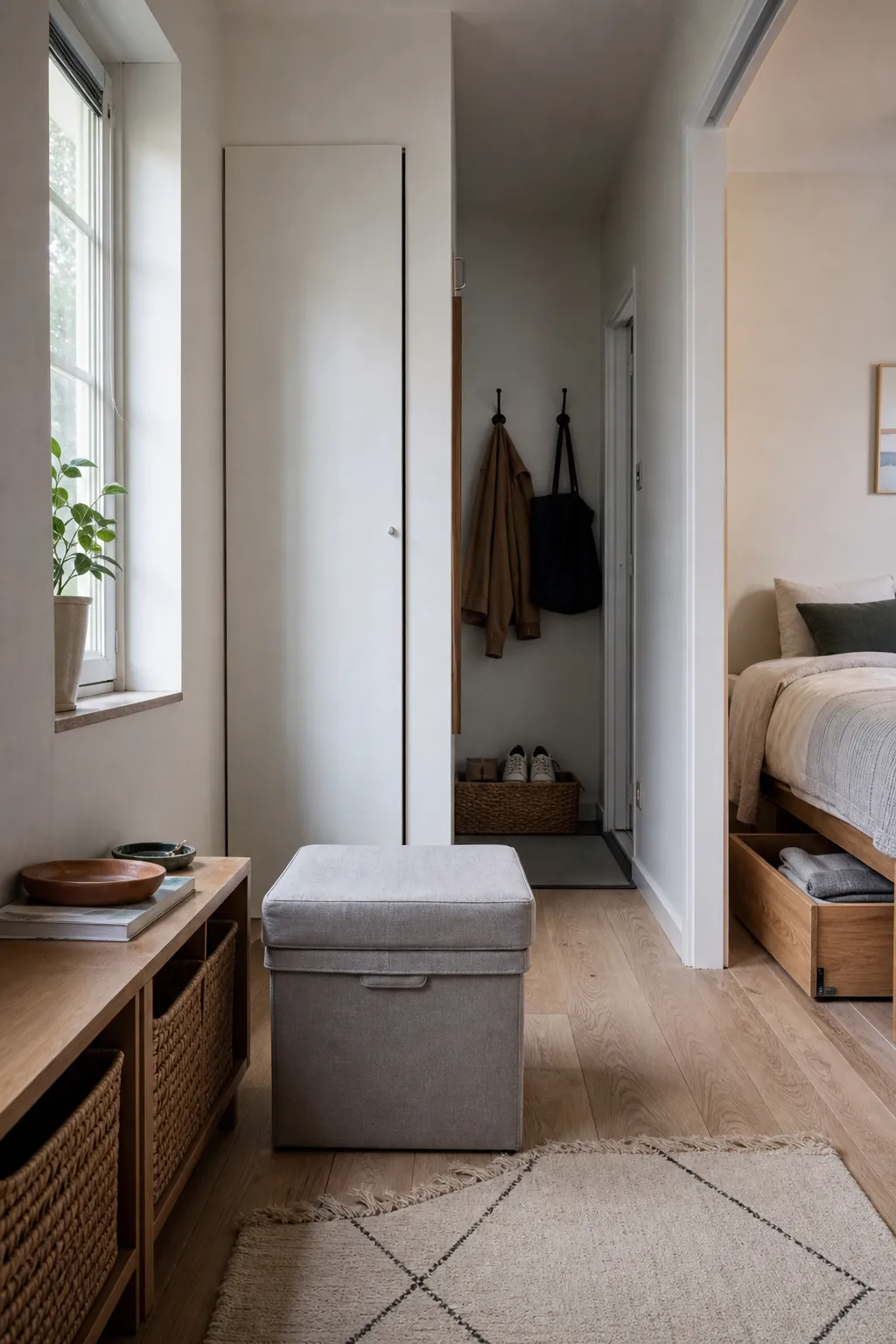
A small home gets messy faster because there is no spare room to absorb unfinished decisions. A jacket lands on a chair, a charging cable stays on the counter, and one extra storage bin becomes another thing to walk around. The fix is not a bigger shopping trip. The fix is a simple storage system that tells every item where to live, how much space it gets, and how easy it should be to put away.
This guide builds that system from the ground up. It works for a tiny house, a studio, a small apartment, or any compact home where storage has to support daily life instead of taking over the room. The goal is functional home organization: fewer piles, clearer storage zones, and clutter control habits that are easy enough to repeat on a tired weeknight.
Reset Before You Buy Storage
The most common small space storage mistake is buying containers before you know what you are keeping. Containers can make clutter look calmer, but they also hide the fact that a home may be storing too many rarely used things. Start with a reset instead of a purchase.
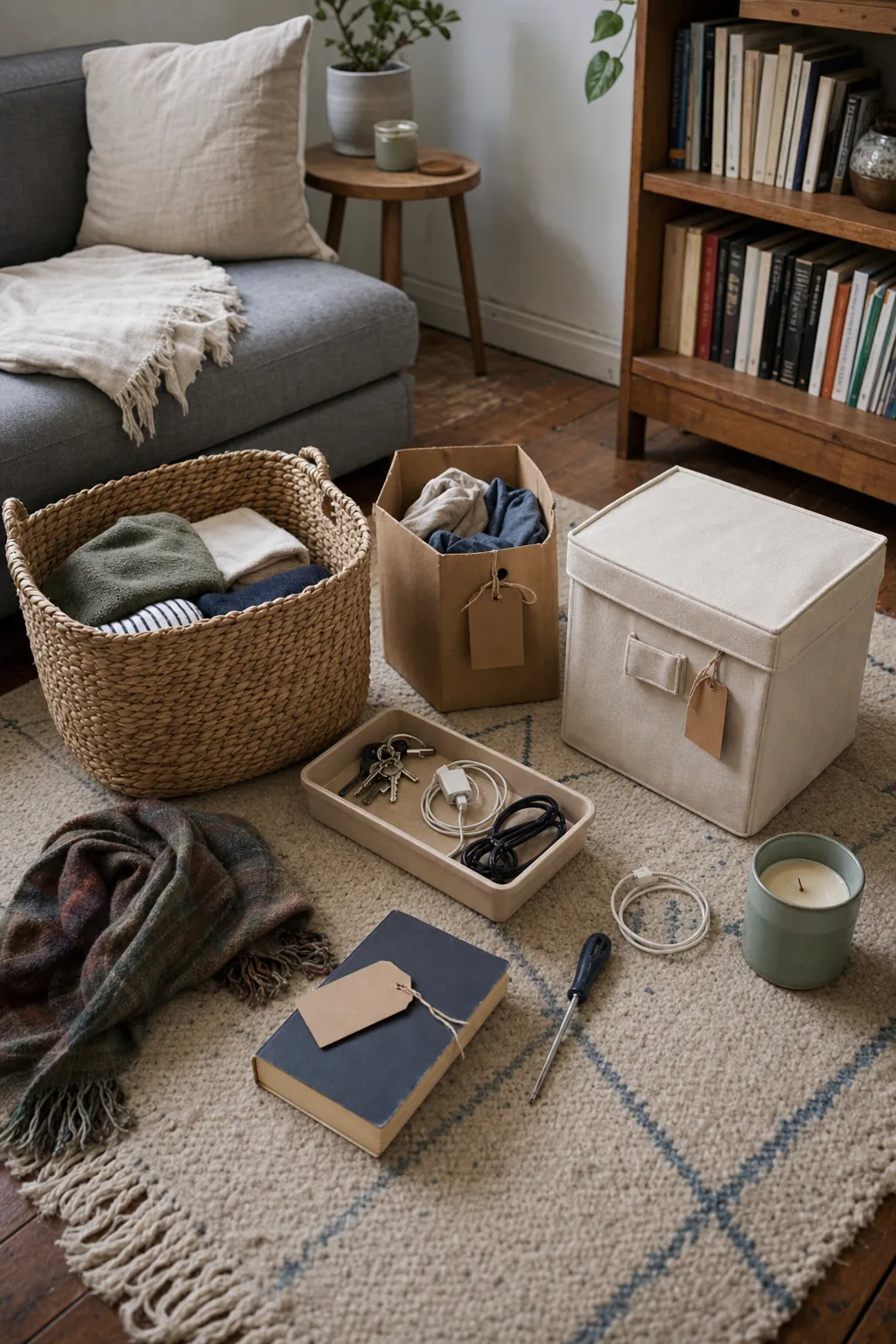
Pick one area that annoys you every day: the entry corner, the kitchen counter, the closet floor, the side table, or the space under the bed. Empty only that area. Do not empty the whole home. In a small home, a giant decluttering pile can block the room and make the project collapse before it becomes useful.
- Keep: items you use now and can name a real location for.
- Move: items that belong in another zone.
- Release: duplicates, broken pieces, expired products, and things you only keep from guilt.
- Decide later: sentimental or uncertain items, limited to one small box.
The small “decide later” box matters. It keeps decluttering from turning into an emotional marathon, but it also gives the uncertainty a limit. If the box fills, something has to leave before something else can enter it.
Map Storage Zones By Frequency
A simple storage system is easier to maintain when it is based on frequency, not just room names. Daily items need the easiest reach. Weekly items can live one step away. Seasonal and backup items should move to the least convenient spaces, because they do not deserve the best real estate.
Use three storage zones across the whole home:
- Daily zone: keys, wallet, shoes, work bag, chargers, current toiletries, everyday cookware, and the few cleaning supplies you reach for constantly.
- Weekly zone: laundry supplies, hobby tools, extra linens, pantry refills, paperwork, small tools, and anything used often but not every day.
- Deep zone: holiday decor, guest bedding, keepsakes, seasonal clothes, luggage, extra blankets, and long-term supplies.
This frequency map prevents the classic apartment organization problem: the thing you use every morning is buried behind the thing you use twice a year. When daily items are hard to return, they become surface clutter. When deep-storage items are too easy to reach, they steal the best shelves.
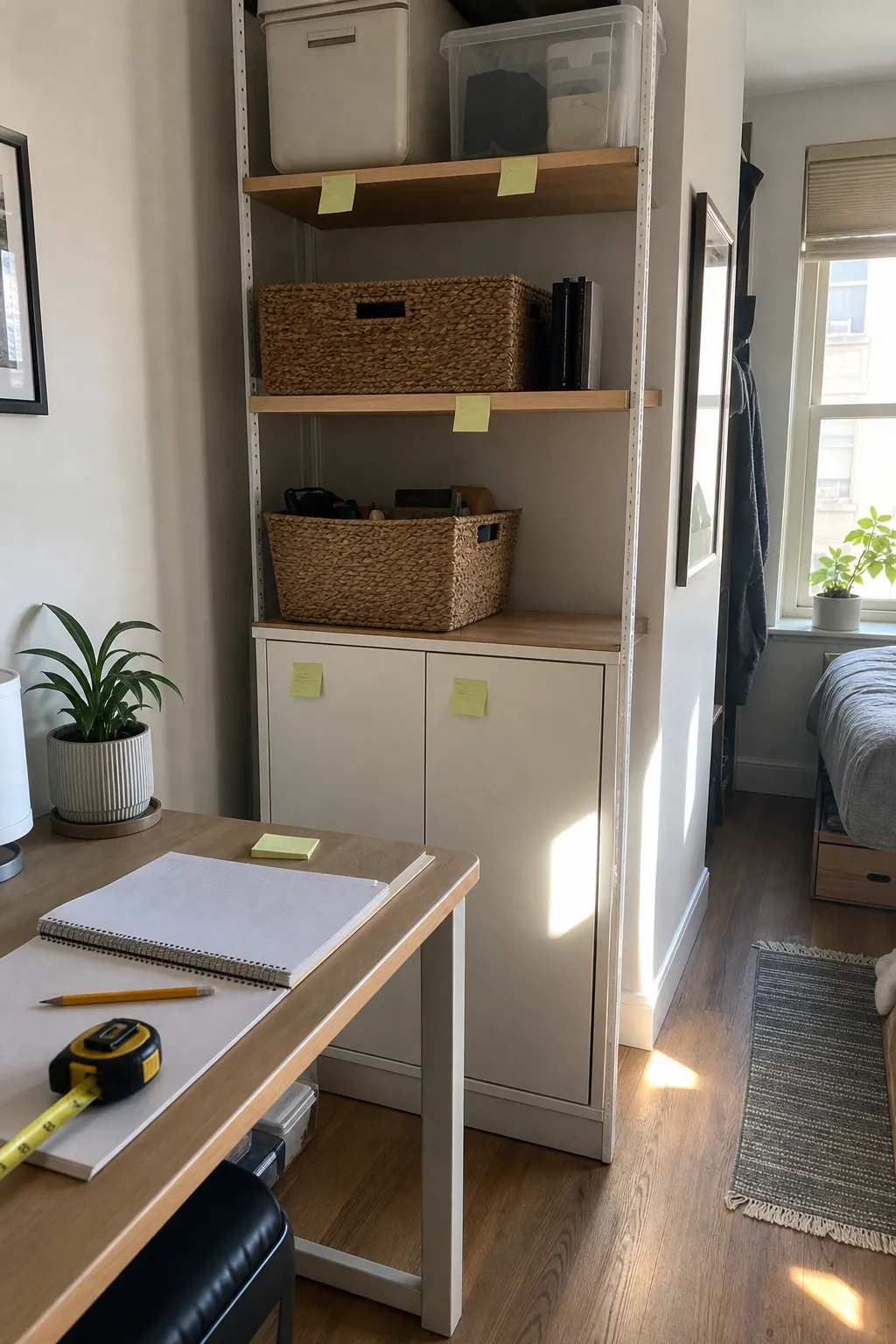
Walk through your home with painter’s tape or sticky notes and label the zones before moving furniture. This is a low-risk way to test the plan. If a zone feels awkward on paper, it will feel worse when you are carrying groceries, laundry, or a laptop bag.
Build An Entry Zone That Stops The First Pile
The entry is usually the first place a small home loses control. Even if the door opens straight into the living room, you need a landing zone. Without one, the whole room becomes the landing zone.
Keep this zone narrow and practical. A wall hook rail, one shallow tray, a shoe basket, and a slim bench or stool can handle most daily clutter. If you rent and cannot drill, use a freestanding coat stand, an over-door hook, or a narrow bookcase turned sideways as a divider.
The rule is simple: the entry zone only stores what leaves the house with you or comes home with you every day. It is not for all shoes, all coats, all bags, or all mail. It is for the current pair, the current jacket, the keys, the wallet, the tote, and the one basket that catches items waiting to leave.
- Use one small tray for keys, earbuds, sunglasses, and wallet.
- Limit visible shoes to one pair per person.
- Put returns, donations, and outgoing mail in one labeled basket.
- Move off-season coats to a deep zone instead of letting them crowd the door.
This single zone gives the rest of the home breathing room. It also makes the storage system feel useful immediately, because the first and last five minutes of the day get easier.

Use Furniture Storage Without Filling The Room
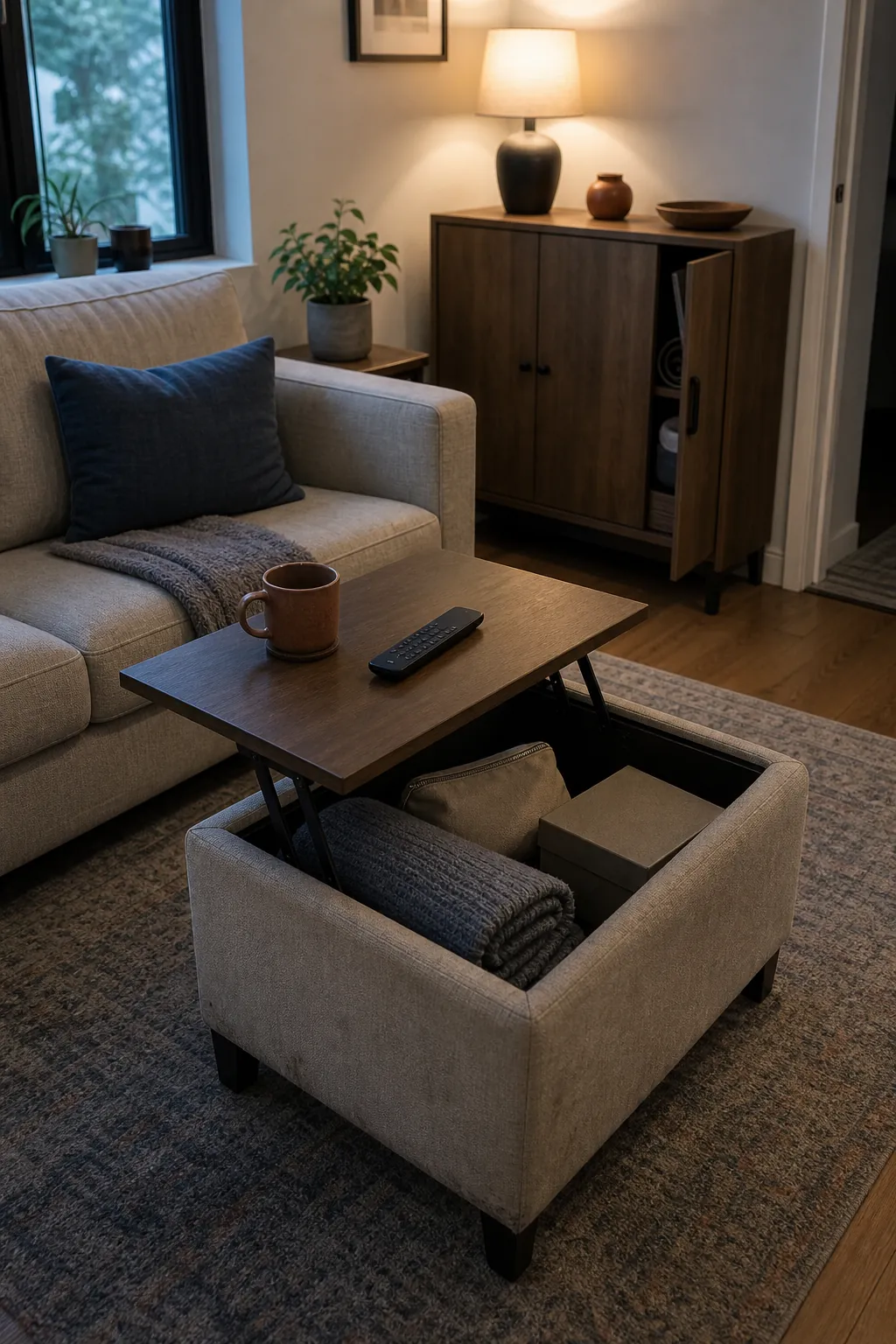
Storage furniture is useful in a small home only when it earns both jobs: it must function as furniture first and storage second. A giant cabinet can hold a lot, but if it blocks movement, darkens the room, or makes the sofa hard to use, it is not helping.
Look for storage ideas that replace something you already need. A bed with drawers can replace loose under-bed bins. A lift-top ottoman can replace a coffee table and blanket basket. A narrow console with closed doors can replace a pile of miscellaneous living room items. A dining bench with hidden storage can hold table linens, games, or craft supplies without adding another cabinet.
Measure before buying or moving anything. In a compact room, the right clearance matters more than the advertised capacity. Leave walking paths open, keep drawers able to extend fully, and avoid furniture that forces you to move another piece just to access storage.
A good test is the “one-hand return.” If you can open the storage and put the item back with one hand, it can support daily use. If returning the item requires moving cushions, unstacking boxes, or lifting a heavy lid every time, use that spot for weekly or deep storage instead.
Make Vertical Storage Quiet And Reachable
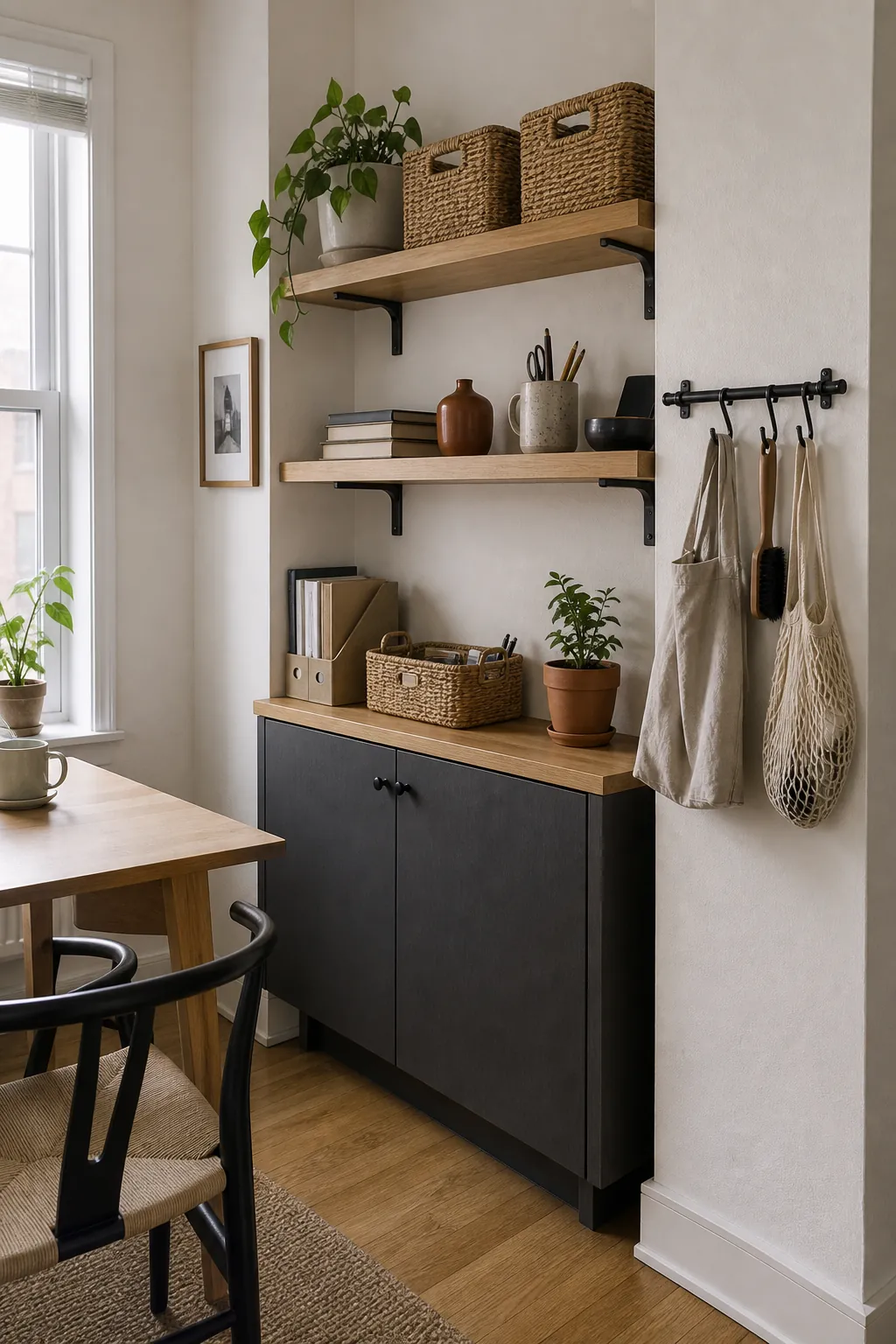
Going vertical is one of the best small home storage moves, but vertical does not mean every wall should become a wall of stuff. Open shelving can make a room feel busy when it holds too many colors, shapes, and labels. Closed storage can feel calmer, but too much of it can make a compact room feel heavy.
Use vertical storage with a clear job. Put daily items between waist and eye height. Put weekly items higher or lower. Put deep-storage items at the very top, under furniture, or behind doors. This keeps your body from fighting the system every time you clean up.
- Open shelves: best for attractive, frequently used items such as books, dishes, baskets, and folded textiles.
- Closed cabinets: best for visual clutter such as tools, cords, paperwork, cleaning refills, and hobby supplies.
- Door backs: best for lightweight items such as towels, wraps, cleaning cloths, hats, or pantry packets.
- Wall rails: best for items with handles, loops, or repeat use, especially in kitchens and work zones.
For a calmer look, repeat materials instead of repeating colors everywhere. Two woven baskets, one wood shelf, and a few white or clear containers will usually look better than a wall of mismatched bins. Small space storage should reduce visual noise, not turn the wall into a store aisle.
Create Small Zones In The Kitchen And Bathroom
Kitchens and bathrooms fail quickly because many tiny items compete for shallow space. The answer is not one giant “miscellaneous” bin. The answer is micro-zones that match routines.
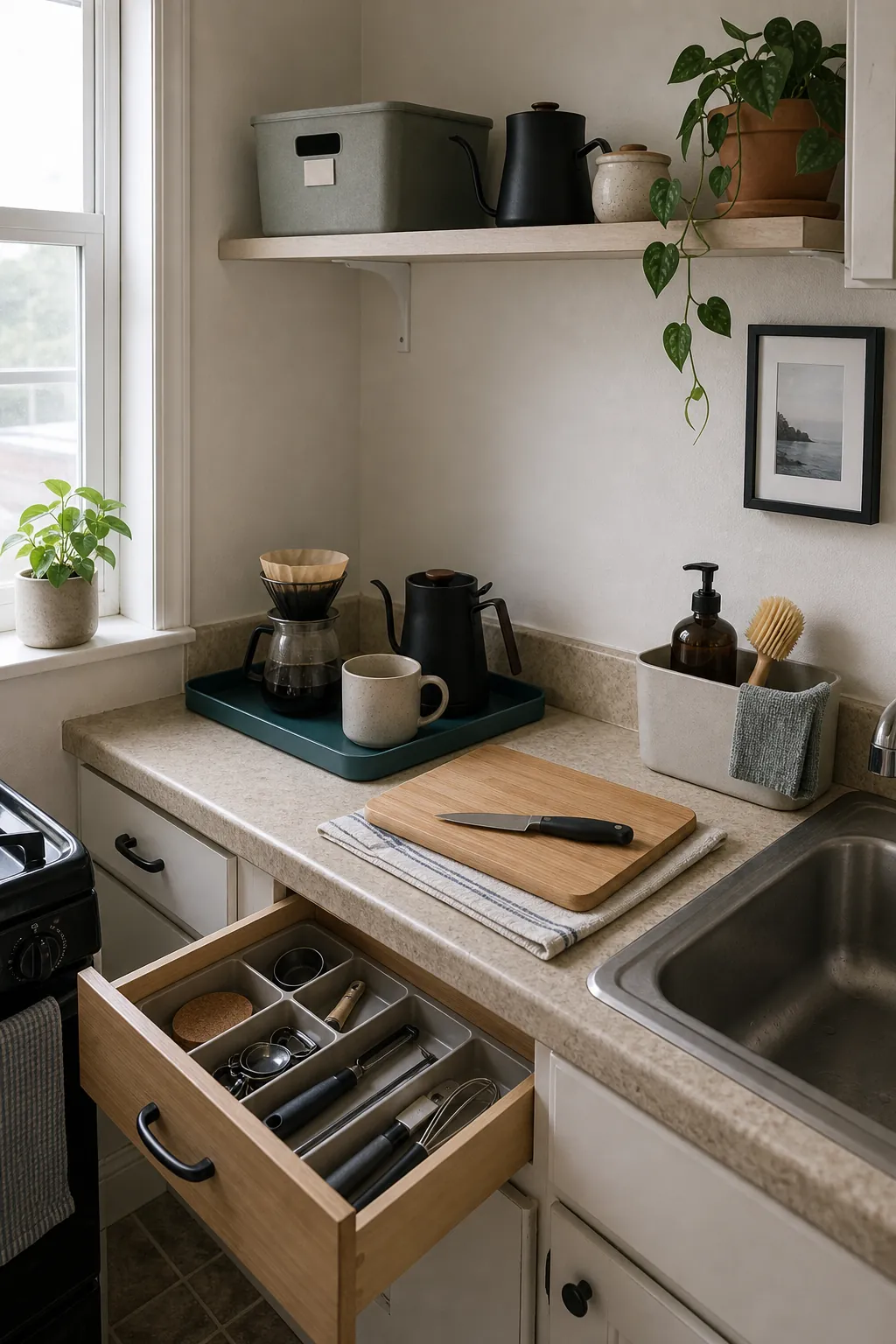
In the kitchen, build zones around actions: coffee or tea, breakfast, cooking tools, food prep, dishwashing, and quick cleanup. Store items where the action happens. If the mugs live near the coffee, the cutting board near the prep surface, and the pan lids near the pans, the room becomes easier to use without adding square footage.
In the bathroom, make the same kind of routine-based zones: morning face care, dental care, shower supplies, cleaning supplies, and backup toiletries. Daily items should be visible or one easy pull away. Backups should not crowd the prime shelf. A tiny bathroom can feel more organized with one narrow shelf and three honest categories than with ten small containers that hide duplicates.
- Use shallow trays for items used together.
- Use drawer dividers only after measuring what stays.
- Store backups in one labeled bin, not scattered in every cabinet.
- Keep the counter for daily actions, not long-term storage.
This is where home organization becomes practical. You are not making the room photo-ready for one afternoon. You are making it easier to cook, wash, clean, and leave on time.
Move Seasonal Items To Deep Storage
A small home can hold seasonal items, but it cannot treat seasonal items like daily items. The winter blanket, guest sheets, holiday pieces, camping gear, luggage, and out-of-season clothes should not sit in the easiest drawers all year.
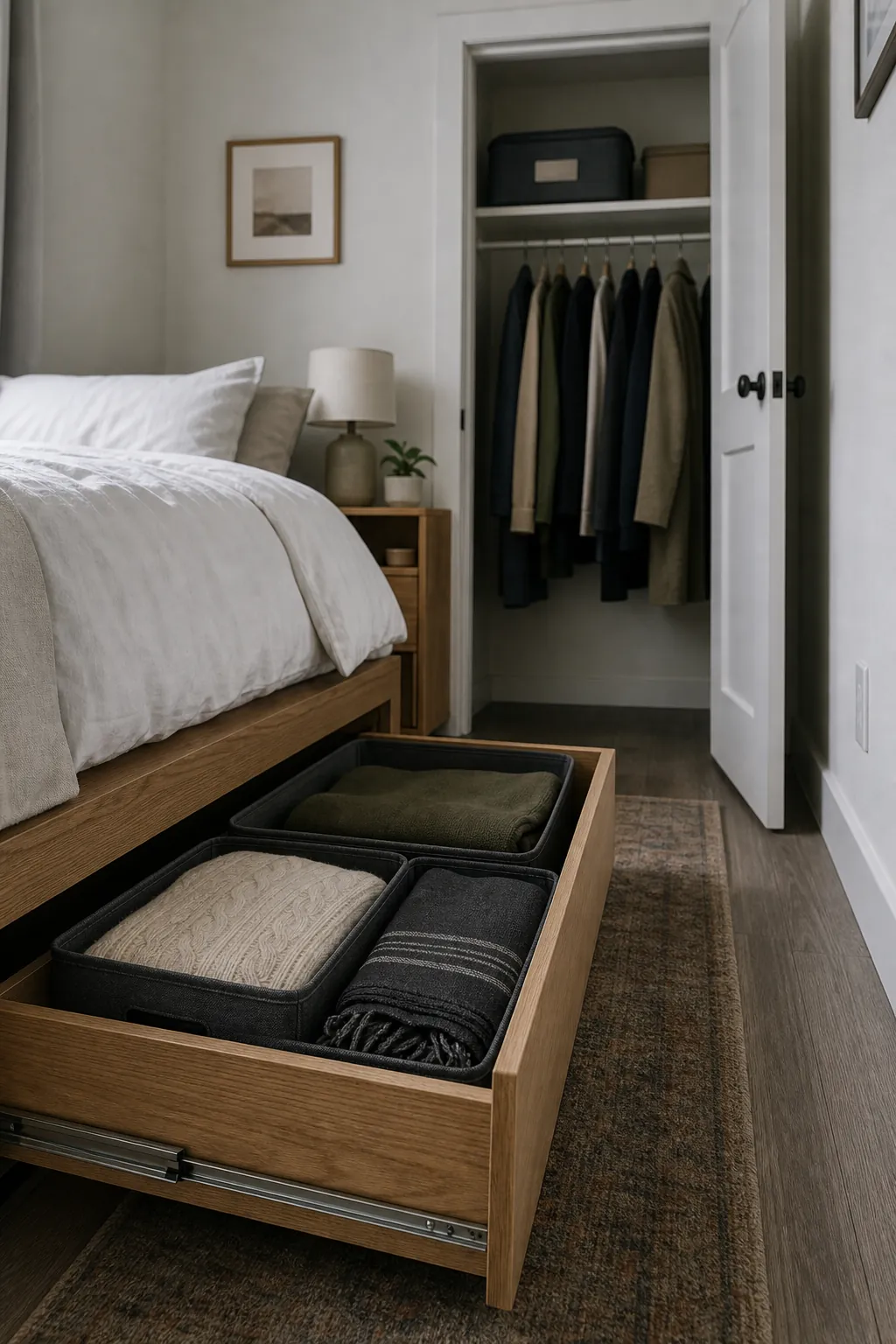
Deep storage works best when it is visible enough to remember and inconvenient enough to stay out of the way. Under-bed drawers, high closet shelves, lidded bins above a wardrobe, a labeled suitcase, or the top shelf of a utility cabinet can all work. The point is to give seasonal things a clear address without making them part of the daily room.
Do not stack deep storage so tightly that you cannot remove one container without dismantling the whole corner. That creates future clutter because the hard-to-access item never gets returned properly. Keep a little margin around each bin, and label the short side that faces outward.
If your home has almost no closets, use furniture boundaries instead. One under-bed drawer can be “guest linens.” One upper shelf can be “winter accessories.” One suitcase can hold “travel and seasonal extras.” The boundary is what makes the system work. Without a boundary, every deep zone becomes a hidden pile.
Give Utility Items One Slim Home
Small homes often scatter utility items because there is no full laundry room, garage, or spare closet. Batteries live in a drawer, tape lives in a kitchen basket, the flashlight is in a nightstand, and the screwdriver is wherever it was used last. This creates the feeling that the home has no system, even when the decorative parts look tidy.
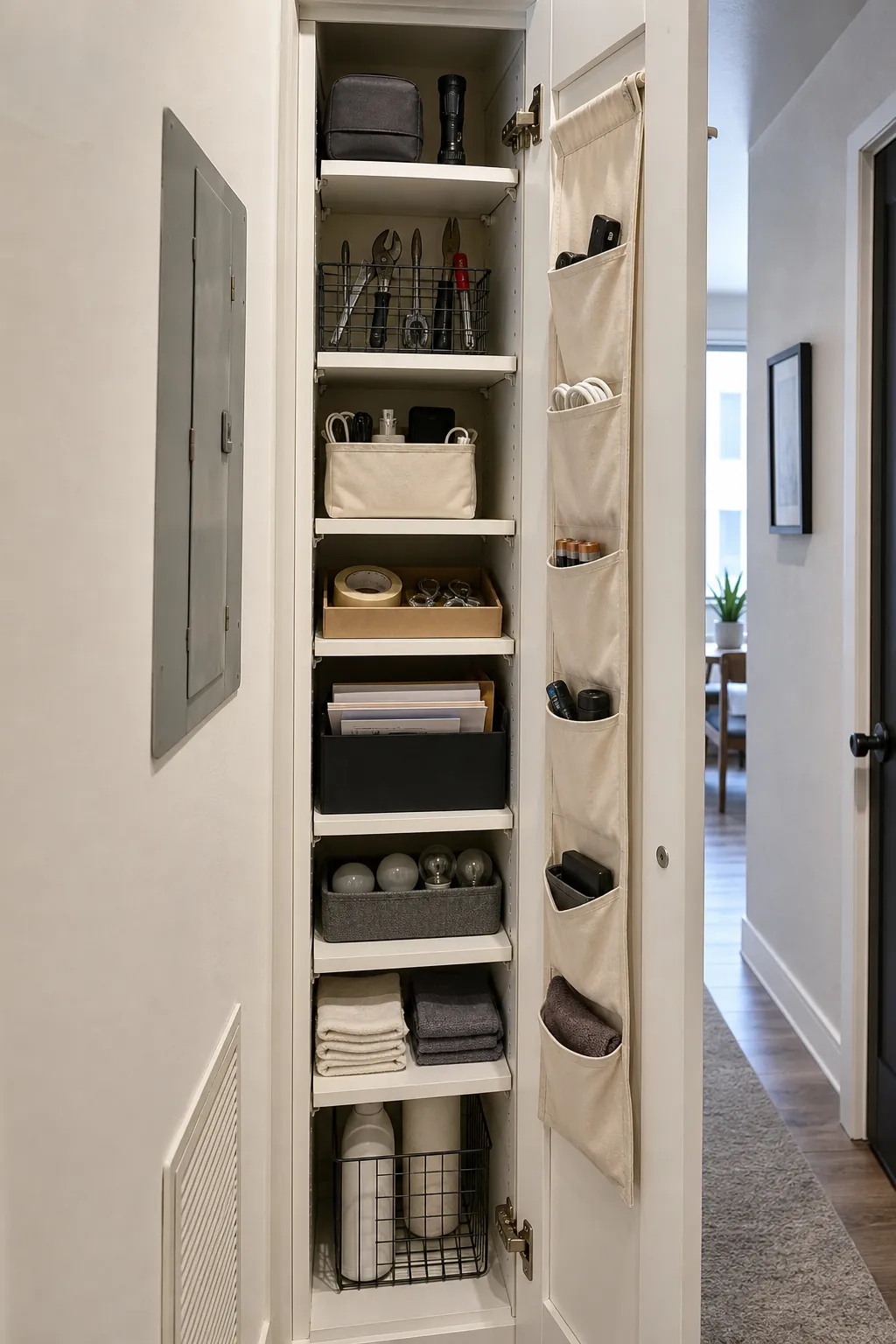
Build one slim utility zone. It can be a narrow cabinet, a rolling cart, a closet shelf, the inside of a door, or a lidded box on a high shelf. The zone should hold only practical support items: basic tools, tape, spare bulbs, batteries, extension cords, cleaning refills, extra filters, small repair supplies, and instruction manuals you truly need.
Keep this zone boring. Clear labels, small pouches, and shallow boxes beat deep bins. The goal is to find the item quickly and return it without reorganizing the whole container. This is especially important for clutter control because utility items often create “temporary” piles that stay for months.
- One pouch for batteries and small chargers.
- One shallow box for tape, scissors, hooks, and labels.
- One small toolkit for the tools you actually use.
- One folder or envelope for manuals and warranty papers worth keeping.
Maintain The System With A Weekly Reset
No storage system stays perfect by itself. A small home needs a short reset because the same surfaces do too many jobs. The reset should be simple enough that you will do it before bed, before groceries, or before a busy week starts.
Use a five-step weekly reset:
- Walk the home with one basket and collect items that are out of place.
- Return daily items to their zones first.
- Put weekly items back only if their container still has room.
- Move donations, returns, and outgoing items to the entry basket.
- Choose one small area to declutter before anything new comes in.
The weekly reset protects the limits you created. If a bin is full, the answer is not automatically another bin. The first answer is to remove duplicates, relocate deep-storage items, or admit that the category needs a stricter boundary.
A functional home is not a home where nothing is visible. It is a home where visible things make sense, daily items are easy to return, and storage zones do not have to be rebuilt every month. That is the standard that makes small home storage sustainable.
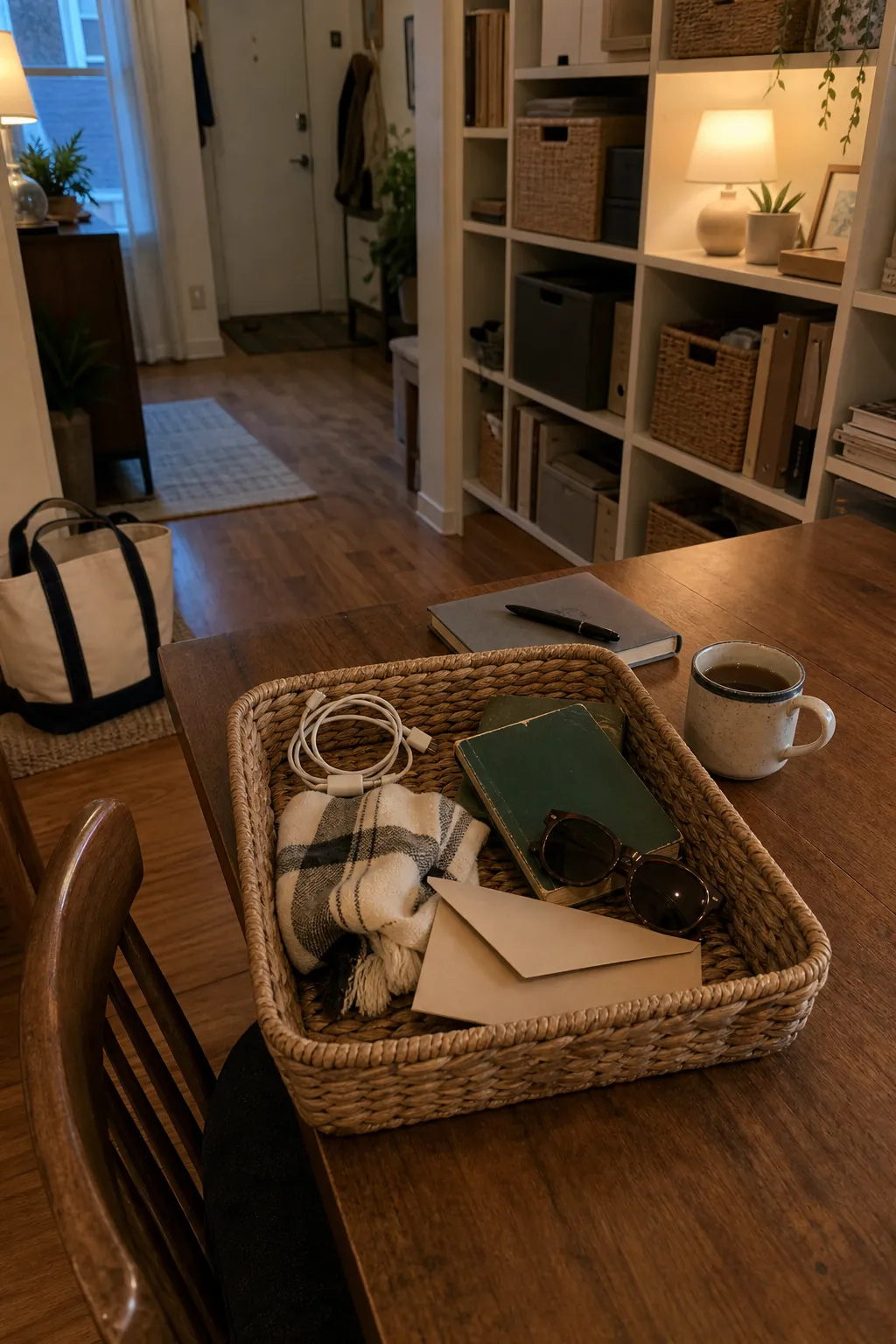
Start with one zone, not the whole house. Once that zone works for a full week, connect the next one. Small pockets of order become a whole-home system when each pocket has a clear limit, an easy return path, and a reason to exist.