
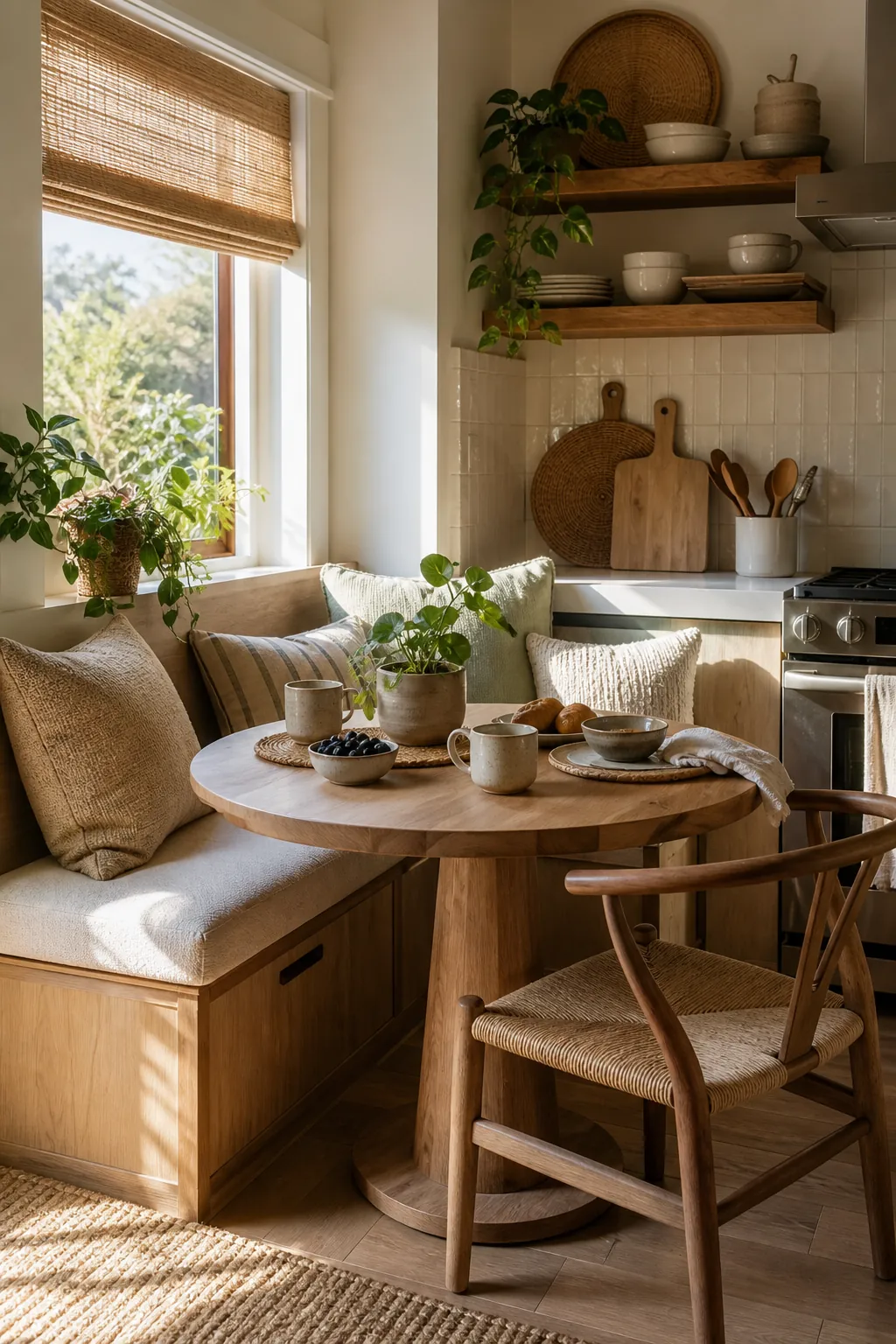
A good dining nook earns its floor space every day. It is not just a pretty corner with cushions; it has to make breakfast easier, keep a small dining area from feeling cramped, and give the kitchen a softer place to land between cooking, coffee, homework, and late leftovers.
The strongest dining nook ideas start with one simple test: can people sit down, slide in, and move past the table without rearranging the room? Once that works, kitchen styling becomes much easier. You can layer in wood, woven texture, open shelving, kitchen plants, and warm lighting without turning the nook into a catch-all zone.
Built-In Bench With Hidden Storage
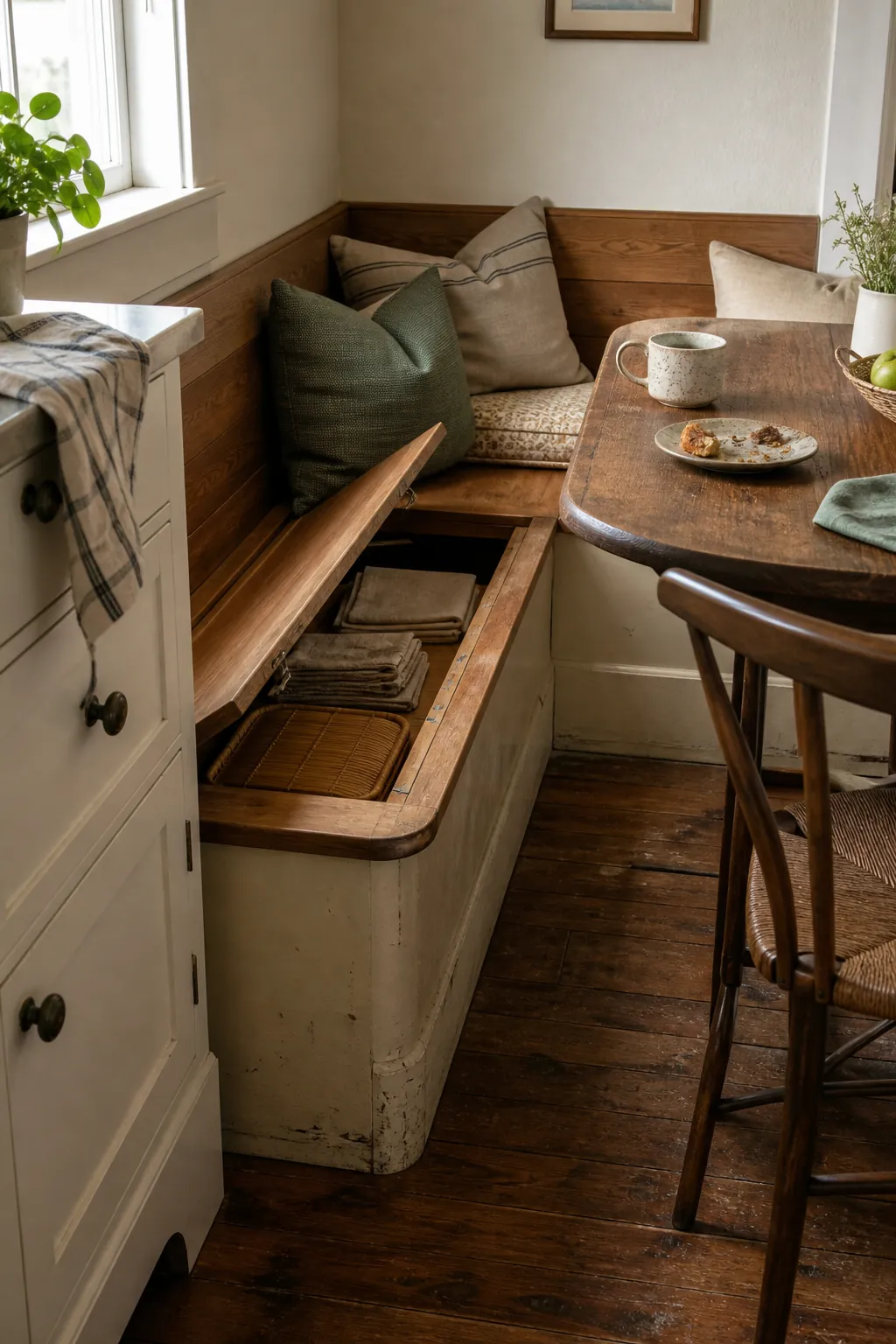
A built-in bench is the most reliable fix for a corner that is too tight for a full dining table and chairs. Chairs need pull-back space on every side, but a bench can hug the wall and leave the walkway open. That is why a banquette often works in a kitchen where a traditional dining room setup feels impossible.
Keep the bench depth comfortable, then add lift-up lids or deep drawers for linens, placemats, kids’ art supplies, spare candles, or small appliances. The best storage is not extra storage for random clutter; it is storage for the things you actually use at the table. If the nook is next to a kitchen, that might mean napkins and breakfast bowls. If it sits between the kitchen and living room, it might hold board games and laptop chargers.
- Match the bench paint to nearby cabinetry for a custom look.
- Choose wipeable cushions if the nook is used for everyday meals.
- Use fewer, larger pillows instead of a pile of tiny decorative ones.
Round Table That Keeps Traffic Moving
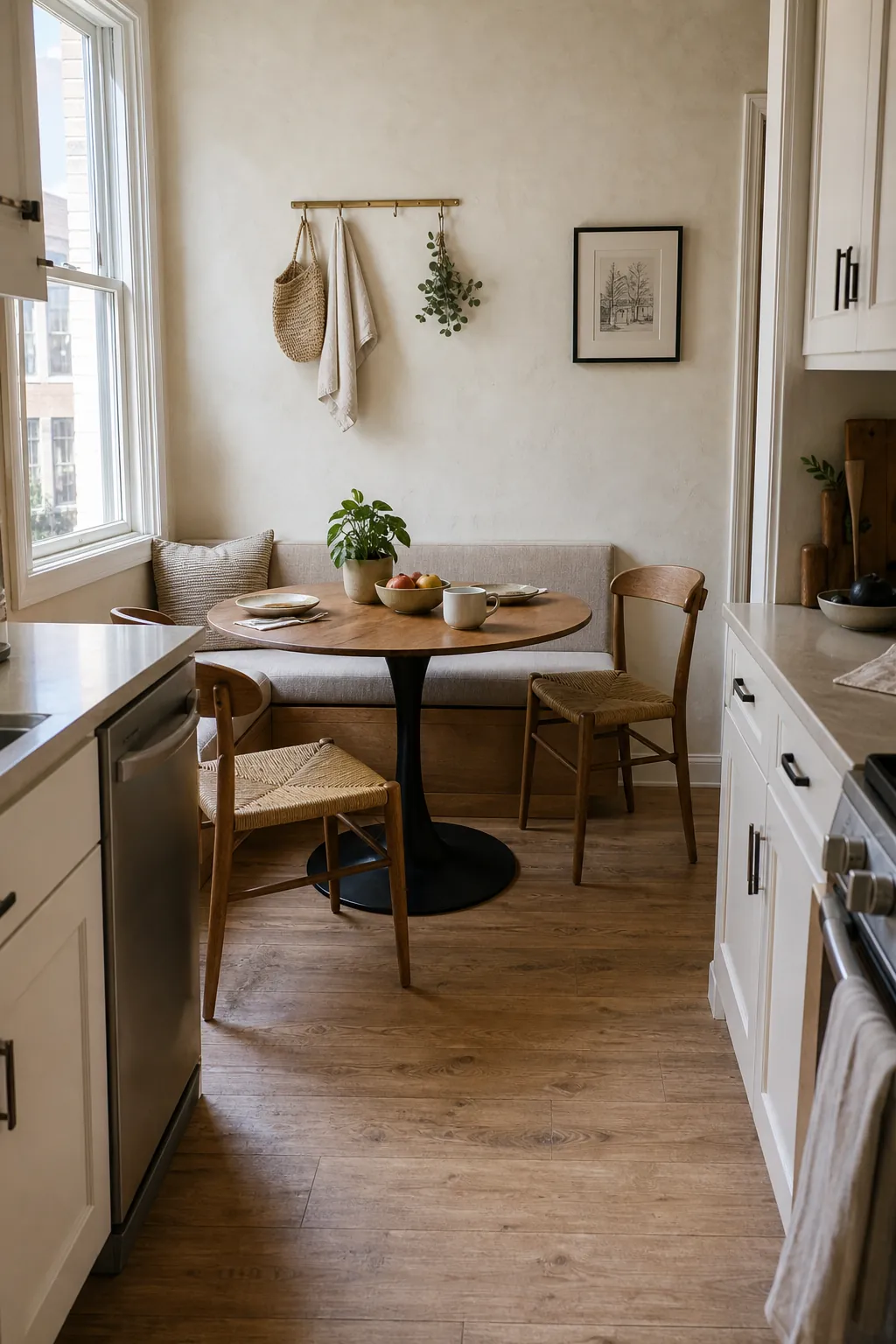
If your main problem is getting in and out of the nook, start with the table shape. A round pedestal table is forgiving because there are no sharp corners and no table legs fighting with knees. It also lets one side pair with a bench while the open side uses lightweight chairs or stools.
For a small dining area, the table should feel slightly undersized before it is styled. Once you add plates, mugs, a small plant, and a pendant above it, the scale will feel intentional. A table that fills the nook edge to edge may photograph well, but it usually becomes annoying when someone has to stand up mid-meal.
Use a pedestal base in wood, black metal, or painted white depending on the kitchen decor around it. Wood warms up tile and stone. A darker base can ground a light room. A white or pale oak finish keeps a narrow corner airy.
Window Seat Breakfast Nook
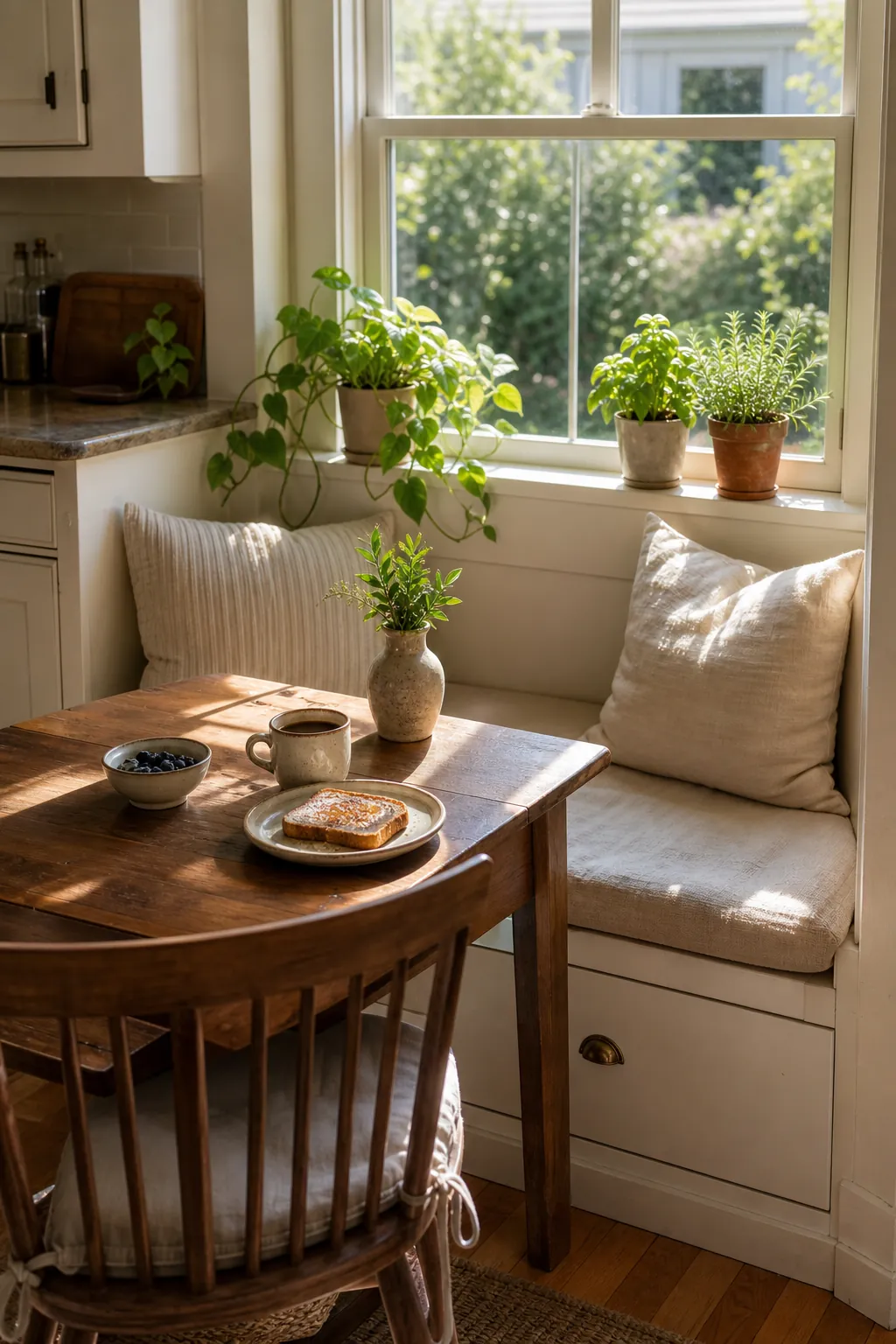
A window seat turns a breakfast nook into the place people naturally choose for coffee, reading, or a quick lunch. The light does most of the decorating, so you can keep the furniture simple and still get a cozy everyday meal space.
The key is to make the seat feel like part of the kitchen rather than a separate decorative moment. Use the same wood tone, cabinet color, or hardware finish that appears elsewhere in the room. Add a washable linen or cotton cushion, then keep the tabletop clear enough for actual plates. A nook that is always covered in styling objects stops being a dining nook.
Kitchen plants work especially well here because they get real light and soften the hard surfaces around the sink, counter, and backsplash. Choose herbs, pothos, peperomia, or small trailing plants if the sill is narrow.
Open Shelving Above the Table
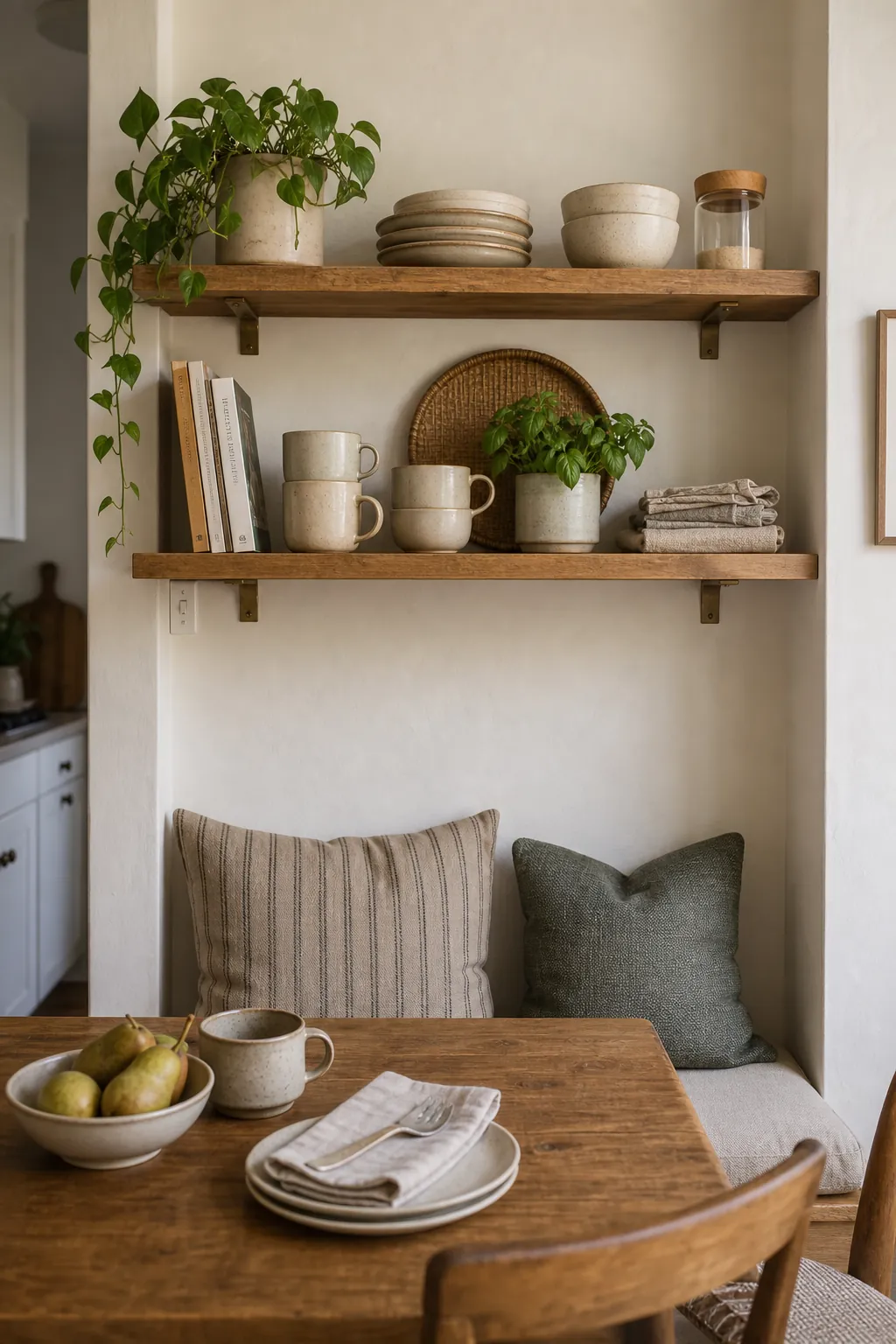
Open shelving can make a dining nook feel finished without stealing floor space. It is also a practical place for the items that make everyday meals easier: mugs, small bowls, linen napkins, a tray, salt cellar, cookbooks, or a compact coffee setup.
Keep the shelves shallow so no one bumps their head when sliding into the bench. A good shelf should feel connected to the dining room decor without acting like a display case. Mix useful objects with a few warm textures: ceramic, bamboo, rattan, glass, matte metal, and small greenery.
If your kitchen already has upper cabinets everywhere, one or two open shelves can break up the heaviness. If your kitchen is very small, use the shelves as controlled storage rather than extra decoration. The difference is editing: only keep what you reach for often or truly like seeing.
Boho Kitchen Corner With Natural Texture
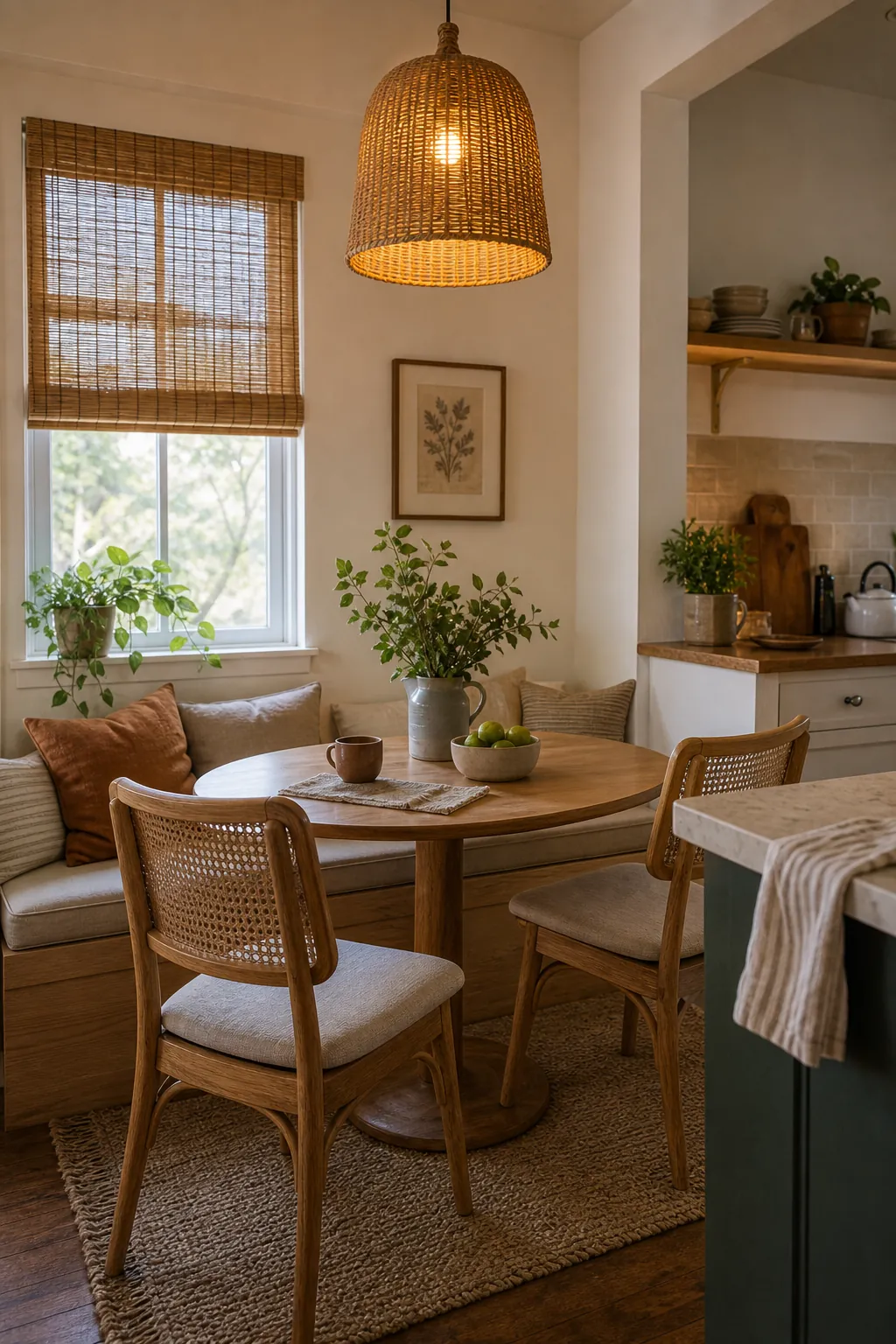
Boho kitchen styling works best when it is restrained. A dining nook can carry woven texture, warm wood, plants, and handmade ceramics without making the whole kitchen feel busy. The trick is to let one or two natural materials lead, then keep the rest calm.
Try a woven pendant over the table, bamboo shades on the window, a jute runner underfoot, or cane-backed chairs opposite a bench. Natural texture adds coziness faster than more color does, especially in a kitchen where cabinets, appliances, and counters already create visual noise.
For a softer boho kitchen, use cream, clay, olive, black, and honey wood rather than a one-note beige palette. A few darker accents keep the nook from looking washed out, and real plants keep it from feeling staged.
Narrow Wall Nook With a Drop-Leaf Table
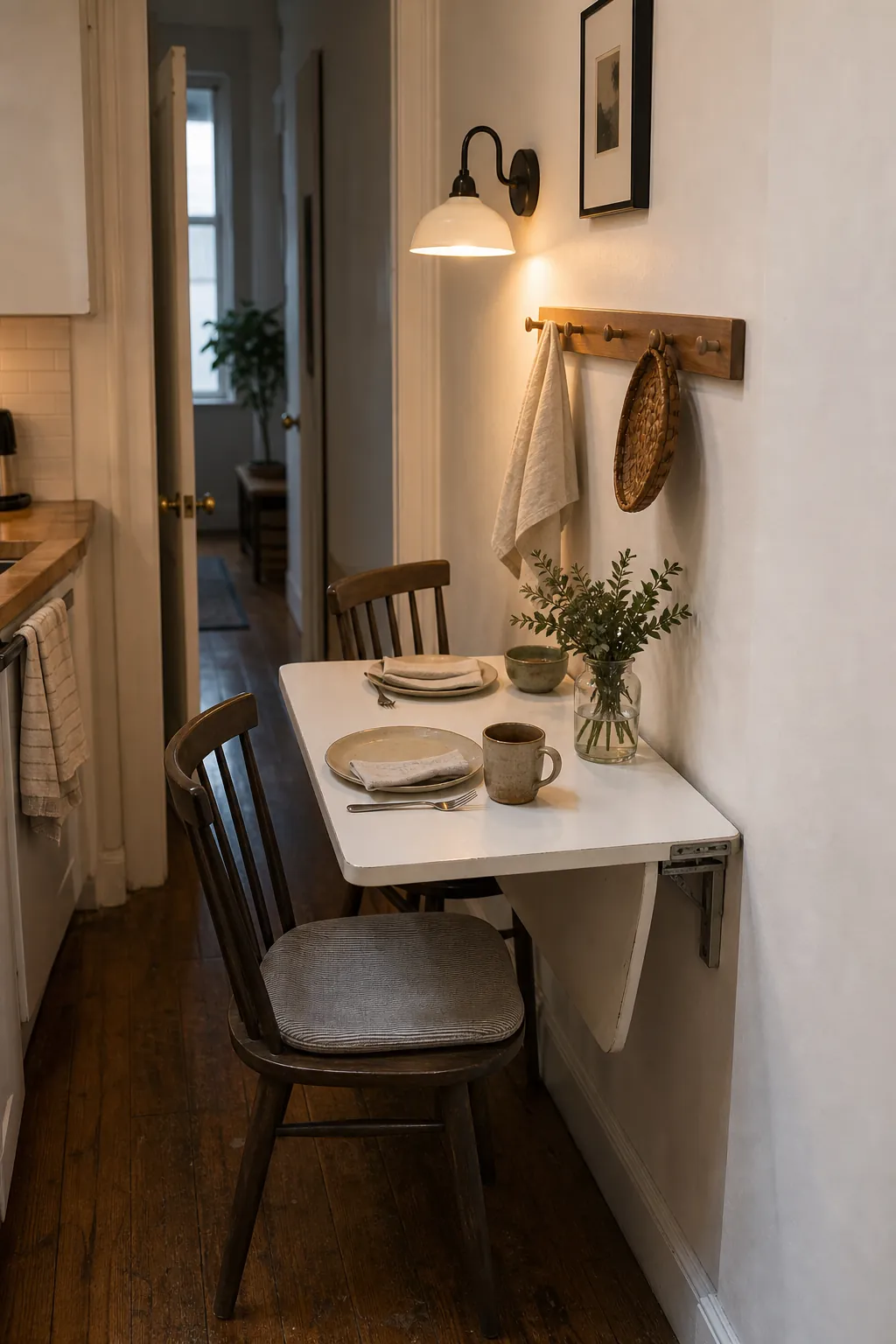
Not every dining nook needs a built-in banquette. In a rental, apartment, or narrow kitchen, a drop-leaf table can create a flexible meal spot without a permanent project. Fold one side down for weekday coffee, open it for dinner, and push it flat when the walkway needs to breathe.
This works especially well along a blank wall between the kitchen and living area. Add two slim chairs, a wall sconce, and a small piece of art or peg rail above. The goal is to make the wall feel intentional, not to force a full dining room into a passageway.
Use chairs that tuck fully under the tabletop. If you need extra seating, keep a folding stool nearby instead of crowding the nook every day for a guest who visits once a month.
Plant-Led Natural Kitchen Nook
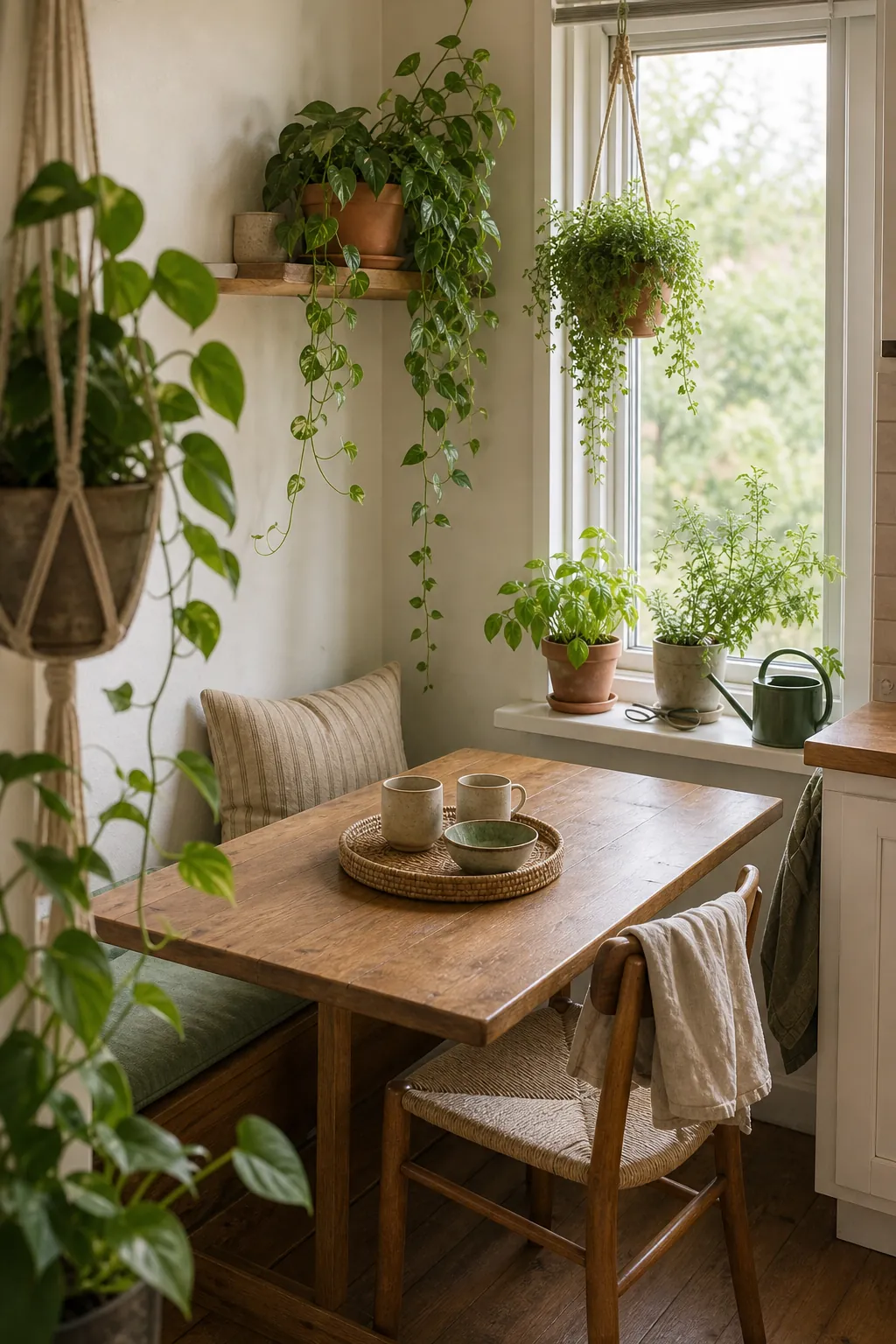
Kitchen plants are useful in a dining nook because they bring life to a small corner without requiring much surface area. A trailing plant on a shelf, a pot of herbs near the window, or a hanging planter beside the bench can make the nook feel softer while keeping the table open.
Choose plants based on the actual light, not the look you want. Herbs need a bright window. Pothos tolerates lower light. Snake plants are forgiving if the nook is away from the glass. A healthy plant in the right place looks better than five struggling plants arranged for a photo.
Pair greenery with natural kitchen materials: wood shelves, stoneware mugs, a bamboo tray, woven shades, linen cushions, or a simple ceramic vase. This keeps the nook connected to the kitchen instead of making it feel like a separate plant shelf with a table underneath.
Soft Lighting That Makes Dinner Feel Slower
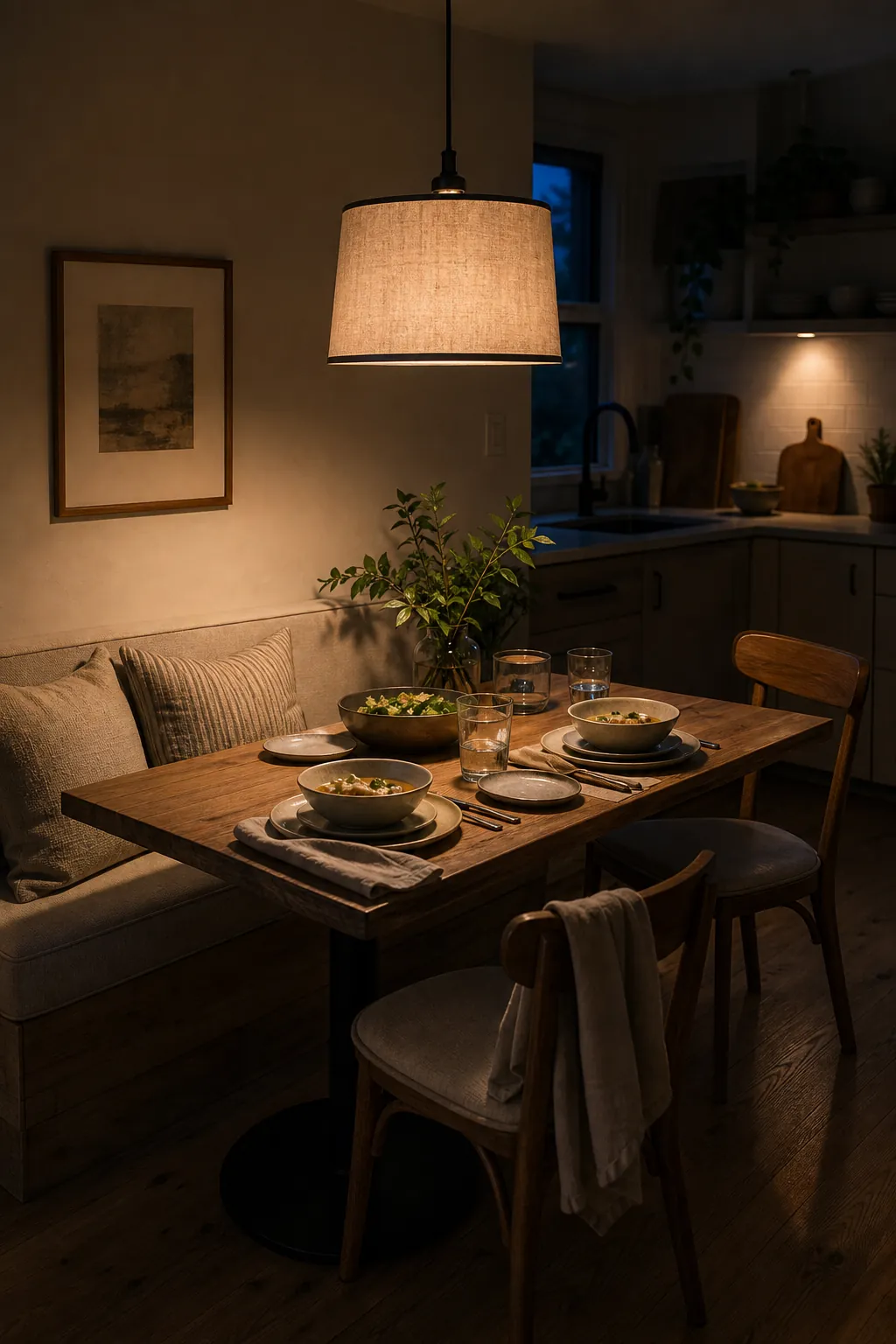
Lighting is what separates a working kitchen corner from a place people want to sit after dark. A pendant, wall sconce, or plug-in shaded lamp gives the table its own glow, which matters if the rest of the kitchen is lit by bright ceiling cans.
Hang a pendant low enough to anchor the table but high enough that faces stay visible across the nook. Use warm bulbs, dimmers if possible, and a shade that diffuses light instead of throwing glare onto plates. Cozy is not dark; cozy is controlled light where the meal actually happens.
Once the lighting is right, the rest of the kitchen decor can stay simple. A clear table, comfortable seat, useful shelf, and one living plant often do more for daily comfort than a bigger furniture plan.