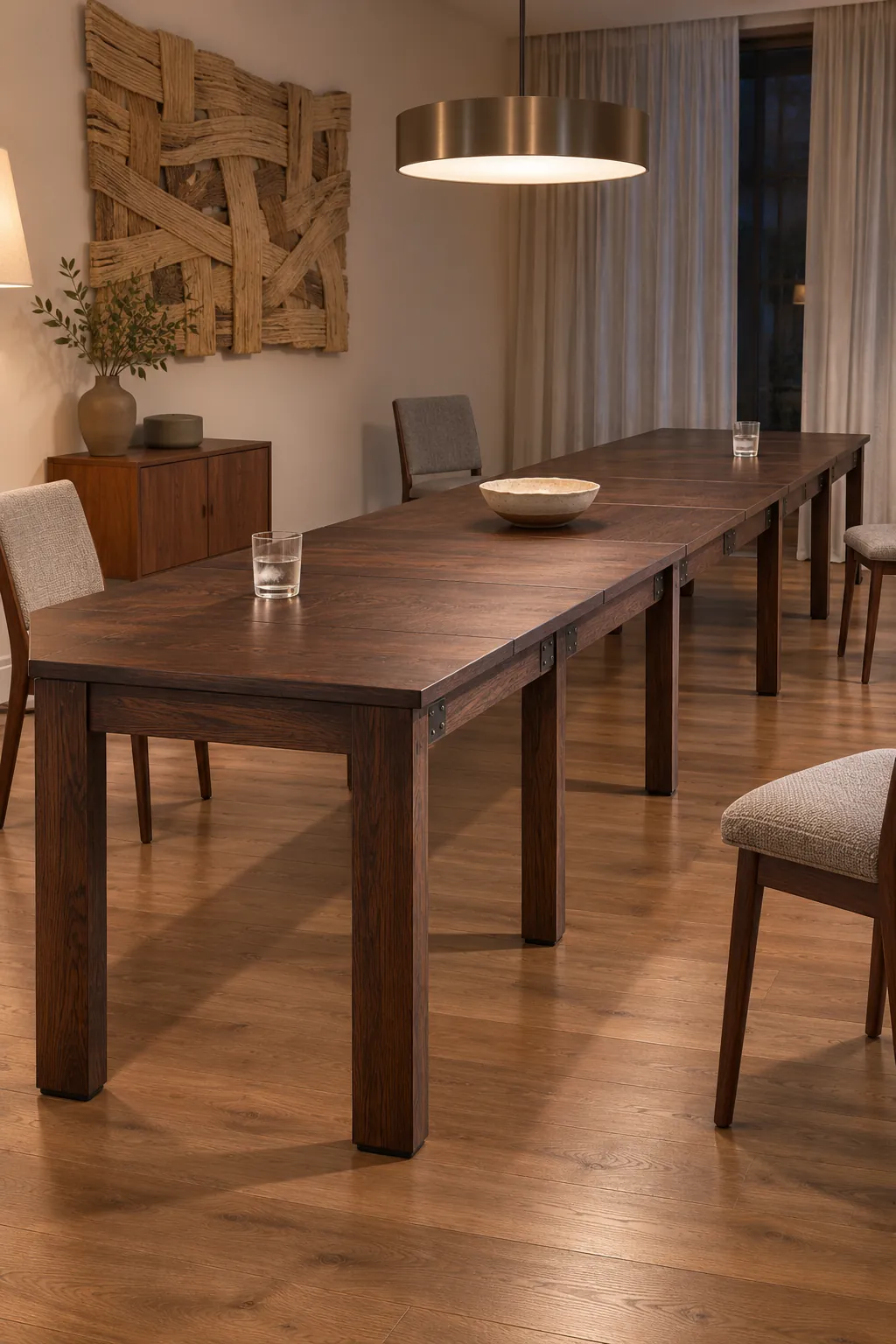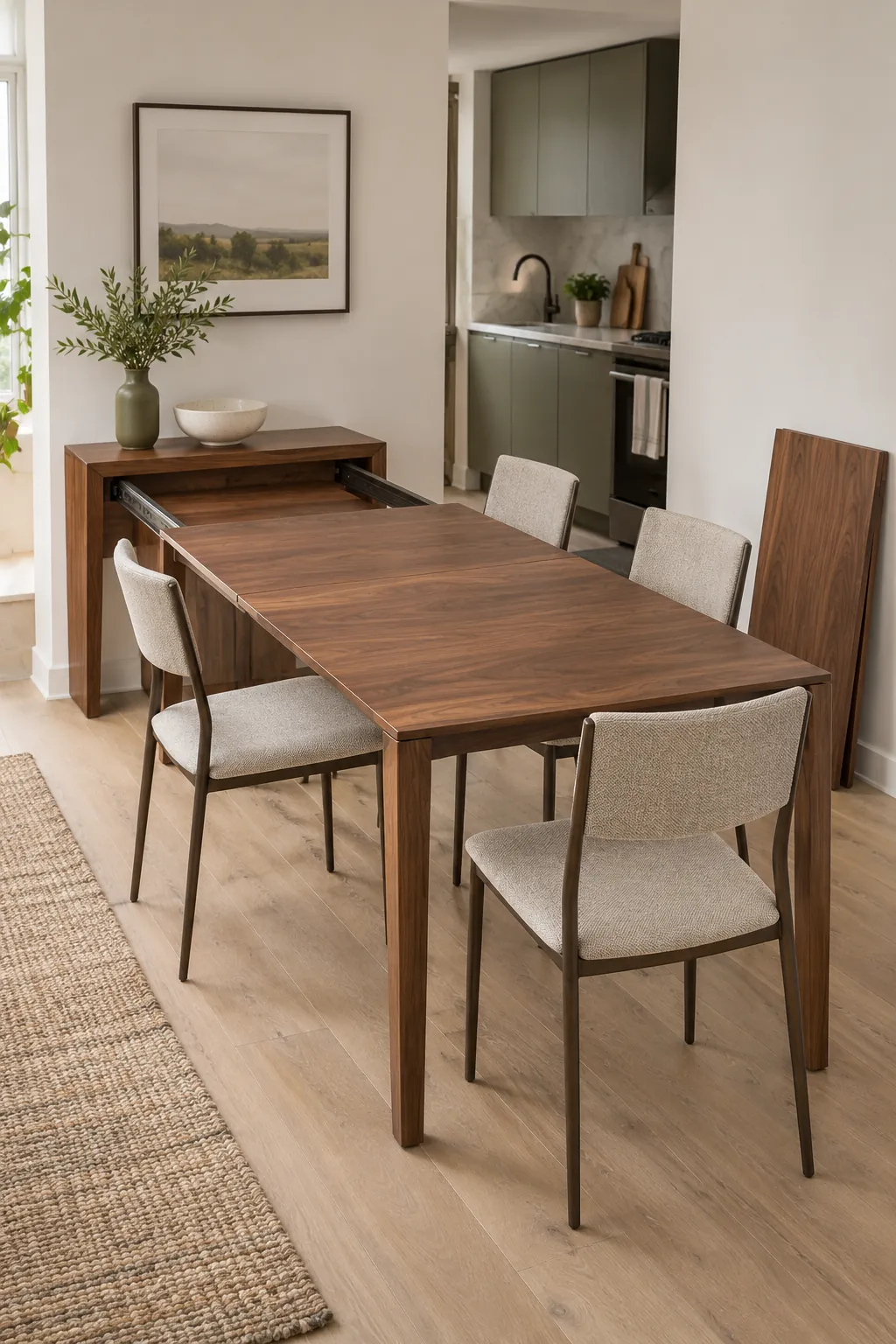
A transforming table can solve a real space problem, but only if both of its sizes fit your home. The closed form must work as everyday furniture without blocking a route. The expanded form must support a comfortable meal without turning every chair into an obstacle.
The best choice starts with measurements, not a product photo. Measure the room, decide how many people you truly host, and check how the table changes between modes. This approach exposes weak mechanisms, awkward leaf storage, and unrealistic seating claims before delivery day.
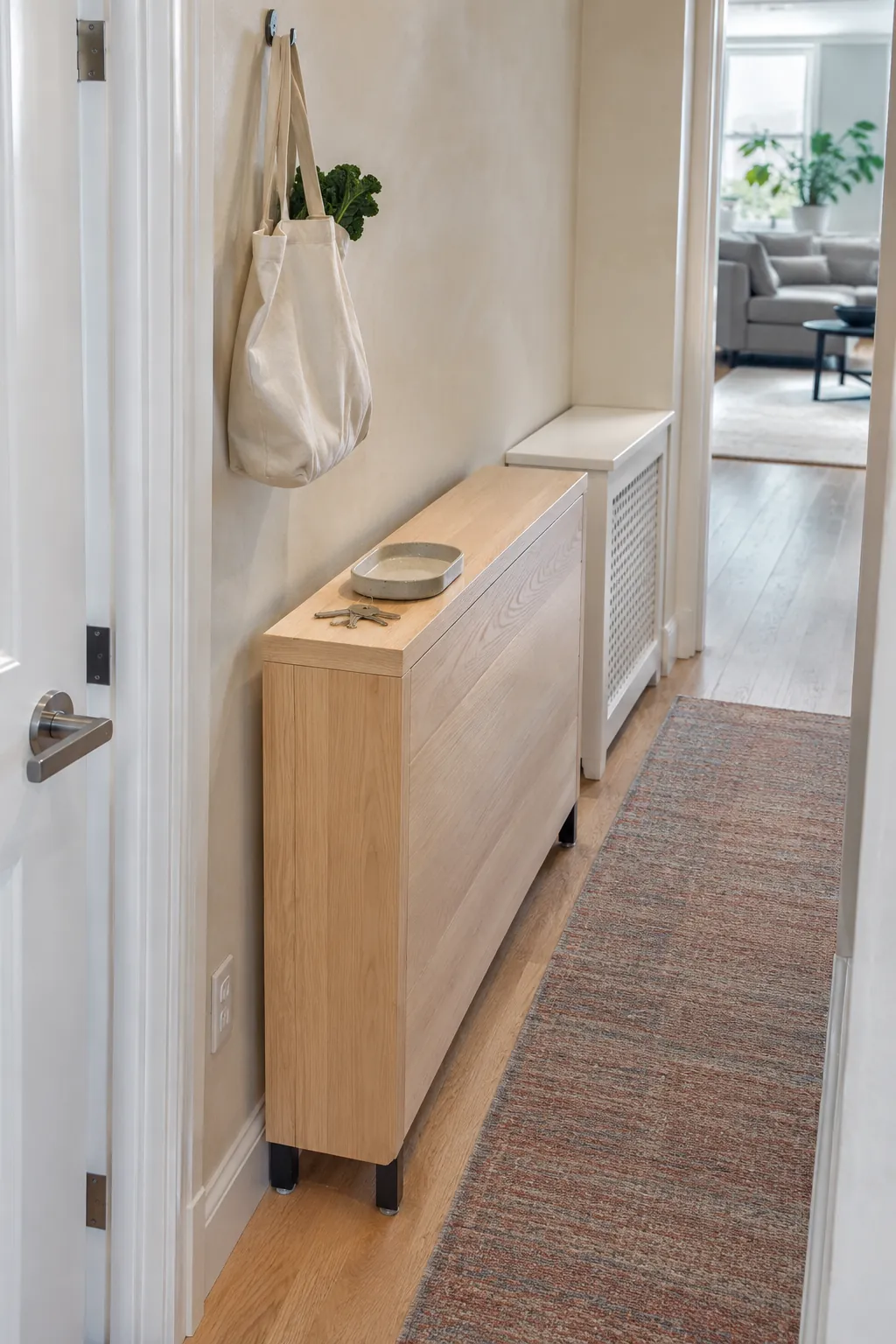
Measure the closed footprint first
Mark the proposed console width and depth on the floor with removable tape. Walk past the outline while carrying a laundry basket or grocery bag, since a route that feels acceptable when empty can feel cramped during normal use. Check nearby doors, drawers, radiators, outlets, and floor vents before you accept the location.
Console depth matters because a narrow profile is the main daily benefit. A deep cabinet style base may provide a stronger visual presence, yet it can consume the same circulation space you hoped to recover. Record the maximum closed depth that keeps your walkway usable, then reject any listing that omits that number.
Map the full dining footprint
The expanded tabletop is only one part of the dining footprint. Add chair depth and the space needed to pull each chair out. A useful planning target is about ninety centimetres from the table edge to a wall or fixed cabinet, although a compact home may require a tighter arrangement for occasional meals.
Use paper rectangles, flattened cartons, or tape to mark the full tabletop. Place real chairs around it and sit at every intended position. Confirm that guests can reach their seats, knees do not meet a support, and the host can move between the table and kitchen.
Match capacity to the top and base
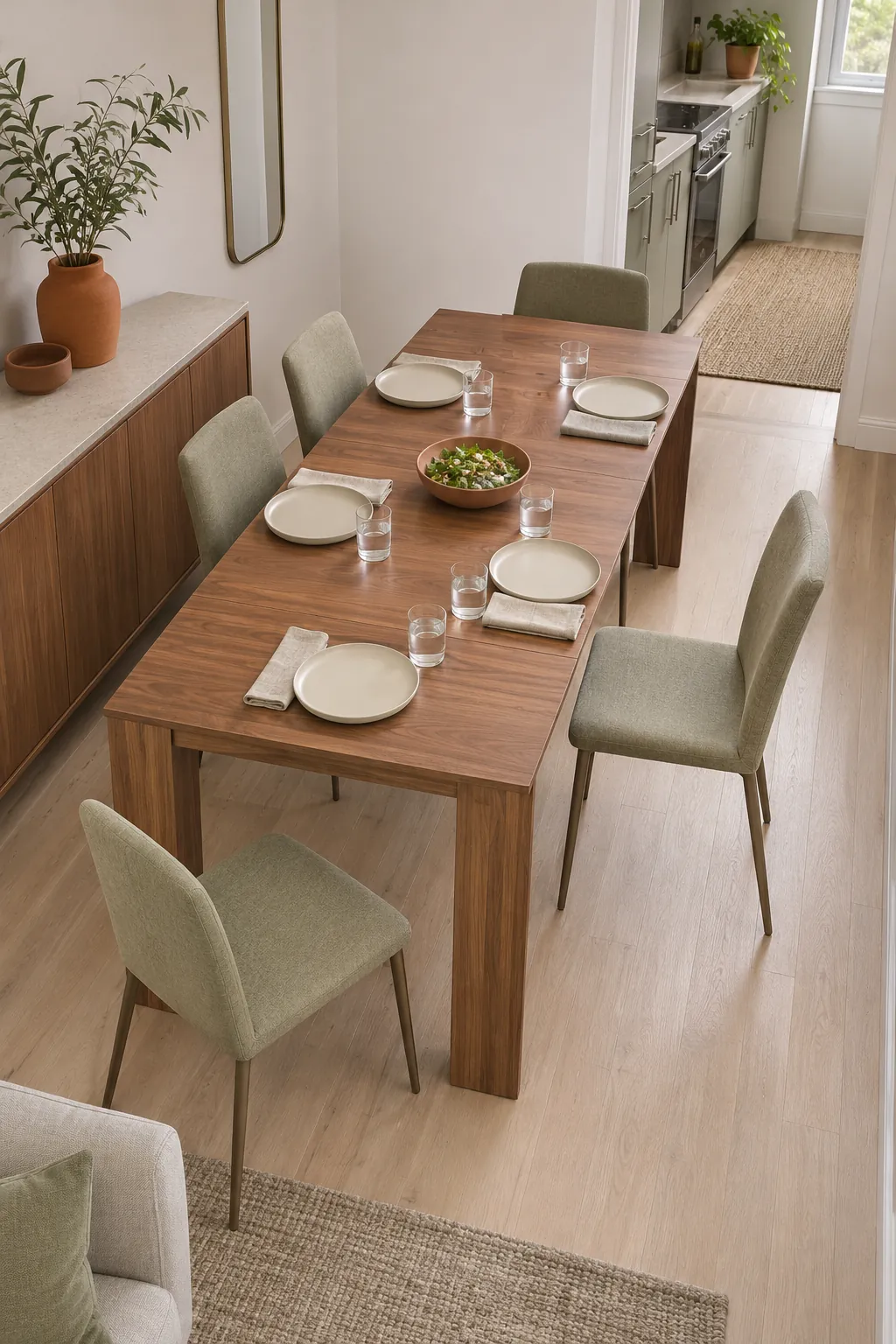
Seller capacity claims often assume narrow chairs and little elbow room. Compare the usable perimeter with your actual chair widths instead. Allow roughly sixty centimetres of table edge for each adult place when comfort matters, then reduce the expected capacity if broad armchairs or serving dishes need space.
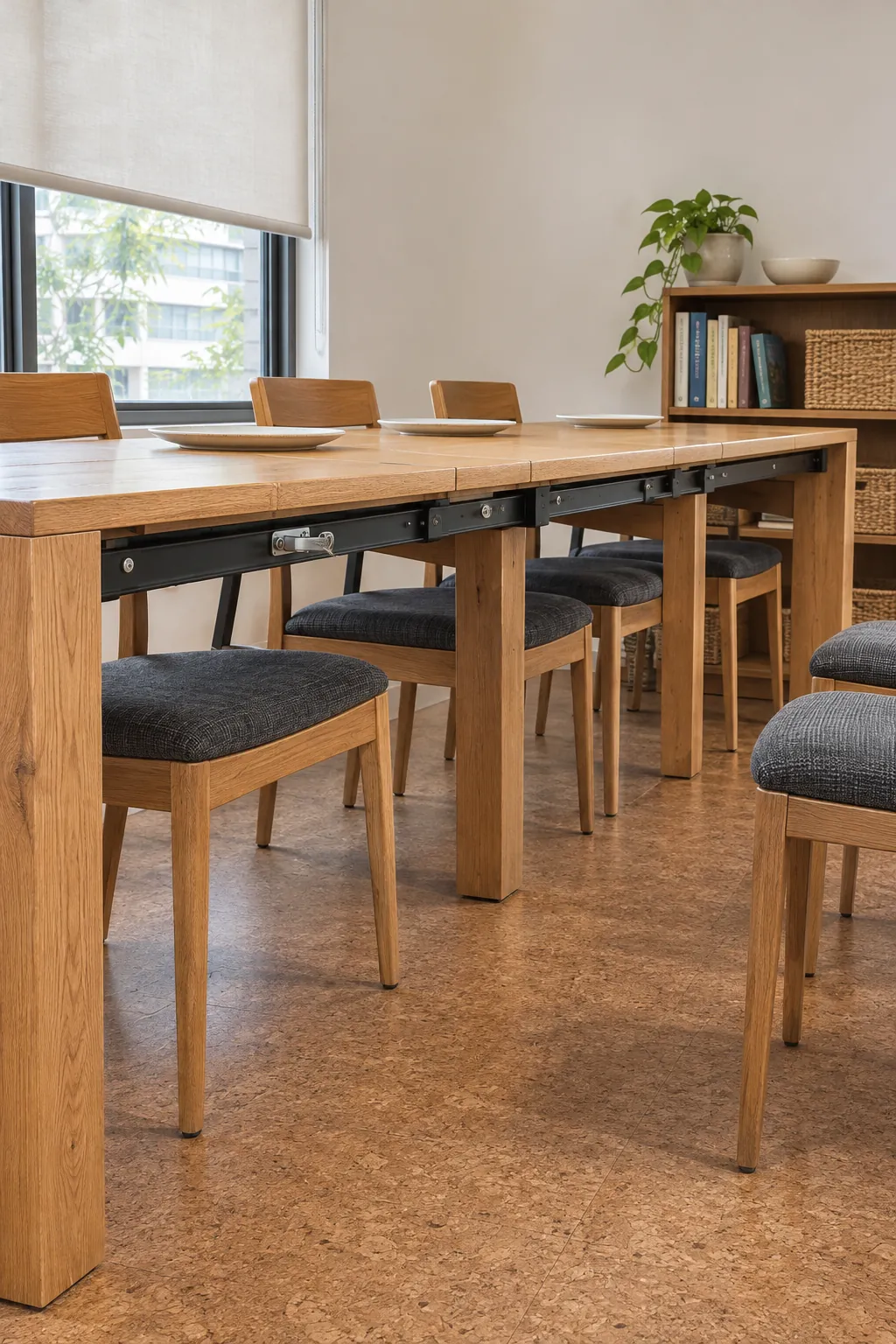
Look underneath the table before counting seats. Pedestals, folding legs, braces, and extension rails can occupy knee space even when the tabletop appears long enough. Ask for an underside photo in every configuration and note where each support lands after all leaves are installed.
Test the extension mechanism
A transforming dining table should be manageable for the person who will set it up most often. Watch a complete demonstration that begins with the closed console and ends with the finished dining table. Count the separate parts, note whether one person can align them, and check whether the base must be dragged across the floor.
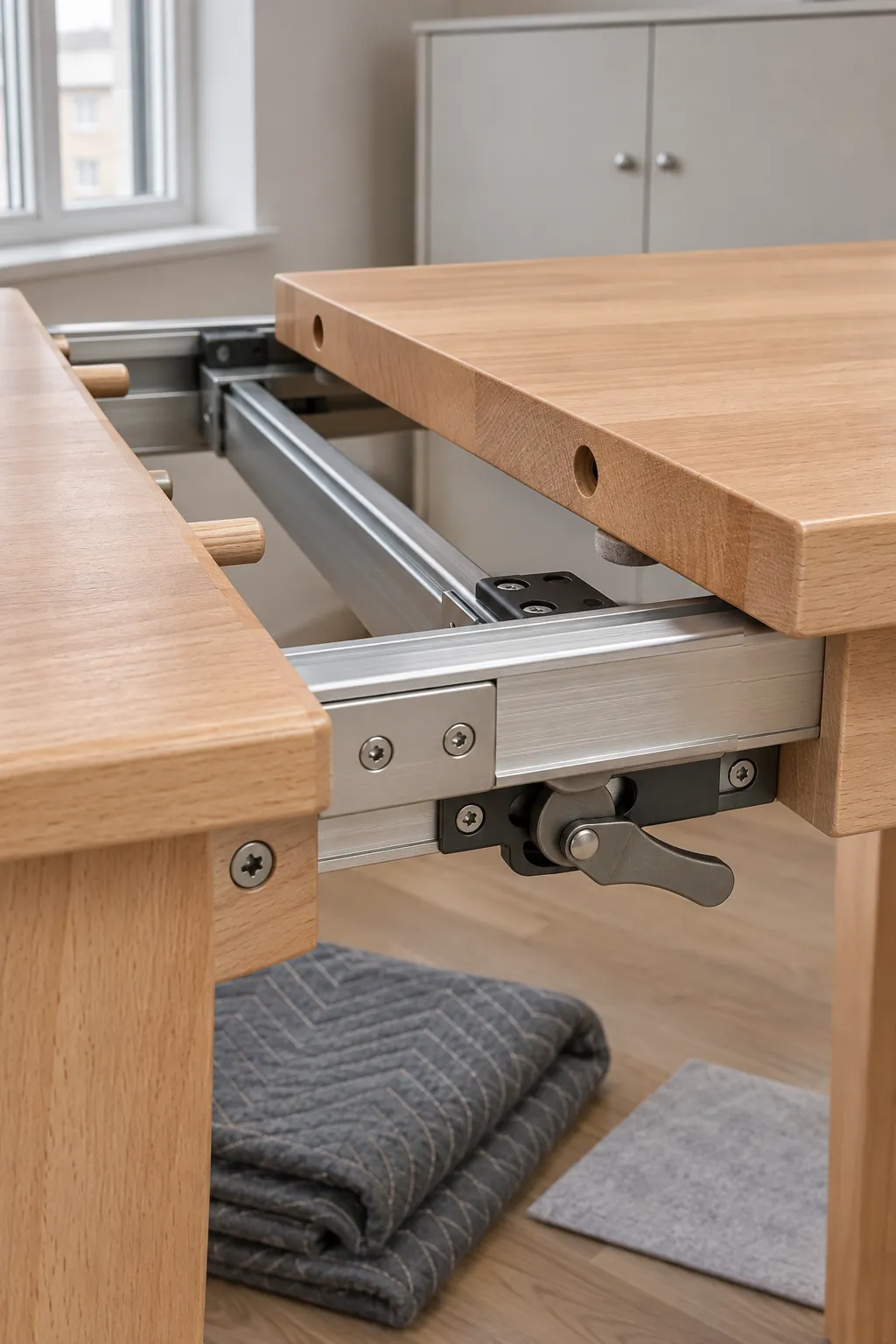
Extension rails should move smoothly without sudden drops or loose sideways play. Locks, clips, or latches should be reachable and should hold the sections together firmly. If the instructions require lifting a heavy top while extending the frame, confirm the weight and decide where a second helper could stand.
Plan storage for every leaf
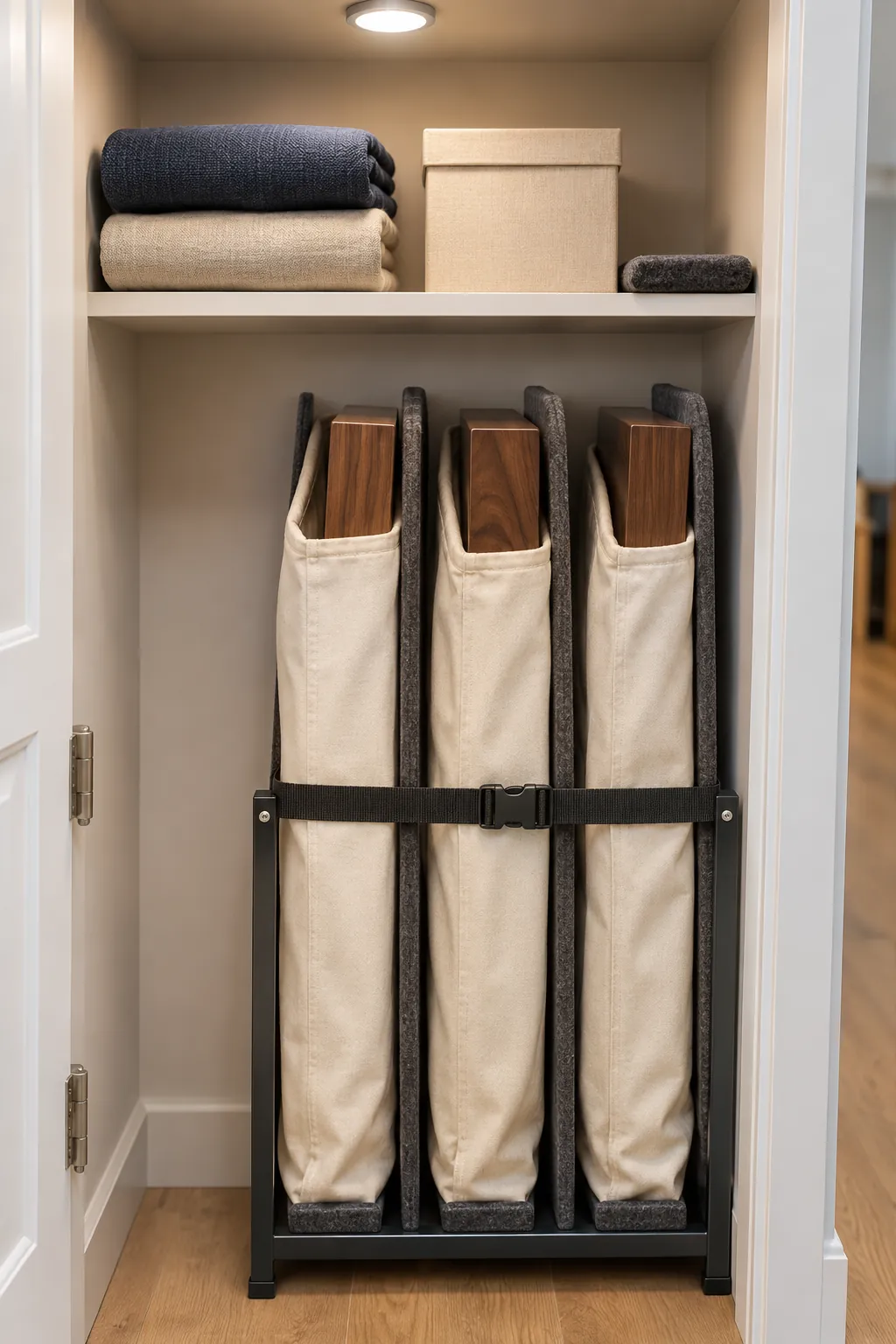
Separate extension leaves can take more storage space than expected. Record each panel dimension, thickness, and weight, then identify a dry location before buying. Store panels flat when the maker requires it, or use a supported vertical rack only when the construction permits that orientation.
Protect finished faces with breathable covers and soft separators. Avoid bare concrete, damp walls, direct heat, and areas where corners can be struck by a vacuum or door. Self storing leaves remove this task, but they can make the base heavier and may reduce leg clearance.
Check stability, finish, and delivery access
Test stability in both the smallest and largest configurations. Press gently near the long edges and corners, then check for rocking, twisting, or gaps between sections. A long expanded top needs well placed supports, secure connections, and level contact with the floor.
Inspect the finish where leaves meet because slight colour or grain differences become obvious under dining light. Ask how heat, spills, and cleaning products affect the surface. Confirm the warranty covers hardware as well as the tabletop, since the mechanism is central to the furniture.
Finally, compare the largest packaged component with your lift, stair turns, corridor, and doorway. Note the assembled weight and whether the base arrives in sections. A console dining table is a strong small apartment choice when its closed size protects daily movement, its expanded size supports real chairs, and its setup is simple enough that you will actually use it.