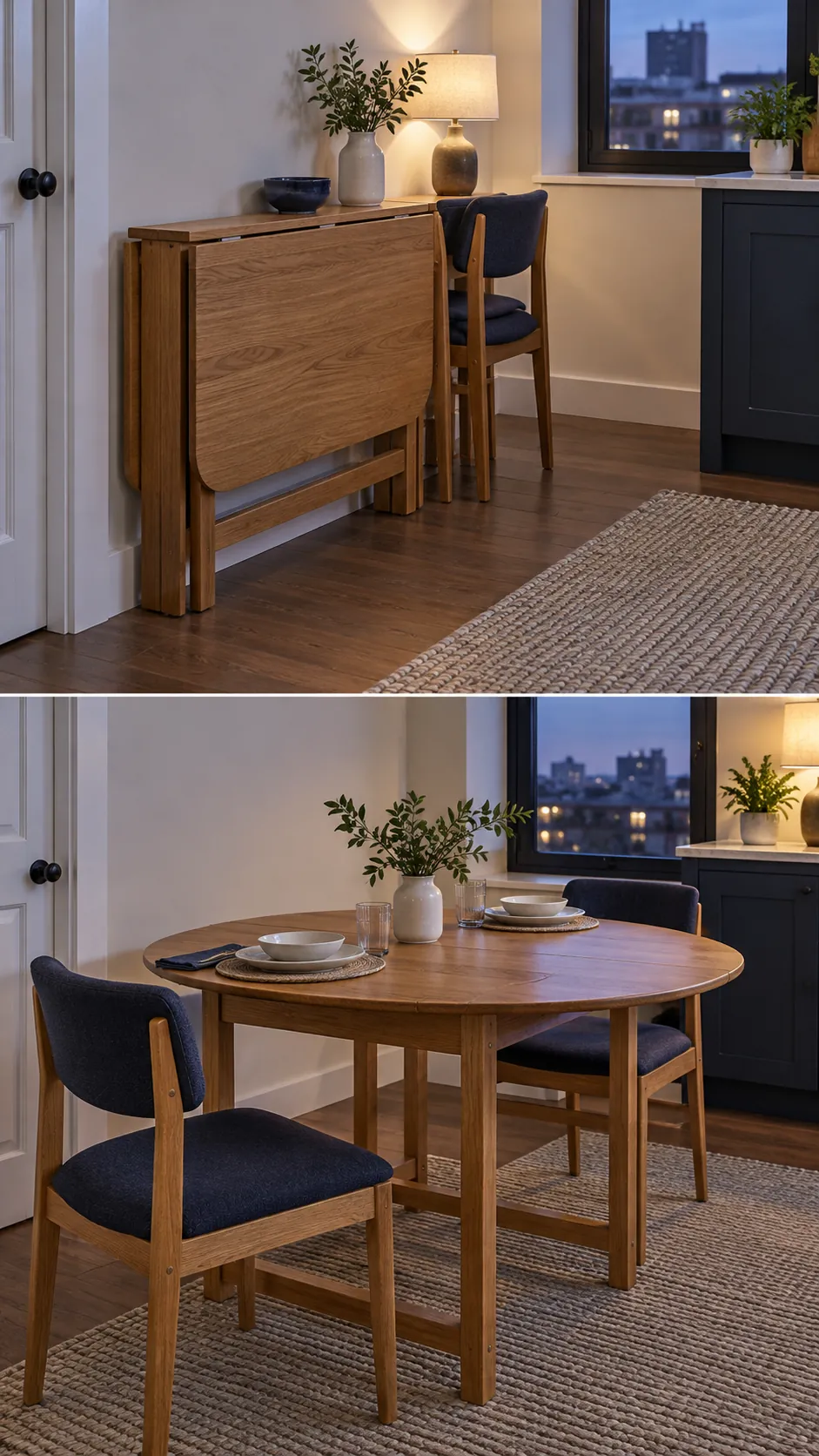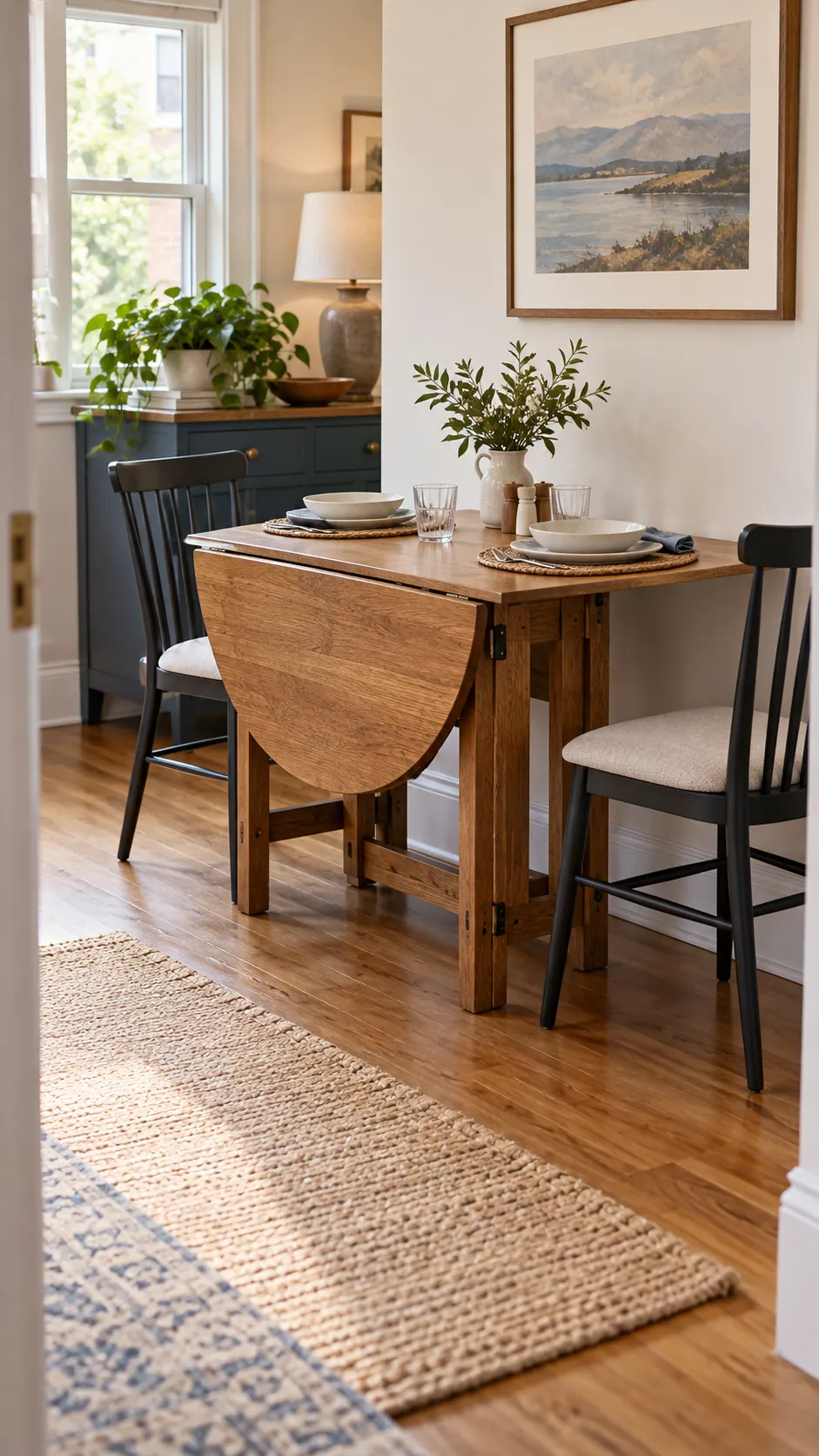
A drop leaf table earns its space only when it works well closed, opens without a struggle, and feels stable during a meal. Many shoppers compare the top dimensions but miss the moving legs, chair clearance, and support hardware that decide whether the table is comfortable.
Measure the whole routine, not just the furniture. Plan where the table rests, how the leaves move, where chairs go, and whether people can still walk through the room.
Measure the Table in Both Positions
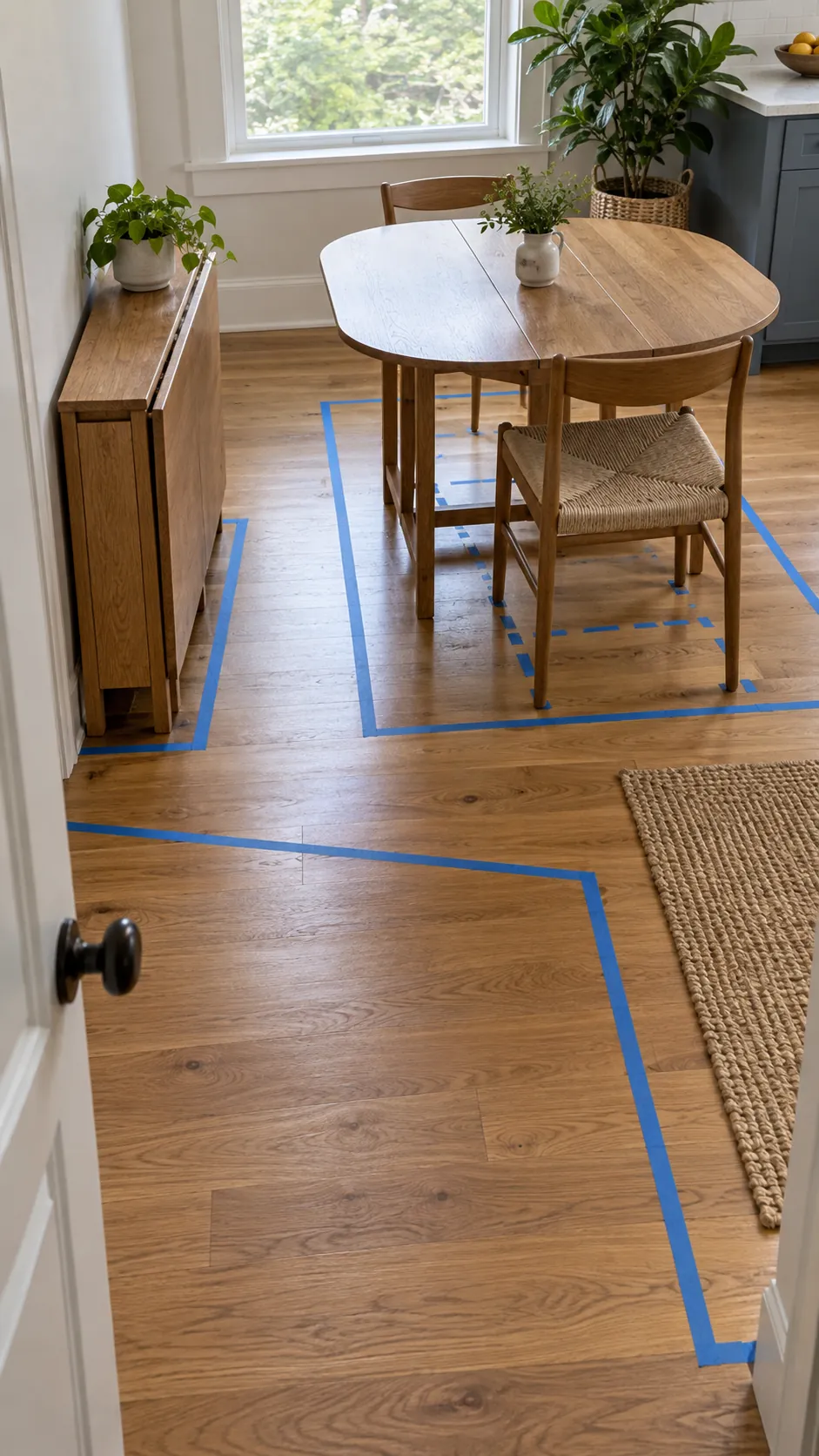
Mark the closed footprint on the floor with removable tape, then mark the full open top and every support leg. Include chair depth and the space needed to pull a chair back. Check doors, drawers, radiators, and the main walking route in both layouts.
Measure the route from the building entrance to the final room. A compact table can still have a wide fixed center section that will not turn through a stair or doorway. Record the maximum size that fits the room and the route before comparing products.
Choose the Leaf Design for Daily Use
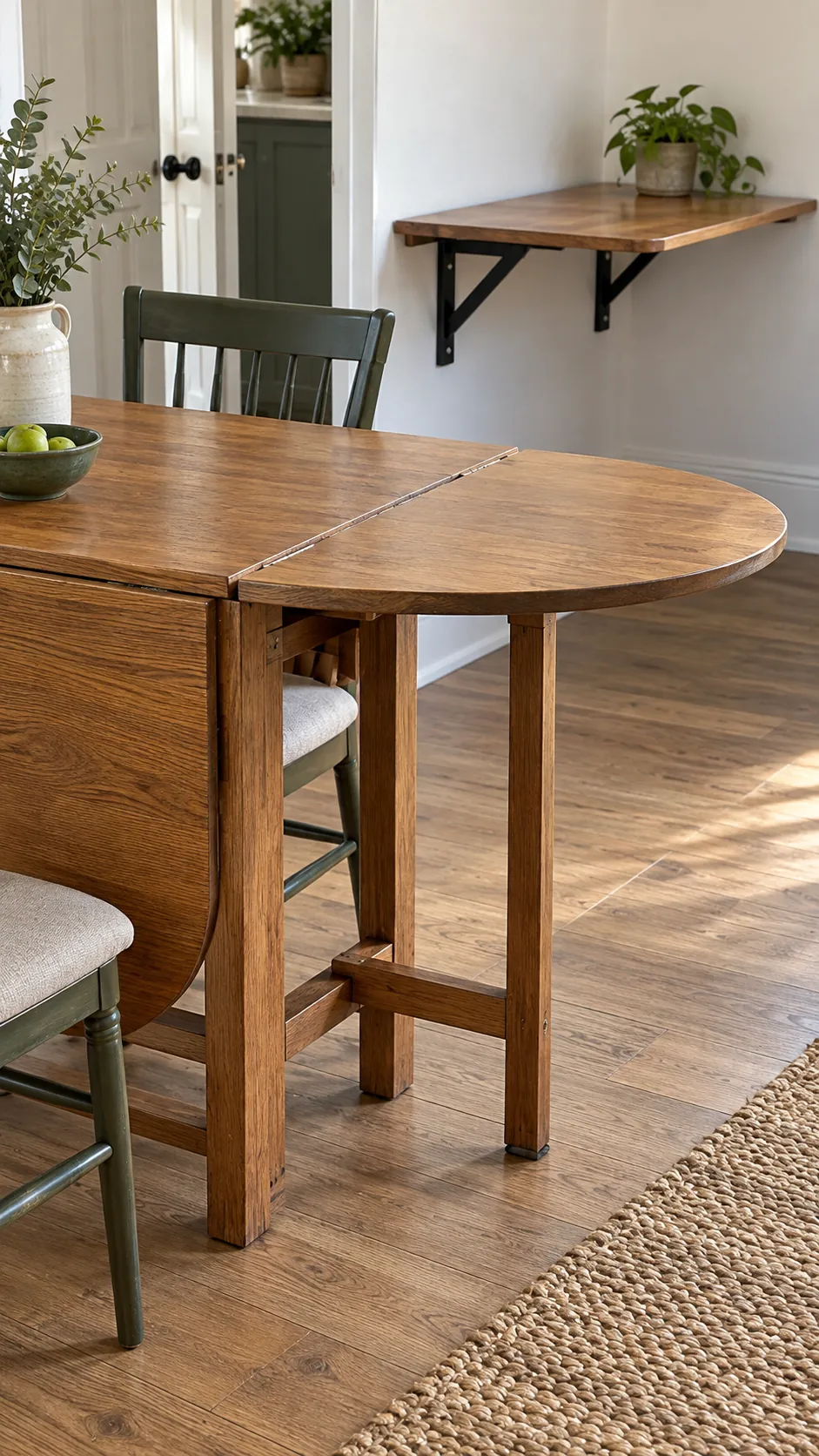
A gateleg table gives each raised leaf a moving leg near its outer edge, which can provide strong support but may affect knee space. A bracket supported leaf keeps the floor clearer, but the bracket must lock positively and carry the expected load. A wall mounted dining table saves more floor space but needs verified structural attachment.
Open and close the mechanism in person when possible. The motion should feel controlled, the supports should engage fully, and fingers should have a clear path. Avoid designs that require reaching beneath a loaded leaf or moving several heavy parts for every meal.
Match the Open Top to Real Seating
A dining table for two needs enough width for place settings and shared dishes without forcing chairs into a walkway. If you plan to seat four, check the usable edge length after accounting for hinges, legs, and the fixed center section. A large top does not guarantee comfortable seating.
Sit at every intended position. Confirm that knees clear aprons, hinges, braces, and gate legs. Check that chairs can face the table squarely and that the support does not land where a foot must rest. Choose comfort for the usual number of diners, not a rare maximum.
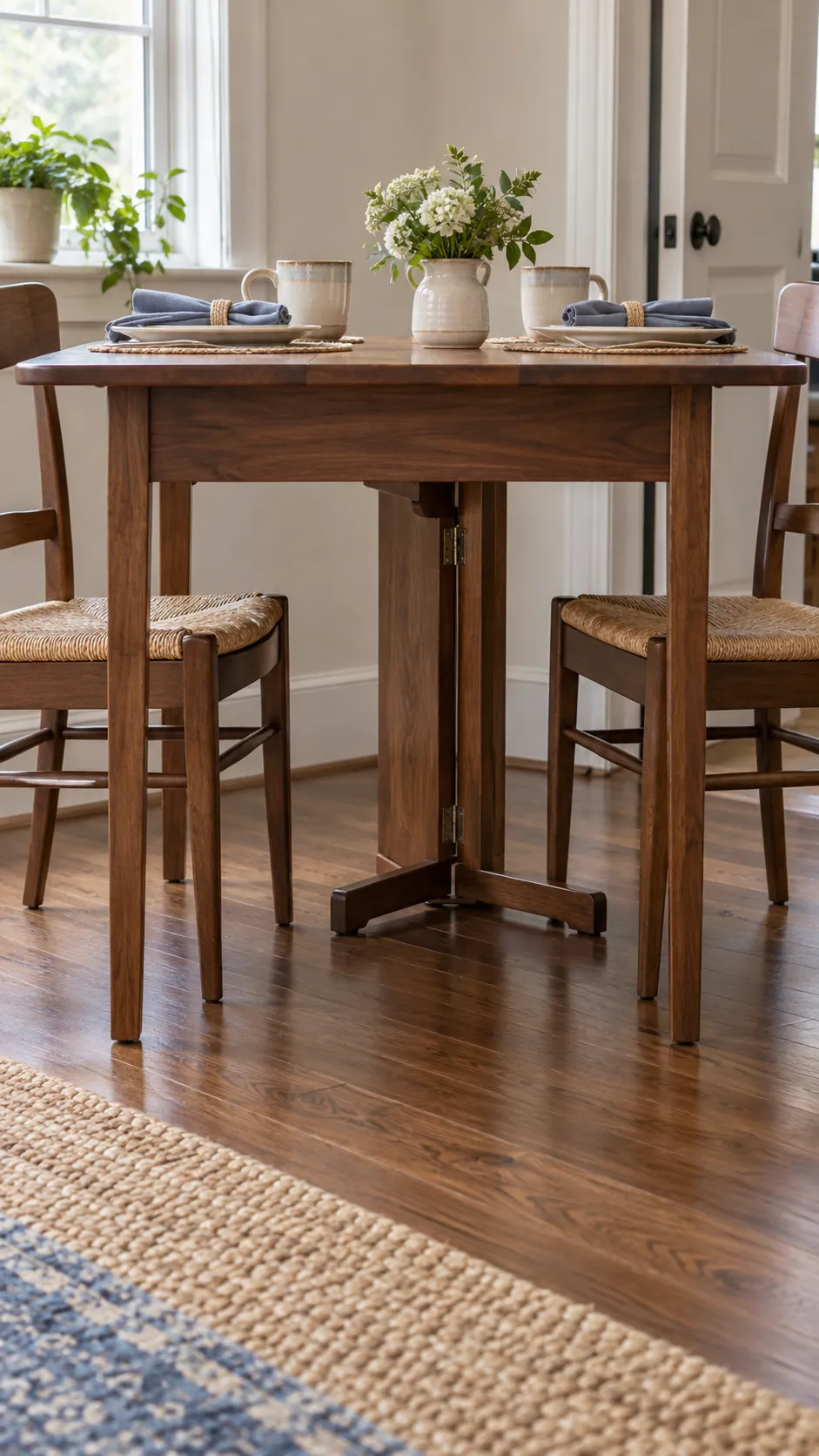
Check Stability Before Style
Raise one leaf and press gently at its outer corners while another adult steadies the table. The leaf should not sag, twist, or make the base lift. Open both leaves and repeat the check. Inspect hinges, brackets, pivots, leg joints, and fasteners for movement or gaps.
A narrow base with a wide leaf can feel unstable even when the hardware looks strong. Gate legs should sit firmly beneath the load, not stop short or swing beyond position. Adjustable feet help on uneven floors, but they cannot correct weak joints or a poorly placed support.
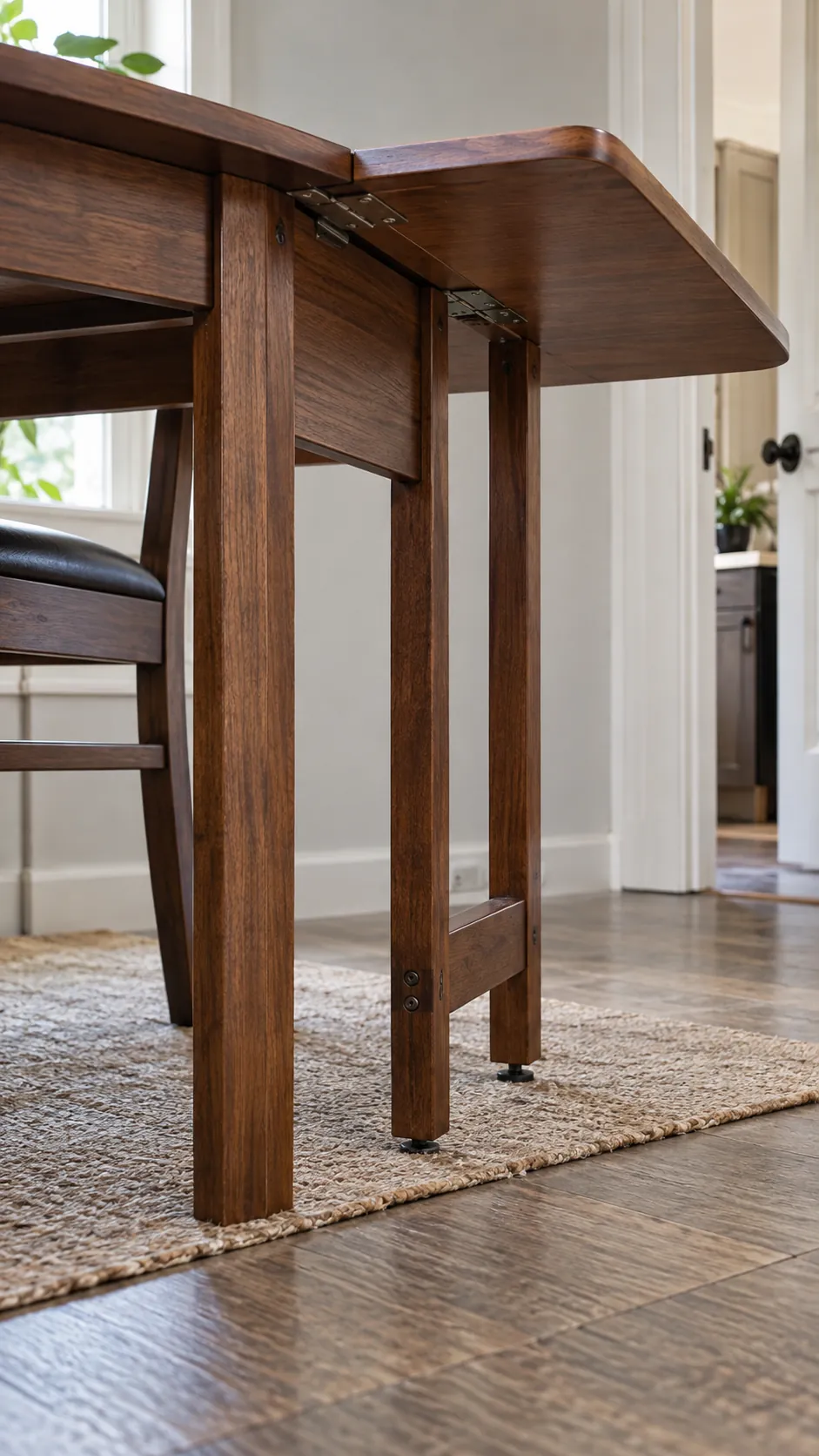
Choose Materials for the Room and Routine
Solid wood can be repaired and refinished, but it moves with humidity and varies in weight. Veneered panels can stay flatter and lighter when edges and hardware points are well made. Inspect the underside because support structure and fastener quality matter more than a decorative top surface.
For an expandable kitchen table, choose a finish that tolerates wiping and ordinary spills. Keep water away from hinge recesses and panel edges. A heavy table may feel stable but becomes harder to reposition, while a very light table needs a well designed base to resist tipping.
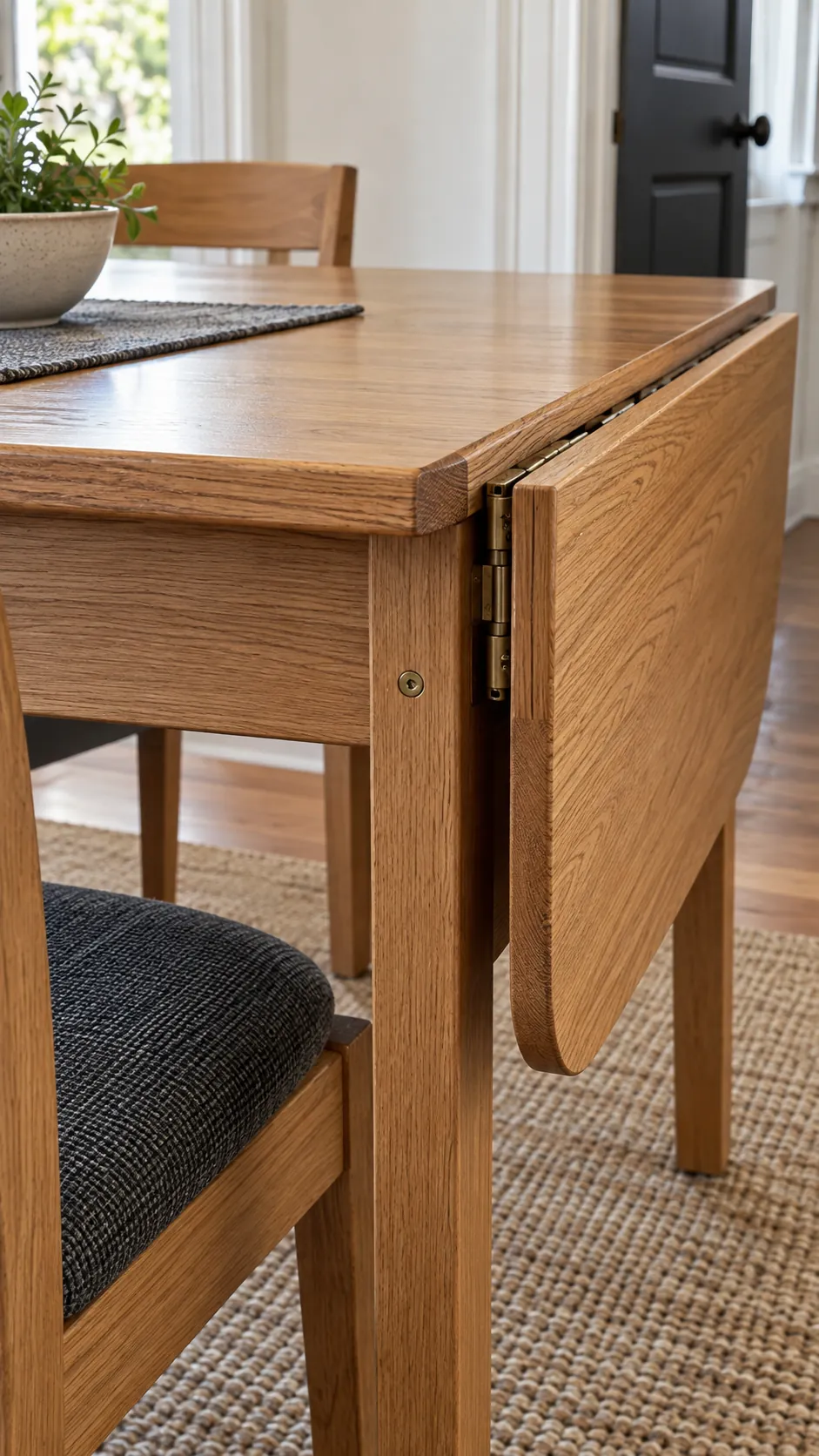
Test the Full Routine Before Buying
Practice moving the table from its storage position, raising the leaves, placing chairs, and returning everything. Listen for rubbing and confirm that latches or supports remain fully engaged. If the table has casters, each one should lock and keep the base still during use.
Inspect a used table for loose joints, split wood, bent hinges, missing stops, and previous repairs. Tightening one screw may not solve a worn hole or failing joint. Choose the table that fits the daily closed layout, opens without struggle, and remains stable where people actually sit.