
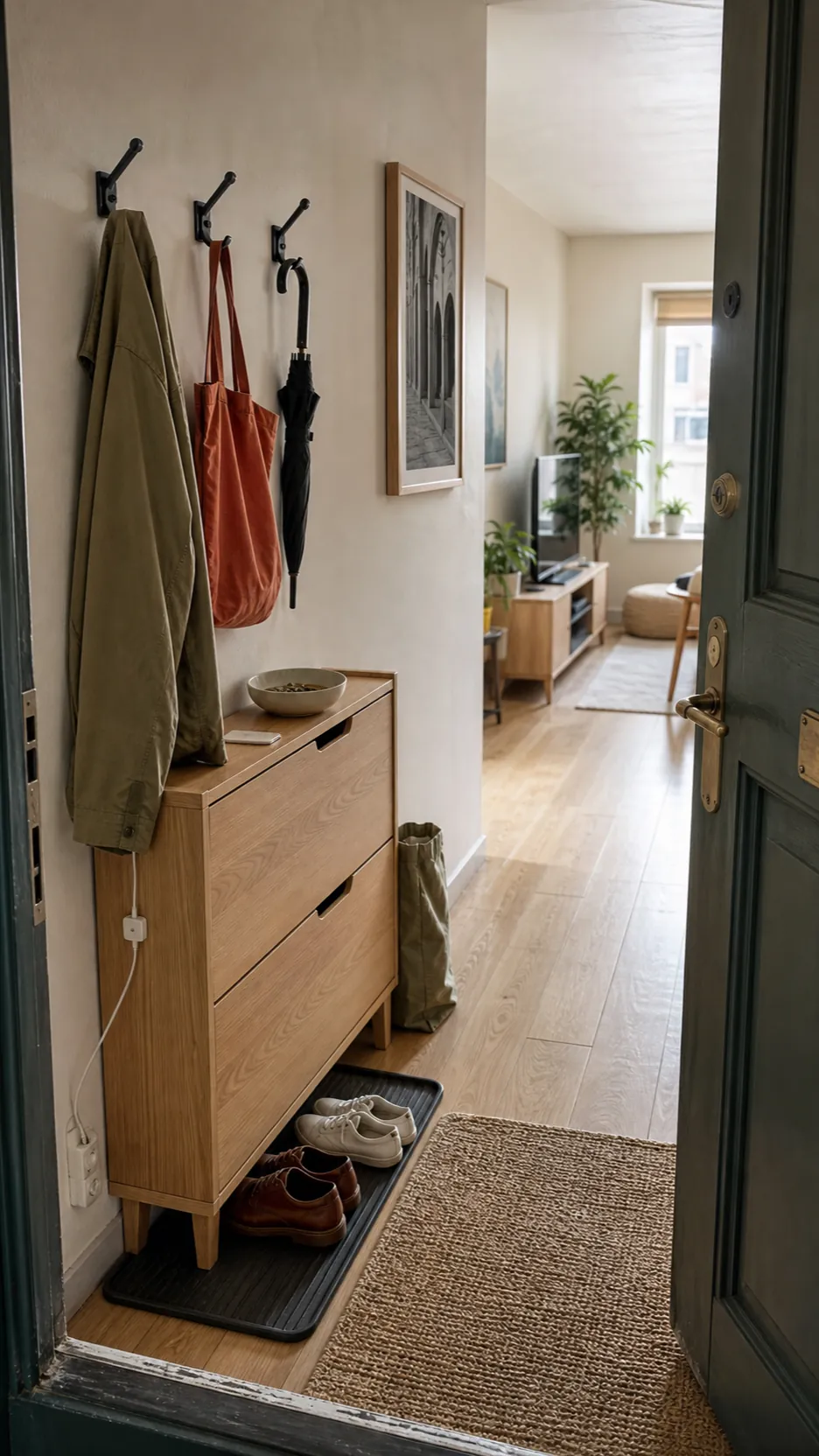
A small entryway gets messy faster than almost any other part of a home because it has to absorb the day in a few square feet. Shoes arrive wet, bags land wherever there is space, keys disappear under mail, and the floor becomes difficult to clean. The answer is not necessarily more storage. It is a lower-friction system that matches what you actually do when you walk through the door.
This approach combines entryway cleaning with practical small entryway organization. You will clear the space, decide what deserves to stay, and give each daily item a home that takes one motion to use. The result is a tidy entryway that is easier to reset, even on busy evenings.
Empty the Entryway Before You Organize It
Start by removing everything that is not fixed in place: shoes, coats, bags, baskets, mats, loose furniture, mail, umbrellas, and decorative objects. Do not sort while standing in the doorway. Move the contents to a nearby room so you can see the actual footprint and the places where dirt collects.
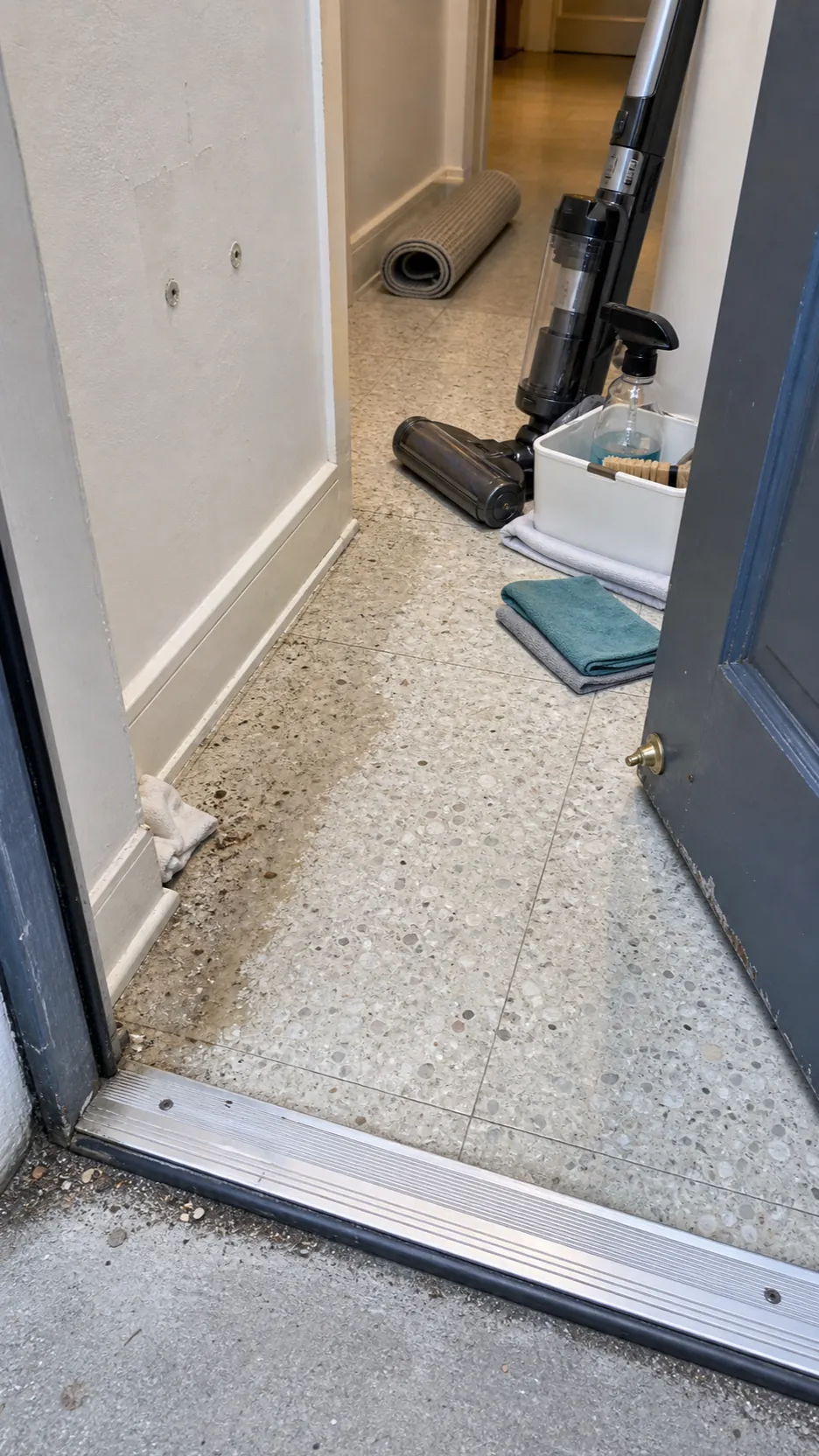
Vacuum from the top down, including corners, baseboards, the threshold, and the space behind the door. Wipe hooks, switches, handles, shelves, and the inside of any shoe cabinet. Clean the floor with the method appropriate for its finish, then let it dry fully. This clean slate reveals whether a storage piece is helping or merely occupying valuable clearance.
Protect the Door Swing and Walking Path
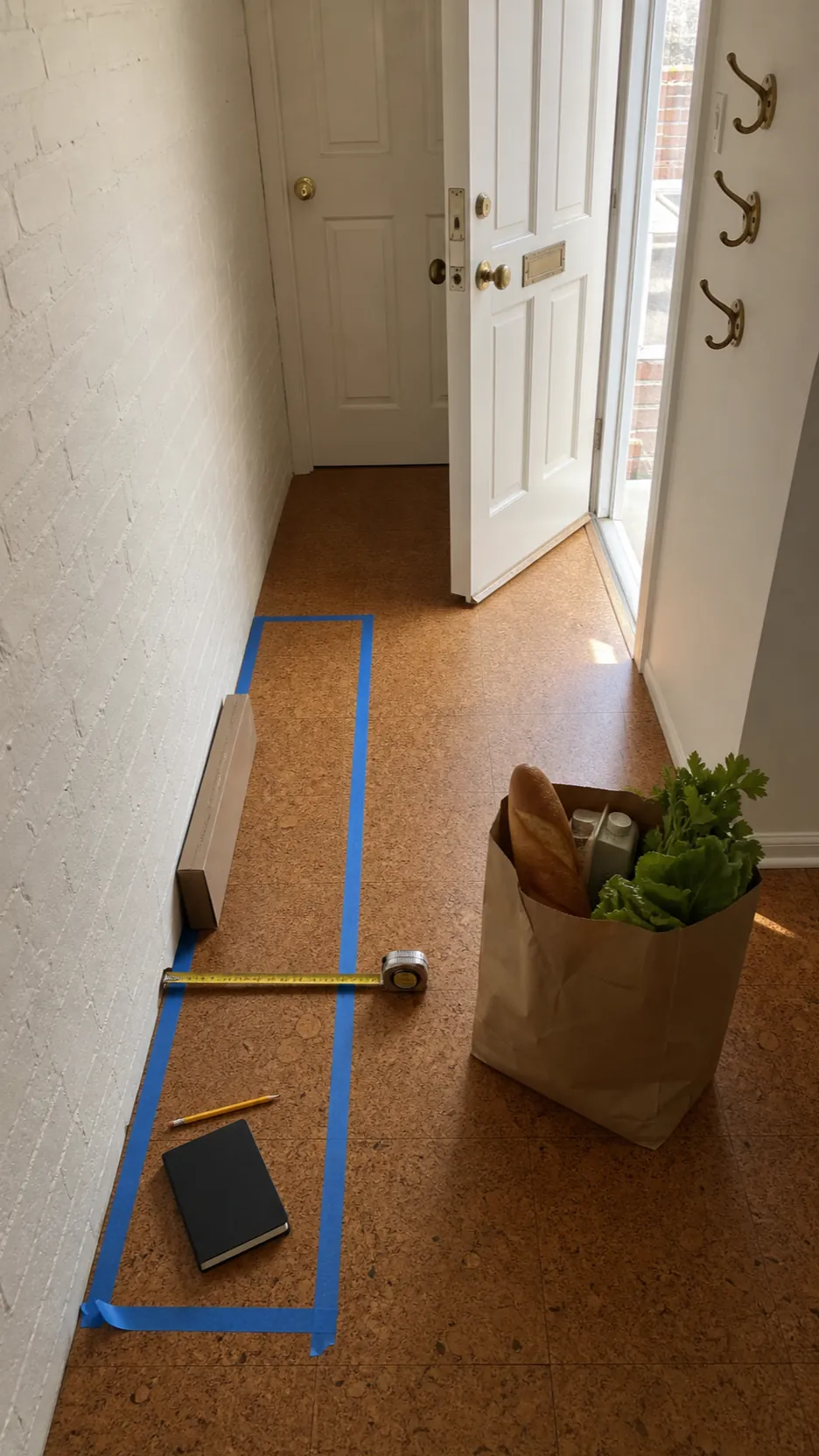
Before buying an entryway bench or shoe cabinet, measure the wall width, usable depth, door swing, nearby closet clearance, and the narrowest walking point. Mark the proposed furniture footprint on the floor with painter’s tape. Open the front door completely and carry a grocery bag through the space. If you have to turn sideways or move something, the footprint is too deep.
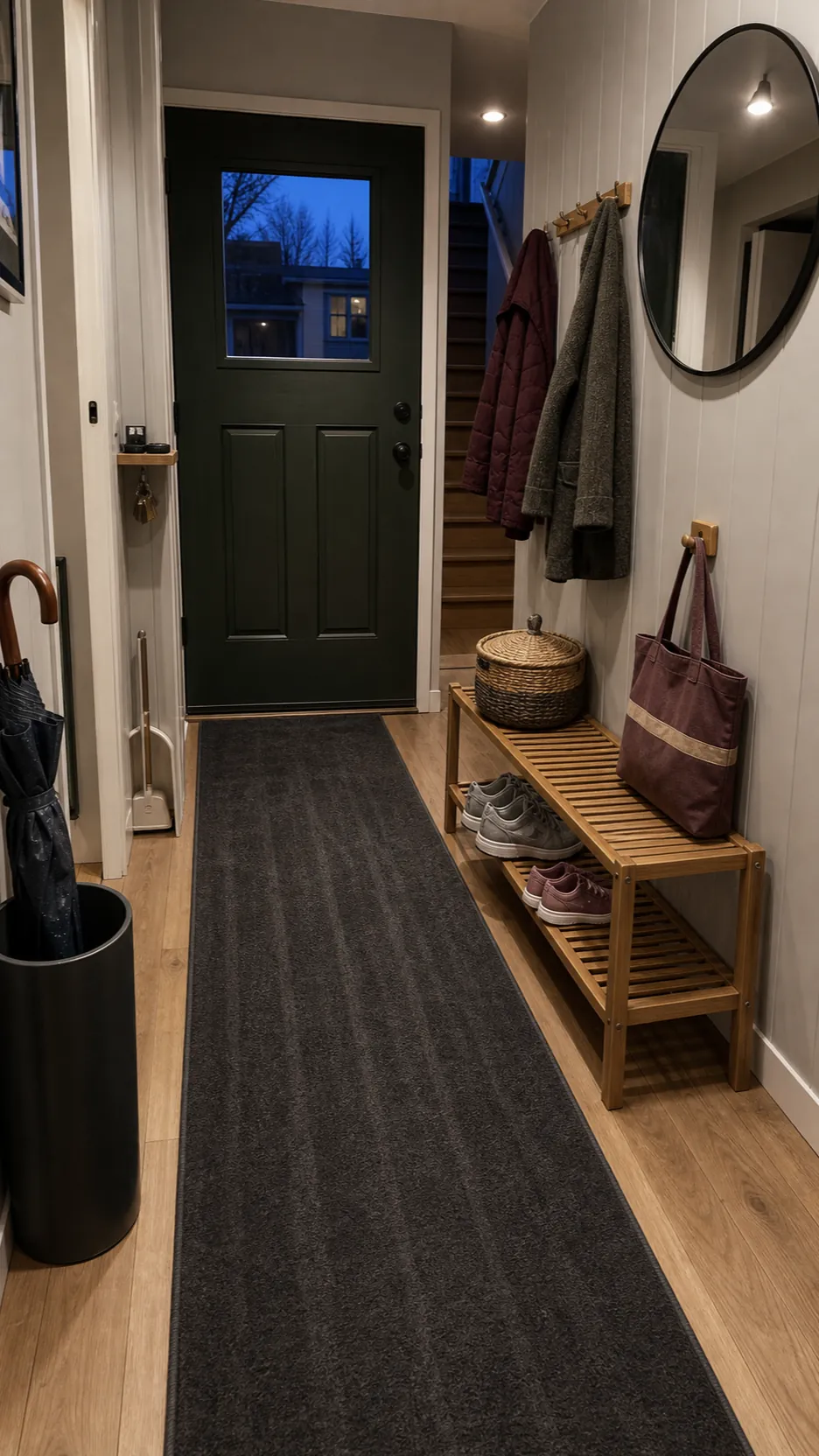
In a narrow apartment entryway, clear floor area is a form of storage: it gives you room to remove shoes, set down a parcel briefly, sweep, and get out safely. Favor shallow wall-mounted pieces, raised furniture, and vertical storage. Keep the threshold and the direct path into the home completely unobstructed.
Limit Shoe Storage to the Pairs in Active Rotation
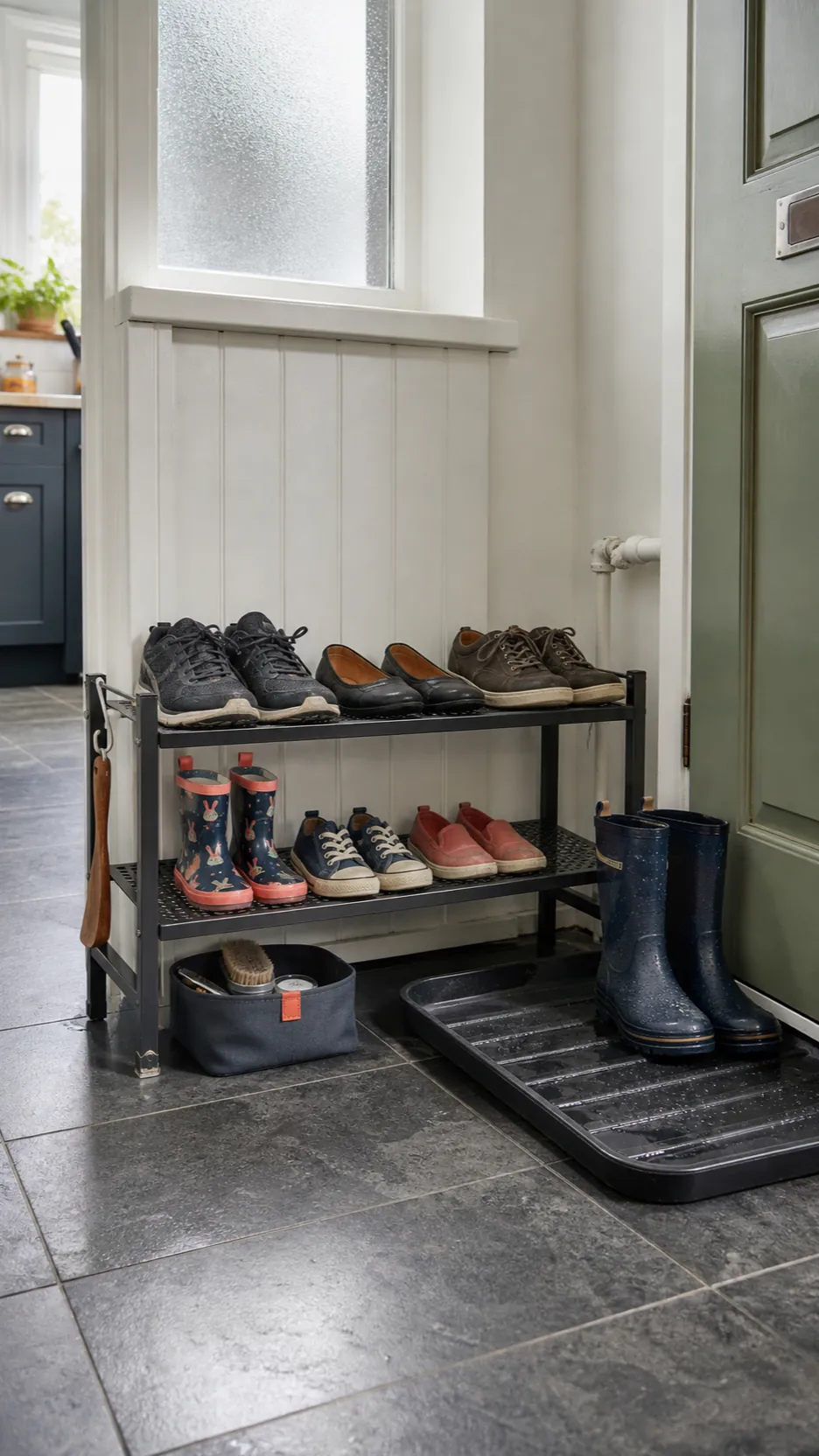
Shoe storage fills instantly when it is asked to hold every pair owned by the household. Keep only the shoes being worn this week or season near the door. Move special-occasion, off-season, and rarely worn pairs to bedroom closets or another storage area. A practical limit might be two or three daily pairs per person, adjusted for weather and work needs.
Choose the containment style according to the mess. A washable tray or ventilated open rack works for wet footwear. A slim tilt-out cabinet hides visual clutter in a dry entryway. Low labeled bins are easier for children than precise cubbies. Whatever you choose, leave enough room around it to vacuum or wipe the floor. If putting shoes away requires opening several doors or rearranging other pairs, the system has too much friction.
Build a One-Motion Drop Zone With Wall Hooks
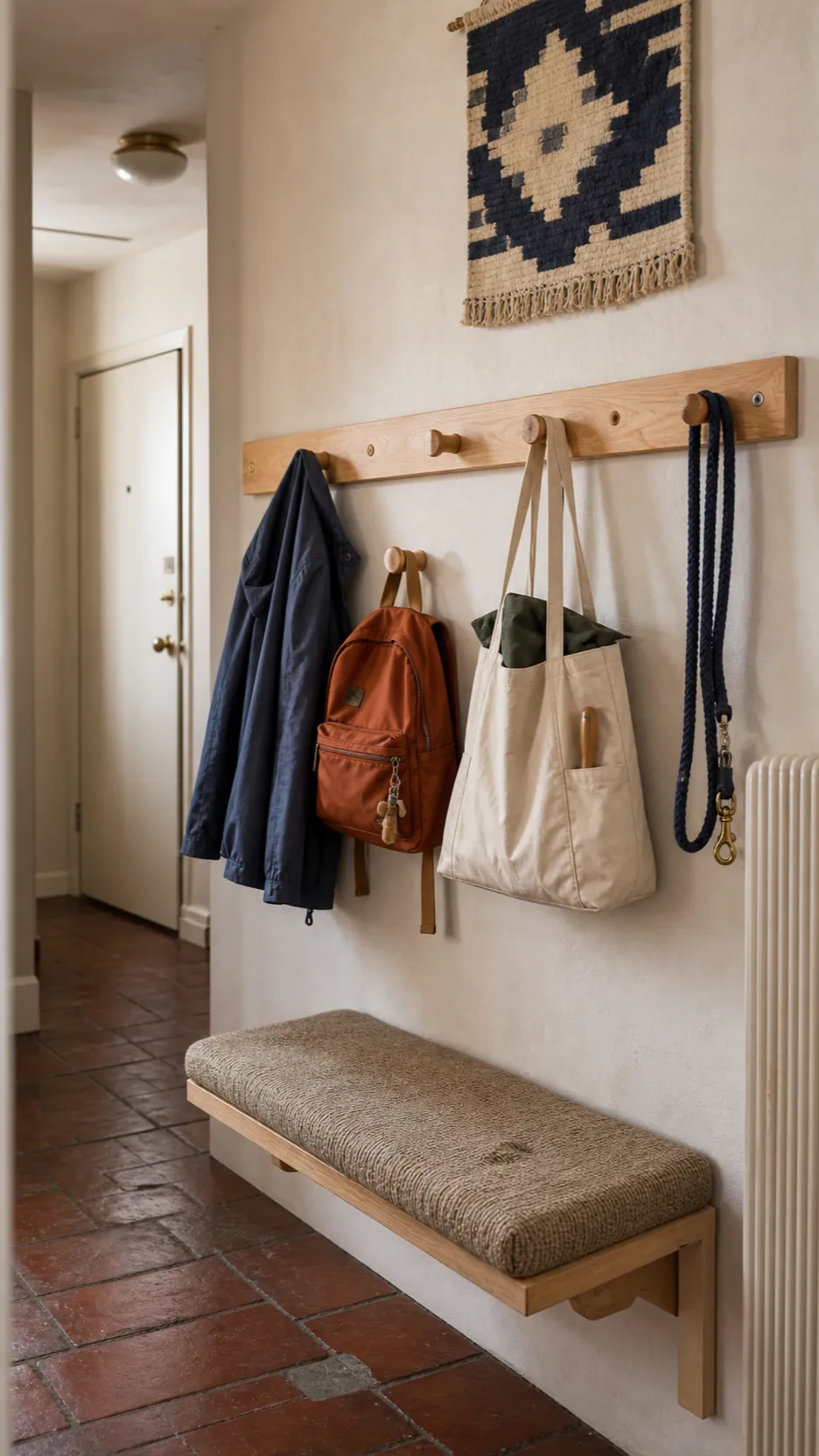
Traditional hangers look orderly but often fail in a busy drop zone because they demand two hands and an open closet. Wall hooks make coats, bags, leashes, and reusable shopping totes easier to put away. Mount sturdy hooks into studs or use hardware rated for the load, and position them where the intended user can reach them. Lower hooks allow children to manage their own backpacks.
Give each person a defined hook or short section of rail, but avoid covering every inch of wall. Hooks only work when their capacity is deliberately limited. Keep one current coat and one daily bag per person at the entry; return extras to their long-term homes. Leave a spare hook for a guest rather than treating every hook as permanent storage.
Create Tiny Homes for Keys, Mail, and Pocket Clutter
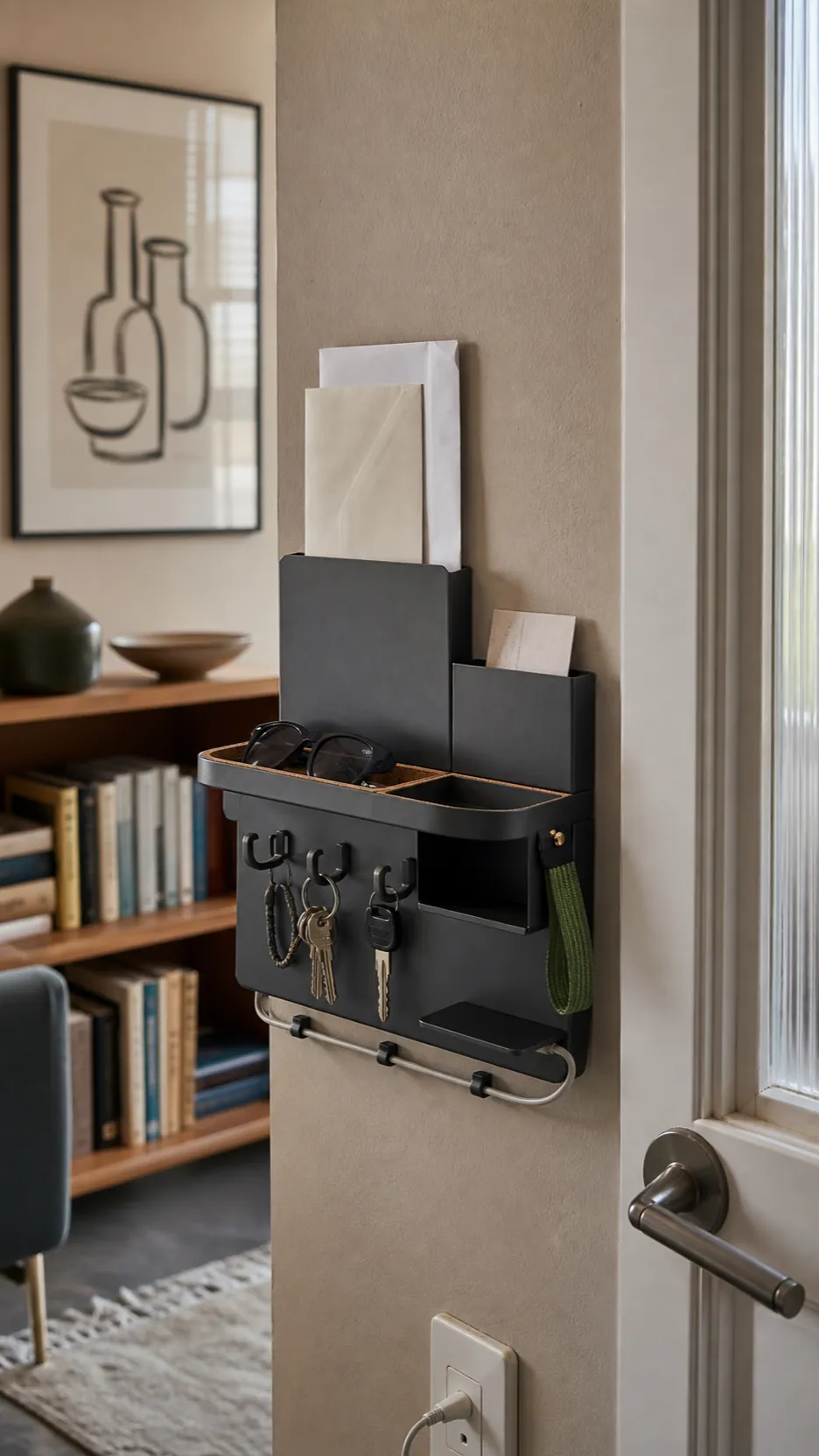
Small objects create a surprising amount of visual noise. Place a shallow tray or wall pocket beside the point where you naturally pause. Keys need a hook or bowl, sunglasses need one compartment, and incoming mail needs a narrow vertical slot. Avoid a large console surface: an empty horizontal surface quickly becomes permission to pile.
Separate temporary items from stored items. A parcel waiting to be returned can use a designated tote. Papers that require action can go in one slim folder, while recycling leaves the entryway immediately. If chargers live here, secure the cable and keep the device off the walking path. This turns the drop zone into a short transfer point instead of a second junk drawer.
Make the Five-Minute Reset Part of Coming Home
A well-designed entryway should be reset without a special organizing session. Each evening, return stray shoes to their assigned limit, hang bags, remove outgoing rubbish, and take mail to its next destination. Shake or vacuum the mat as needed, and wipe wet grit before it spreads into the rest of the home.
- Daily: clear the floor, return keys, hang bags, and remove mail.
- Weekly: vacuum edges, wipe the door and handles, and clean the shoe tray.
- Seasonally: rotate coats and shoes, wash baskets, and reassess what earns space by the door.
When clutter repeatedly appears in the same place, treat it as information. Add a small home at that exact landing point, or move the official home closer. The best small-space cleaning routine is not the strictest one; it is the one your household can complete while tired and carrying things.
A Small Entryway Works When Every Item Earns Its Place
You do not need to turn a narrow entrance into a miniature mudroom. You need a clear route, a contained amount of footwear, reachable wall hooks, and tiny assigned homes for the objects that enter with you. Clean first, protect the walking path, and reduce every put-away action to one motion. That is what keeps a compact entryway calm after the organizing project is over.