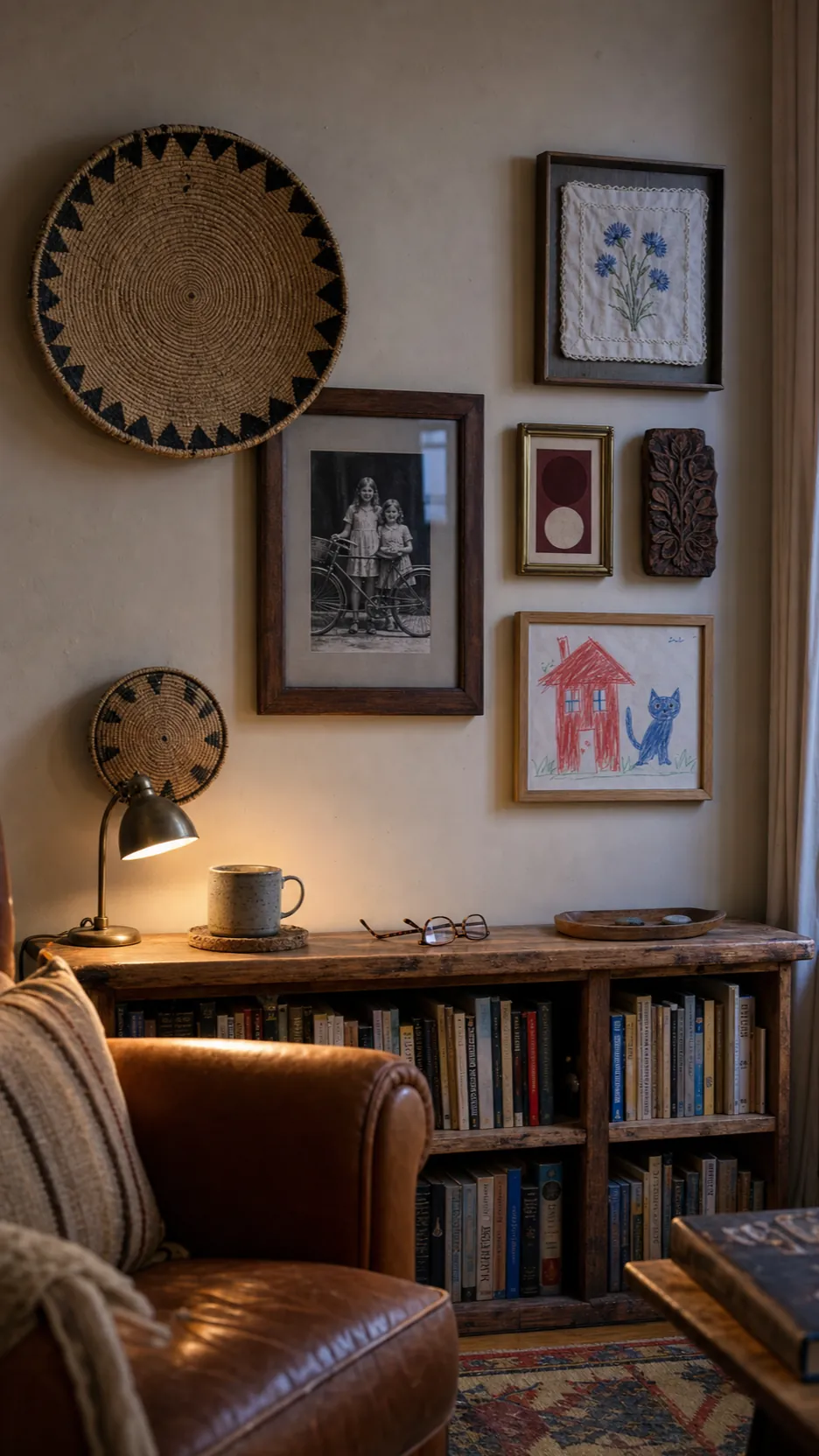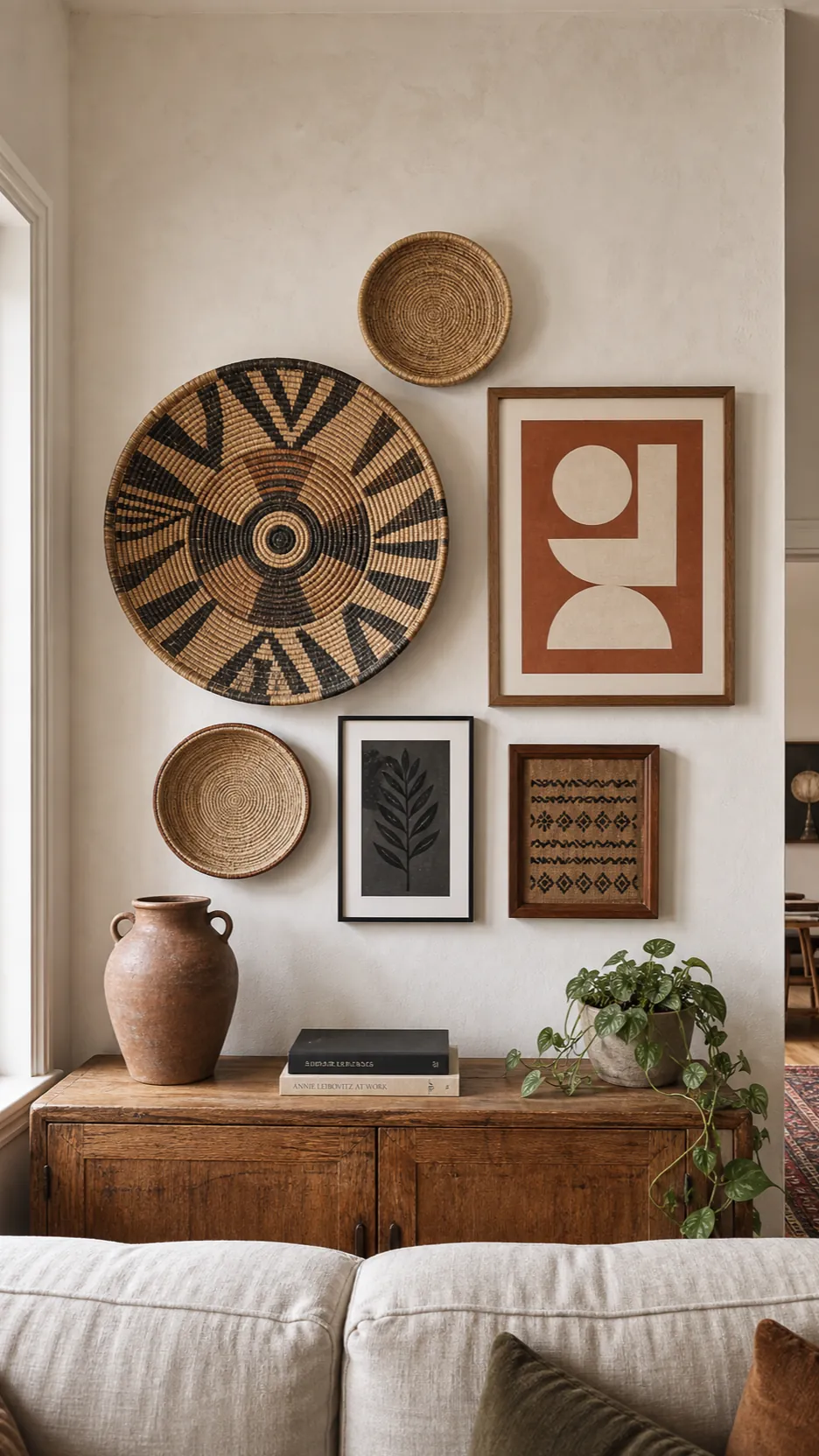
A boho gallery wall looks effortless only after a few quiet decisions have done the hard work. Mixing woven baskets with wall prints gives a room warmth, depth, and personality, but the same mix can quickly feel scattered when every piece competes for attention. The answer is not to make everything match. It is to create one clear anchor, one consistent spacing rhythm, and a handful of repeated colors or materials that guide the eye through the collection.
This approach works whether you are decorating above a sofa, a console, a bed, or an empty dining-room wall. Start with what you already love, edit the collection before making holes, and let the baskets provide texture rather than treating them as filler.
Choose an Anchor Before You Build the Gallery Wall
The easiest way to prevent a boho gallery wall from feeling chaotic is to choose the piece that should be noticed first. This might be the largest framed print, a broad shallow basket, a round rattan mirror, or a textile with a strong silhouette. Place it slightly off center if you want an informal arrangement, but keep it close to the visual center of the entire grouping.
Your anchor does not have to be the darkest object. Visual weight also comes from size, texture, contrast, and detail. A pale basket with a thick braided rim can hold more attention than a small black frame. Once the anchor is chosen, every other piece gets a job: support it, balance it, or lead the eye toward it. If two pieces demand equal attention from opposite corners, the arrangement may feel split instead of collected.
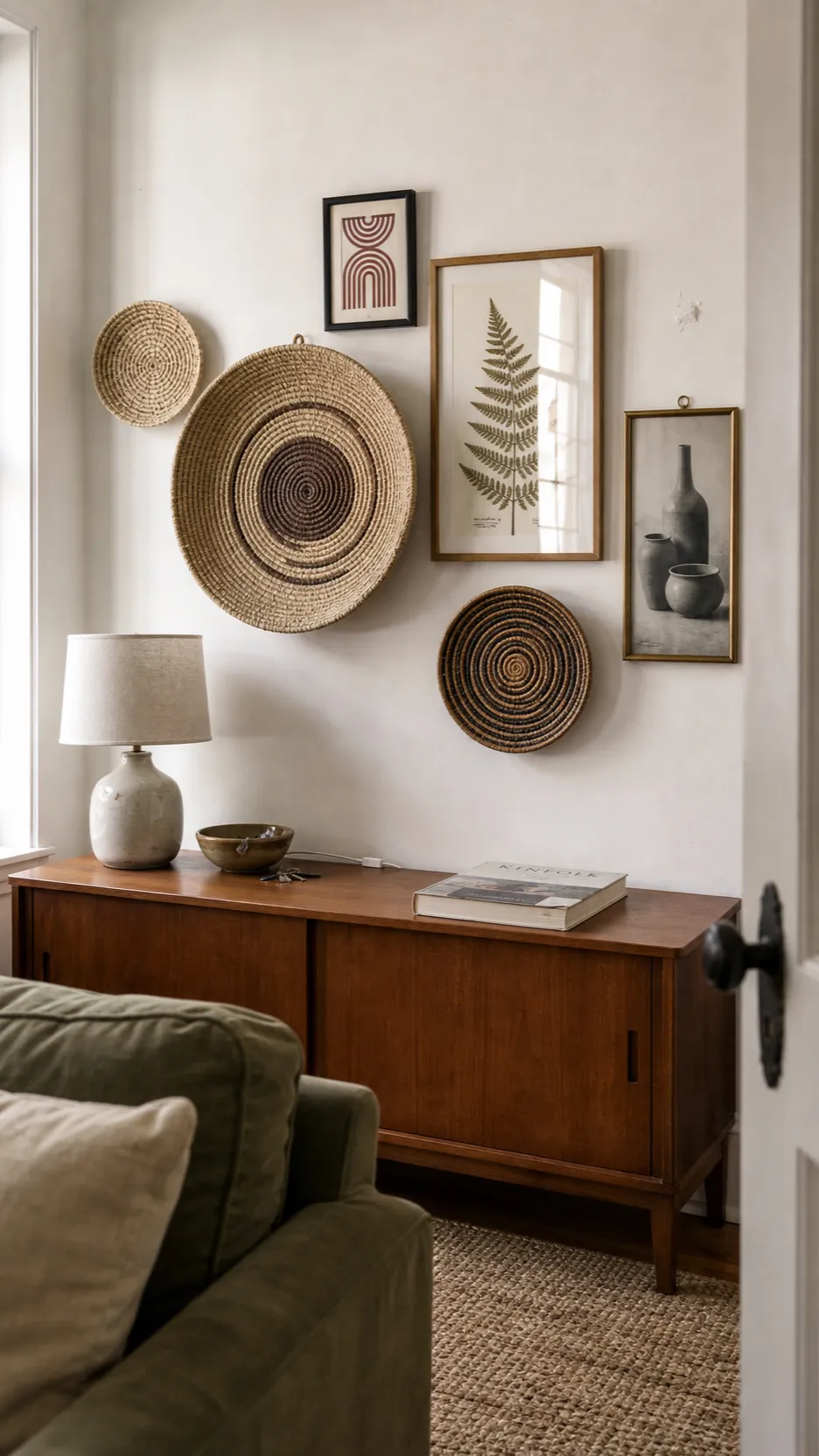
Mix Round Baskets With Rectangular Prints on Purpose
Rectangular frames create strong vertical and horizontal lines. Baskets interrupt those lines with curves, shadows, and woven texture. That contrast is exactly what makes basket wall decor useful, but random placement can make the curves look like afterthoughts. Use at least two rounded elements so one basket does not appear stranded. They can differ in size and weave as long as they share something—natural fiber, a similar rim color, or a related pattern.
A practical formula is one large rectangular anchor, two smaller frames, and two or three baskets. Tuck a small basket beside a frame corner to soften the angle, then use a second round piece across the composition to echo it. Avoid lining every basket along the top or every print along the bottom. Instead, let each shape overlap an imaginary oval around the group. The outer edge should feel varied but controlled, without a single piece sticking far beyond the rest.
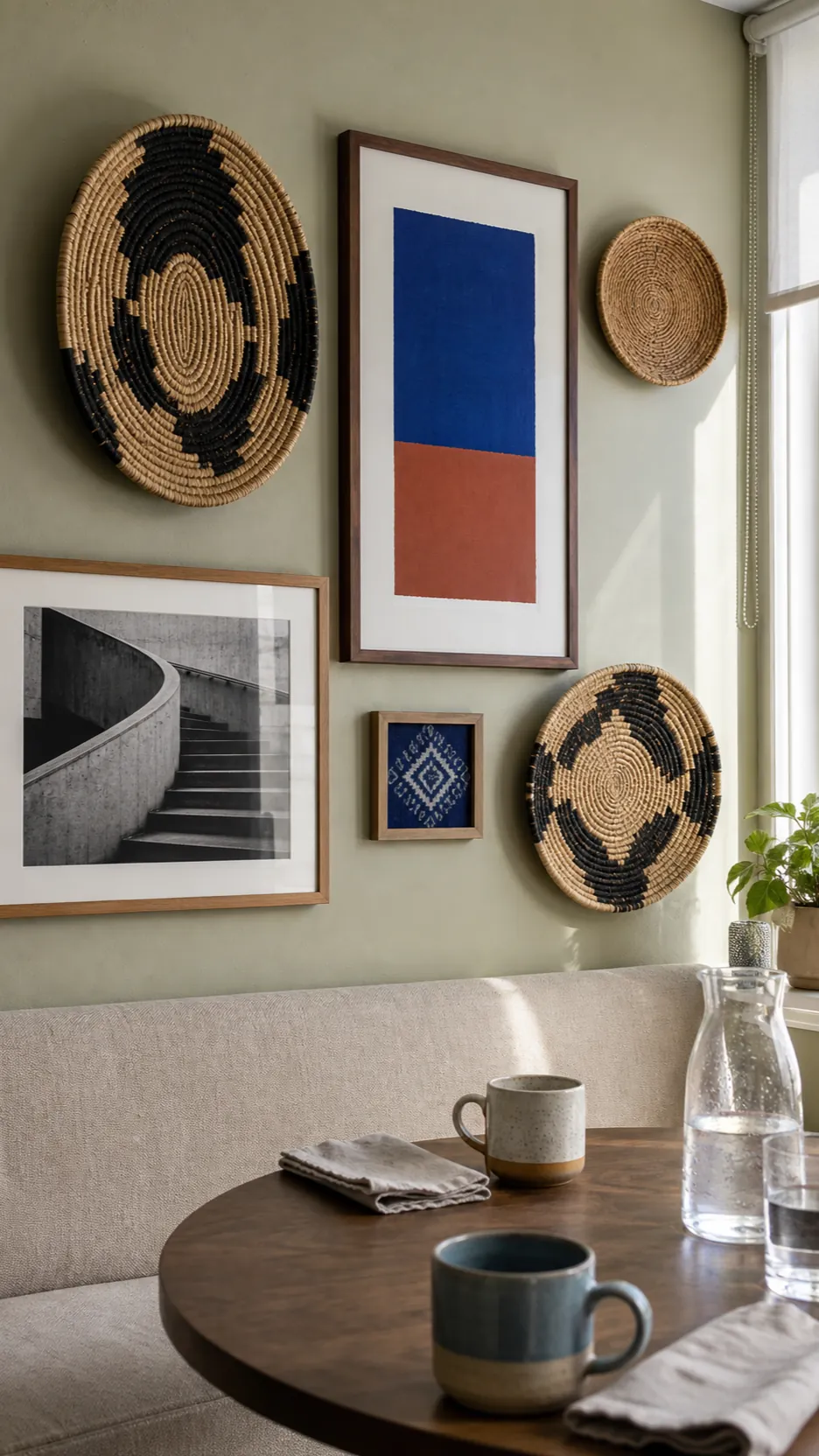
Repeat a Small Color Palette Across Different Pieces
Boho decor can hold plenty of pattern, but a limited palette keeps the patterns from arguing. Pull three or four colors from the room rather than inventing a new scheme for the wall. Warm oak, black, cream, terracotta, muted olive, and dusty rust are easy companions, but the right palette is the one already present in your rug, upholstery, pottery, or curtains.
Repeat each important color at least twice. A terracotta shape in an abstract print might return as a dyed stripe in a woven basket. A slim black frame can echo a charcoal line drawing. Cream matting can connect a pale wall print to natural raffia. Repetition creates cohesion without requiring identical frames or matching art sets. If a new piece introduces a color found nowhere else, either add a subtle echo or leave that piece out.
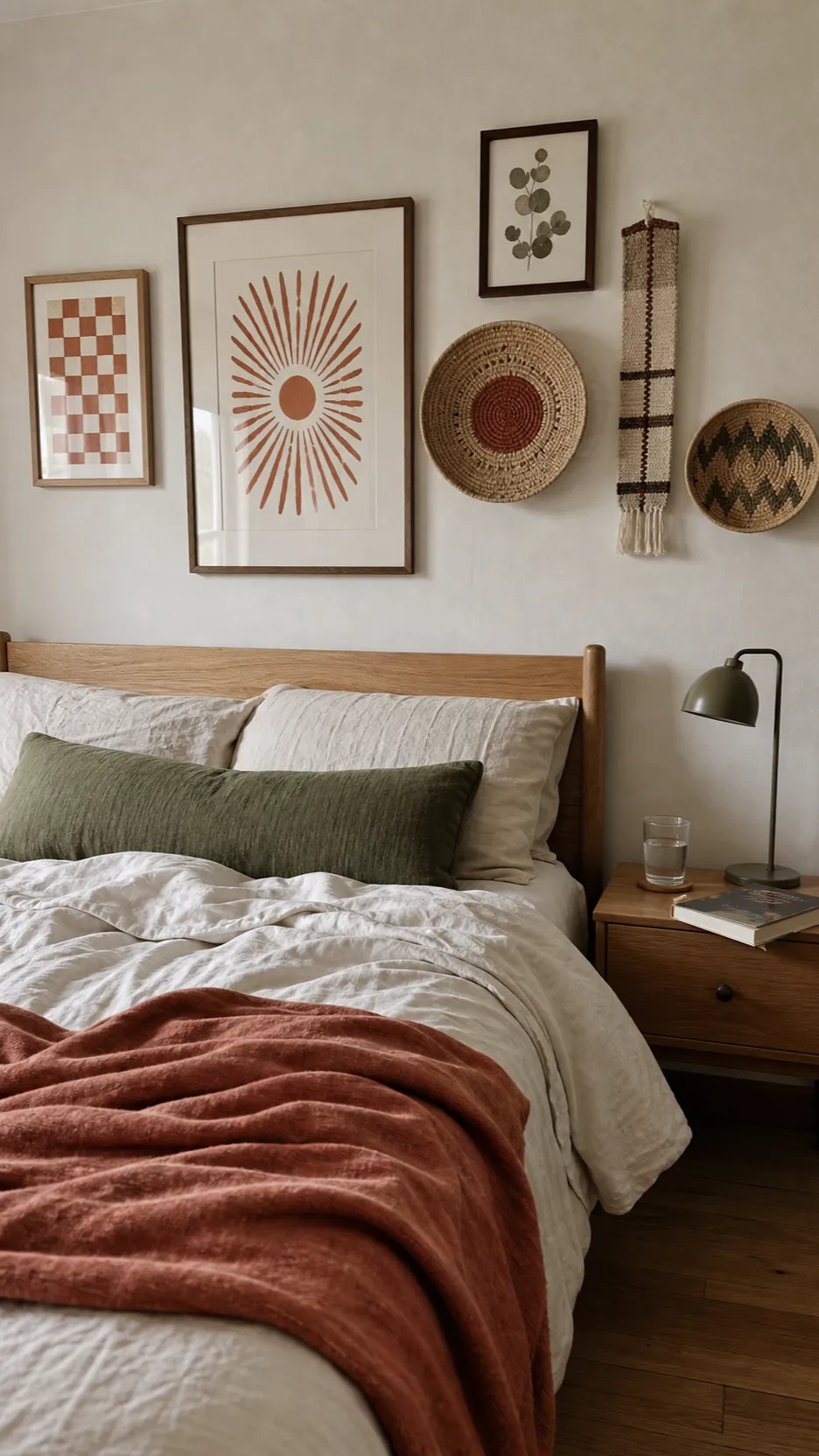
Use Consistent Gaps to Calm an Eclectic Collection
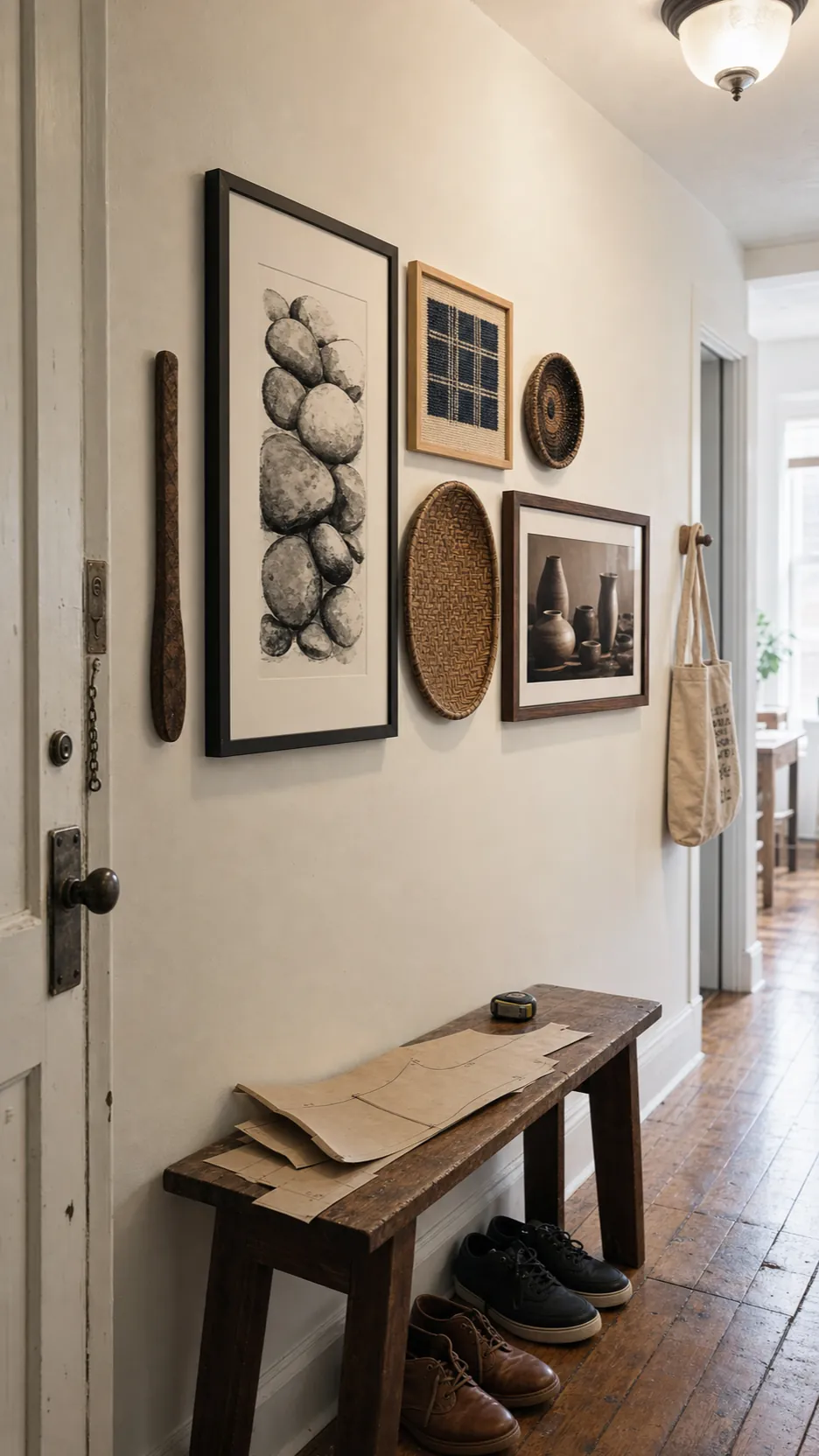
Consistent spacing is the invisible grid behind a relaxed gallery wall. Aim for roughly 2 to 3 inches between neighboring pieces, measuring from the closest edges rather than from their centers. Small objects can sit toward the tighter end of that range; bigger frames and deeply textured baskets often need a little more breathing room.
The goal is not mathematical perfection around every irregular basket. It is a steady visual beat. When one gap is noticeably larger, the eye reads it as a break and may see two separate clusters. When pieces nearly touch, the group can feel cramped and hard to dust. Keep the densest part near the anchor, then allow only a slight increase in spacing toward the edges.
- Measure edge to edge, including thick basket rims.
- Keep the narrowest gaps consistent throughout the arrangement.
- Align at least one edge or centerline between neighboring frames.
- Step back from the wall often; balance is easier to judge from across the room.
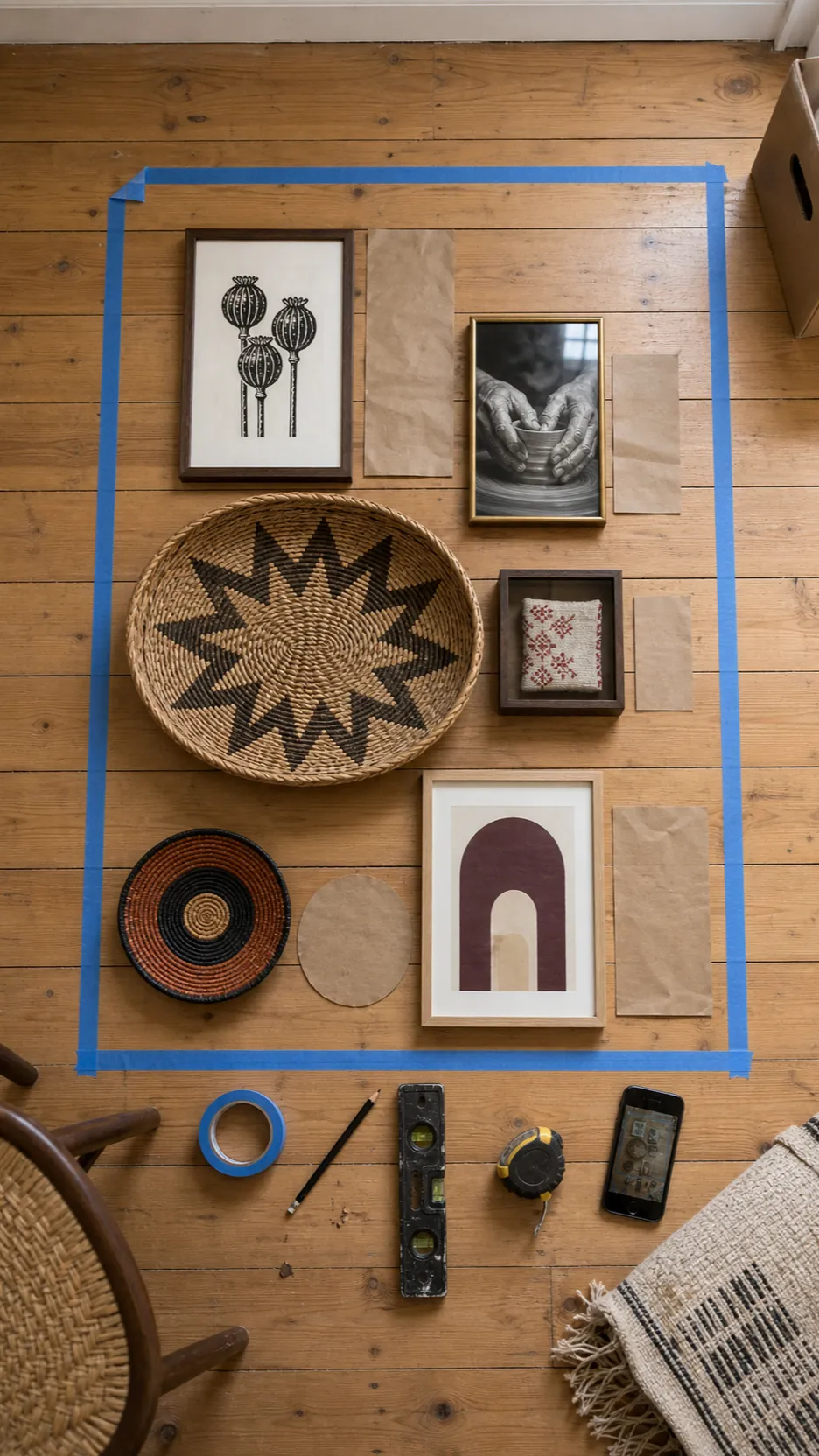
Plan the Full Arrangement on the Floor First
The most useful styling tool is a patch of floor about the same size as your wall. Mark the available width with painter’s tape, place the anchor first, and build outward. Take a phone photo of every promising layout. A photograph makes uneven gaps, isolated colors, and overly heavy corners more obvious than staring at the pieces in person.
Once the floor layout works, trace frames and baskets onto kraft paper. Mark each hanging point on its paper template, tape the templates to the wall, and live with the arrangement for a day. Check the grouping from the doorway and from the main seat in the room. This extra step answers the questions that measurements cannot: Does the wall feel top-heavy? Is the display too wide for the furniture below? Does a basket cast an awkward shadow under evening light?
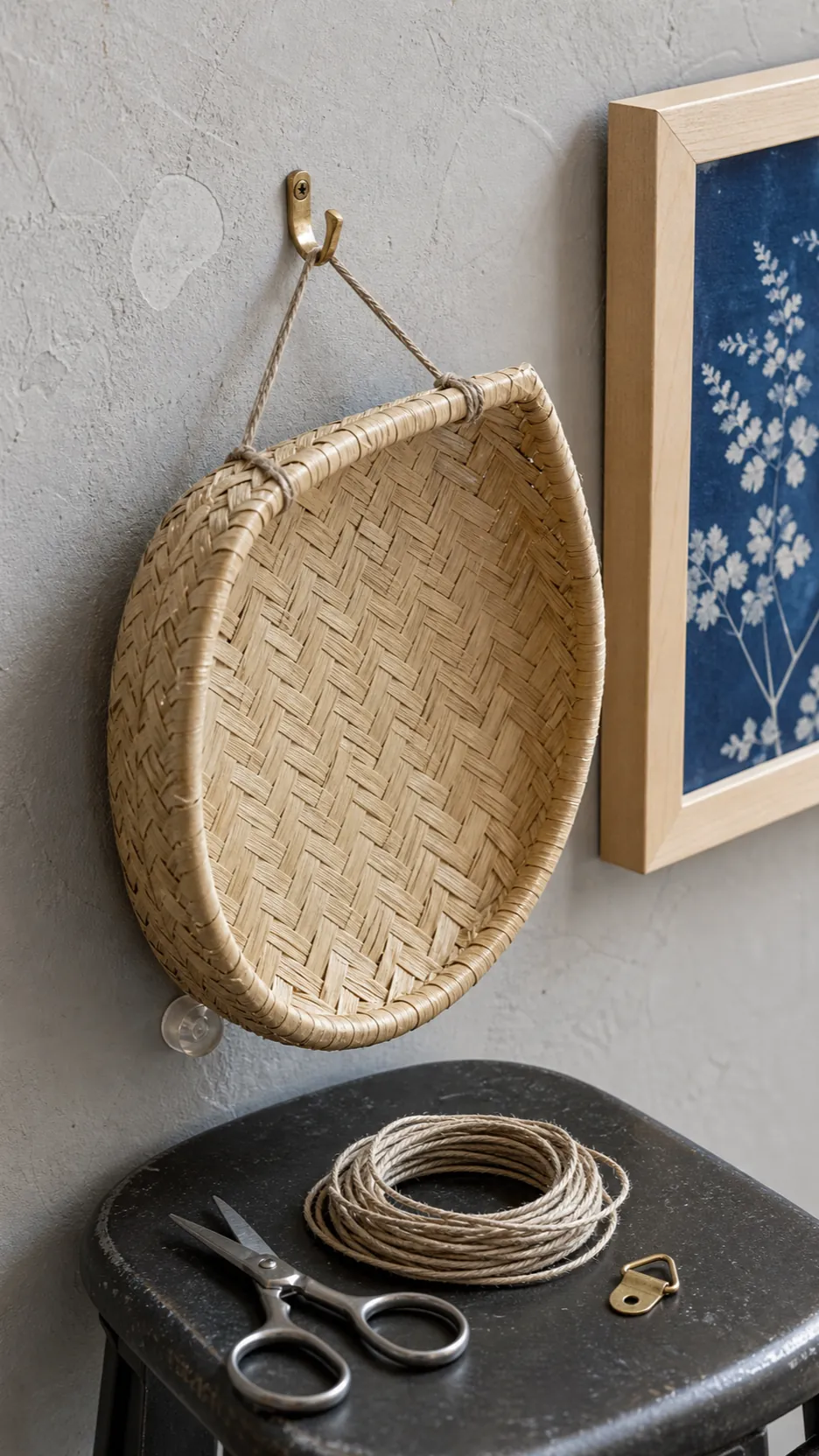
Hang Baskets Securely Without Crushing the Weave
Flat decorative baskets are light, but their weave can stretch when the hanging point carries all the load. Look for a sturdy rim, loop, or crossing point in the weave. A small picture hook often works on drywall; a clear removable hook can suit a very light basket in a rental. Follow the hardware’s weight rating and wall-surface instructions, and avoid forcing a nail through brittle fibers.
For a basket without a hanging loop, thread thin, strong cord through two stable points near the rim and tie it behind the piece. Two contact points help the basket stay level. Add a small removable bumper near the bottom if it tilts or shifts when a door closes. Deep baskets may need more space from neighboring frames because their side shadows visually enlarge them.
Edit the Wall Until Every Object Has a Role
More objects do not automatically create more character. If the wall feels busy, remove the smallest generic print first and reassess. Then look for repeated shapes that add no new texture, color, scale, or meaning. A family photo, a travel sketch, a child’s drawing, or a vintage textile fragment usually contributes more personality than another trend-driven filler print.
A finished gallery wall should read as one composition from across the room and reward closer viewing with handmade details. Keep negative space around the outside so the collection has a clear boundary. Relate its width to the furniture beneath it—often around two-thirds to three-quarters of that furniture’s width feels grounded—and leave enough room above a sofa or headboard that the wall decor belongs to the furniture without crowding it.
The best boho gallery wall is not the one with the most baskets and prints. It is the one where texture, color, and personal meaning repeat just enough to make an eclectic mix feel inevitable.