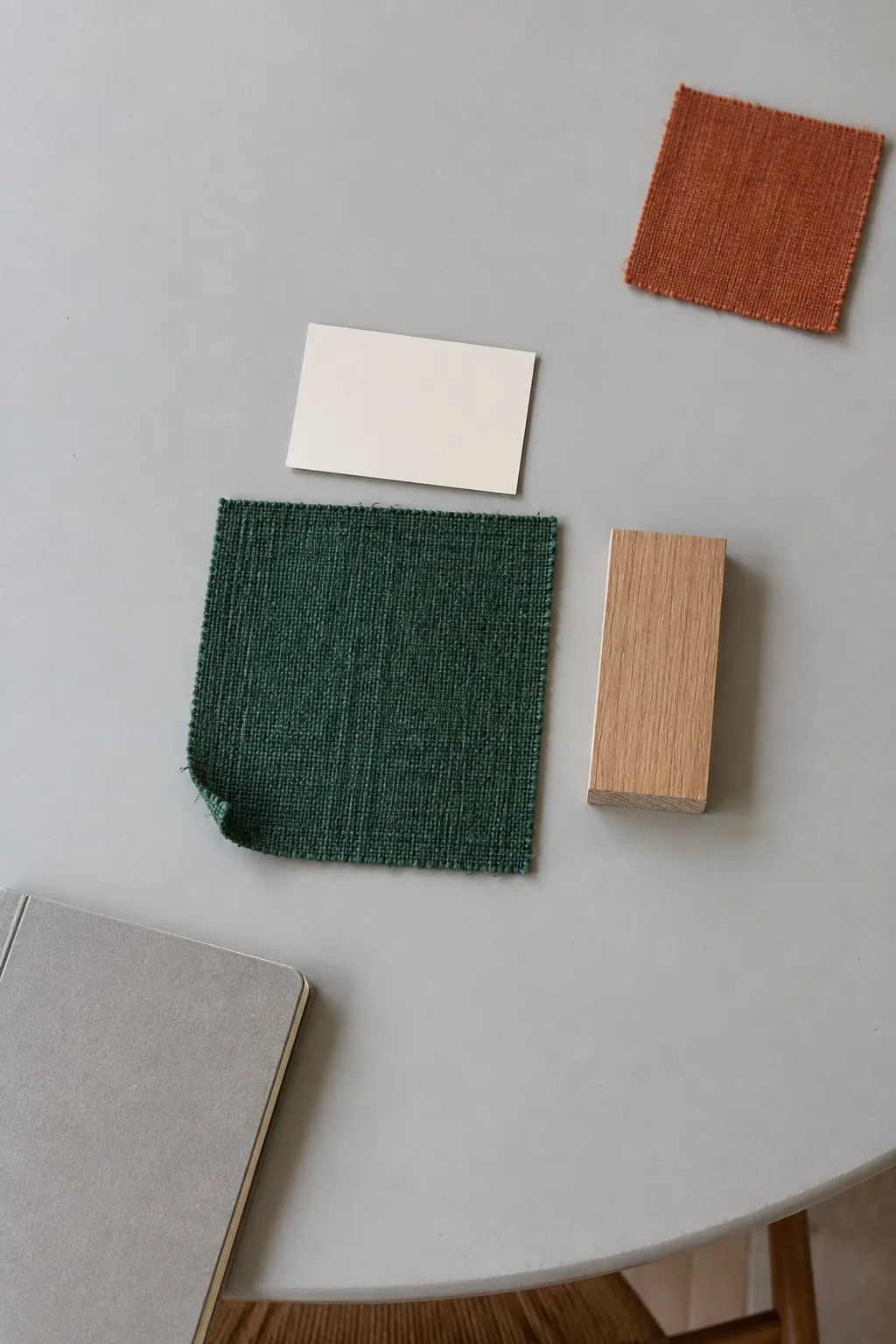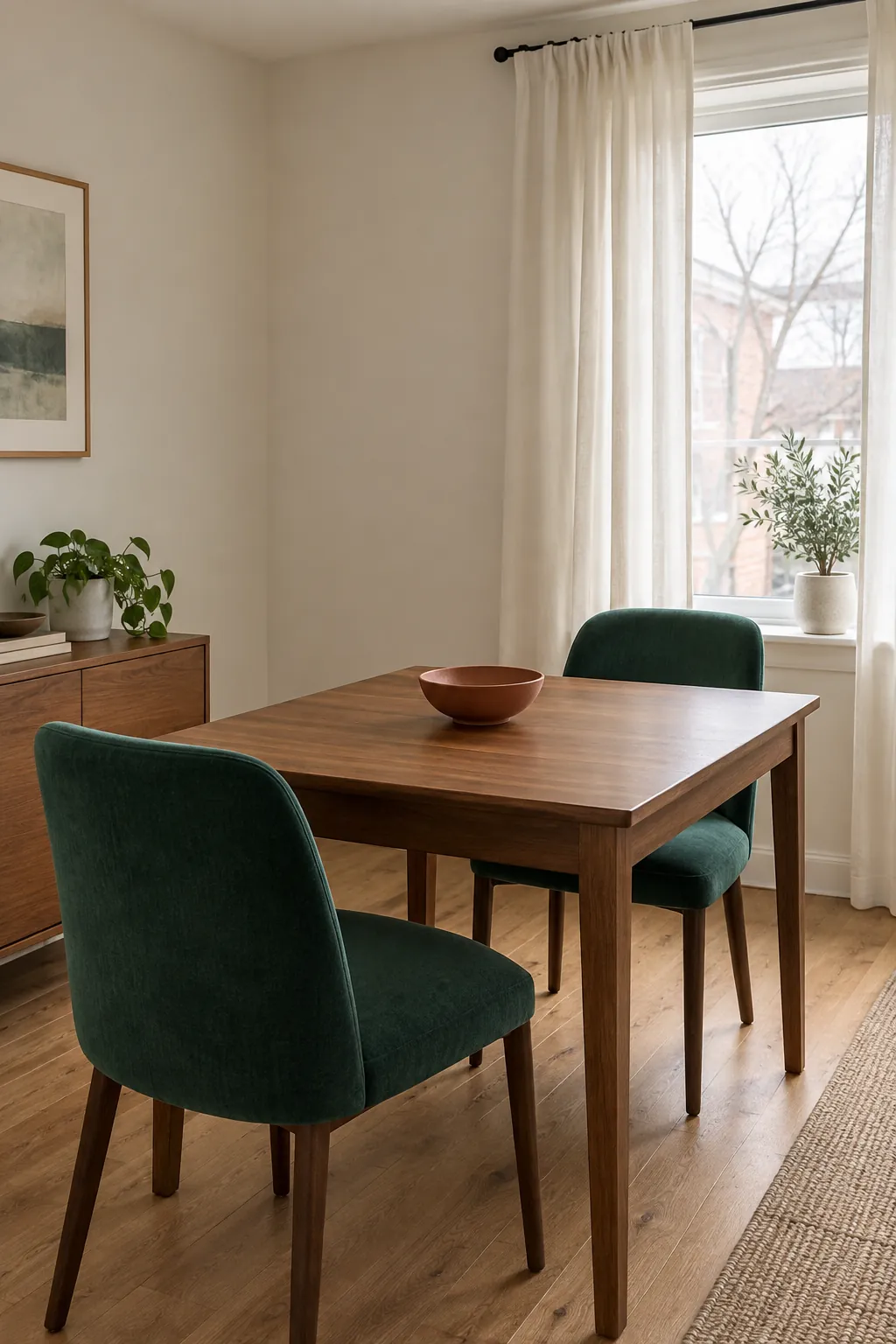
A rug, curtain, and sofa can each look beautiful on their own and still compete when they share a room. Build the palette around which surface should lead, then use the remaining colors to connect it to the things you already own.
Emerald, ivory, and pale oak for an easygoing room
Ivory, soft gray, dusty pink, rust, navy, and restrained gold accents are useful companions for emerald green. To turn those options into a room, choose a background, a main colored surface, and a smaller supporting detail. Giving each color a job matters more than collecting every shade that happens to look good beside green.
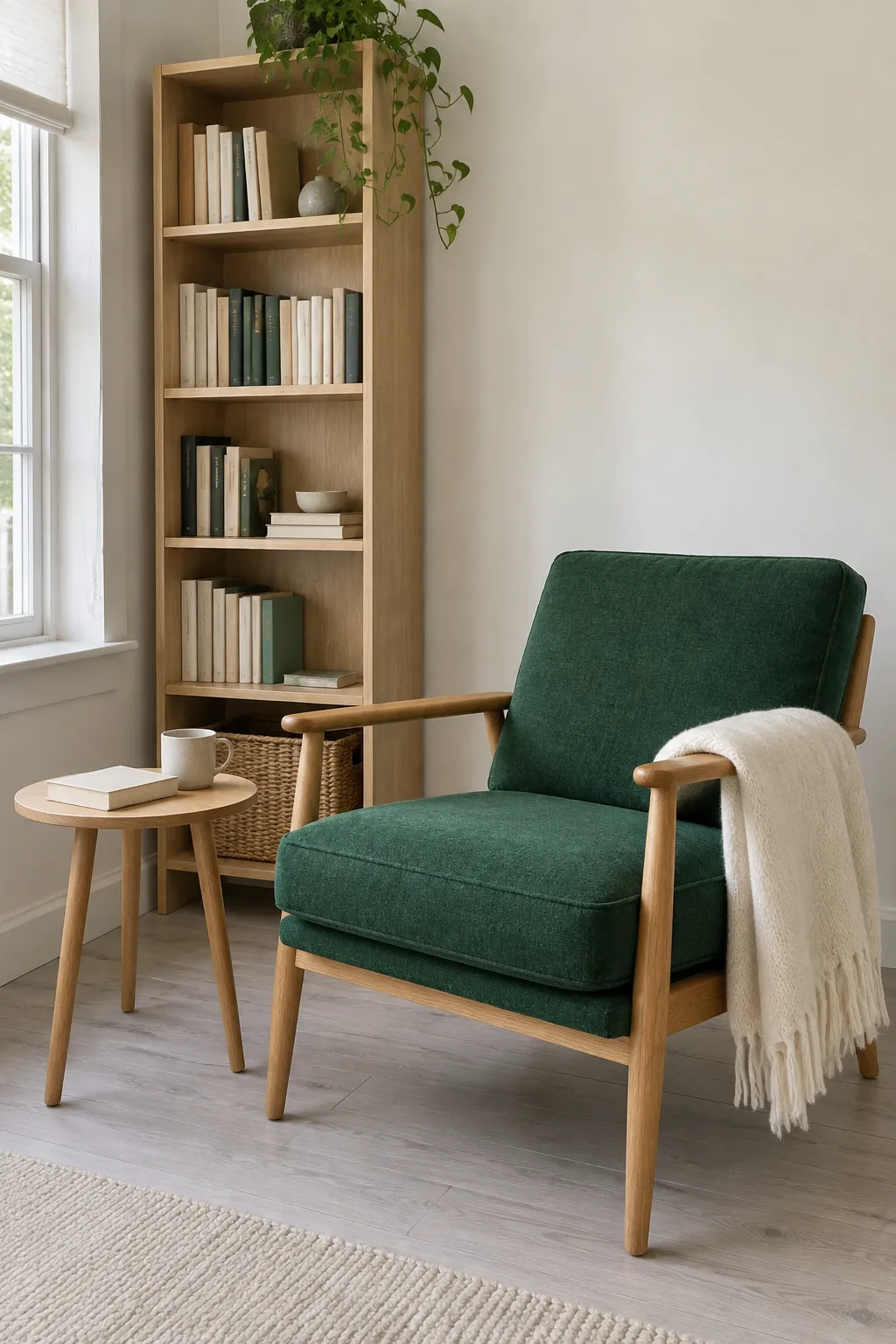
For the simplest emerald green interior color palette, use ivory across the largest background, emerald in one substantial upholstered piece, and pale oak in the furniture. This keeps the green distinct without demanding a bright accent. If your existing trim is a cooler white, compare ivory samples beside it so the room’s pale surfaces feel deliberate.
Emerald, dusty rose, and mushroom for a softer bedroom
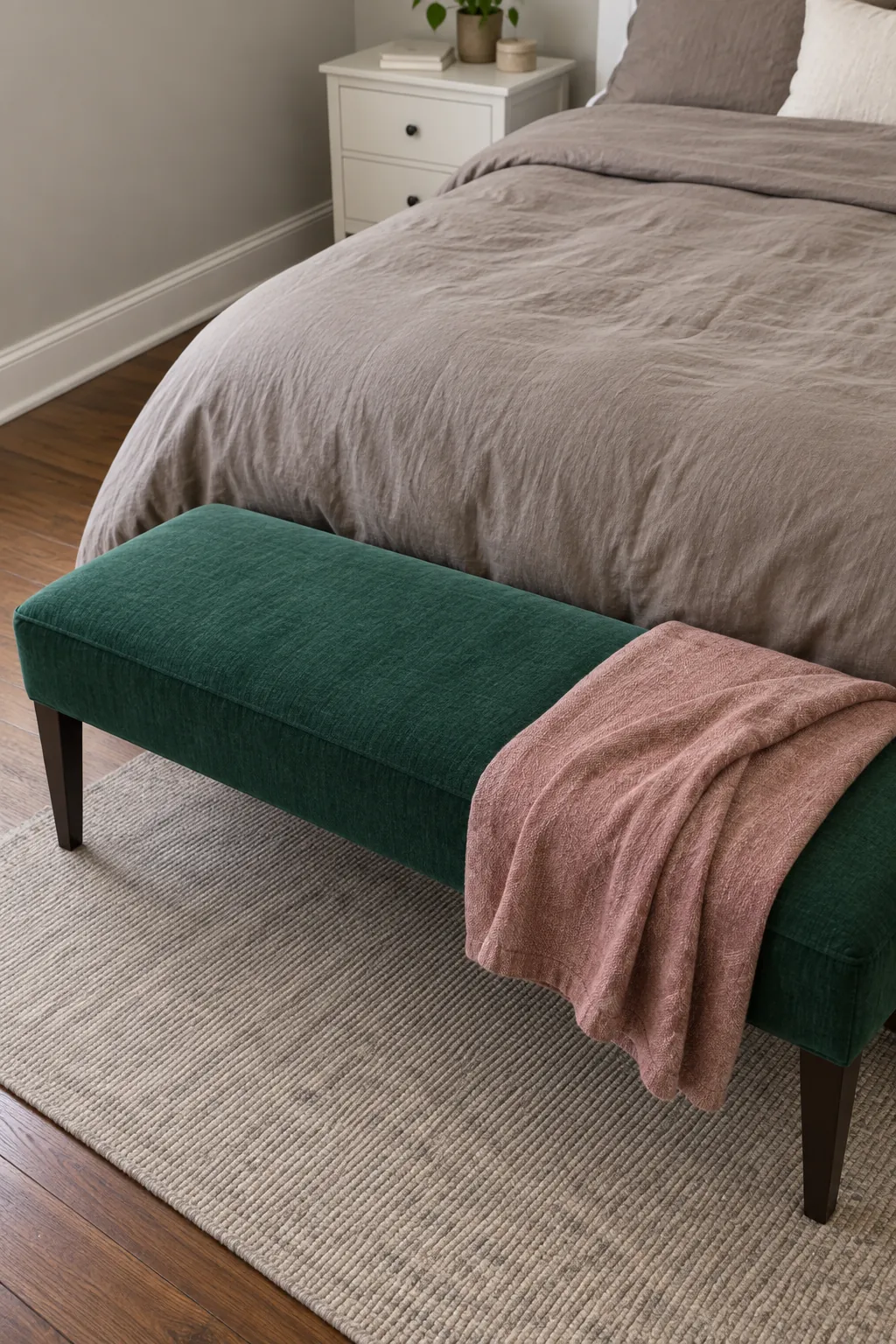
Mushroom, a muted gray brown, gives emerald and dusty rose a quieter base than a stark white would. Try mushroom bedding, a green upholstered bench, and a small rose throw rather than assigning a different saturated color to every surface. The palette works through differences in lightness as much as through the pink and green contrast.
Keep the rose softened and the bedding relatively plain if you want a restful emerald green bedroom color scheme. Repeating the rose in one small object can connect it to the room, but matching the curtains, cushions, and rug is unnecessary. Check the mushroom fabric carefully under bedside lamps because some versions look distinctly pink or violet.
Emerald, rust, and flax for warmth with texture
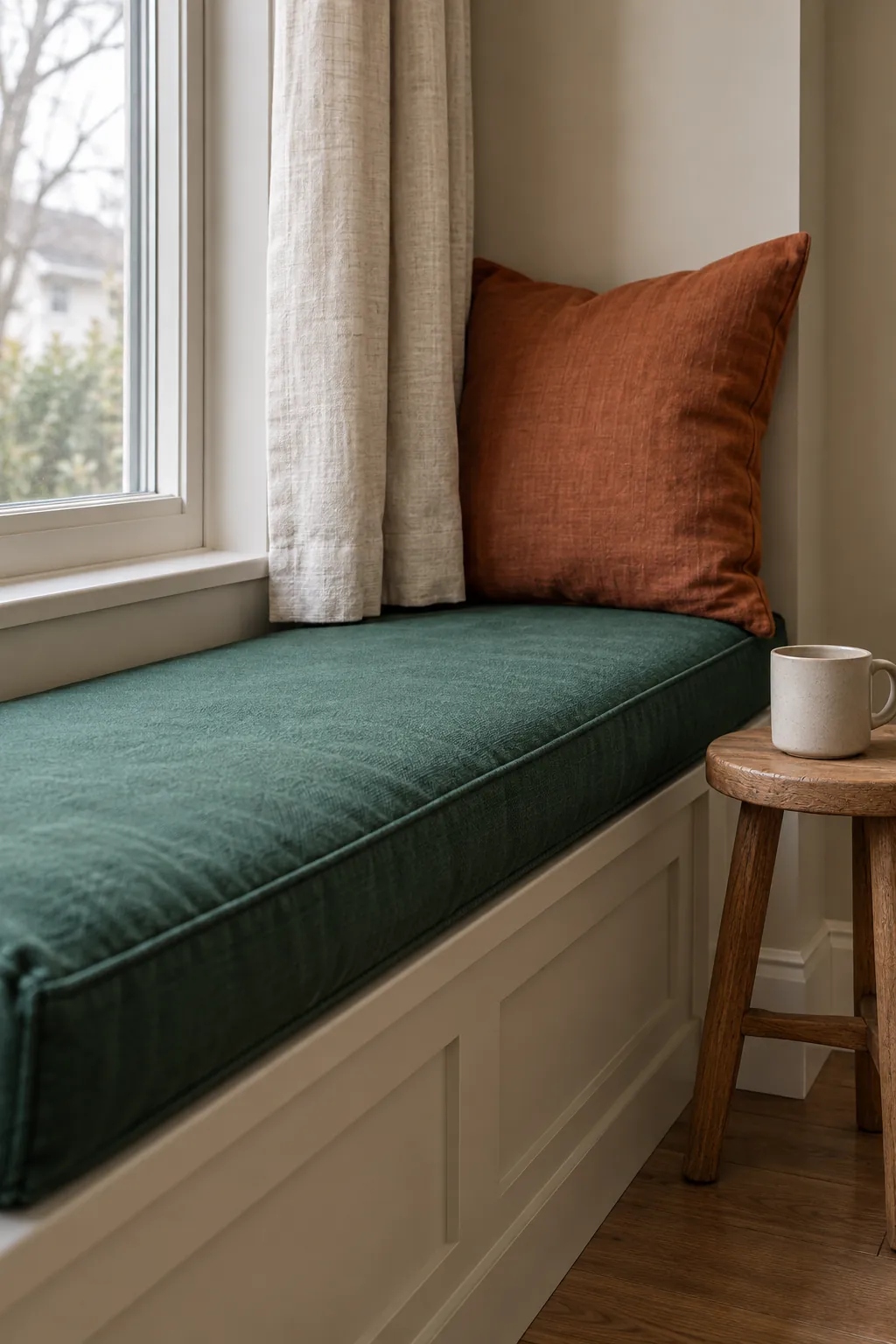
Rust and flax bring a grounded warmth to a deep green palette. Use flax for a large curtain or rug, emerald for seating, and rust in a smaller cushion or ceramic piece. Woven fabric and natural wood provide variation without introducing another bright color.
If an existing patterned rug contains green and rust, let it supply your starting references for the other textiles. Choose a quiet curtain from one of its background colors instead of automatically matching the strongest shade. When two patterns sit close together, compare their scale and visual density as well as their colors.
Emerald, ink blue, and chalk for a cooler scheme
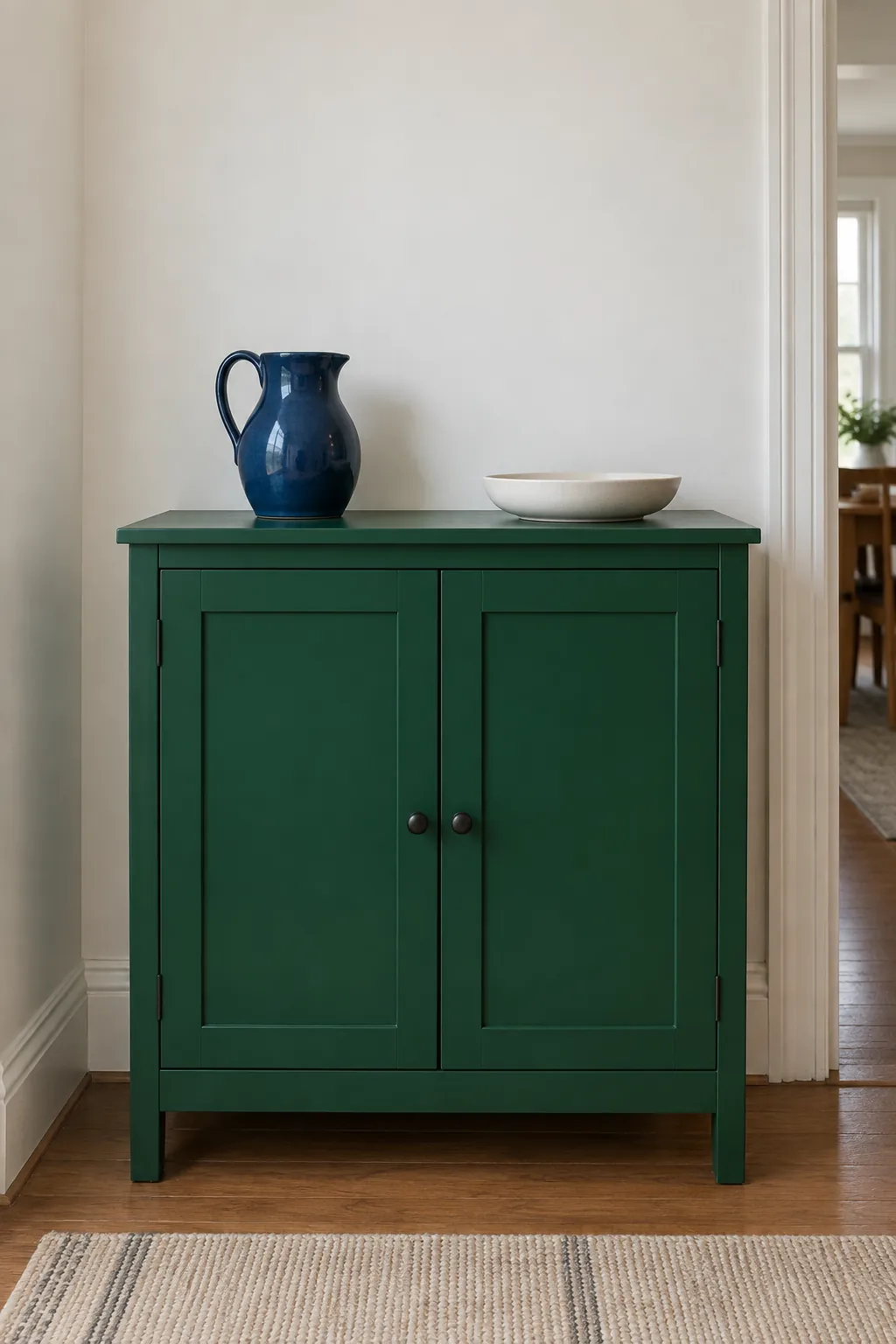
Ink blue gives emerald a rich neighbor, while chalk white keeps the combination readable. A green cabinet with a small blue vessel and a pale wall can test the effect before you commit to two large dark surfaces. This is especially useful when you like a moody palette but still want clear contrast around everyday objects.
For emerald green paint color combinations, place the dark samples upright beside the actual trim and inspect them at night. If the blue and green become indistinguishable, reduce one color’s area or choose a lighter version of it. A nearby reading or task lamp should support the room’s use, not merely make the palette attractive in a photograph.
Shiny and matte finishes can separate similar dark colors, but sheen also changes with viewing angle. Check from the doorway and from where you normally sit.
Emerald, warm gray, and brushed brass for a restrained finish
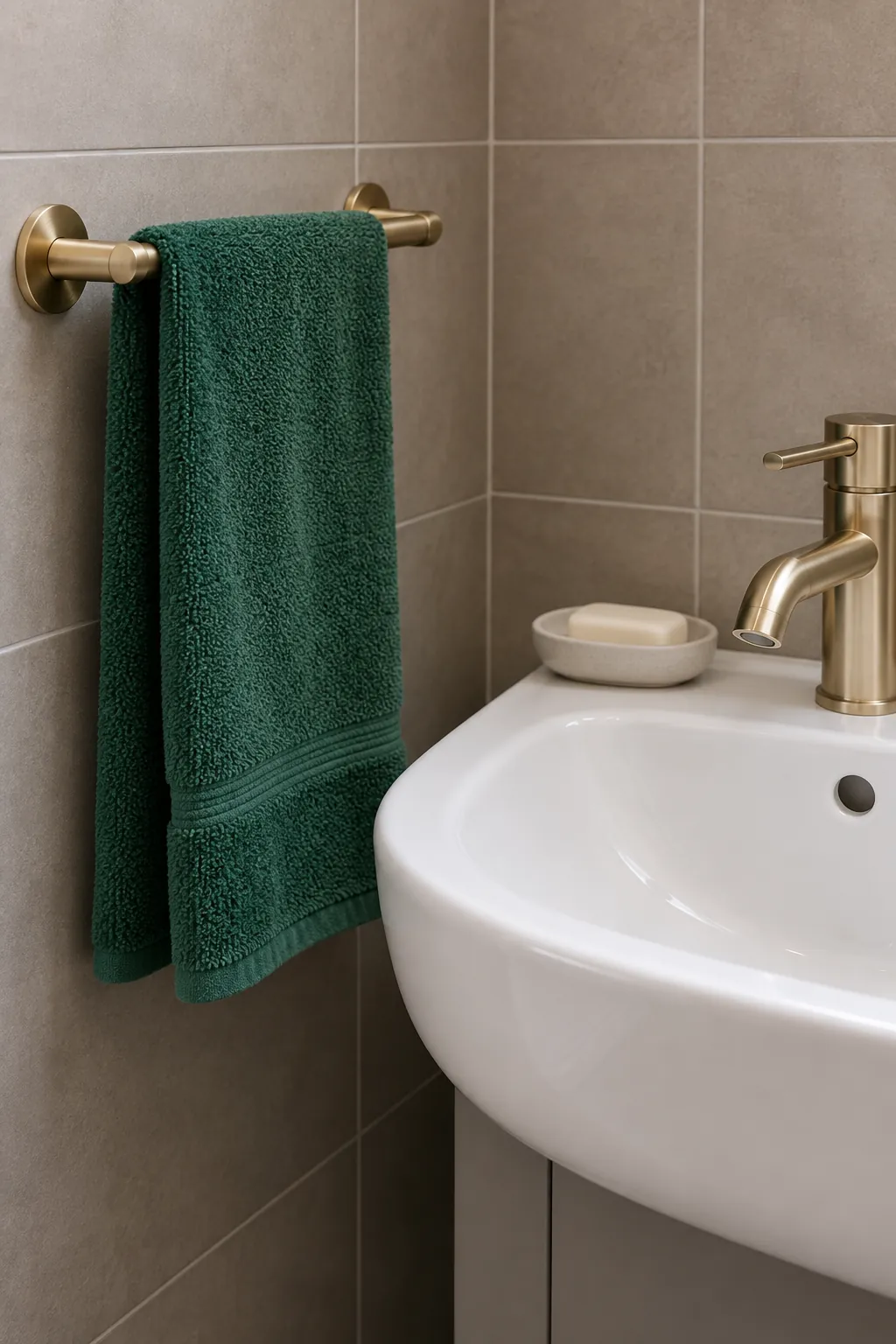
Warm gray offers a quieter alternative to cream when the room already contains gray tile, upholstery, or stone. Add emerald through a washable textile or painted furniture, then use brushed brass in a small functional detail. The metal supplies a highlight rather than acting as another large block of color.
Compare the gray with the green before choosing hardware, since gray can lean blue, violet, brown, or green. Keep existing metal finishes if they still work; a room does not need every handle and lamp to match. Emerald green accent decor should connect with the surfaces you own rather than create a reason to replace them all.
Repeat a connection, then stop adding colors
A rug, curtain, or piece of upholstery can connect an emerald palette when it repeats a color already present elsewhere. That does not mean every textile needs an exact match. Try one larger green element and one smaller echo, then let neutral surfaces separate them so each remains visible.
Before buying more emerald green curtains and textiles, remove one proposed accent from your sample arrangement and see whether the whole scheme becomes clearer. Photographing the samples can help you remember the layout, but make the final color decision in person. The best palette is the one that still works with your fixed finishes and everyday light after the extra options have been put away.