
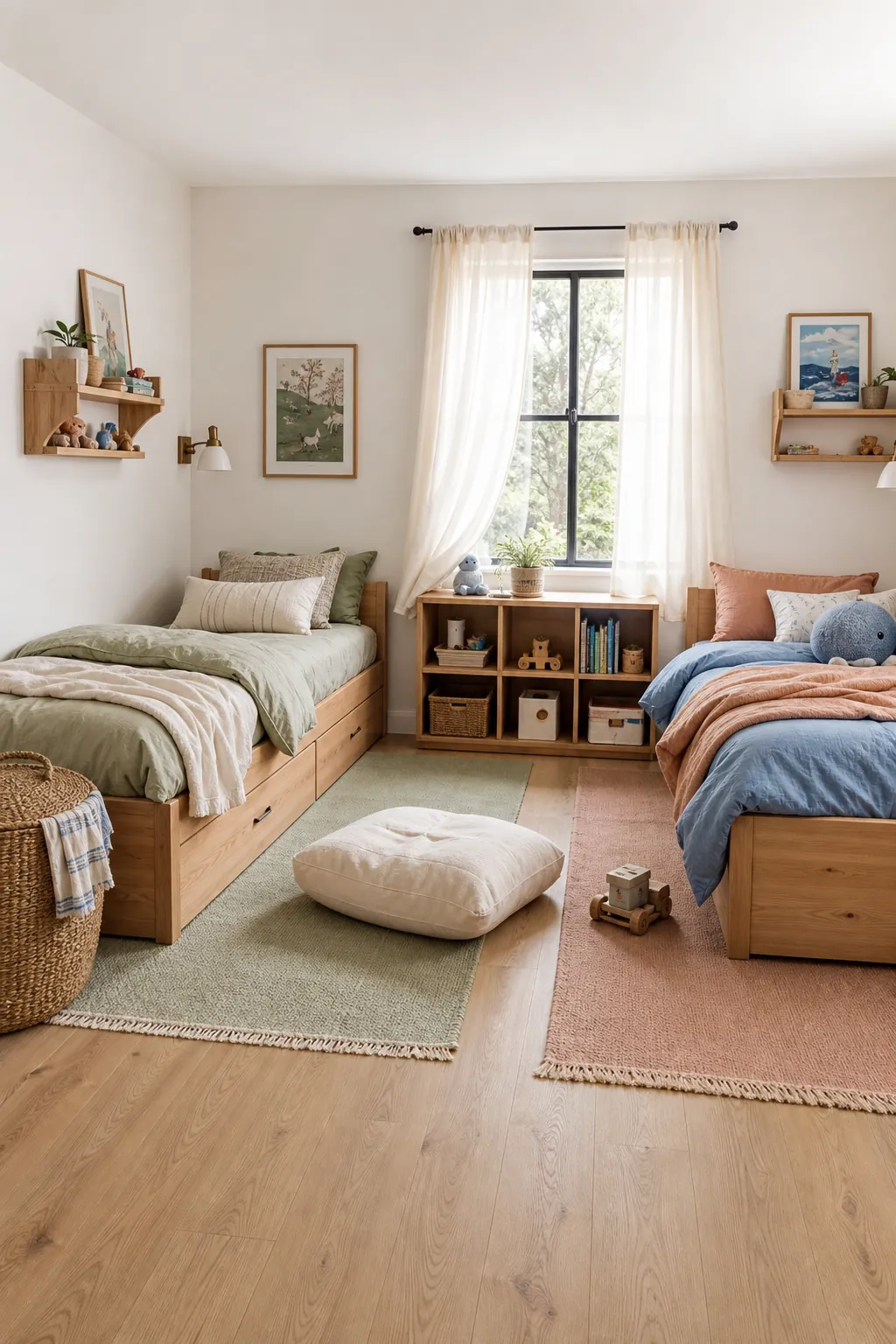
A shared kids room does not need two identical beds, two identical quilts, and two identical personalities squeezed into one layout. In real homes, the room usually works better when it is cohesive without being copied. The goal is not to make both sides match. The goal is to make each child feel like the room is fair, calm, and clearly partly theirs.
Parents usually run into trouble for practical reasons: one child thinks the other side is taking over, favorite things get mixed together, storage becomes a daily argument, or the room looks busy because every preference is competing at once. The fix is not stricter matching. It is a smarter system of color zones, personal storage, repeated shapes, and shared breathing space.
Start With One Calm Base, Then Let Each Side Speak
The easiest way to avoid the showroom-twin look is to make the background consistent and let the smaller layers vary. Keep the walls, main rug, curtain style, and large furniture finishes calm. Then give each child freedom through bedding, a pillow, a small lamp, art, or a shelf of favorite objects.
This is where non matching decor starts to look intentional. If both sides share one or two quiet anchors, such as light wood furniture and warm white walls, the room can handle different patterns, colors, or hobbies without looking chaotic. The base is the agreement; the details are the personalities.
Give Each Child a Real Zone, Not Just a Bed
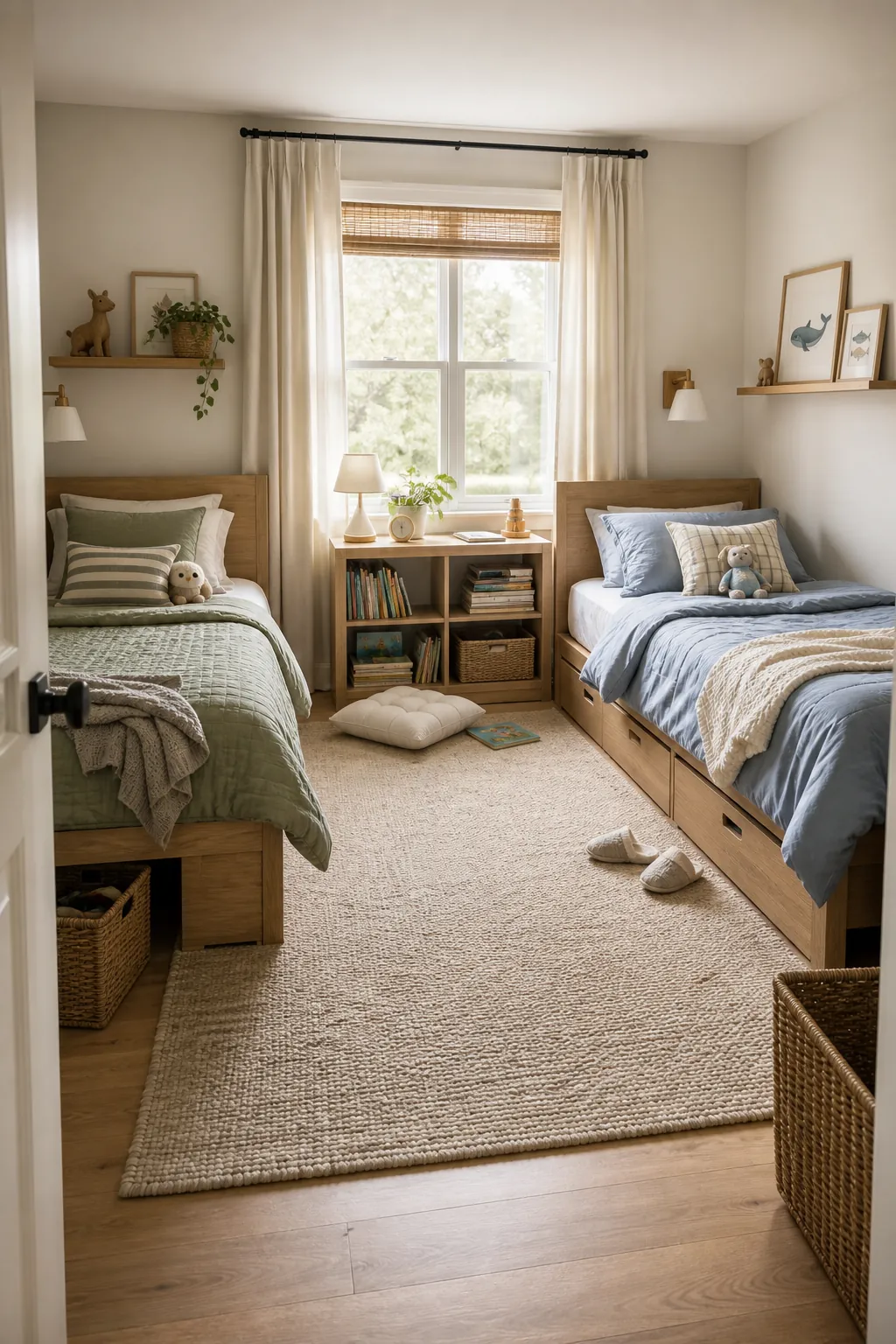
A bed alone is not enough personal space. In a sibling bedroom, each child needs a small zone that has a place to sleep, a place to put treasured things, and a visual cue that says, “this part is mine.” That cue can be a painted half wall, a rug beside the bed, a wall shelf, a canopy, a peg rail, or a narrow book ledge.
Color zones are especially useful because they create boundaries without building barriers. Try one shared wall color, then assign each child a secondary color in the items closest to their bed. One side might use sage green, the other dusty blue, while both still share natural wood, cream, and woven textures. The room reads as one space, but the children can still recognize their own corner immediately.
Use Repeated Shapes Instead of Matching Sets
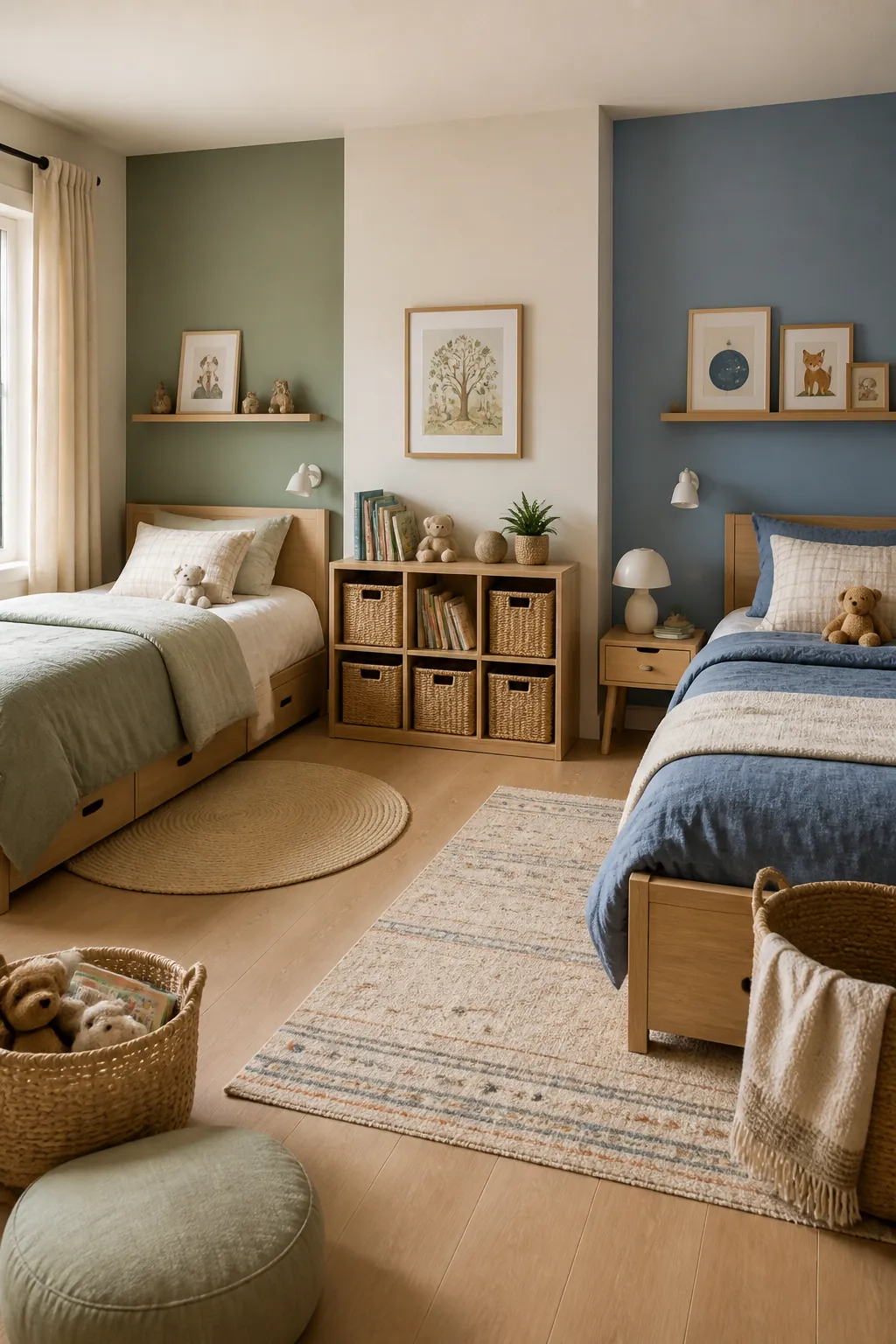
Matching furniture is not the only way to make kids bedroom decor feel pulled together. Repetition can be softer and more flexible. Two different nightstands can work if they are about the same height. Two different lamps can work if both have rounded shades. Two bedding sets can work if they share one common color, stripe size, or fabric texture.
This is a better long-term strategy because kids change their minds. A child who loves dinosaurs this year may want soccer, ballet, space, flowers, books, or no theme at all next year. If the room depends on a perfectly matched theme, every change feels disruptive. If the room depends on repeated scale, materials, and shapes, you can swap the personal layers without starting over.
A simple rule helps: choose one shared finish, one shared neutral, and one repeated shape. For example, use light oak, warm white, and rounded details across the room. Then let the art, quilts, baskets, and small accessories differ.
Make Storage Personal Before It Becomes Pretty
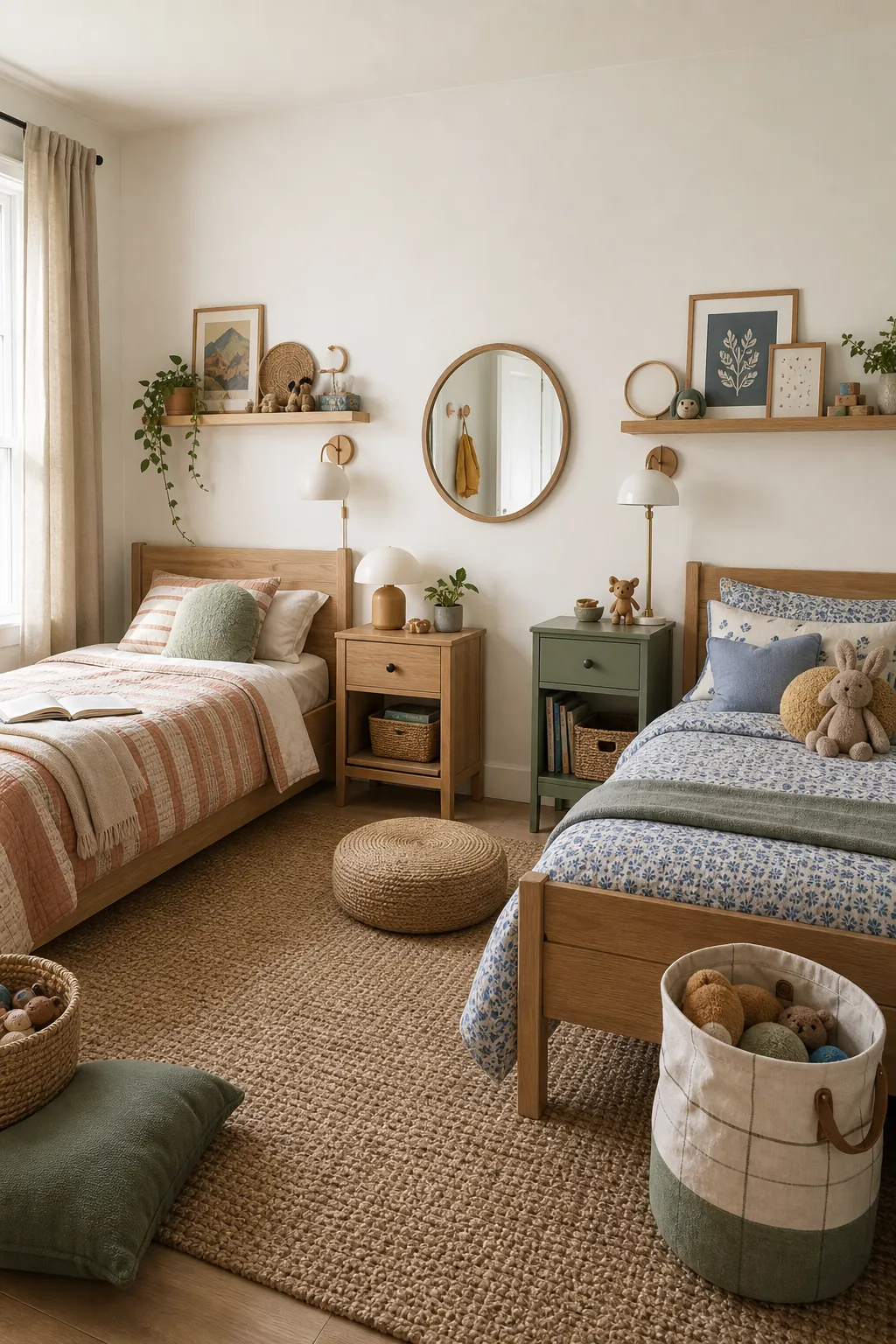
Bedroom storage is the difference between a shared kids room that looks cute for one afternoon and a room that actually works on a school night. Before choosing baskets or shelves, decide what must be separate. Clothes, keepsakes, library books, small toys, hair accessories, sports gear, and bedtime favorites often need clear ownership.
Use duplicate storage zones even if the decor is different: one drawer per child under the bed, one shelf per child, one basket for current bedtime books, one hook for tomorrow’s outfit, and one small container for tiny treasures. Labels help younger kids, but color tags or picture labels can feel less busy than words everywhere.
The important part is emotional as much as practical. When children know where their things live, they argue less about whose mess is whose. The room also becomes easier to reset because every item has a home that belongs to someone specific.
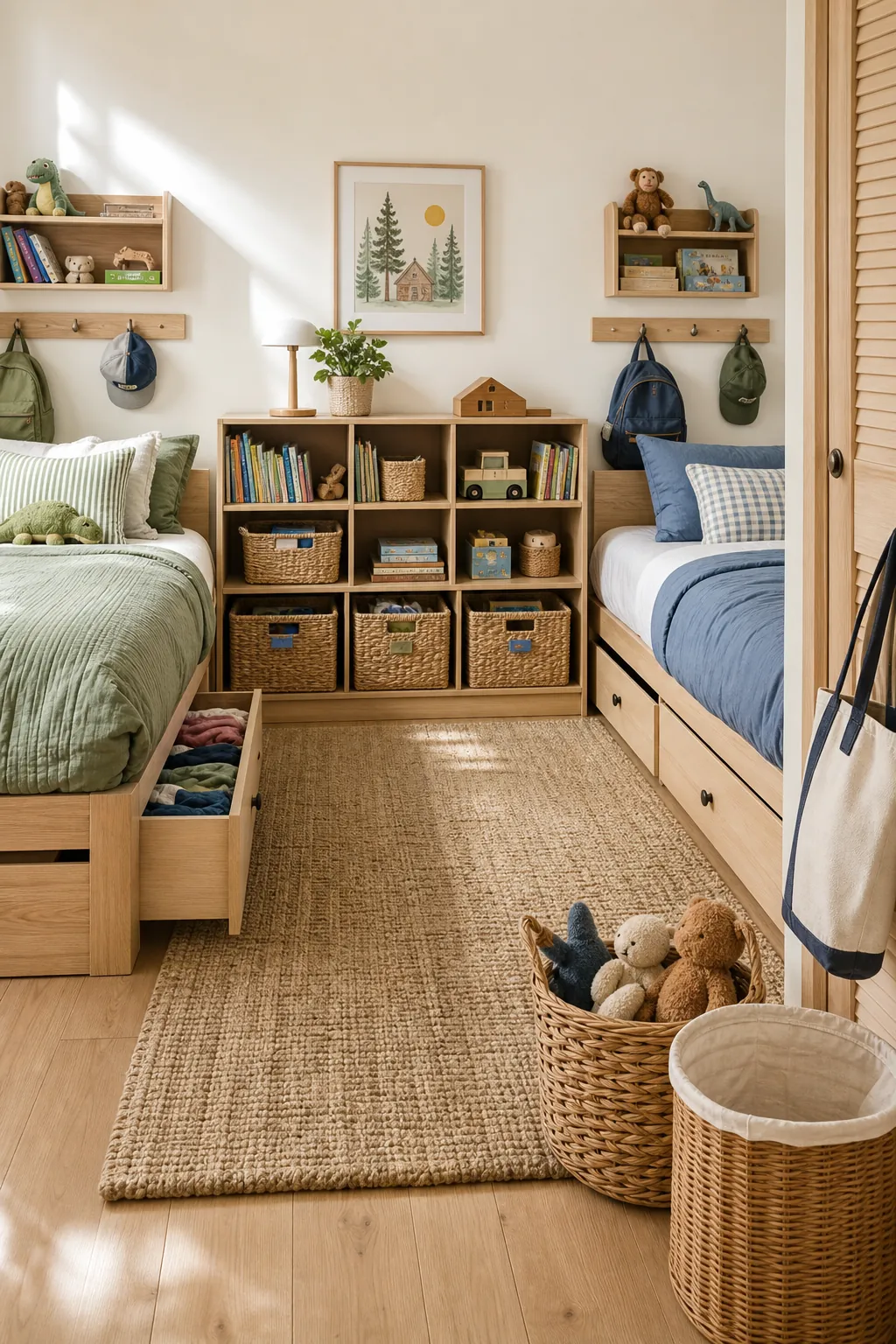
Let Wall Decor Carry Their Personalities
Wall decor is one of the safest places to let children be different. It is visible, personal, and easy to update without replacing beds or repainting the whole room. Give each child a small display area near their bed: a cork board, picture ledge, framed art grid, pennant, name plaque, or clip rail.
The trick is to control the frame system, not the content. Use the same frame color on both sides, or keep both displays inside the same size area. One child can show animals while the other shows sports or rainbows, and the room will still feel styled because the arrangement has the same visual rhythm.
This also keeps the room from becoming a battle over one theme. Instead of asking two kids to agree on one look, you create two smaller places for self-expression. Personal does not have to mean visually loud; it just has to feel chosen.
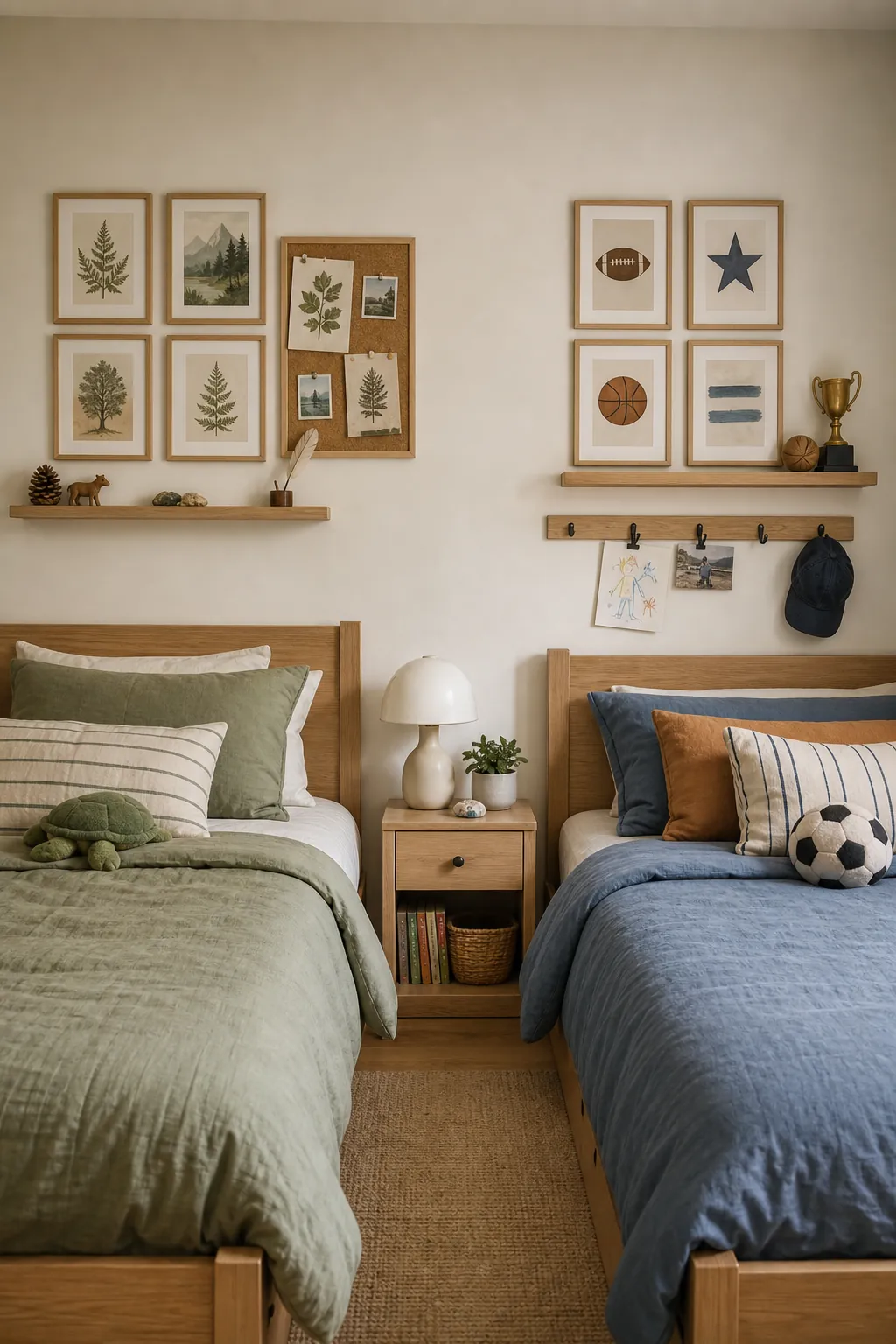
Keep the Middle Shared and Easy to Reset
Once each side has identity, the middle of the room can become the shared part. This is where a small rug, reading cushion, low bookcase, play table, or soft floor basket can make the room feel friendly instead of divided. It gives siblings a place to play together without climbing into each other’s beds or scattering toys across both zones.
Keep this shared area simple. A low shelf with books and a few open bins is better than a complicated play setup that has to be styled every day. If the room is small, the shared zone can be only a clear walkway and one basket between the beds. Empty floor is a design choice in a kids room, not wasted space.
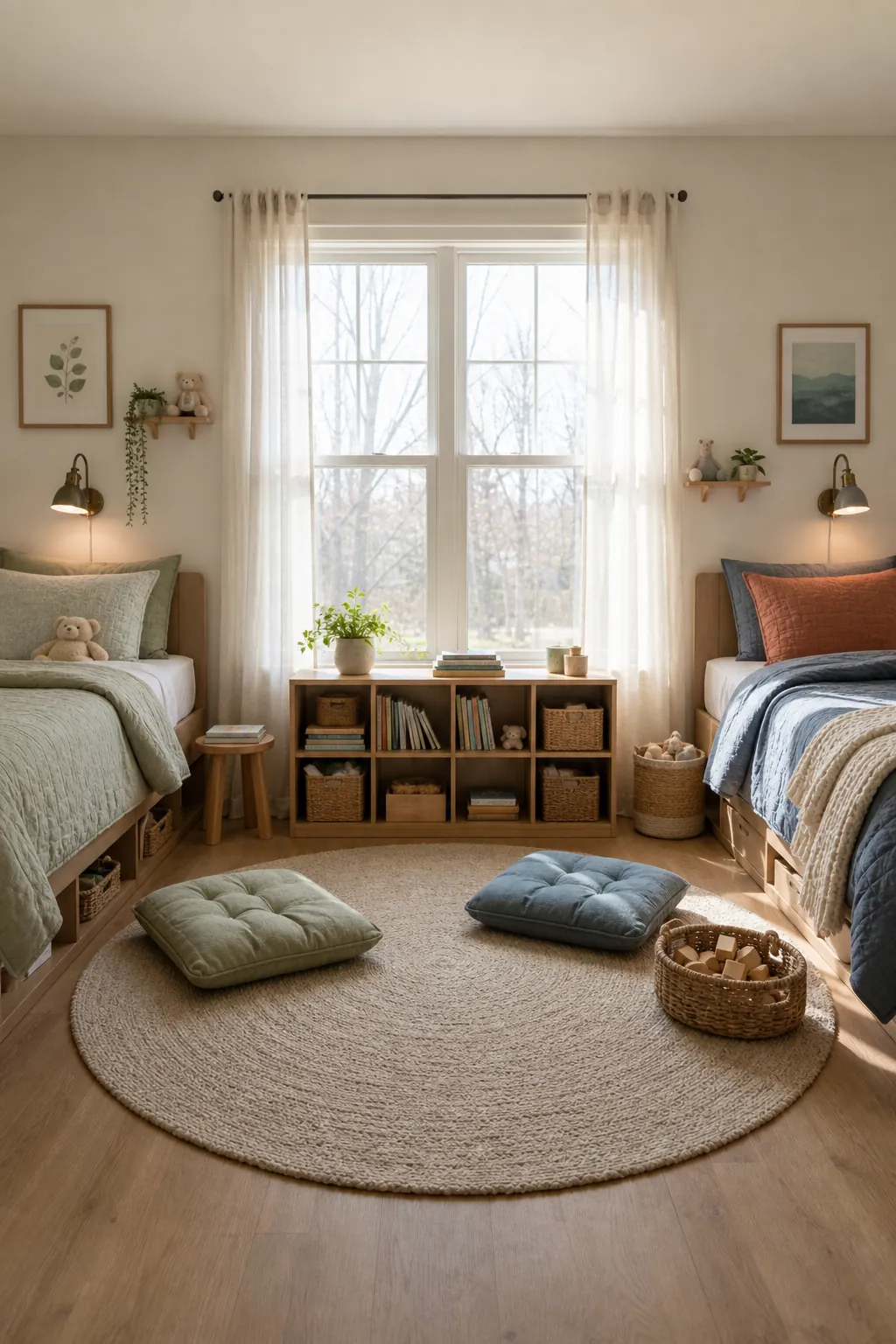
The best shared kids room is not perfectly symmetrical. It is understandable. Each child can see what belongs to them, the shared parts are easy to reset, and the whole bedroom still feels like one thoughtful space. Start with a calm base, divide the room through gentle zones, repeat shapes instead of buying matching sets, and let the personal details live where they are easiest to change.
That is how you decorate a shared kids room without matching everything: make the room fair first, cohesive second, and identical never.