
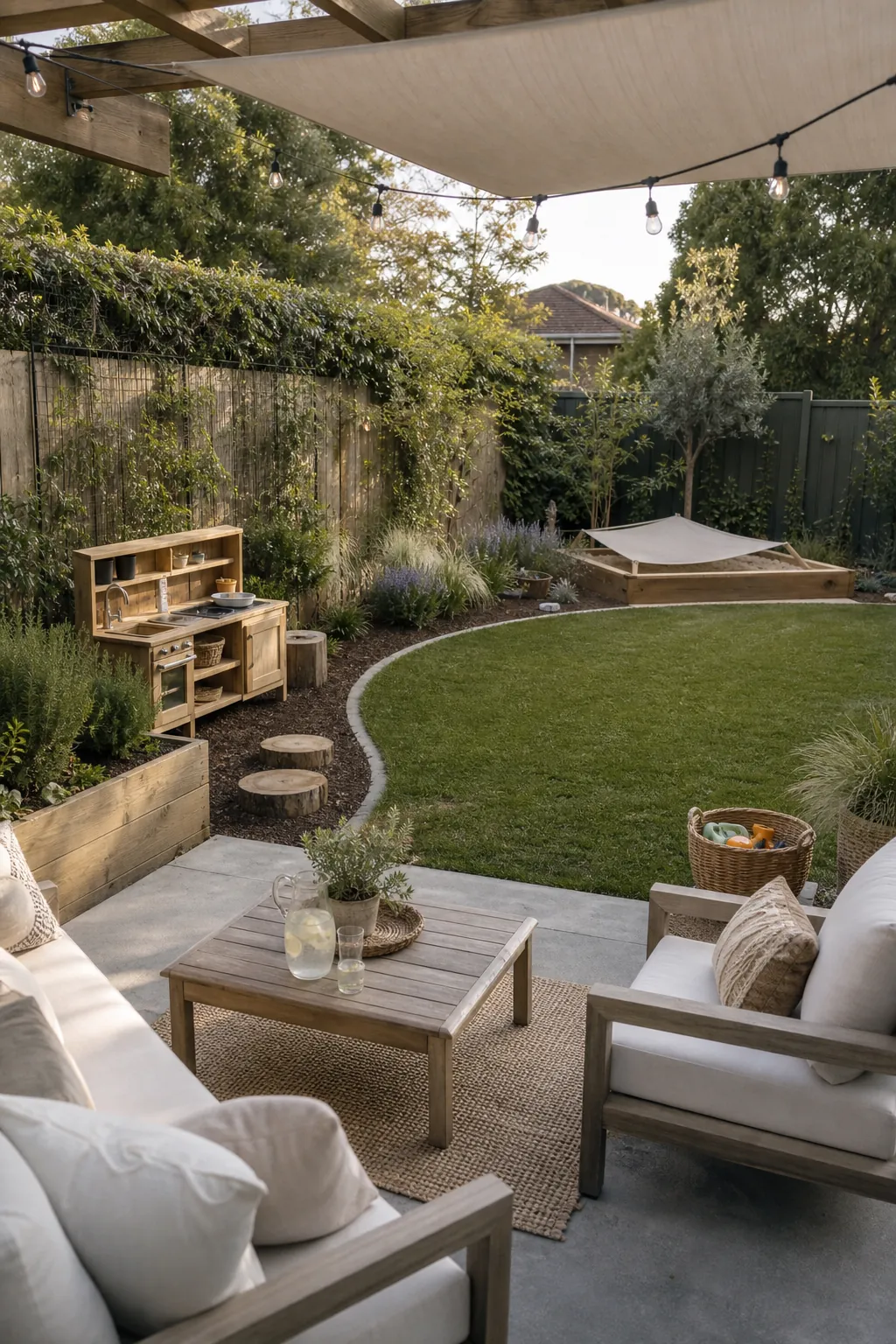
A backyard that works for both kids and adults cannot be designed like a showroom. It has to handle snack spills, running feet, outdoor play, quiet coffee, family dinners, and the occasional neighbor looking over the fence. The best backyard ideas do not split the yard into a kids’ zone and a grown-up zone. They make one outdoor living space flexible enough that everyone actually uses it.
The useful test is simple: can a child move, explore, and make a little mess while an adult still has a comfortable place to sit, eat, talk, and see what is happening? If the answer is yes, the decor is doing real work.
Keep the Lawn Flexible, Not Empty
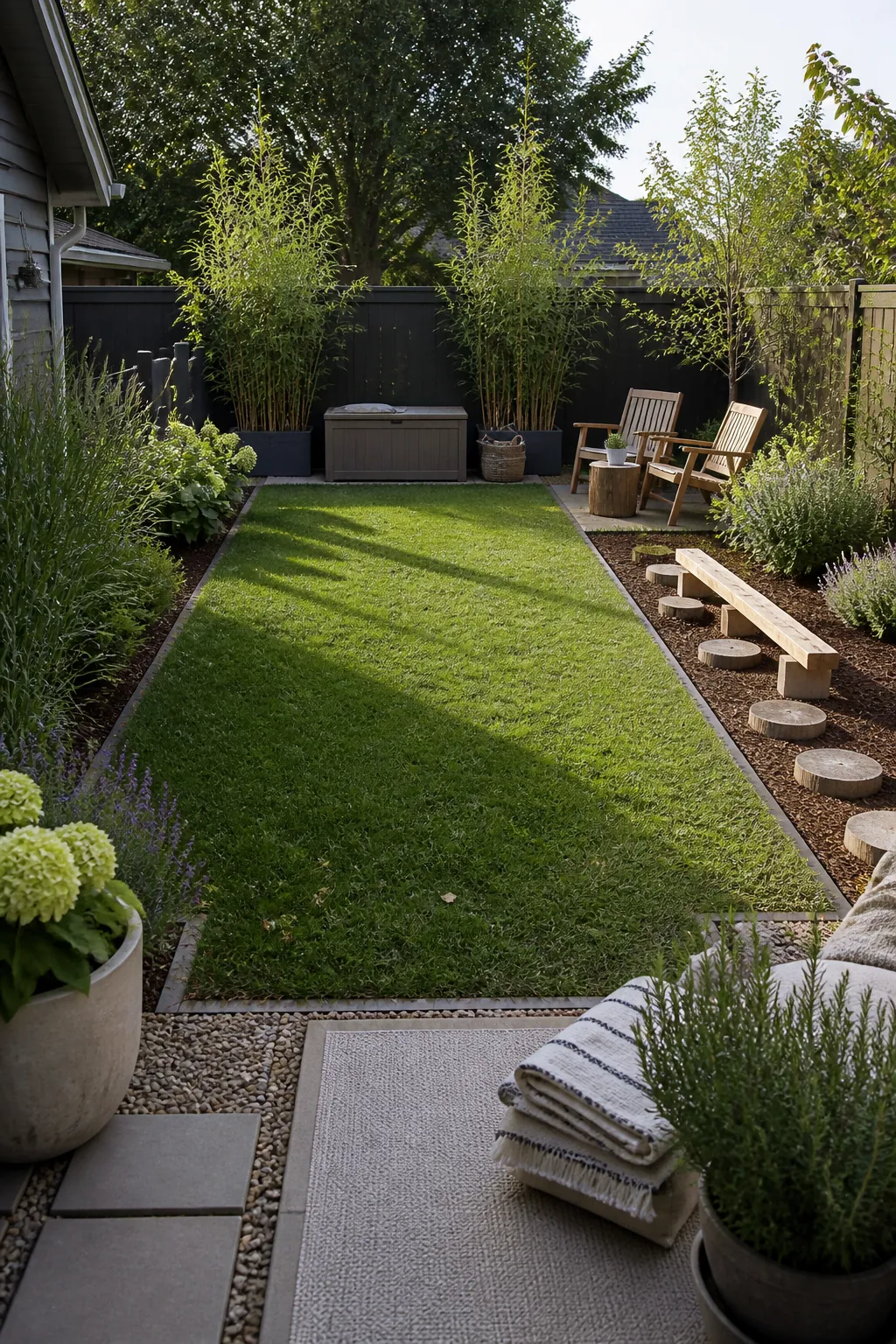
An open patch of grass is not wasted space. For a kids backyard, it is the room that changes jobs all day: soccer in the morning, picnic blanket at lunch, sprinkler run in the afternoon, and a soft landing zone while adults sit nearby. The mistake is leaving the lawn visually unfinished, which makes the yard feel bare instead of intentional.
Frame the lawn with adult-looking edges: gravel strips, steel edging, mulch beds, low shrubs, herbs, and ornamental grasses. This turns a plain play space into a garden design feature. Keep the center clear, then decorate the perimeter with things that can take weather and movement.
- Use the middle for motion. Avoid filling every corner with furniture, planters, or play equipment.
- Put beauty at the edges. Lavender, rosemary, grasses, and compact shrubs give the yard shape without stealing play space.
- Choose storage that looks like furniture. A bench or deck box keeps balls, chalk, and bubble wands from becoming the main view.
This is where many family backyard plans get easier: you do not need a huge yard. You need one clean, flexible surface and a few strong borders.
Use Patio Seating That Can Watch the Play Zone
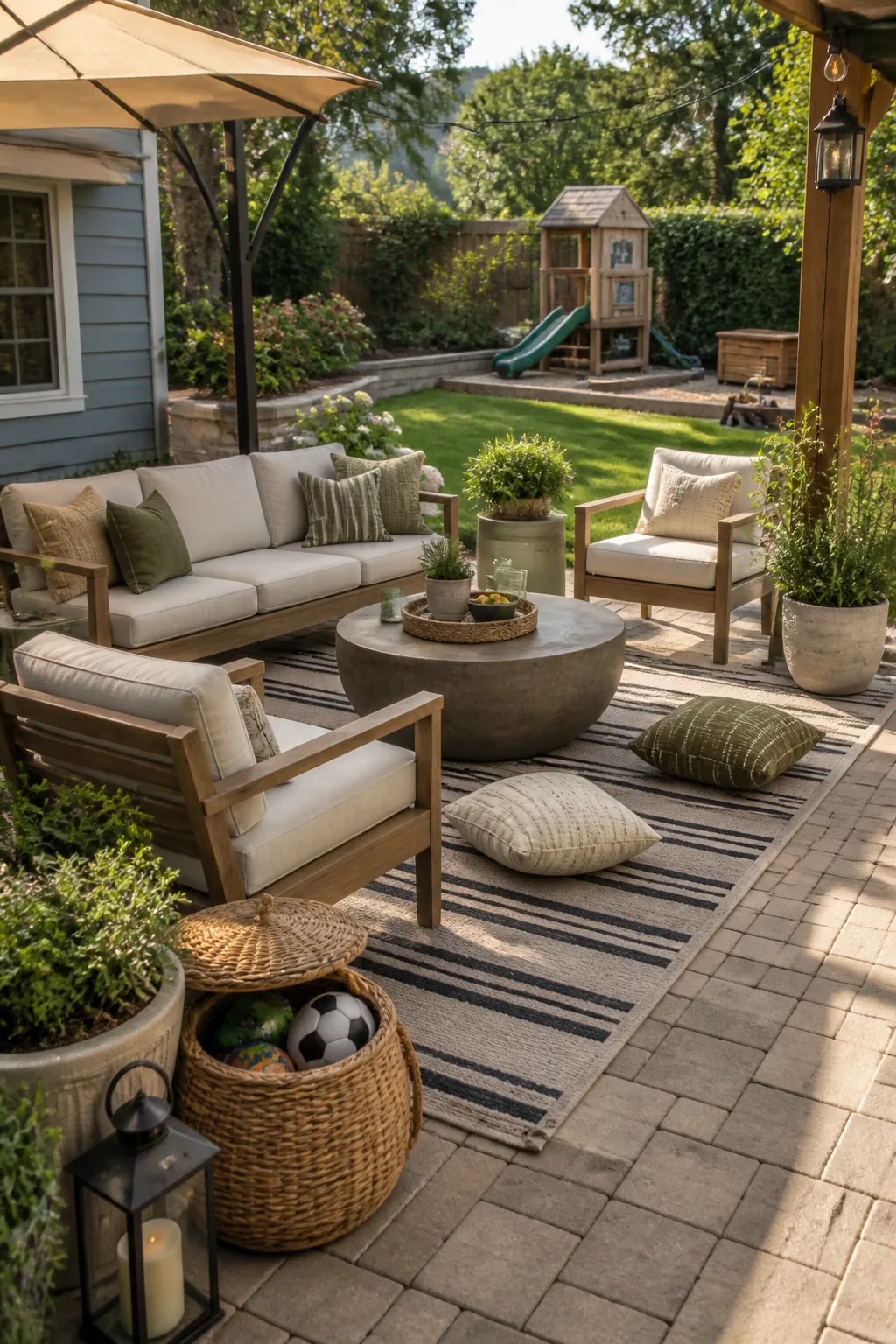
The best outdoor seating is not just pretty. It is placed where adults naturally want to stay. If the chairs face only the house, the adults will keep turning around. If the seating is too far from the outdoor play area, nobody relaxes. Place the patio decor so the main chair or sofa has a direct line of sight to the lawn, sandbox, mud kitchen, or playhouse.
Use a conversation layout instead of a row of chairs. A small outdoor sofa, two chairs, and a round or oval coffee table create a room-like feeling without blocking movement. Rounded tables, washable cushions, and a durable rug make the space forgiving for kids and comfortable for adults.
The adult feature is comfort. The kid feature is visibility. When both are solved, the patio becomes the place everyone returns to instead of a separate adult area that only works after bedtime.
- Choose performance cushions with removable covers.
- Use one lidded basket or storage bench for toys near the seating, not across the yard.
- Leave a walking lane between the seating and the lawn so traffic does not cut through the conversation area.
Build a Nature Play Corner That Looks Like Garden Design
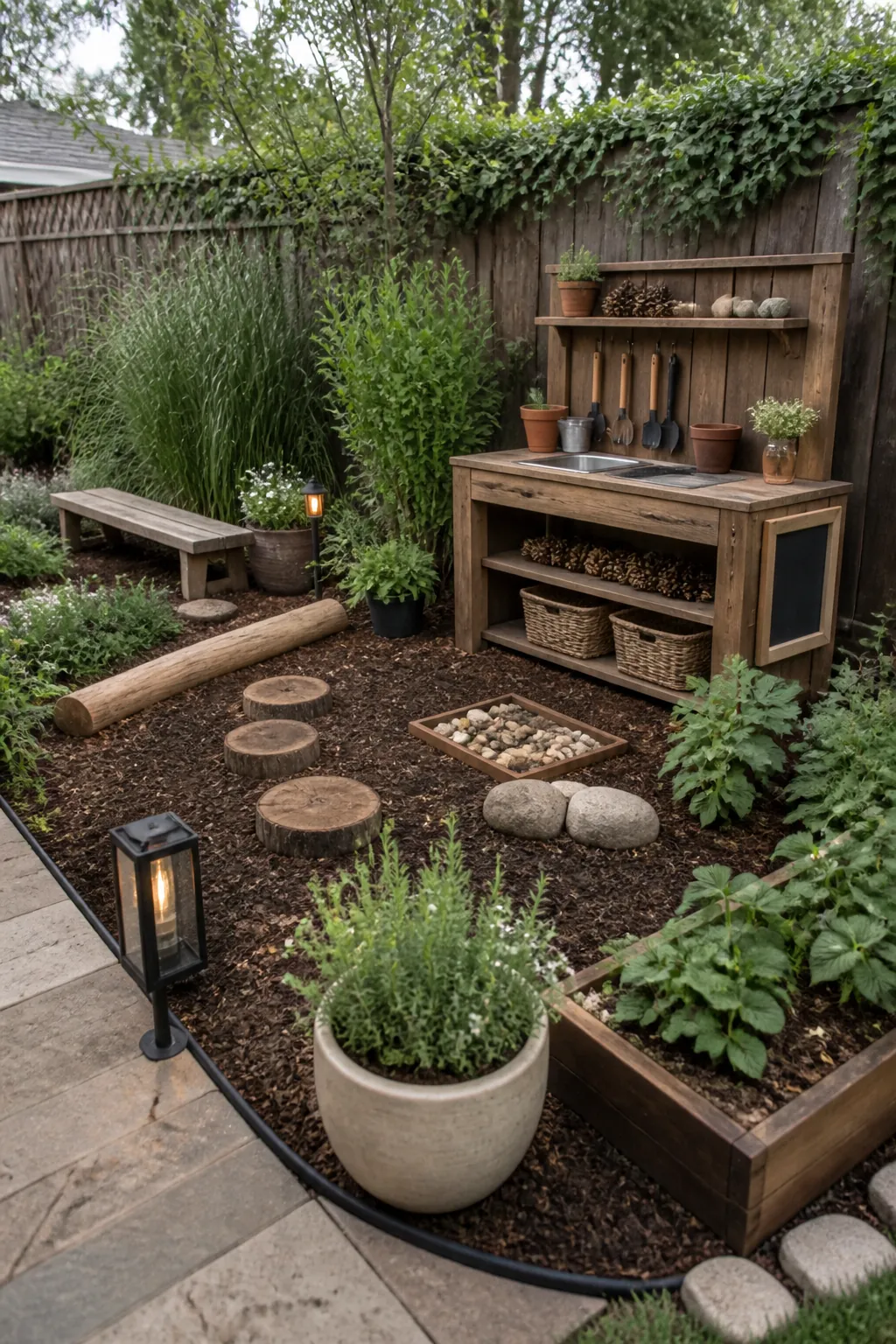
A play corner does not have to look like a plastic playground. In fact, nature play often blends better with adult backyard decor because it uses the same materials as the rest of the garden: wood, mulch, stone, water, soil, herbs, and planters.
A small mud kitchen, stepping stumps, a balance log, a covered sandbox, and a sensory planter can fit into one corner without taking over the yard. The key is to give it a boundary. Mulch underfoot, a curved bed edge, or a low timber border tells the eye that the play area is designed, not abandoned.
Keep it close enough to the patio for supervision, but not directly in the path between the door and the dining table. If you garden, add herbs or strawberries nearby so outdoor play overlaps with watering, picking, and digging. Kids get texture and discovery; adults get a corner that still reads as landscaping.
- Use mulch, bark, pea gravel, or soft groundcover depending on the activity and your climate.
- Avoid sharp plantings around running routes.
- Store loose pieces in baskets or shelves so the corner can reset quickly.
Make Outdoor Dining the Family Command Center
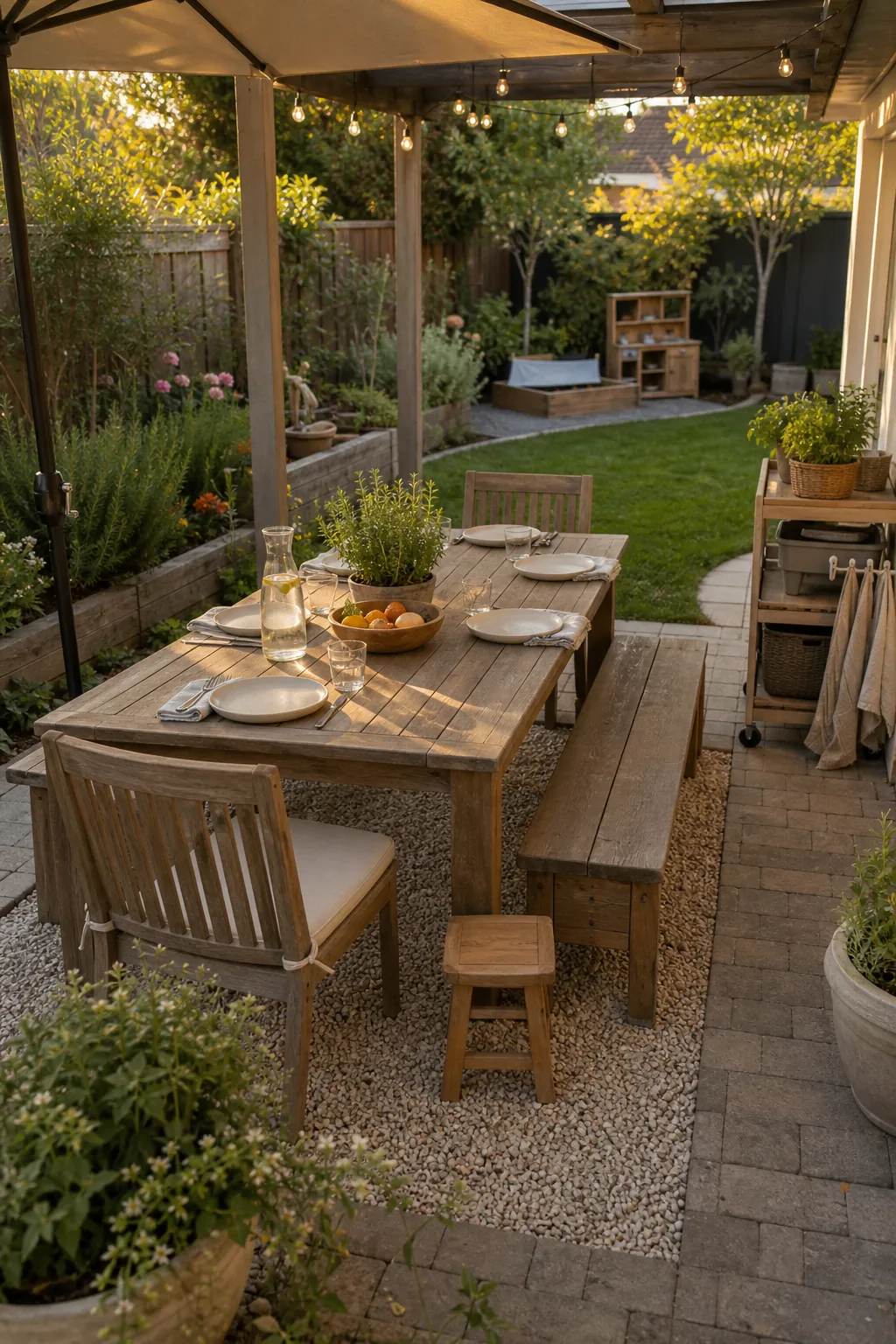
Outdoor dining is often treated like a special-occasion setup, but in a family backyard it should work as the command center. This is where snacks land, homework comes outside, adults drink coffee, kids sort leaves, and dinner stretches into evening.
Use a sturdy table rather than a delicate one. A bench on one side helps children slide in and out without dragging chairs across pavers, while two proper chairs keep the setup comfortable for adults. Add a small cart, lidded bin, or cabinet nearby for outdoor plates, wipes, sunscreen, napkins, and throws.
For patio decor, keep the table simple and repeatable: a pot of herbs, unbreakable cups, a water carafe, and washable textiles. The goal is not a perfect tablescape. The goal is a table that makes the backyard easier to use on a normal Tuesday.
- Place the dining area close to the kitchen door if possible.
- Keep a clear path to the lawn so children can move without squeezing behind chairs.
- Use overhead shade, an umbrella, or a pergola so lunch is not limited to cool days.
Layer Shade and Lighting Before Buying More Decor
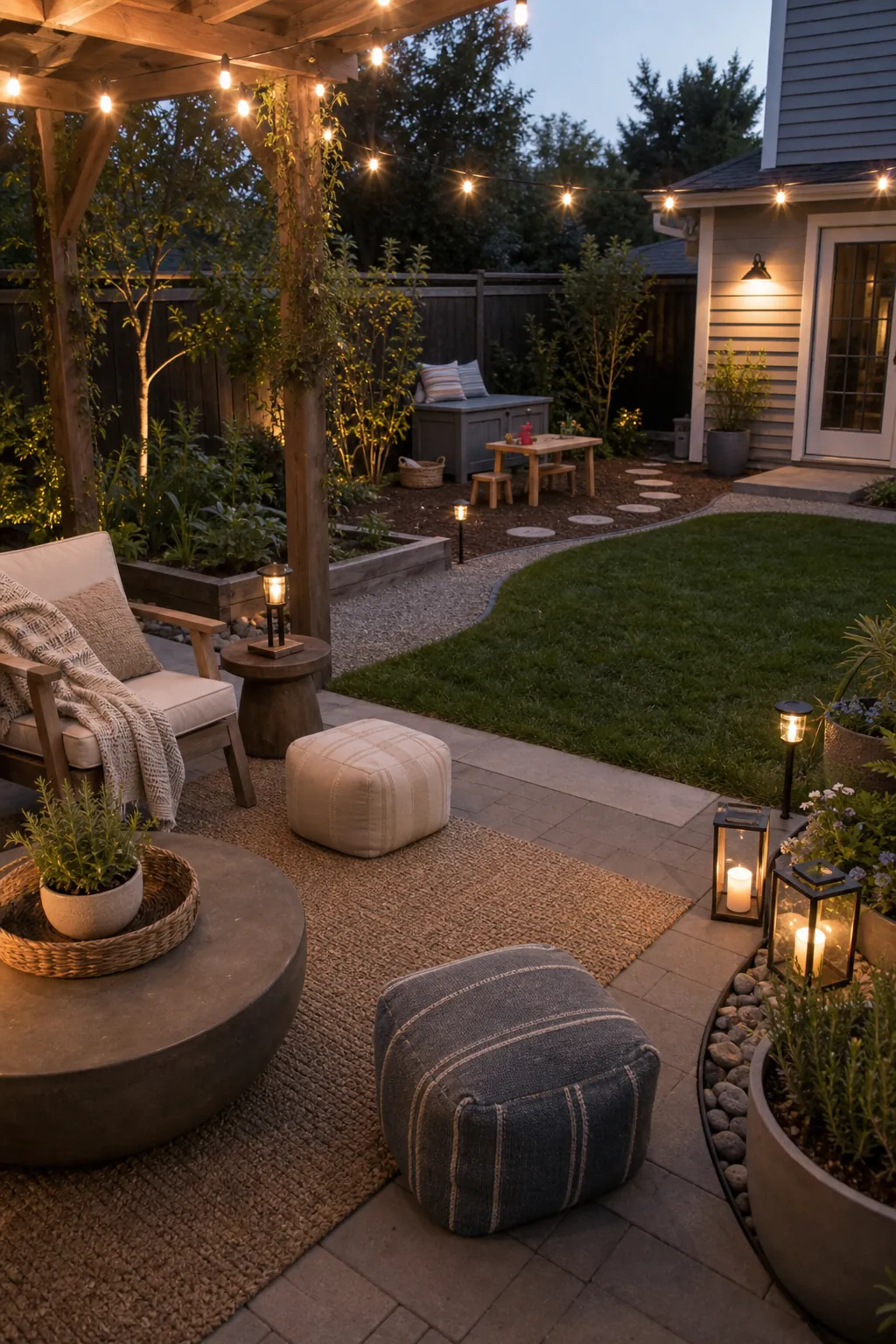
Many backyard decor problems are really comfort problems. If the patio is too hot, adults leave. If the play area is too exposed, kids avoid it. If the yard goes black after dinner, everyone drifts back inside. Shade and lighting are not finishing touches; they decide whether the space gets used.
Start with shade over the places people pause: the dining table, the main outdoor seating, and the part of the lawn or play corner that gets harsh afternoon sun. A pergola, shade sail, umbrella, or tree canopy can all work. Then add lighting in layers: path lights for movement, string lights for atmosphere, and a wall light or low lantern near the door.
Keep lighting warm, low, and practical. Avoid dangling cords where kids run. Skip open flames in traffic paths. Put lanterns where they glow without becoming obstacles. This makes the same yard feel active in the day and calm at night.
Create Privacy With Plants, Paths, and Storage
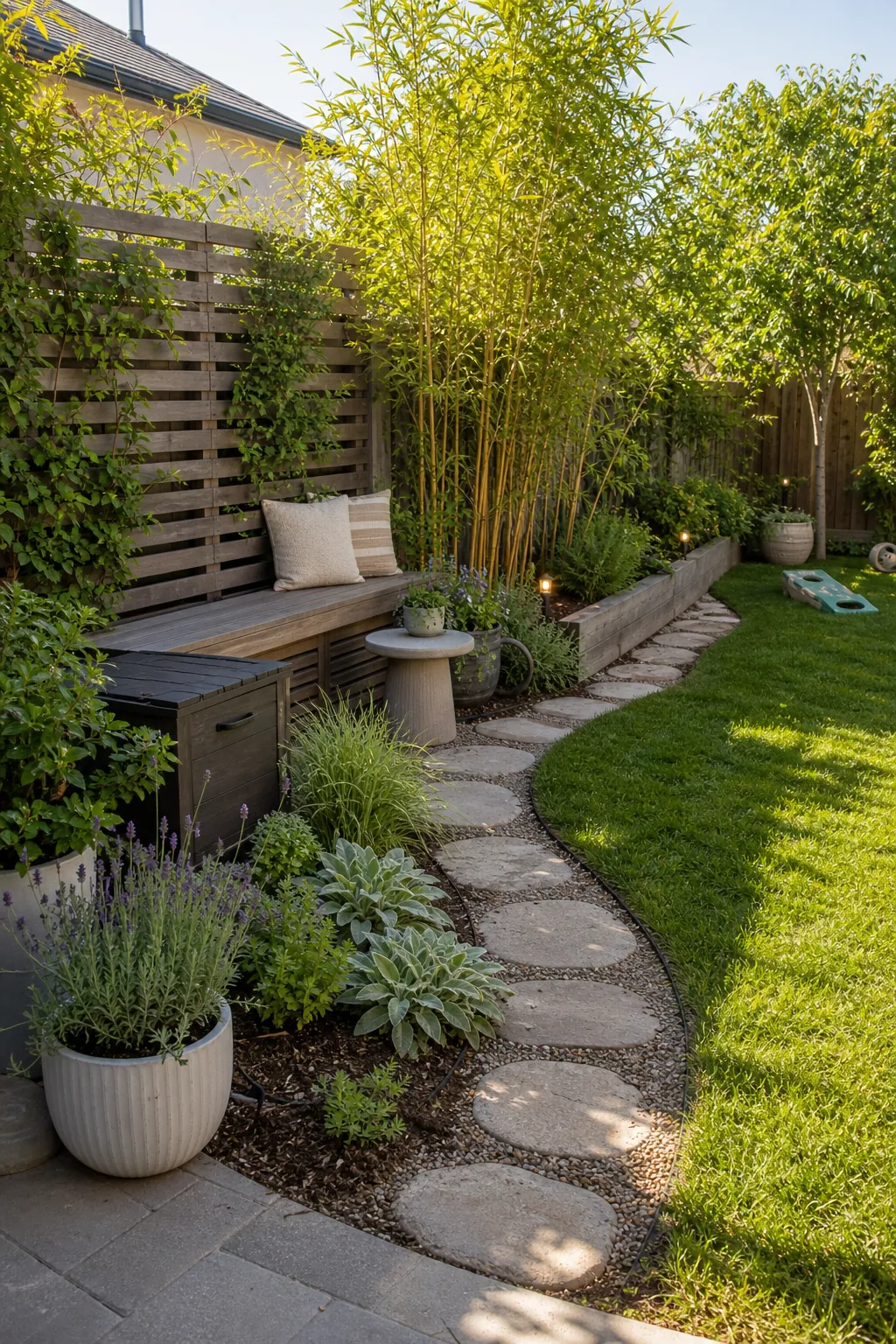
Privacy ideas matter more in a family yard because nobody wants to feel watched while eating dinner, rinsing off muddy hands, or reminding a child to put shoes back on. But privacy does not have to mean building a tall blank wall around the yard.
Layer privacy instead. Use a slatted screen where you need immediate cover, then soften it with vines, tall planters, clumping bamboo-style screening, shrubs, and grasses. Add a curved path so the planting bed feels intentional and so kids have a clear route that does not cut through every chair group.
Storage belongs in this layer too. A bench with a storage box, a deck chest that matches the fence, or a narrow cabinet near the patio can hide the things that make outdoor living work: balls, chalk, bubble refills, gardening gloves, bug spray, towels, and cushions.
- Use plants for softness and screens for speed. You get privacy now and a better garden later.
- Make paths obvious. Children follow clear routes, which protects beds and keeps furniture from becoming an obstacle course.
- Match storage to your materials. Wood, woven resin, or powder-coated metal looks calmer than a bright toy bin.
The most successful family backyard does not look childish or fragile. It looks ready. There is a place to run, a place to sit, a place to eat, a place to dig, a place to hide the clutter, and enough planting to make the whole yard feel settled. That is the version of backyard decor that lasts beyond one season.