
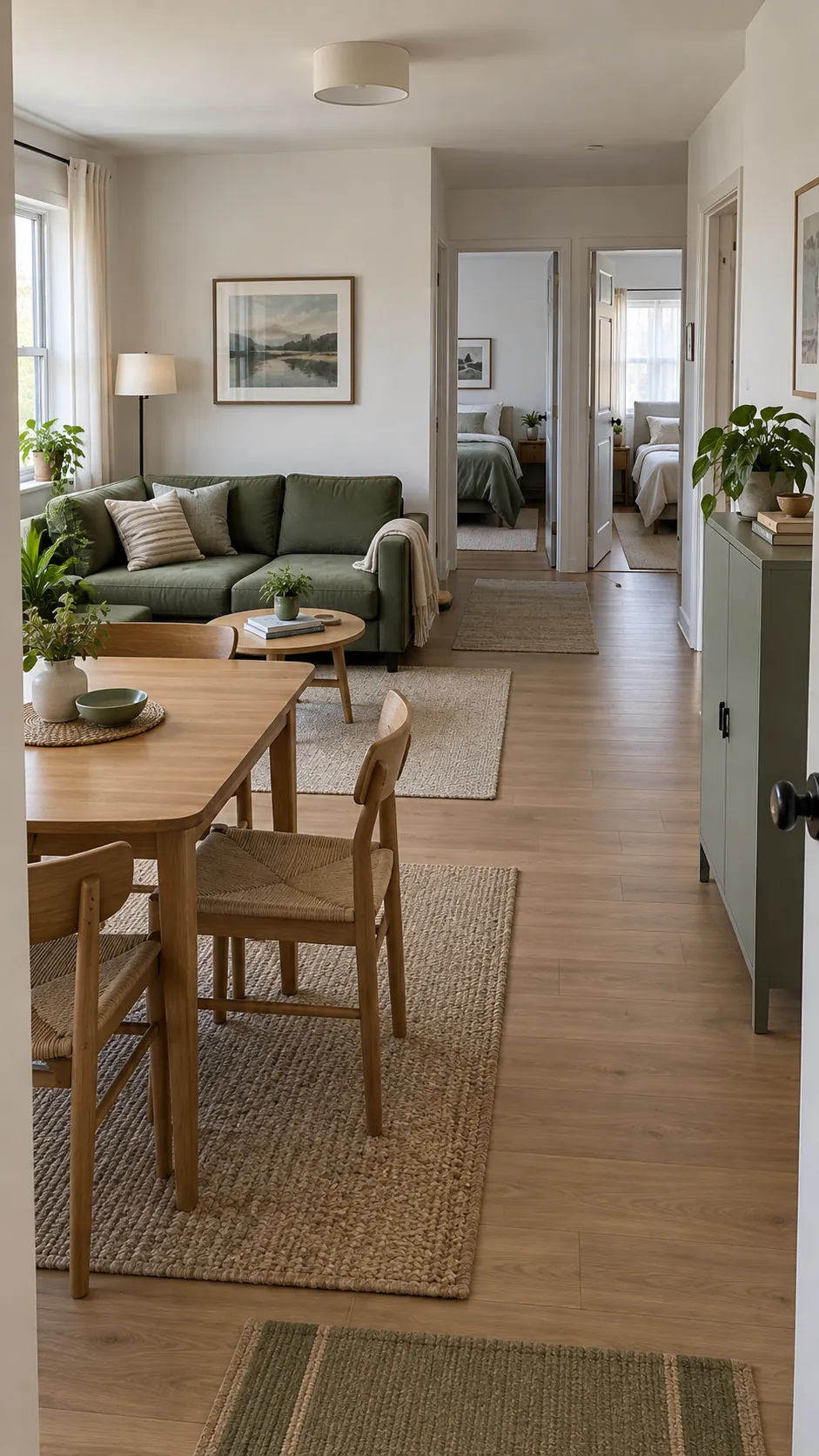
Two bedroom doors do not guarantee enough room for everything that happens between them. The sofa may fit until someone pulls out a dining chair, and the spare room can become storage before it has a purpose. Decide how the household will use each space before choosing the pieces that make it look finished.
Give each room a primary job
Start with the people who live in the apartment and the activities they repeat. Two roommates may need two equally functional bedrooms and a genuinely shared living area. A couple working from home may need one bedroom plus a second room that handles focused work and occasional guests.
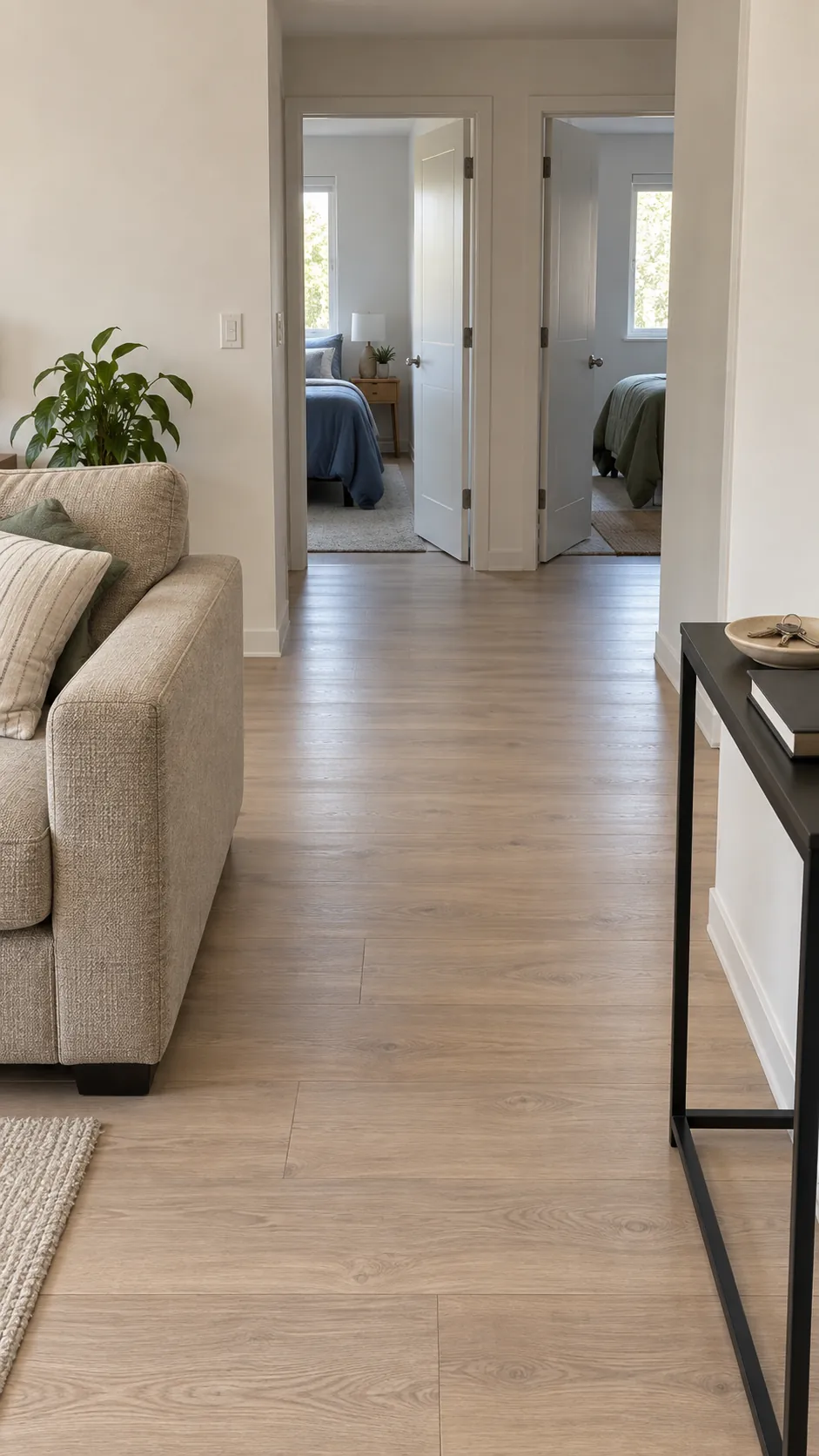
Write down the must have functions before assigning furniture: sleeping, dressing, eating, relaxing, work and any regular play or hobby space. Give each activity a home, even if two share a surface. A compact apartment layout becomes harder to manage when every room is expected to serve every purpose.
Measure door swings, closet access and the routes between bedrooms, bathroom and kitchen. Mark new furniture footprints with removable tape and test them with the chairs pulled out. Keep required exits, heating clearances and access routes unobstructed; the best looking arrangement still has to work when everyone is home.
Treat the living and dining area as one connected room
Choose the sofa for the usable wall and the number of regular occupants rather than the largest size that fits on paper. A smaller sofa with a movable chair may leave more options than a sectional with a fixed chaise. Keep the route to the bedrooms outside the main conversation area where possible.
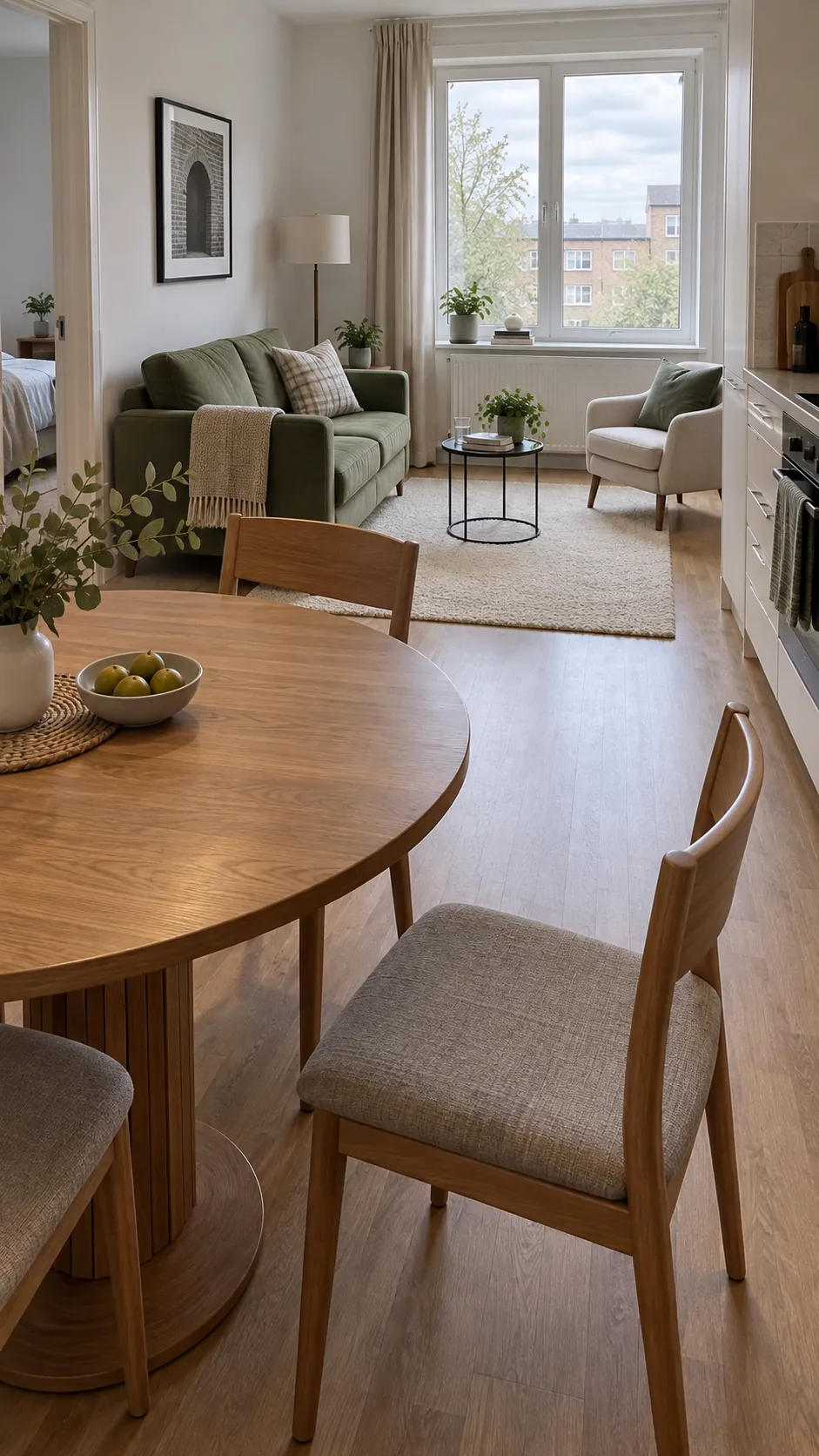
In a shared living dining space, place the dining table close enough to the kitchen to serve meals easily, then check the space with every chair in use. A round table can soften a tight corner, but its diameter still needs clearance all around. A narrow rectangular table may suit a long room better; shape is a response to the floor plan, not a universal rule.
Connect the zones with a repeated timber tone or accent color. Use a rug to anchor seating while leaving dining chairs on a surface they can move across comfortably. Avoid using a tall divider where it would steal light or make the shared room feel like a passageway.
If the table also handles homework or remote work, put a drawer or portable supply tray within reach. Clearing it for meals should take a simple transfer, not a search for somewhere to hide everything.
Make both bedrooms useful before styling them
In the main bedroom, choose a bed size that still permits the access its sleepers need. Check dresser drawers and wardrobe doors against the actual bed frame, not just mattress dimensions. Narrow bedside shelves or compact tables can free floor area, provided their fixings and edges suit the room.
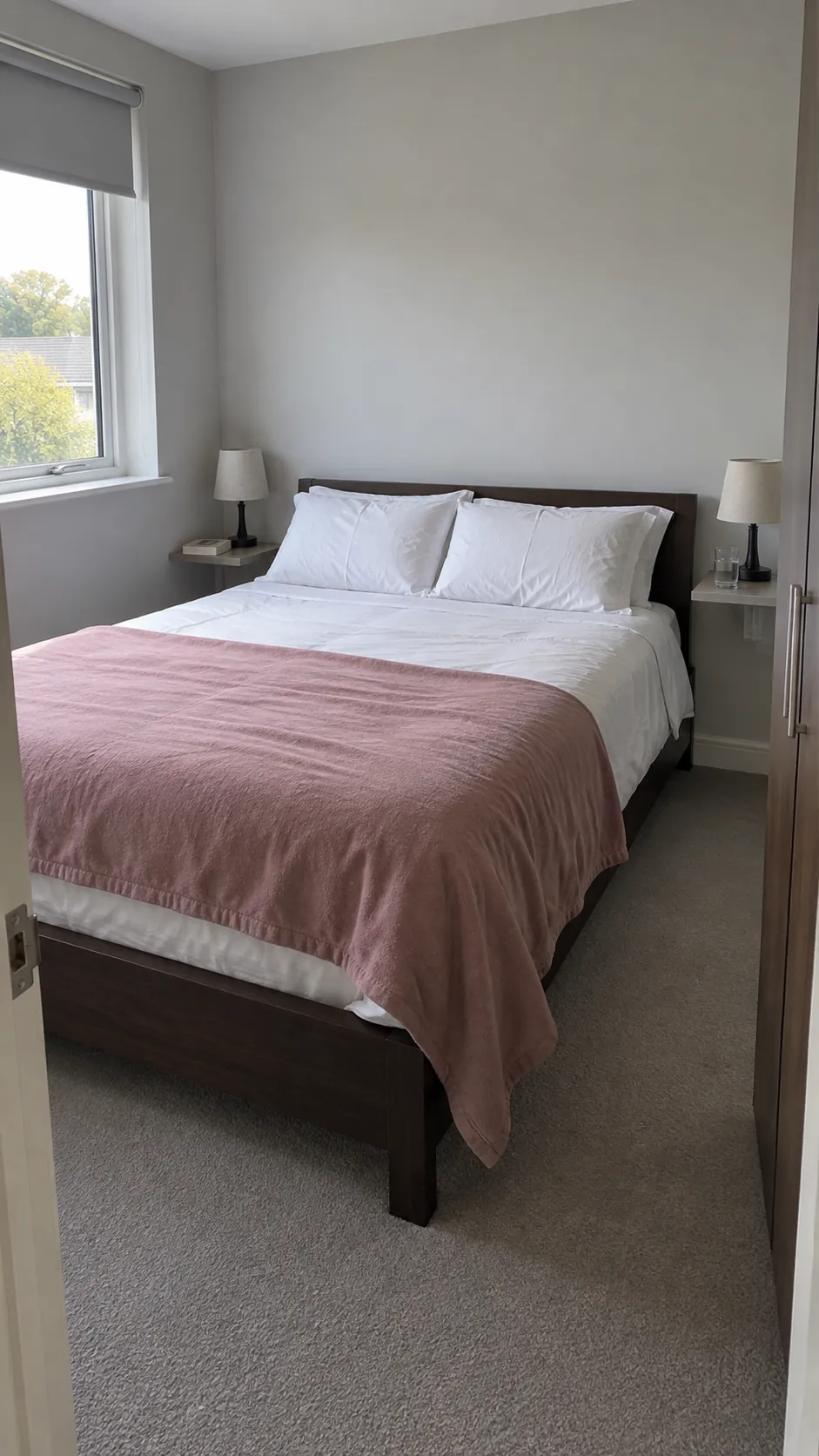
Small bedroom decor can stay simple: comfortable bedding, effective window covering and a reading light at each occupied side. Repeat one color from the shared room if you want continuity, but let the bedroom have its own quieter combination. A decorative bench is optional when its only contribution is another obstacle.
For roommates, do not solve living room storage by filling one person's bedroom with communal belongings. Agree on shared storage locations first so both private rooms remain usable.
Set up the second bedroom for its real schedule
A room used for work five days a week and guests twice a year should work well as an office most of the time. Place the desk where the chair can move freely and the screen avoids troublesome glare. Test the guest bed or sofa in its open position before assuming the same room can accommodate both.
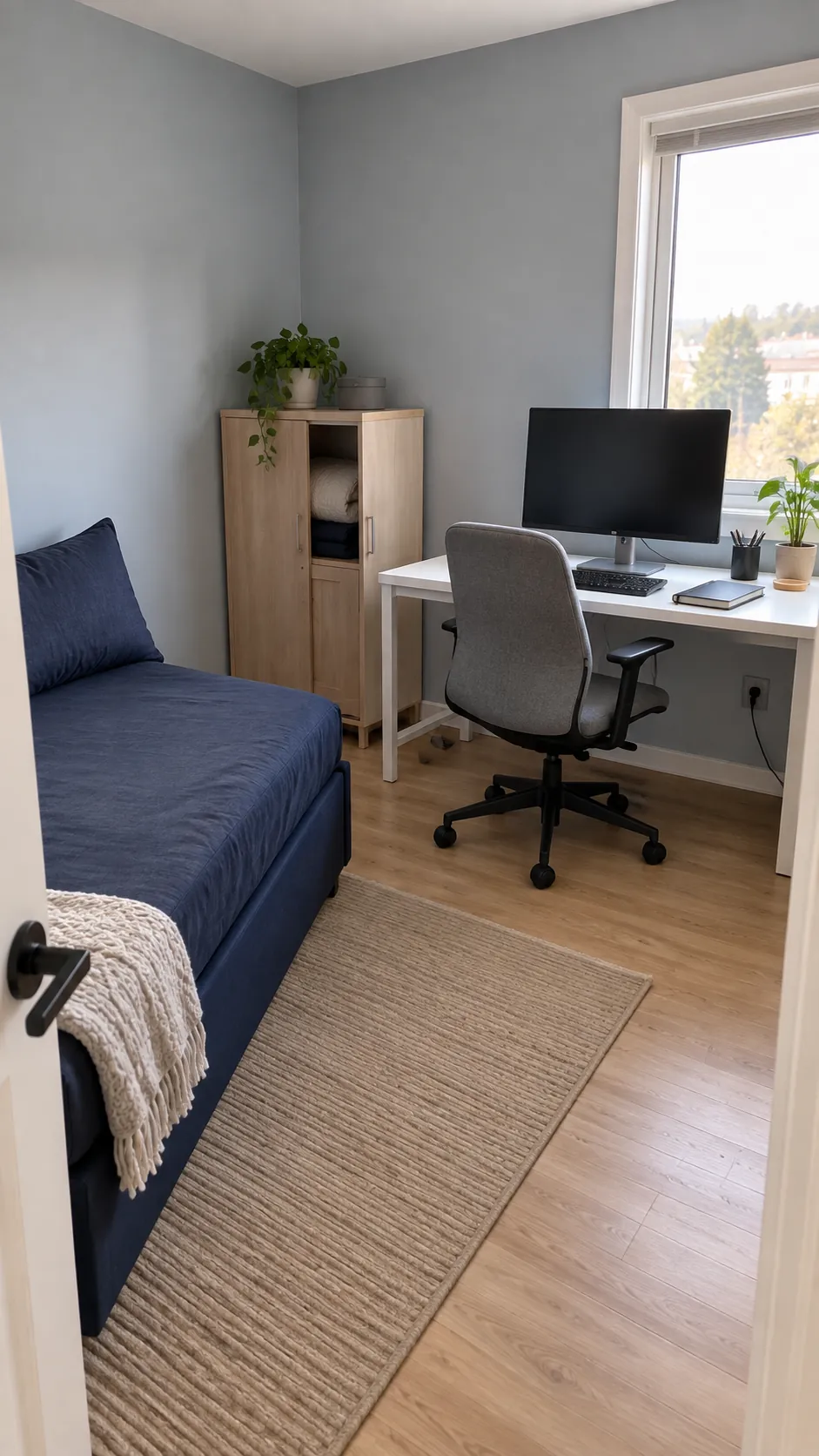
Give visitors a place for a bag and a small amount of clear storage when they arrive. Keep bedding together nearby so preparing the room does not spread items across the living area. If guests are frequent, a permanent bed may be worth the footprint; if not, a convertible option may leave more everyday flexibility.
When the second bedroom is a child's room, prioritize the child's current sleeping, storage and play needs rather than treating it as an overflow office. Follow product age guidance and anchoring instructions for furniture. Keep window coverings and cords appropriate for the household, and avoid placing climbable furniture where it creates a window hazard.
Assign storage to people and shared routines
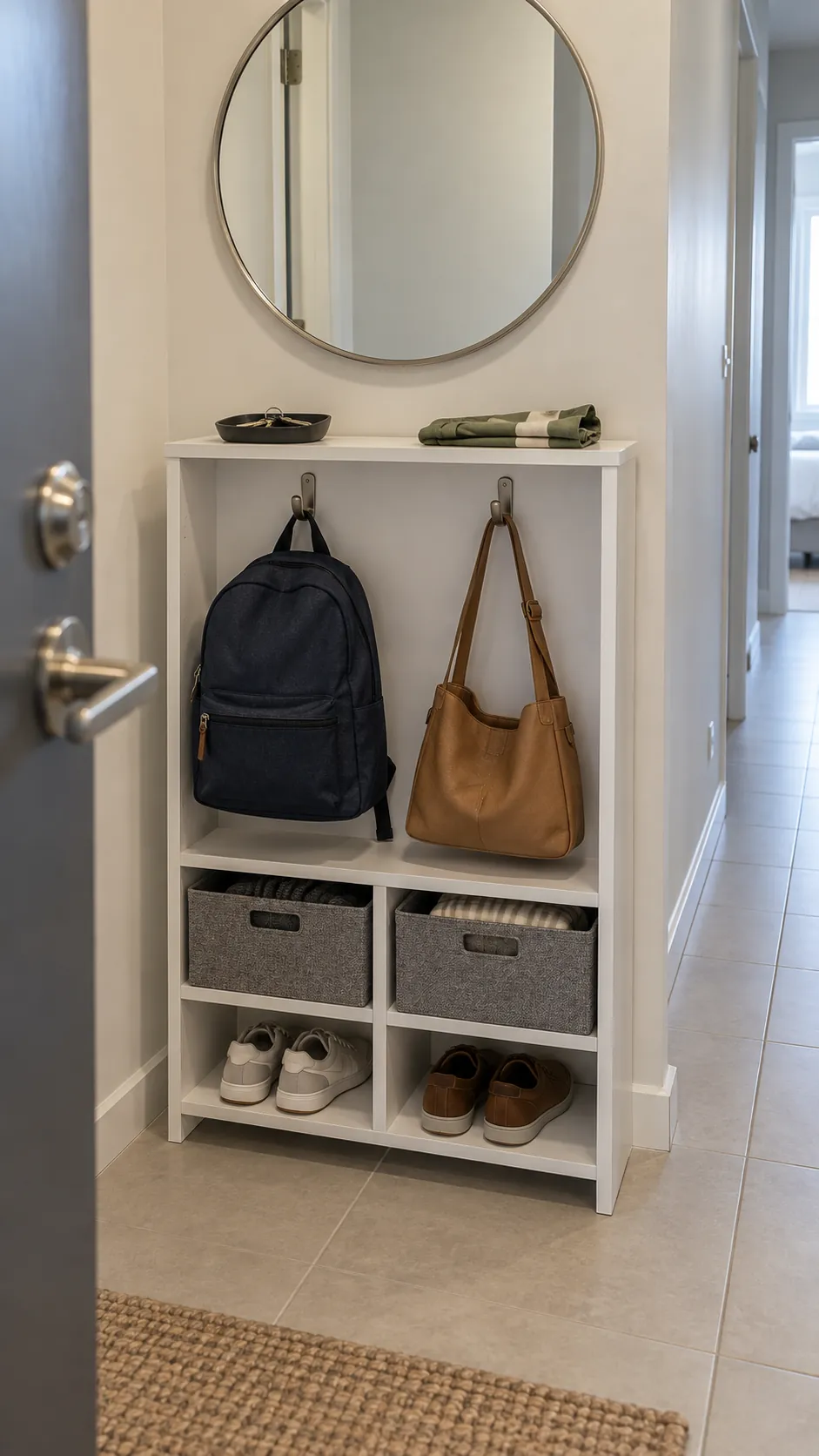
Apartment storage solutions work better when everyone knows what belongs where. Divide an entry cabinet or closet into simple personal areas for daily shoes and bags, then reserve another shelf for shared items such as umbrellas. Keep seasonal belongings deeper in storage so they do not crowd the things used every morning.
In a small kitchen, first separate food, cookware and dishes by how you use them. A narrow extra cabinet can help only if it leaves the working aisle and appliance doors clear. Measure internal shelves and the items they must hold before buying another unit.
Use closed storage for visually busy supplies in the living room and a modest open shelf for frequently used books. Place heavy objects low and secure furniture according to its manufacturer. Avoid turning every empty wall into another storage bank before deciding what the household actually needs to keep.
Apartment entryway storage should make arriving home easier. If bags still land on dining chairs, move the hook or basket closer to the route rather than adding more decorative containers farther away.
Finish with a shared palette and a realistic buying order
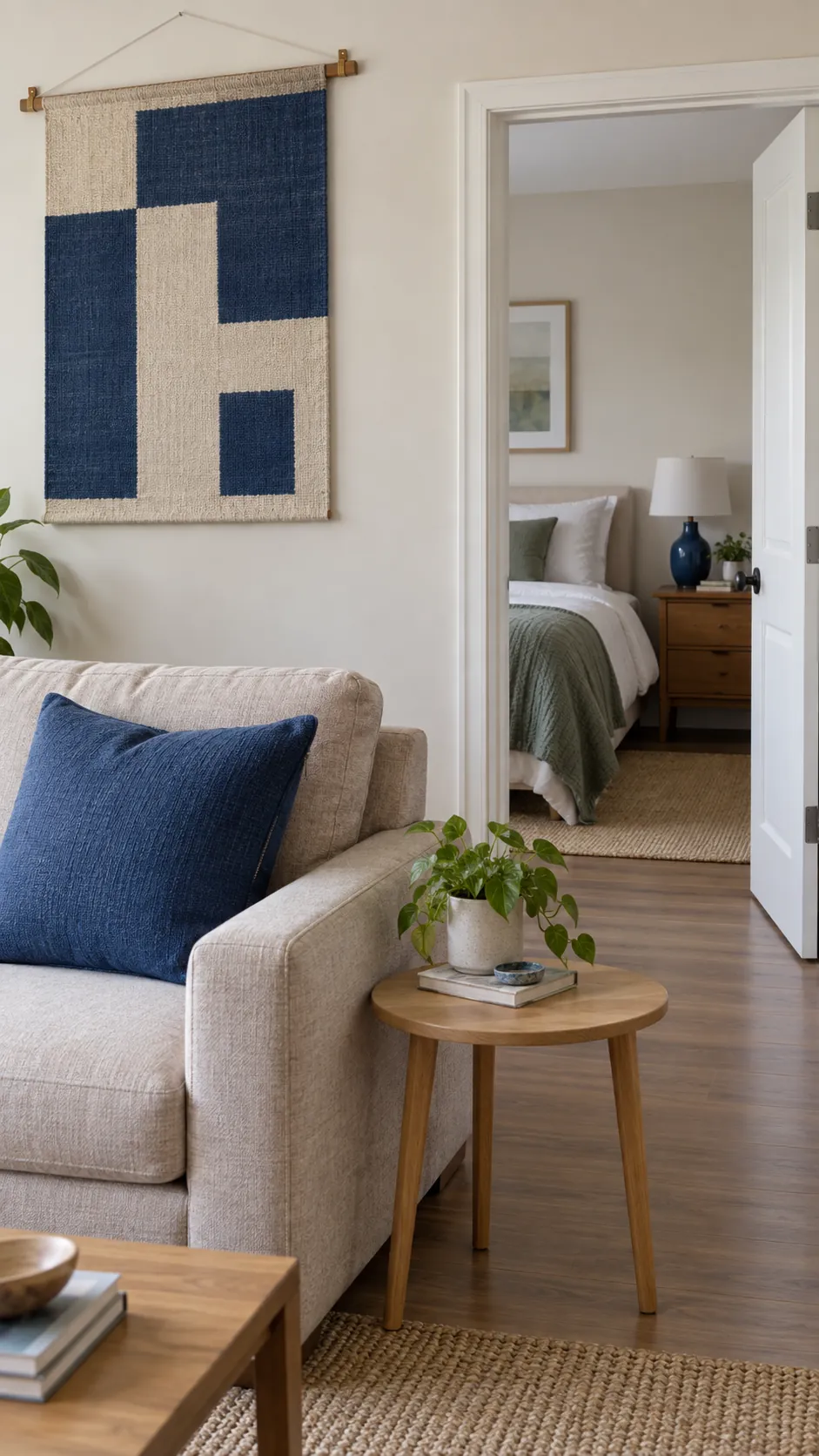
Choose a small set of colors and finishes that can recur through the hall and shared rooms, then let each bedroom vary within it. A blue cushion in the living room might relate to a blue bedside lamp without making the rooms identical. Curtains, rugs and lighting often connect existing small apartment furniture more effectively than replacing every piece.
For renter friendly decor, confirm permission before painting or installing fixtures, and test products according to their instructions. Adhesive hooks and removable coverings can still damage some surfaces. Use secure, suitable fixings for mirrors and art, and choose freestanding alternatives where the walls cannot support your plan.
Buy in the order of daily discomfort: a usable table before extra ornaments, privacy curtains before a decorative throw, and needed storage before another accent chair. Bring in one change at a time and check it with the whole household using the apartment. A room is finished when it supports the people living there, not when every corner contains something new.