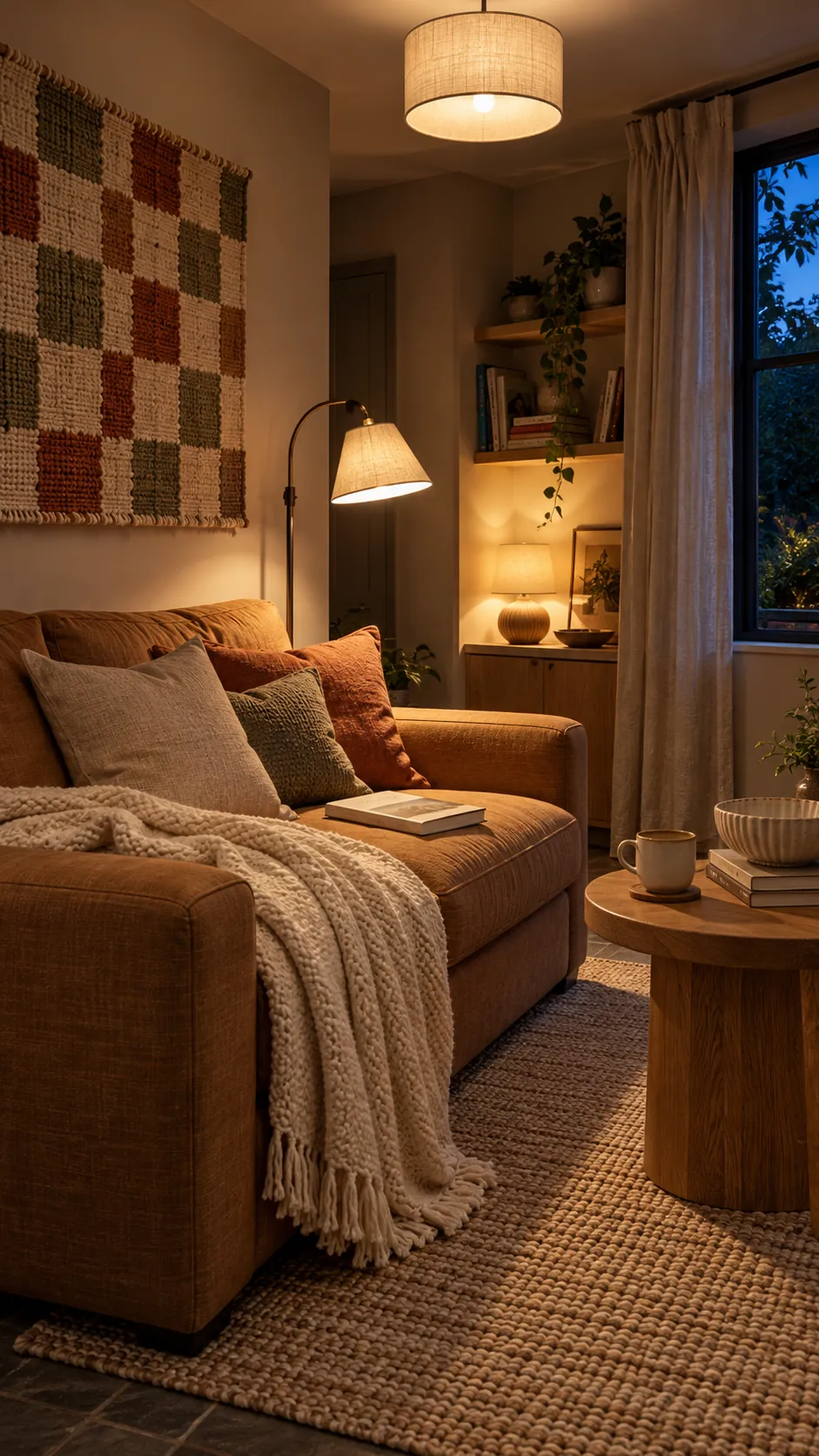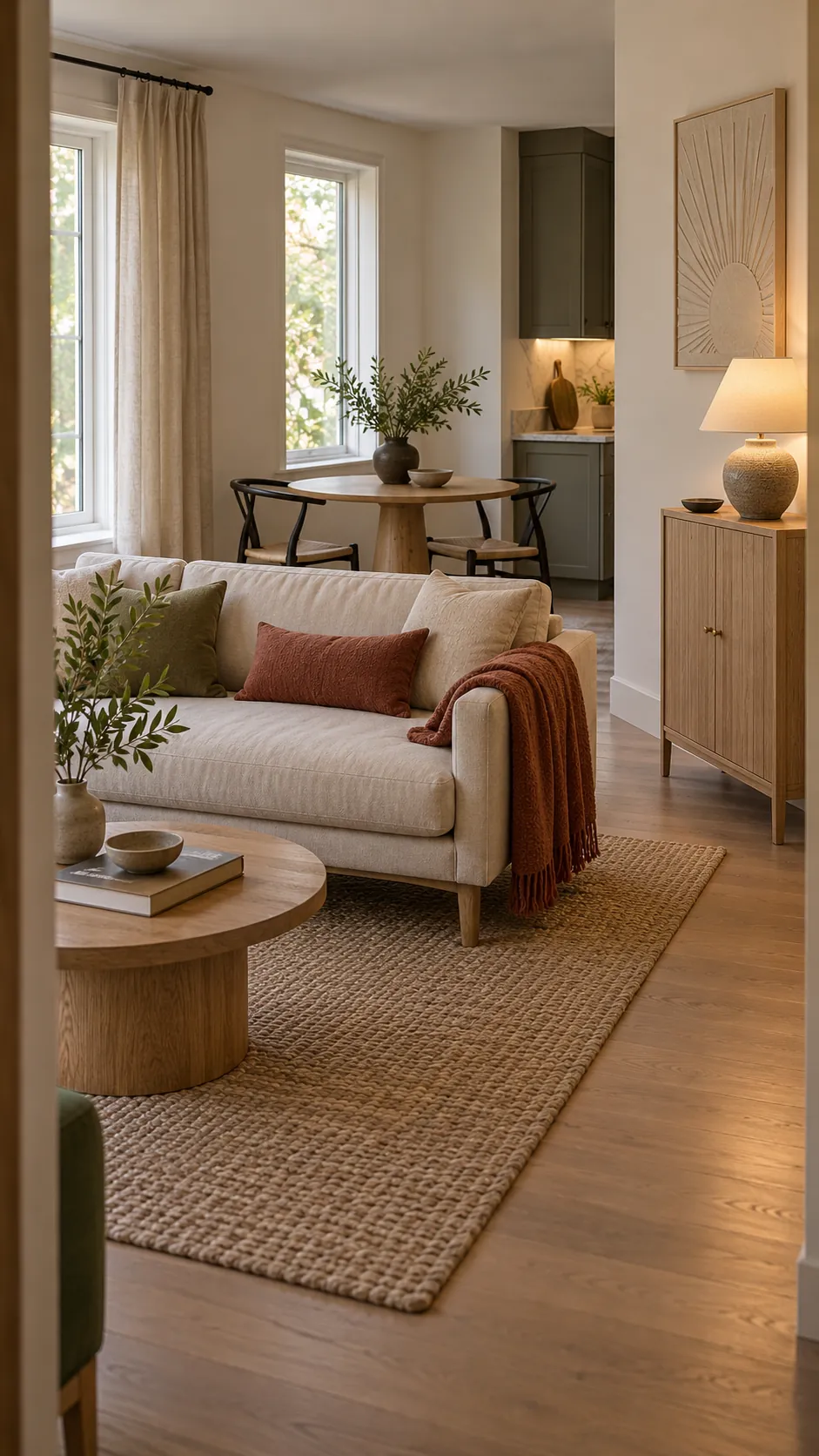
A small home does not need less personality. It needs clearer priorities. When every surface competes for attention, even beautiful objects can make a room feel restless, so the most useful decorating decisions begin with space, movement, and daily habits.
The goal is not to make your home look empty. The goal is to let each room support real life while giving your favorite colors, textures, and objects enough breathing room to be noticed.
Edit What the Room Must Hold
Start with what the room needs to do before you choose a style. A living area might need comfortable seating, a place for drinks, closed storage for games, and a clear route to the kitchen. Write down those functions, then remove or relocate anything that does not support them.
This step prevents storage furniture from becoming a substitute for decisions. If a category has no sensible home, reduce it before buying another basket or cabinet. Keep frequently used items within easy reach, place occasional items higher or farther away, and let decorative objects earn their visible space.
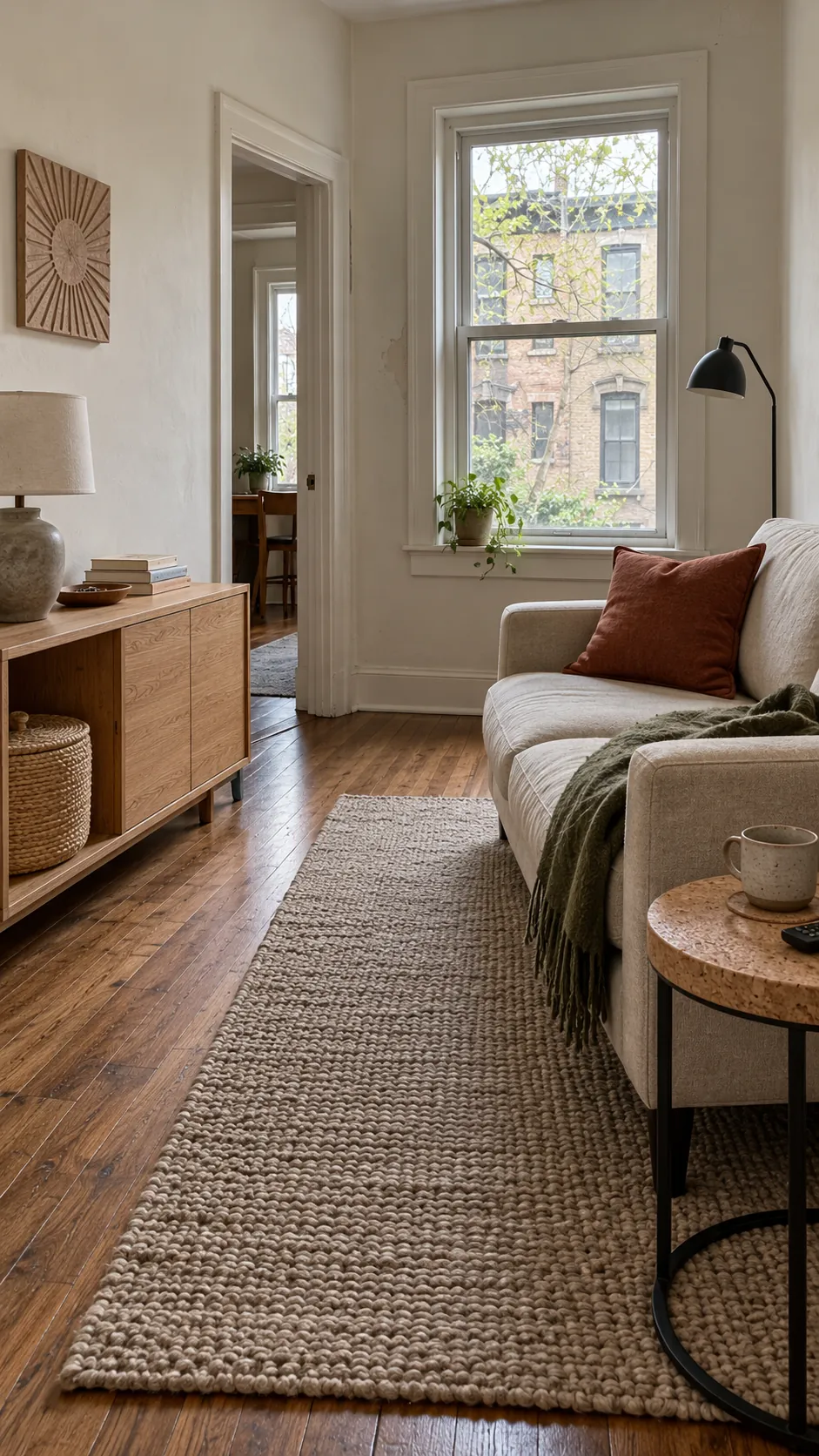
Plan Clear Walking Paths
A compact house interior feels crowded when people must turn sideways around furniture. Mark the natural route between doors, seating, storage, and work areas. Keep that route open, and avoid placing a table or floor lamp where it interrupts a repeated movement.
Try the layout with painter tape before moving or buying large pieces. The taped outlines show whether a sofa depth, dining chair, or cabinet door will consume more room than expected. Floating a small sofa a little away from the wall can work when it creates a useful zone behind it, but pushing everything outward is not automatically the best answer.
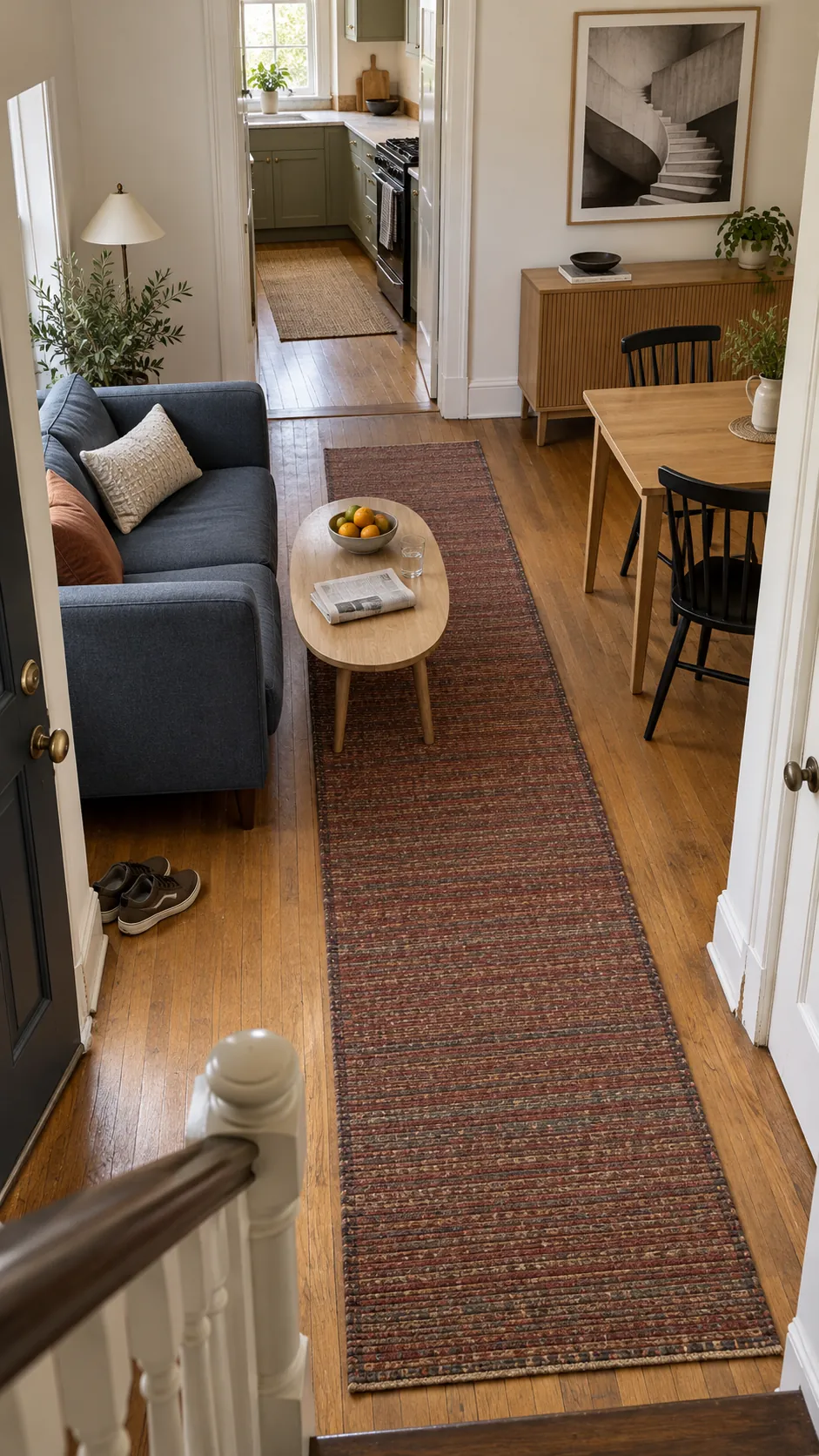
Choose Furniture With the Right Visual Weight
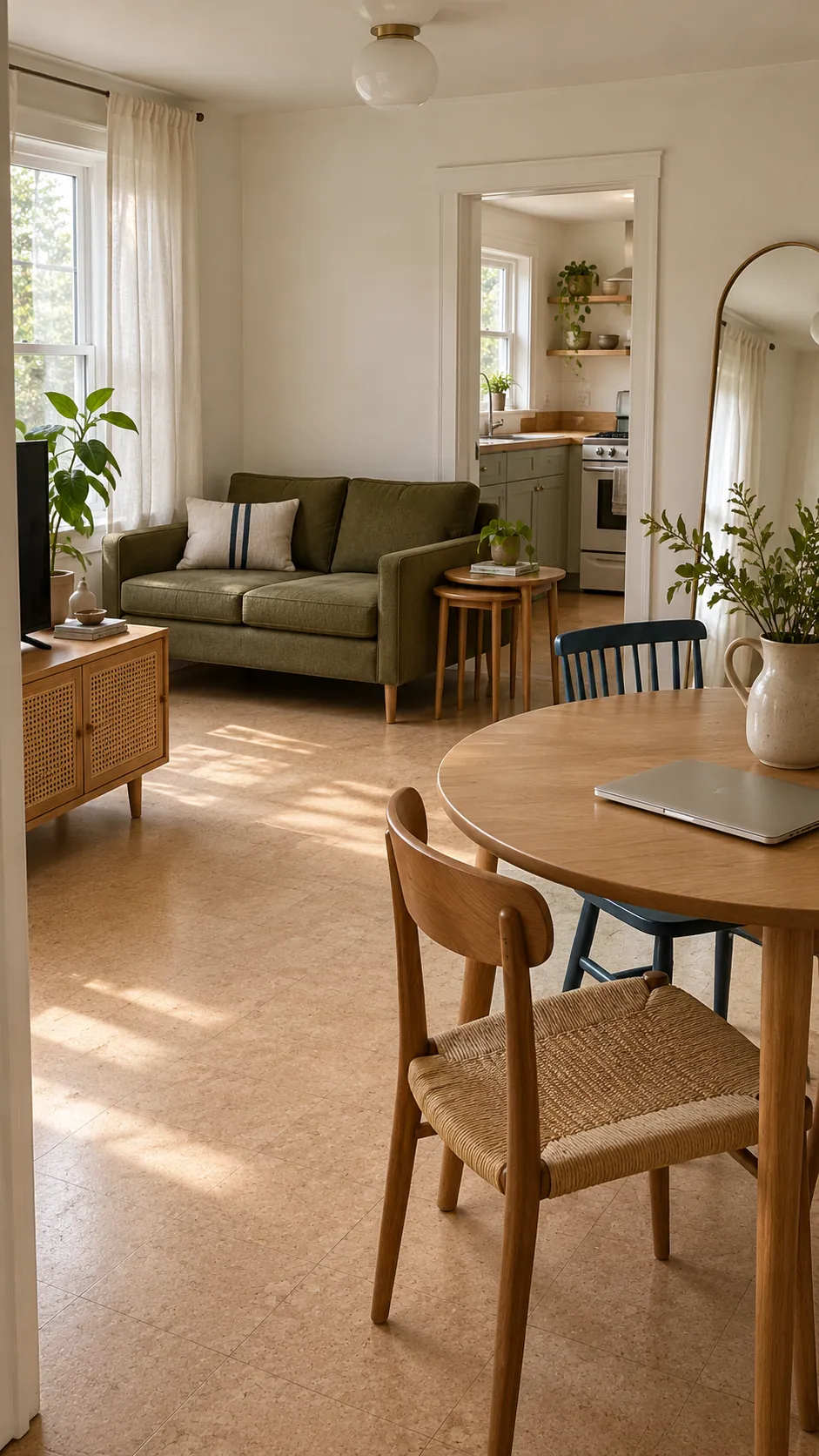
Space saving furniture helps only when its size and function fit the room. Measure the full footprint, including open drawers, pulled out chairs, and the swing of doors. A compact sofa with a supportive seat may serve you better than a bulky sectional, while a round table can soften a tight circulation point.
Look for visible floor beneath selected pieces. Open legs on a sofa, console, or bedside table allow light to continue through the room and reduce the sense of a solid block. Balance that openness with one or two substantial pieces so the home still feels grounded rather than temporary.
Build a Connected Color Palette
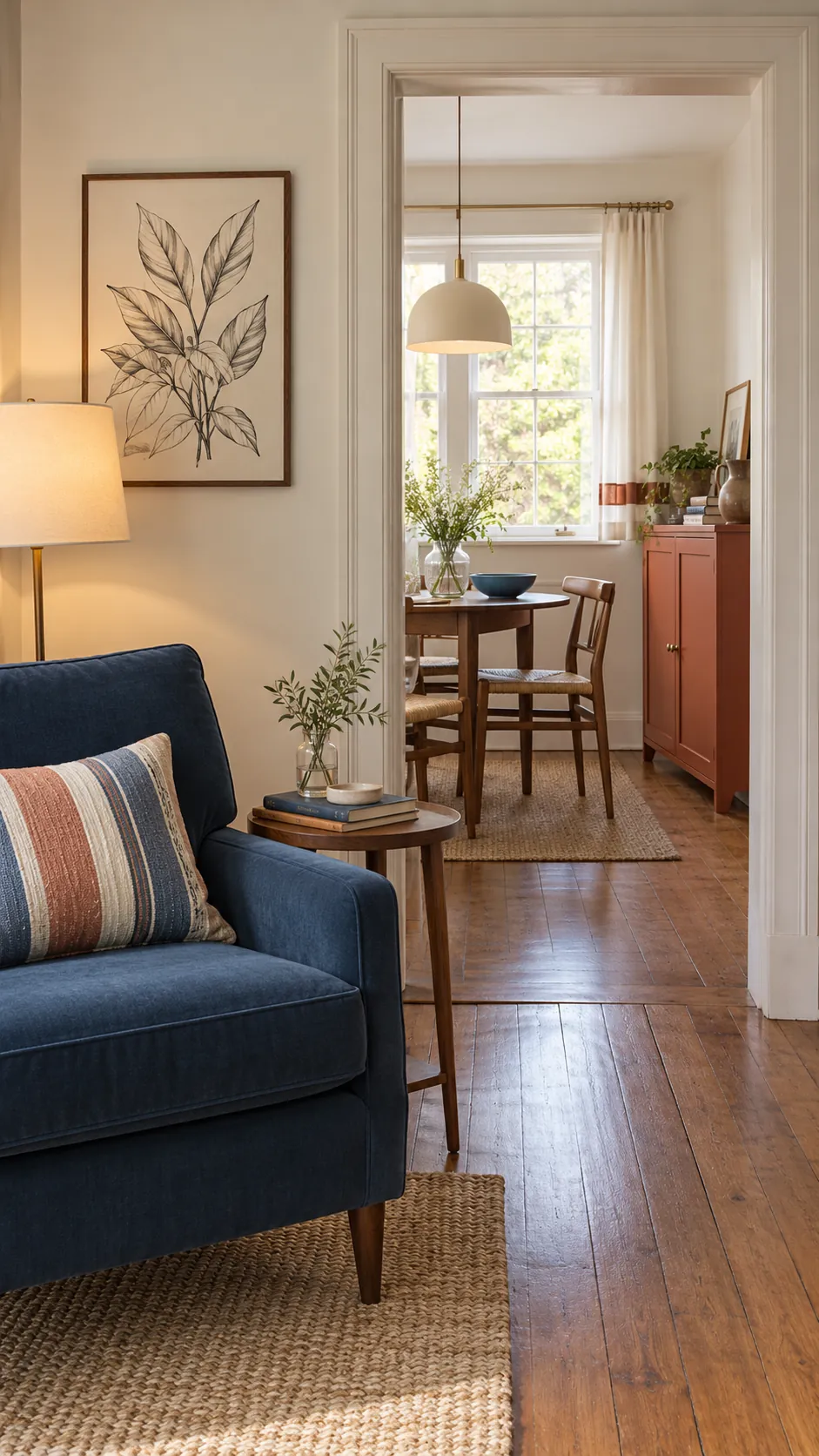
A small home color palette does not have to be pale or bland. Choose one calm base that moves through connected spaces, then repeat two or three accent colors in controlled amounts. The repetition creates continuity, while a richer color on a chair, cabinet, or alcove gives the eye a destination.
Test paint and fabric samples in morning and evening light. Undertones can shift beside flooring, wood, and existing countertops. Renters can bring in color through washable covers, curtains, art, and removable objects, but should treat adhesive products cautiously because some finishes can damage paint or cabinet surfaces.
Use Walls Without Filling Every Inch
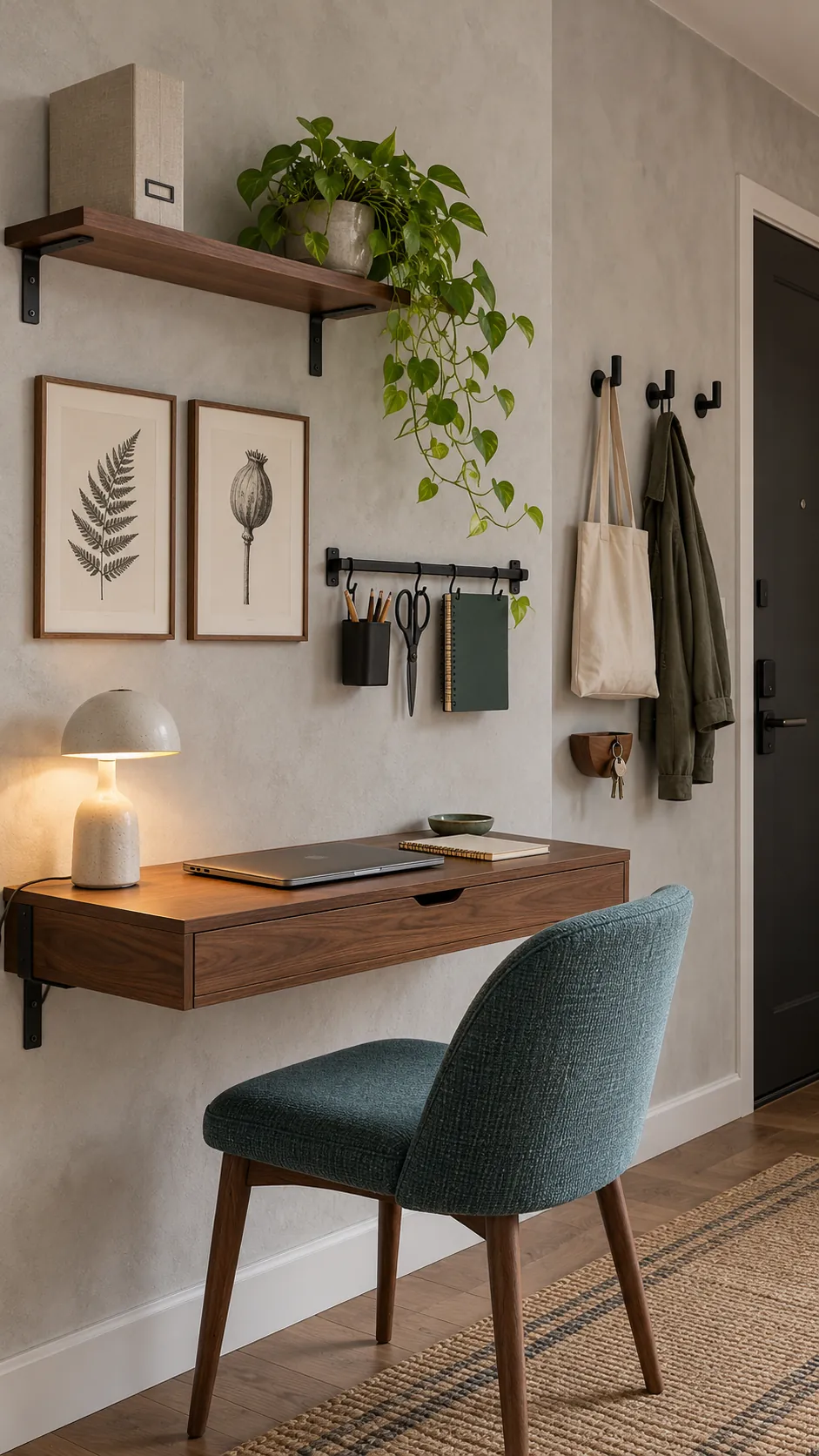
Vertical wall decor can free surfaces and pull attention upward. Hang a narrow shelf above a desk, place hooks near the entry, or use one tall cabinet where several short units would create visual noise. Leave some wall area open around each feature so it reads as an intentional composition.
Keep the arrangement related to the furniture below it. A group of small frames should form one clear shape rather than scatter across the wall. If drilling is not possible, use a leaning mirror, a tall bookcase secured according to its safety instructions, or lightweight hanging methods that suit the exact wall finish and load.
Layer Light and Texture for Comfort
One ceiling fixture often creates harsh contrast and leaves corners dull. Combine general light with a reading lamp and a smaller glow near a shelf or cabinet. Place mirrors where they can reflect a window or a pleasant part of the room, not a cluttered worktop or a glaring bulb.
Texture makes a cozy small house feel finished without requiring many objects. Mix a washable woven rug, linen or cotton curtains, a smooth wood surface, and one soft throw. Repeat a material or color in another room, then stop before every seat and surface receives an accessory. The quiet spaces between those details are what allow the home to feel calm, useful, and personal.