

The wall beside the front door is small, but it carries a lot of pressure. It is the first blank surface guests see, the place where bags and keys usually land, and often the spot that makes a front door entryway feel either finished or forgotten.
The mistake is trying to make that wall do everything. A mirror, a gallery wall, wall hooks, a console, plants, mail storage, shoe storage, and a lamp can all be useful, but not all at once. The best entryway wall decor starts by choosing one main job for the wall: storage, reflection, display, or a clean welcome moment. Once that job is clear, the rest of the entryway decor becomes much easier.
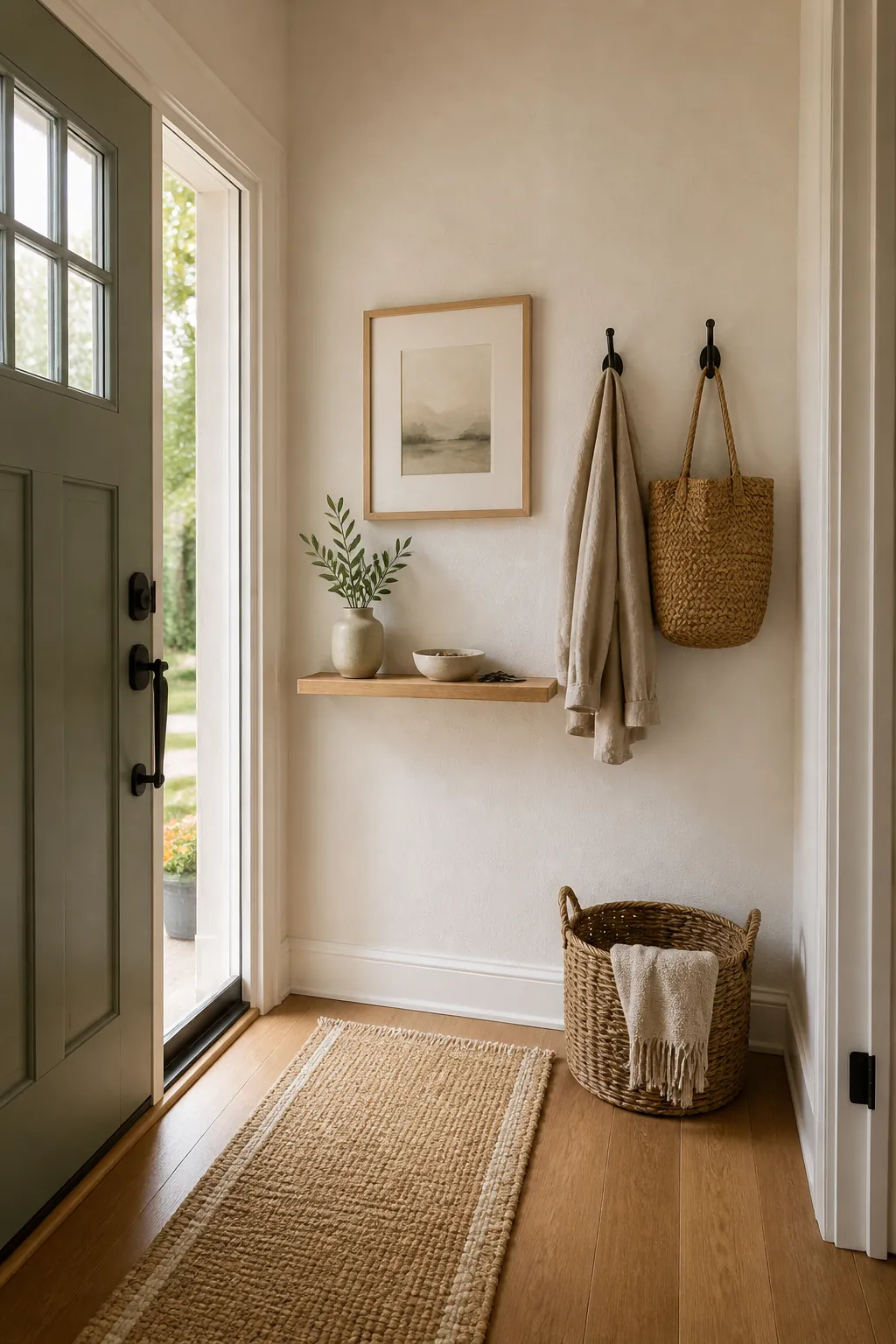
Start by deciding what the wall needs to solve
Before buying anything, stand at the door and watch what happens when someone comes in. Do coats get dropped on a chair? Do keys disappear? Does the wall look empty because the door opens directly into a living room? Or is the problem simply that the space feels flat and white?
If your entry is narrow, practical items should stay shallow. If the door swings toward the wall, measure the clearance before choosing furniture. If the wall is visible from the living room, repeat one material or color from that room so the entry wall decor feels connected instead of random. A front door wall usually looks best when it has one anchor piece and two or three supporting details.
- For daily mess: use hooks, a shelf, a basket, or a slim cabinet.
- For a blank, cold wall: use art, molding, wallpaper, or a gallery wall.
- For a dark entry: use a mirror, sconce, lamp, or lighter artwork.
- For a tiny entry: keep the floor open and move storage onto the wall.
Use wall hooks only when they are part of the design
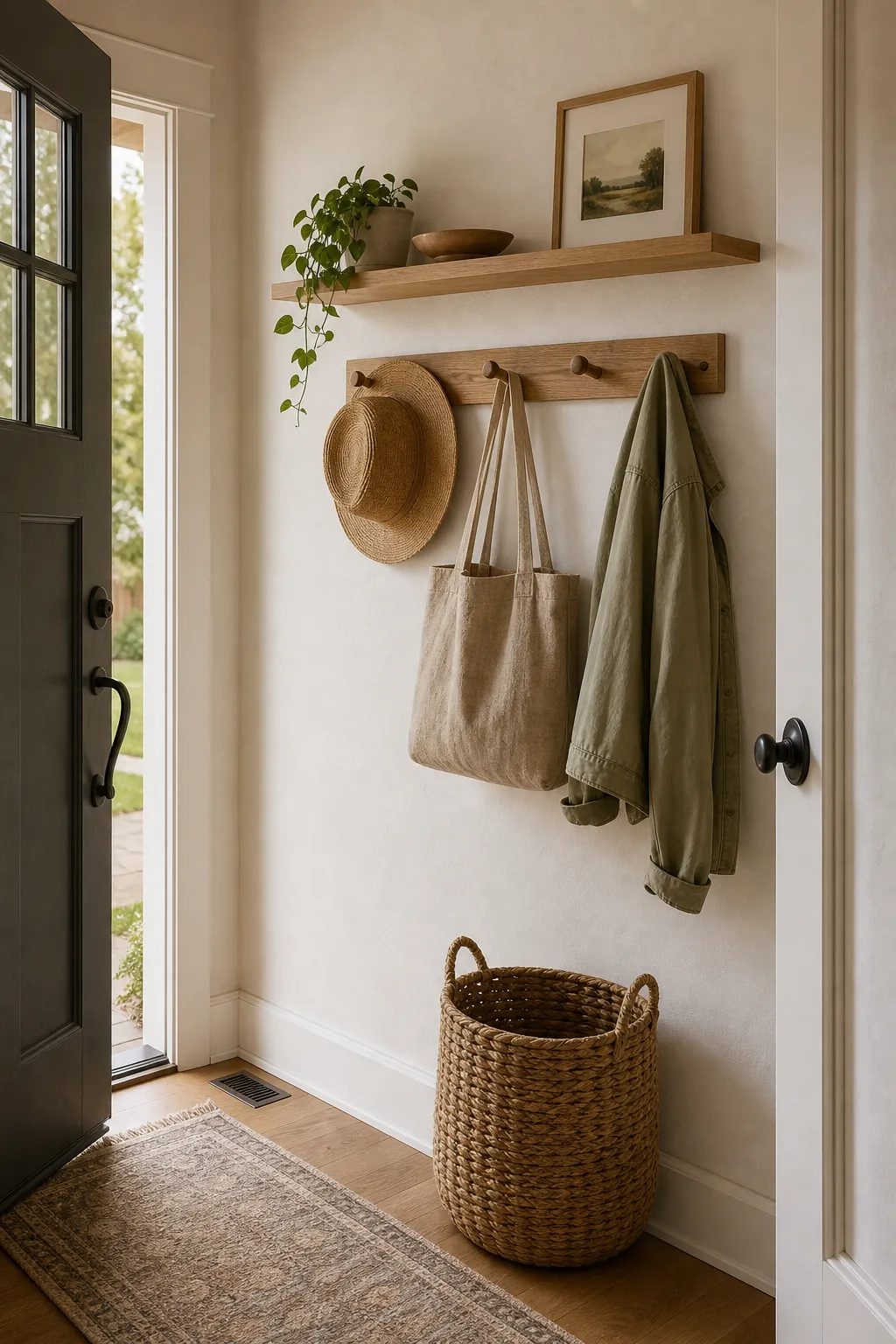
Wall hooks are one of the most useful entryway wall decor ideas, but they can also become visual clutter fast. The trick is to make them intentional. Choose a hook rail with a shelf above it, or use a small set of sculptural hooks that look good even when nothing is hanging from them.
For a family entry, place hooks at two heights: adult coats higher, bags or kids’ jackets lower. For a guest-facing foyer, keep only one or two attractive hooks near the door and hide the everyday overflow somewhere else. Hooks should solve the drop zone problem without turning the first view of the home into a coat pile.
Add a slim console when you need a landing spot
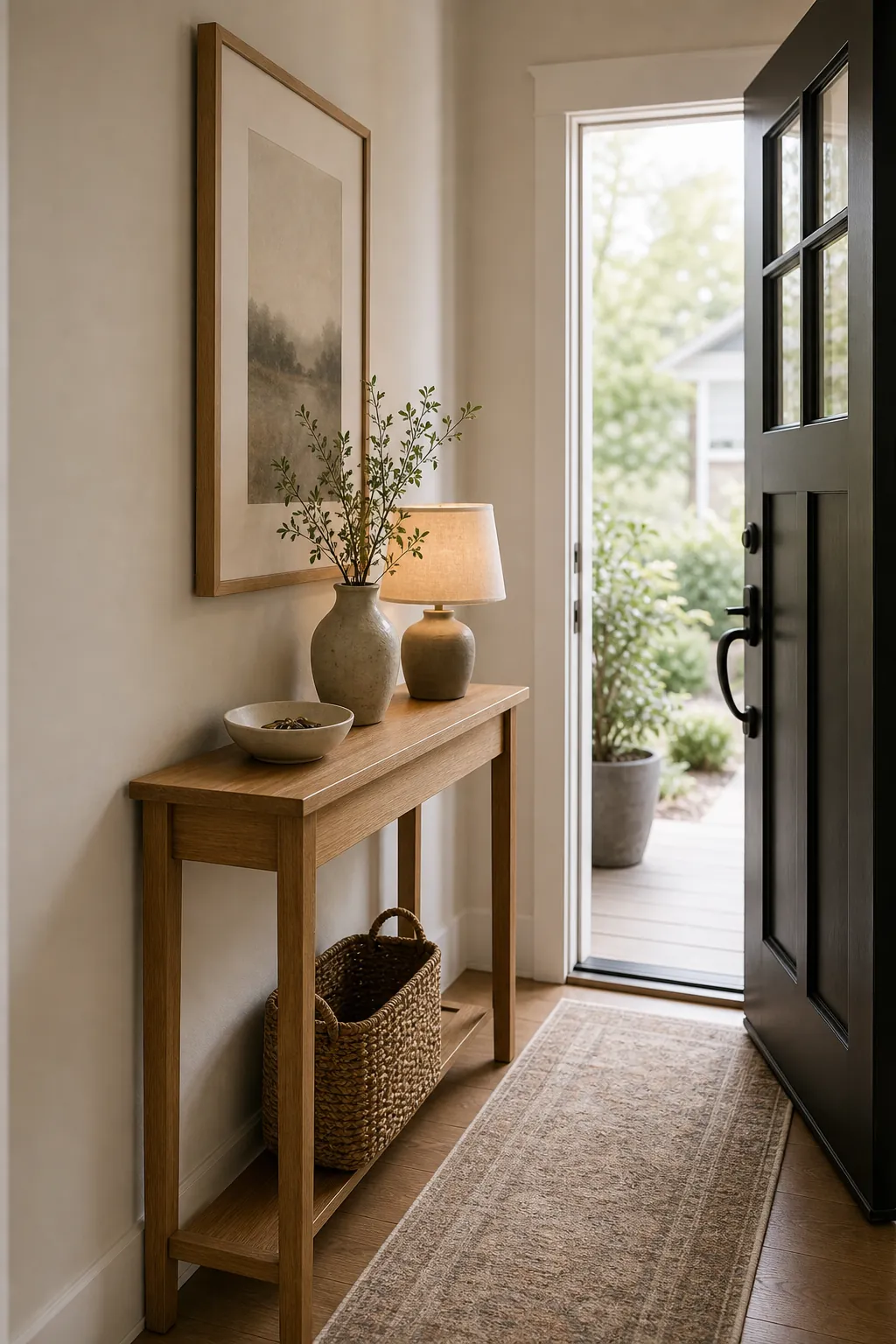
If there is enough clearance, a narrow console is the easiest way to make the wall beside the front door feel finished. It gives you a surface for a catchall bowl, a small lamp, fresh branches, or a tray for mail. The key is depth. In many homes, a console around 10 to 14 inches deep works better than a standard table because it gives function without crowding the walkway.
Keep the tabletop edited. A bowl, one vertical object, and one piece of art or mirror above the table is usually enough. If the console has open space underneath, use one basket for shoes or pet leashes instead of several loose containers. This is where small space decor needs discipline: the entry should catch essentials, not display every essential.
Choose a mirror when light and last checks matter
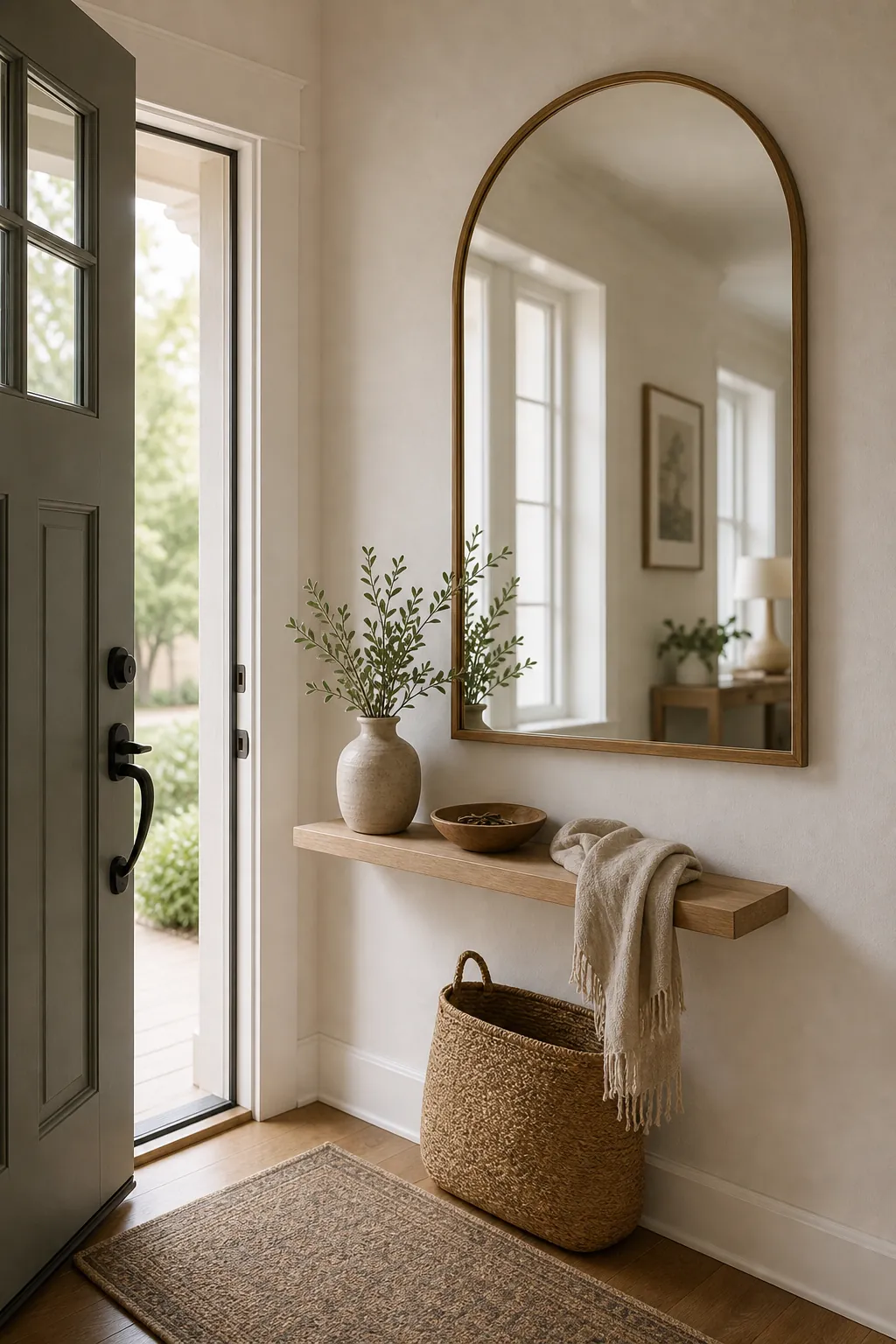
A mirror is not mandatory, especially if you dislike seeing one directly opposite the door. But when the entry is dark, narrow, or disconnected from the rest of the home, a mirror can make the wall work harder. It reflects light, gives height, and creates a useful check before leaving.
Scale matters more than shape. A tiny mirror on a tall wall can look nervous. A larger round, arched, or rectangular mirror usually feels calmer. Hang it so the center sits near eye level, and leave breathing room around the frame. If the front door has glass panels, avoid placing the mirror where it creates harsh glare. If the opposite view is messy, art may be a better choice.
Make a gallery wall feel collected, not crowded
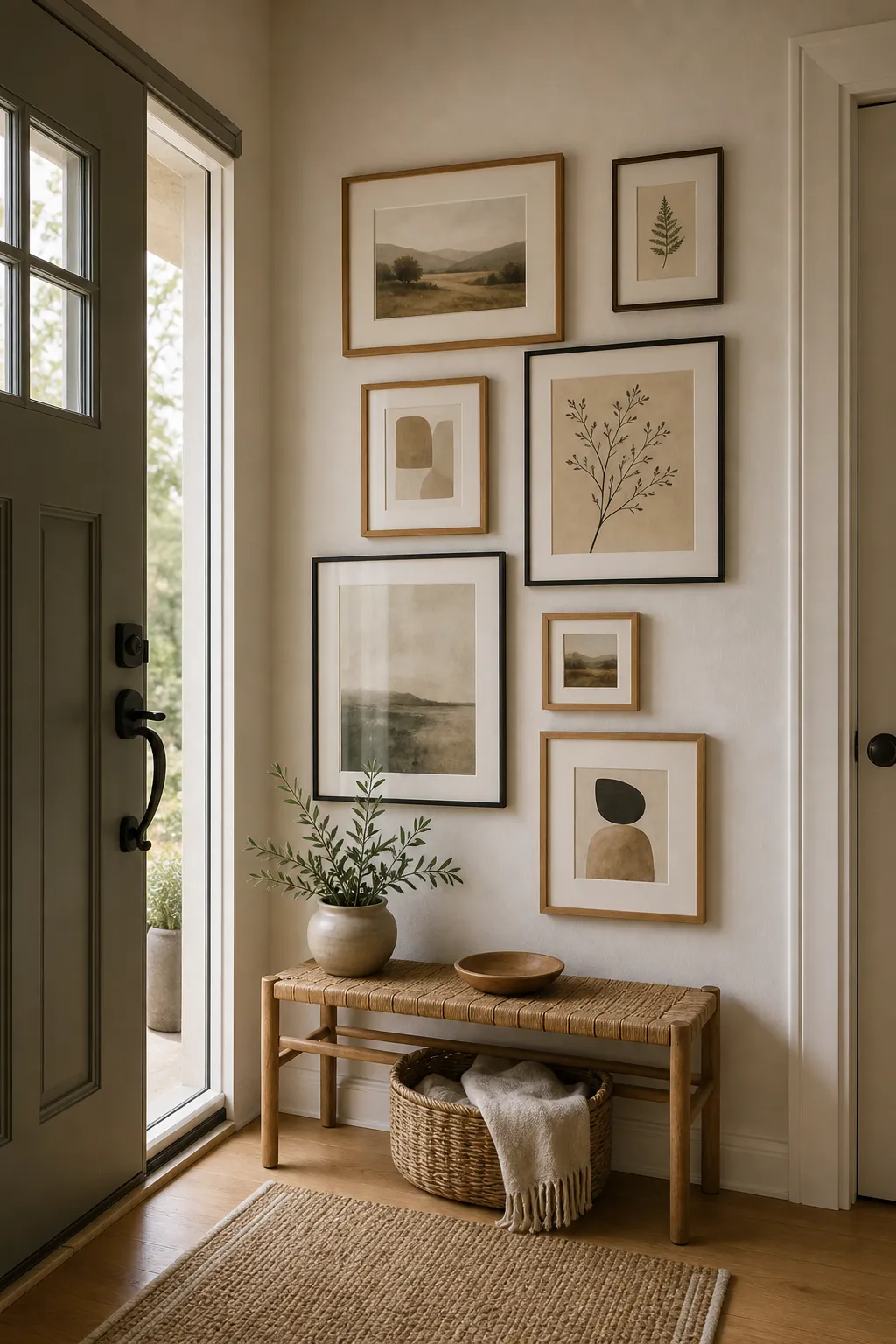
A gallery wall can be beautiful in an entry, but it needs control because the area is high traffic and often seen from close range. Instead of covering every inch, build around a simple shape: a vertical column, a tight grid, or a loose rectangle above a bench or console.
Use consistent spacing between frames, and repeat one detail such as black frames, warm wood, white mats, or a shared color palette. Mix family photos, small landscapes, botanical prints, or simple abstract pieces, but keep the overall mood aligned with the rooms nearby. The goal is not to fill a blank wall. The goal is to set the tone for the home in the first five seconds.
Use a bench or mudroom setup when the wall handles real traffic
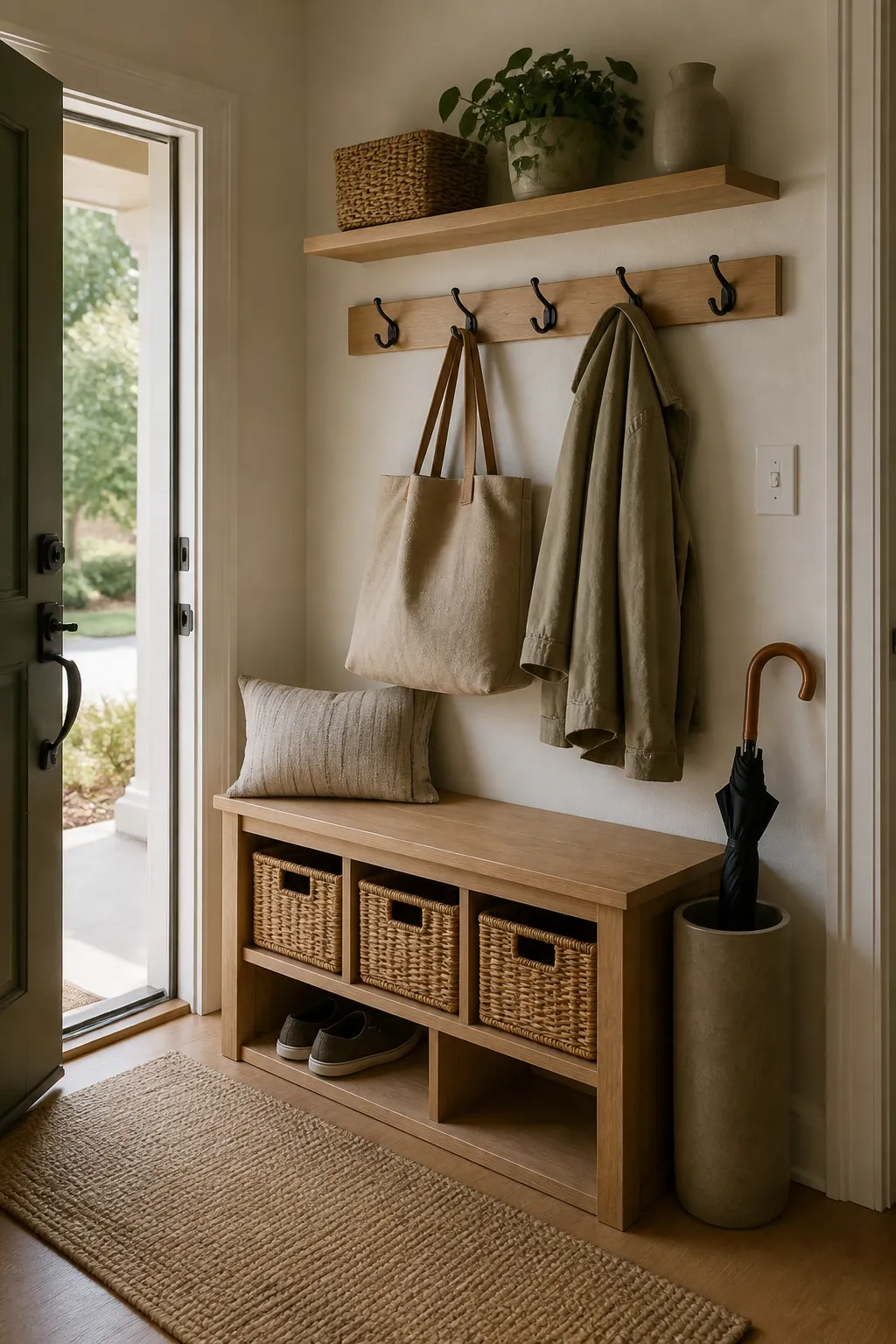
If this wall is where shoes, school bags, umbrellas, and dog leashes actually land, lean into that truth. A compact mudroom idea can still look polished. Pair a small bench with closed baskets, a hook rail, and one shelf above. Choose finishes that match the rest of the hallway decor so the storage reads as built-in rather than temporary.
The bench does not need to be large. Even a low, narrow seat gives people a place to put on shoes. If a bench blocks the door, use a wall-mounted shoe cabinet or a floating shelf with hooks instead. Function should follow the door swing and walking path, not the other way around.
Bring in lighting so the wall does not go flat
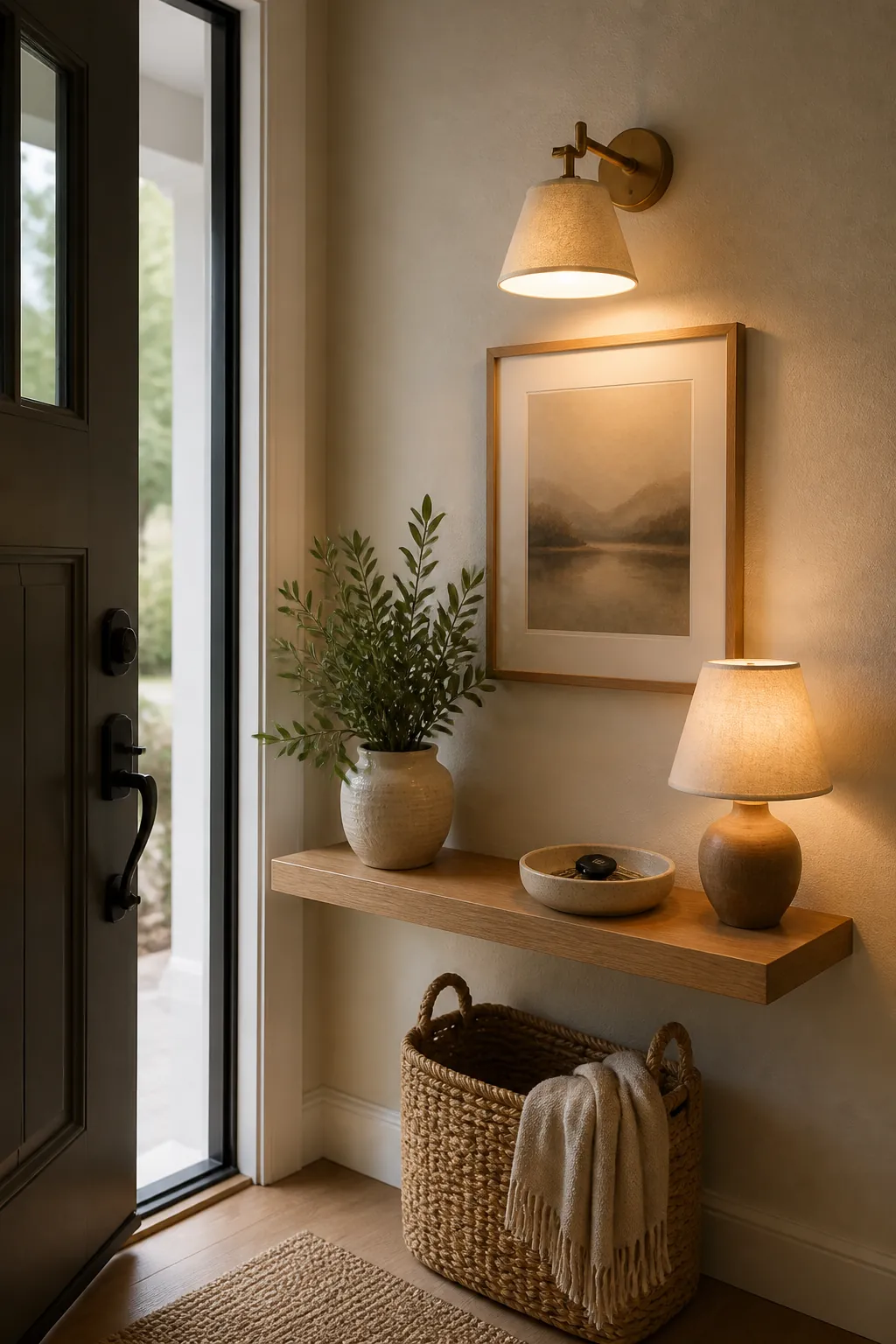
Many entryway problems are actually lighting problems. A nice mirror, picture frame, or shelf can still look dull if the front hall depends only on overhead light. A plug-in sconce, a small lamp on a console, or a picture light above art gives the wall depth and makes the entry feel intentional at night.
If you cannot add wiring, use a plug-in light with a hidden cord cover or a rechargeable picture light. Keep the shade warm rather than icy white. Warm light softens hard surfaces like tile, painted trim, and doors. It also helps natural textures like wood, rattan, linen, bamboo, and woven baskets look richer.
Try texture if you do not want more objects
Some walls do not need more things hanging on them. They need texture. Picture frame molding, beadboard, grasscloth-style wallpaper, peel-and-stick wallpaper, or a painted lower wall can make an entry feel finished while keeping the floor clear.
This is a strong option for renters or anyone who wants a quieter entry wall. A tone-on-tone treatment adds interest without demanding attention. If the home already has a lot of art nearby, texture can be better than another gallery wall. If the door opens into a living room, using the same wall color in a slightly different finish can create separation without making the entry feel chopped up.

Use a simple formula when you feel stuck
If you are still unsure, use one of these formulas. They work because they give the wall a clear anchor, a useful layer, and a soft finishing detail.
- For a narrow entry: wall shelf, two hooks, small mirror, runner rug.
- For a decorative foyer: slim console, large art, lamp, catchall bowl.
- For a busy household: bench, hook rail, closed baskets, washable runner.
- For a blank tall wall: large mirror or art, picture light, plant or umbrella stand.
- For a rental: peel-and-stick wallpaper panel, removable hooks, framed print.
The best foyer ideas are not always the most dramatic. They are the ones that make coming and going easier while making the first view of the home feel cared for. Start with the daily problem, choose one anchor, and keep the supporting pieces edited. When the wall beside the front door has a clear purpose, even a small entry can feel calm, useful, and complete.