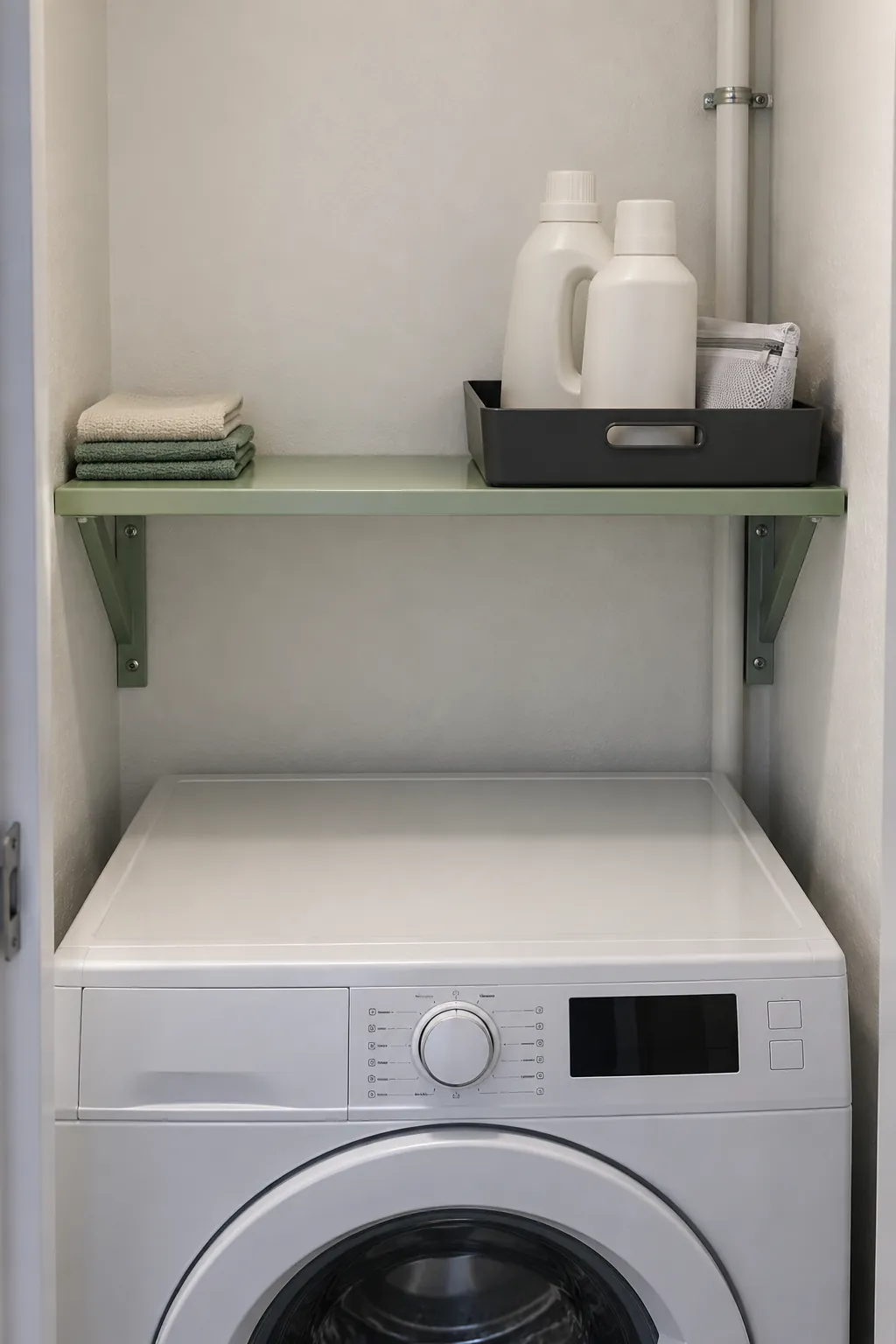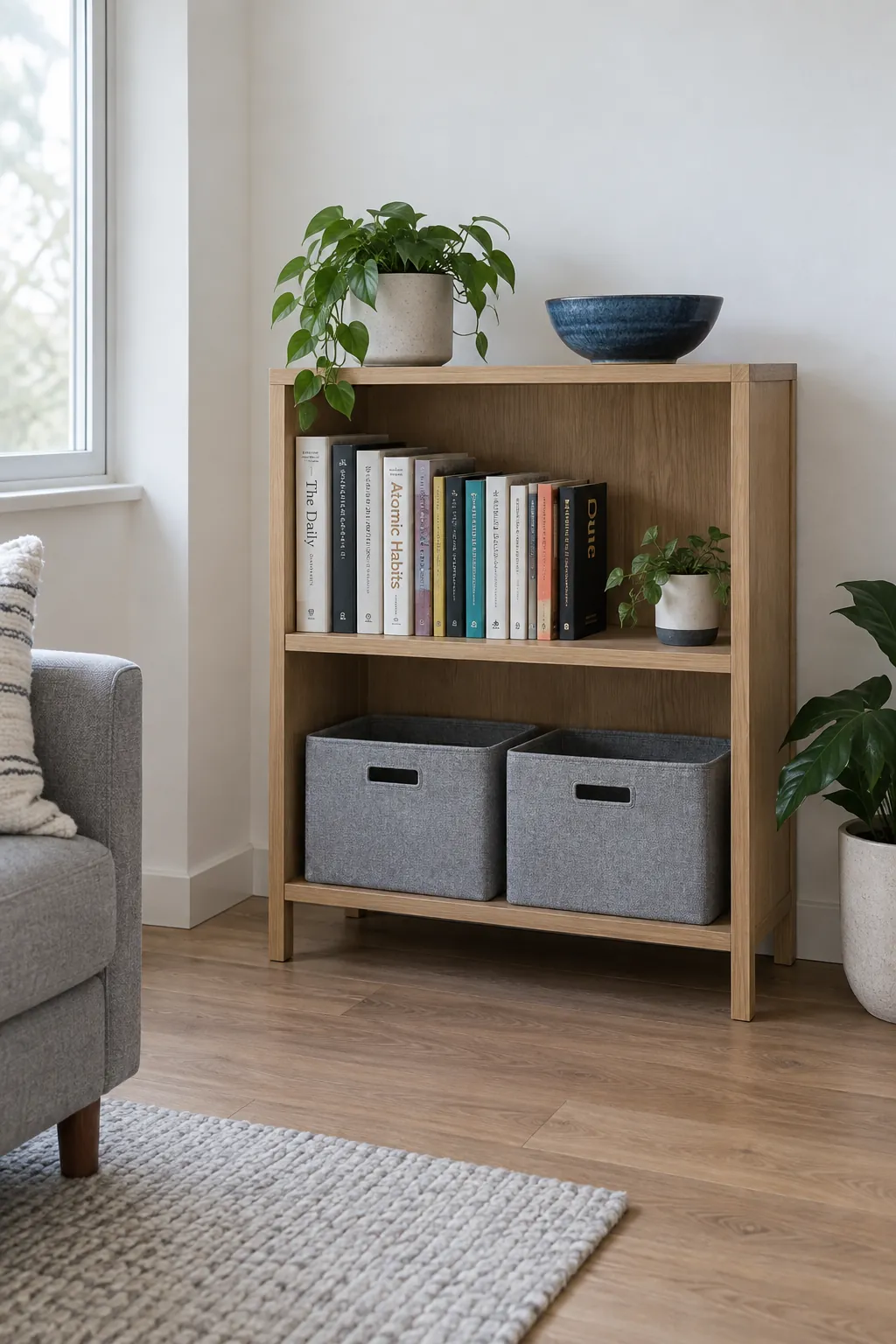
If putting something back means lifting a vase, moving a stack, and squeezing a box into place, the shelf is working against you. A tidy display can survive a photograph and fail the next morning. Organize around the objects you use, then give the remaining space a little room to breathe.
Empty one shelf and decide what belongs
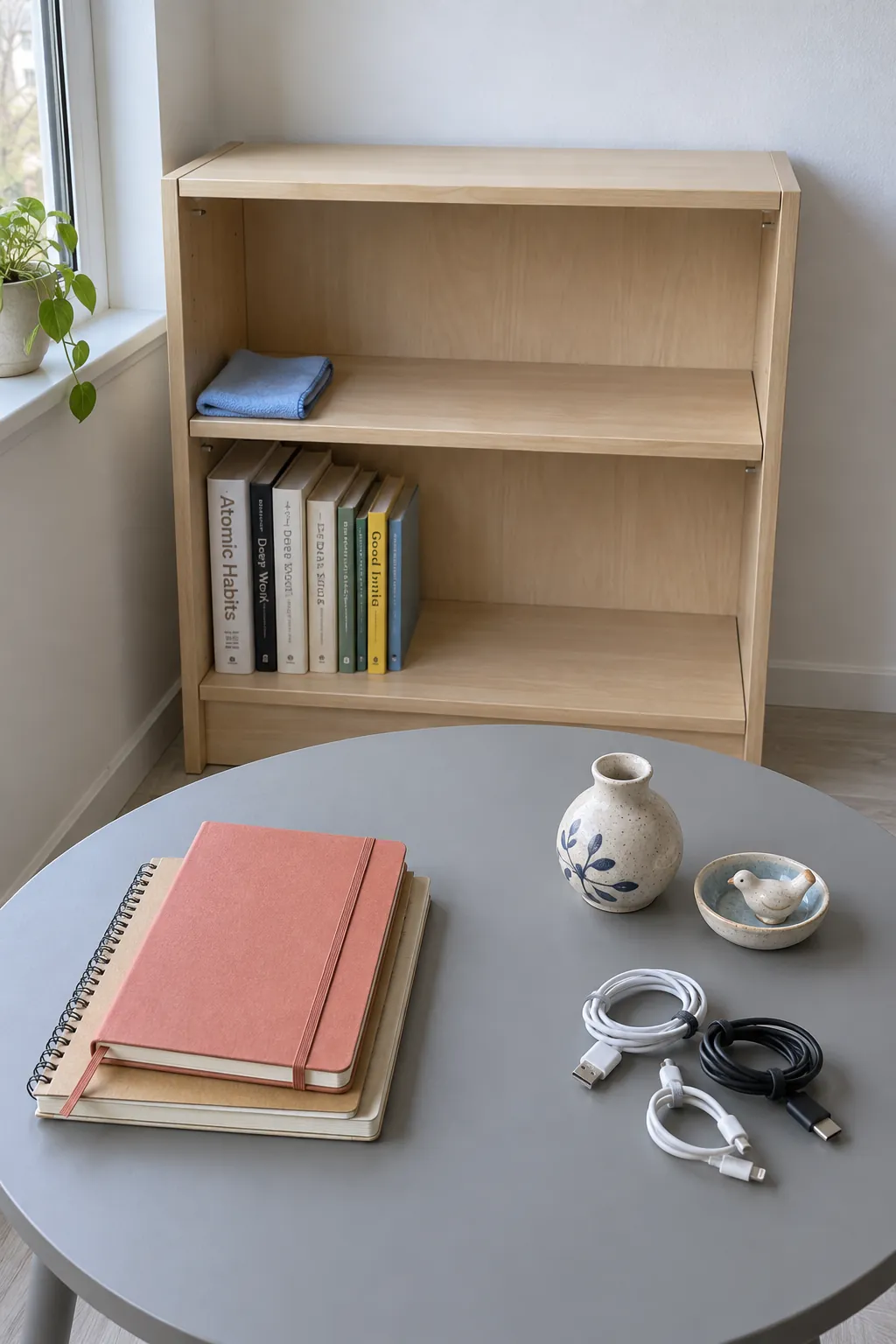
Start with one shelf rather than unloading the entire room. Set its contents on a nearby table, wipe the surface with a method suitable for its finish, and let it dry. Separate the objects you use here from things that belong elsewhere, duplicates you do not need, and items you want to display.
Move the misplaced objects to their actual homes before arranging anything. Buying more bins at this stage can turn an unresolved pile into an unresolved collection of boxes.
Put frequent use within comfortable reach
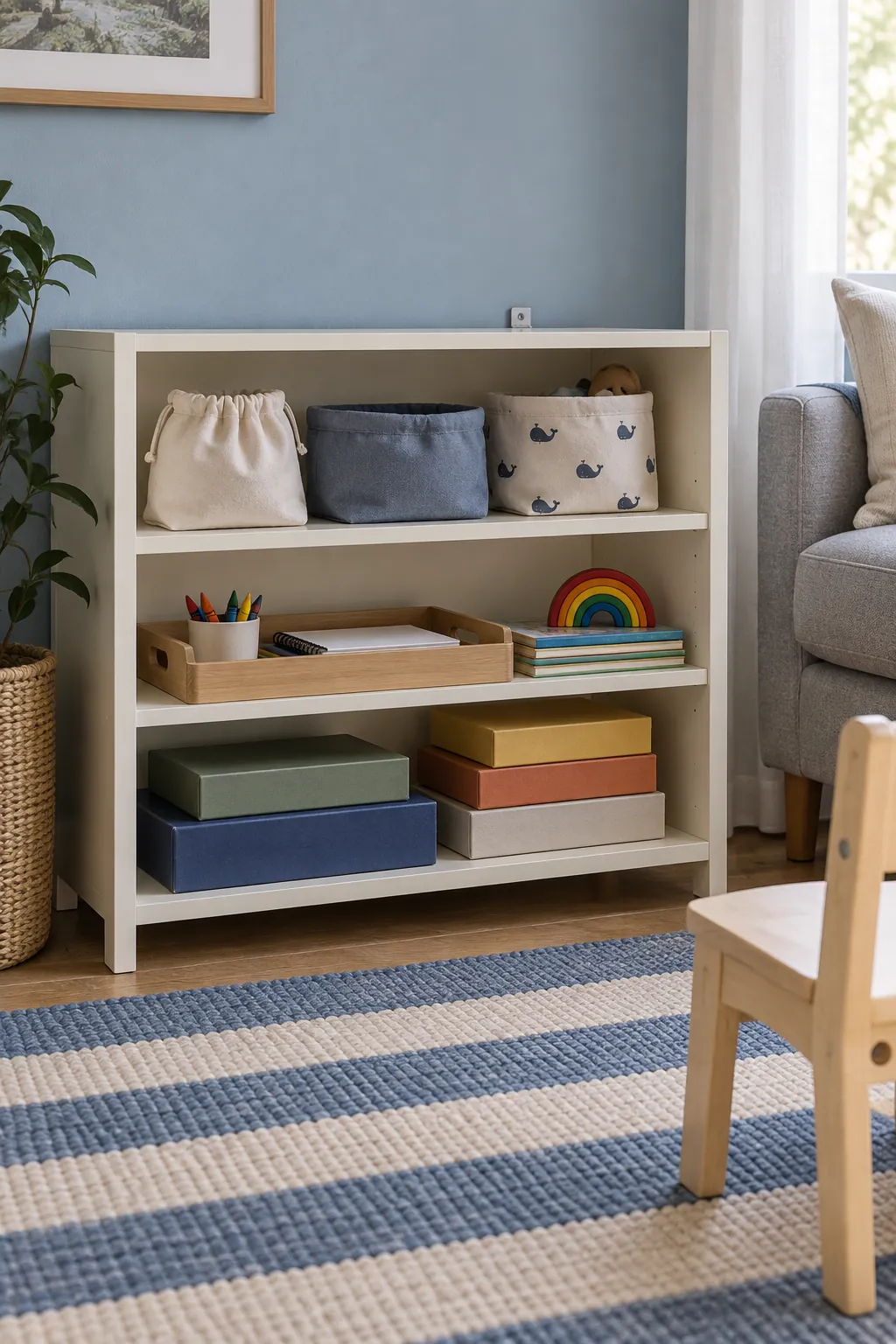
Give the easiest shelf to the things you retrieve most often, whether those are work notebooks, everyday dishes, or children’s activities. Keep heavy objects low and lighter occasional items higher. Check the unit’s load limits and anchoring instructions before concentrating books or equipment on one shelf.
Match the arrangement to the person using it. A child should not need to climb for a game, and an adult should not have to stretch overhead for a heavy appliance. Store hazardous supplies securely rather than relying on height alone to keep them inaccessible.
Choose containers that leave room for your hands
Measure the shelf opening, its usable depth, and the space above the intended container. Include handles and lids in the dimensions. A bin that fits perfectly but cannot be grasped is the wrong size.
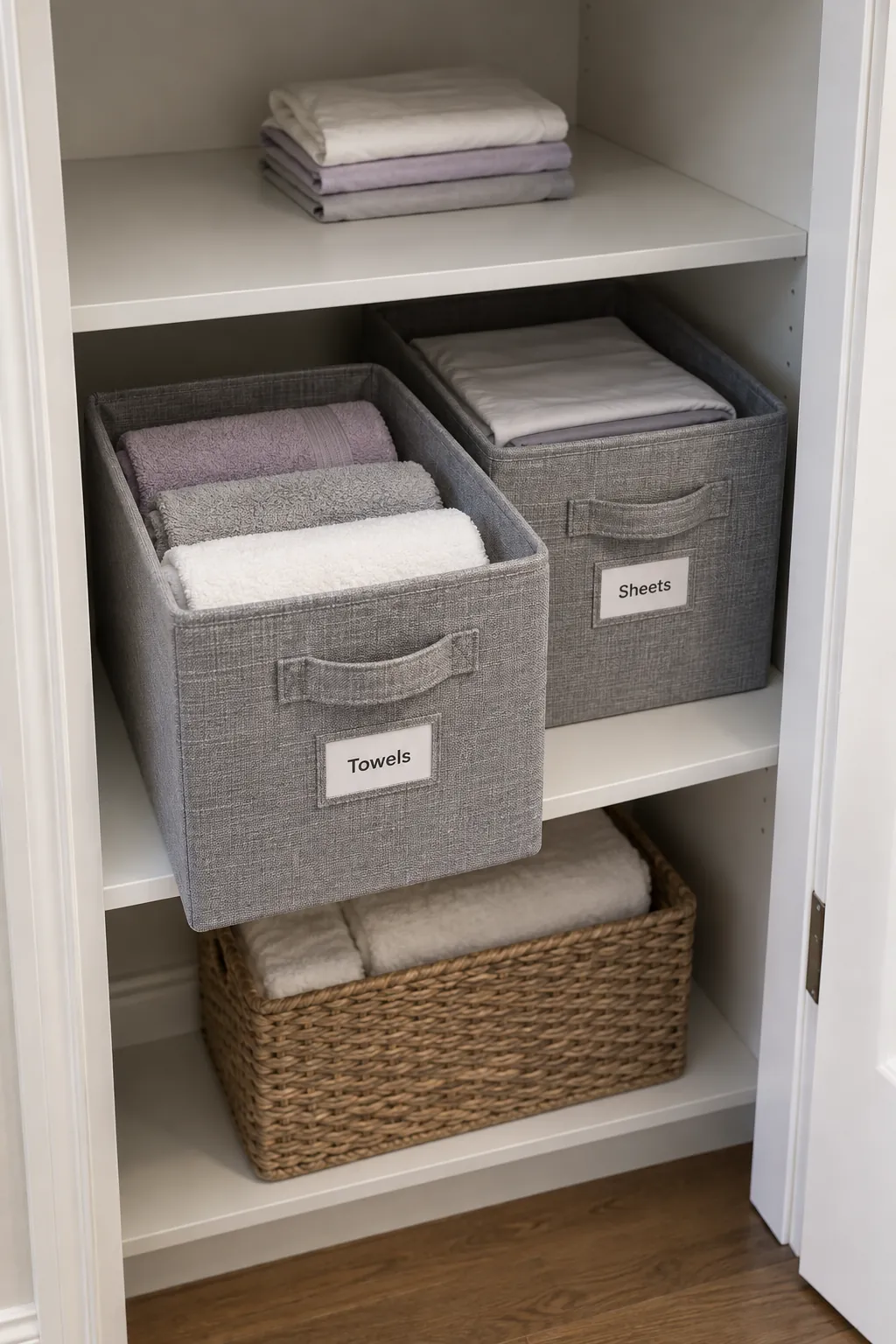
Shelf basket storage suits broad categories such as spare cables or sewing supplies. Use a shallow tray when small objects need to remain visible, and a lidded box when dust protection matters more than instant access. For a deep shelf, a removable bin brings its contents forward without leaving loose items hidden behind it.
Labeled storage bins help other people return things to the right place. Choose names they already use, such as “Chargers” or “Sewing,” rather than vague labels like “Miscellaneous.” Leave a little spare capacity so a category can be put away without precise packing.
Add a riser only when it improves access
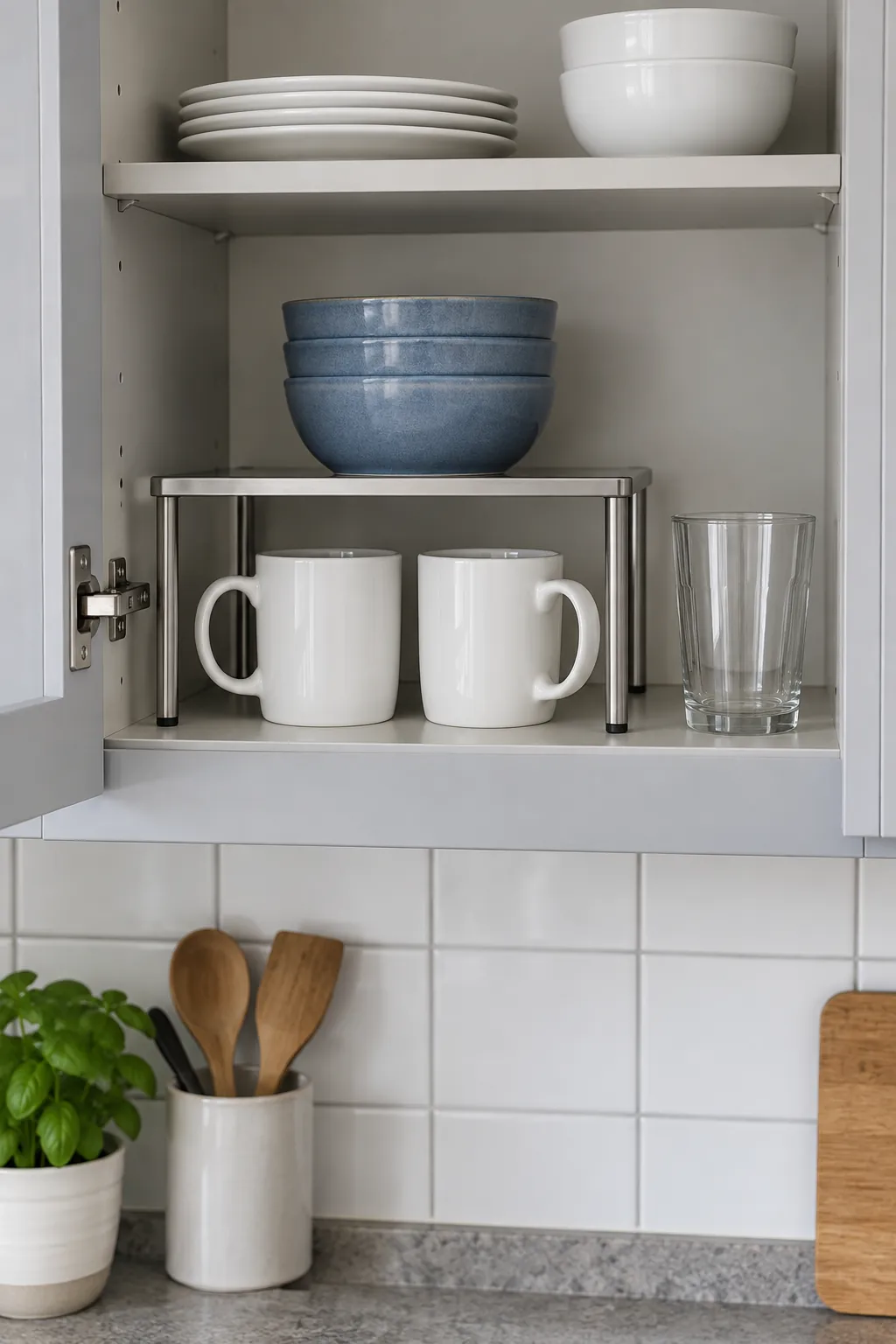
Shelf risers can divide a tall space into two useful levels, especially for cups, small bowls, or pantry items. Measure the tallest object that will sit above the riser as well as the objects underneath it. Check that the riser stands flat, stays within the shelf edge, and supports the intended load.
A rear row raised above a front row may be easier to see but still difficult to reach. Test removing an item from the back without knocking anything over. If that movement feels awkward, reduce the number of items or use a pull forward tray instead of adding another tier.
Keep books findable and decoration separate
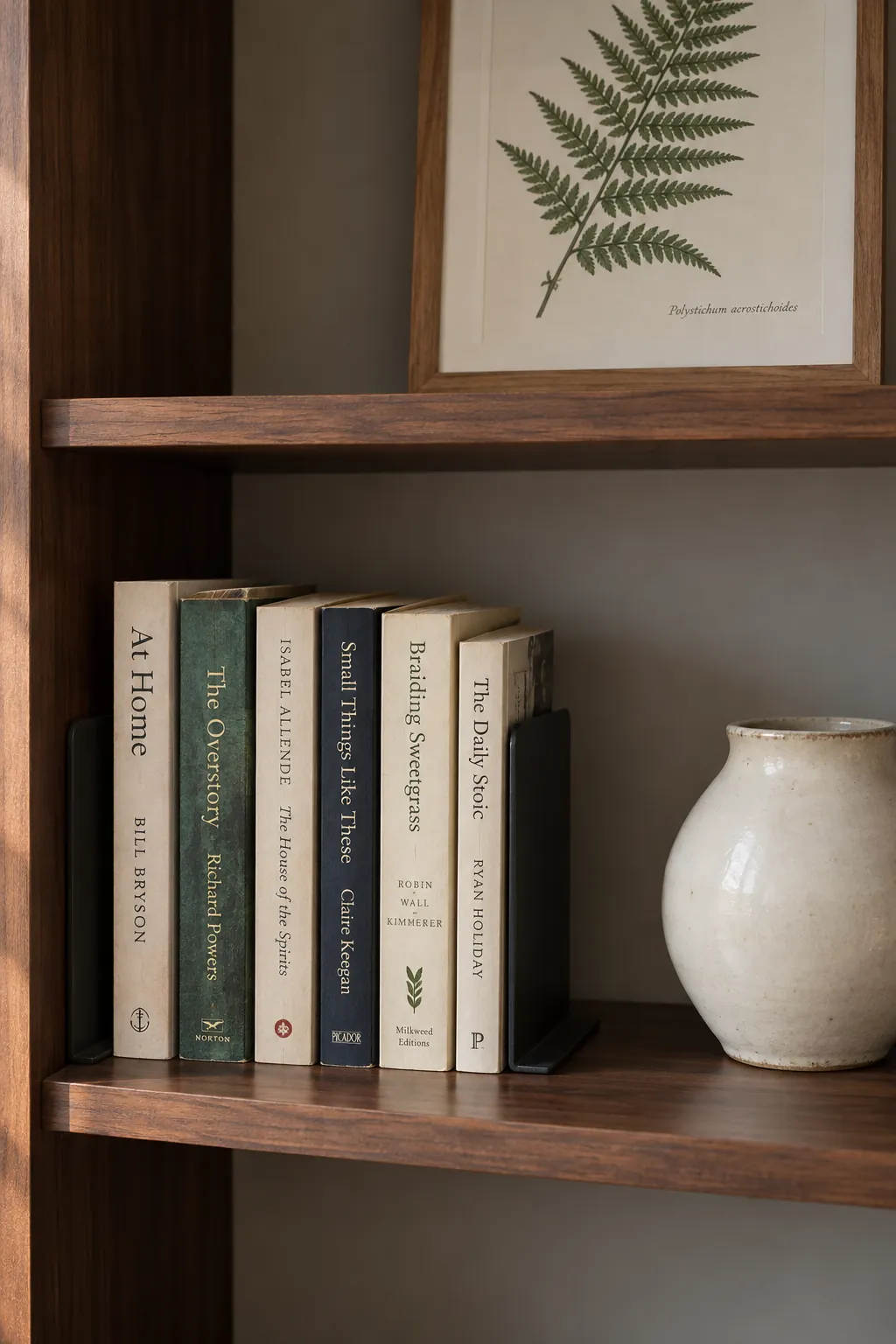
For book and decor grouping, establish the book order first. Broad subjects or author names are useful when you search by content; arranging by color suits a collection whose covers you remember. Keep series together if you read them in sequence, and let unusually tall volumes have a suitable shelf rather than forcing them into a cramped opening.
Use bookends to support short rows without wedging the books tightly. Place a decorative bowl or a favorite object beside the row, where it does not need to move each time you take a book. A horizontal stack works best for a few occasional volumes, since retrieving the bottom one disturbs everything above it.
Functional shelf styling does not require decorating every gap. Leave clear sections of the surface so the useful objects remain easy to recognize.
Use the shelf before calling it finished
Put a frequently used object away with one normal movement. If a lid catches, a basket scrapes, or several things must be shifted, change that part of the arrangement now. A shelf should support ordinary habits without requiring careful restyling after every use.
Revisit the shelf during your usual cleaning routine and return items that have wandered into it. When a category repeatedly overflows, remove unused contents or assign it a larger space rather than placing a second row in front. The best sign of successful home shelf organization is simple: the thing you need is there, and its empty place is ready when you return it.