If making dinner begins with moving a tray, a vase, and three jars off the counter, the display is taking up the space your kitchen needs. Start with what your hands reach for each day, then give those objects a place that makes cooking and cleaning easier. The attractive part can come from the tools themselves.
Choose the essentials by watching your routine
For a few ordinary meals, notice which objects leave their storage spots and which stay untouched. A spoon used every evening has a stronger claim to counter space than a beautiful serving bowl used twice a year. Keep occasional gadgets, extra mugs, and duplicate tools in closed storage before buying anything to organize the visible collection.
Divide the survivors by task: preparing food, cooking, making drinks, and serving. Place each group near its actual work area, while keeping a clear surface large enough for your usual cutting board and ingredients. If a display forces you to prepare food beside the sink or balance a bowl on the stove, reduce the display first.
Give a utensil crock room to work
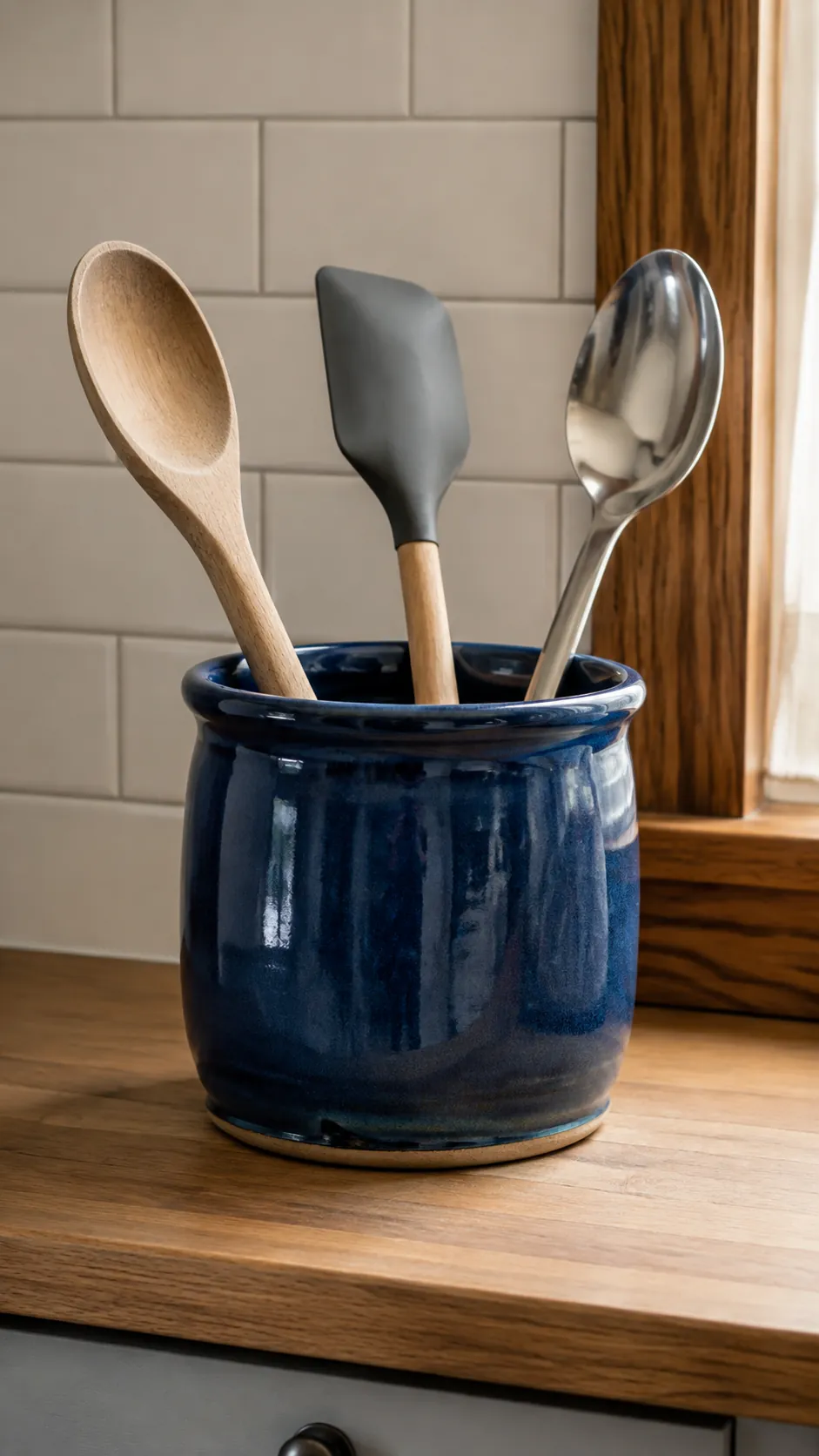
A cooking utensil crock works best when you can remove one tool without pulling out its neighbors. Choose a stable container with a washable interior, then add only the spoons, spatulas, or tongs you use often. Put knives and sharp tools in appropriate secure storage instead of mixing them into the crock.
Set it within comfortable reach of the preparation area but outside the stove’s heat and splatter zone, following the appliance’s clearance requirements. Allow washed utensils to dry before returning them, especially wooden handles. If the collection becomes top heavy or handles catch together, move the less useful pieces to a drawer rather than buying a larger container.
Display cutting boards without trapping moisture
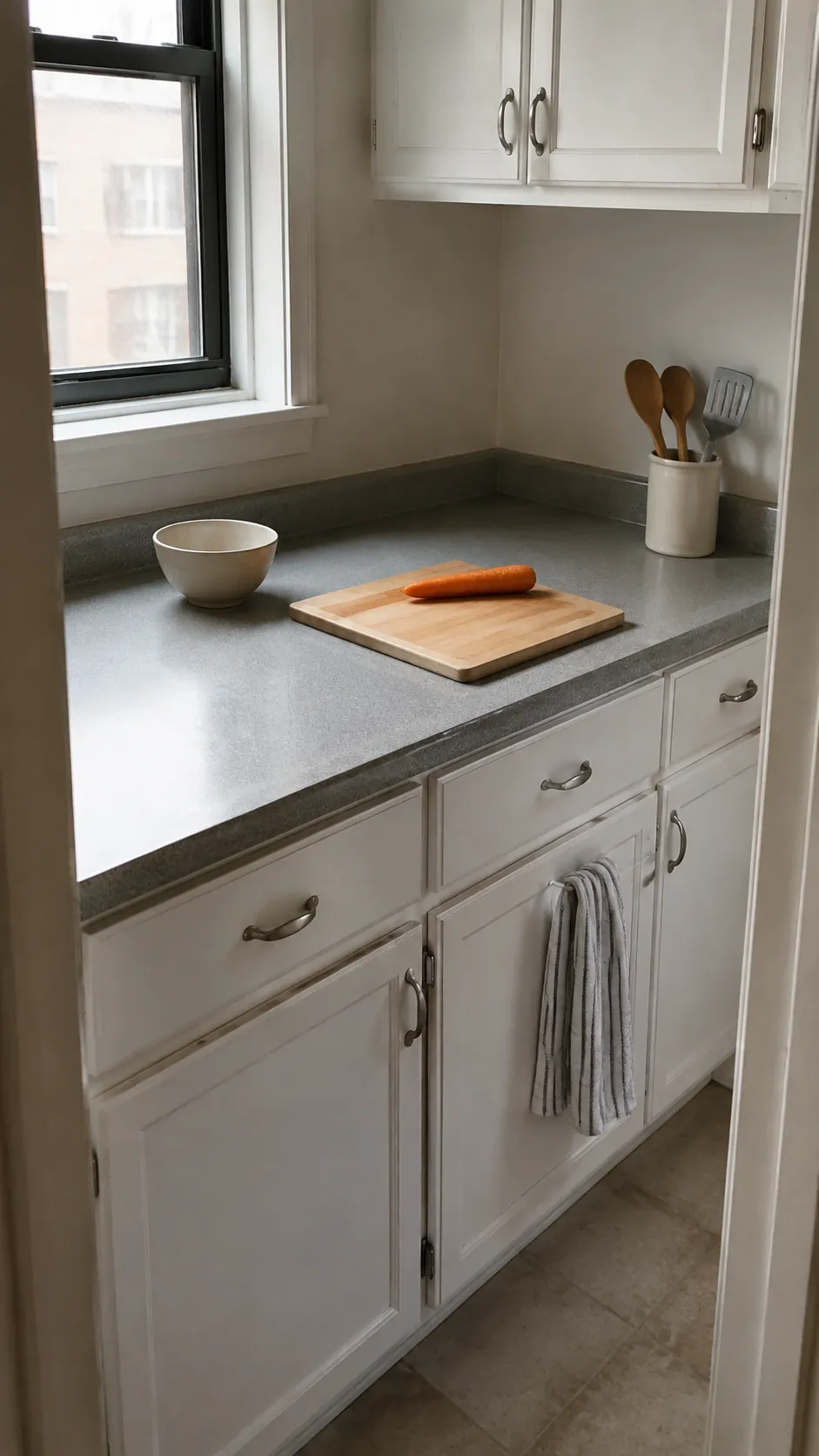
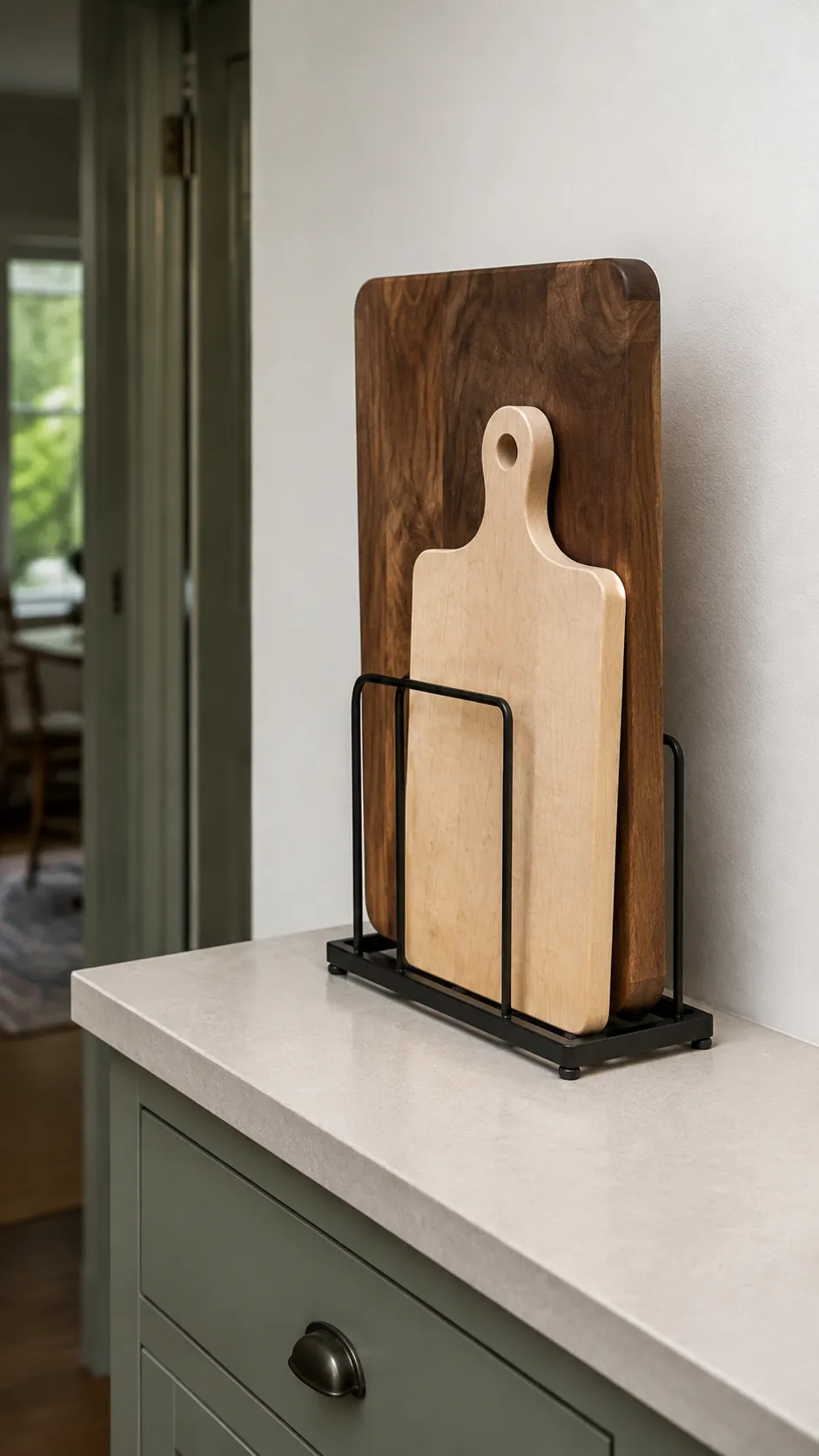
Cutting board styling does not require a stack of decorative boards. One large board and a smaller board can bring wood texture into a kitchen while staying useful, provided both are clean, fully dry, and held securely. A stable divided rack is more dependable than leaning a slippery board against glossy tile.
Leave enough separation for air to circulate, and keep the rack away from standing water around the sink. Follow the board maker’s cleaning and drying directions; a display is not a substitute for proper drying after washing. Store boards used for raw meat separately from ready to eat food tools, and choose washable storage that lets you clean beneath it.
Use open shelves for dishes that circulate
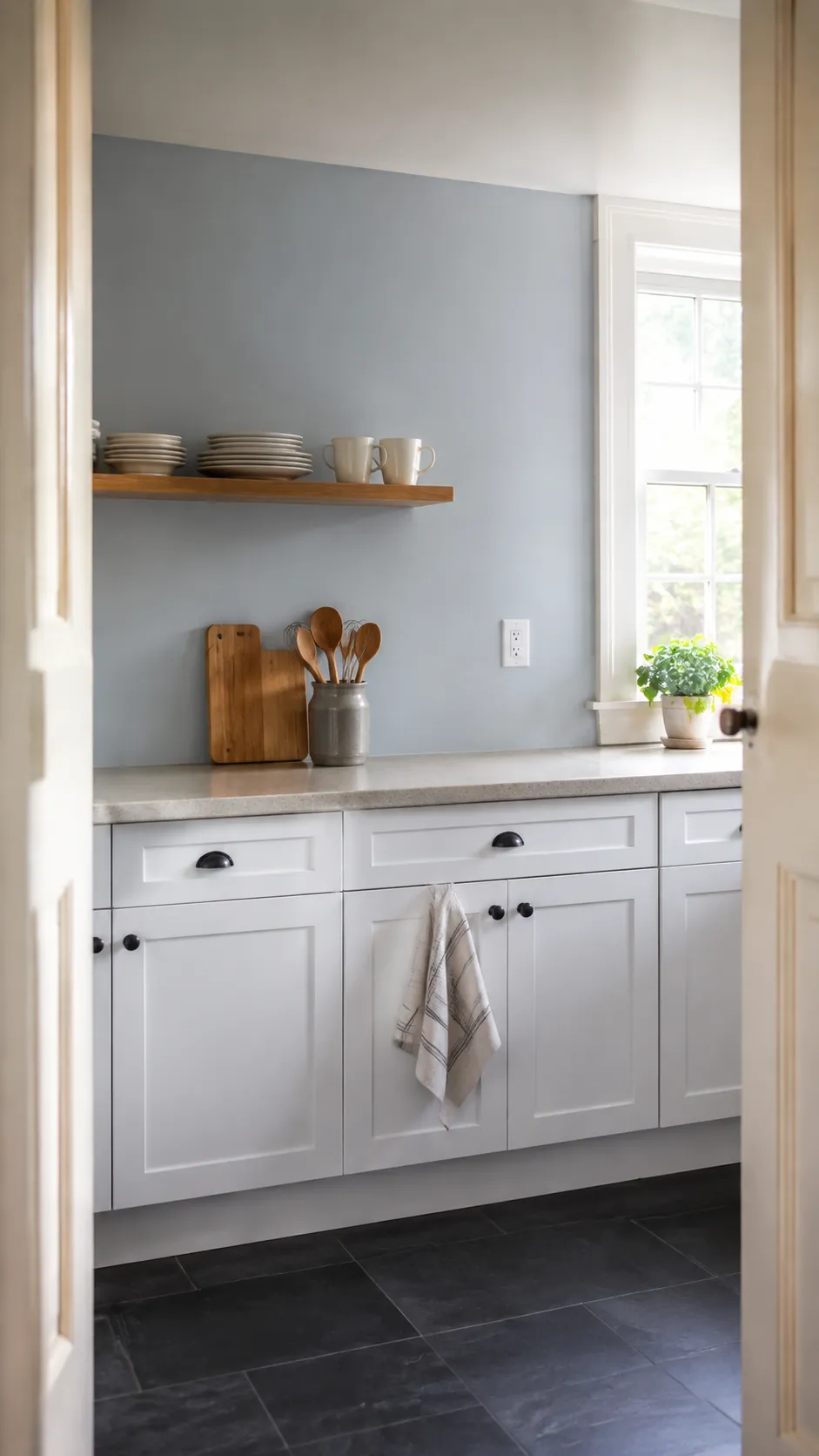
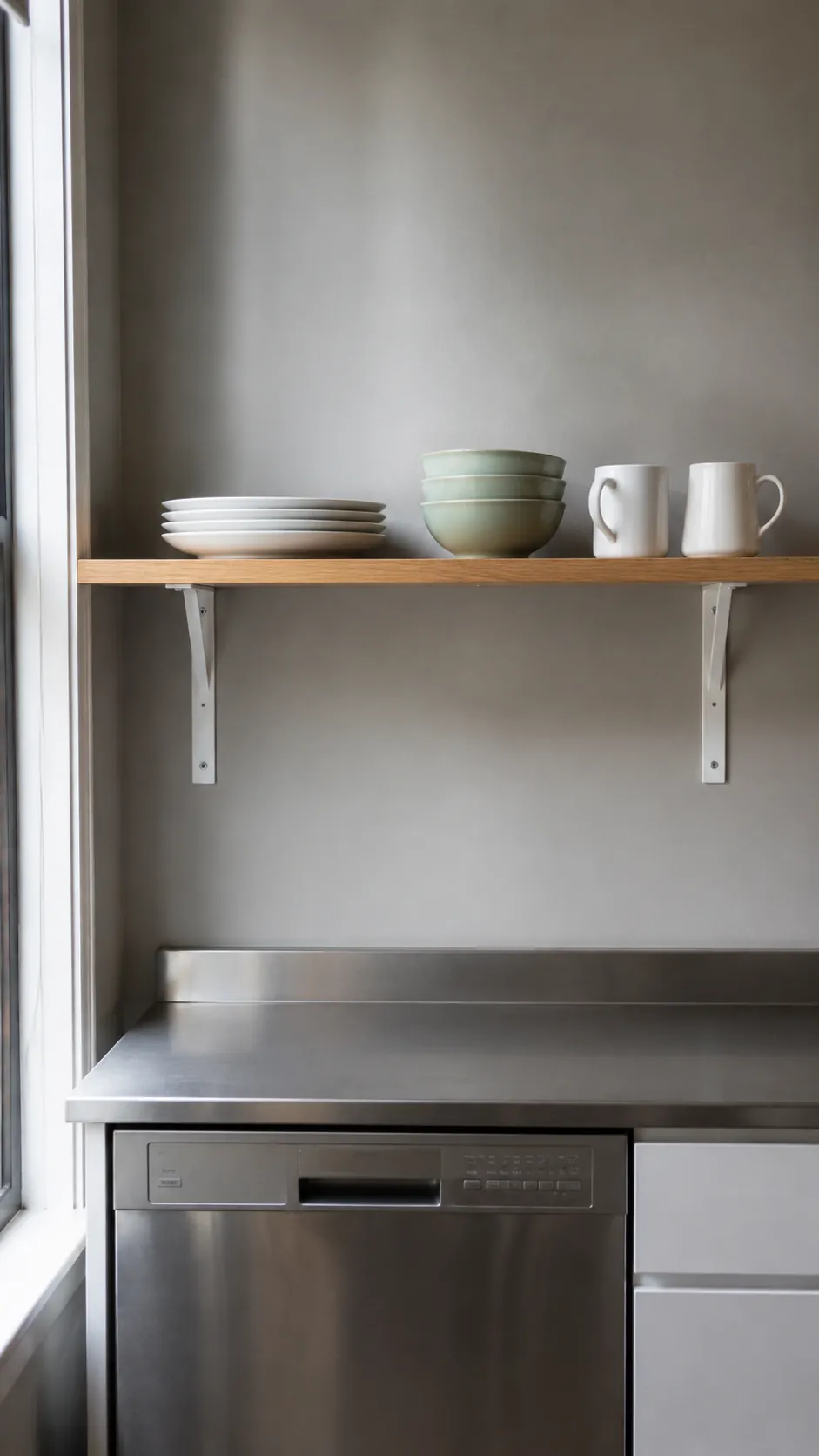
Open kitchen shelving is easiest to maintain when it holds everyday dish storage rather than a rarely touched collection. Keep manageable stacks of plates on a reachable shelf and mugs where they can be lifted without reaching over fragile glasses. Position frequently washed dishes near the dishwasher or sink, but outside direct splashes.
Check that the shelf, brackets, wall fixings, and wall material can support the intended load before adding dishes. Heavy pieces belong lower, and nothing should overhang the edge. Leave a visible gap between groups instead of filling every inch; this gives your fingers room and makes it easier to wipe the shelf.
If exposed dishes collect grease before you use them again, move them into a cabinet and reserve the shelf for a smaller washable selection. You do not need to replace mismatched dishes to make the arrangement coherent. Grouping similar shapes or repeating one color is enough, without hiding the cups your household actually likes.
Move a few lightweight tools onto a rail
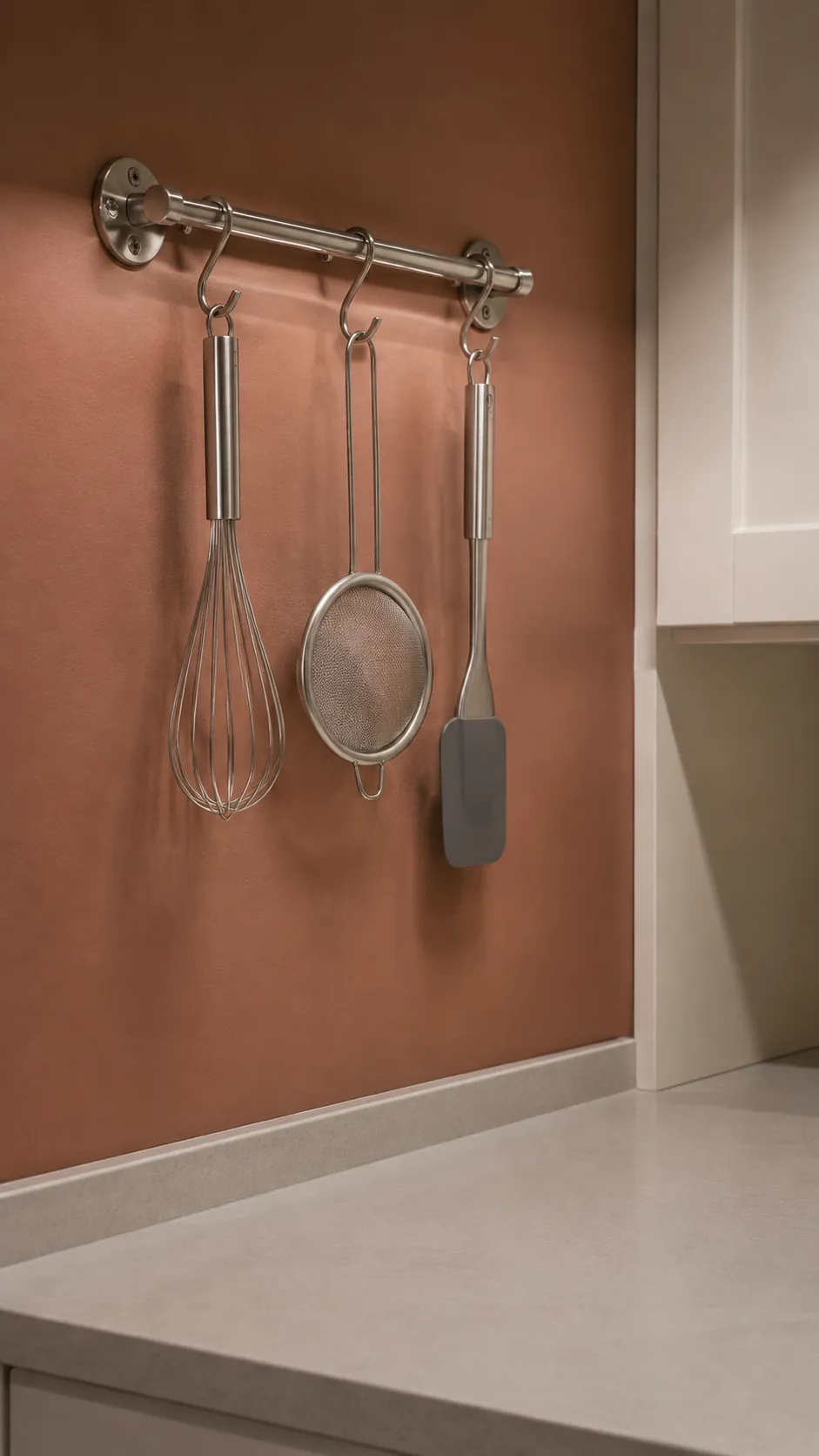
Kitchen rail organization can free a narrow counter when there is usable wall space beside the work area. Hang a small selection of lightweight tools with enough distance between hooks that removing one does not set the others swinging. Check the complete system’s load rating and install it for the actual wall surface, using the manufacturer’s fixing instructions.
Avoid suspending tools above burners, electrical outlets, or a place where people can bump into them. In a rental, get permission before drilling; a freestanding organizer or drawer may be the simpler option. Leave towels away from cooking heat and keep handles within safe reach for the people using the kitchen.
Make the daily reset part of the display
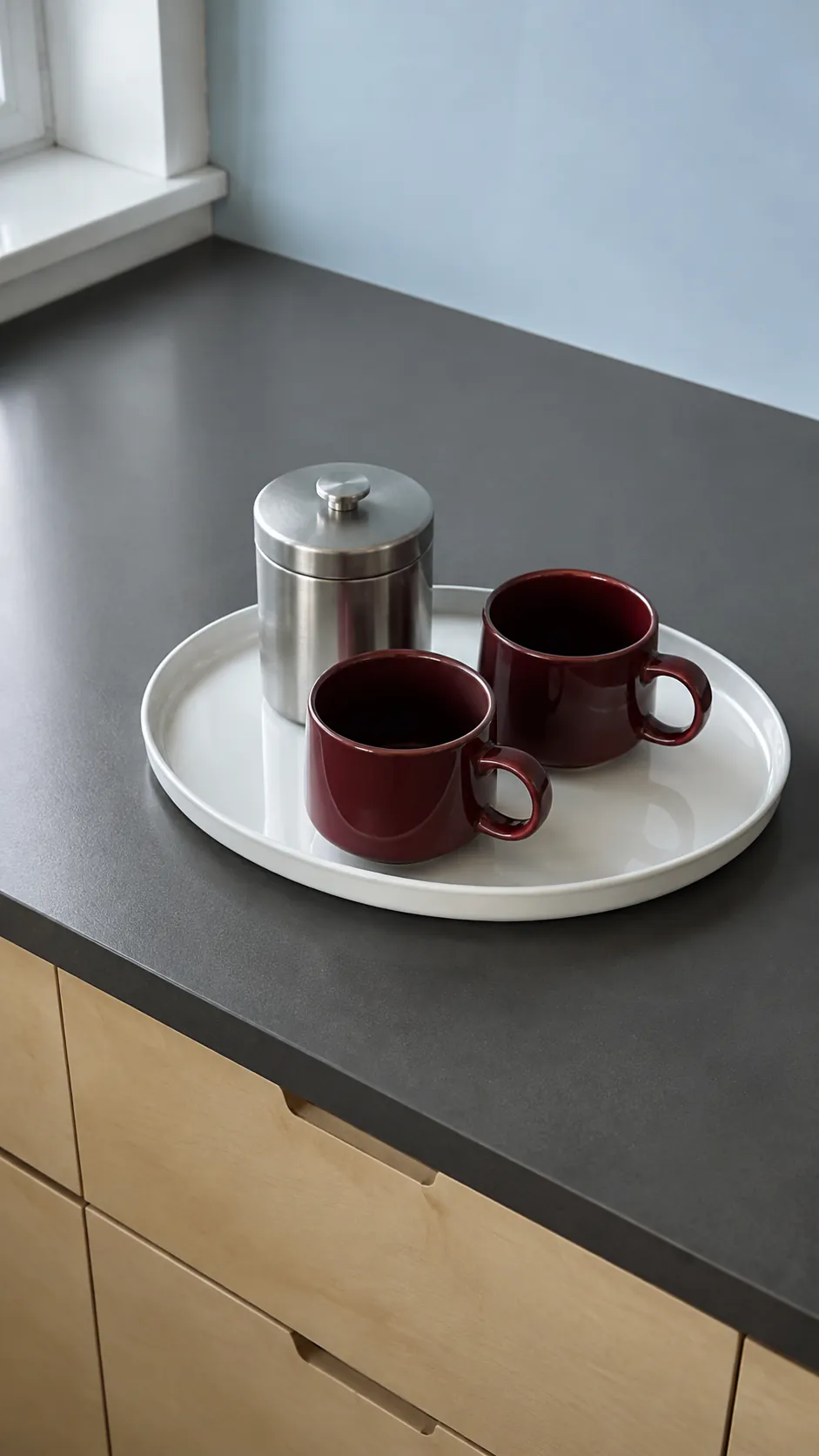
A countertop essentials display should take little effort to lift and wipe beneath. A small washable tray can gather a coffee canister and two mugs, but it should not become a parking space for receipts, medicine, and spare utensils. Store coffee and other foods in suitable closed containers and keep oils away from heat and direct sunlight.
During your normal kitchen cleanup, wipe the exposed surfaces and return only the items that belong in that group. If you repeatedly postpone cleaning because there are too many pieces to move, remove one category from view for a week. Minimal countertop decor succeeds when the arrangement stays useful after breakfast, not just when everything has been positioned for a photograph.