
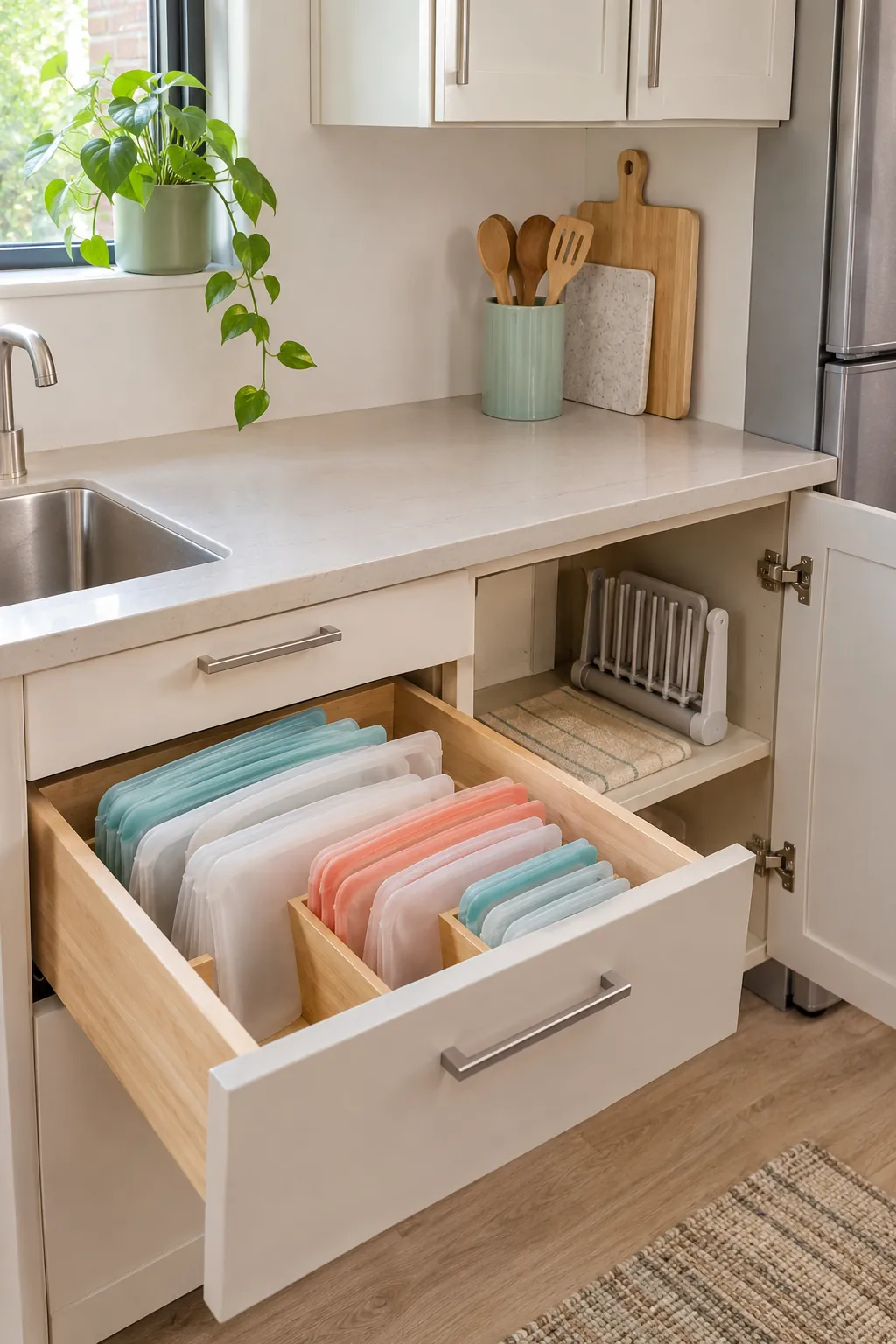
Reusable food bags save space only when the cleaning routine and the drawer layout work together. A bag that enters the drawer damp can develop odor, while a thick bag forced into a narrow organizer creates a pile that is hard to use.
The simplest system has two separate stages. Wet bags stay open in a temporary drying zone, and only completely dry bags move into wide upright drawer slots.
Wash the corners before thinking about storage
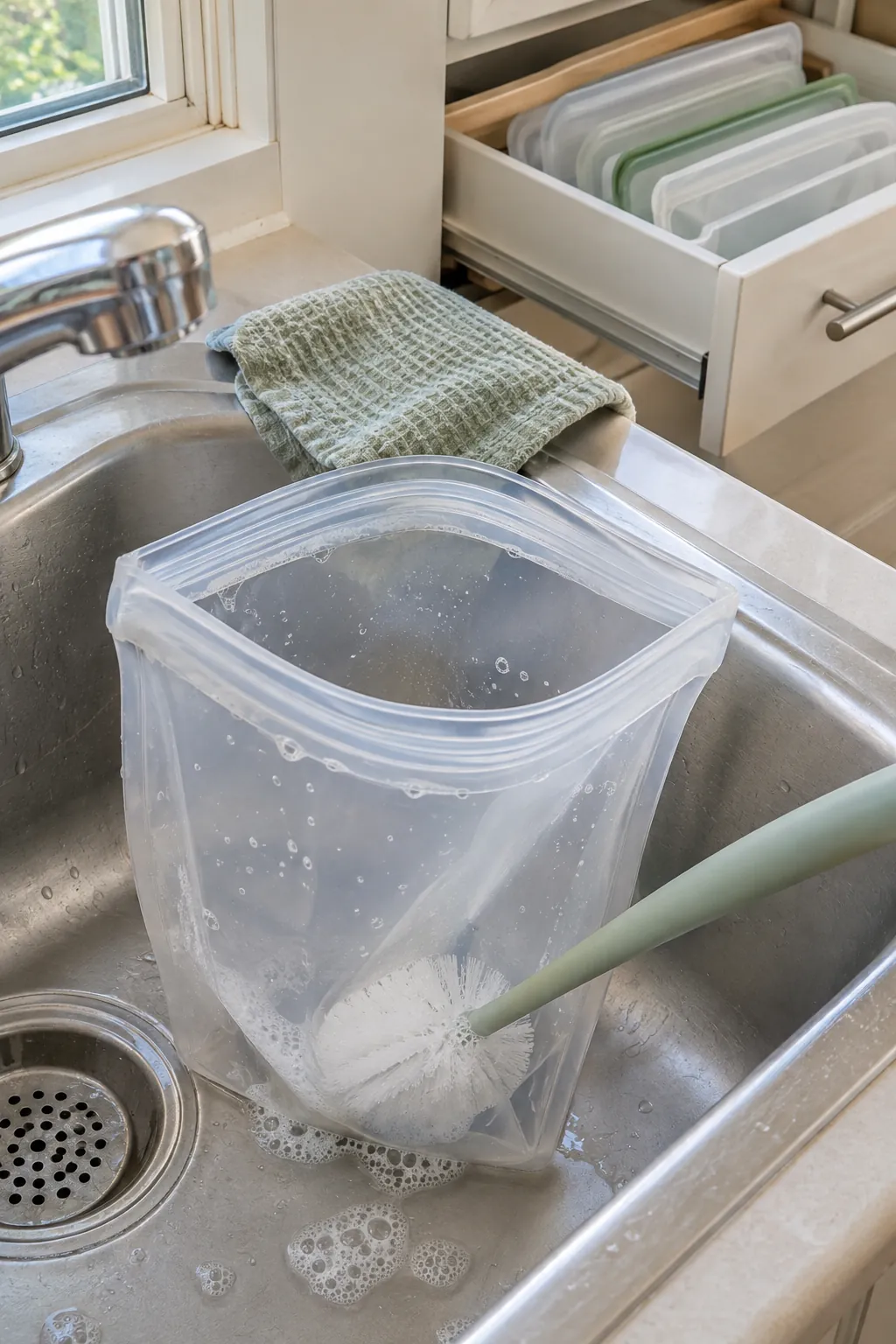
Rinse food residue as soon as the bag is empty, then wash it according to the maker instructions. Turn the opening wide enough to reach seams and corners, since residue trapped there can hold odor even when the visible panels look clean. Do not force a bag inside out if its care instructions warn against it.
Dry each bag fully open and upside down
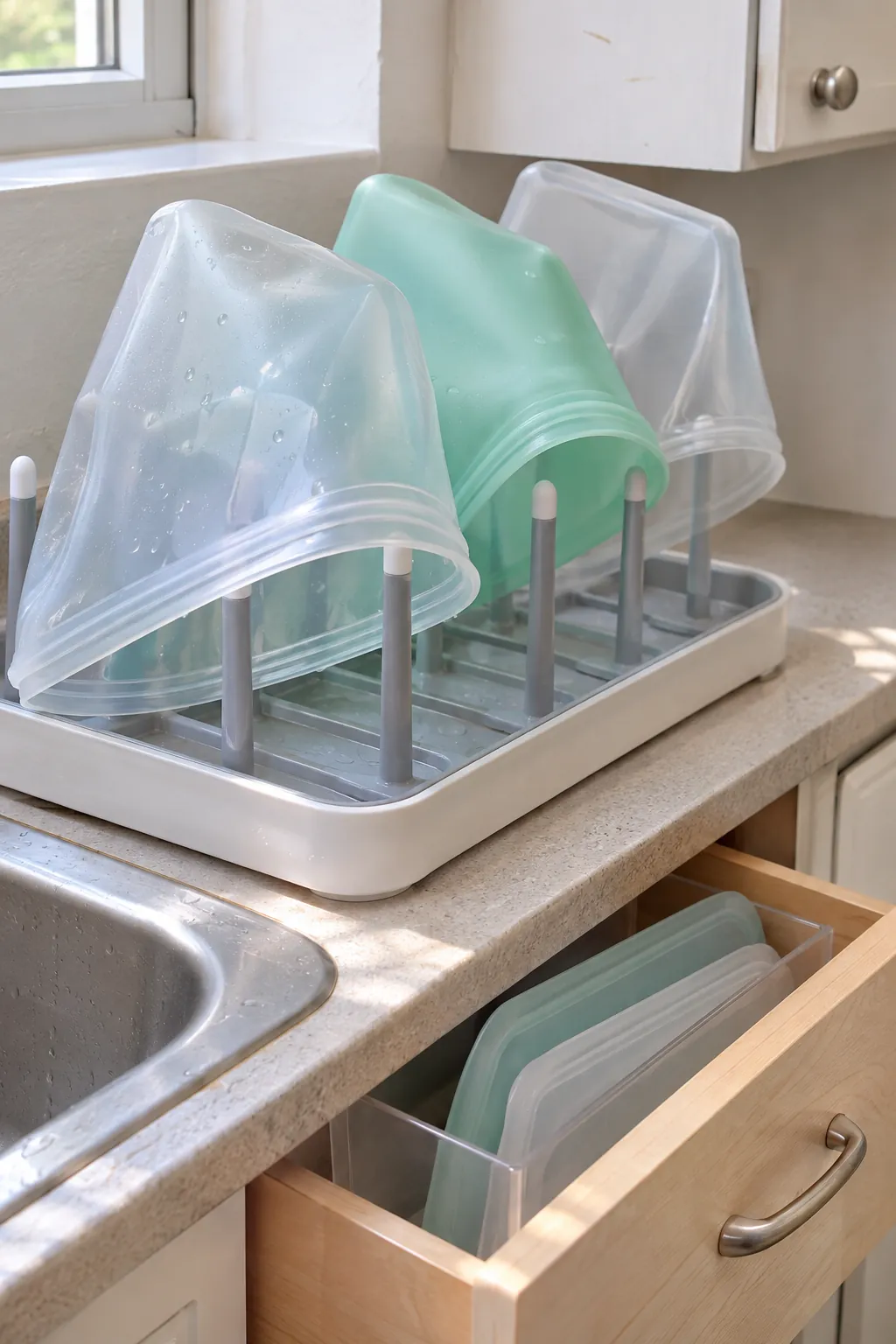
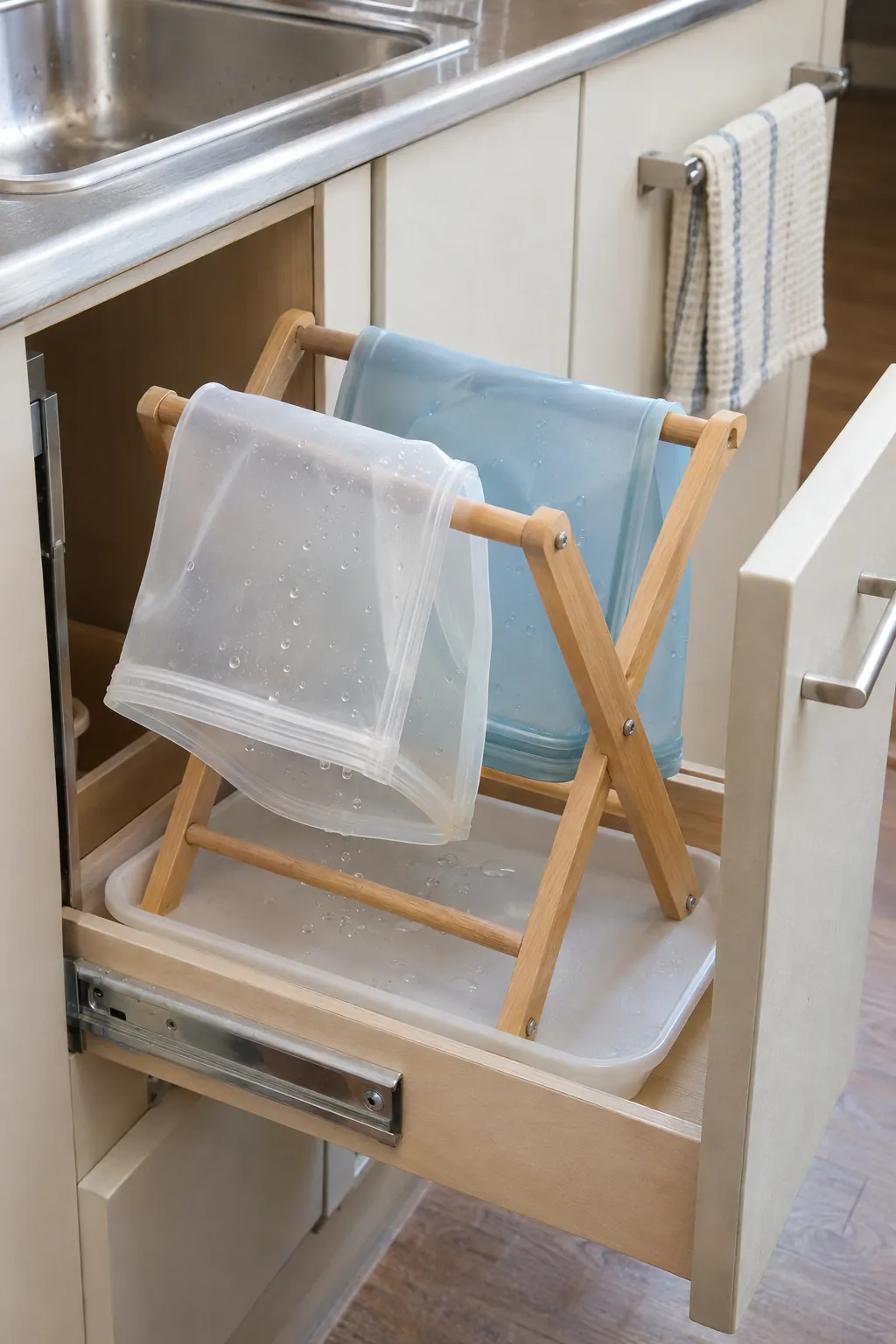
A bag dries more reliably when air can enter and water can drain from the deepest corners. Prop it open and invert it over a clean rack, glass, or suitable support, then leave space between bags. Check the seams by touch before moving any bag to the drawer.
Use a temporary drying rack that stores away
A drying rack does not need to live on the counter all day. Choose a compact model that opens the bags without stretching them, catches drips, and fits in a cabinet after use. Put it away only after both the rack and catch tray are dry.
Sort dry bags by size and shape
Lay every completely dry bag on the table and group it by actual dimensions rather than color. Separate flat sandwich bags, wide stand up bags, and narrow snack pouches because they occupy drawer space differently. Remove closures that store separately only when the product design allows it.
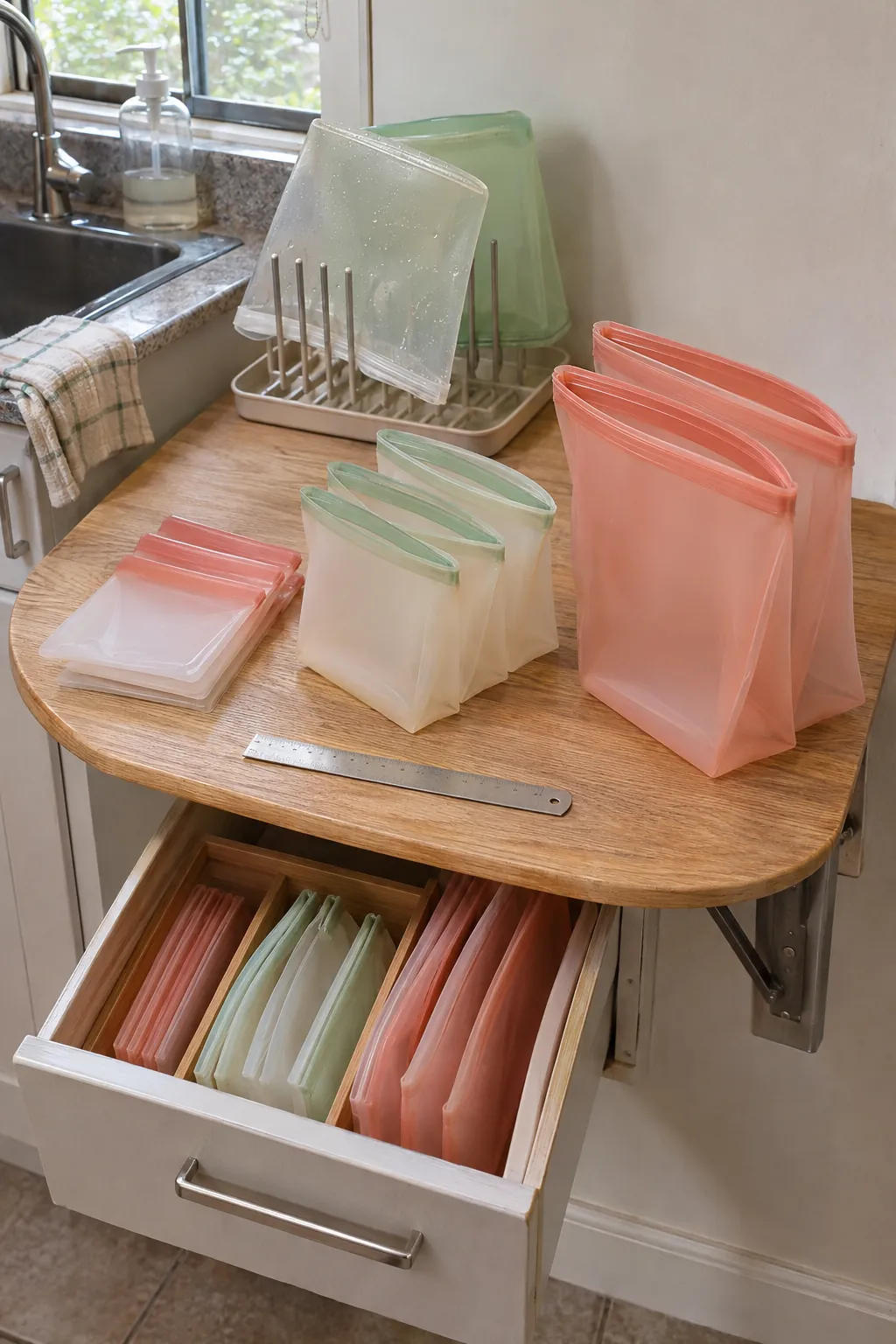
File thick bags upright in adjustable dividers
Thick silicone bags usually fit better on edge than in a compressed stack. Use adjustable drawer dividers or low bins to create wide slots, then file the largest bags at the back and the most used sizes near the front. Leave each slot loose enough that a bag comes out without pulling its neighbors.
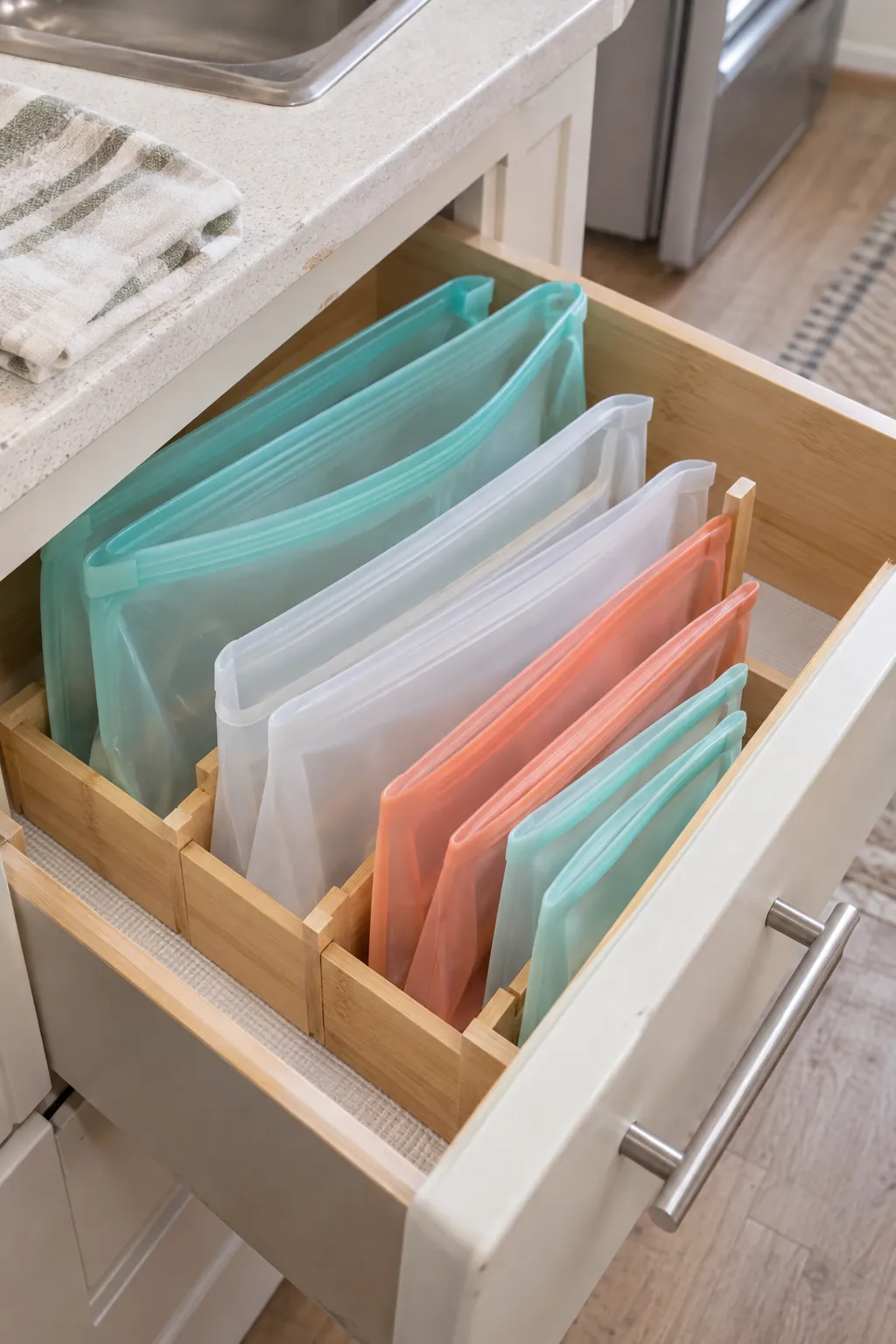
Keep a small return space for the bags in use
Do not force a bag into the organized drawer when it is still damp or holding food. Reserve one open drying position and one small return slot so the routine has somewhere to pause. This keeps the dry collection separate and makes missing sizes easy to notice.
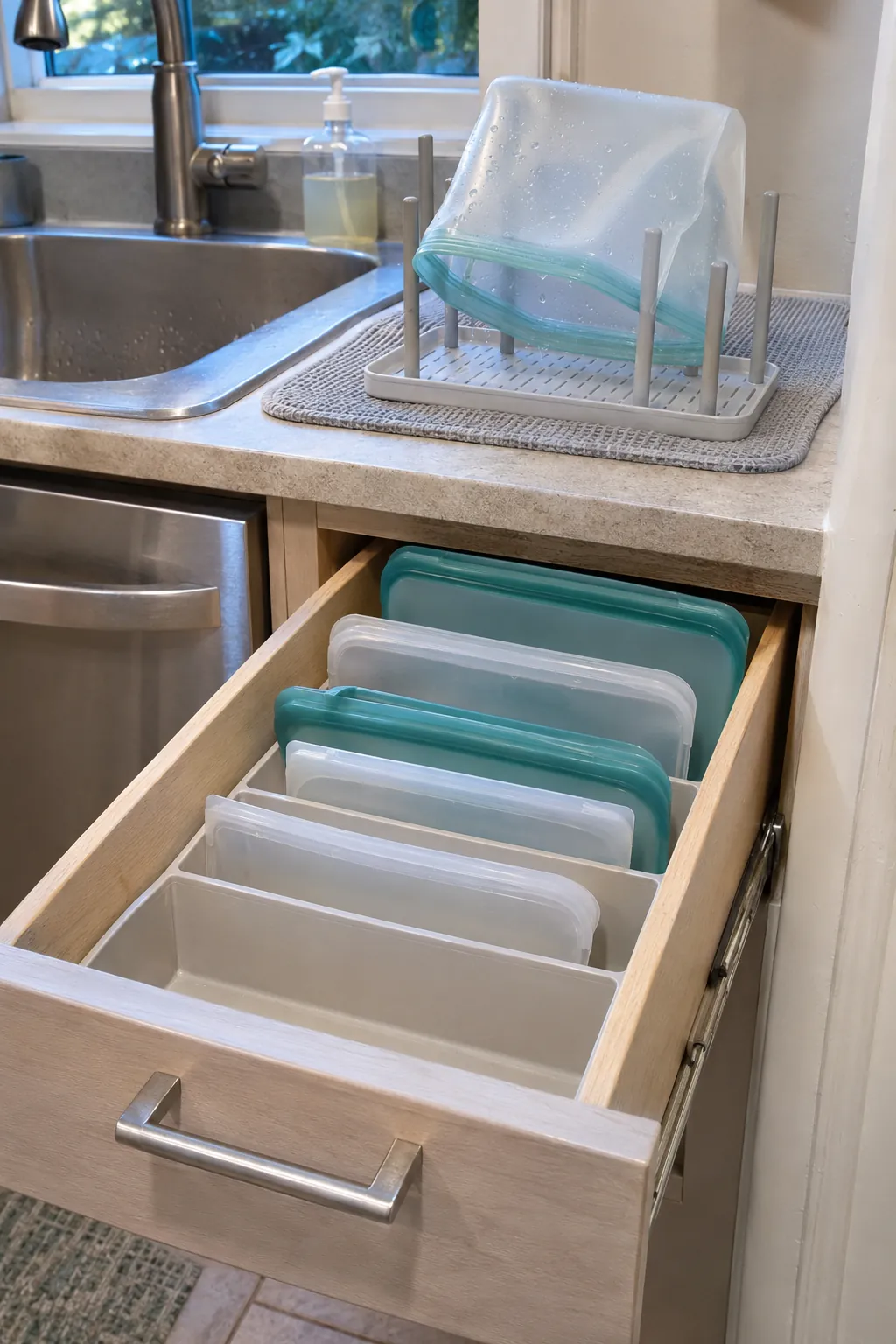
Reset the drawer when bags stop sliding freely
When one slot becomes crowded, remove the bags and confirm that every piece is fully dry, undamaged, and still useful. Wipe the drawer, adjust the dividers, and return each size without compressing it. A two minute reset prevents the system from becoming another mixed pile.