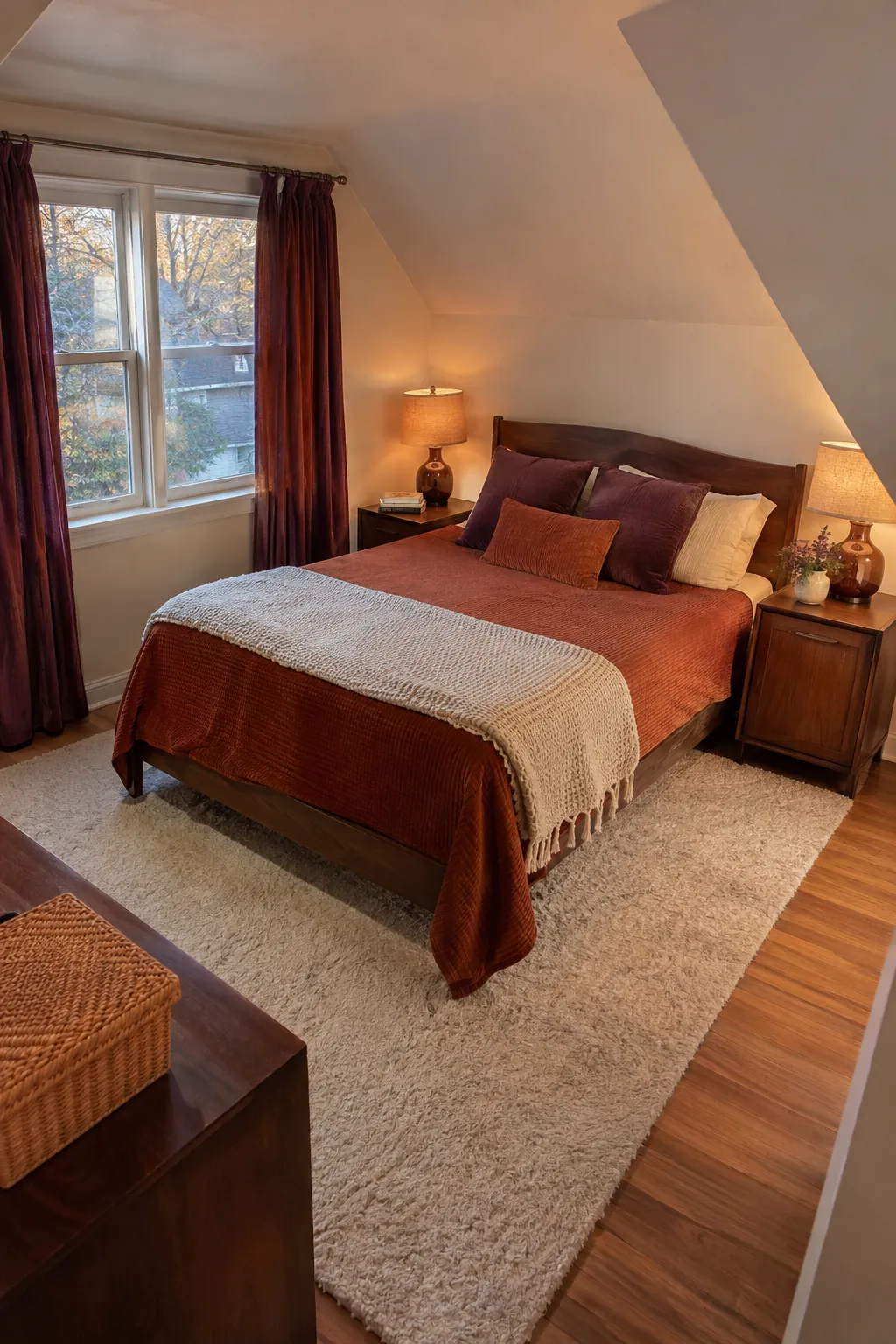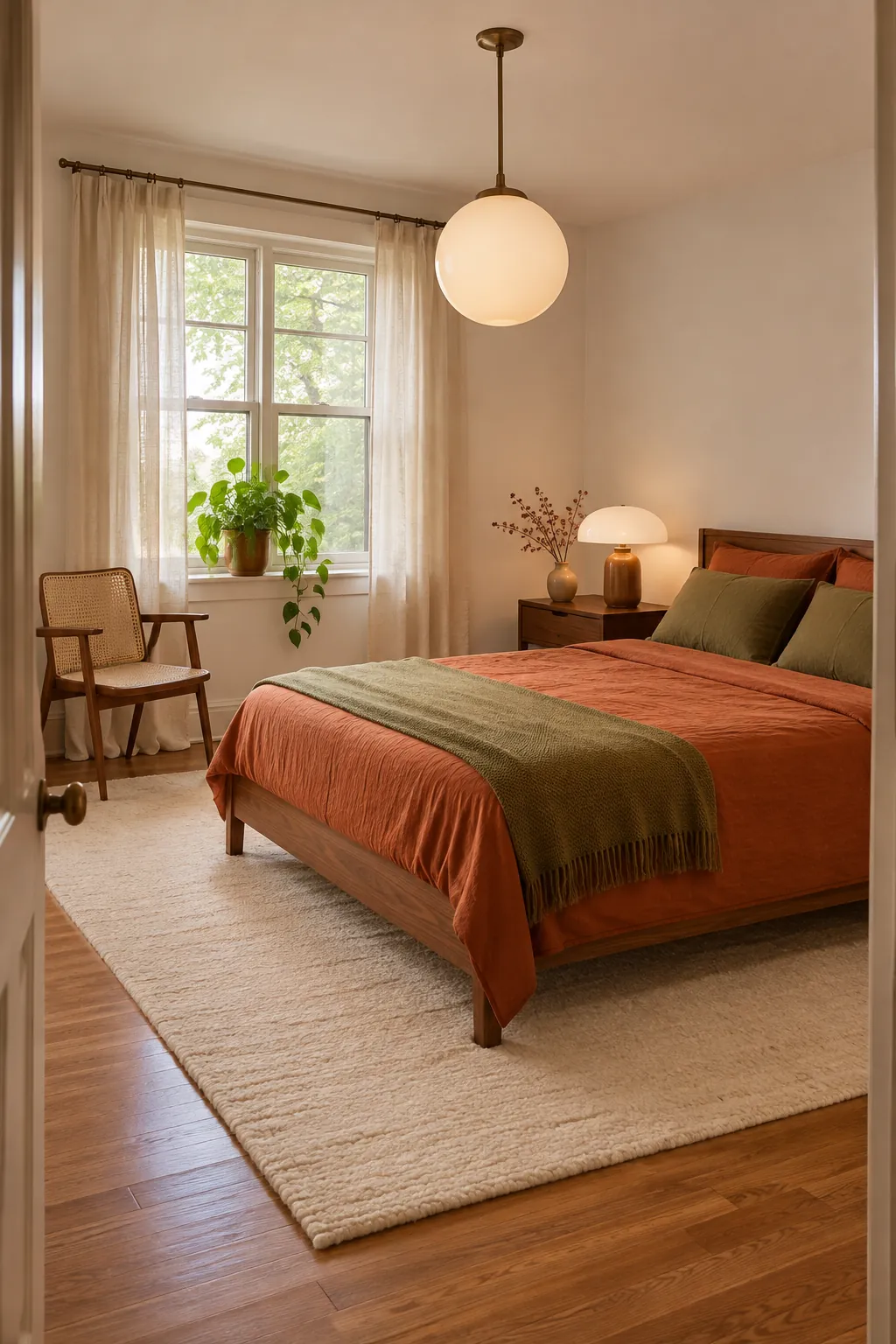
A bedroom can feel unmistakably retro without becoming dark, crowded, or difficult to maintain. The useful approach is to keep the sleep zone calm, then place the strongest decade cues in movable color, lighting, and texture. This plan works especially well when a lease limits paint and permanent fixtures.
Start With Walnut and Warm White
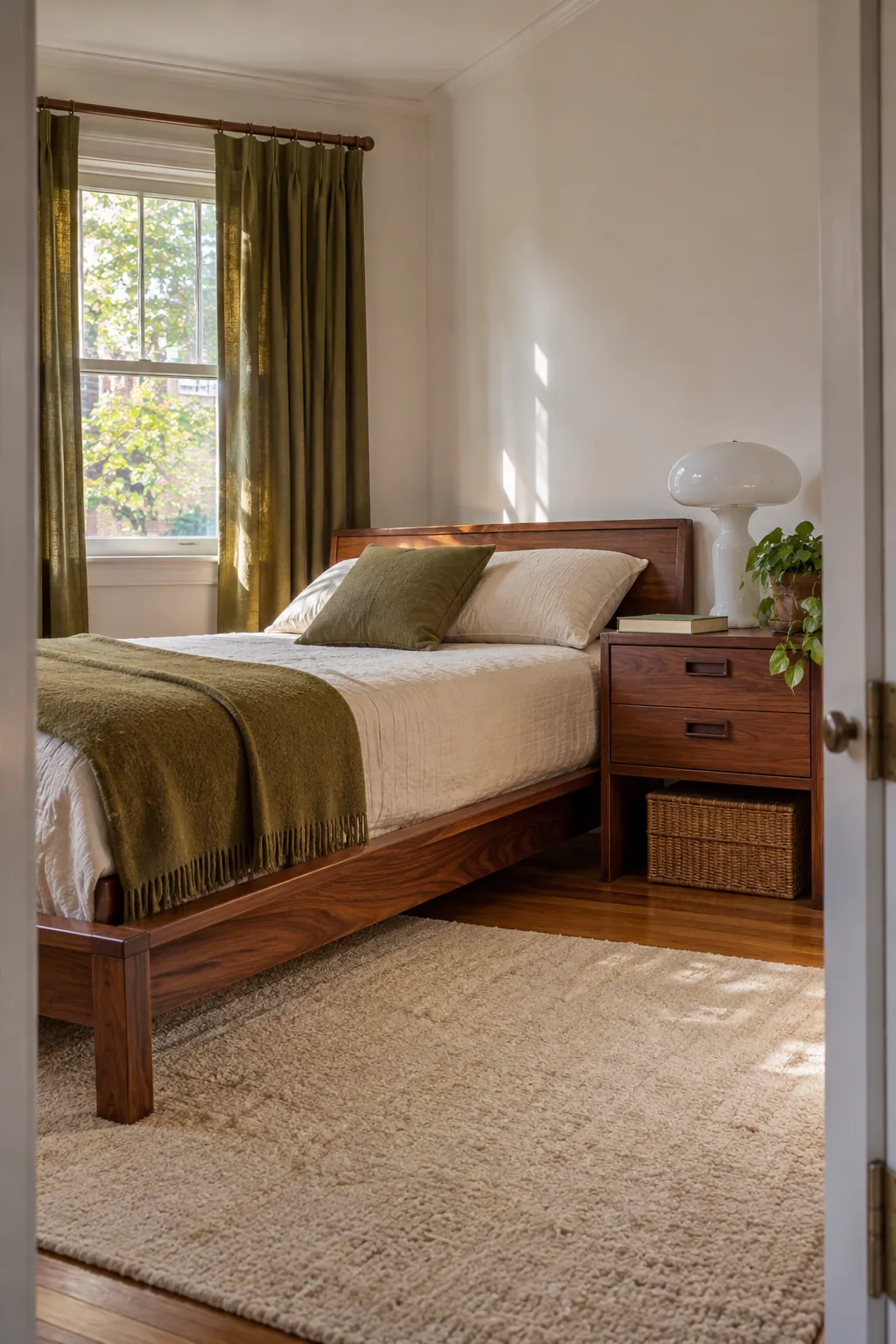
Walnut gives a 70s style bedroom a clear foundation without forcing every object to look vintage. Pair one useful wood piece with warm white walls and simple bedding, then repeat the brown tone in a small frame or lamp base. This keeps an existing dark feature intentional while preventing the room from feeling enclosed.
Build Color Through Bedding
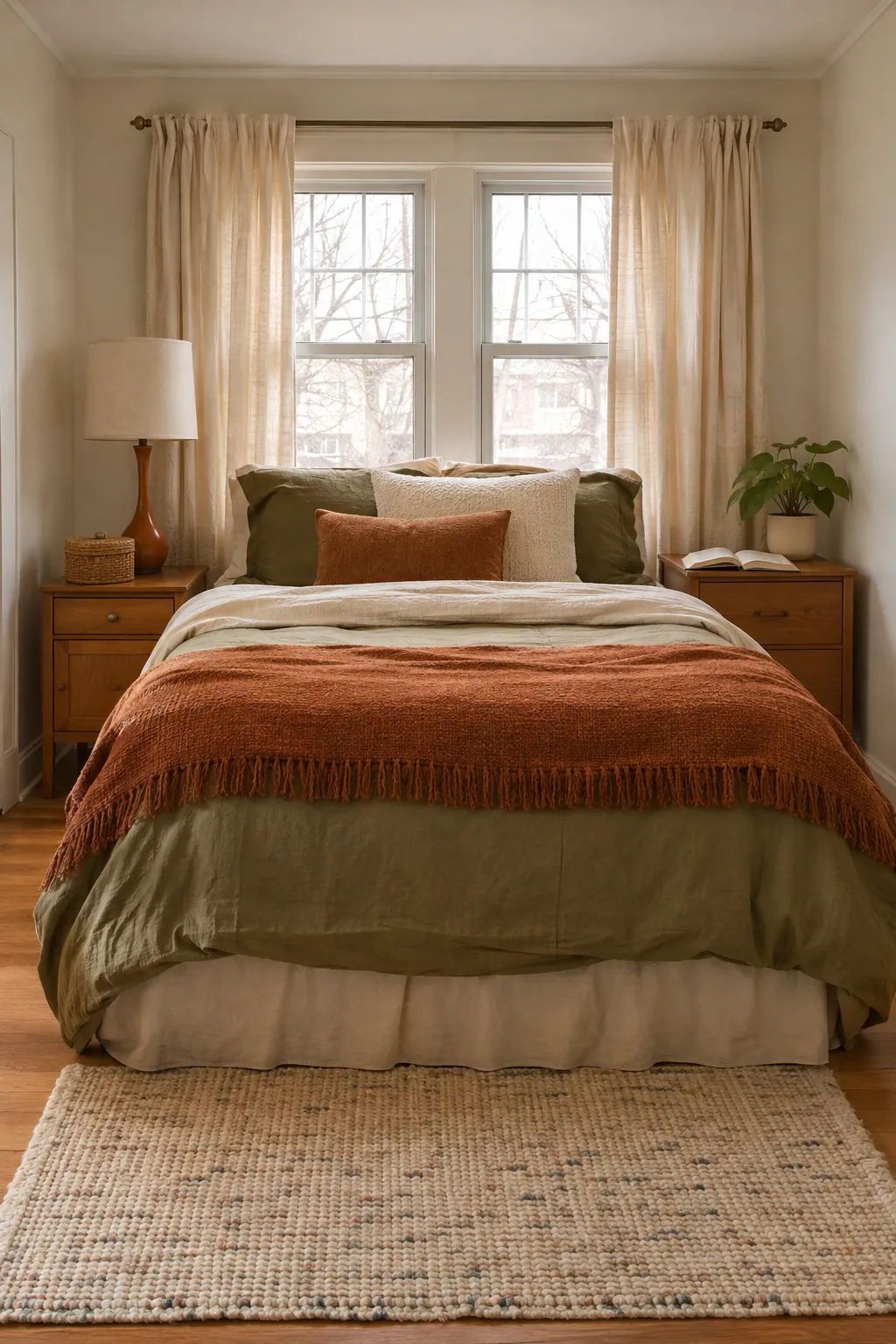
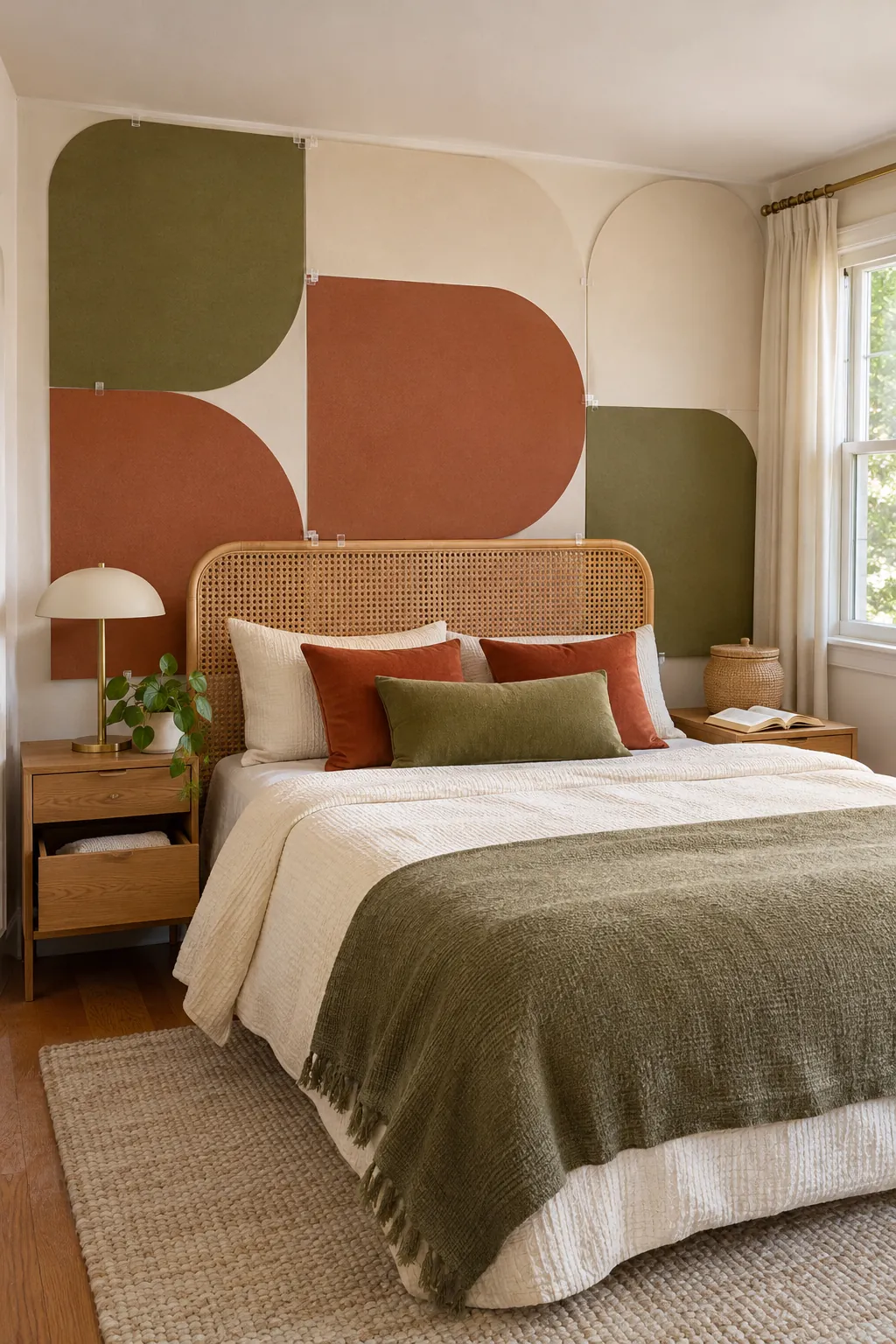
Bedding is the safest place to test rust, olive, mustard, and plum because it can change without repainting. Choose one patterned cover or two solid layers, not several competing prints. Keep sheets and the largest pillow quiet so the bed still feels restful at night.
Use One Graphic Wall Treatment
A removable geometric wall panel can establish a retro bedroom aesthetic while protecting the lease. Limit the pattern to the headboard wall or a narrow desk zone, then draw two colors from it into movable accessories. Photograph the original paint information before installation so restoring the wall later is easier.
Layer Light at Three Heights
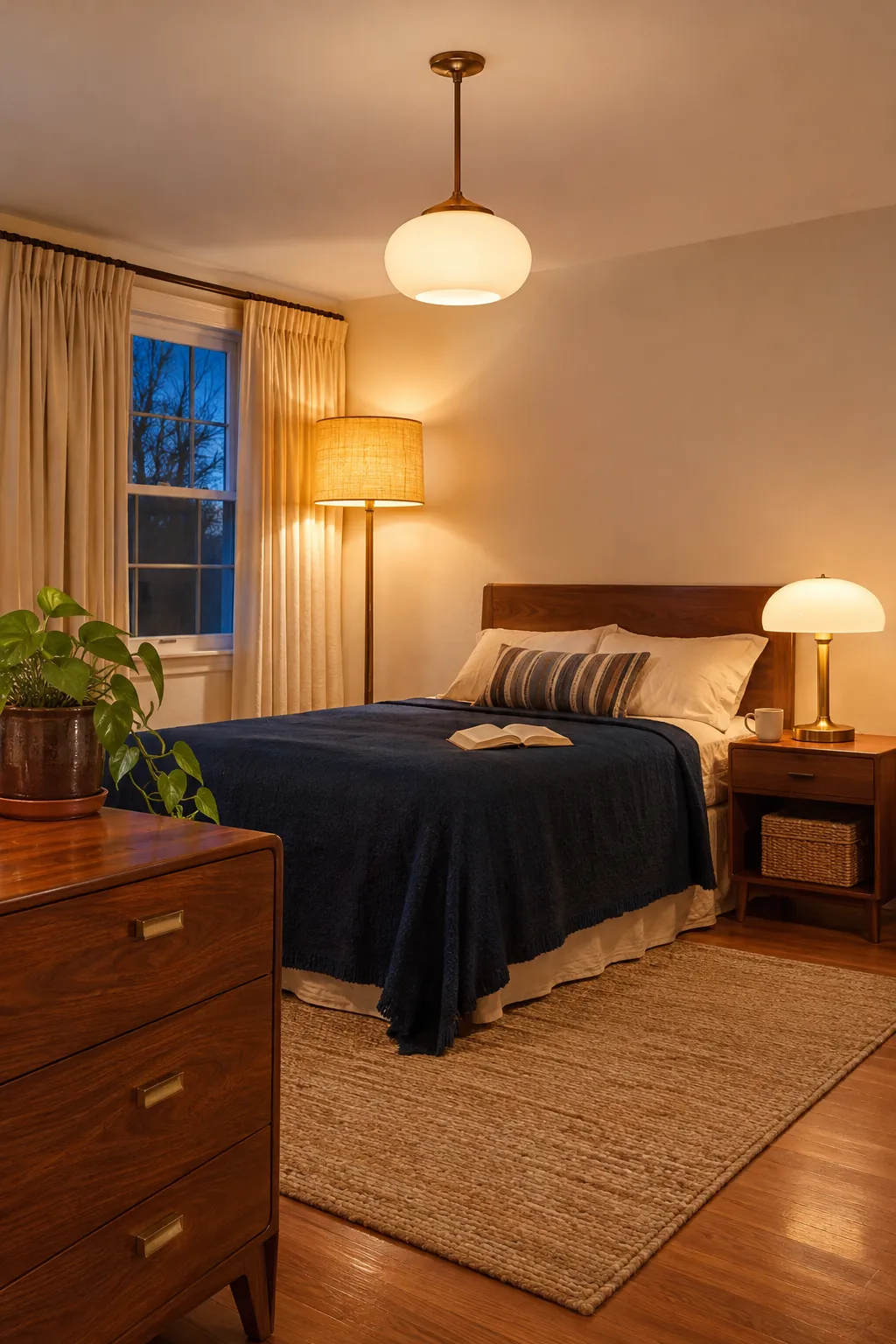
A ceiling fixture alone often makes a bedroom look flat and harsh. Combine a globe pendant, bedside mushroom lamp, and low reading light so evening tasks have separate sources. Warm bulbs can flatter wood and earth tones, but use shades that prevent glare near the bed.
Make Texture Do the Decorating
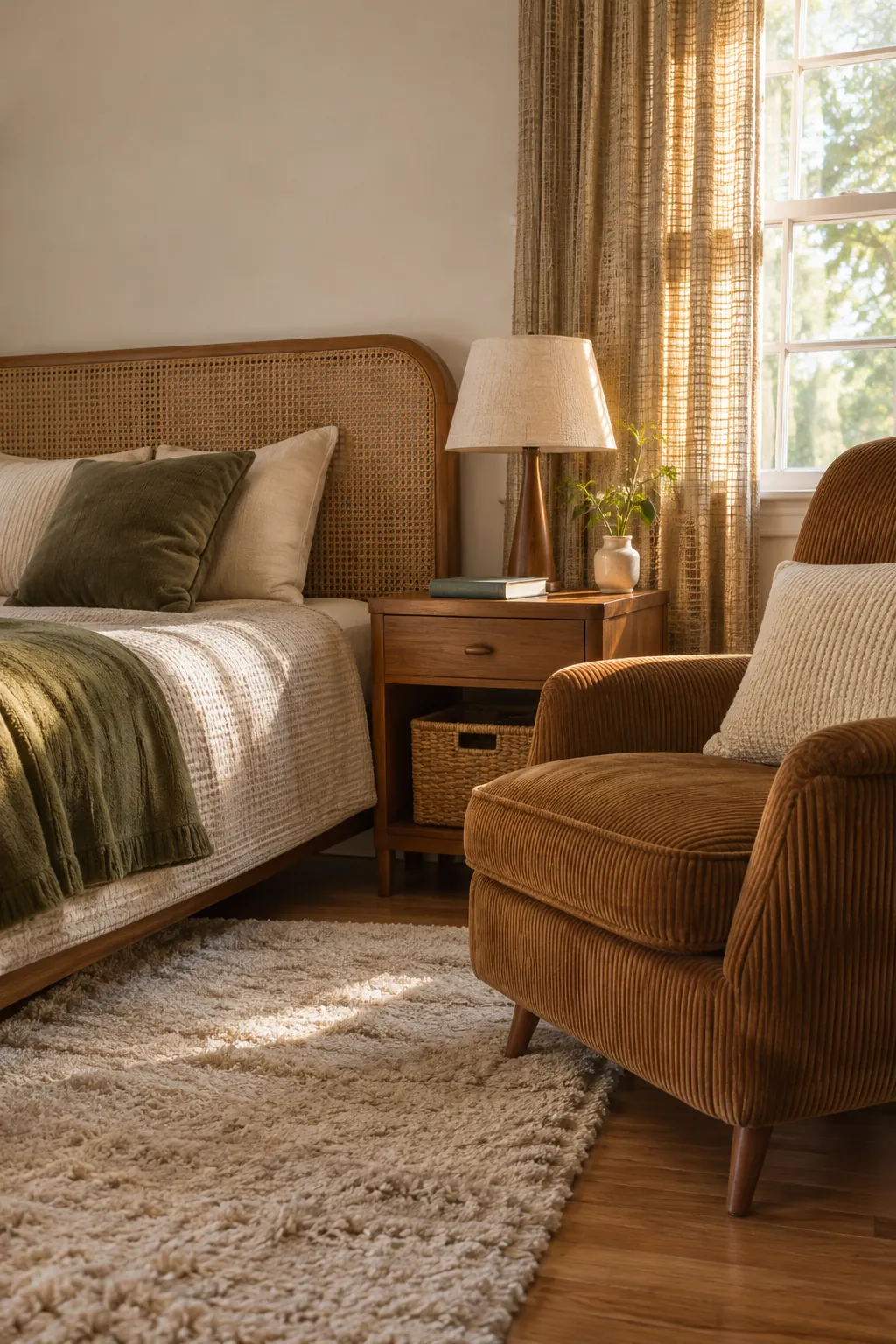
Corduroy, cane, shag wool, and woven curtains can create a 70s bedroom aesthetic even when the walls stay plain. Give each texture a different job, such as seating, storage, floor softness, or light control. Stop after three or four strong materials so dusting and laundry remain manageable.
Edit the Room Before Adding More
A maximalist bedroom still needs clear floor space and a place for ordinary objects. Remove unrelated colors, duplicate small decor, and furniture that blocks drawers before shopping for another vintage piece. The remaining collection will look more personal because every object supports the palette or the way the room is used.