
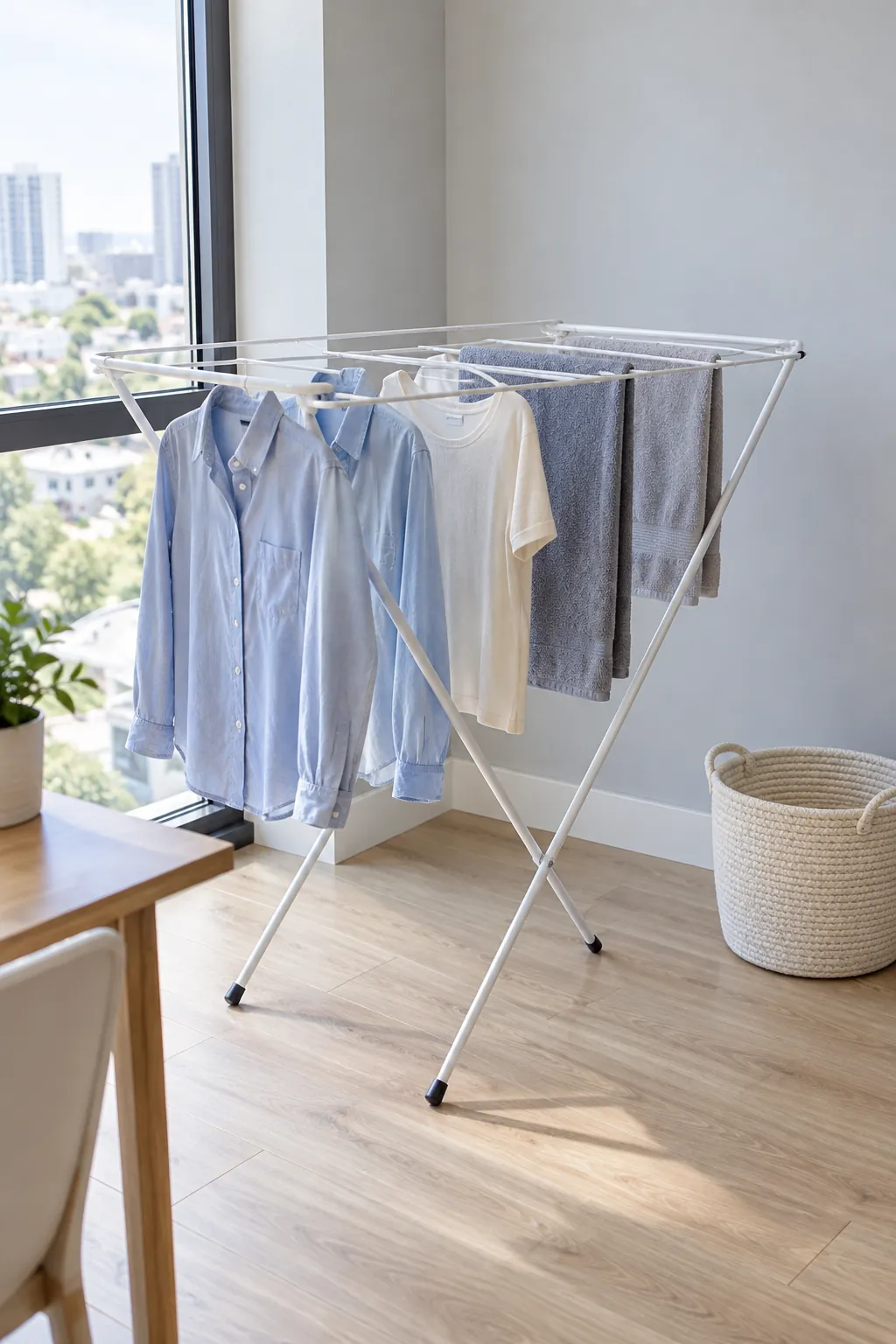
A rack full of wet clothes can take over the room while the thick seams stay damp. The solution is to remove as much water as the fabric allows, leave air around each item, and give that moisture a way out of the apartment. More heat alone will not solve a room that is already humid.
Start with less water in the fabric
Check the garment care label before choosing the wash and spin settings. For suitable fabrics, the highest permitted spin speed removes more water before the clothes ever reach a rack. Delicate items may need a gentler setting, so do not apply the same approach to every load.
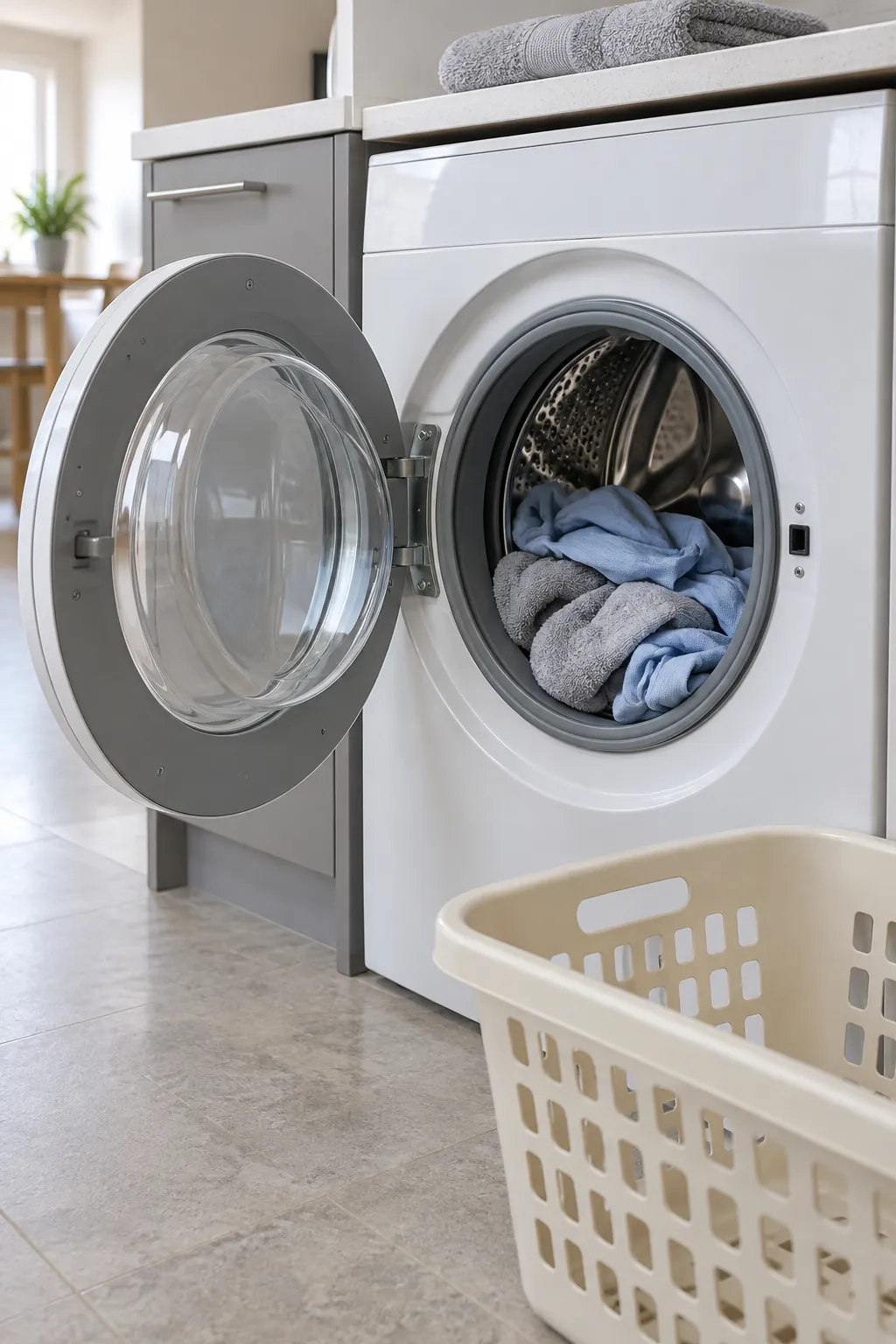
Take laundry out as soon as the cycle finishes and separate items that have twisted together. Shake out shirts, open trouser legs, and smooth bunched hems before hanging. Clothes left in a damp pile lose valuable drying time and can develop an unpleasant smell.
For an item that must not be strongly spun, gently press water out as its care instructions allow. A clean dry towel can help absorb excess moisture when the garment is rolled inside it and pressed. Avoid wringing fabrics that could stretch or lose their shape.
Choose a rack location that can release moisture
Put the rack in a space where air can circulate and moisture can leave through suitable ventilation or a dehumidifier. Keep fabric away from cold walls, curtains, upholstered furniture, and other surfaces it could dampen. The sunniest corner is not automatically the best spot if it traps humid air.
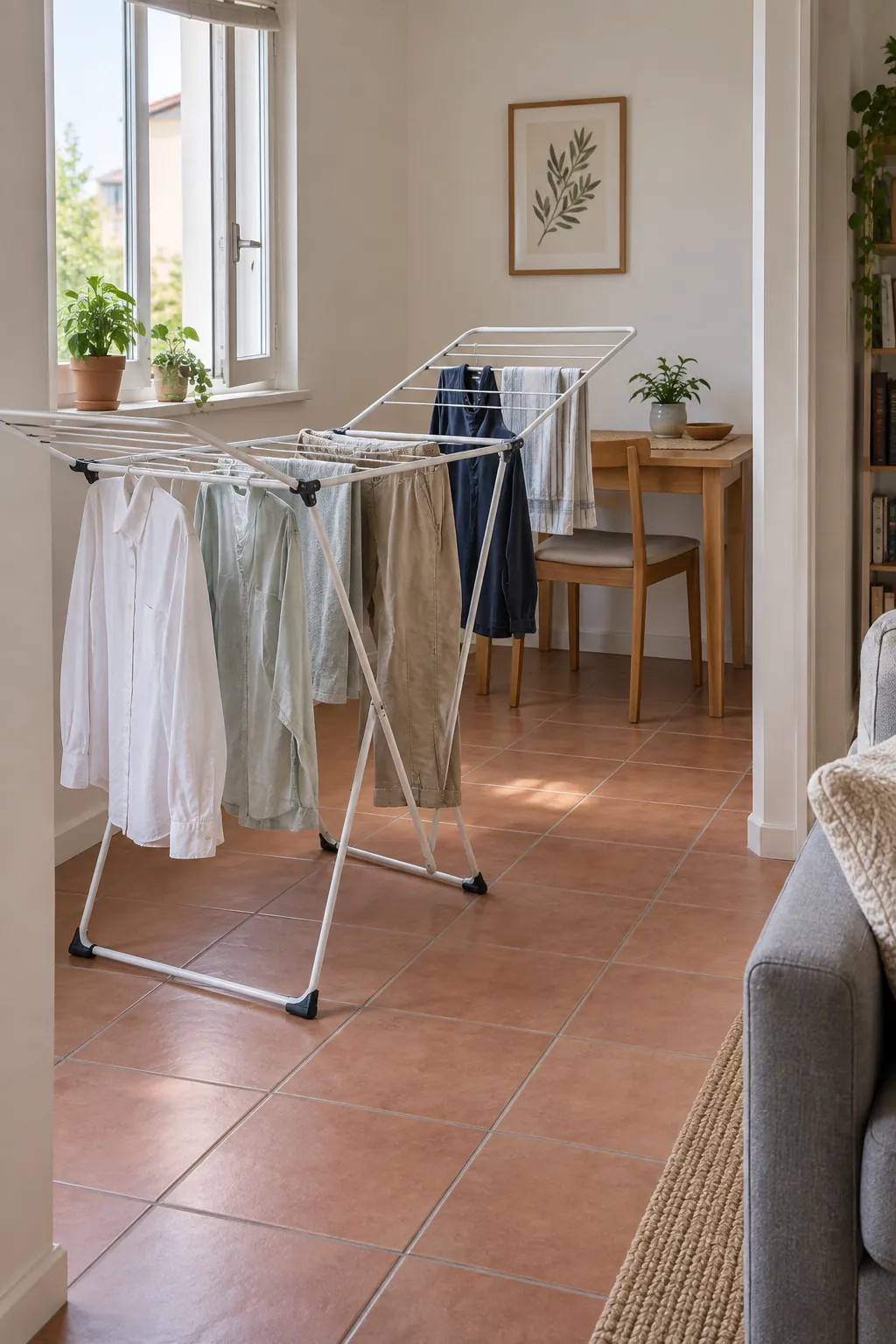
In a studio apartment layout, measure the rack with its wings open and clothes hanging from it. Keep the entrance, bathroom route, exits, and heaters clear. A compact upright rack saves floor width, while a broad folding rack can provide better separation for larger pieces if you have room to open it.
A bathroom can be useful only if it has effective ventilation and is not already staying wet from showers. Do not put ordinary electrical fans or dehumidifiers in a wet area unless their instructions explicitly allow that use and the installation is safe. A room with persistent condensation needs a moisture solution before it becomes your regular drying room.
Leave air gaps instead of filling every rail
Hang clothes so neighboring items do not press together. Spread heavier pieces across more than one rail when the rack and care label permit it, and keep sleeves and trouser legs from folding into thick bundles. A rack packed to its limit can leave the middle of the load damp long after the outside feels dry.
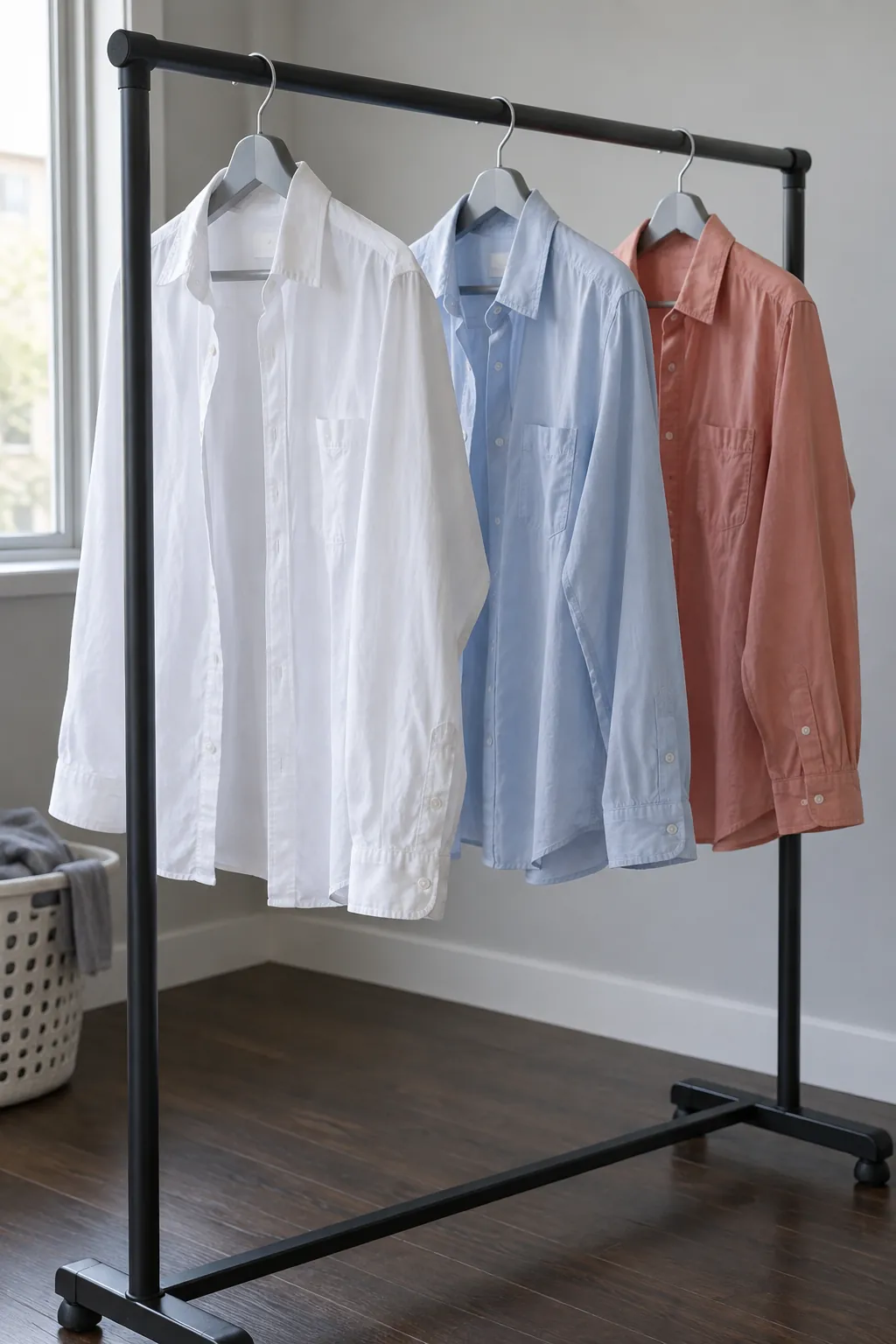
Use suitable hangers for lightweight shirts and leave space between them on a stable rail intended to support the wet load. Do not rely on curtain poles, loose hooks, or a tension rod beyond its rated capacity. Heavy knitwear usually needs different handling because hanging can pull it out of shape.
Check the load partway through and move items if surfaces are touching. Turn thick seams or folded areas toward the available airflow. If you consistently run out of gaps, wash smaller loads rather than adding another layer of wet clothing over the top.
Pair moving air with a way to remove humidity
A fan can move air past wet fabric, but it does not remove the water from the apartment. Position it safely on a dry stable surface, away from drips, with its cord outside the walkway. A gentle flow across the rack is more useful than leaving the clothes in still air.
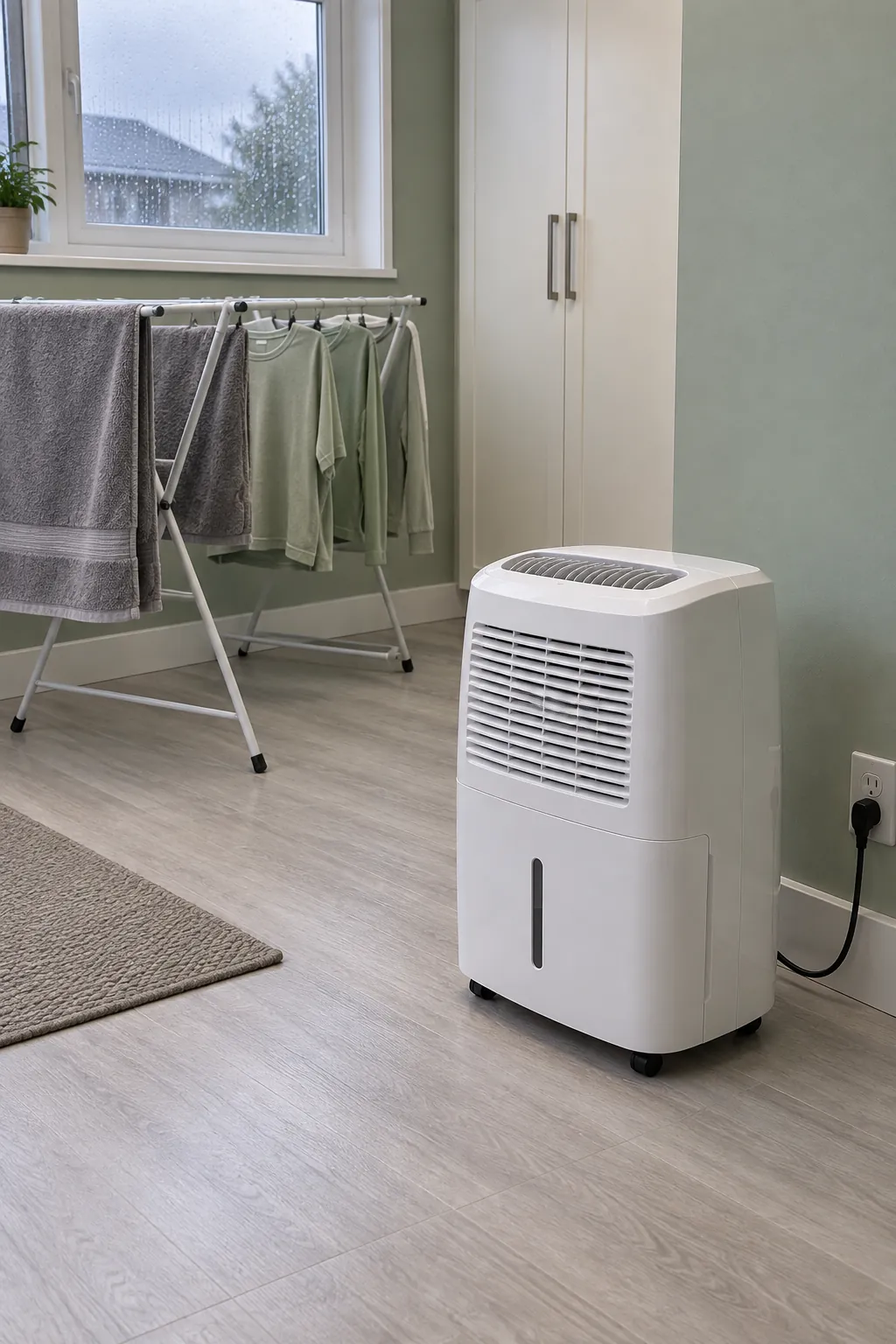
Ventilation helps when the incoming air can carry moisture away under your local conditions. In cold weather, a brief effective airing may be more practical than leaving a window barely open for hours. In very humid weather, open windows may provide little drying benefit or bring in more moisture.
A dehumidifier can help when indoor humidity is the limiting factor. Choose one suitable for the room size and operating temperature, follow its clearance instructions, and keep laundry from dripping onto it or covering its intake and outlet. Empty the tank or use the approved drainage arrangement, and clean the filter as directed.
When using a dehumidifier, follow its instructions about keeping doors and windows closed so it is treating the intended room. A simple hygrometer can help you notice whether humidity falls or continues rising during drying. Persistent window condensation, damp patches, or recurring mold call for investigating ventilation, leaks, and building conditions rather than simply running a larger load of laundry.
Give thick and delicate items their own plan
Towels, jeans, and dense seams usually need more exposure than thin shirts. Place bulky pieces where air reaches both sides and avoid overlapping several layers on one bar. Check pockets, waistbands, cuffs, and towel folds instead of judging dryness only from the outer surface.
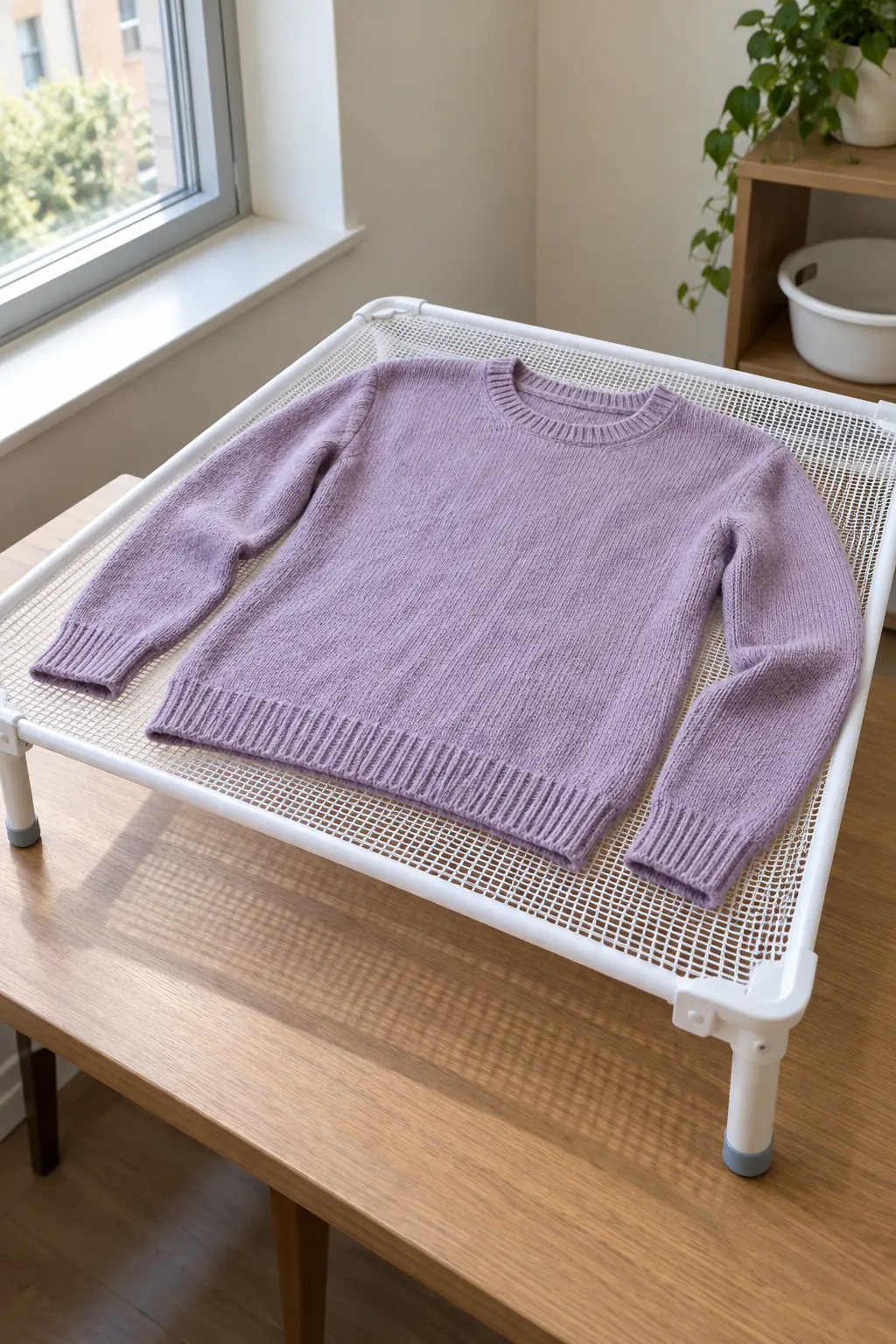
Lay garments marked for flat drying on an appropriate clean mesh surface and reshape them according to the care label. A wet sweater hanging from its shoulders can stretch even when the room conditions are otherwise good. Keep the mesh supported and leave room for air beneath it.
If large bedding overwhelms the rack or the apartment cannot manage the added moisture, use a suitable shared dryer or laundromat when the care label permits. Do not drape clothes over a portable heater or use an oven to dry them. Heated airers also need their own operating clearances and approved accessories; improvised covers can create hazards.
Check for complete dryness before putting things away
Touch the thickest parts of each garment and unfold hidden areas before folding. Fabric that feels cool may still contain moisture, so give questionable areas more time with good airflow. There is no dependable universal drying time because fabric, spin performance, temperature, humidity, and spacing all matter.
If clothes already smell musty, do not hide the odor with fragrance and place them in a cupboard. Rewash them according to the care label, then address the slow drying conditions. If freshly washed items smell before hanging, check detergent dosing and clean the washing machine according to its instructions as well.
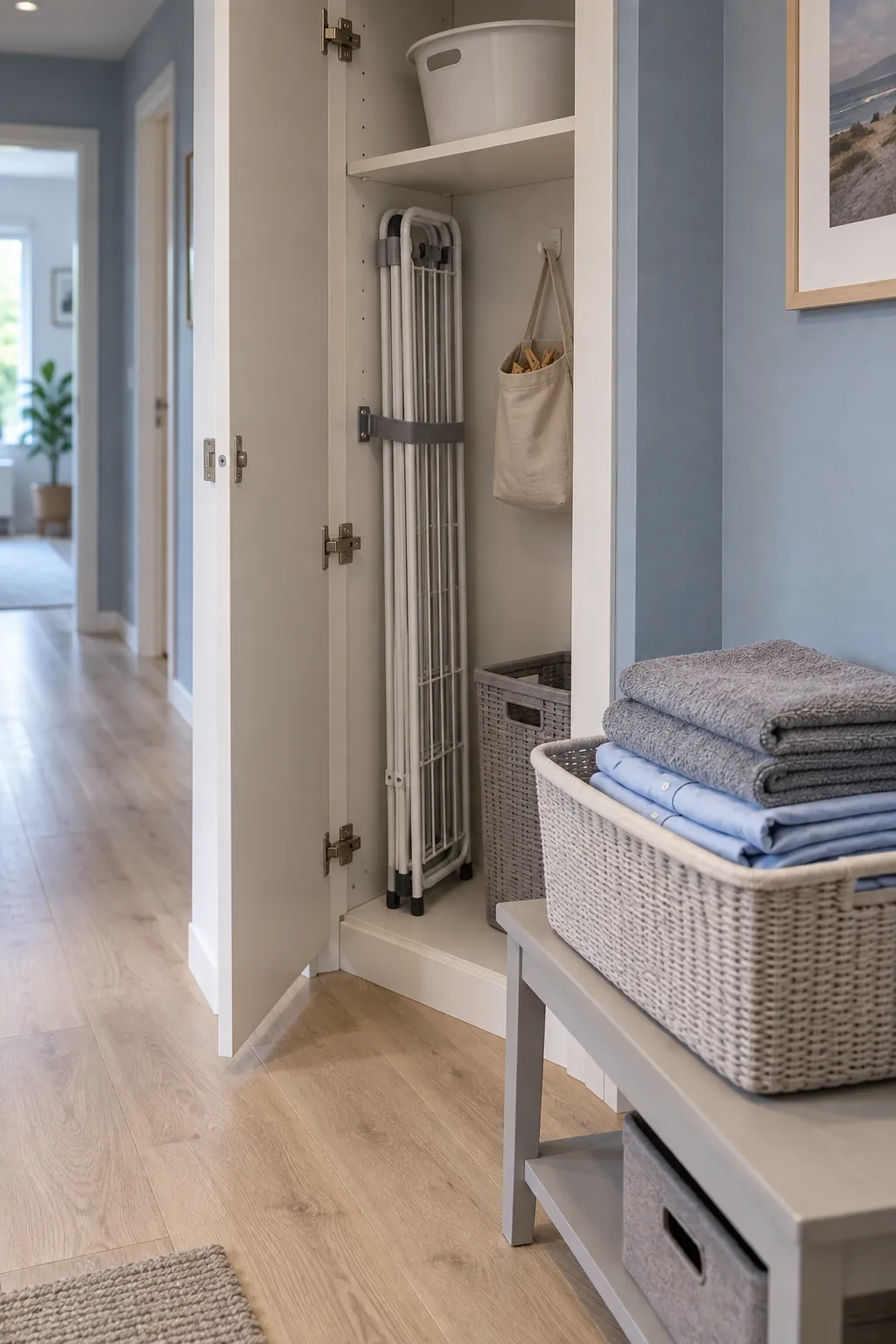
Once the load and rack are dry, fold the rack and store it where it will not block a door or fall into the room. Keeping pegs, hangers, and the laundry basket together makes small apartment organization easier. The useful routine is one you can finish: wash a manageable load, dry it fully, put it away, and give the floor back to daily life.