
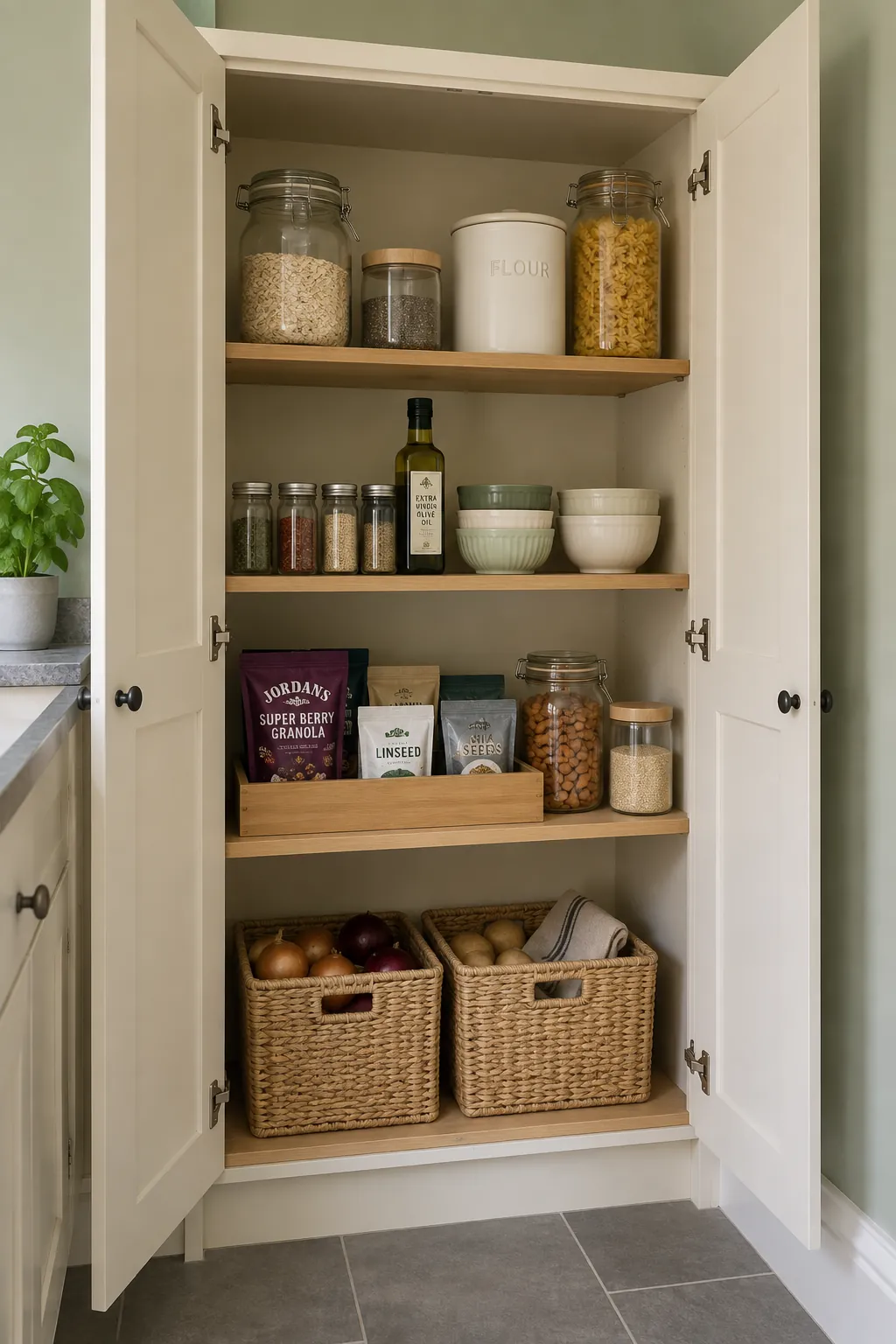
The awkward shelf usually announces itself at dinner time. A packet disappears behind a stack of tins, a serving tray pins the flour in place, or the floor fills with bags that have no assigned spot. Start with that specific frustration before buying another organizer.
The best change may be a shallower board, a removable tray, or one extra level inside a tall gap. These approaches suit different rooms and habits, so choose according to what you need to reach and how you need to remove it. Measure the opening as carefully as the storage space behind it.
Make a closet pantry shallower where food gets lost
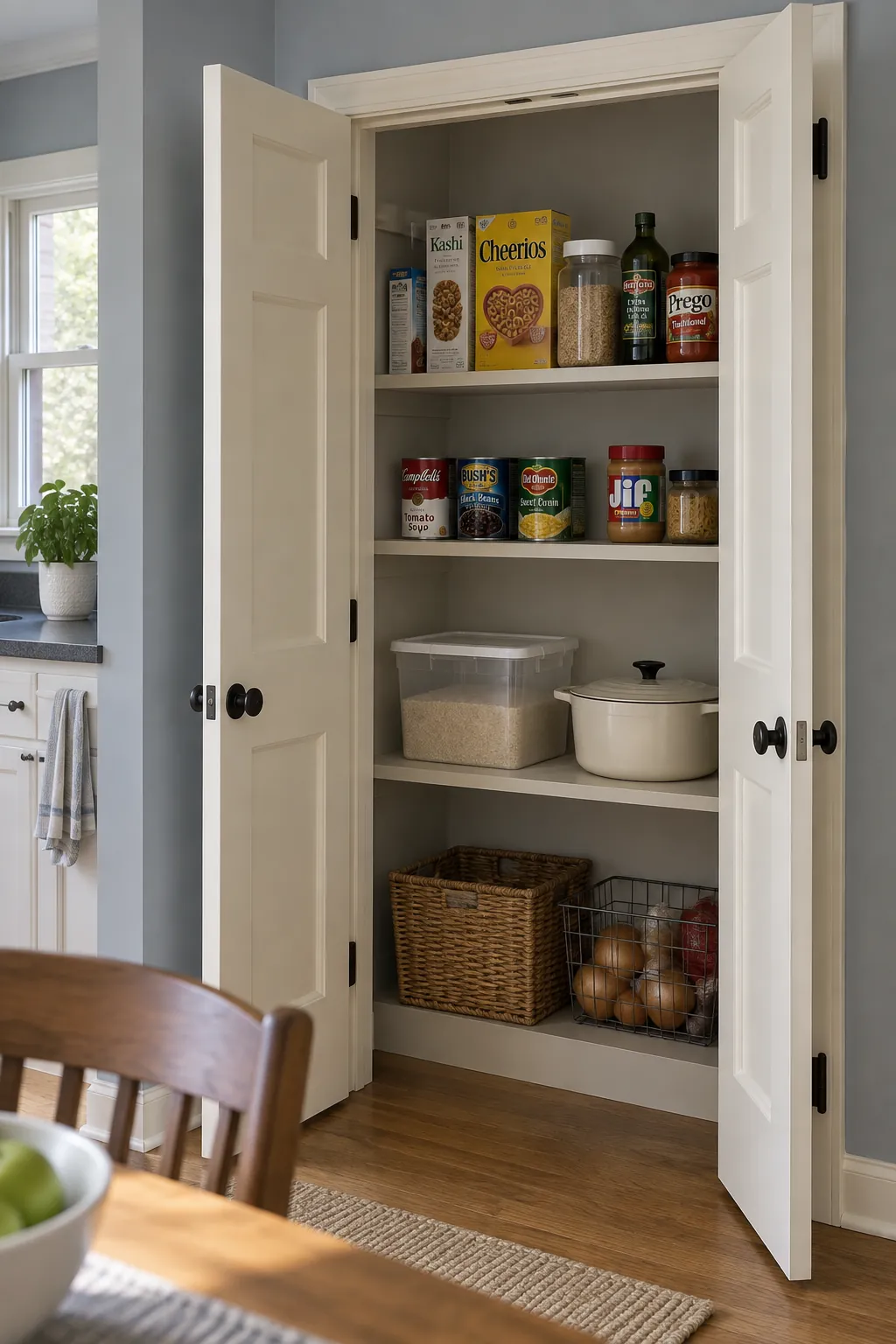
Deep boards across a small closet can hide food beyond both sides of a narrow doorway. Replacing some upper shelves with shallower ones can bring everyday ingredients into view while retaining deeper space below for larger supplies. Before altering anything, lay out your usual packages on a table and test how much depth a visible row actually needs.
For a closet turned pantry, map door hinges, trim, vents, and any service panels before planning a shelf run. Leave required access available rather than enclosing it behind fixed storage. Where the opening prevents you from reaching the sides, shorter side shelves may serve better than a deep wall to wall board. Keep the daily ingredients nearest the part you can reach comfortably.
Small closet pantry ideas also need a plan for the top. Light serving pieces can occupy an occasional use shelf, but do not turn that space into an overhead store for heavy bulk goods. Check how you will place and use a stable step stool without blocking the doorway.
Use removable trays to make deep shelves manageable
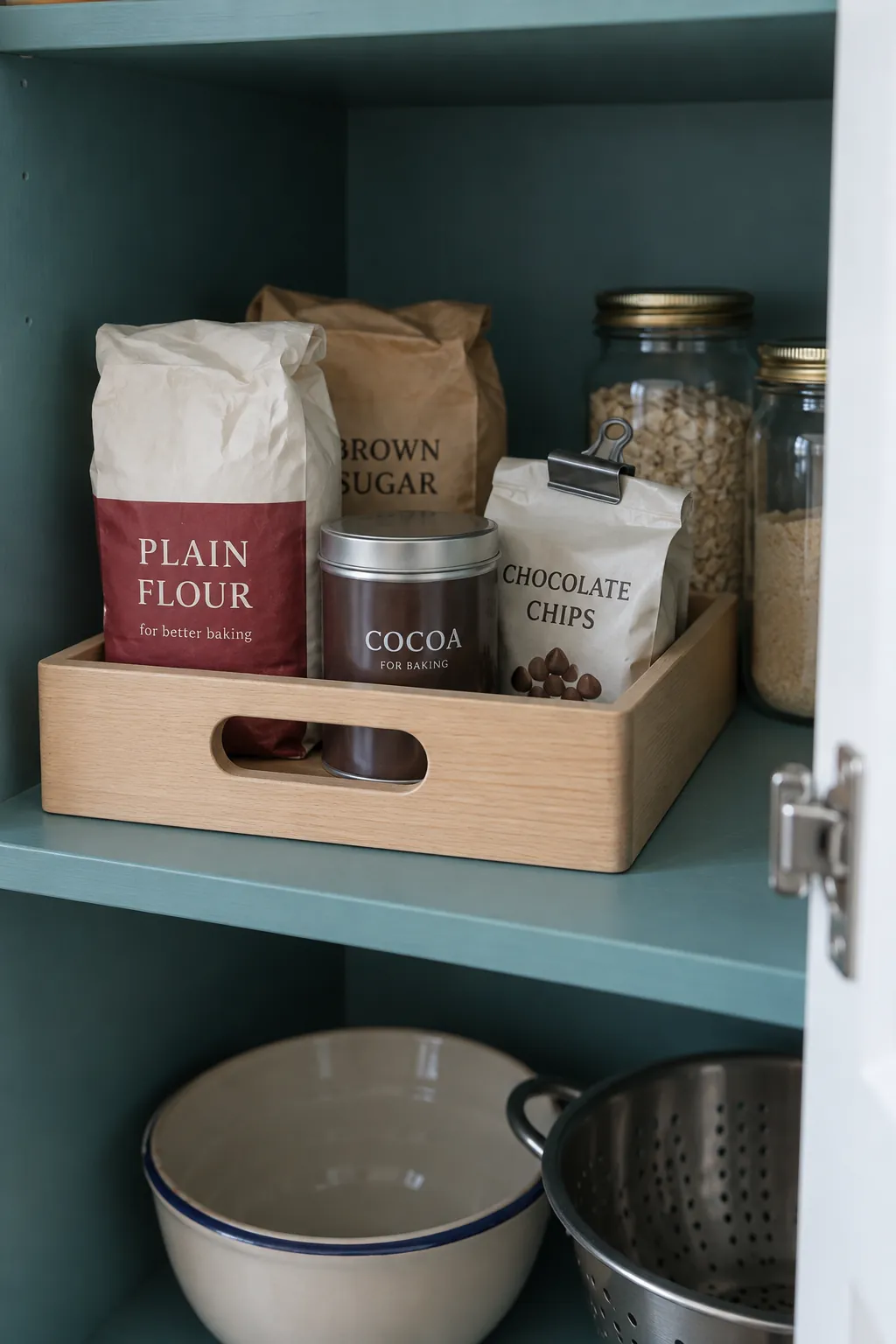
If the shelf itself works and replacement would be disruptive, group one category in a shallow tray with a usable handle. Baking packets, small snack bags, or drink supplies can come out together so you can see the contents. Choose a tray you can lift when full rather than the largest one that fits.
Measure the narrowest removal path, including the door opening and any bracket projecting into the bay. Test a cardboard outline before buying several matching trays. A handle that adds depth can make an otherwise suitable organizer collide with a door, and tall sides can hide the small packets you hoped to find more easily.
Keep related spare stock behind the active tray only if you can still retrieve it without unloading the whole shelf. A removable group should reduce the number of movements, not turn an ordinary ingredient into a heavy lifting exercise. Leave some visible space so fresh groceries have somewhere to go.
Add a riser where the unused space is above small items
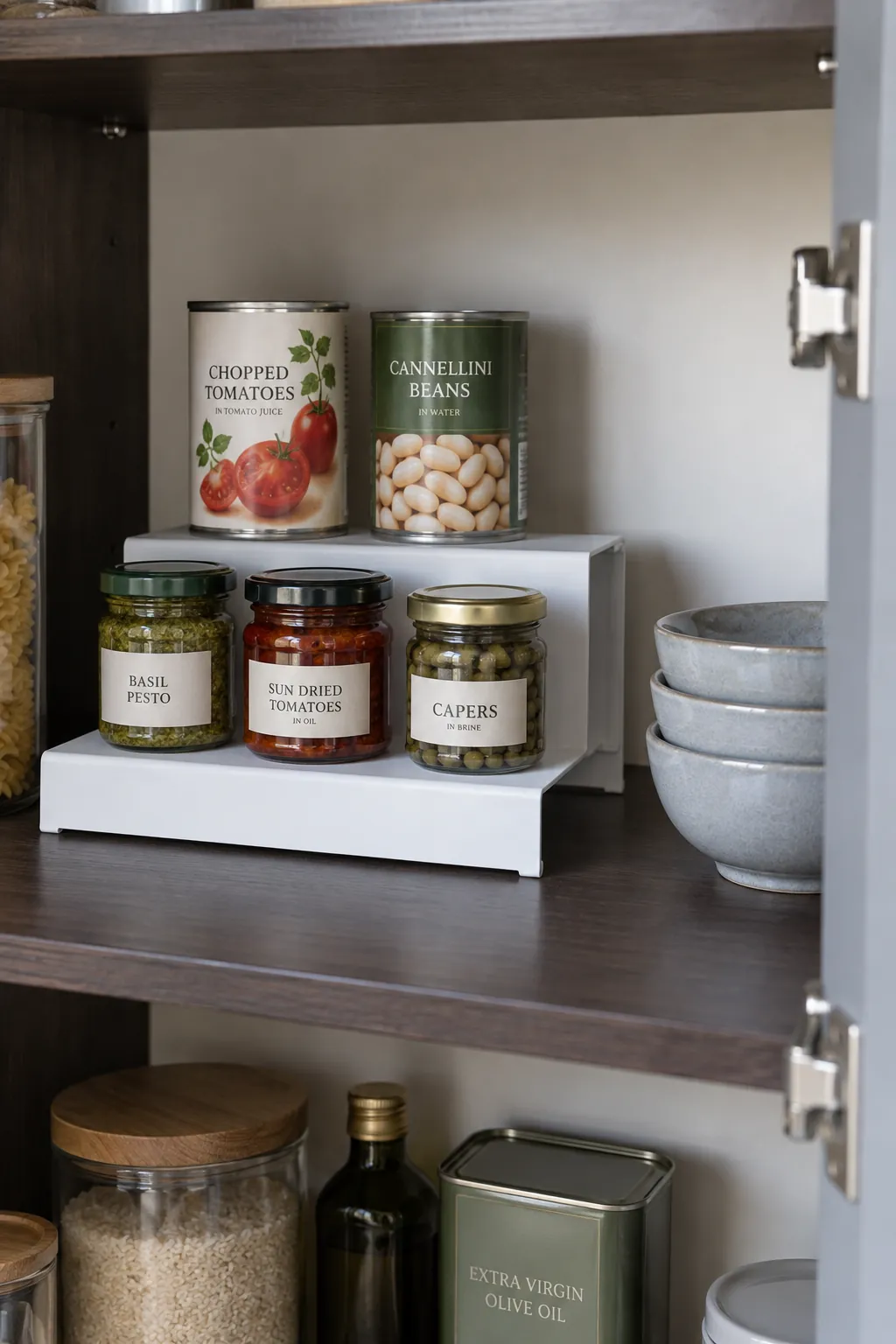
A short shelf insert can create a second level inside an oversized vertical gap. It suits sturdy items such as small tins or cups when the existing board is sound and the insert is rated for the intended load. Position it so the lower objects remain visible and your hand can reach underneath without knocking the upper row.
A stepped riser does a different job: it raises the back row so labels are easier to see. Try it with a small collection of similar containers rather than assuming it belongs on every shelf. Check headroom above the tallest item on the highest step. For pantry ideas for small spaces, improving visibility in one crowded area can be more useful than filling every gap.
Give the space below existing shelves a defined role
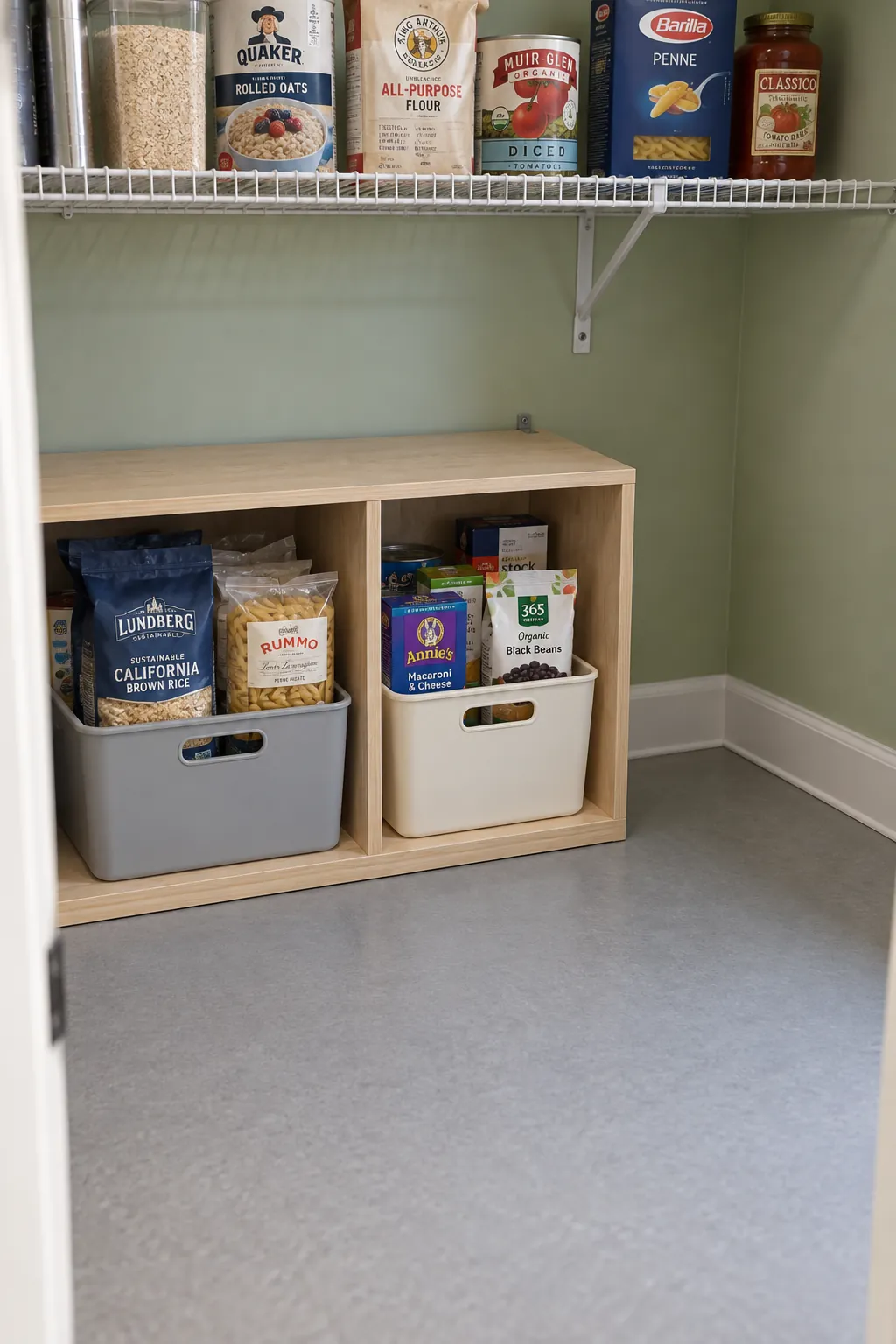
An empty floor area can become a pile of shopping bags because nothing tells you where each category belongs. A low shelf with removable bins can give that area a clear structure while keeping the contents off the floor. Pick bin heights that let you see what is inside without pulling every container out.
Use heavier supplies at a manageable low height and keep the route into the pantry open. If you add a freestanding unit, follow its anchoring instructions and check that doors, drawers, and baskets can open fully. Do not treat leftover floor space as permission to obstruct vents or utility access. In a narrow walk in pantry, one low bay at the end may be enough.
Make cleaning part of the choice. A removable bin is easier to empty and wipe than a permanent heap tucked under a deep shelf. Keep food sealed appropriately, retain its date information, and separate household cleaning supplies from groceries.
Let a short return shelf solve an awkward corner
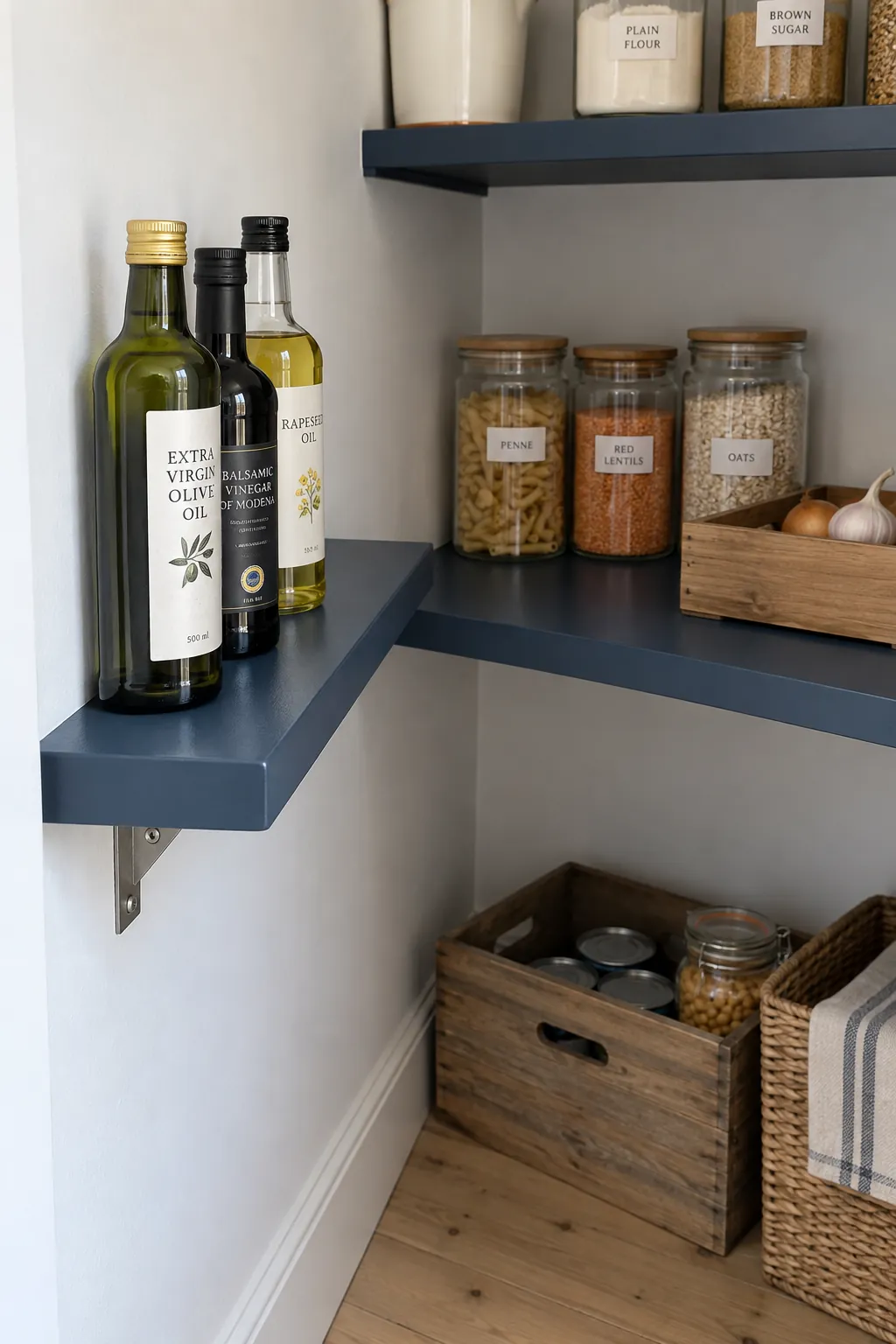
A corner does not always need a continuous wrap of shelving. A short return on the side wall can hold a narrow category while leaving the deeper rear run accessible. Mock up both shelf edges first and confirm that you can reach the junction from the actual standing position.
Small corner pantry ideas work best when the objects suit the shape. A short line of bottles may fit a shallow side shelf, while a broad appliance belongs elsewhere. If two boards meet, plan their supports and connection as part of the installation rather than relying on the corner to hold itself. Have the shelf system or installer account for the expected load and wall construction.
Avoid filling the back corner with a large opaque basket just because it fits. That can recreate the hidden storage problem in a tidier package. An open tray, a few visible containers, or even a deliberate empty gap may make the whole arrangement easier to use.
Reserve a clear bay for the tasks you repeat
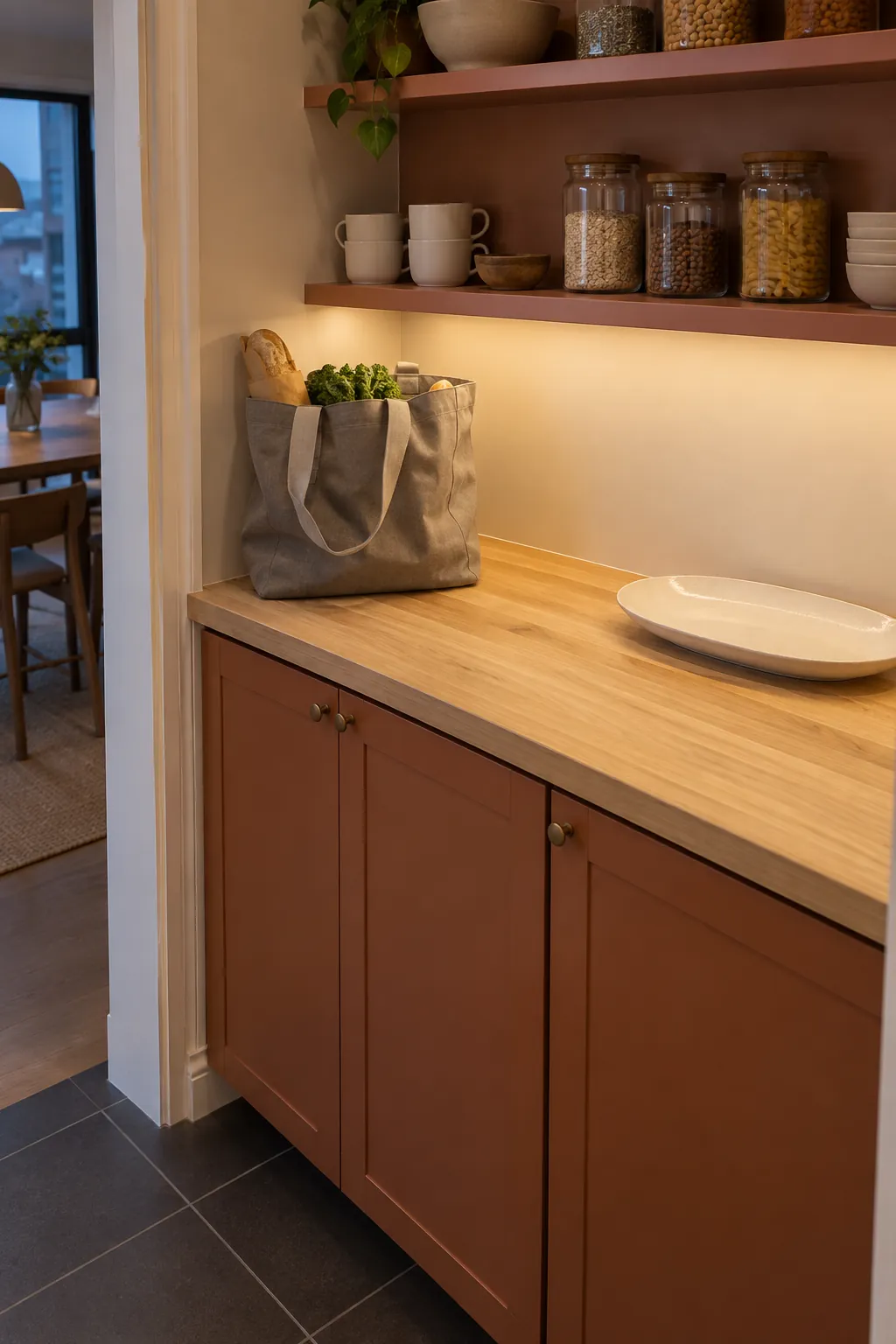
A mini butlers pantry does not need a full wall of cabinetry to earn its space. One clear work bay between storage levels can hold a grocery bag while you unpack or a serving tray while you gather dishes. Test those tasks on an existing shelf or temporary surface before deciding whether a counter belongs in your mini pantry design.
Keep the shelf above far enough back and high enough for the actual task. If you plan to operate an appliance there, follow its clearance and ventilation instructions and have the electrical requirements checked; storage alone does not make a suitable operating station. A simple landing bay may deliver the benefit without adding appliances, plumbing, or a deep counter.
Choose one change and live with it through a grocery refill before repeating it across the room. Note whether the item that used to disappear is easier to find and whether everyone can put it back in the same place. Keep the solution that makes the next meal simpler, even if that means leaving a shelf partly empty.