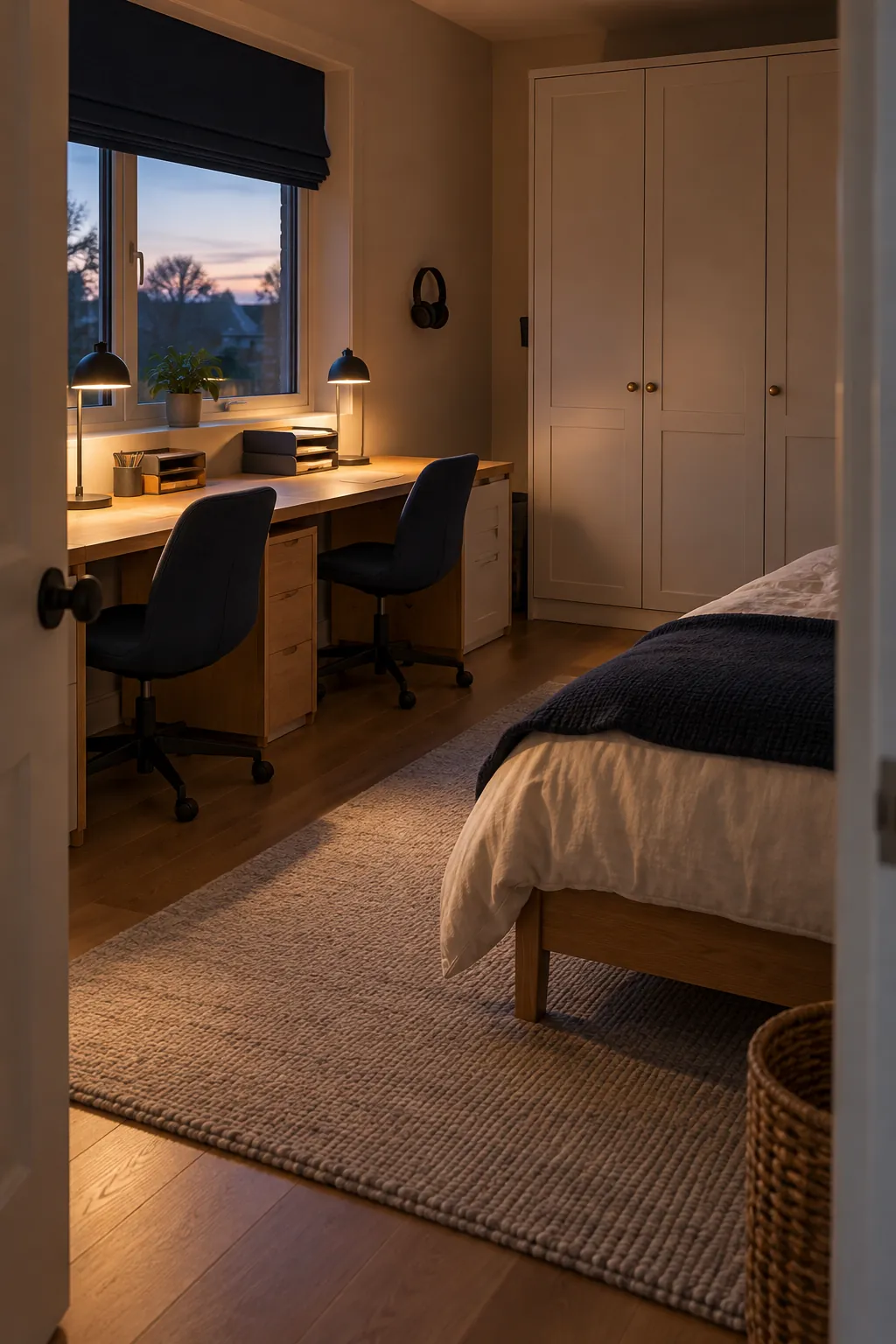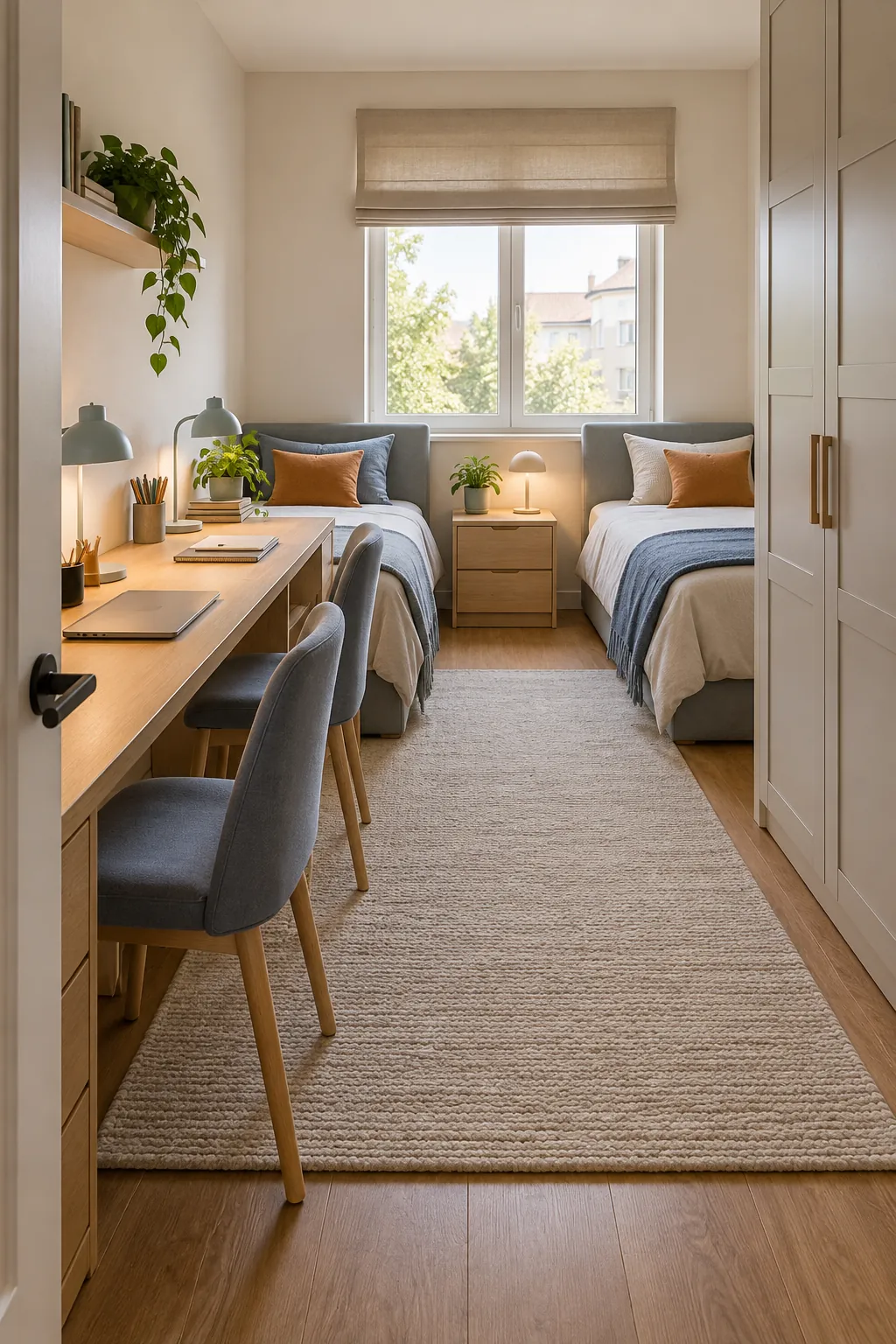
Two desks do not help if their chairs block drawers, closet doors, or the only clear route through the room. The first job is to protect the clothing volume the children already need. The second is to create two usable work positions with enough light, knee room, and personal supply storage.
Measure the Working Clearances Before Furniture
Draw the room with the beds, door swing, closet opening, radiator, and window before choosing desks. Mark the depth of an occupied chair, not only the depth of the worktop. A slim desk that blocks a wardrobe drawer every evening is not space saving.
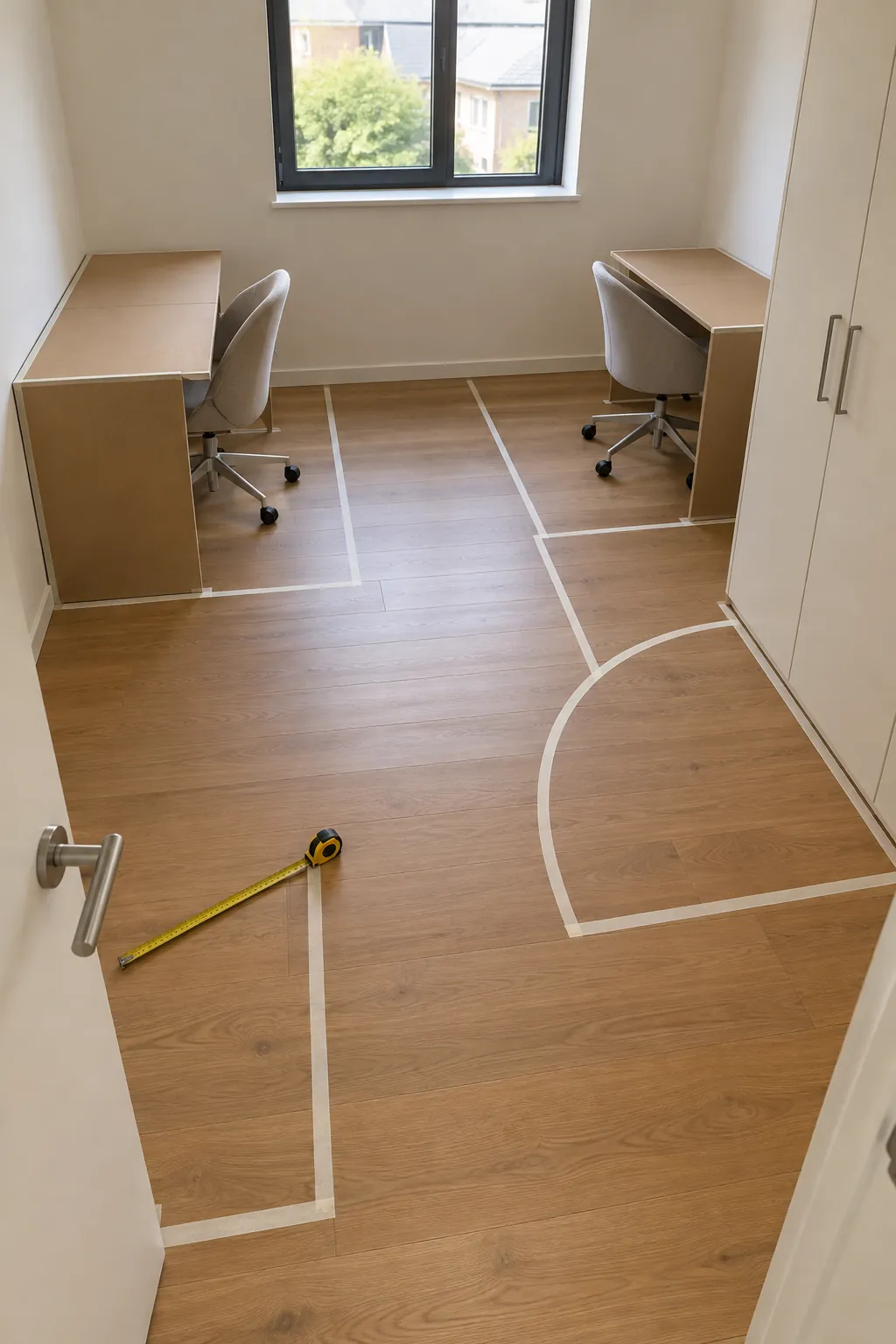
Choose One Long Desk Instead of Two Cabinets
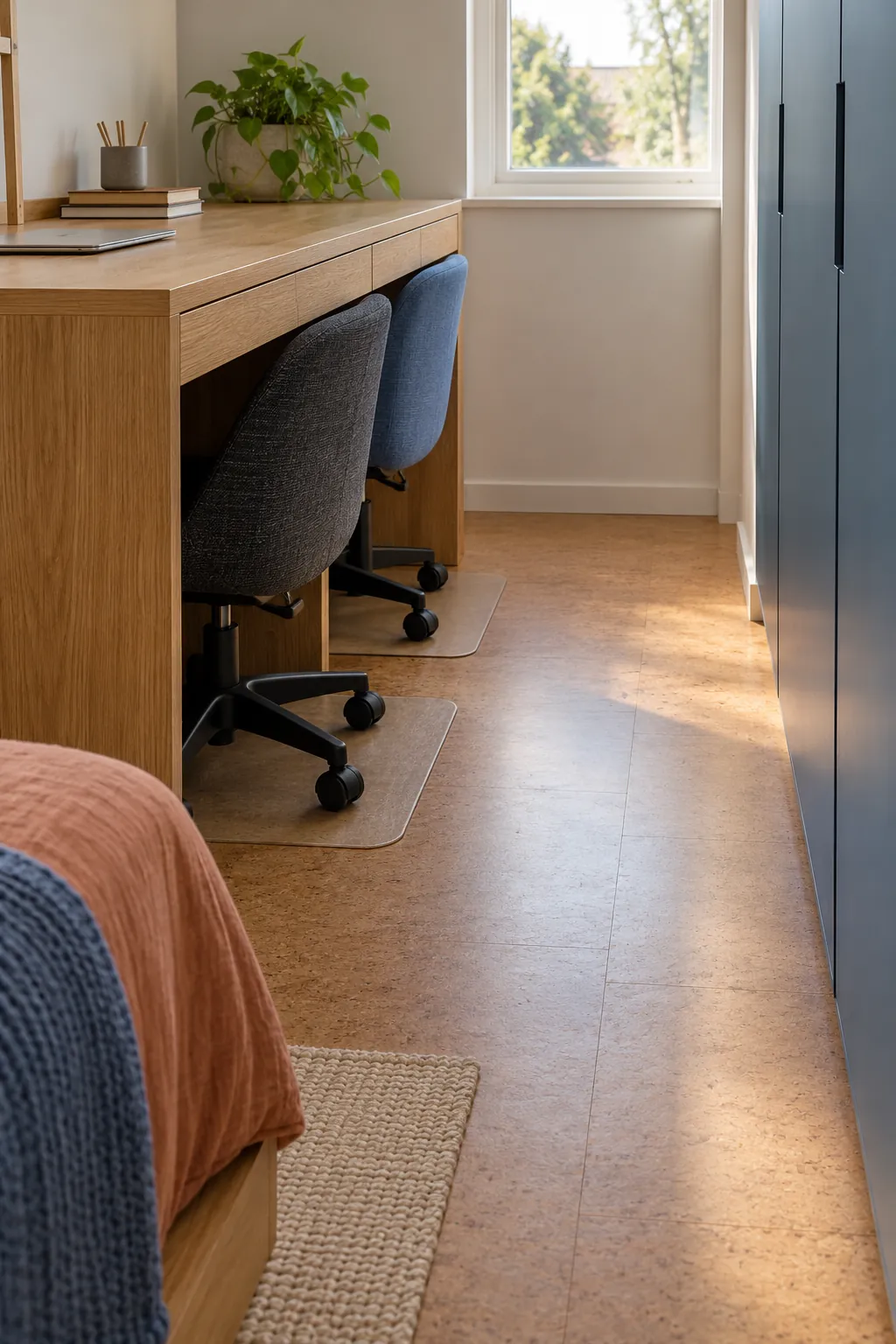
A continuous worktop can provide two seats with fewer legs and gaps than separate desks. Mount one shallow drawer beneath each seat and keep the center open for cables or a shared lamp. This arrangement works best on the longest uninterrupted wall, where both chairs can move without entering the closet path.
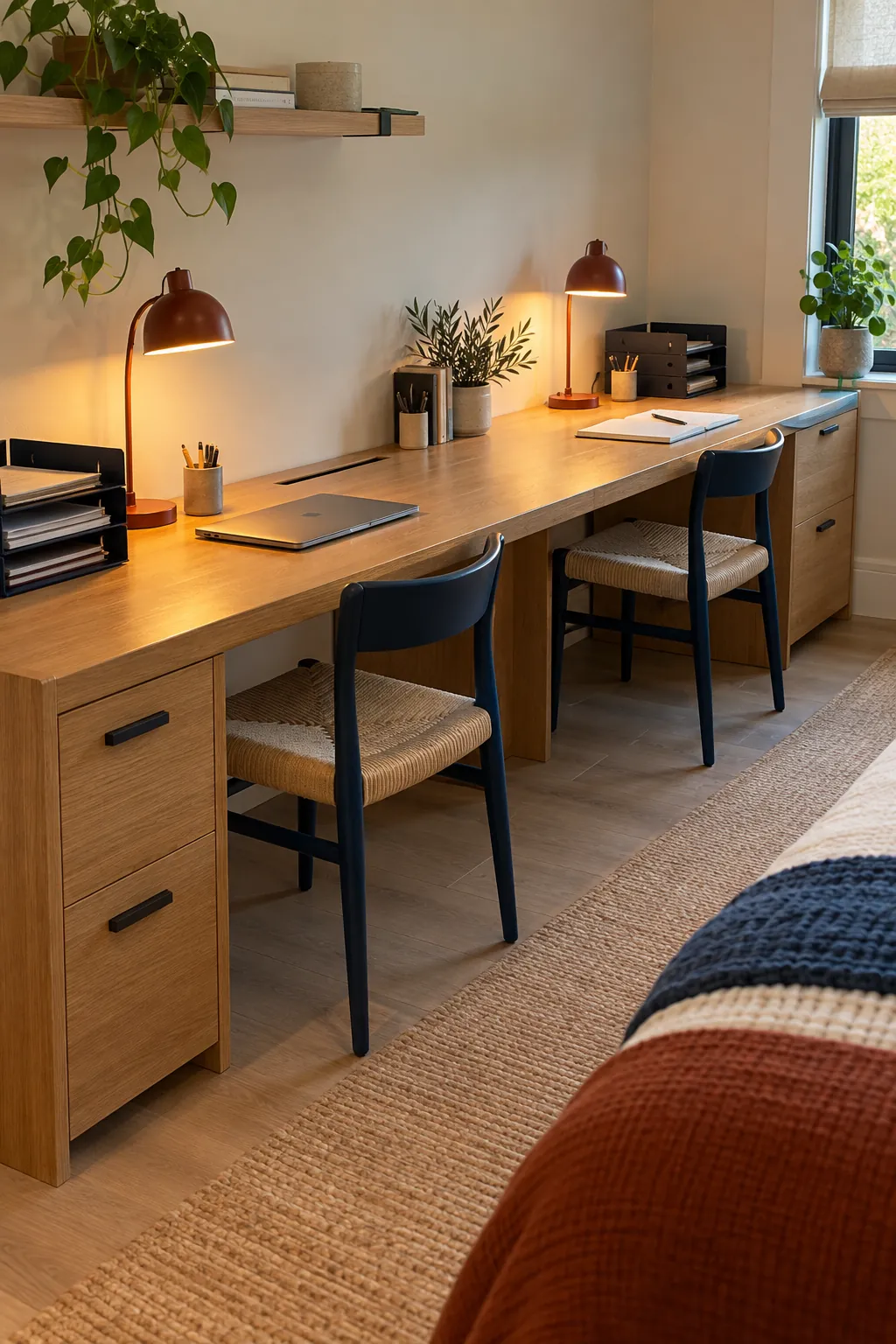
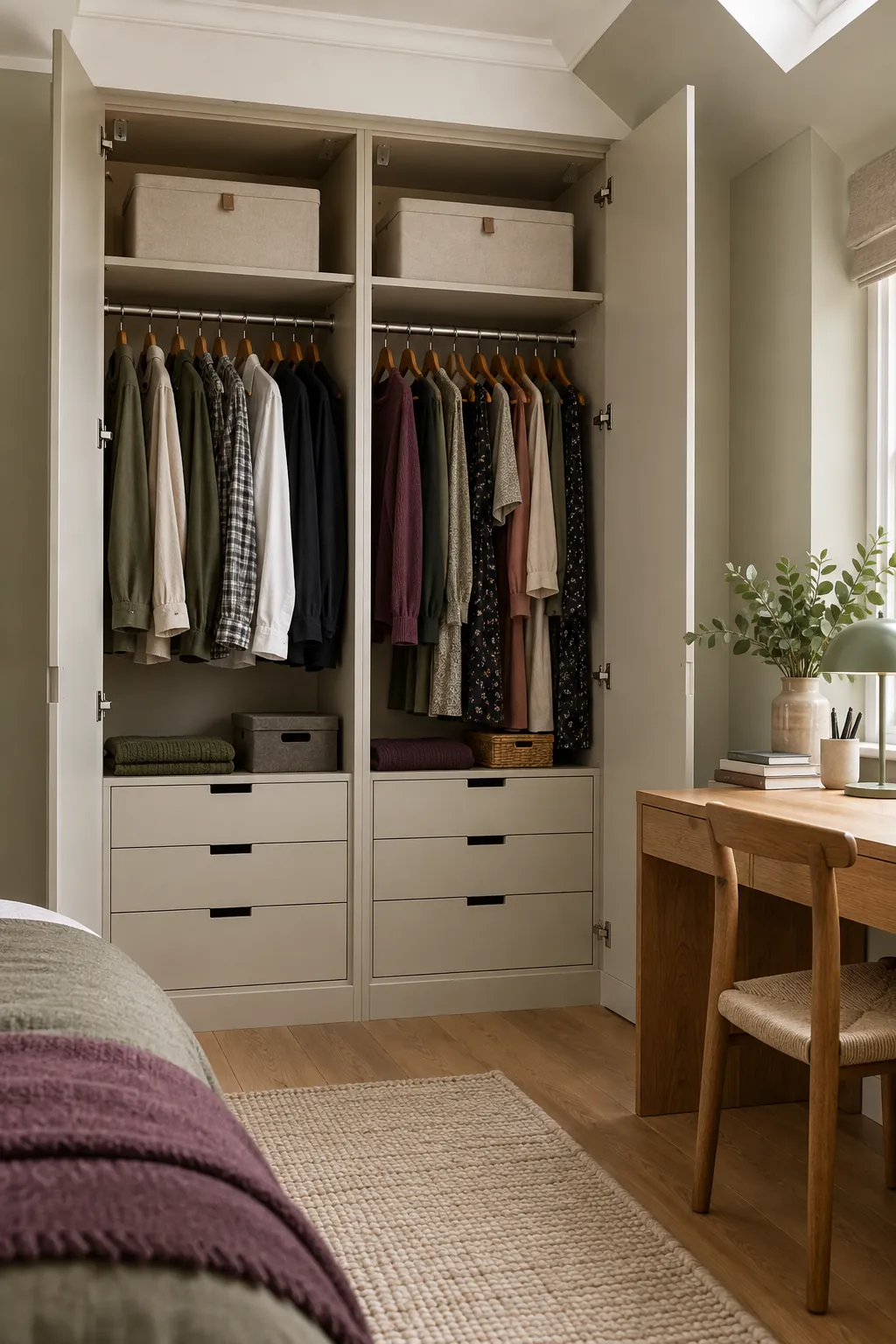
Keep Clothing in Tall Storage Columns
Replace short wide dressers only when a tall anchored wardrobe can hold the same clothing categories safely. Give each child one vertical column with low daily drawers and high seasonal shelves. Tall storage frees wall width for desks, but it should never place heavy boxes above a child.
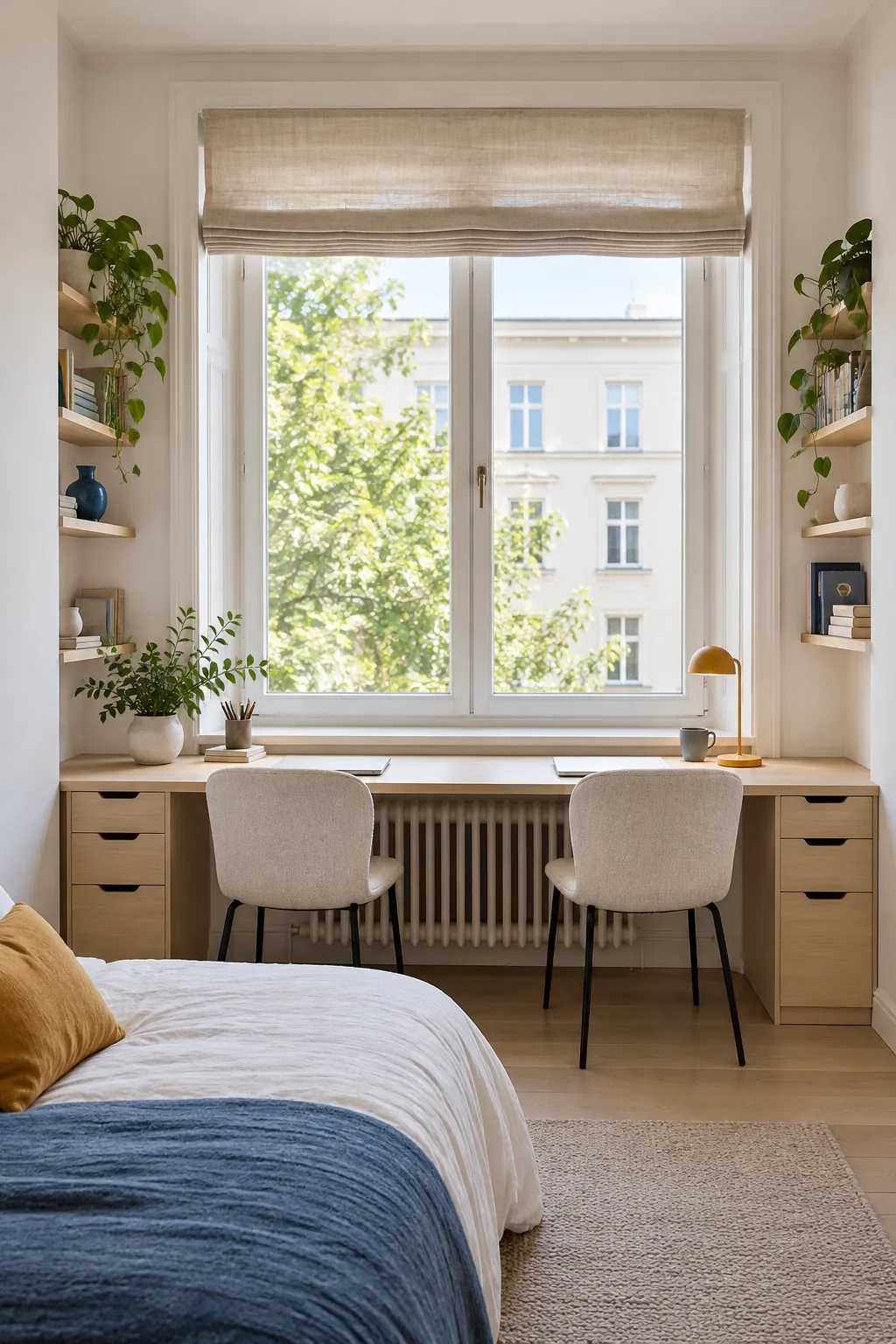
Use the Window Wall Without Blocking Light
A shallow desk beneath a window can use a difficult wall while preserving wardrobes elsewhere. Keep the top below the sill and leave heating vents clear. Add side shelves rather than a tall hutch so both children receive daylight and the room does not feel closed in.
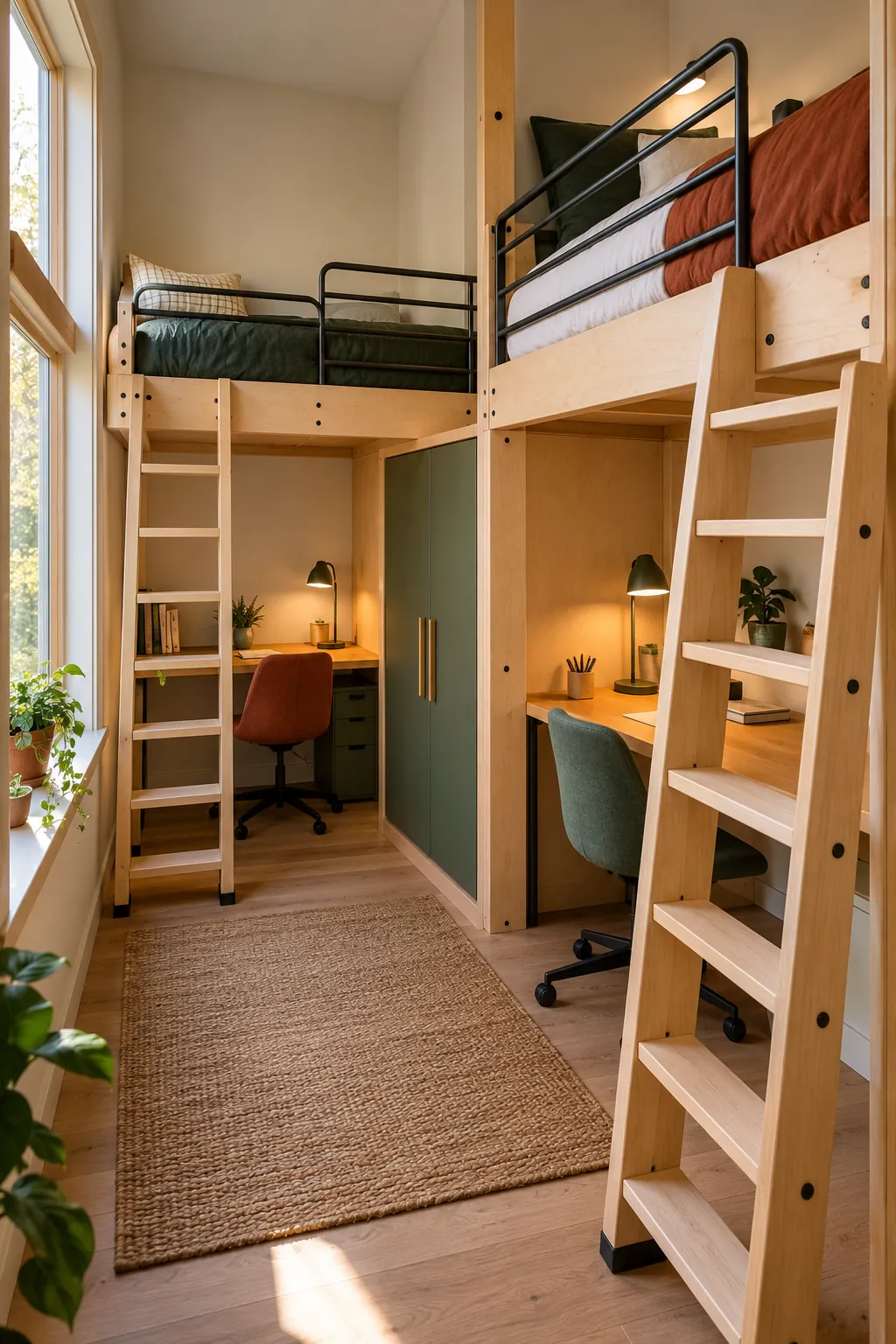
Turn One Bed Wall Into a Lofted Study Zone
When floor width is extremely limited, one or two lofted beds can place work surfaces beneath sleeping space. Check ceiling height, guard rails, ladder clearance, and the children’s ages before using this plan. Clothes can remain in a full wardrobe because the desks no longer compete for a separate wall.
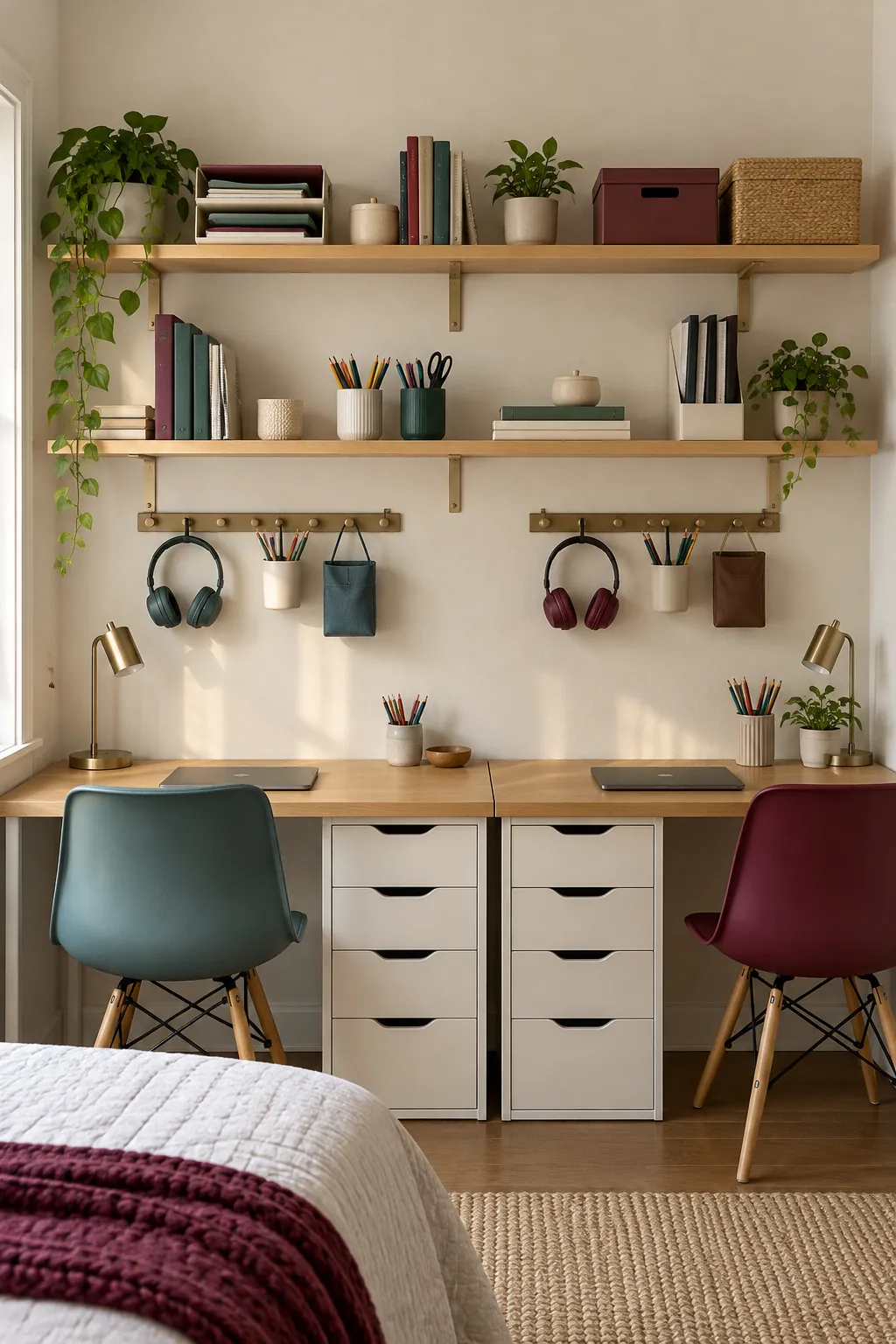
Build Supply Storage Upward
Use shallow shelves, peg cups, or magnetic rails above each desk for light school supplies. Keep frequently used items within comfortable reach and place display objects higher. This protects desk surface without stealing the deep storage needed for folded clothing.
Give Each Chair a Parking Position
Chairs cause more circulation trouble than narrow worktops when they have no place to tuck away. Choose armless models that slide fully beneath the desk and mark each position with a small rug pad or floor protector. Test the layout with chairs pulled out before fixing shelves or wardrobes in place.
Protect the Evening Reset
End each work period by clearing papers into personal trays, hanging headphones, and pushing both chairs home. Clothes should return to the wardrobe without crossing the study surface. If the room cannot reset in a few minutes, reduce desk supplies before removing more clothing capacity.