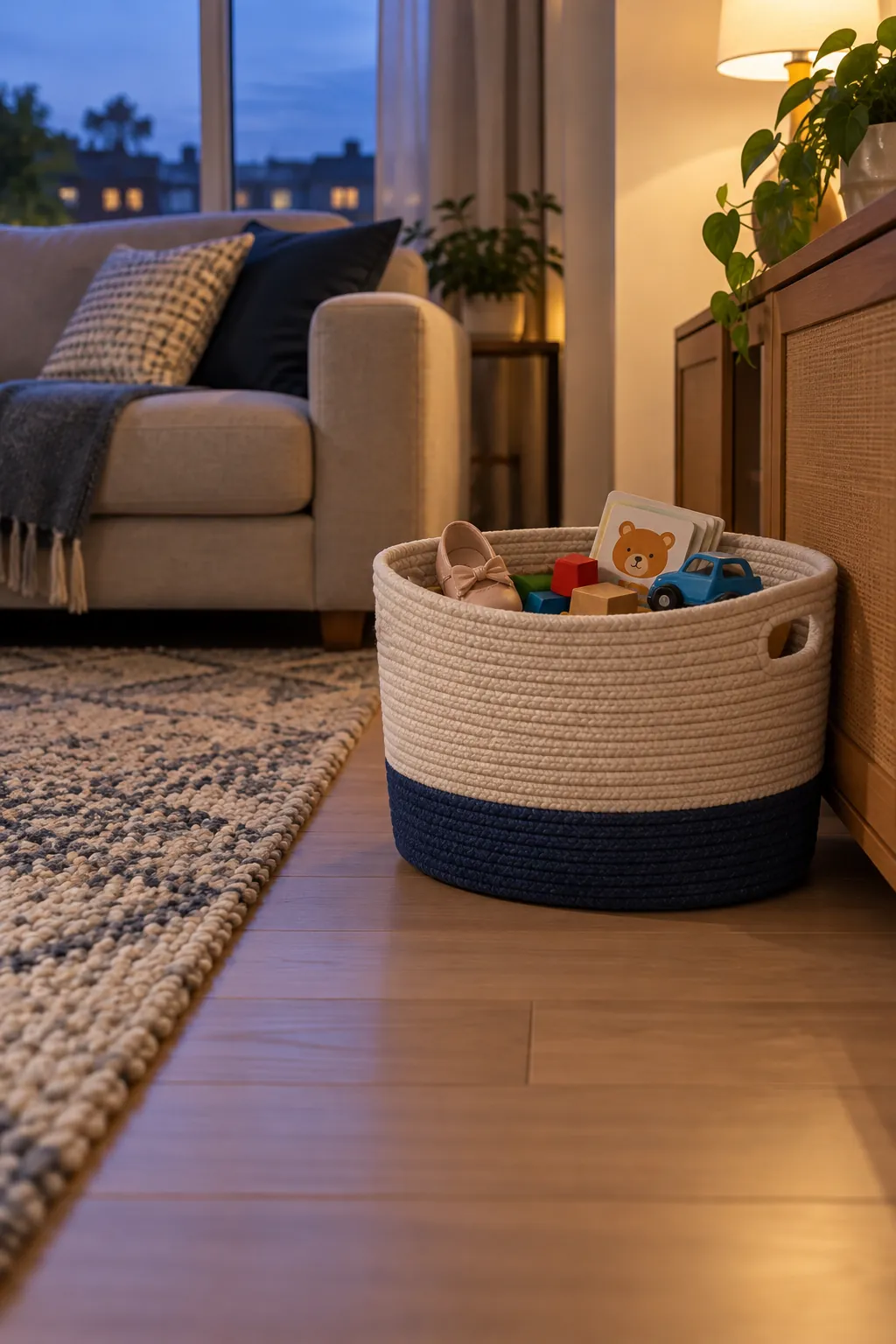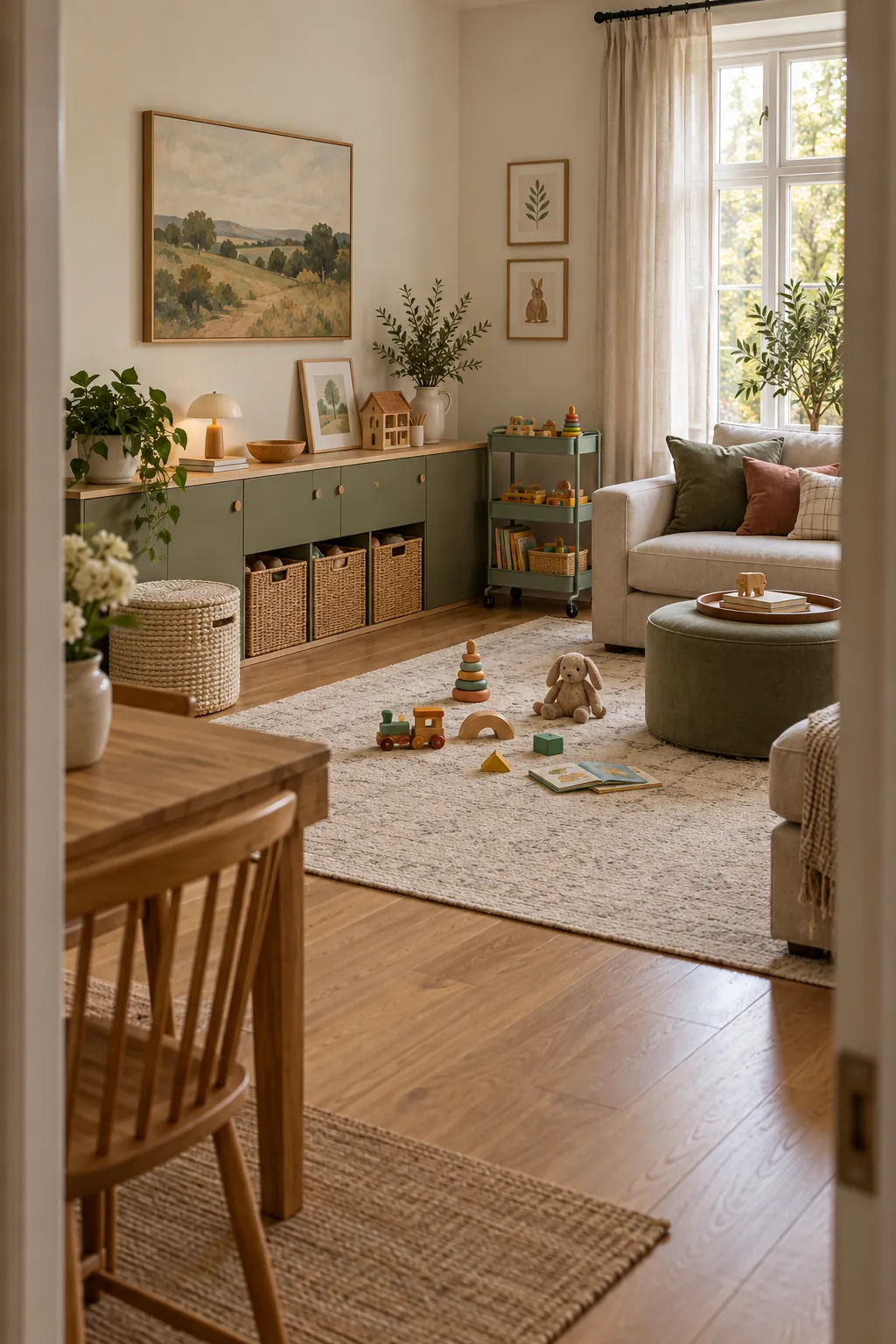
A toy rotation succeeds when the active selection is small enough to reset quickly and the reserve toys have a real home. In an apartment without a playroom, every container also competes with adult living space. Choose a fixed capacity first, then rotate categories with purpose instead of hiding an unlimited overflow.
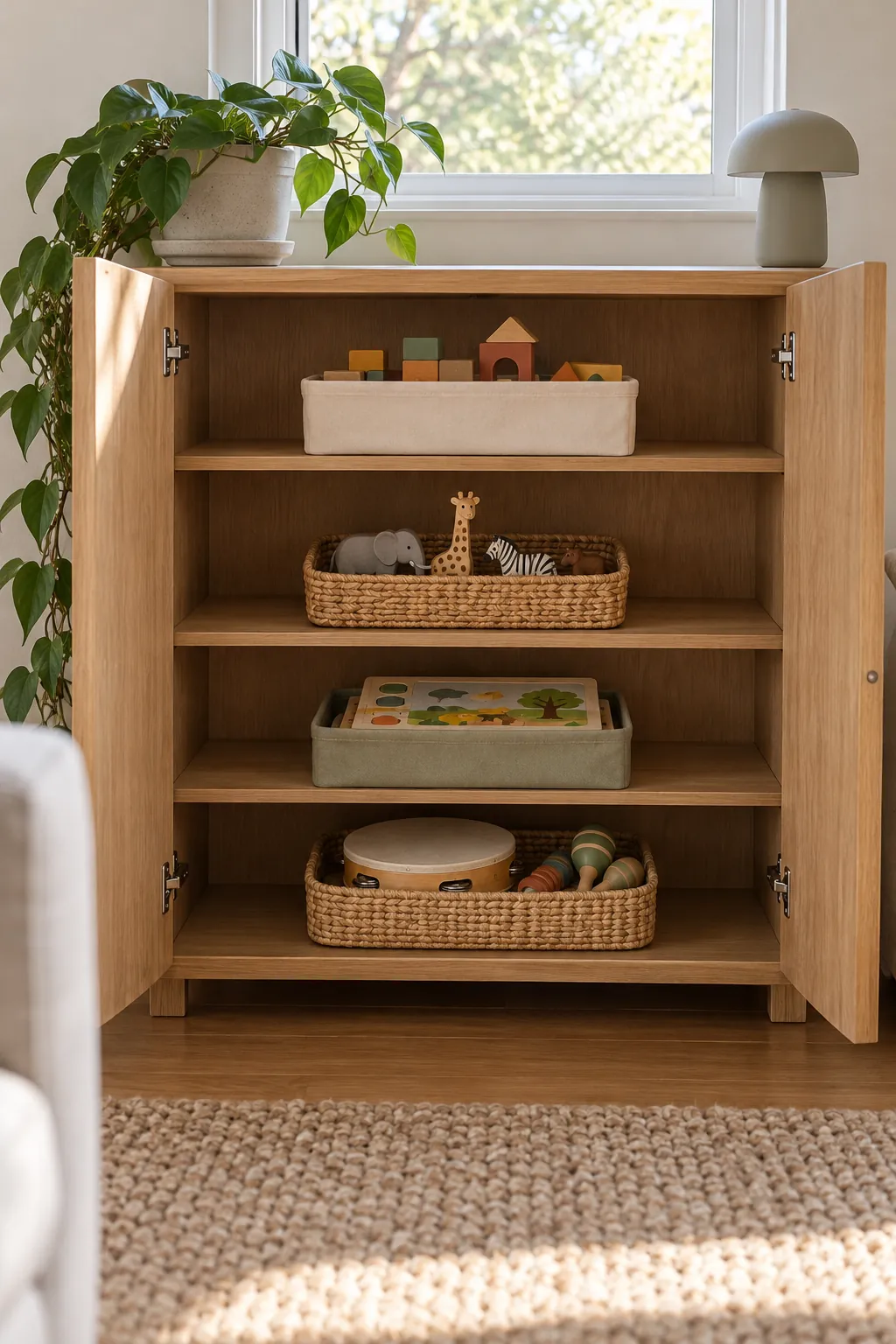
Keep One Week of Toys in a Low Cabinet
Use a low closed cabinet for the current rotation so children can choose toys without opening every reserve bin. Give each shelf one play category and leave visible breathing room. When the cabinet is full, something must return to reserve before another toy comes out.
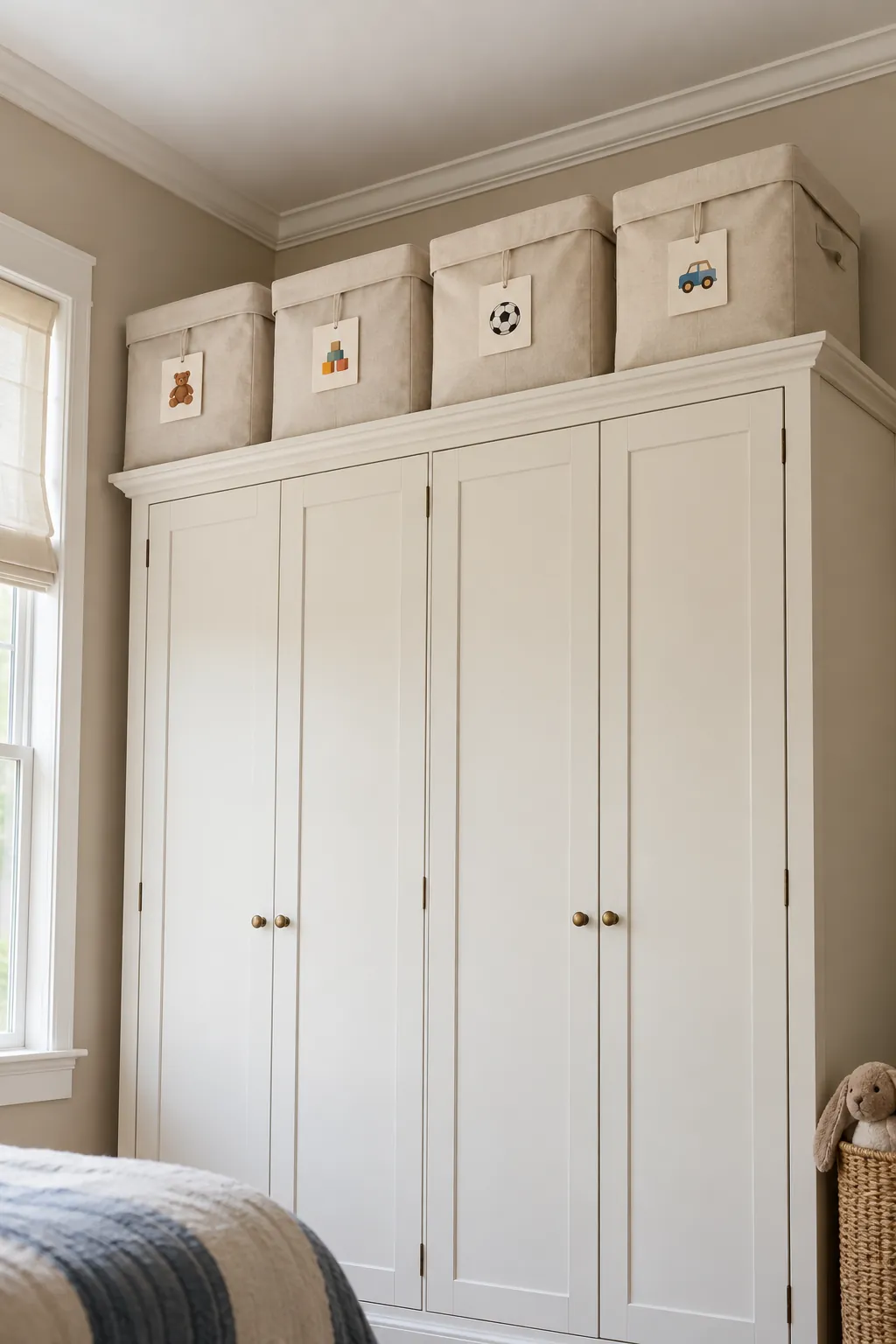
Store Reserve Bins Above the Wardrobe
The unused space above a wardrobe can hold lightweight reserve toys that adults rotate. Use matching lidded bins and keep a simple inventory where it can be checked without opening them all. Avoid heavy sets overhead and use a stable step when changing the rotation.
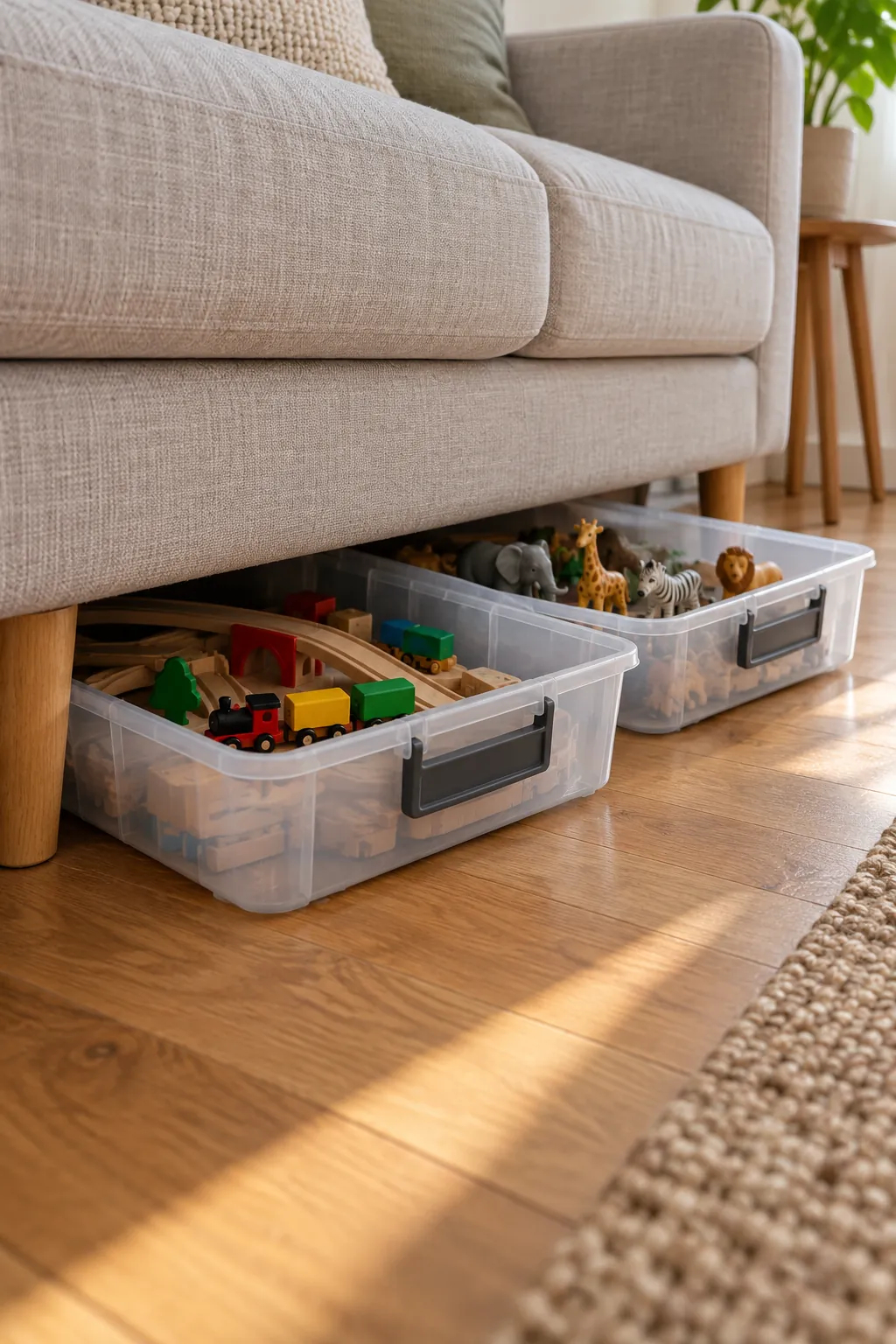
Slide Rotation Boxes Under the Sofa
Shallow boxes can turn the sofa footprint into concealed reserve storage. Group toys by play type and choose handles that are easy for an adult to reach but not tempting during daily play. Measure the center supports before buying because many sofas have less usable clearance than their front edge suggests.
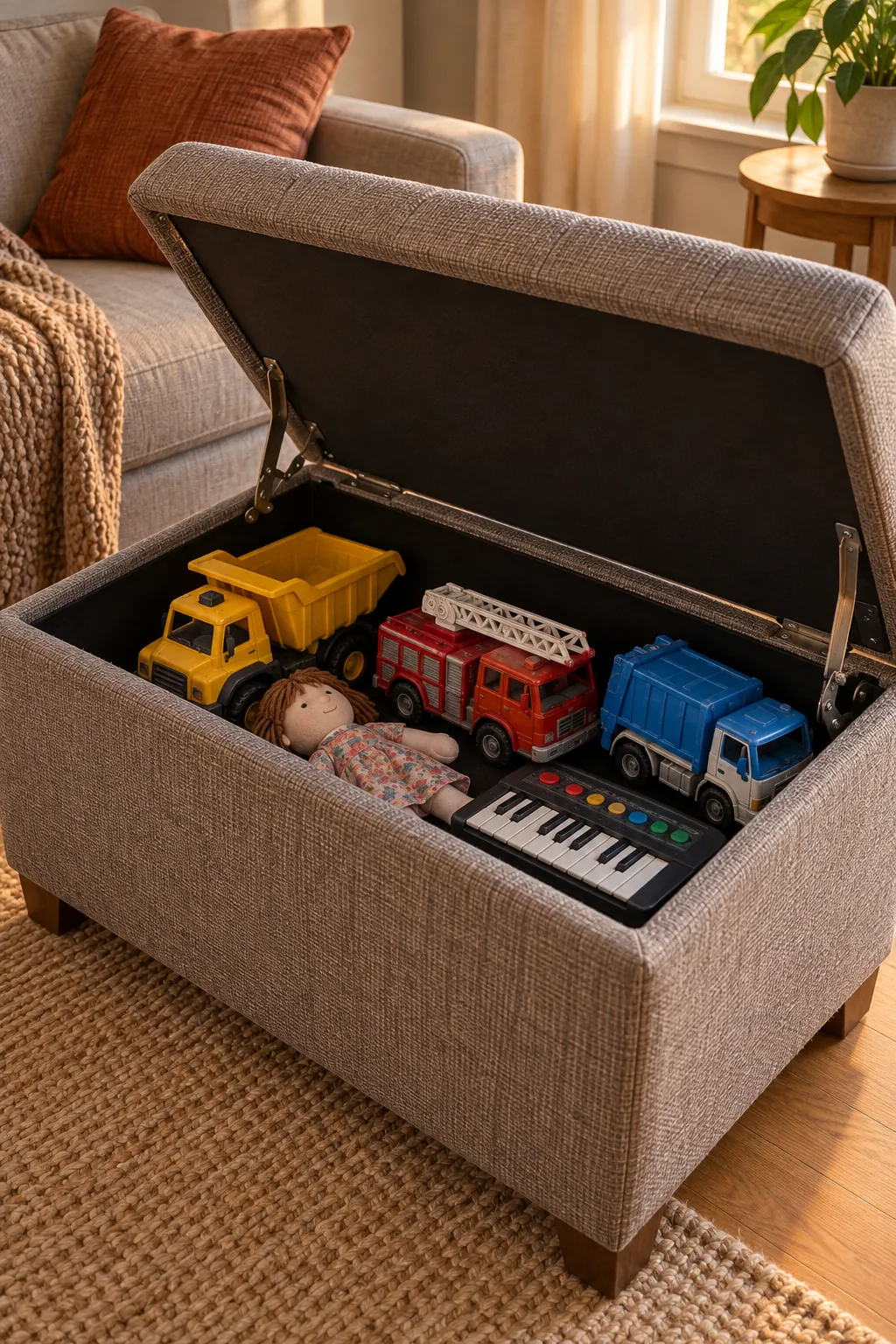
Use an Ottoman for the Current Large Toys
A storage ottoman can hold the current set of trucks, dolls, or musical toys while serving as a seat. Keep the contents loose enough that the lid closes without pressure. Choose a light lid with safe hinges and rotate the whole category rather than mixing unrelated overflow inside.
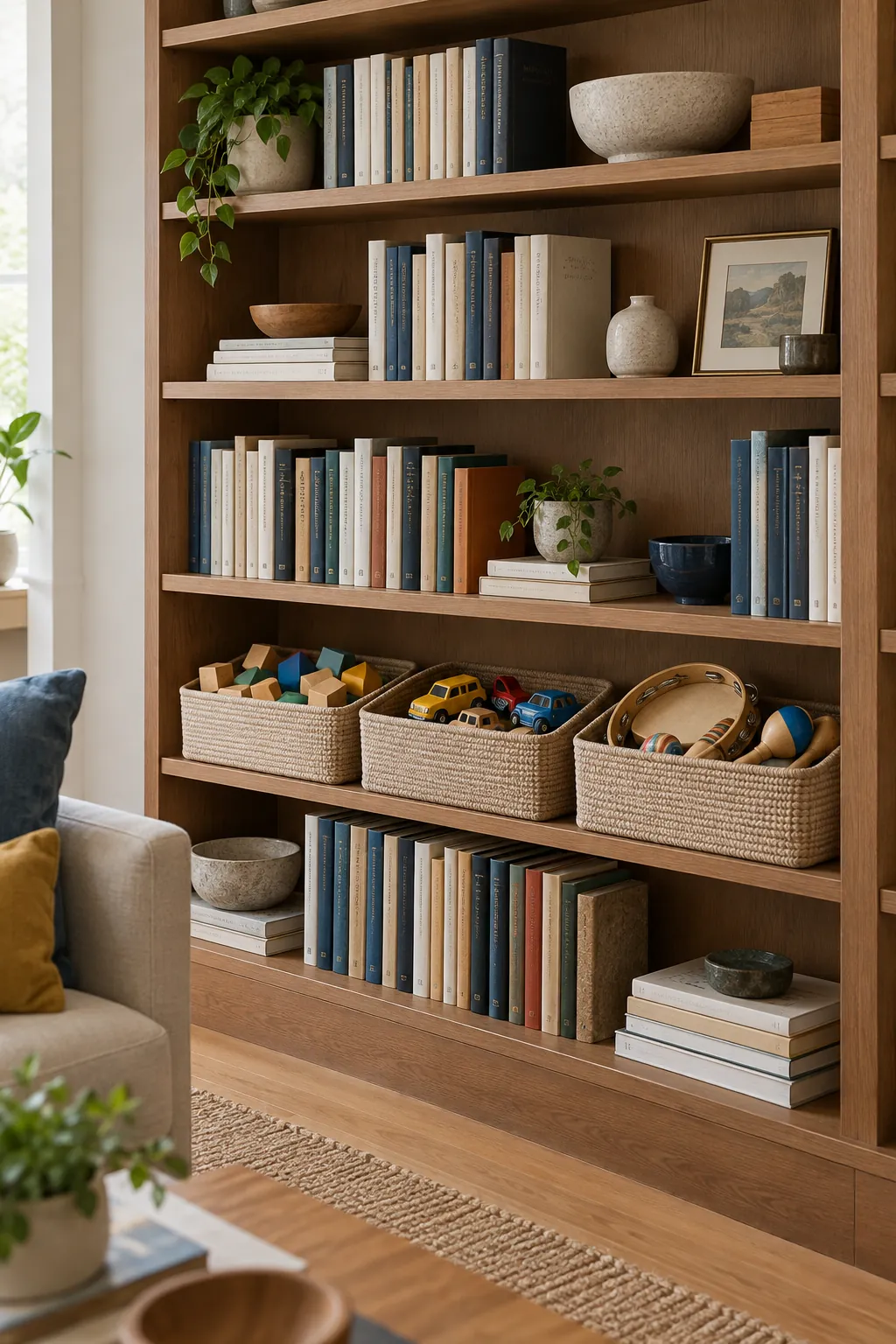
Turn a Bookcase Row Into Rotation Bays
Reserve one row of a living room bookcase for three or four active toy baskets. The rest of the shelf can still hold adult books and household items. Use baskets with distinct shapes or picture labels so cleanup does not depend on reading.
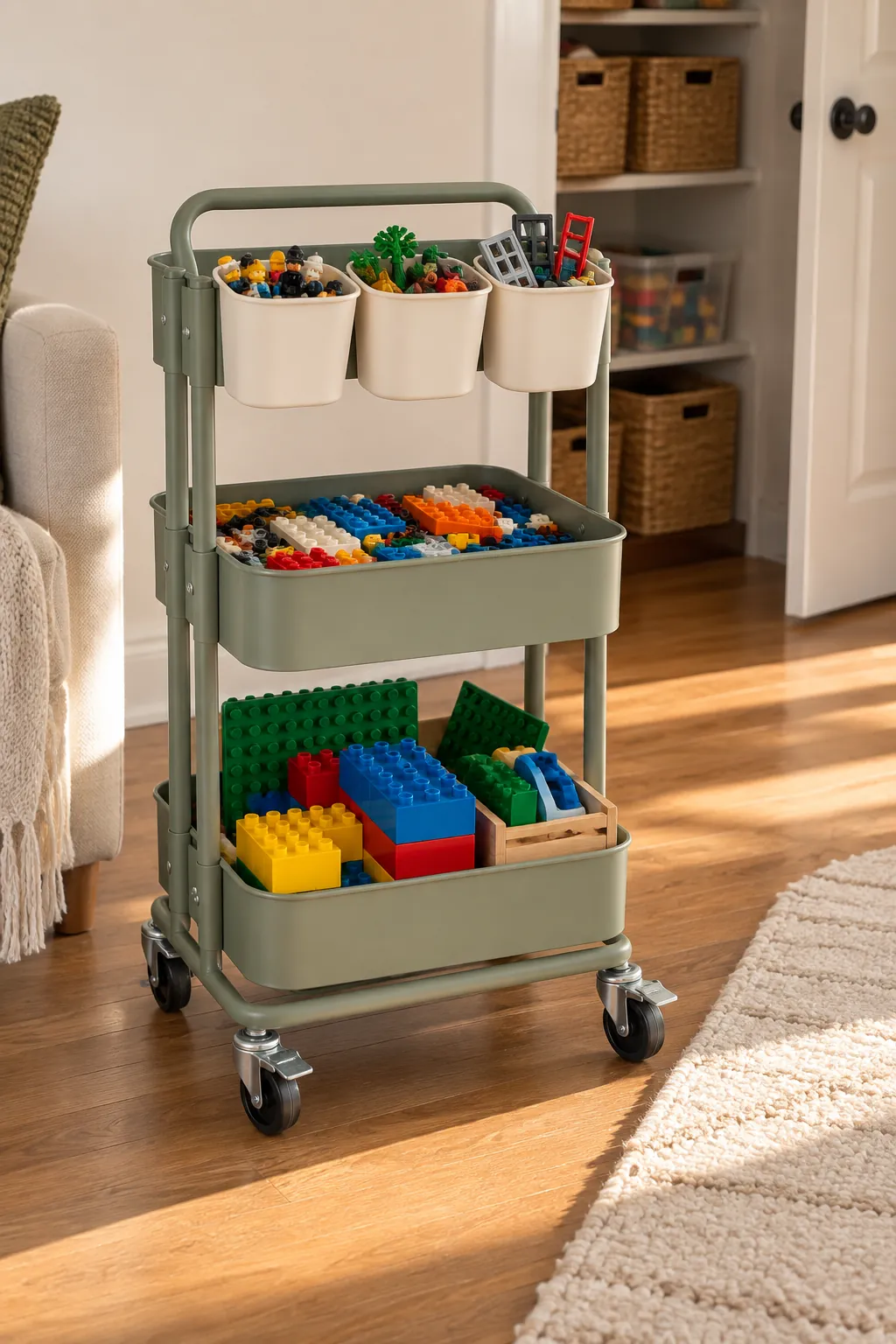
Pack a Building Toy Rotation in One Cart
A narrow rolling cart can hold one complete building rotation and move to the open floor only when needed. Put heavy pieces on the lowest tier and small accessories in removable cups above. Roll the cart into a closet or beside a cabinet after cleanup.
Rotate Pretend Play Kits in Lidded Cases
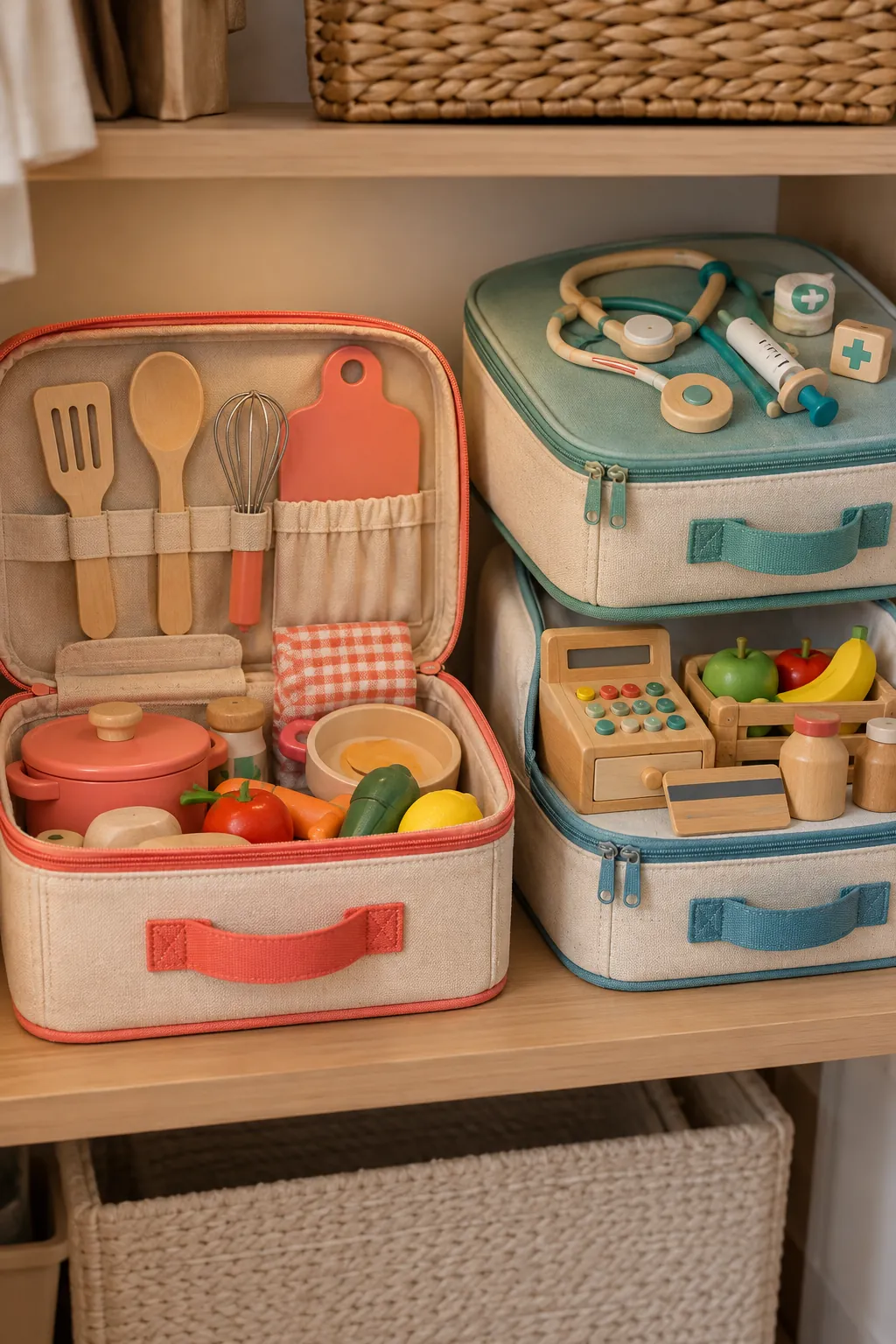
Create complete pretend play kits for cooking, doctor visits, shops, or dress up rather than presenting every theme together. A handled case keeps the accessories paired with the main pieces. Bring out one kit at a time and check that every small part returns before it goes back to reserve.
Use a Window Bench for Seasonal Toys
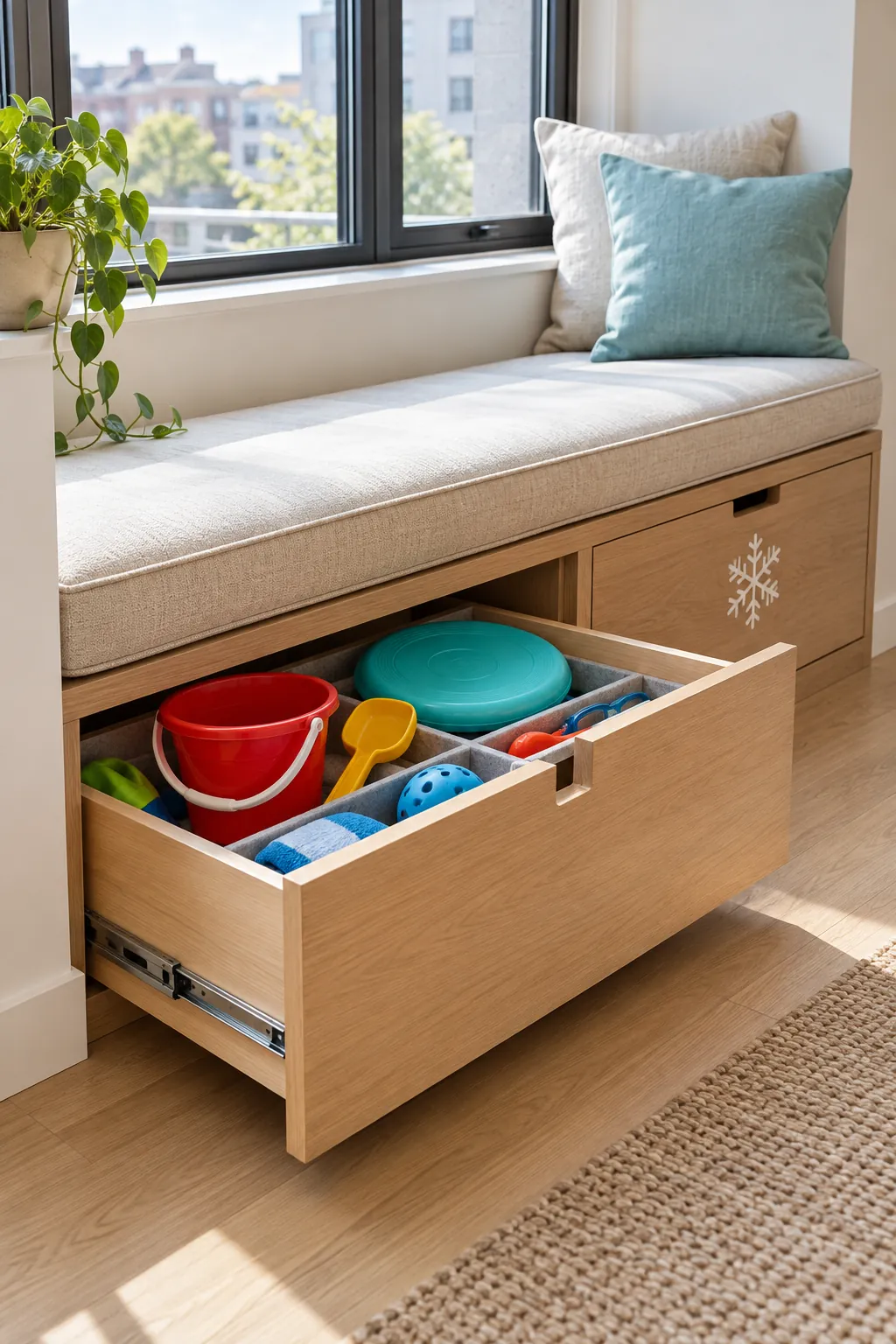
Deep drawers under a window bench can hold toys that only make sense during certain seasons or weather. Keep the drawer closed until that rotation becomes useful, then swap its contents with the current indoor category. A fixed seasonal boundary stops occasional toys from occupying daily shelves all year.
Hang Puzzle Pouches Inside a Closet Door
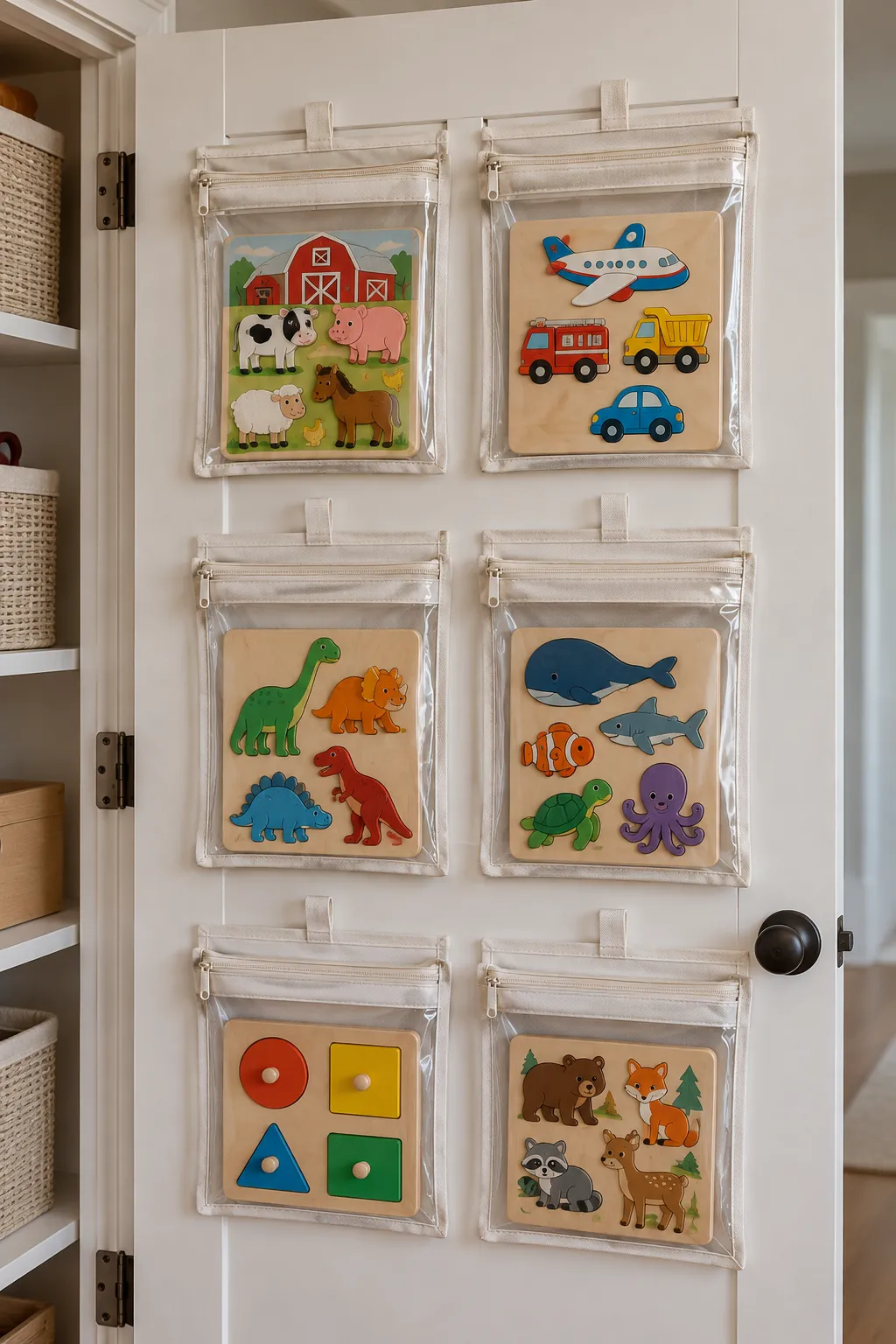
Clear zipped pouches keep puzzle pieces with their boards while using very little depth. Hang only a few active puzzles at child height and place reserve pouches higher for adults to rotate. Check that the door closes freely and that young children cannot access unsafe small pieces.
Create a Quiet Time Basket Rotation
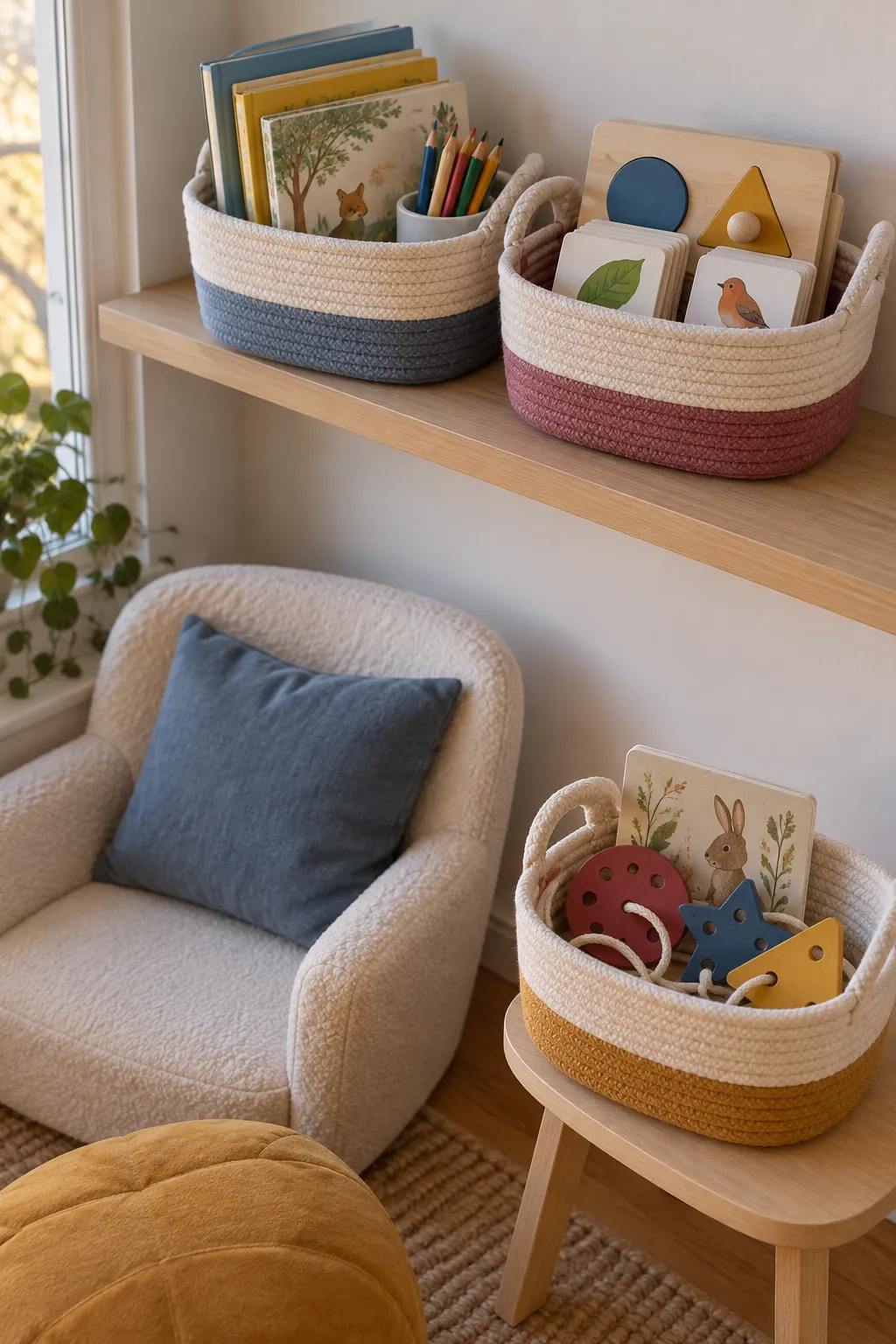
Prepare several small baskets with different quiet combinations, such as books with drawing tools or matching cards with a simple puzzle. Keep one basket available and the others on a high shelf. Switching the whole basket creates novelty without increasing the number of visible toys.
Separate Small Pieces in a Locking Drawer
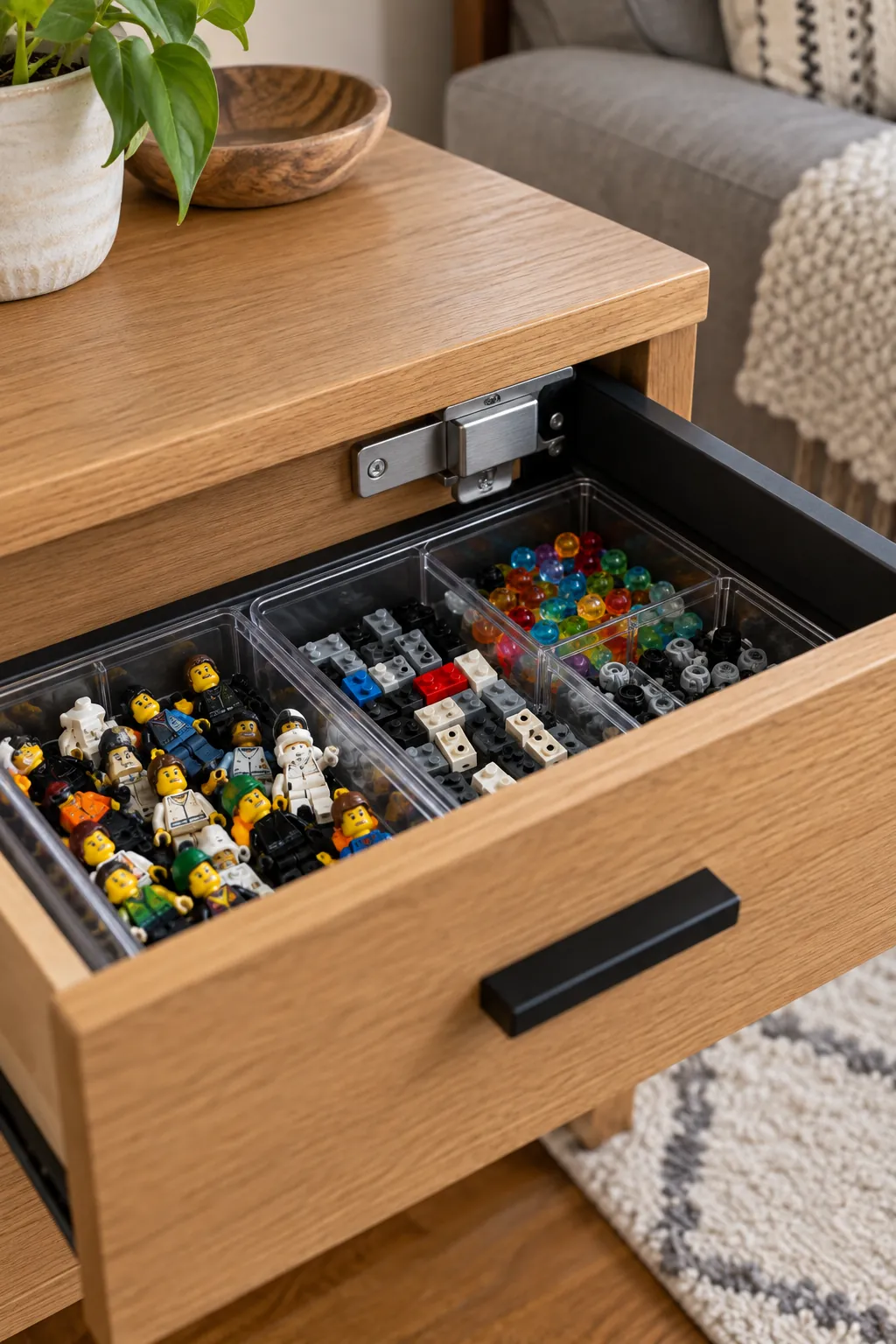
A shallow drawer with internal trays protects tiny parts from toddlers and pets. Use it for one active small piece category rather than every miniature item the household owns. The latch should be adult controlled but quick enough that rotation does not become a burden.
Use Color Bands to Mark Rotation Groups
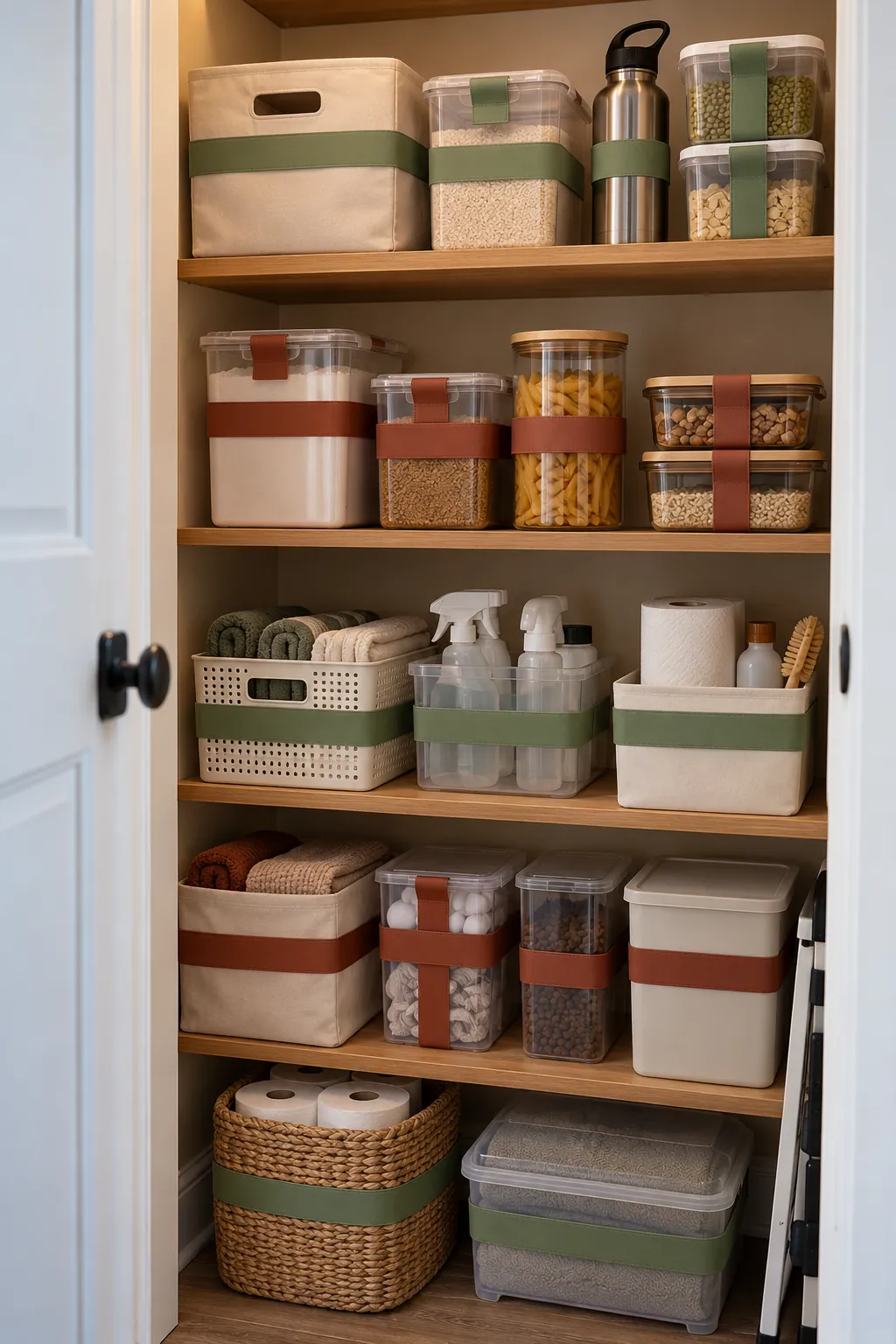
Matching color bands can identify which containers belong to the same rotation even when they live in different places. Give each group one color and keep the categories balanced across active play, movement, reading, and making. Avoid assigning a different color to every individual toy because that creates more sorting work.
Keep One Open Ended Toy in Every Rotation
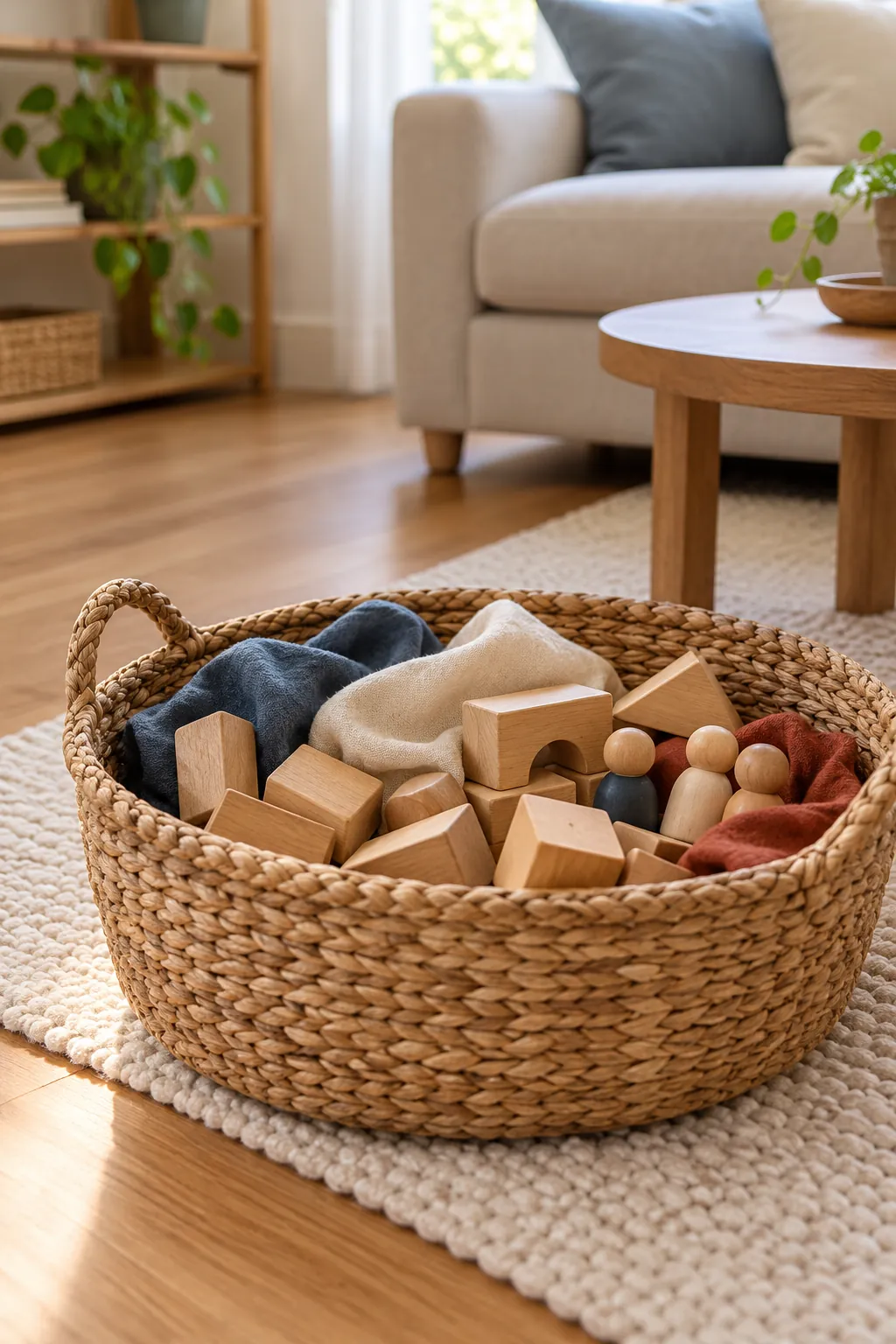
Every rotation benefits from one toy that supports many kinds of play, such as blocks, figures, or simple fabric pieces. Store it in a broad accessible basket and pair it with more specific toys. This keeps the active selection flexible without needing a large number of choices.
Park Ride On Toys in a Marked Nook
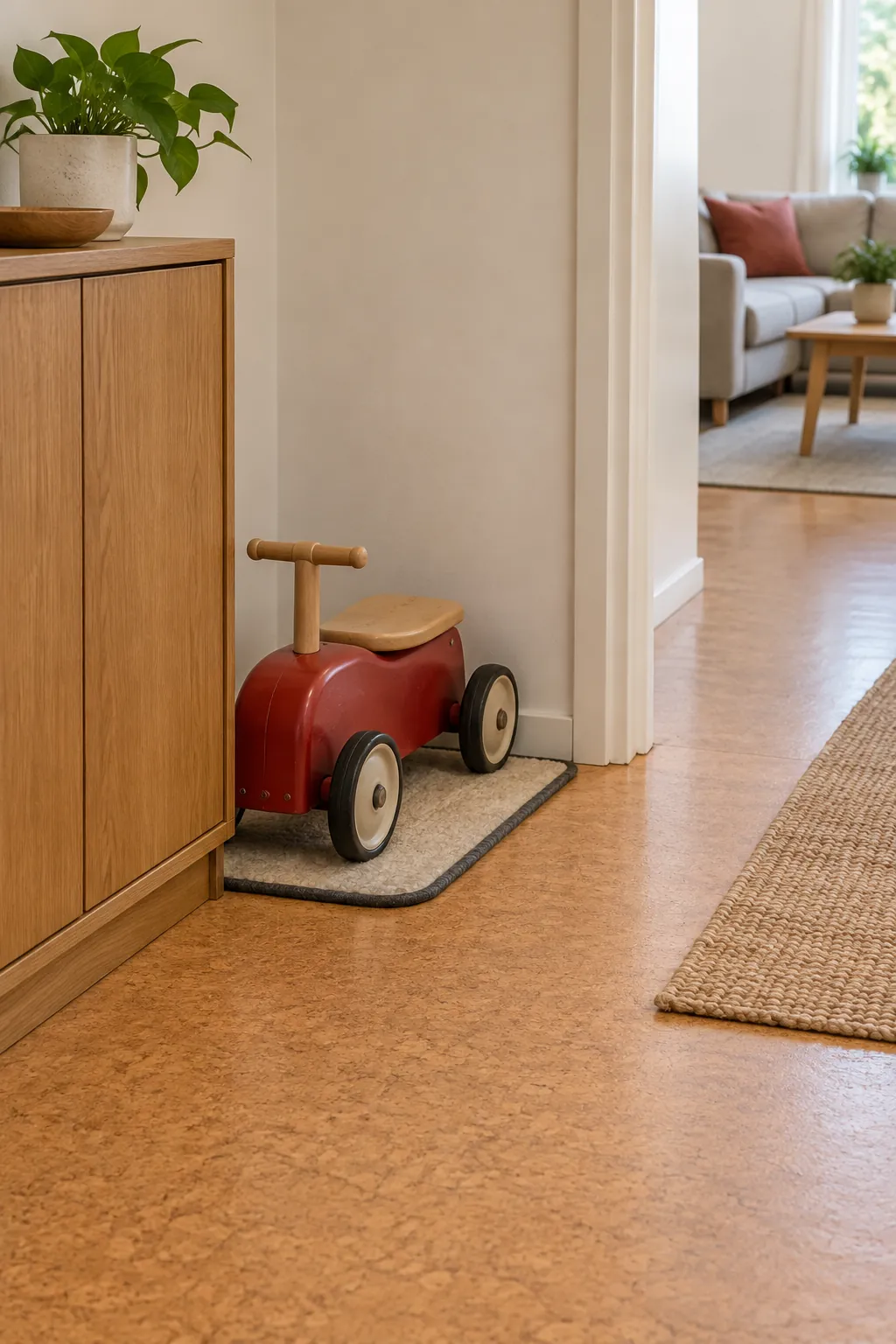
Large toys need a footprint limit because they cannot disappear into ordinary bins. Mark one parking nook beside a cabinet or entry wall and allow only what fits there safely. Rotate or remove the extra ride on toy when the nook becomes crowded.
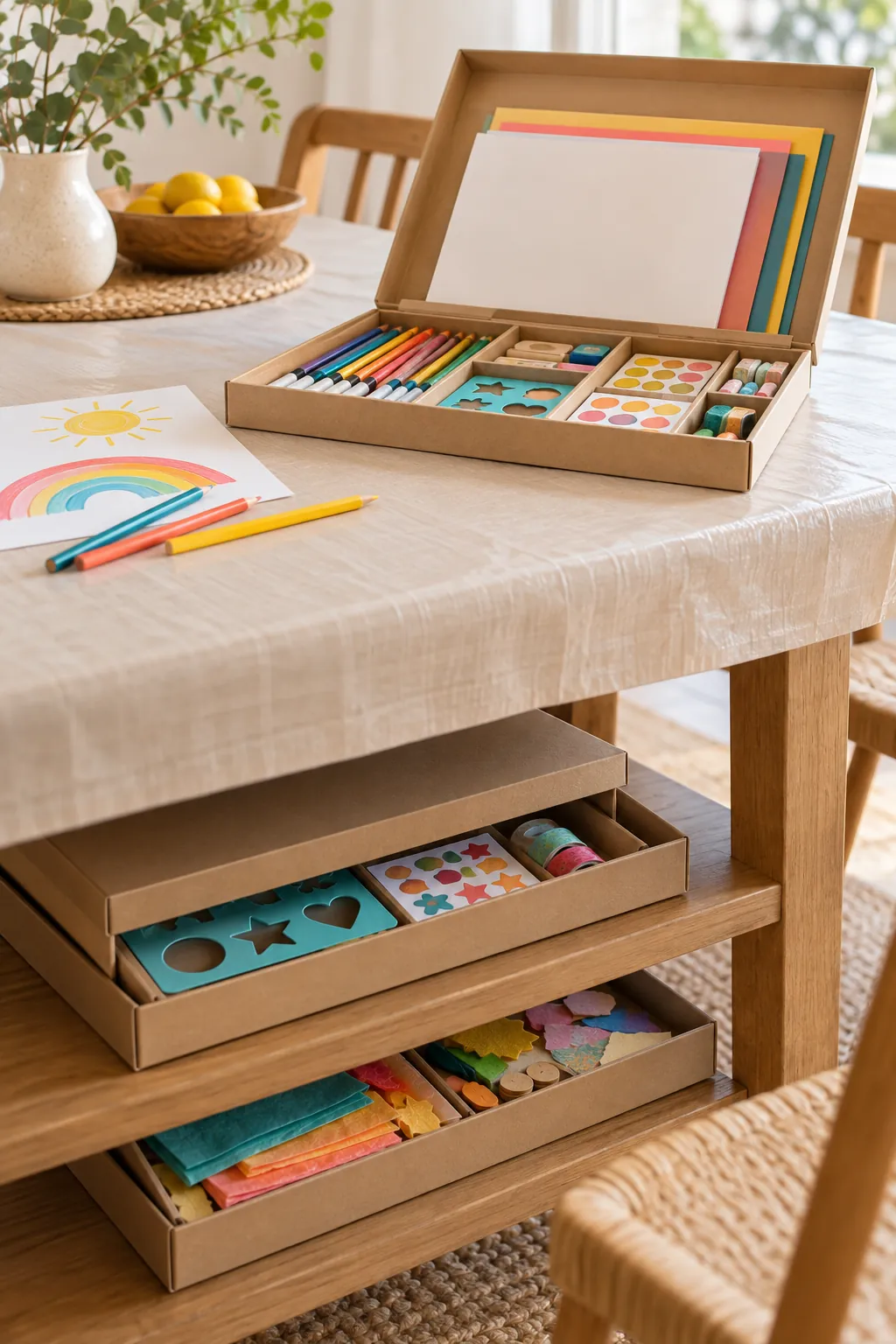
Store Art Rotations in Flat Boxes
Flat boxes keep paper, stickers, stencils, and simple craft materials from spreading through a common room. Build several activity themes and open one box at a time on a protected table. Remove dried supplies before the box returns to reserve so future rotations stay ready to use.
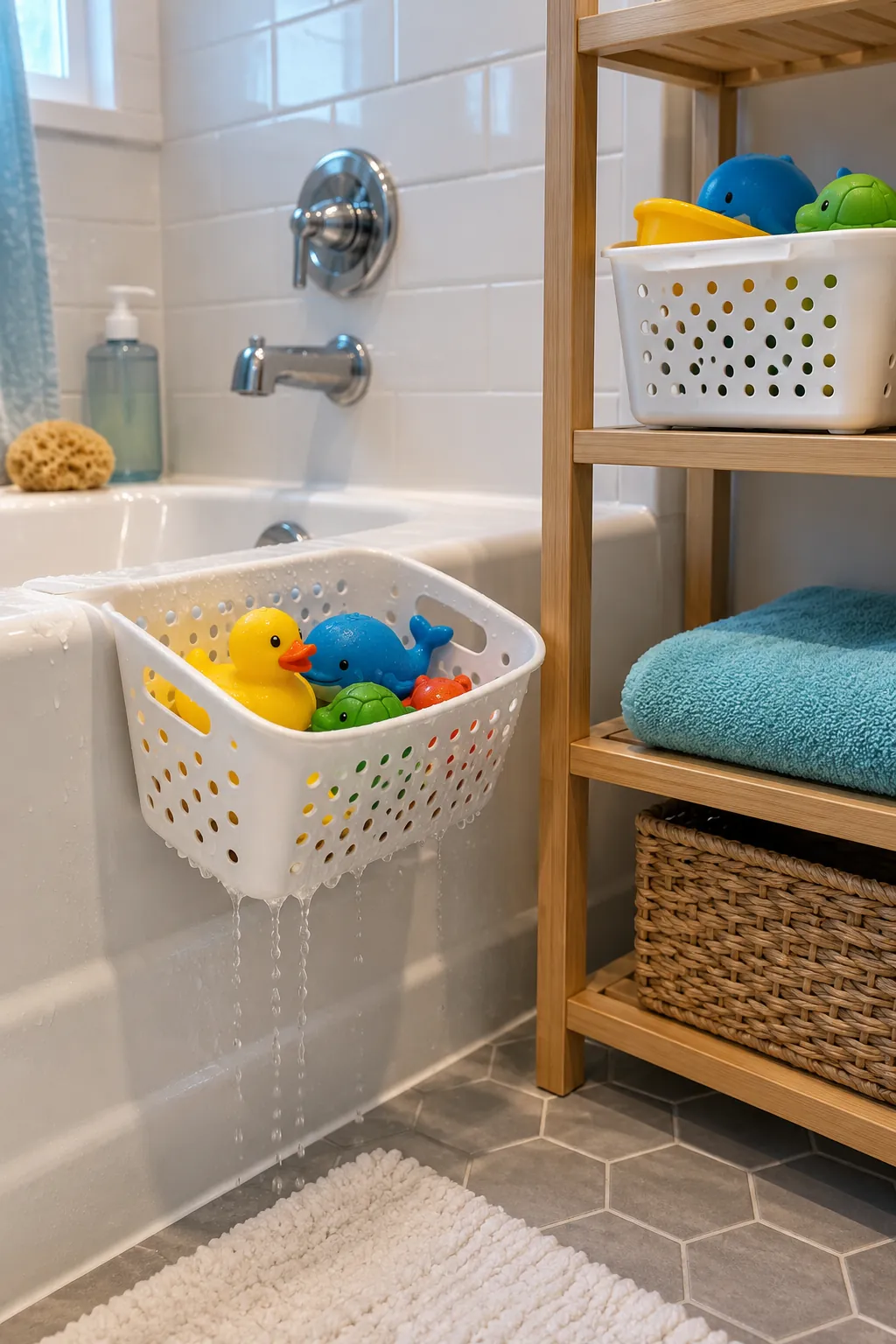
Build a Bath Toy Drying Rotation
Bath toys need to dry fully before they enter reserve storage. Keep one small draining basket in the bathroom and a second clean dry set in a ventilated bin elsewhere. Discard toys that trap water or cannot be cleaned reliably instead of rotating a hygiene problem.
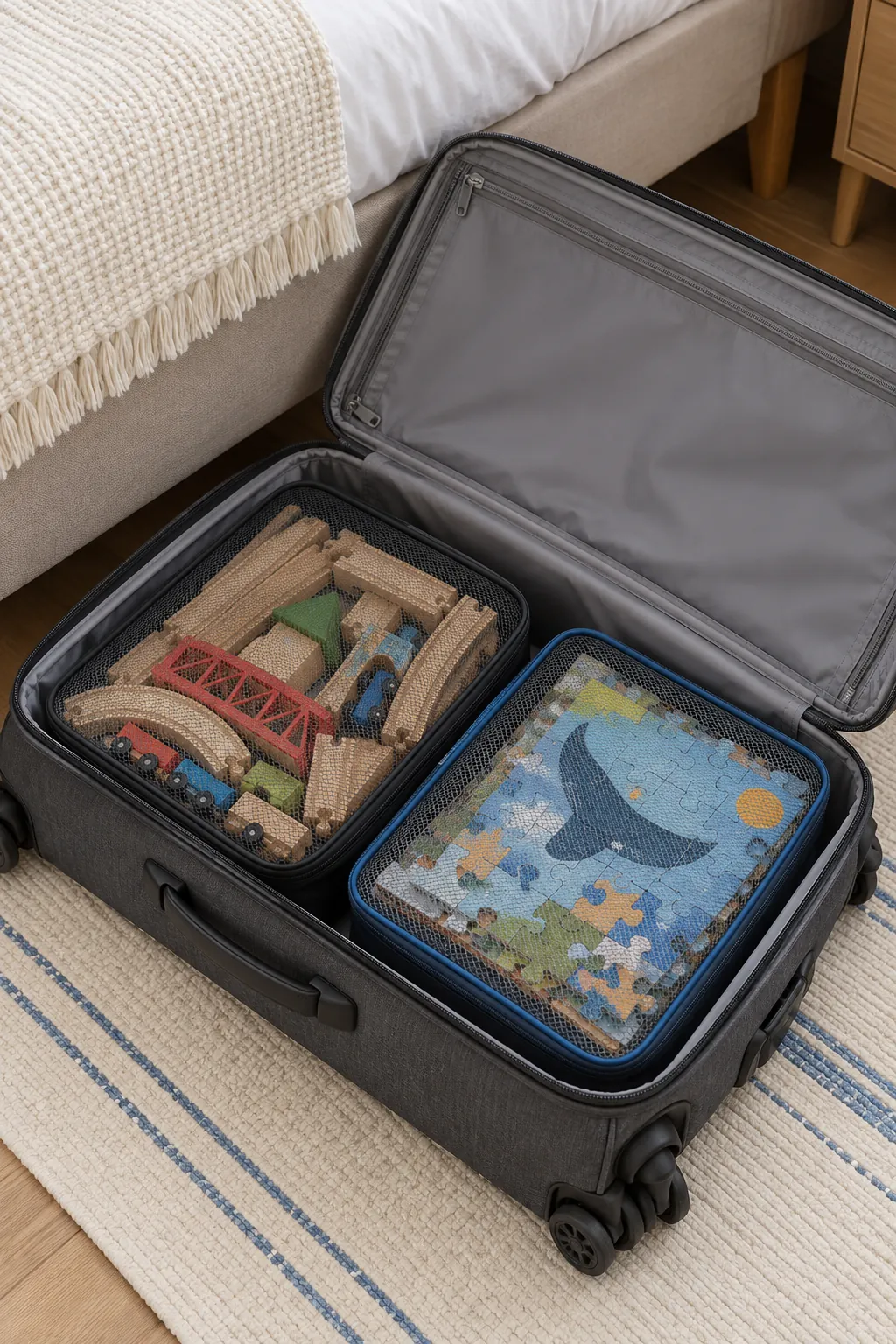
Use Suitcases for Rarely Used Toy Sets
An empty suitcase can hold a carefully chosen reserve category without adding another container to the apartment. Use packing cubes inside so pieces do not tumble when the case moves. Do not fill luggage needed for frequent travel or make the case too heavy to lift safely.
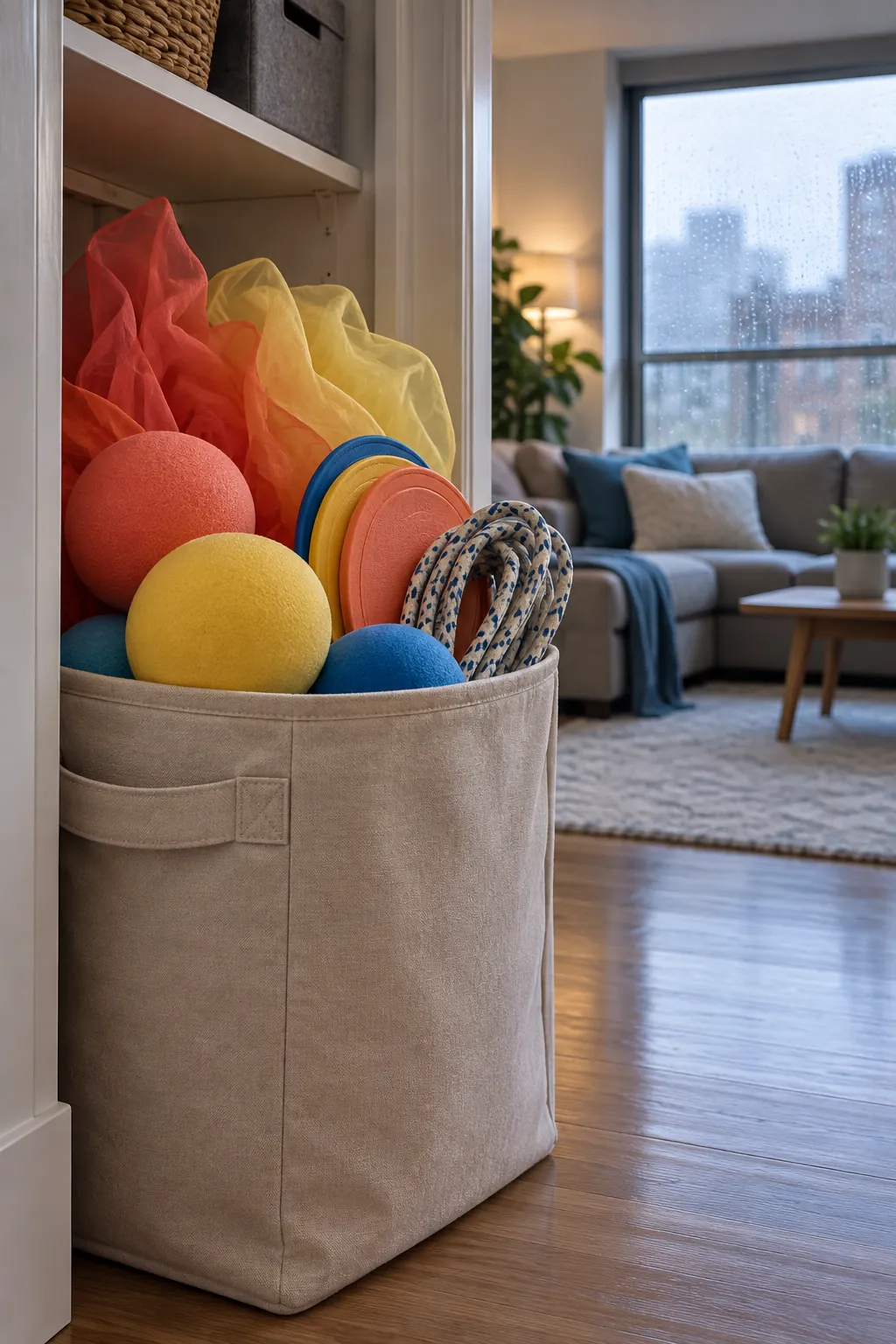
Make a Rainy Day Movement Bin
A movement bin can hold soft balls, scarves, floor markers, and a jump rope for days when outdoor play is limited. Store it high until the room has enough cleared space for safe use. Rotate it out when the weather improves so movement gear does not live in the common room permanently.
Create a Waiting Bin Before Donating
Place uncertain toys in one dated waiting bin rather than returning them automatically to the rotation. If no one asks for an item during the chosen review period, it is a stronger candidate to donate. Keep the bin finite and out of daily sight so it tests genuine demand.
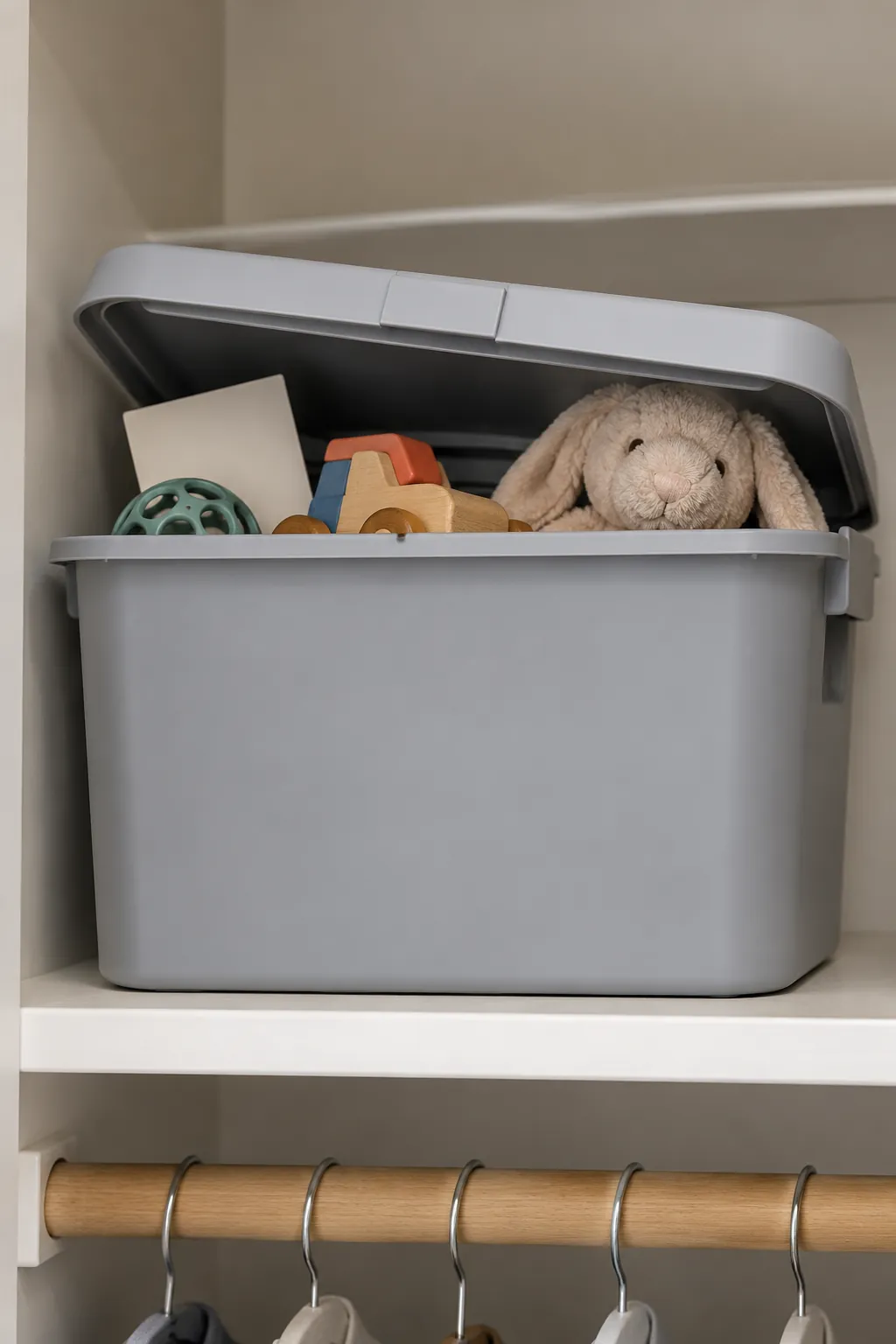
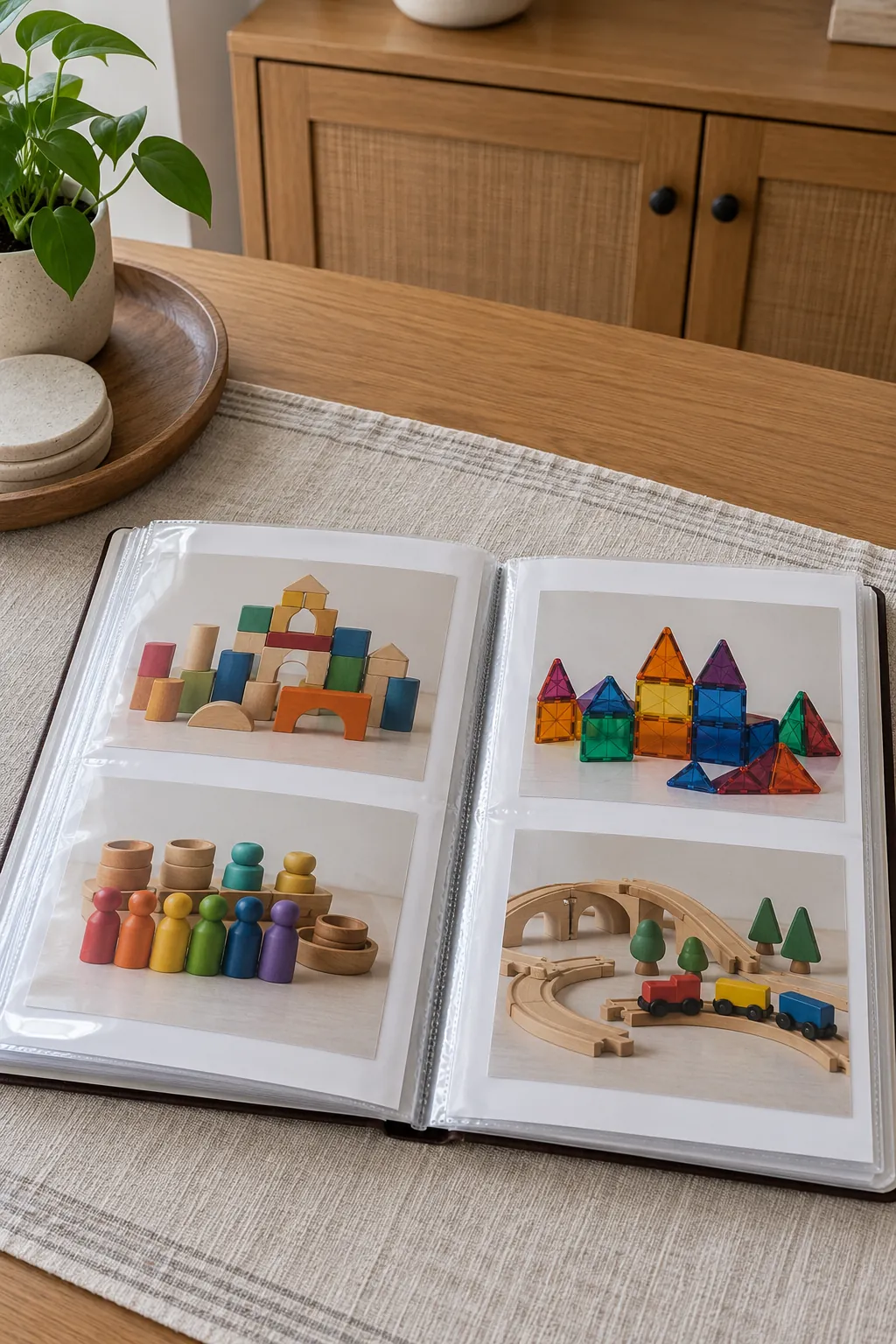
Use a Picture Inventory for Hidden Toys
Photograph each rotation group and place the images in a small household reference sleeve. Adults can plan the next swap without opening every hidden bin, and children can help choose from a limited set of pictures. Update the inventory whenever toys leave the home so it remains trustworthy.
Rotate by Play Need Instead of Calendar Date
Swap toys when interest drops, a skill changes, or the household routine shifts rather than following a rigid weekly schedule. Keep the active shelf steady while a toy is producing deep play. The system should reduce adult work, so an arbitrary date is not useful when the current selection still works.
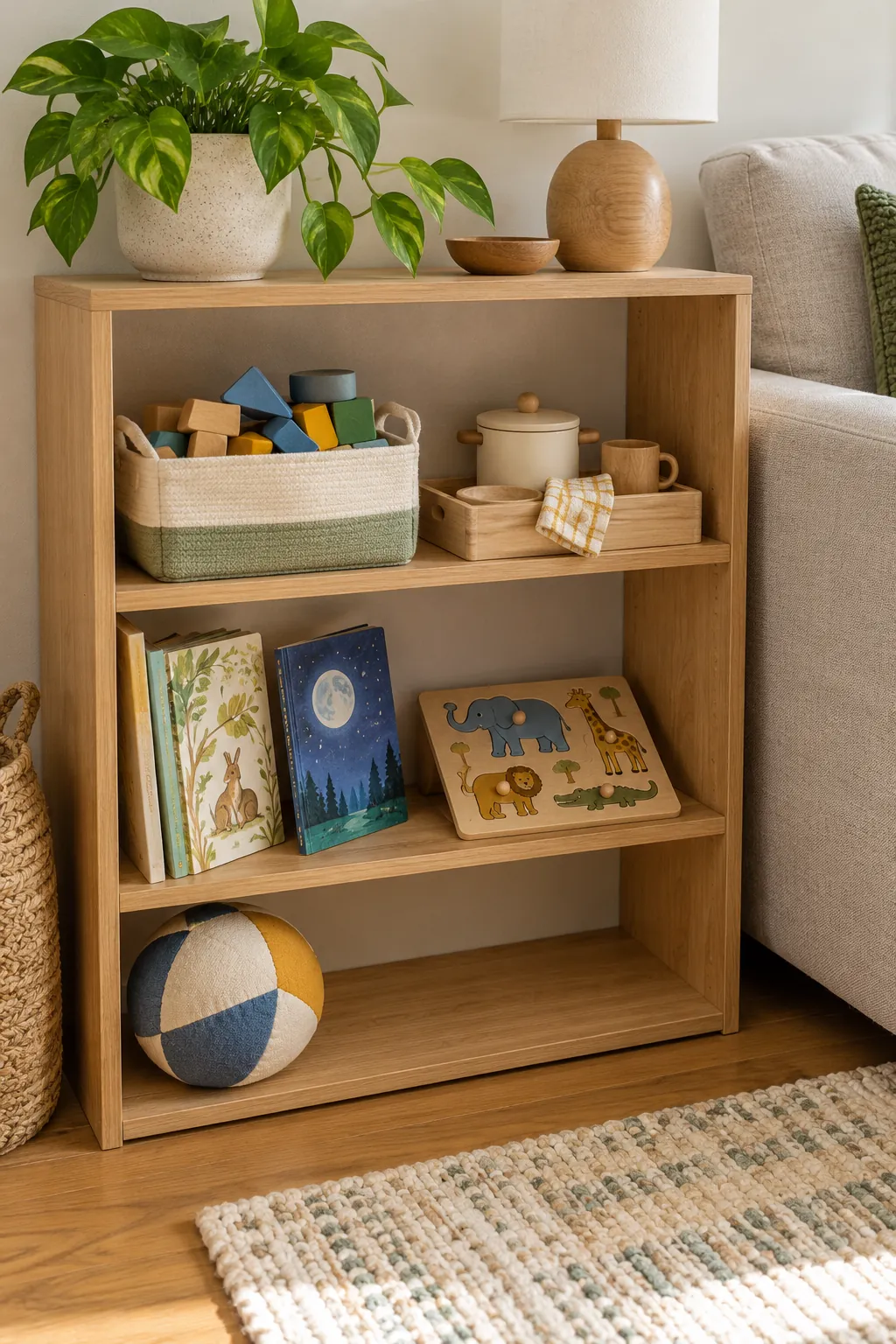
Make the Container the Collection Limit
Assign a fixed container to each toy category and keep only what fits comfortably. When a category overflows, select the most used and versatile items before choosing what leaves. This rule protects the apartment from endless reserve storage and makes every future rotation easier.
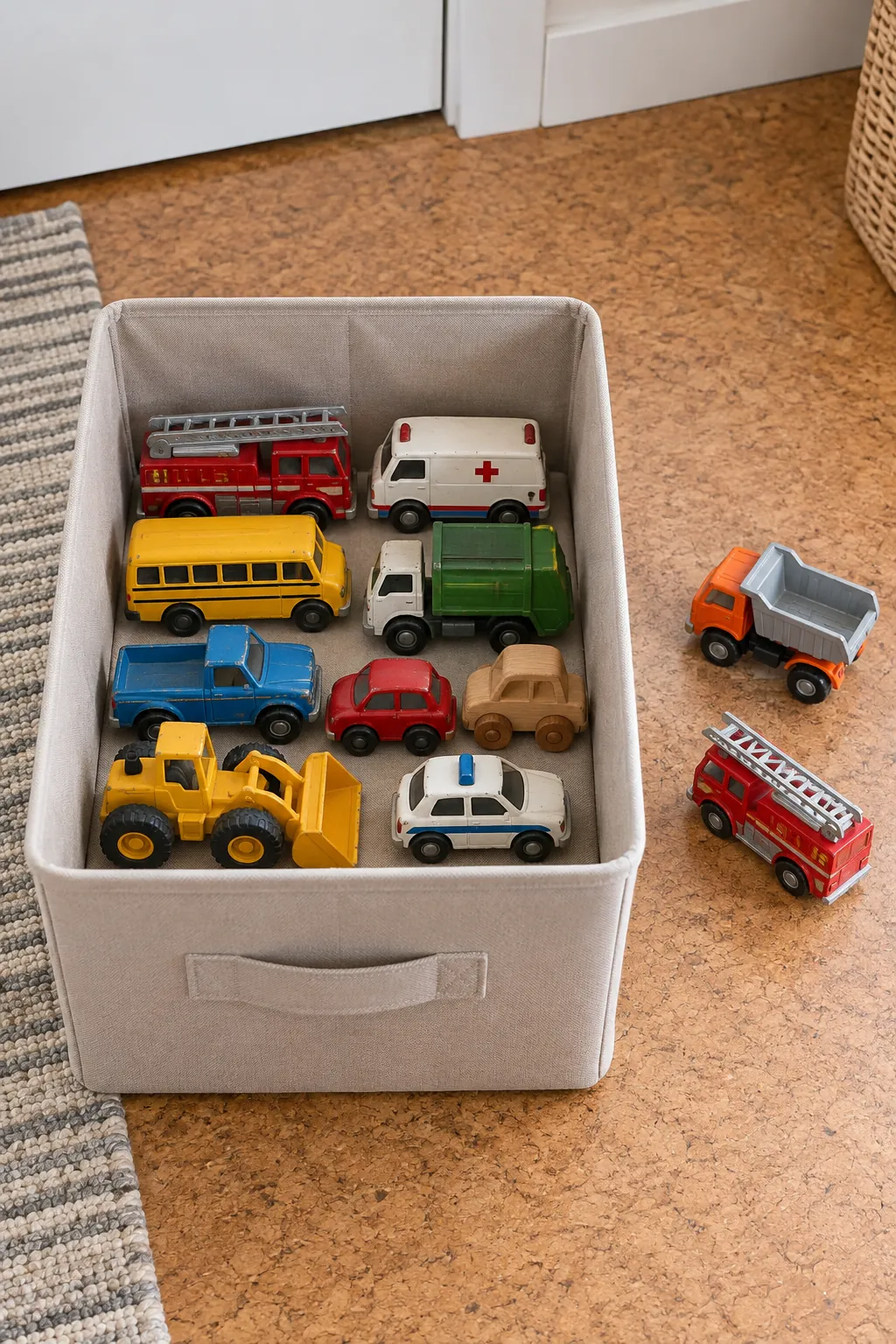
Reset the Living Room With One Closing Basket
Keep one empty basket available for stray pieces at the end of the evening. Use it to clear the sofa and walking route quickly, then return every item to its active category the next day. The basket is a temporary reset tool, not a permanent mixed toy home.