An indoor lucky bamboo often survives in a poor location long enough to make the setup seem successful. Months later, the leaves stretch, tips brown, or the cane yellows, and the cause is hard to trace. A stable position and a repeatable care routine are more useful than constantly moving the plant in search of perfect conditions.
The plant sold as lucky bamboo is Dracaena sanderiana, not a true bamboo. It is naturally suited to filtered light and warm indoor conditions, but tolerance is not the same as active growth. The goal is to give it enough light and root care to stay firm, balanced, and green without exposing it to harsh sun or household hazards.
Choose a Stable and Safe Indoor Position
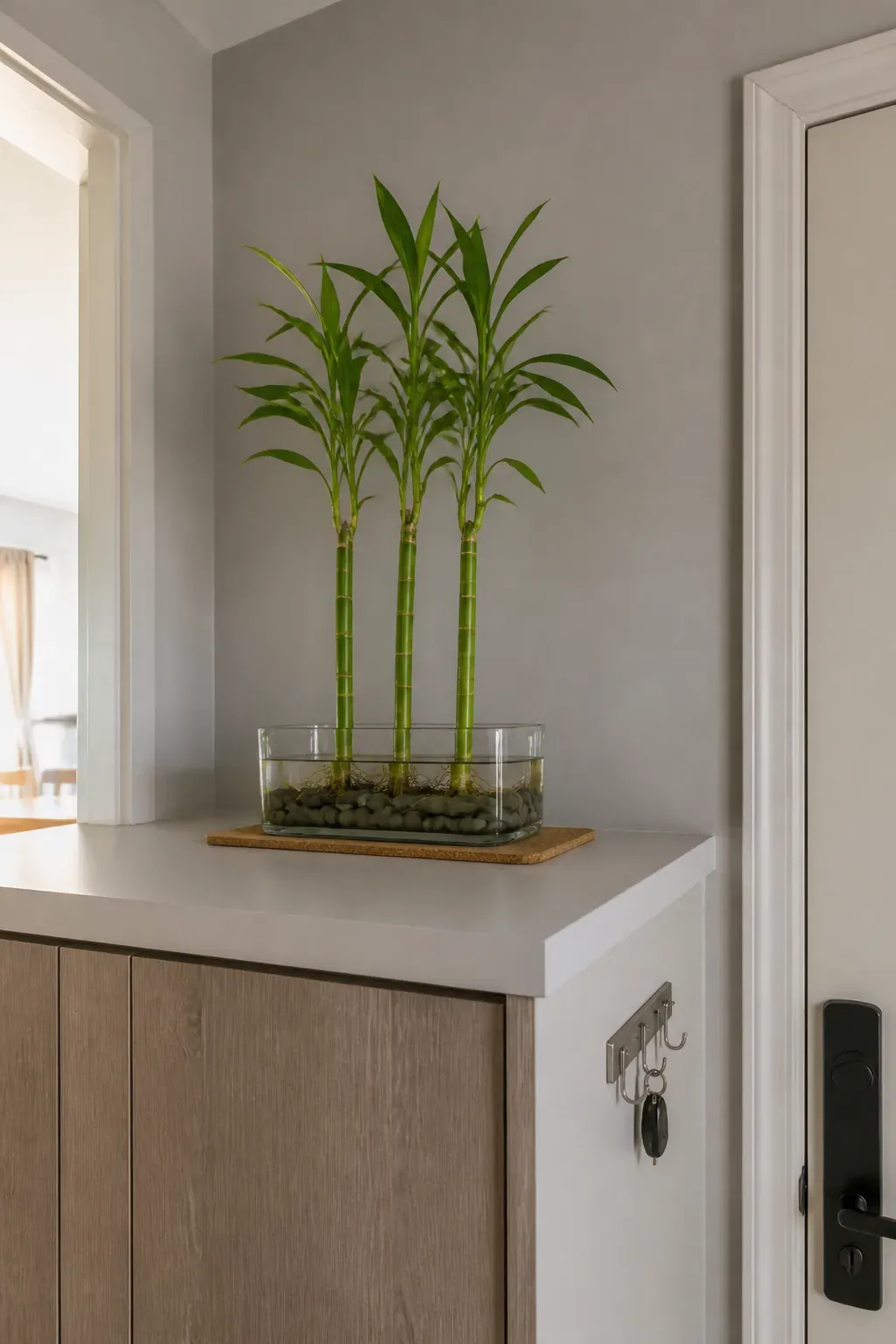
Begin with a level surface near useful light, not a narrow ledge where the container can fall. Keep the plant away from heating vents, air conditioners, frequently opened winter doors, and hot window glass. A broad shelf, desk corner, bathroom counter, or sideboard can work when it supports the entire vessel and allows air around the leaves.
Dracaena foliage is toxic to cats and dogs if eaten, so place it beyond their reach and account for climbing pets. Heavy stones can make a glass arrangement more stable, but they also make a fall more dangerous. Choose a vessel with a wide base, check that tall canes are not top heavy, and do not rely on a lightweight decorative cachepot for support.
Provide Enough Filtered Light
Bright indirect light produces stronger growth than a dark room, while direct afternoon sun can scorch leaves. A spot near an east window or behind a sheer curtain is often dependable. In a west facing room, increase the distance from the glass or filter the strongest hours so bright light reaches the plant without heating its foliage.
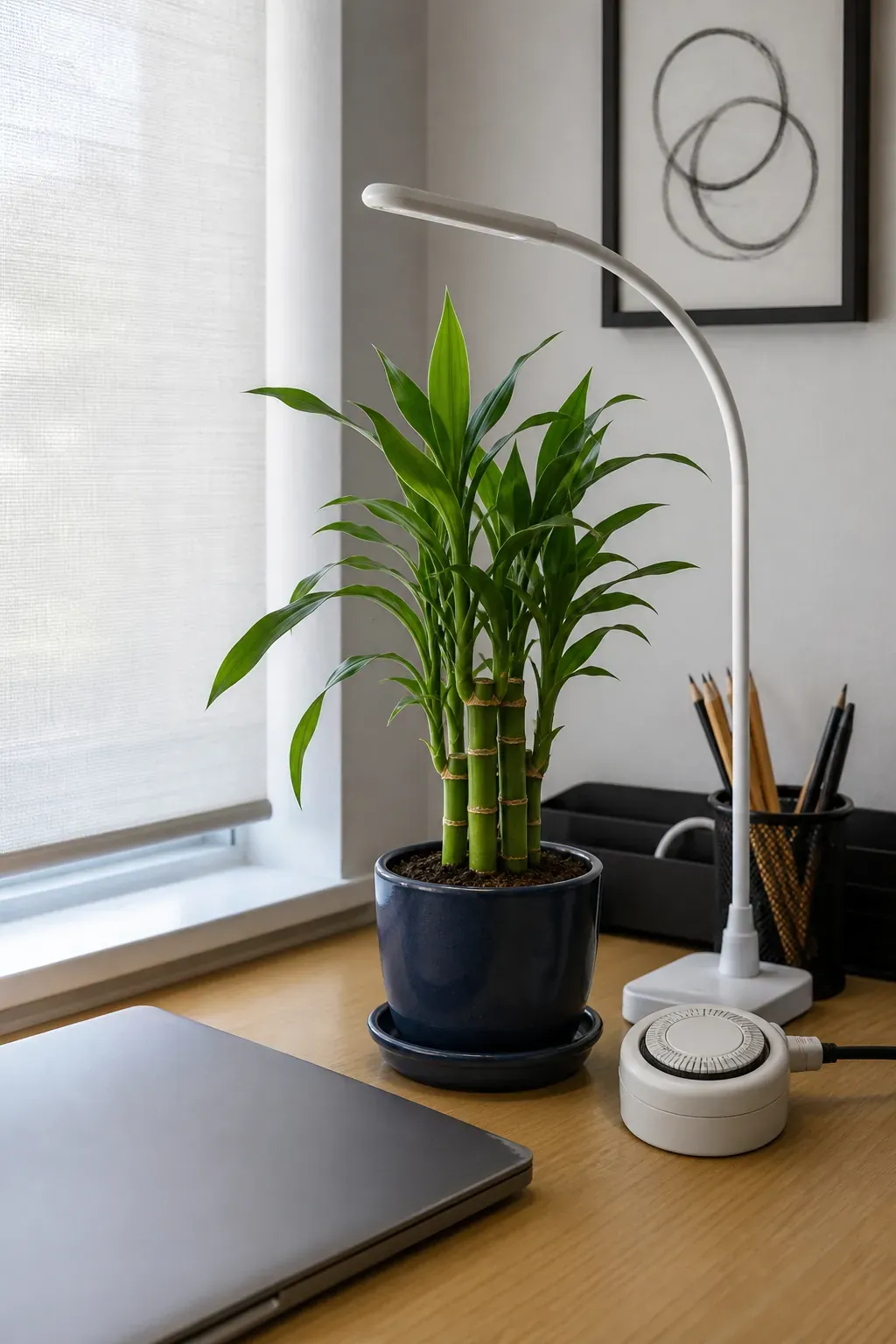
A windowless office can support an indoor lucky bamboo when a suitable grow light or consistent bright workplace lighting supplies the missing daylight. Place a dedicated lamp above the foliage and use a timer to create a regular day rather than leaving it on continuously. Pale stretched shoots and leaves leaning hard toward one direction suggest that survival light is not enough for balanced growth.
Set Up a Clean Water Grown Arrangement
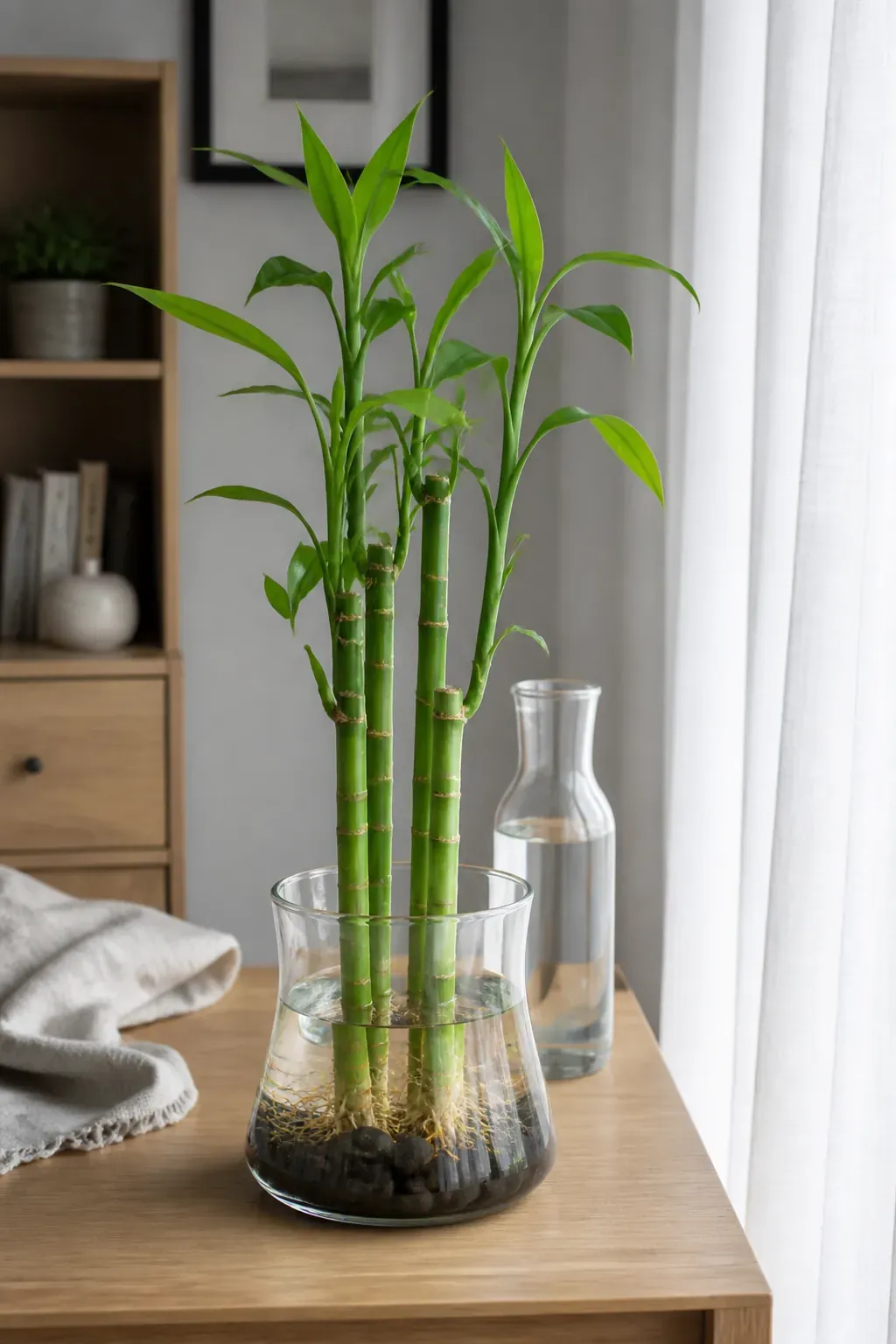
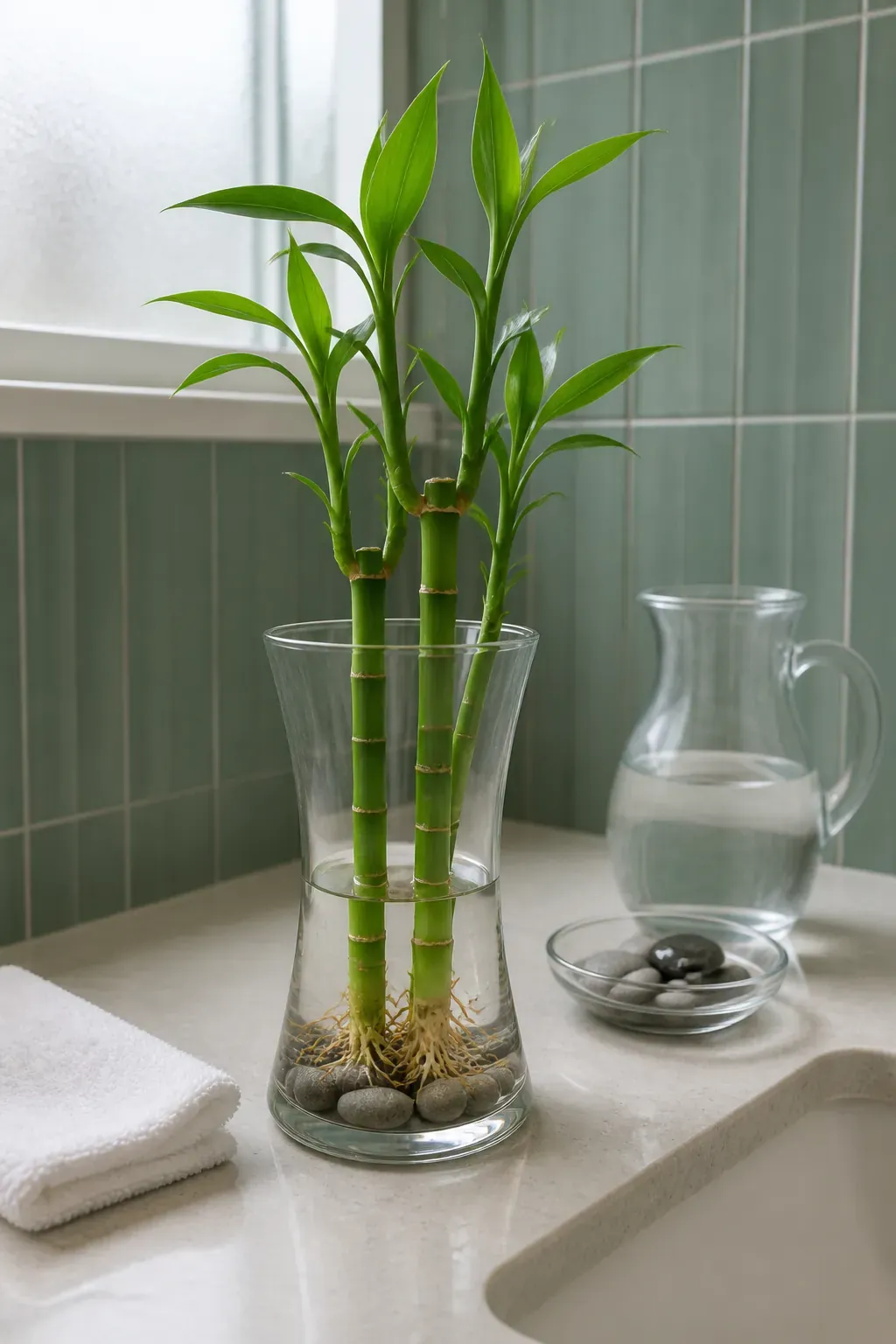
For lucky bamboo water care, submerge the roots and a low rooting node rather than most of the cane. Use distilled, rain, or appropriate filtered water when local tap water causes deposits or leaf tip damage. A clear vessel makes root condition easy to monitor, although an opaque container can reduce algae where the room is especially bright.
Replace the water about once a week, wash the vessel, and rinse support stones when they become slippery. Fine roots should stay covered between changes, so top up for evaporation with the same water source. Do not pack stones so tightly that they crush roots, and isolate any cane that becomes soft or develops spreading yellow color.
Use a Draining Pot for Soil Grown Plants
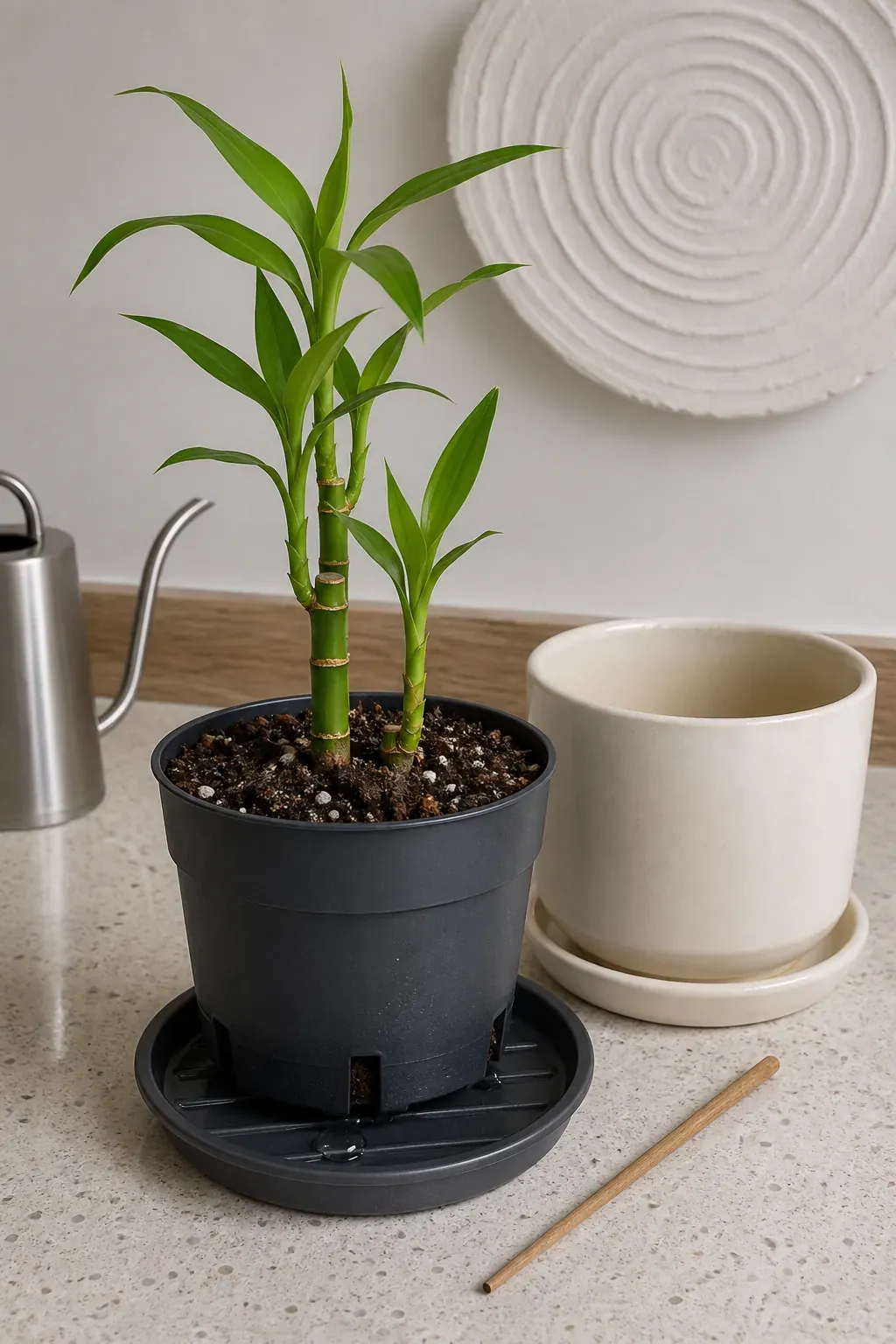
Lucky bamboo soil care begins with drainage. Plant the canes in a loose indoor mix amended with perlite or fine bark, using a pot only modestly wider than the roots. Water until excess leaves the drainage hole, empty the saucer, and wait until the upper mix begins to lose moisture before watering again.
Decorative outer pots are useful only when they do not trap forgotten runoff. Lift the inner pot after watering and check the cachepot instead of assuming the surface tells the whole story. When moving a water rooted plant into soil, keep the mix evenly moist at first and allow the new soil adapted roots to develop before lengthening the interval.
Keep Temperature and Feeding Steady
Ordinary comfortable room temperatures suit this tropical houseplant, but sudden drafts can damage leaves and slow roots. Keep it away from a radiator, active fireplace, refrigerator exhaust, and cold air conditioner. A bright bathroom may offer useful humidity, but humidity does not compensate for poor light, dirty water, or saturated soil.
Feed sparingly during active growth with a heavily diluted houseplant or water culture fertilizer appropriate to the chosen medium. Water grown plants need especially cautious doses because salts remain in the vessel. If the plant is stressed, newly moved, or yellowing, correct the environment first rather than adding more fertilizer.
Use a Simple Weekly Indoor Check
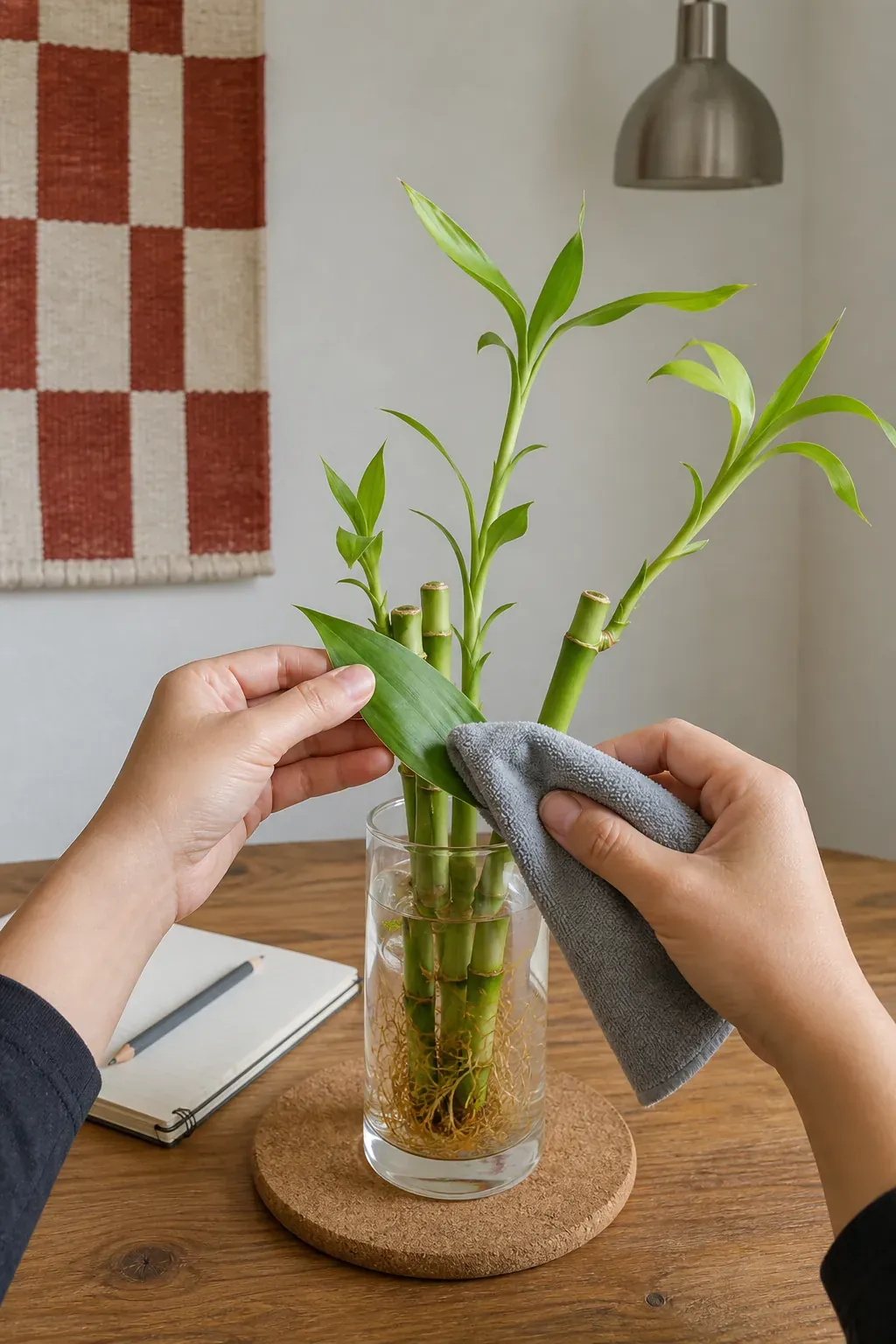
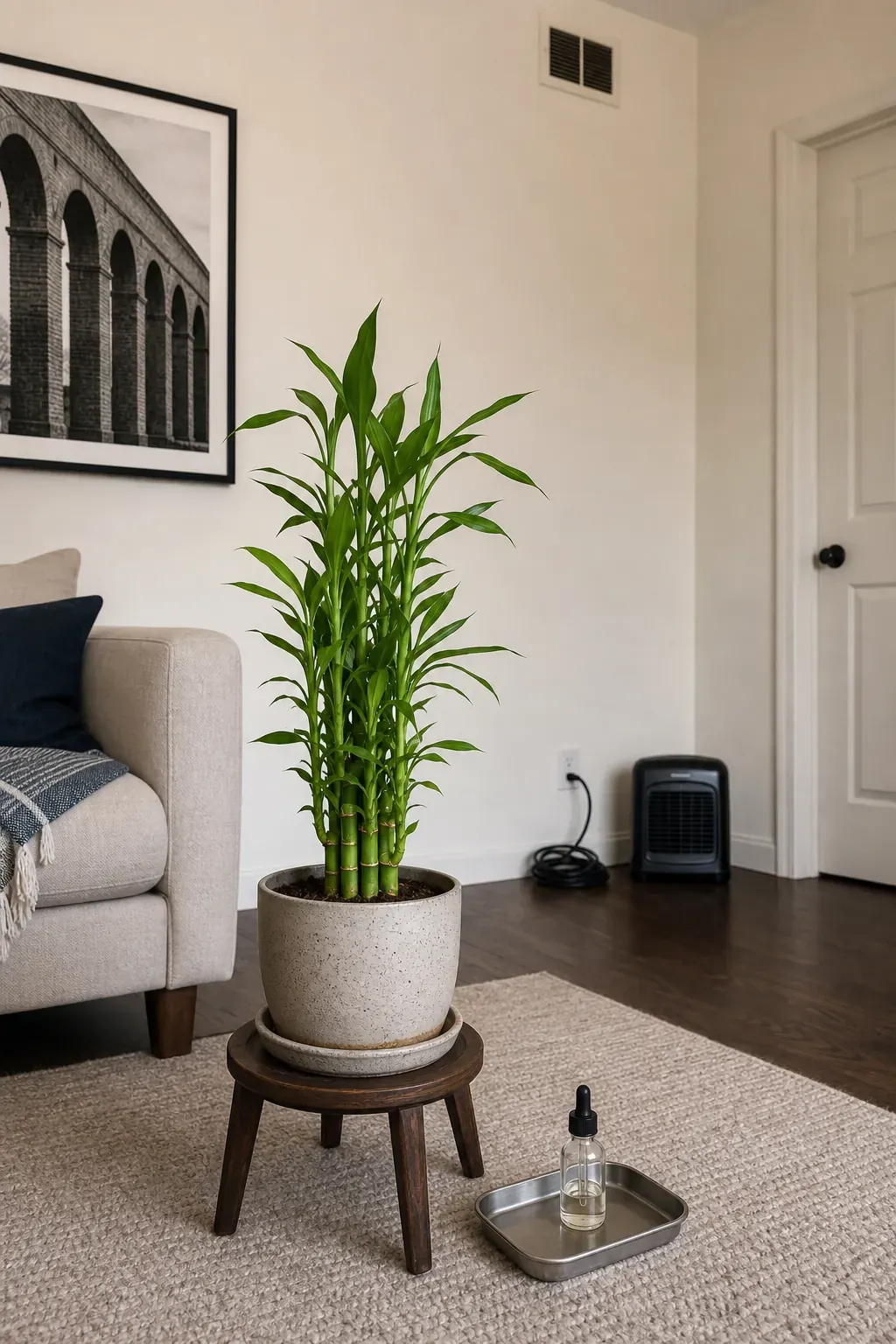
Once a week, look at the water or soil, feel the canes, inspect both sides of several leaves, and check the distance from windows and vents. Wipe dust from foliage with a damp soft cloth so light reaches the leaf surface. Rotate the container slightly if growth is leaning, but leave the plant in the same general location while judging its response.
Brown tips can reflect water minerals, accumulated fertilizer, or dry moving air. Pale growth often calls for more usable light, while a soft yellow cane may indicate root decay that will not turn green again. Change one factor at a time, record what you changed, and allow healthy new growth to show whether the indoor lucky bamboo is improving.