
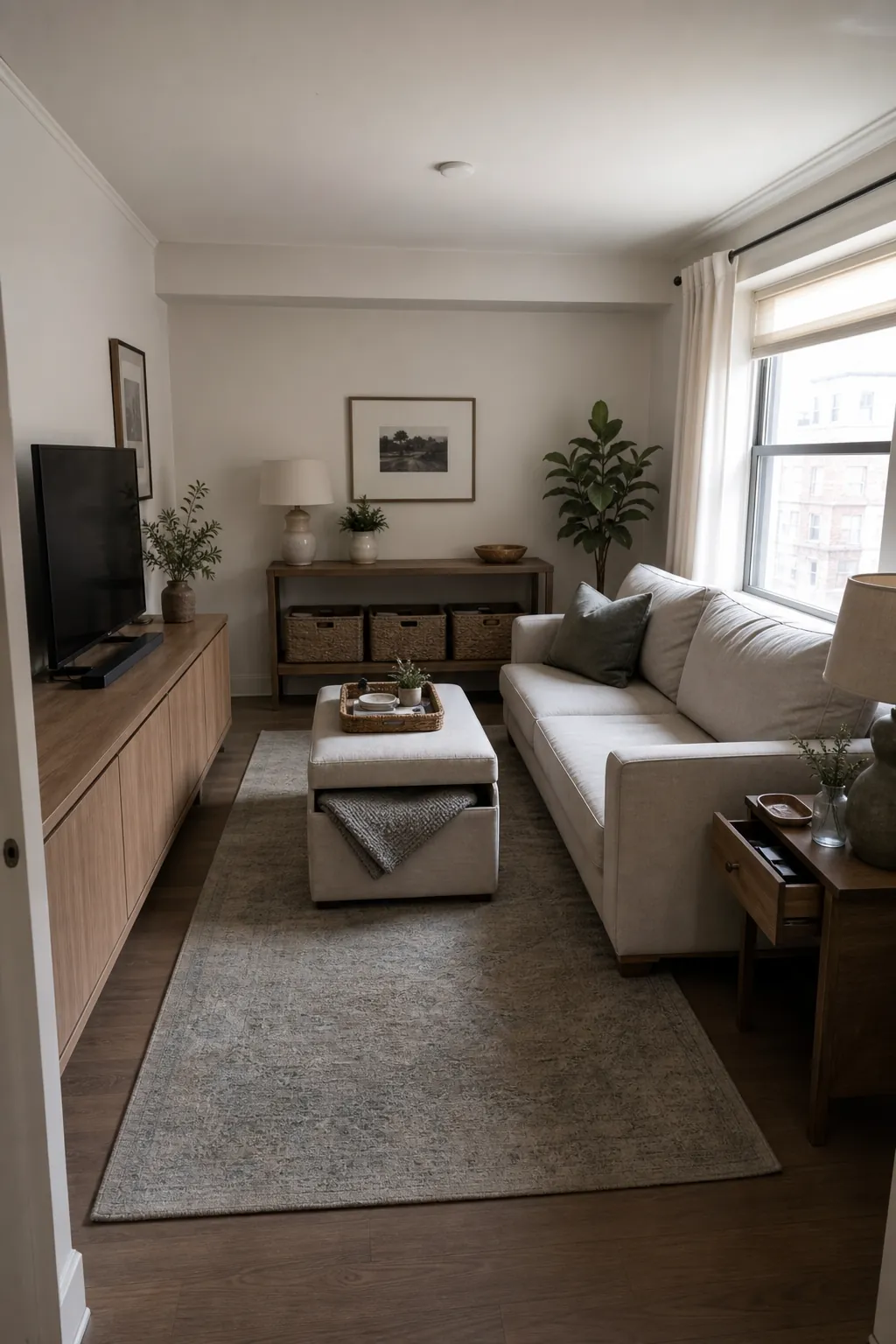
A small living room can look messy long before it is actually dirty. A remote on the coffee table, a blanket on the sofa, a stack of mail near the door, and one half-open basket can make the whole room feel busy because there is not much empty space for the eye to rest.
The goal is not to hide every sign of real life. A comfortable living room still needs books, throws, chargers, games, toys, pet supplies, and the things you reach for every night. The better goal is to hide clutter by giving daily items quiet homes, not by filling the room with more visible storage.
Use this guide to create a clutter free living room with storage furniture, basket storage, hidden storage, and simple home organization habits that work in a small space.
Start With What the Room Actually Needs to Hold
Before buying another basket or cabinet, make a quick inventory of what truly belongs in the living room. Small living room storage fails when the room becomes the backup closet for the whole home. Shoes, paperwork, craft supplies, extra linens, cleaning products, and rarely used gadgets can all drift into the room because it is central and convenient.
Sort the room into three groups: daily use, weekly use, and wrong-room items. Daily-use items deserve the easiest storage. Weekly-use items can live behind doors, in a lower cabinet, or in a labeled bin. Wrong-room items need to leave, even if they only move to a hallway closet or bedroom shelf for now.
This one edit changes the tone of the whole room. You stop trying to hide clutter that does not belong there, and the storage you already own starts working harder.
Use Closed Storage Where the Eye Naturally Stops
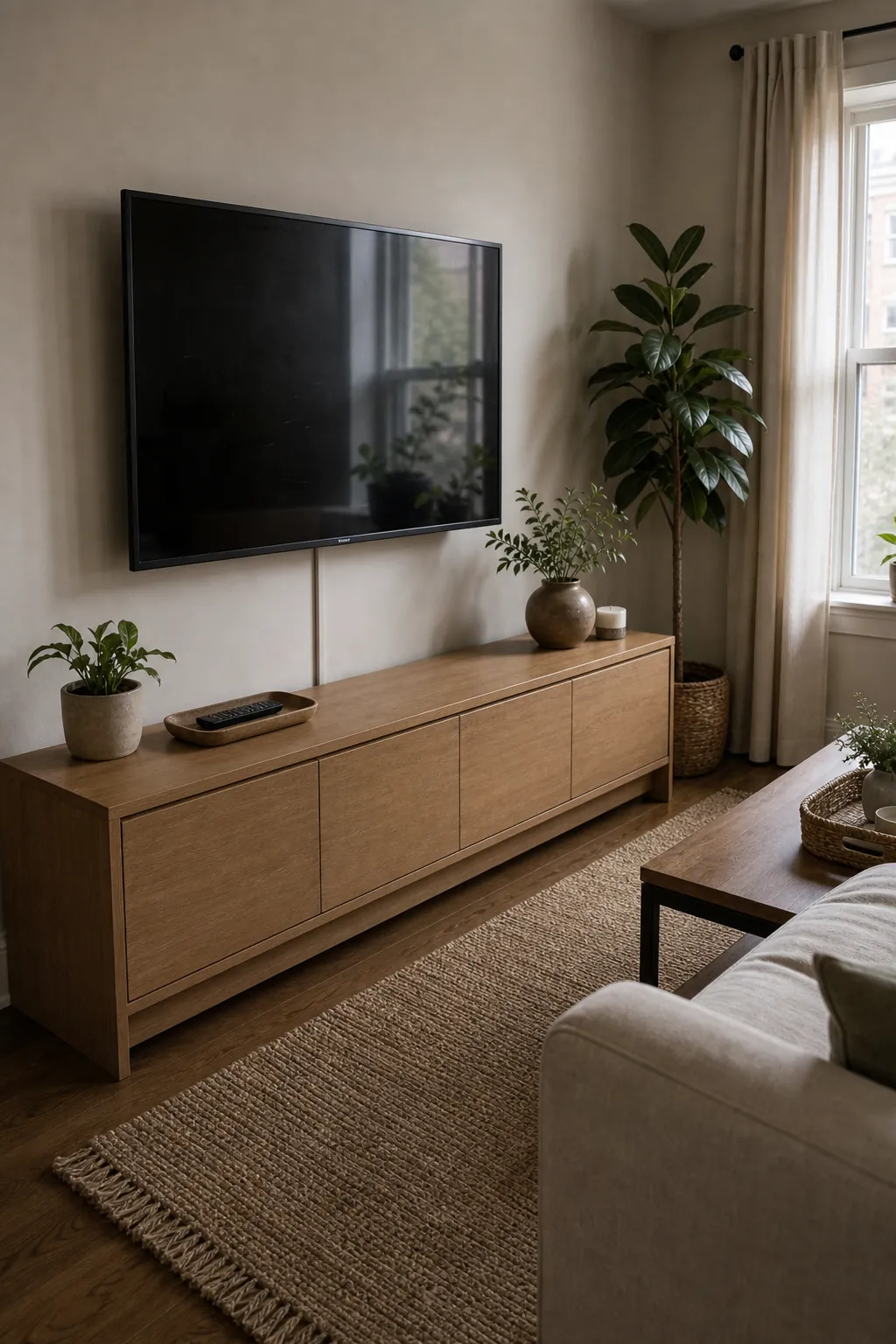
In a small room, the TV wall, sofa wall, and coffee table are visual anchors. If these spots are crowded with open shelves, tangled cords, game controllers, books, and loose decor, the whole room reads as cluttered. The fastest visual fix is closed storage at the main sightline.
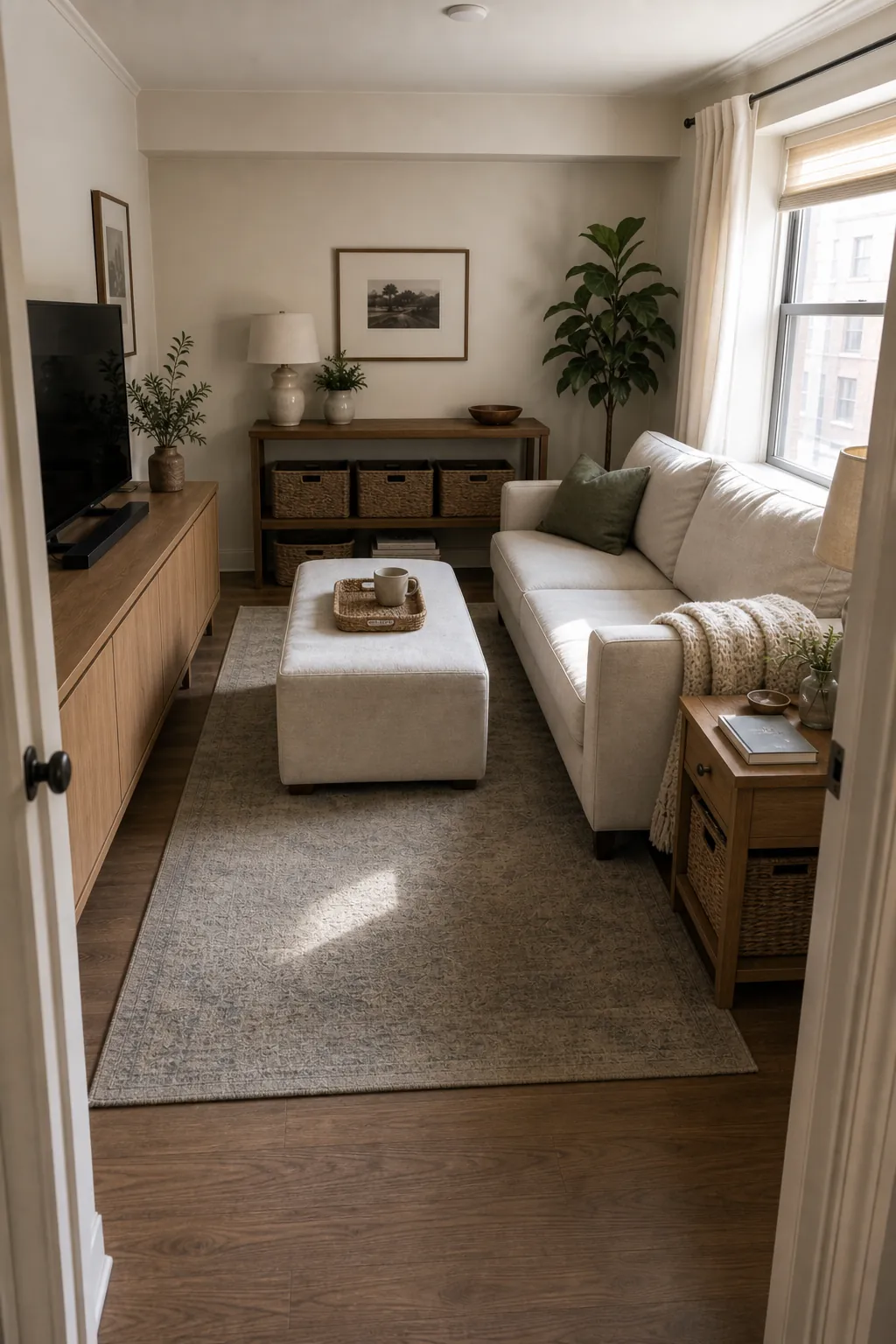
A low TV console with doors can hide remotes, cables, streaming devices, board games, and extra candles while still grounding the room. Choose one larger piece instead of several tiny storage pieces scattered around the floor. Too many small units create more edges, more legs, and more visual interruption.
If you rent or cannot change the layout, focus on furniture depth. A shallow cabinet with flat fronts can hold a surprising amount without pushing into the walking path. Keep the top mostly clear so the cabinet feels intentional, not like another surface waiting to collect clutter.
Give Everyday Clutter One Fast Landing Place
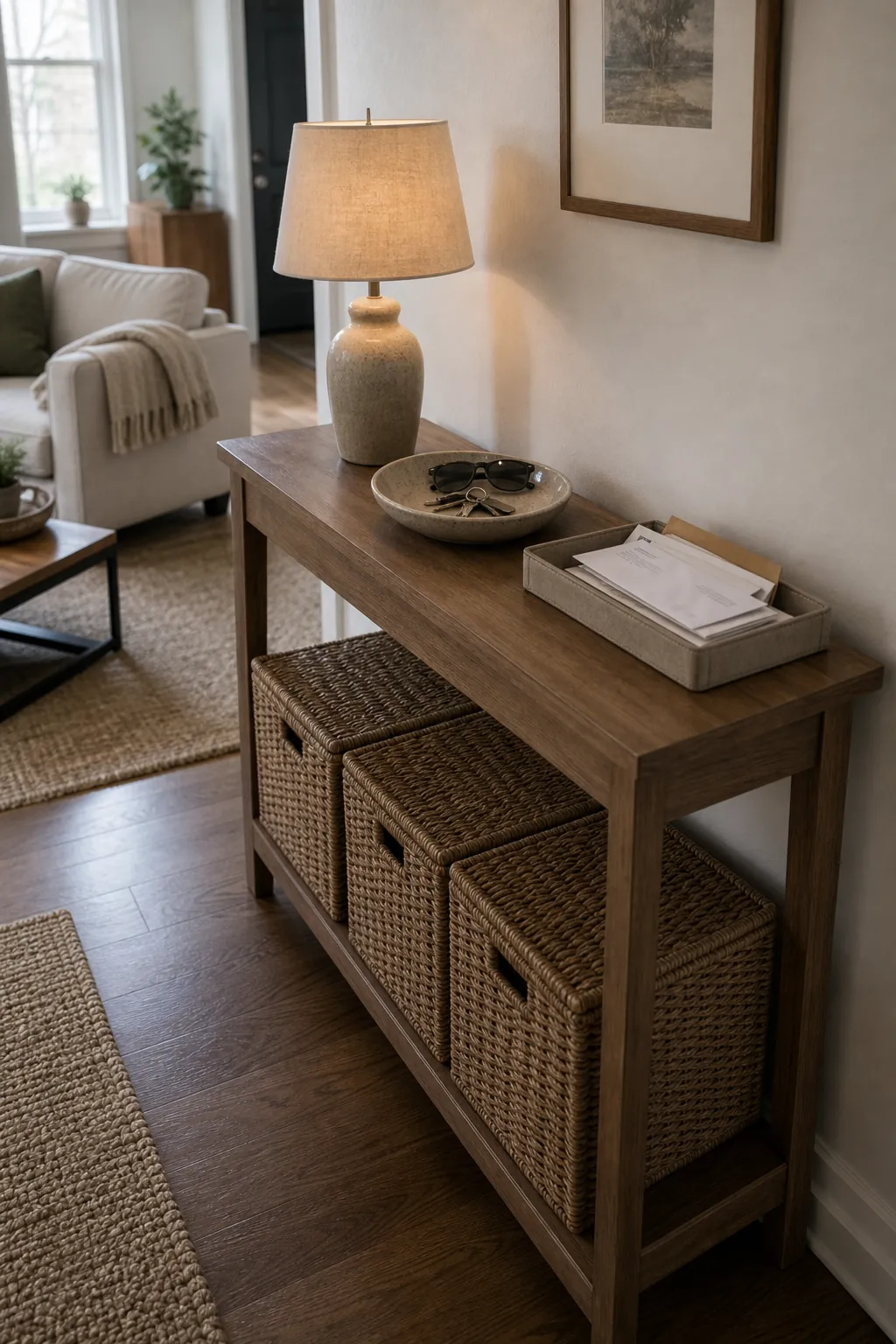
Some clutter keeps returning because it is not really clutter. Keys, headphones, lip balm, mail, glasses, chargers, and receipts are small, useful objects that need a temporary home. If they do not have one, they spread across every flat surface.
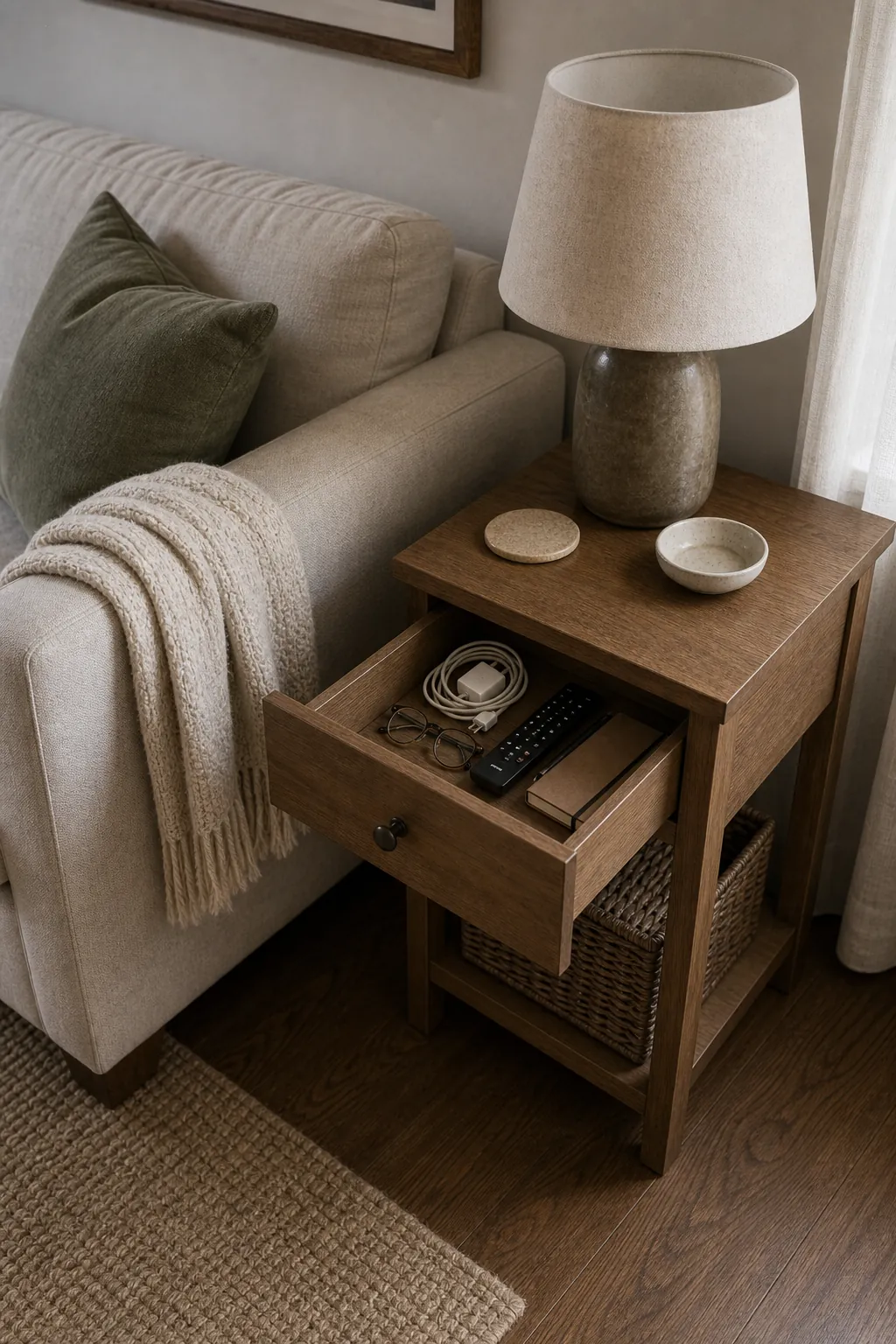
Create a landing place that is easy enough to use when you are tired. A lidded box on a console, a drawer in a side table, a ceramic bowl on a tray, or a wall basket near the entry can catch the daily mess. The rule is simple: one container per clutter zone, not one container per object.
This is where basket storage works best. Use it for loose categories, not for things you need to sort perfectly every night. If you expect a busy household to file every receipt and coil every cable daily, the system will collapse. If you give those items one attractive container, the living room can reset in seconds.
Choose Storage Furniture That Does Two Jobs
Storage furniture is useful in a small living room only when it earns its footprint. A storage ottoman can replace a coffee table and hold throws or toys. A bench can add seating and hide shoes. A side table with a drawer can hold chargers, coasters, and reading glasses. A sofa with hidden storage can store seasonal blankets without adding another cabinet.
The key is proportion. Hidden storage should make the room feel calmer, not heavier. Look for raised legs, lighter finishes, rounded corners, or woven texture if the room already has large solid pieces. If the sofa is bulky, choose a slimmer storage coffee table. If the TV console is closed and solid, use softer baskets or a lighter ottoman nearby.
Do not turn every item into storage. A room where every piece is a box can feel stiff. Choose the two or three pieces that solve your biggest mess points, then leave breathing room around them.

Make the Coffee Table Look Clear Without Making It Empty
The coffee table is usually the first surface to show clutter. It collects remotes, cups, books, snacks, mail, toys, and the things people put down while sitting. In a small room, a messy coffee table can make the entire seating area feel cramped.
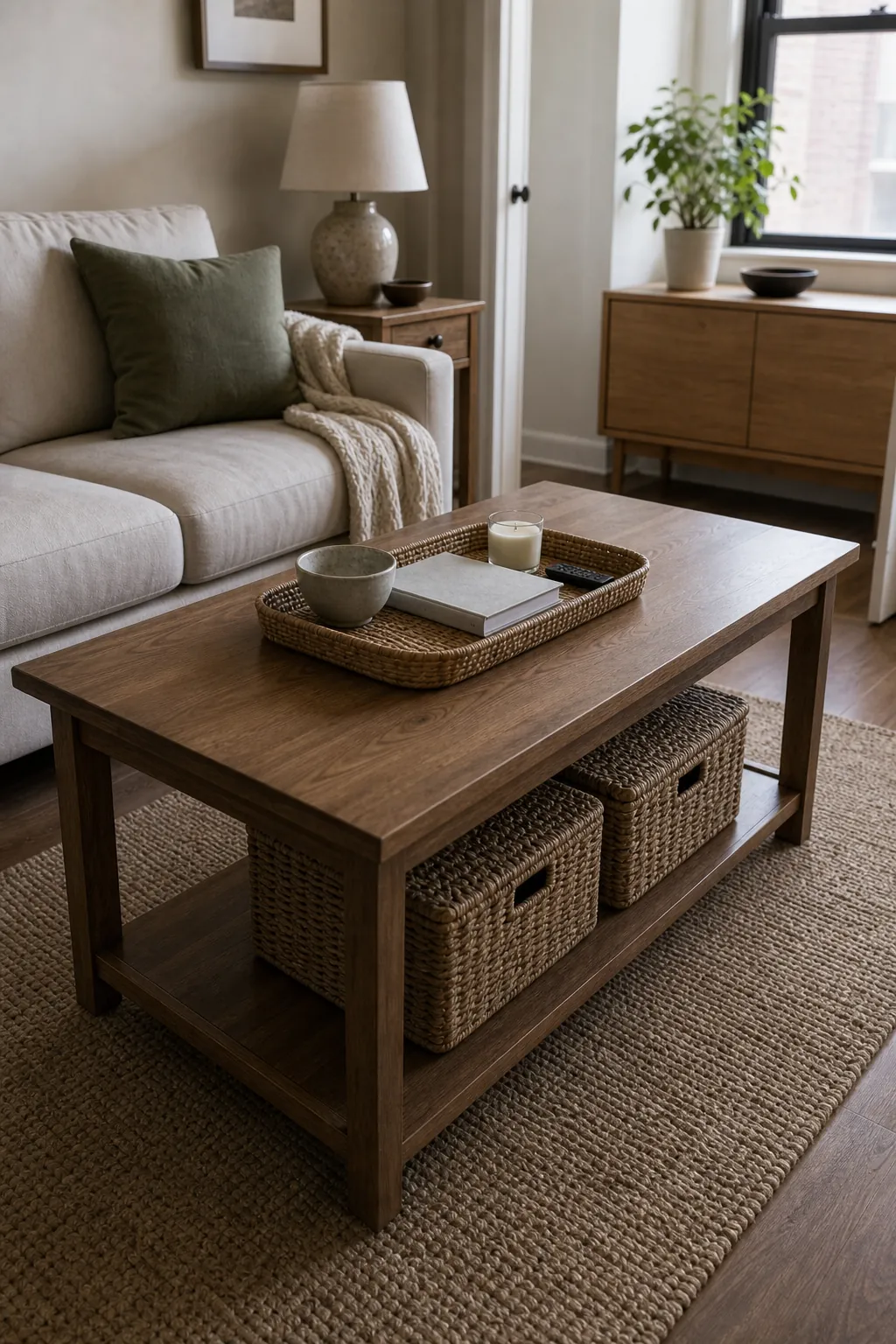
Use a tray to create a boundary. Inside the tray, keep only the objects you want visible: maybe a small bowl, one book, and a candle. Everything else needs a drawer, lidded box, or lower shelf. A tray does not organize clutter by itself; it tells you when the surface is full.
If your coffee table has an open lower shelf, avoid stacking random items there. Use two matching boxes or one shallow basket so the shelf reads as one calm shape instead of many small objects. This small living room idea keeps useful items close without making the room feel visually loud.
Use Baskets Carefully So They Do Not Become Decorated Piles
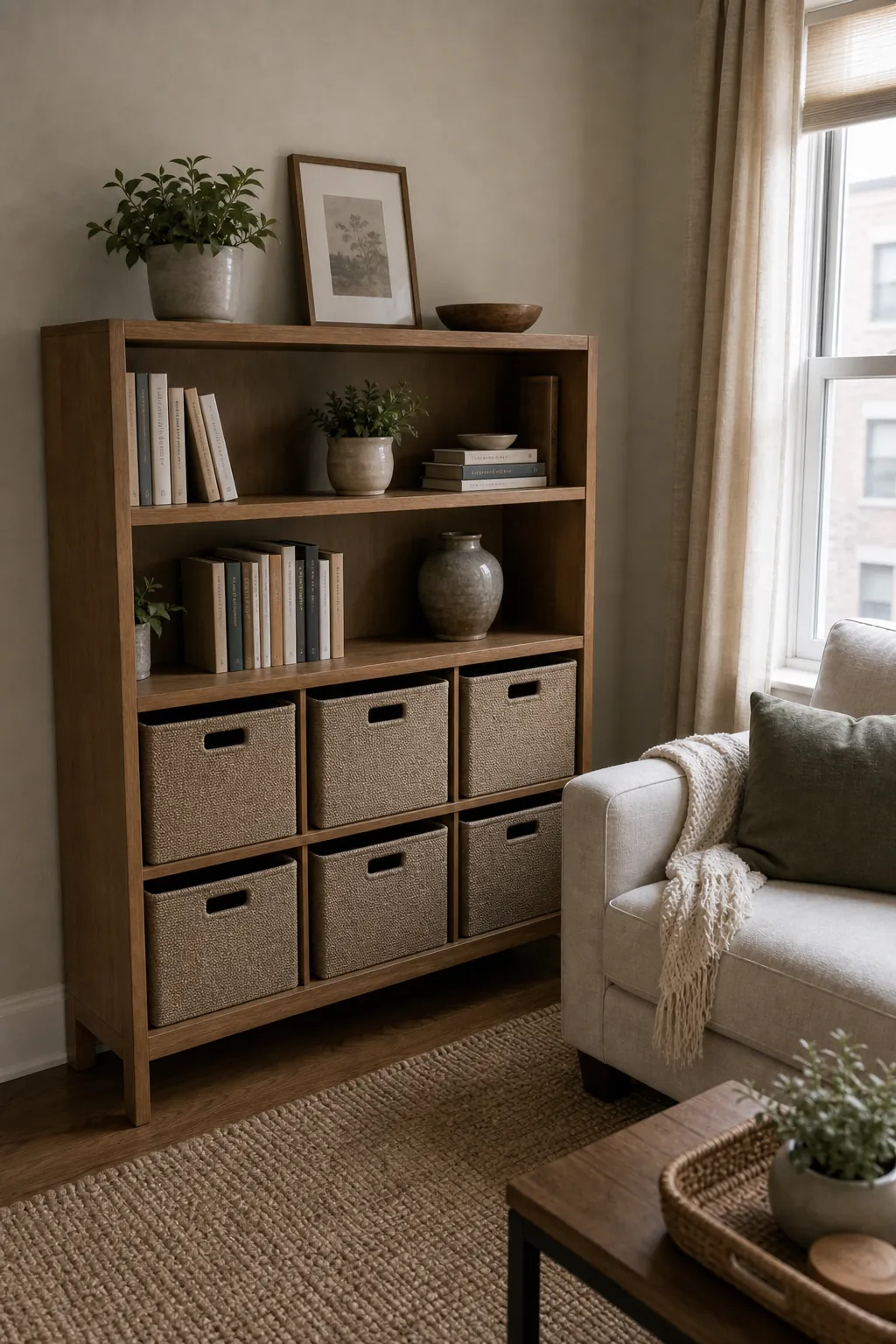
Baskets are one of the easiest ways to hide clutter, but they can also become open piles with handles. In a small living room, visible basket storage should have limits. Use baskets for soft, broad categories: blankets, toys, magazines, pet supplies, workout bands, or extra pillows.
Avoid using open baskets for tiny mixed objects unless they are inside a cabinet or on a high shelf. Small mixed items make a basket look messy from across the room. If you need to store tiny things, use a lidded container or a drawer organizer inside the basket.
Keep basket colors and textures consistent. Three matching baskets under a console look intentional. Six different baskets in different corners look like clutter management instead of living room organization. The basket should disappear into the room, not announce how much stuff it is hiding.
Go Up the Wall Without Crowding the Floor
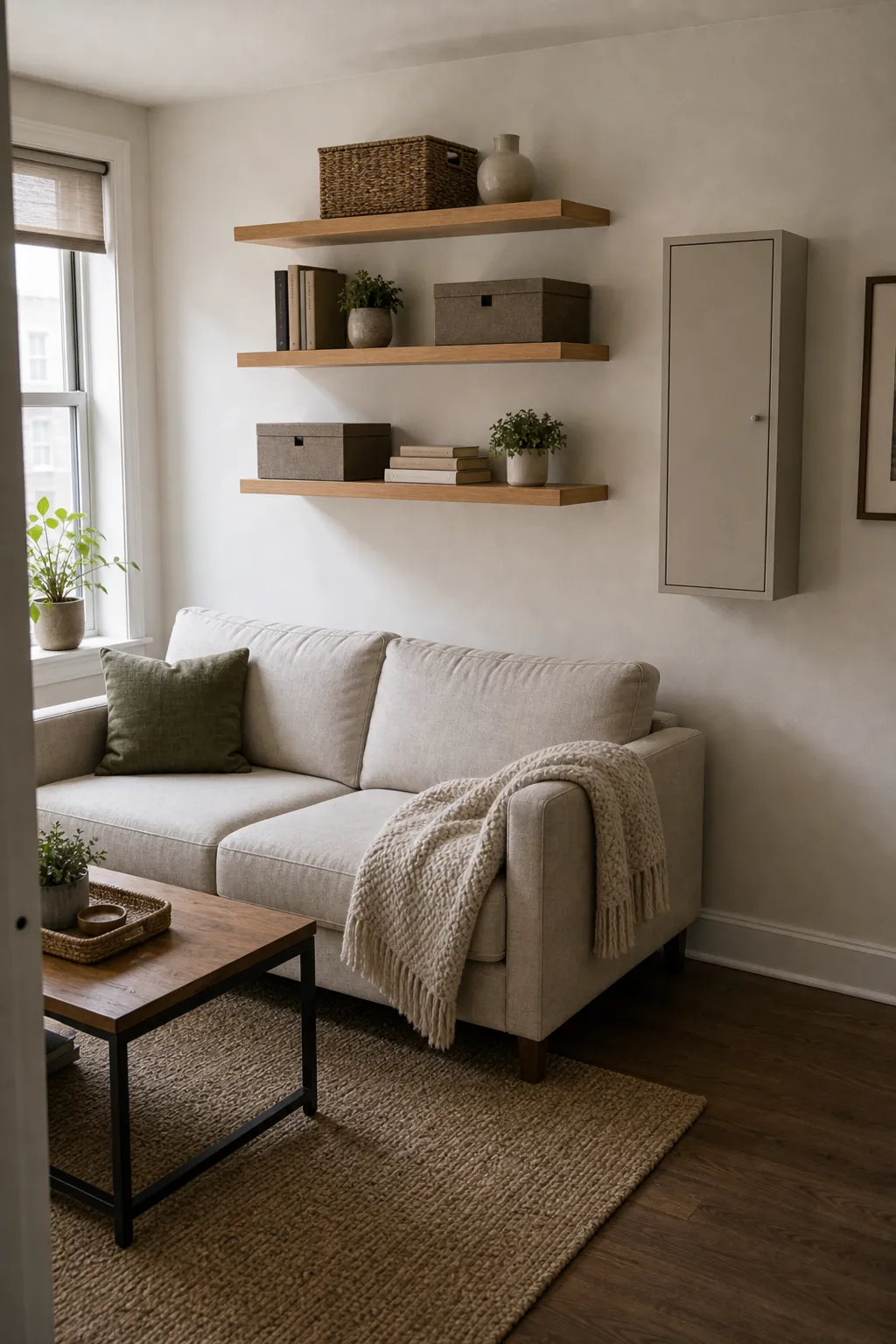
When floor space is tight, vertical storage can help, but it needs restraint. A small living room can handle floating shelves, a tall narrow cabinet, wall hooks behind a door, or a slim bookcase. It usually cannot handle every wall becoming storage.
Use height for the items you do not need every hour. Display a few attractive objects at eye level, then use baskets or closed boxes higher or lower. Leave some empty shelf space. Negative space is part of the storage plan because it keeps the wall from becoming another busy surface.
If the room has low light, choose storage that preserves brightness. Open-backed shelves, pale wood, glass doors, and wall-mounted pieces can keep the floor clear and avoid blocking windows. The less furniture sits on the floor, the larger the room tends to feel.
Build a Small Entry Drop Zone if the Living Room Starts at the Door
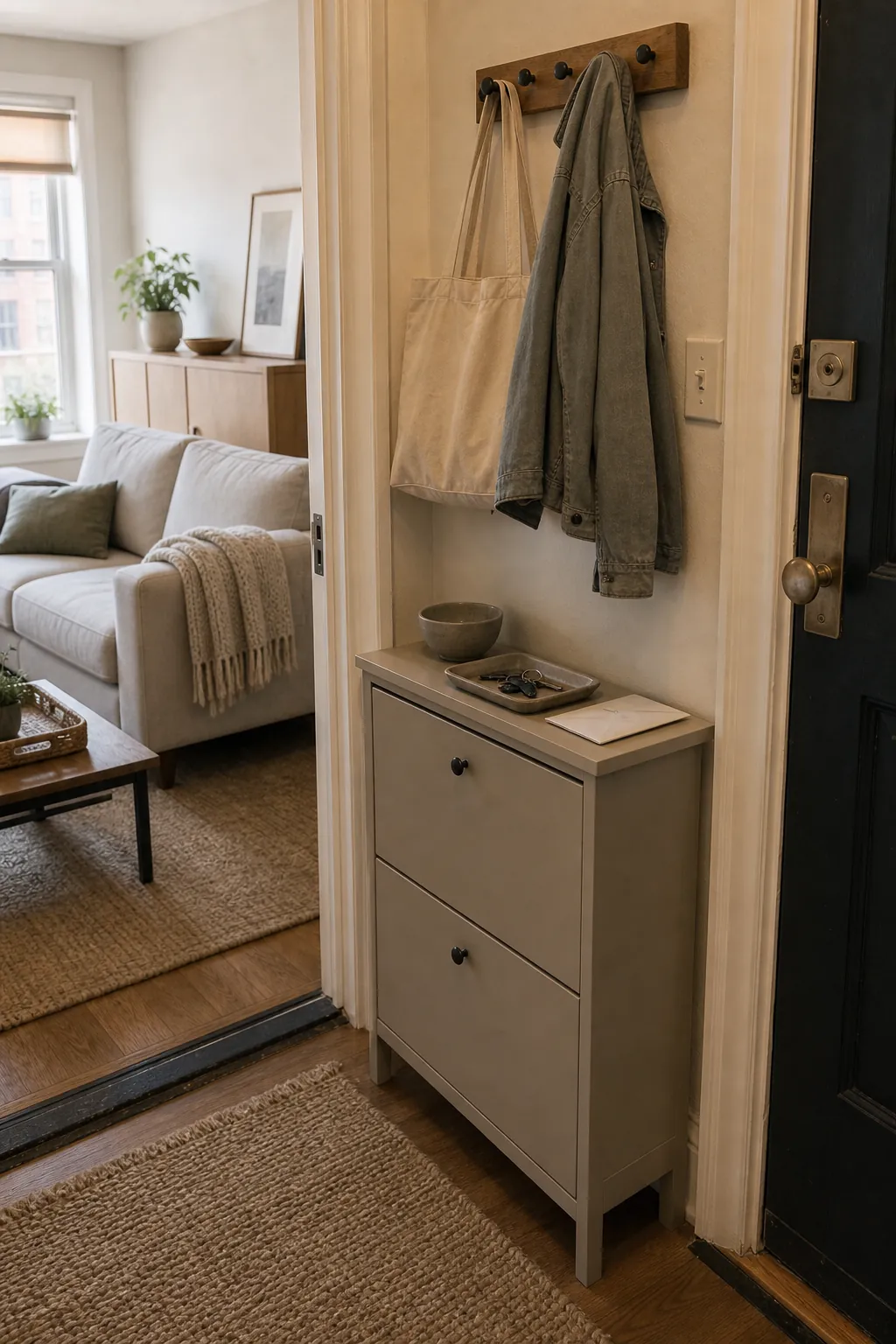
Many apartments and small homes open directly into the living room. That means entryway clutter becomes living room clutter: shoes, bags, keys, mail, umbrellas, and jackets land where guests sit. If this is your layout, the room needs a tiny drop zone, even if there is no real foyer.
A narrow cabinet, wall hooks, a storage bench, or a slim console can create a boundary between coming home and relaxing. The best drop zone is not large. It is obvious. When the first storage point is easy to use, clutter stops traveling deeper into the room.
Keep this zone visually quiet. Closed shoe storage, one tray for keys, and one basket for seasonal items are usually enough. If you add too many hooks, bins, and shelves, the entry will look busy from the sofa.
Hide Cords, Chargers, and Remote Controls Like Real Clutter
Cords are visual clutter even when everything else is tidy. A clean room can still feel unfinished when black cables hang below the TV, chargers sprawl behind the sofa, or remotes sit in several different places.
Start with the TV area. Use a console with a cord cutout, adhesive cable clips, or a simple cord cover painted close to the wall color. Place chargers in one drawer or lidded box with a power strip inside if the furniture allows safe ventilation. Keep remotes in one tray, drawer, or side-table pocket.
This kind of hidden storage is not glamorous, but it changes the room quickly. When cords and controllers have a home, the living room looks organized even before you style anything.
Keep a Five-Minute Reset Instead of a Perfect System
The best home organization system for a small living room is the one you can repeat when life is busy. A perfect setup that needs twenty minutes every night will fail. A five-minute reset can become automatic.
Before bed or before leaving the house, clear the coffee table, return remotes, fold or basket the throw blanket, move dishes to the kitchen, drop loose items into the right container, and remove anything that belongs in another room. Do not reorganize the whole living room. Just restore the main surfaces and walking paths.
If the reset takes longer than five minutes, the storage is too far away, too full, or too complicated. Adjust the system instead of blaming yourself. A clutter free living room is built from easy repeatable moves, not one big weekend cleanout.
The Real Secret Is Less Visual Noise
When people search for how to hide clutter in a small living room, they are usually not looking for a magazine-perfect room. They want the room to feel calm after a normal day. That means fewer scattered pieces, fewer exposed piles, fewer mystery surfaces, and fewer items fighting for attention.
Start with one sightline, one daily clutter zone, and one piece of storage furniture that solves a real problem. Once those work, add vertical storage, better baskets, and a small reset routine. The room will feel bigger when the storage supports the way you live instead of becoming the main thing you see.